
Describe concept of natural history of disease with the help of diagram and a suitable example
Reading File
Searching sources...
Finding Sources
Finding Sources
Park's Textbook of Preventive and Social Medicine has the most relevant dedicated section. Let me read it along with Harrison's version:
Reading File
Reading File
I can see a truncated diagram URL. Let me read more of Park's textbook section and retrieve the diagram image:
Reading File
I have the diagram URL. Let me fetch it and read more of the text section:
Loading Image
Reading File
I now have all the information needed - the classic Leavell & Clark diagram from Park's textbook and comprehensive content. Let me compose the full answer.
Natural History of Disease
The natural history of disease is a key concept in epidemiology. It refers to the way a disease evolves over time - from its earliest stage in the prepathogenesis phase through to its final outcome (recovery, disability, or death) - in the absence of treatment or prevention. Each disease has its own unique natural history, which may also vary between individuals.
"What the physician sees in the hospital is just an 'episode' in the natural history of disease."
- Park's Textbook of Preventive and Social Medicine
The Classic Diagram (Leavell & Clark)
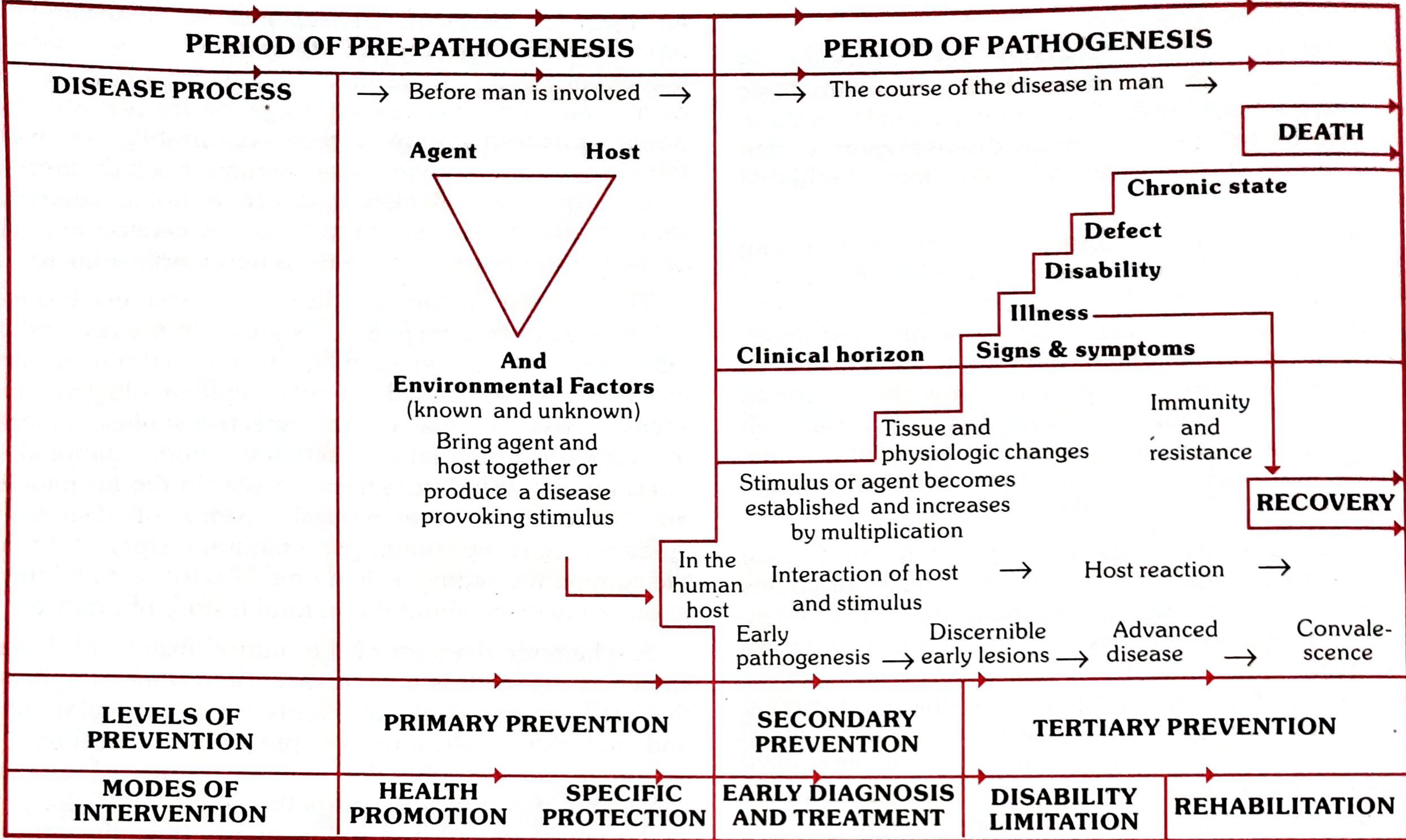
Fig. 8 - Natural History of Disease (From Preventive Medicine for the Doctor in His Community, by Leavell & Clark)
Two Phases of Natural History
Phase 1: Prepathogenesis Phase
This is the period before disease begins in the human host. The disease agent has not yet entered the body, but the factors favouring interaction between the agent, host, and environment already exist.
- The Epidemiological Triad operates here: Agent + Host + Environment
- Environmental factors (known and unknown) bring the agent and host together or produce a disease-provoking stimulus
- The host is "exposed to the risk of disease" but not yet ill
- All three factors must interact for the disease process to begin
Example - Typhoid fever: A person is exposed to a contaminated water source (environment), carrying Salmonella typhi (agent), and the person may have low immunity (host factor). The stage is set, but disease has not begun yet.
Phase 2: Pathogenesis Phase
This begins with the entry of the disease agent into the susceptible host. It is subdivided into:
| Sub-stage | What Happens |
|---|---|
| Early pathogenesis | Agent/stimulus establishes itself, multiplies; tissue and physiological changes begin - all below the "clinical horizon" (subclinical/presymptomatic) |
| Discernible early lesions | Structural or functional changes begin; still often undetectable clinically |
| Advanced disease | Signs and symptoms appear (disease crosses the clinical horizon); illness is now manifest |
| Convalescence | The body begins resolution - toward recovery, chronic state, defect/disability, or death |
Clinical horizon - an important conceptual line that separates subclinical (below) from clinical (above) disease.
Possible outcomes:
- Recovery - aided by immunity and resistance
- Chronic state / Defect / Disability
- Death
Levels of Prevention - Mapped to Natural History
The diagram also shows how preventive interventions align with the natural history timeline:
| Phase | Level of Prevention | Mode of Intervention |
|---|---|---|
| Prepathogenesis | Primary Prevention | Health Promotion + Specific Protection |
| Early Pathogenesis | Secondary Prevention | Early Diagnosis and Treatment |
| Late Pathogenesis / Outcome | Tertiary Prevention | Disability Limitation + Rehabilitation |
Suitable Example: Tuberculosis (TB)
| Stage | What Happens |
|---|---|
| Prepathogenesis | Person lives in overcrowded conditions (environment), is malnourished (host), and is exposed to Mycobacterium tuberculosis (agent). No disease yet. |
| Early pathogenesis (subclinical) | Bacilli enter the lungs, primary complex forms; host mounts an immune response. The person has no symptoms - Mantoux test may turn positive. Below the clinical horizon. |
| Discernible early lesions | Small granulomas form in the lung; chest X-ray may show early changes before symptoms appear. |
| Advanced disease (clinical stage) | Symptoms appear: productive cough, haemoptysis, fever, night sweats, weight loss. Disease is now above the clinical horizon. |
| Outcome | With treatment - Recovery. Without treatment - Chronic state, cavitation, spread to other organs, or Death. |
Key Points to Remember
- Natural history is established best by cohort studies, though cross-sectional and retrospective studies also contribute.
- In infectious diseases, the phases are clear-cut with a defined incubation period.
- In chronic diseases (e.g., coronary heart disease, hypertension, cancer), the early pathogenesis phase is called the presymptomatic phase and is less dramatic - pathological changes occur silently below the clinical horizon for years.
- Understanding natural history allows clinicians and public health professionals to identify the right "point of intervention" to halt or modify disease progression.
Source: Park's Textbook of Preventive and Social Medicine, pp. 45-47
This is a shared conversation. Sign in to Orris to start your own chat.