
Delirium Types of pain Lines for fluid Olanzapine Vaseline gauze
Reading File
Now I'll search all 5 topics in parallel across the medical library.
Finding Sources
Finding Sources
Finding Sources
Finding Sources
Finding Sources
Good results. Now let me read the key sections in parallel - delirium from Rosen's EM and Family Medicine, olanzapine from Maudsley, and also search for pain types and vascular access lines.
Reading File
Reading File
Reading File
Finding Sources
Finding Sources
Now let me read the key pain classification, fluid lines, and more olanzapine details in parallel.
Reading File
Reading File
Reading File
Reading File
Now let me get the delirium management/treatment section from Rosen's and lines for fluid from Rosen's EM, plus search for vaseline gauze/petroleum dressing and olanzapine adverse effects.
Reading File
Reading File
Finding Sources
Reading File
Excellent - I now have rich content on all 5 topics. Let me read the vaseline/petroleum gauze section from Bailey & Love and the Rosen's local wound therapies section.
Reading File
Reading File
I now have comprehensive content on all 5 topics. Let me compile the full, detailed answer.
1. Delirium
Sources: Rosen's Emergency Medicine, Textbook of Family Medicine
Definition
Delirium is an acute or subacute state of cognitive dysfunction caused by an underlying physiologic condition. The hallmark is disturbance in attention and awareness - inability to focus, reduced orientation. It develops over hours to days, and crucially, it fluctuates throughout the day. It is never a normal occurrence.
Other names: altered mental status, acute confusional state, acute brain syndrome.
DSM-5 Diagnostic Criteria (4 Key Features)
- Disturbance in attention and awareness
- Develops acutely, represents a change from baseline, fluctuates in severity during the day
- Additional disturbances in cognition (memory, disorientation, language, visuospatial ability, perception)
- Not better explained by another neurocognitive disorder; does not occur in the context of a coma
Subtypes by Psychomotor Activity
| Type | Features | Notes |
|---|---|---|
| Hyperactive | Agitation, emotional lability, refuses care, may pull out lines | Most recognizable |
| Hypoactive | Sluggishness, lethargy, somnolence | Most common; highest mortality risk; most underdiagnosed |
| Mixed | Fluctuates between the two OR normal activity with attention/awareness disturbance |
Hypoactive delirium is the "great imitator" - easily mistaken for depression, anxiety, or dementia.
Risk Factors
| Patient Factors | Medication/Environmental |
|---|---|
| Advanced age | Sedatives (benzodiazepines, opioids) |
| Male gender | Anticholinergic drugs |
| Dementia | Alcohol/drug intoxication or withdrawal |
| Previous delirium | Heavy metals, insecticides, cyanide, CO |
| Visual/hearing impairment | Psychoactive botanicals (jimsonweed, nutmeg, psilocybin) |
| Hypertension, heart failure | |
| Chronic kidney/respiratory disease | |
| Malnutrition, depression |
Pathophysiology
Widespread alteration in cerebral metabolic activity with secondary deregulation of neurotransmitter synthesis. Both cortex and subcortical structures are affected.
Key neurotransmitter disturbances:
- Cholinergic deficiency (most pronounced with anticholinergic drugs)
- Glutamatergic excess (hepatic encephalopathy, uremia, sepsis, alcohol withdrawal)
- GABAergic deficit
- Noradrenergic, serotonergic, and dopaminergic imbalance
- Neuroinflammation
Delirium vs. Dementia
| Feature | Delirium | Dementia |
|---|---|---|
| Onset | Acute | Gradual |
| Attention | Impaired | Normal |
| Consciousness | Fluctuates | Normal |
| Hallucinations | Present | Usually absent |
| Course | Hours to days | Months to years |
Common Causes (AEIOU-TIPS mnemonic widely used)
- Metabolic: hypoglycemia (most common), hypoxia, hypo/hypernatremia, hypercapnia, hyperglycemia, uremia, hepatic failure
- Infection/Sepsis: any CNS or systemic infection
- Drugs: anticholinergics, benzodiazepines, opioids, steroids, poly-pharmacy
- Withdrawal: alcohol, sedative-hypnotics
- Structural CNS: stroke (usually with other deficits), trauma, CNS vasculitis
- Endocrine: thyroid storm, adrenal insufficiency
- Cardiac: hypoperfusion, post-cardiac surgery
Assessment Tools (ED Setting)
| Tool | Items | Time |
|---|---|---|
| Delirium Triage Screen (DTS) | 2 | 1-2 min |
| Brief CAM (bCAM) | 4 | 1-2 min |
| MMSE | 30 | 5-10 min |
| Short Blessed Test | 6 | 5-10 min |
Management
Non-pharmacological (first-line):
- Treat the underlying cause
- Reorientation, familiar faces, minimize room changes
- Restore sleep-wake cycle (light during day, dark at night)
- Correct sensory deficits (glasses, hearing aids)
- Minimize anticholinergic and sedative medications
- Early mobilization
Pharmacological (for agitation/safety):
-
Haloperidol 0.5-1 mg PO/IM - traditional first-line for hyperactive delirium
-
Atypical antipsychotics (quetiapine, olanzapine) - similar efficacy
-
Avoid benzodiazepines except in alcohol/sedative withdrawal delirium (worsens most other delirium)
-
Dexmedetomidine in ICU setting
-
Rosen's Emergency Medicine, p. 1478-1481 | Textbook of Family Medicine 9e, p. 47
2. Types of Pain
Sources: Firestein & Kelley's Textbook of Rheumatology, Morgan & Mikhail's Clinical Anesthesiology, Rosen's EM
Pain is mechanistically divided into four classifications:
1. Nociceptive Pain
- Transient pain in response to a noxious stimulus activating high-threshold afferents (nociceptors)
- Serves a protective function - warns of actual or potential tissue damage
- Stimulus-dependent: stops when stimulus removed
- Examples: acute injury, procedural pain
- Responds well to NSAIDs and opioids
2. Inflammatory Pain
- Spontaneous hypersensitivity to pain occurring in response to tissue damage and inflammation
- Two key phenomena: allodynia (pain from normally non-painful stimuli) and hyperalgesia (exaggerated pain response)
- Examples: postoperative pain, trauma, arthritis, rheumatic disease
- Responds well to NSAIDs/COX-2 inhibitors, steroids
3. Neuropathic Pain
- Spontaneous pain and hypersensitivity associated with damage to or lesions of the nervous system
- Can be peripheral (damage to peripheral nerves) or central (spinal cord/brain)
- Often described as burning, shooting, electric, stabbing
- Examples: peripheral neuropathy (diabetic), postherpetic neuralgia, phantom limb pain, CRPS
- Responds to anticonvulsants (gabapentin, pregabalin), TCAs, SNRIs; opioids less effective
4. Functional Pain
- Hypersensitivity to pain resulting from abnormal central processing of normal input (no identifiable tissue damage or nerve lesion)
- Central sensitization is the key mechanism
- Examples: fibromyalgia, irritable bowel syndrome (pathologic), functional abdominal pain
- Responds to centrally acting agents: SNRIs (duloxetine), TCAs, gabapentin, CBT
Clinical Relevance
"Primary analgesics are more efficacious in nociceptive and inflammatory pain, whereas adjuvant agents are more efficacious in neuropathic and functional pain." - Firestein & Kelley's Rheumatology
Pain can also be classified by:
-
Duration: Acute vs. chronic (>3 months)
-
Etiology: Cancer pain, arthritis pain, cardiac pain
-
Location: Headache, low back pain, visceral pain
-
Mechanism: Somatic (well-localized) vs. visceral (poorly localized, referred) vs. neuropathic
-
Firestein & Kelley's Textbook of Rheumatology, p. 1390 | Morgan & Mikhail's Clinical Anesthesiology 7e
3. Lines for Fluid (Vascular Access)
Source: Rosen's Emergency Medicine, Murray & Nadel's Respiratory Medicine
Peripheral IV (PIV)
- First-line for most patients
- Sites: dorsal hand, forearm, antecubital fossa, external jugular
- For vasoactive medications: use large-gauge (18G or larger) at antecubital fossa or more proximally
- Ultrasound guidance can access brachial or proximal basilic veins in difficult access
- Note: standard 3-5 cm catheters in deep veins have high early failure/dislodgement rates
Central Venous Catheter (CVC) / Central Line
Indications:
- Poor peripheral access
- Administration of vasopressors (safer - avoids extravasation injury)
- Measurement of CVP (though clinical utility debated)
- Simultaneous infusion of multiple incompatible drugs
Types by lumen:
- Single-lumen: simple fluid/drug delivery
- Triple-lumen: most common in ICU; allows CVP measurement + multiple infusions simultaneously
Common sites:
| Site | Notes |
|---|---|
| Internal jugular (IJ) | Preferred with ultrasound; risk of carotid puncture |
| Subclavian | Low infection rate; risk of pneumothorax |
| Femoral | Easy access, higher infection/DVT risk; bilumen 3-5 Fr in children |
| PICC | Peripherally inserted central catheter; long-term use |
Ultrasound guidance: Standard of care - confirmed wire placement in both short-axis and long-axis views before dilation.
Intraosseous (IO) Access
- Used when peripheral and central access cannot be rapidly obtained
- Can deliver all fluids, drugs, blood products
- Sites: proximal tibia (most common), humeral head, distal femur, sternum
- "Easy and can provide a temporary method of administering fluid resuscitation and medications to adults and children"
- Temporary - convert to IV/CVC when feasible
Summary Hierarchy in Shock:
- PIV x2 large bore (18G+) - attempt first
- CVC (IJ, subclavian, femoral) - if PIV inadequate
- IO - if above fail rapidly
- Rosen's Emergency Medicine, p. 62
4. Olanzapine
Sources: Kaplan & Sadock's Comprehensive Textbook of Psychiatry, Maudsley Prescribing Guidelines 15th ed.
Classification
- Second-generation (atypical) antipsychotic - thienobenzodiazepine class
- Mechanism: D2 antagonist + 5-HT2A antagonist + muscarinic, histaminergic, adrenergic antagonism
Licensed Indications
- Schizophrenia - acute and maintenance; mildly sedating, useful in agitation
- Bipolar mania/mixed states - monotherapy or adjunct to lithium/valproate
- Bipolar I depression - combined with fluoxetine (Symbyax)
- Acute agitation - IM formulation (schizophrenia or bipolar I mania)
Key Efficacy Points
- Superior to haloperidol on negative symptoms and depression rating
- In CATIE trial: lowest discontinuation rate among antipsychotics tested
- Effective for both psychotic and non-psychotic bipolar patients
- May be more effective than lithium in mania
- IM olanzapine: effective in acutely agitated patients; similar to IM haloperidol for positive symptoms, with more rapid onset
Dosing
- Oral: 5-20 mg/day (typical: 10 mg/day)
- IM (acute agitation): 10 mg IM; repeat doses possible
Adverse Effects
BLACK BOX WARNING
Increased mortality in elderly patients with dementia-related psychosis (applies to all SGAs)
Metabolic Effects (most significant concern)
| Effect | Detail |
|---|---|
| Weight gain | Greatest of all antipsychotics except clozapine; ~2 lb/week in CATIE; 56% gain >7% baseline weight |
| Hyperlipidemia | Triglycerides most affected (mean +40.5 mg/dL in CATIE; can exceed 500 mg/dL); total cholesterol and LDL elevated |
| Hyperglycemia / Insulin resistance | Risk of new-onset diabetes; monitor fasting glucose |
Other Adverse Effects
- Orthostatic hypotension (especially early in treatment)
- Sedation / somnolence (useful property in agitation, but side effect in outpatients)
- EPS (lower than FGAs, but still possible)
- Prolactin elevation (less than risperidone)
- Liver enzyme elevation (especially in pediatric patients)
- QTc prolongation (less than other antipsychotics)
- Excreted in breast milk (generally low concentration)
In Children/Adolescents
Serious safety concerns: weight gain, liver enzyme elevation, prolactin elevation, cholesterol/glucose elevation. Use only when other antipsychotics have failed.
Monitoring
- Fasting glucose and lipid panel before and after starting
- Weight at baseline and regularly
- Liver enzymes (especially in children)
Olanzapine/Samidorphan Combination (Lybalvi)
- Available in some countries; minimizes metabolic side effects, particularly weight gain
- Maudsley Prescribing Guidelines 15e, p. 327 | Kaplan & Sadock's Psychiatry, p. 9265
5. Vaseline Gauze (Petroleum Jelly / Petrolatum Gauze)
Sources: Bailey & Love's Short Practice of Surgery 28e, Rosen's Emergency Medicine
What It Is
Gauze (tulle) impregnated with petroleum jelly (petrolatum/Vaseline). The original and most traditional non-adherent wound dressing. Trade names include Jelonet®.
May also contain additives such as tribromophenate (mild antibacterial).
Properties
- Non-adherent - petroleum jelly prevents gauze fibres sticking to the wound bed
- Maintains a moist wound environment to facilitate epidermal migration
- Allows gas exchange between wound and environment
- Sterile, non-toxic, non-allergenic, cost-effective
Ideal For
- Clean wounds with minimal exudate
- Low-risk contamination wounds
- Skin graft coverage
- Burns (as an alternative to topical agents; requires less frequent dressing changes than plain gauze)
- Post-surgical wounds, donor sites
Advantages vs. Disadvantages
| Advantages | Disadvantages |
|---|---|
| Inexpensive, widely available | Not suitable for heavily exuding wounds |
| Non-adherent - atraumatic removal | Does not absorb exudate |
| Maintains moist environment | May require frequent changes if wound is wet |
| No active antibacterial properties (unless additive) |
Comparison with Other Dressings
| Dressing | Best Use |
|---|---|
| Vaseline gauze (Jelonet®) | Clean, low-exudate wounds |
| Foam (Allevyn®) | Moderate-to-high exudate (leg ulcers) |
| Hydrocolloid (Duoderm®) | Moderate exudate, minor burns |
| Alginate (Kaltostat®) | Moderate-to-heavy exudate, skin graft donor sites; haemostasis |
| Silicone mesh (Mepitel®) | Prolonged application; pediatric wounds |
| Antimicrobial (Aquacel Ag®) | Contaminated/infected wounds |
In burns specifically: petrolatum gauze is an established alternative to topical agents (e.g., silver sulfadiazine), associated with less pain and effective wound healing when used as an occlusive dressing, with less frequent dressing changes required.
- Bailey & Love's Surgery 28e, p. wound dressings | Rosen's Emergency Medicine, p. 837
Menstruation pain treatment
Reading File
Searching for dysmenorrhea treatment across the library in parallel.
Finding Sources
Finding Sources
Finding Sources
Excellent - rich results. Now let me read the key sections from Berek & Novak's Gynecology (the most authoritative source) and Swanson's for the full treatment details.
Reading File
Reading File
Reading File
Now let me get more treatment detail - secondary dysmenorrhea management and the full NSAID section.
Reading File
Reading File
I now have comprehensive information. Let me also quickly fetch the prostaglandin pathway diagram to enrich the answer.
Loading Image
I now have everything needed for a thorough, well-structured answer.
Menstruation Pain (Dysmenorrhea) - Treatment
Sources: Berek & Novak's Gynecology, Swanson's Family Medicine Review, Harrison's Principles of Internal Medicine 22e
Definitions
Primary dysmenorrhea - painful menstruation in the absence of pelvic pathology. The most common gynecologic complaint of young women, with prevalence as high as 90%. It is a leading cause of school/work absenteeism.
Secondary dysmenorrhea - cyclic menstrual pain associated with an identifiable underlying pelvic pathology.
Pathophysiology of Primary Dysmenorrhea
The mechanism is driven by prostaglandins - specifically PGF2α:
- During the luteal phase, progesterone stimulates prostaglandin production in the endometrium
- After progesterone withdrawal at the end of the cycle, the endometrium sloughs and releases PGF2α in large amounts
- PGF2α stimulates myometrial contractions → decreased uterine blood flow → ischemia ("uterine angina")
- This ischemia produces the cramping pain
Women with primary dysmenorrhea have elevated levels of PGF2α compared to those without pain. This is why NSAIDs - which block prostaglandin synthesis - are the first-line treatment.
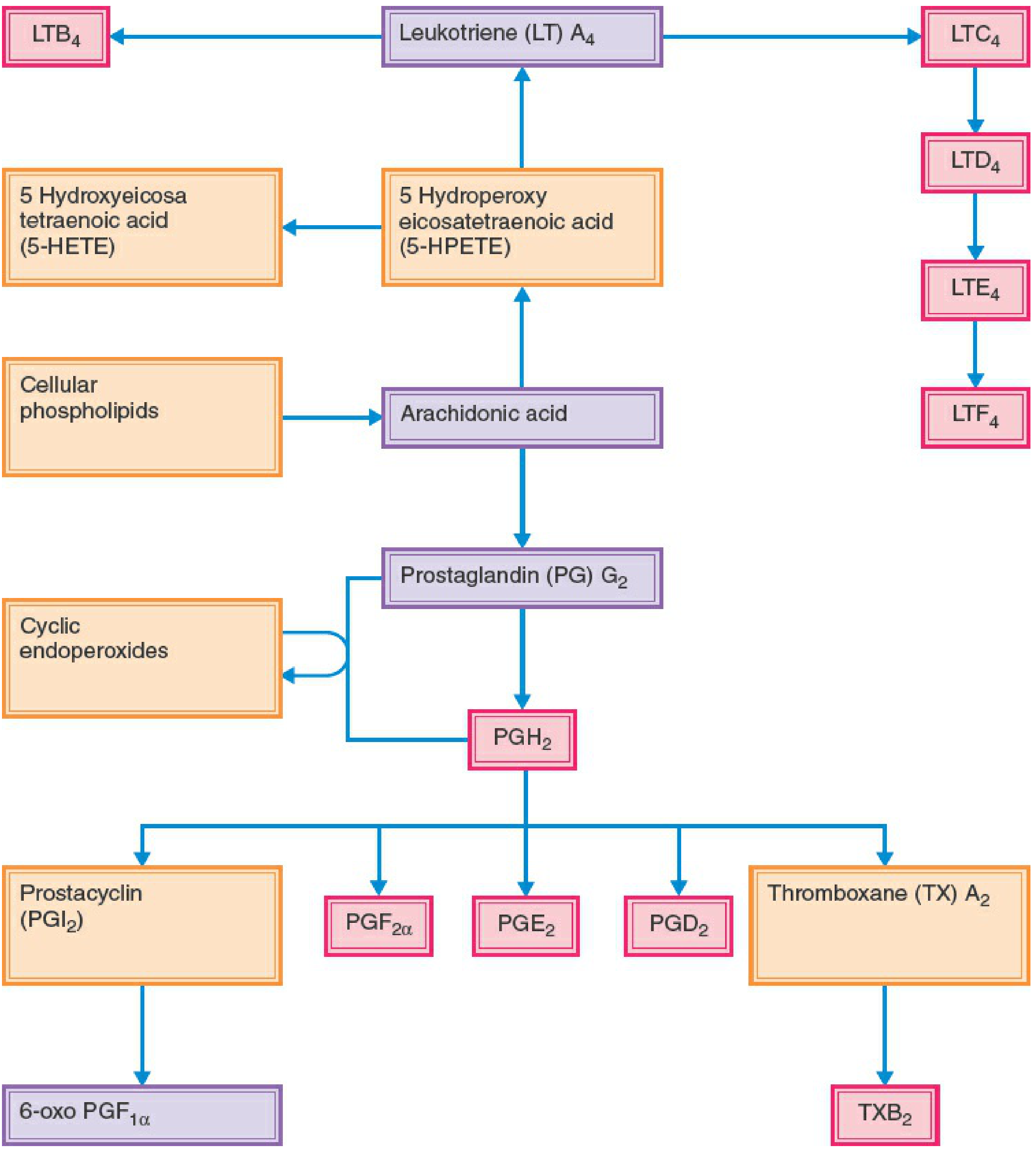
Clinical Features of Primary Dysmenorrhea
- Onset: within 6-12 months of menarche (almost always within 2 years)
- Pain: sharp, spasmodic, lower abdomen/suprapubic
- Timing: begins within hours of menstrual flow onset, peaks on day of heaviest flow, resolves within 2-3 days
- Associated symptoms: nausea, vomiting, diarrhea, headache, fatigue
- Normal pelvic examination and ultrasound
Treatment of Primary Dysmenorrhea
Step 1 - First-Line: NSAIDs (Prostaglandin Synthase Inhibitors)
NSAIDs are the treatment of choice. They inhibit cyclooxygenase (COX), reducing prostaglandin synthesis and therefore uterine cramping.
How to use:
- Start 1-3 days before expected menses onset (or at the very first sign of pain/minimal bleeding - if cycles are irregular)
- Take continuously every 6-8 hours (not on-demand) - this prevents reformation of prostaglandin byproducts
- Continue for the first 2-3 days of menstrual flow
- Allow a 4-6 month trial before concluding failure
Common NSAIDs used:
| Drug | Dose | Interval |
|---|---|---|
| Ibuprofen | 400-600 mg | Every 6-8 h |
| Naproxen sodium | 500 mg loading, then 250 mg | Every 6-8 h |
| Mefenamic acid | 500 mg loading, then 250 mg | Every 6 h |
| Diclofenac | 50 mg | Every 8 h |
If a drug from one NSAID class is not effective, try a drug from a different NSAID class before declaring NSAID failure.
Contraindications: GI ulcers, bronchospastic hypersensitivity to aspirin, renal impairment
Side effects: nausea, dyspepsia, diarrhea, occasionally fatigue (usually mild)
Step 2 - Second-Line: Hormonal Contraceptives
Equally effective to NSAIDs overall. Indicated when:
- NSAIDs fail or are contraindicated
- Patient also desires contraception (can be used as first-line in this context)
Mechanism: Hormonal contraceptives:
- Inhibit ovulation
- Decrease endometrial proliferation
- Create an endocrine milieu similar to the early proliferative phase - when prostaglandin levels are naturally lowest
Options (all effective):
- Combined OCP (estrogen + progestin) - cyclic or continuous/extended cycle (continuous is equally efficacious and reduces total number of periods)
- Progestin-only pills
- Transdermal patch
- Vaginal ring (NuvaRing)
- Injectable progestin (Depo-Provera)
- Levonorgestrel-releasing IUD (Mirena) - reduces endometrial proliferation and prostaglandin production
Combination therapy (NSAIDs + hormonal contraception) may be more effective than either alone.
Step 3 - If Steps 1+2 Fail (2-3 months)
- Weak opioids (codeine, hydrocodone) for 2-3 days/month - short-term bridge while investigating for secondary causes
- Before adding narcotics, assess and address psychological factors contributing to pain
Non-Pharmacological Options
These are useful adjuncts, particularly for those who prefer to avoid medications:
| Modality | Evidence | Mechanism |
|---|---|---|
| Heat (heating pads, warm baths) | Good evidence | Relieves uterine muscle spasm; abdominal electrical/chemical heating pads effective |
| TENS (transcutaneous electrical nerve stimulation) | Moderate evidence | Alters pain signal perception; does not directly affect contractions |
| Acupuncture | Moderate evidence | Excites receptors/nerve fibers; interacts with serotonin and endorphins |
| Exercise | Limited but positive | Increases endorphins; reduces prostaglandin sensitivity |
| Dietary changes (low-fat, omega-3) | Insufficient evidence | |
| Herbal/vitamin remedies | Insufficient evidence to recommend |
Surgical Options (Rarely Used)
Used only in severe, refractory primary dysmenorrhea:
- Laparoscopic uterine nerve ablation (LUNA)
- Presacral neurectomy - interrupts pain signal pathways
- Hysterectomy - last resort
Secondary Dysmenorrhea
Key Differences from Primary
| Feature | Primary | Secondary |
|---|---|---|
| Pelvic pathology | None | Present |
| Onset | Within hours of menses | Often 1-2 weeks before menses |
| Duration | First 2-3 days of flow | Persists until days after cessation |
| Response to NSAIDs | Good | Less reliable |
| Age | Adolescents/young adults | Any age; often older |
Common Causes
- Endometriosis (most common cause of secondary dysmenorrhea)
- Endometrial glands/stroma outside the uterus (ovaries, cul-de-sac, peritoneum)
- Associated features: dyspareunia, dyschezia (painful defecation), subfertility, cyclic pelvic pain starting up to 2 weeks before menses
- Definitive diagnosis: laparoscopy
- Adenomyosis - endometrial tissue within the myometrium; uterus often enlarged and tender
- Copper (non-hormonal) IUD - increases local prostaglandin production
- Subacute endometritis / PID
- Ovarian cysts
- Cervical stenosis
- Congenital pelvic malformations
Treatment Principle
Treat the underlying cause. NSAIDs and hormonal contraceptives are less effective in secondary dysmenorrhea than primary.
- For endometriosis: OCPs, progestins (Depo-Sub Q Provera 104), GnRH agonists (leuprolide), danazol; laparoscopic excision/ablation
- For copper IUD: switch to LNG-IUD or remove
- For PID/endometritis: antibiotics
Summary Treatment Algorithm
Dysmenorrhea
     │
     ├── Primary (normal exam + US)
     │        │
     │        ├── 1st line: NSAIDs (start 1-3 days before, q6-8h)
     │        ├── 2nd line: Hormonal contraceptives (or combine with NSAIDs)
     │        ├── Adjuncts: Heat, TENS, acupuncture
     │        └── Refractory: Short opioids / surgical nerve ablation
     │
     └── Secondary (pelvic pathology present)
              └── Treat the underlying cause
                  (endometriosis → OCP/GnRH agonist/surgery
                   copper IUD → switch to LNG-IUD
                   PID → antibiotics)
- Berek & Novak's Gynecology, p. 573-576 | Swanson's Family Medicine Review, p. 406 | Harrison's Principles of Internal Medicine 22e
This is a shared conversation. Sign in to Orris to start your own chat.