
Role of radiofrequency ablation in treatment of solid organ metastases.
Reading File
Finding Sources
Searching PubMed
"radiofrequency ablation" AND "metastases"
Reading File
Reading File
Reading File
Finding Sources
Reading File
Reading File
Finding Sources
Reading File
Finding Sources
Finding Sources
Reading File
Finding Sources
Finding Sources
Reading File
Loading Image
Loading Image
I now have comprehensive material from multiple authoritative textbooks. Let me compile the full answer.
Radiofrequency Ablation in the Treatment of Solid Organ Metastases
Mechanism of Action
RFA delivers high-frequency (460-500 kHz) alternating current through a needle-like electrode placed directly into tumor tissue. The alternating electrical field causes ionic agitation and frictional heating within a few millimeters of the probe tip. When tissue temperature is sustained above 45°C, coagulative necrosis results; temperatures of 60°C cause immediate cell death through protein denaturation. Thermistors within the electrode allow close temperature regulation. A single 3-5 cm ablation zone takes approximately 15-30 minutes to produce.
RFA probe designs (expandable multineedle array with deployed tines):
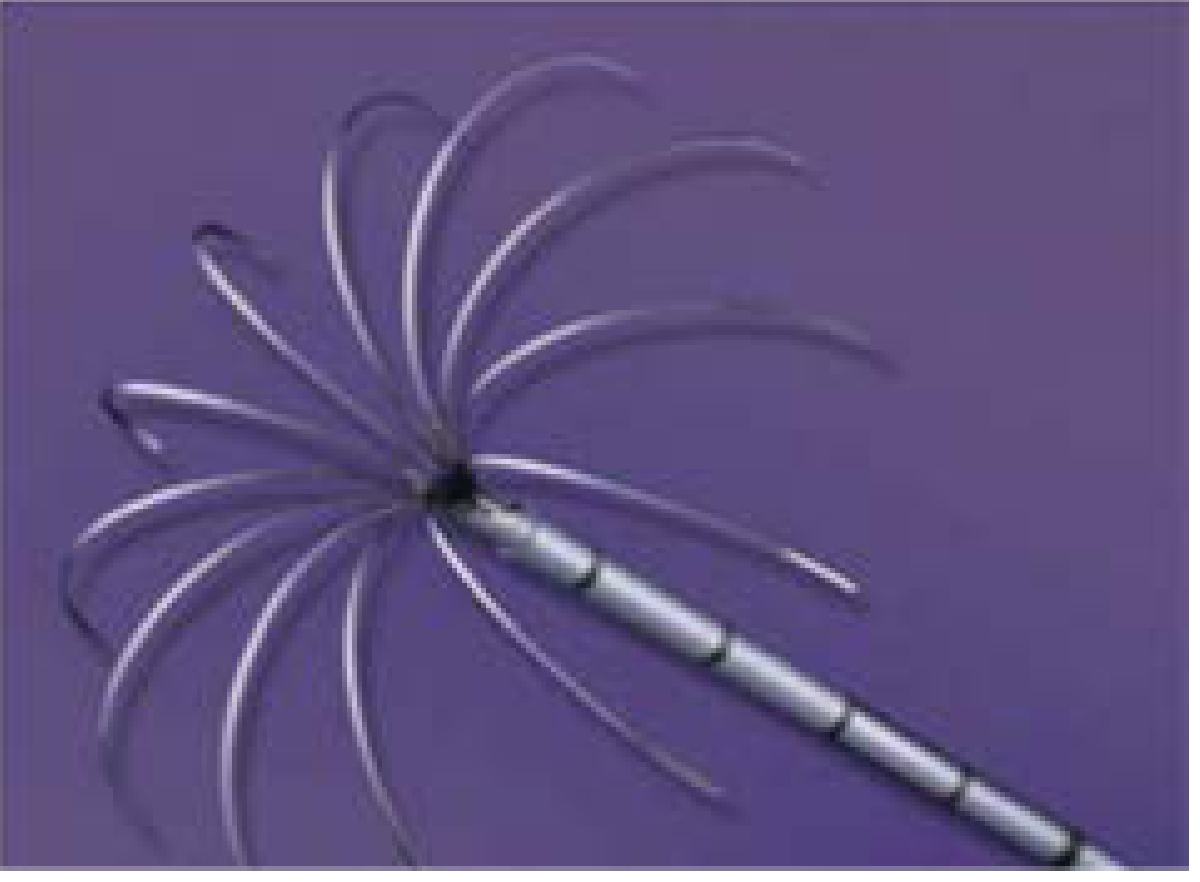
Fig. 1: Expandable multineedled RFA probe with array deployed - Current Surgical Therapy 14e, p. 434
StarBurst expandable RFA needle devices (Grainger & Allison's):
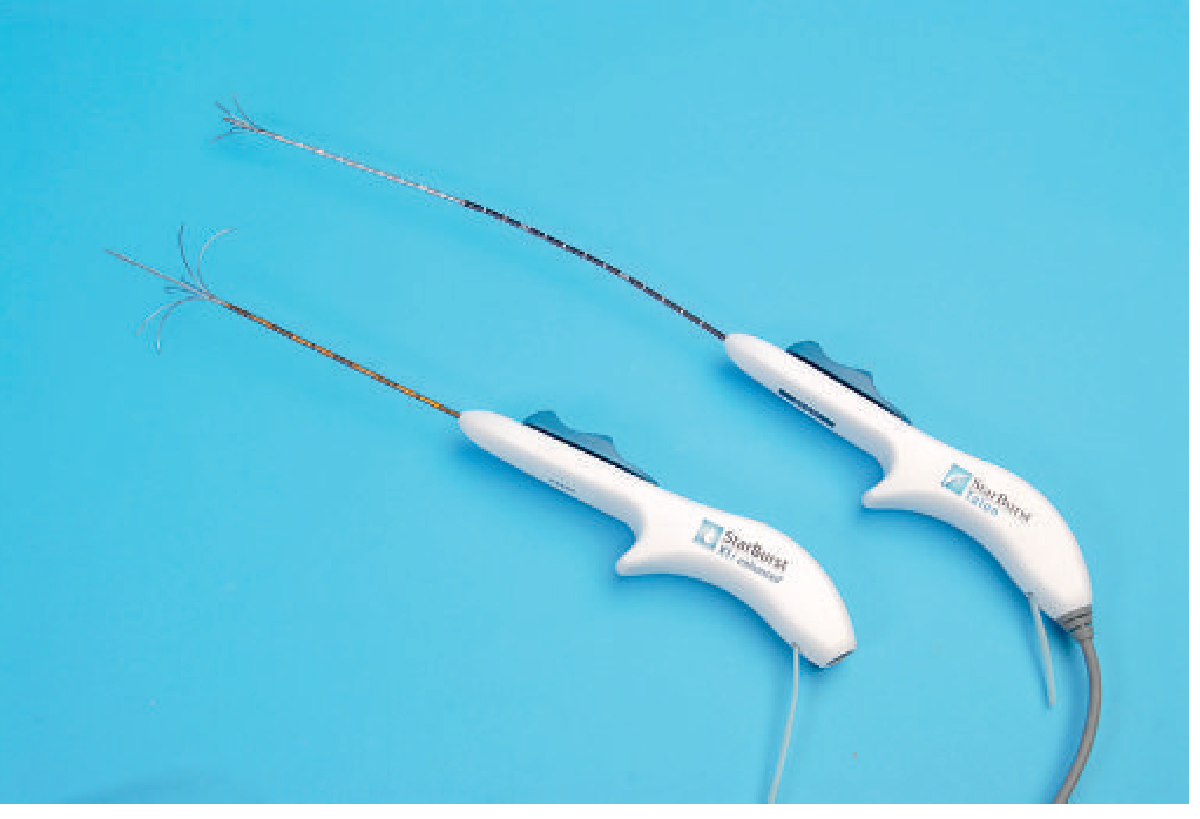
Fig. 2: Clustered/expandable probe arrays developed to overcome single-probe RFA limitations - Grainger & Allison's Diagnostic Radiology, p. 2101
Technical Approaches
RFA can be performed via three routes:
- Percutaneous - under US or CT guidance (ideal for non-surgical candidates)
- Laparoscopic
- Open (laparotomy) - often combined with hepatic resection
General anesthesia is typically used for patient comfort and to minimize motion artifact during image guidance.
Liver Metastases (Colorectal Liver Metastases - CLM)
RFA is the most widely used liver ablative modality. The liver is the most common metastatic site for colorectal cancer; approximately one-third of patients have liver metastases at diagnosis.
How it works in the liver: A generator conducts 5000-9000 MHz alternating current between the intratumoral electrode and a grounding pad, producing heat via ion agitation leading to coagulative necrosis.
Patient selection and outcomes:
- Best results are seen with solitary lesions <3 cm
- Efficacy decreases as tumor size increases - retrospective data show higher local recurrence rates with tumors >3.5 cm
- 5-year OS after RFA is estimated at 18-22%
- Overall, RFA has been shown inferior to surgical resection for both local recurrence and OS; however, comparison studies are non-randomized and RFA patients were often non-surgical candidates
- No prospective randomized controlled trials comparing RFA with resection have been performed in CLM
The "heat sink" problem: RFA is less effective for metastases near large vascular structures. Continuous blood flow maintains physiologic temperatures along vessel walls, dissipating heat away from the tumor. This is a key limitation compared to microwave ablation.
Complications: Major complications occur in about 2.2% of patients (Livraghi series of 3554 lesions). These include intrahepatic abscess, hemorrhage, neoplastic seeding, and intestinal perforation. Post-ablation syndrome (flu-like malaise, low-grade fever, myalgias) occurs in approximately one-third of patients and is self-limiting.
- Current Surgical Therapy 14e, p. 433-435
Pulmonary Metastases
RFA is the most commonly performed thermal ablation procedure for lung tumors. The lung is considered particularly well-suited for RFA because it concentrates thermal energy focally within the tumor, with little spread to adjacent aerated normal lung parenchyma.
Indications and selection:
- Tumors ≤3 cm respond better
- Peripheral tumors surrounded by parenchyma and away from hilar structures are ideal targets
- Even tumors adjacent to thoracic aorta or pulmonary vessels can be treated safely in experienced hands - the cooling effect of flowing blood may actually protect large vessels from thermal damage
Limitations:
- Pneumothorax risk is the major complication - rates as high as 50% have been reported, so bilateral lesions should NOT be treated in the same session
- RFA for lung metastases is gaining increased acceptance but its role is less clearly defined than for hepatic or renal tumors
Position in the treatment algorithm: For isolated lung metastases, resection remains the gold standard when feasible. RFA or stereotactic ablative body radiotherapy (SABR) are excellent alternatives in non-surgical candidates.
- Murray & Nadel's Textbook of Respiratory Medicine, p. 2611-2613
Renal Metastases / Renal Cell Carcinoma
RFA has received increasing interest in urology for treating renal tumors (both primary RCC and metastatic lesions). Key technical points:
-
Monopolar devices require a grounding electrode pad on the patient's back; bipolar devices require two needle probes flanking the tumor
-
Energy is conducted poorly through fat, providing natural protection to surrounding structures (rectal wall, neurovascular bundles in the pelvis)
-
Either impedance-based or temperature-based monitoring systems can be used
-
Percutaneous or laparoscopic approaches are both available
-
Hinman's Atlas of Urologic Surgery, p. 835-841
Bone and Spinal Metastases
RFA is used in a palliative role for painful bone metastases, particularly in lesions that are radioiodine-nonavid or radioresistant (e.g., renal cell carcinoma metastases). A 2025 systematic review (PMID 40558243) evaluated RFA specifically for painful spinal metastases and confirmed its role in pain palliation.
Indications include:
- Painful osseous metastases not amenable to or failing radiation
- Radioiodine-nonavid thyroid cancer bone/lung metastases
- Metastatic renal cell carcinoma (typically radioresistant)
Palliative embolization is often used adjunctively for hypervascular bone metastases (e.g., renal cell, thyroid).
- Sabiston Textbook of Surgery; Mulholland and Greenfield's Surgery
Adrenal Metastases
Percutaneous image-guided RFA is used for adrenal metastases at selected centers, with preliminary results showing feasibility and efficacy (referenced in Campbell Walsh Wein Urology). The adrenal gland is a common site of metastases from lung, renal, and breast primaries.
Limitations of RFA vs. Microwave Ablation (MWA)
Understanding RFA's limitations contextualizes when to choose MWA:
| Feature | RFA | MWA |
|---|---|---|
| Ablation time | ~30 min | 2-5 min |
| Max temperature near probe | 100-110°C | Higher |
| Heat sink effect | Significant limitation | Less affected |
| Simultaneous multi-probe use | Limited | Yes |
| Tissue charring / impedance | Can increase, limiting efficacy | Less charring |
| Larger lesions | Less effective | More suitable |
| Ablation zone (single probe) | 3-5 cm | Comparable or larger |
On meta-analysis, disease-free survival and OS rates are comparable between MWA and RFA for colorectal liver metastases.
- Current Surgical Therapy 14e, p. 434-435
General Patient Selection Criteria for RFA of Metastases
- Unresectable disease (primary indication) - medical co-morbidities, inadequate hepatic reserve, bilateral lung metastases
- Lesion size - ideally <3-4 cm for liver/lung, smaller for other sites
- Number of lesions - oligometastatic disease preferred (typically ≤4-5 lesions)
- Location - not immediately adjacent to major bile ducts, bowel, or (in liver) large vessels where heat sink compromises efficacy
- Controlled primary disease
- Adjunct to resection - RFA can be combined with hepatic resection to treat additional unresectable lesions during the same operation
Recent Evidence (2023-2026)
| Study | Key Finding |
|---|---|
| SAGES/AHPBA guidelines 2023 (PMID 37957297) | Supports RFA/MWA for hepatocellular carcinoma or colorectal liver metastases <5 cm |
| Yang et al. meta-analysis 2023 (PMID 37869011) | Survival benefit for RFA ± chemotherapy in lung cancer/pulmonary metastases |
| Liu et al. meta-analysis 2025 (PMID 39727205) | RFA vs. MWA for lung tumors - comparable outcomes, MWA trending superior in some metrics |
| Scaggiante et al. systematic review 2025 (PMID 40558243) | RFA of painful spinal metastases: effective palliation |
Summary
RFA is a well-established, minimally invasive technique for treating solid organ metastases in patients who are not surgical candidates or in whom ablation complements resection. Its greatest evidence base is in colorectal liver metastases and pulmonary metastases, with expanding roles in renal, bone, adrenal, and thyroid cancer metastases. Key limitations include the heat sink effect near large vessels, reduced efficacy for lesions >3.5 cm, and the pneumothorax risk in pulmonary applications. MWA is increasingly preferred for lesions near vessels or requiring larger ablation zones, though long-term oncologic outcomes remain comparable between the two modalities.
This is a shared conversation. Sign in to Orris to start your own chat.