
How to manage a scorpion sting patient in detail
I'll start by reading the medical library skill, then search for comprehensive information on scorpion sting management.
Reading File
Now let me search the medical library and PubMed in parallel for comprehensive scorpion sting management information.
Finding Sources
Finding Sources
Searching PubMed
scorpion envenomation management treatment
Good - I found key sources. Let me now read the most relevant textbook sections in parallel.
Reading File
Reading File
Reading File
I need the detailed forensic/toxicology textbook section on scorpion sting management. Let me search for that specifically.
Finding Sources
Finding Sources
Searching the Web
scorpion sting management clinical guidelines treatment antivenom prazosin 2024
Excellent! I found Harrison's 22E (2025) and two key textbooks. Let me now read all three in parallel.
Reading File
Reading File
Reading File
I need to read more of the Harrison's treatment section and the Tintinalli's full table. Let me get those.
Reading File
Reading File
I now have comprehensive information from multiple authoritative sources. Let me also fetch the scorpion image from Andrews' to include in the answer.
Loading Image
I now have comprehensive, multi-source data to compile a detailed answer. Here is the complete management guide:
Scorpion Sting: Detailed Clinical Management
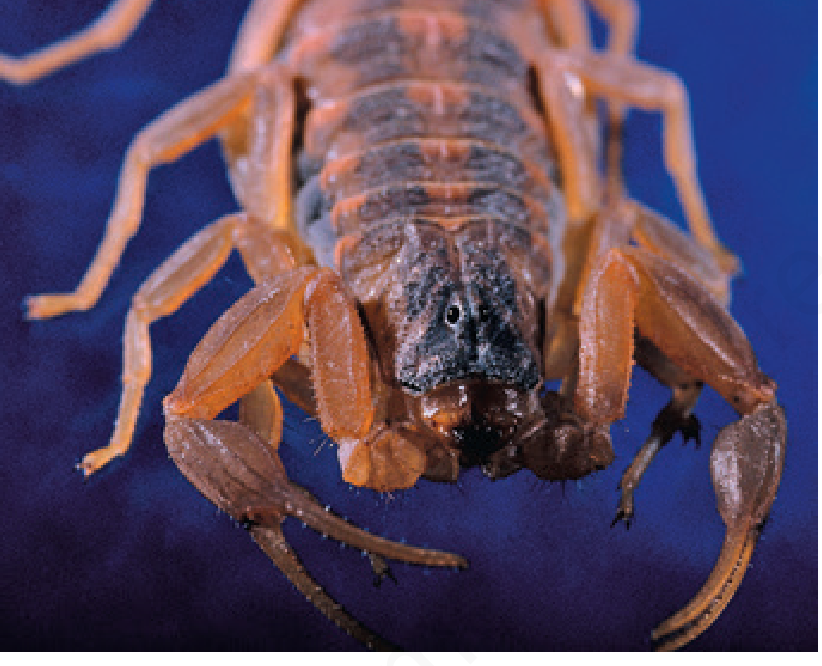
1. Background and Epidemiology
Scorpions are nocturnal arachnids that hide in crevices, shoes, clothing, and bedding. Of ~1,000 known species, approximately 30 produce venom lethal to humans. Medically important species include:
| Species | Region | Primary Toxicity |
|---|---|---|
| Centruroides sculpturatus | USA (Southwest) | Neurotoxic |
| Mesobuthus tamulus (Buthotus tamulus) | India | Cardiovascular |
| Leiurus quinquestriatus | Middle East, North Africa | Cardiovascular (50% mortality in children) |
| Androctonus spp. | North Africa, Middle East | Cardiovascular |
| Tityus serrulatus | Brazil | Cardiovascular + pancreatic |
| Tityus trinitatis | Trinidad | Acute pancreatitis |
| Hemiscorpius lepturus | Iran | Cytotoxic, hemolysis, renal failure |
| Parabuthus/Buthotus | South Africa | CNS toxicity |
- Harrison's Principles of Internal Medicine, 22E (2025), p. 3778
2. Venom Composition and Mechanism
Scorpion venom is a clear, colorless toxalbumin consisting of:
- Neurotoxins - act on preganglionic/postganglionic nerve terminals and muscle endplates; keep voltage-gated sodium channels open, causing prolonged depolarization
- Hemolysins, agglutinins, hemorrhagins
- Proteinases, phospholipase A
- Leucocytolysins, coagulins
The key mechanism is persistent sodium channel opening, leading to:
- Somatic nervous system hyperexcitability - muscle twitching, fasciculations
- Autonomic (sympathetic + parasympathetic) overstimulation - catecholamine surge
- Cardiovascular toxicity - arrhythmias, pulmonary edema, myocardial depression
- P.C. Dikshit Textbook of Forensic Medicine and Toxicology
- Tintinalli's Emergency Medicine, p. 1397
3. Clinical Features
Local Effects
- Red wheal with a central puncture hole
- Severe burning pain radiating from the site
- Swelling, redness, edema
- Tap test positive: pain/hyperesthesia worsens on tapping the site (pathognomonic for Centruroides)
- Minimal or no visible change in neurotoxic species (despite severe systemic effects)
Systemic Effects - Graded by Severity
Grade I - Local only:
- Pain, paresthesia, burning at sting site
- No systemic involvement
Grade II - Mild systemic:
- Numbness spreading from sting site
- Diaphoresis, chills, low-grade fever, headache
- Nausea, giddiness
Grade III - Neuromuscular/Autonomic:
- Restlessness, agitation, anxiety
- Profuse salivation and lacrimation (hypersalivation)
- Rhinorrhea, diaphoresis
- Slurred speech, blurred vision
- Abnormal eye movements, nystagmus
- Muscle twitching, jerking (can mimic seizures)
- Tongue fasciculations
- Loss of pharyngeal muscle control - airway compromise risk
Grade IV - Severe/Life-threatening:
-
Tachycardia, arrhythmias
-
Hypertension (catecholamine surge)
-
Pulmonary edema (cardiogenic)
-
Cardiogenic shock, myocardial depression
-
Rhabdomyolysis, acidosis
-
Hyperthermia
-
Acute pancreatitis (Tityus spp.)
-
Hemolysis, hemoglobinuria, acute kidney injury (H. lepturus)
-
Fatal respiratory arrest (most common in young children and elderly)
-
Death in children from pulmonary edema and respiratory depression
-
Harrison's 22E (2025), p. 3778; Tintinalli's Emergency Medicine, p. 1397
4. Diagnosis
- Clinical - based on history and examination; no specific confirmatory test
- Tap test - tapping the sting site worsens pain/hyperesthesia (Centruroides)
- Lab workup in severe envenomation:
- CBC, renal function tests (AKI from H. lepturus)
- Serum amylase/lipase (pancreatitis from Tityus)
- Cardiac enzymes, ECG (arrhythmias, myocardial injury)
- ABG (respiratory compromise)
- Urine for myoglobinuria/hemoglobinuria
- Blood glucose (hypoglycemia possible)
- LFTs (hepatotoxicity)
- Coagulation profile
5. Treatment - Step by Step
A. Immediate First Aid (Scene/Pre-hospital)
- Keep patient calm - reduces absorption of venom
- Apply cold packs (NOT hot packs) to the sting site - retards systemic absorption; hot packs cause vasodilation and must NOT be used
- Apply pressure dressing above the sting site
- Do NOT apply tourniquet for routine cases (older sources recommend tourniquet, but this is outdated for most envenomations)
- Immobilize the affected limb
- Identify the scorpion if possible (species identification guides treatment)
- Do NOT suck out venom - ineffective and potentially harmful
B. Local/Wound Management
- Clean the wound with weak potassium permanganate, borax, or antiseptic solution
- Local anesthetic infiltration: Lignocaine (lidocaine) 2% WITHOUT epinephrine injected in and around the sting site - provides excellent pain relief
- For mild local effects: Acetaminophen (paracetamol) or NSAIDs orally
- Avoid opioids if possible, as they appear to increase toxicity and, when used for neuromuscular symptoms, require close monitoring for respiratory compromise
C. Pain Management
- Oral paracetamol/NSAIDs for mild cases
- Local infiltration of 2% lidocaine without epinephrine
- Antihistamines (oral/IV) for local reactions and allergic component
- Opioids only in monitored settings with airway management available
D. Sedation and Neuromuscular Control
- Benzodiazepines (midazolam): A continuous IV infusion of midazolam reduces agitation and involuntary movements - drug of choice for neuromuscular hyperexcitability
- Short-acting benzodiazepines are preferred for sedation
- All sedatives in patients with neuromuscular symptoms require close monitoring for respiratory compromise
E. Cardiovascular Management
| Manifestation | Drug | Notes |
|---|---|---|
| Hypertension + pulmonary edema | Prazosin (alpha-blocker) | Counteracts adrenergic surge - first choice |
| Hypertension | Nifedipine, nitroprusside, hydralazine | Alternatives if prazosin unavailable |
| Pulmonary edema | Nitroglycerin or prazosin | Plus antivenom if available |
| Cardiogenic shock | Dobutamine | For cardiac dysfunction support |
| Bradyarrhythmia/bradycardia | Atropine | Controls dangerous bradydysrhythmias |
| Cholinergic (salivation, sweating, bradycardia) | Atropine | Especially Tityus spp. |
| Tachycardia/arrhythmia | Antiarrhythmics, calcium channel blockers, antiadrenergic agents | Species-dependent |
- Calcium gluconate 10 mL of 10% solution IV - to combat muscular cramps
- IV fluids: 5% dextrose saline 500 mL IV for shock management
- Glucocorticoids IM - for shock
F. Antivenom (Antivenin)
- Most effective specific intervention when given early
- Species-specific - identify the scorpion or administer based on most common local species
- Route: IV administration is preferred - rapidly reverses cranial-nerve dysfunction and muscular symptoms within 4 hours
- FDA-approved: Equine-derived C. sculpturatus IgG F(ab')₂ antivenom (Anascorp) - available in the USA, reserved for patients with severe systemic symptoms due to high cost
- In a randomized double-blind trial in children with significant neurotoxic effects from Centruroides stings, IV antivenom resolved the clinical syndrome within 4 hours and significantly reduced the need for concomitant sedation
- Note: Antivenom binds free toxin but does not readily reverse already-established injury; give early
- Watch for: immediate allergic reactions and delayed serum sickness (all animal-derived antivenoms)
- Without species identification, give presumptively based on most common local species
G. Respiratory and Airway Management
- Hypersalivation + cranial nerve dysfunction = high airway compromise risk
- Position the patient and manage secretions
- Supplemental oxygen if indicated
- Intubation and mechanical ventilation if:
- Respiratory arrest or compromise
- Inability to protect the airway
- Severe respiratory depression from sedation
H. Monitoring
- Continuous cardiac monitoring (ECG) in all Grade III-IV patients
- Vital signs - pulse, BP, SpO₂, temperature
- Urine output monitoring
- Serial neurological assessment
I. Special Populations
- Young children: Highest risk for severe systemic toxicity; treat as medical emergencies at the first sign of systemic symptoms; fatal respiratory arrest is most common in children and elderly
- Elderly: High risk of fatal respiratory arrest
- Pregnant women: Antivenom safety must be weighed; supportive care prioritized
6. Disposition
| Severity | Disposition |
|---|---|
| Local effects only | Discharge home with instructions to return for systemic symptoms |
| Mild systemic, stable | Observe in ED for 4-6 hours, reassess |
| Moderate-severe systemic | Hospital admission, ICU if cardiorespiratory compromise |
| Respiratory/cardiovascular failure | ICU, possible intubation |
7. Prevention
- Use chemical pesticides to reduce scorpion populations near dwellings
- Remove debris, wood piles, and loose rocks around homes (hides and breeding grounds)
- Shake out shoes, clothing, and bedding before use in endemic areas
- Wear gloves when gardening or moving rocks
8. Summary of Key Drug Choices
| Drug | Indication |
|---|---|
| Lidocaine 2% (local, without epi) | Local pain relief |
| Midazolam (IV infusion) | Agitation, muscle hyperexcitability |
| Prazosin | Hypertension, pulmonary edema (adrenergic crisis) |
| Atropine | Bradyarrhythmia, cholinergic toxicity |
| Dobutamine | Cardiogenic shock |
| Antivenom (species-specific, IV) | Severe/systemic envenomation |
| Calcium gluconate IV | Muscular cramps |
| Benzodiazepines | Sedation, neuromuscular symptoms |
| Paracetamol/NSAIDs | Mild pain |
Sources:
- Harrison's Principles of Internal Medicine, 22E (2025) - Scorpion Stings, pp. 3778-3779
- Tintinalli's Emergency Medicine: A Comprehensive Study - Table 211-2, pp. 1397-1398
- Andrews' Diseases of the Skin - Scorpion Sting
- P.C. Dikshit Textbook of Forensic Medicine and Toxicology - Scorpion Venom
- Medical Microbiology 9e - Treatment, Prevention, and Control
- Recent systematic review: Scorpion envenomation-associated myocarditis (2023) - PMID 37018229
This is a shared conversation. Sign in to Orris to start your own chat.