Add a note on medical social worker psm parks spm
Medical Social Work and Medical Social Worker
Medical Social Work - Background
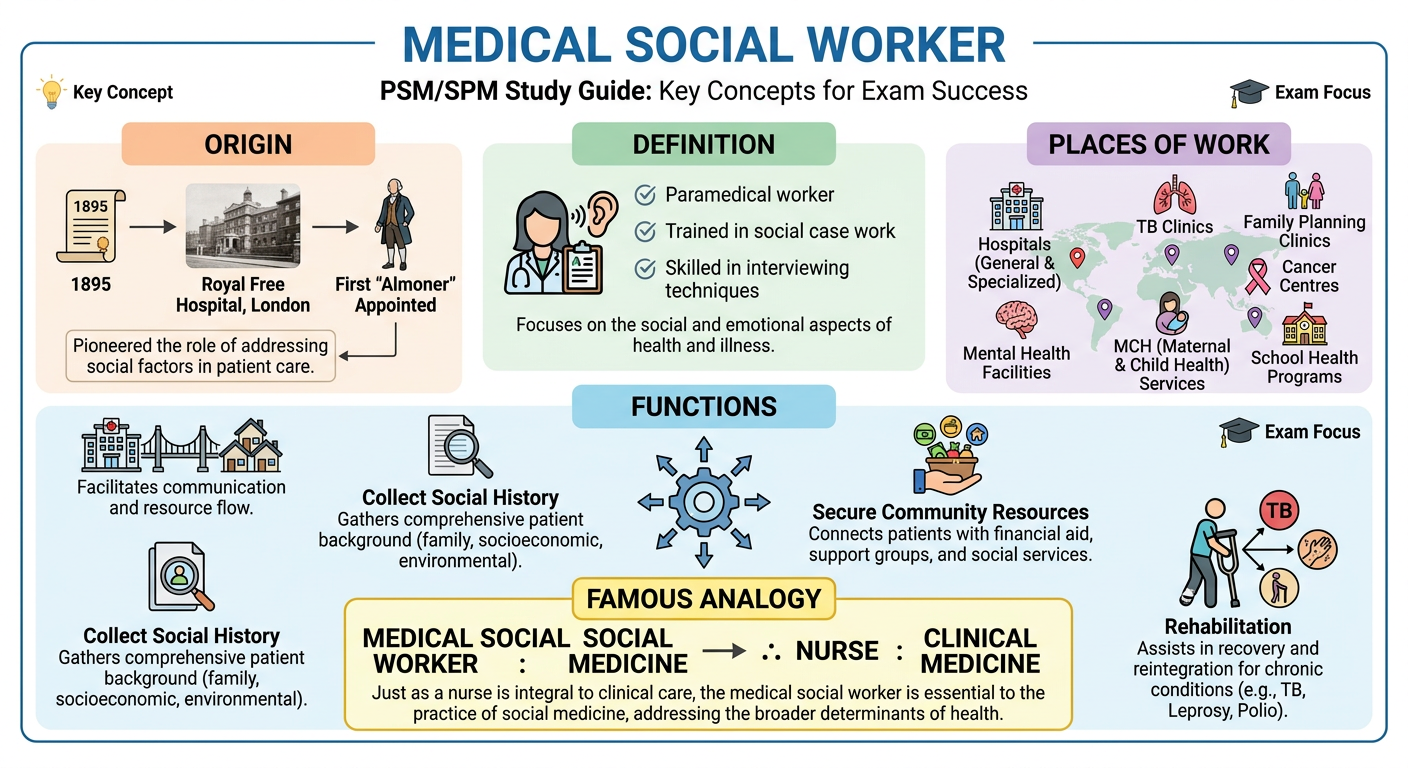
- Medical social work had its beginning in England in 1895 when a social worker known as "Almoner" was appointed at the Royal Free Hospital, London.
- Later, the term was expanded in the United States into "medical social work."
- Today it has grown into an important field of social work and an integral part of medicine.
- Arriving at a social diagnosis
- Treating illness
- Estimating the prognosis
Medical Social Worker - Definition
- Social case work
- The art of interviewing people
Places of Employment
- Hospitals
- Tuberculosis clinics
- Family planning clinics
- Cancer control centres
- Mental health services
- Maternal and child welfare services
- School and university health services
Functions / Role
- Link between institution and community - forms a bridge between the hospital/organization and the community.
- Visit the family - probes into the personal, economic, and social causes of illness.
- Collect social history of the patient - supplements the medical history.
- Secure help for the patient through community resources.
- Rehabilitation - in chronic disabling illnesses like tuberculosis, leprosy, and poliomyelitis, the medical social worker helps in rehabilitation of the patient.
- Analysis and correction of social and emotional factors affecting health.
- Supplies information fundamental to formulating a complete diagnosis and directing treatment.
Analogy (Important for exams)
"A medical social worker bears the same relationship to the effectiveness of social medicine, as does the nurse to clinical medicine."
Key Points for Exam
| Point | Detail |
|---|---|
| Origin | 1895, Royal Free Hospital, London; worker called "Almoner" |
| Main technique | Case work |
| Category | Paramedical worker |
| Key role | Social diagnosis + rehabilitation |
| Analogy | Medical social worker : Social medicine :: Nurse : Clinical medicine |
Create an image.
What should the image be about?
What style would you prefer?
Medical study infographic titled "Medical Social Worker" for PSM/SPM students. Key sections: Origin (1895, Royal Free Hospital London, "Almoner"), Definition (paramedical worker trained in social case work and interviewing), Places of Work (hospitals, TB clinics, family planning clinics, cancer centres, mental health, MCH services, school health), Functions (link between institution and community, collect social history, secure community resources, rehabilitation in TB/leprosy/polio), and the famous analogy "Medical Social Worker : Social Medicine :: Nurse : Clinical Medicine". Clean, colorful, easy to memorize, exam-focused layout.
Create an infographic visual image for the topic Public Private Partnership from the Parks PSM textbook. Okay.
Medical PSM study infographic titled "Public Private Partnership (PPP) in Health" for Park's Textbook of Preventive and Social Medicine students. Include these clearly labeled sections: 1. DEFINITION: Collaboration between government (public sector) and private sector to improve health care delivery. PPP = Government + Private Sector working together. 2. WHY PPP? - 75% of health services provided by private sector in India - Government alone cannot meet healthcare demand - PPP fills gaps in public health delivery 3. KEY AREAS WHERE PPP IS USED: - RCH II Programme (Reproductive & Child Health) - preventive and curative services - NVBDCP (National Vector Borne Disease Control Programme) - BCC and anti-larval measures - National Cancer Control Programme - laboratory investigations, mammography, biopsy - NACP (HIV/AIDS) - PPP-ICTCs (Integrated Counselling & Testing Centres) - National Programme for Control of Blindness - eye care in underserved areas - Family Planning - private practitioners, voluntary orgs, industrial organizations 4. MECHANISMS OF PPP: - Grants-in-aid to voluntary & industrial organizations - Family welfare centres and postpartum centres run by NGOs - Scheme for private medical practitioners in family welfare - Subsidized condom retail outlets (nationwide) - PPP-ICTCs in private hospitals, labs, NGOs 5. BENEFITS: - Extends services beyond government delivery system - Better outreach to underserved communities - Supplements government resources - Improves availability and quality of health services Clean, colorful, easy-to-read infographic layout with icons and color-coded boxes. Exam-focused PSM style.
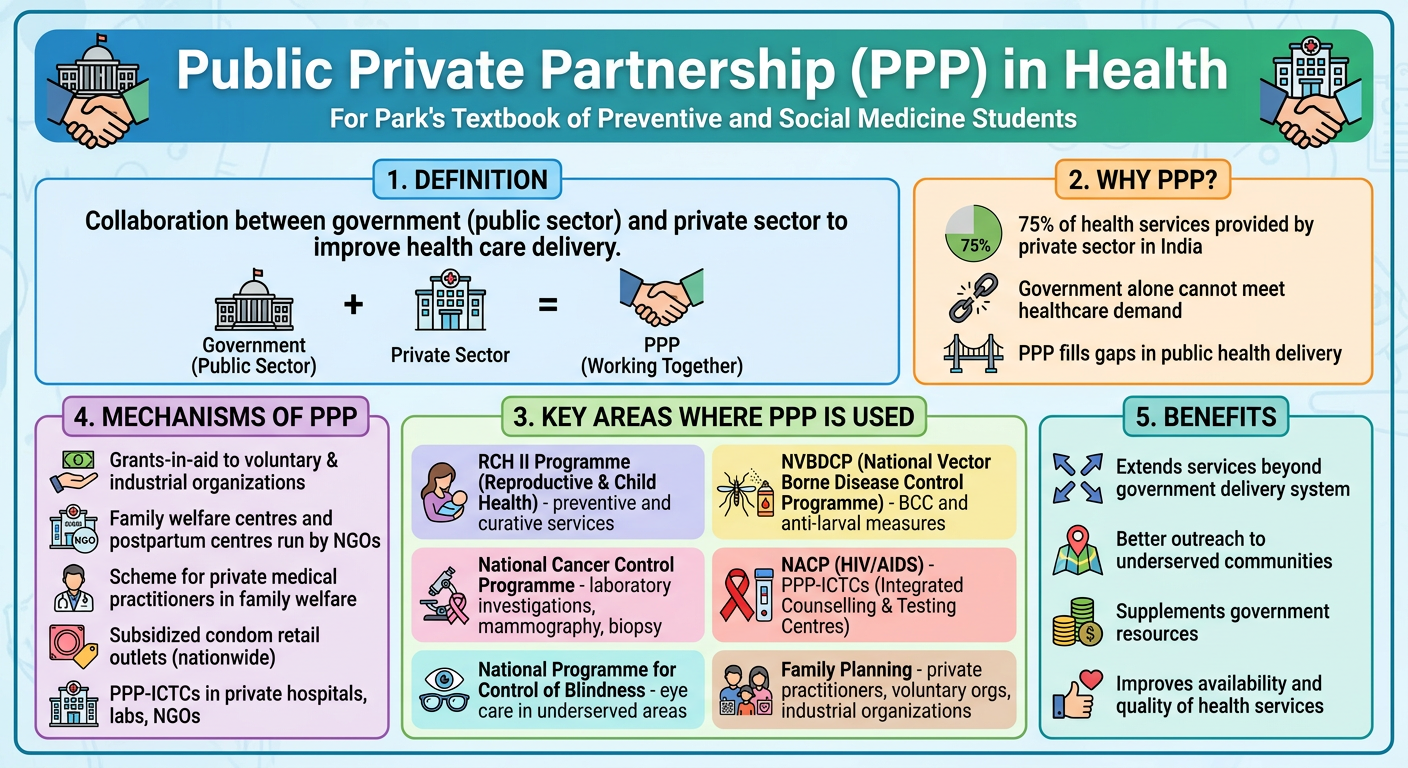
- Definition - Government + Private sector collaboration
- Why PPP - 75% of health services are provided by the private sector in India
- Key national programmes where PPP is applied (RCH II, NVBDCP, Cancer Control, NACP/HIV, Blindness Control, Family Planning)
- Mechanisms - Grants-in-aid, PPP-ICTCs, subsidized condom outlets, private practitioner schemes
- Benefits - Extends services, improves outreach, supplements resources
Create an image for the question, "Health for all 2000" program. From PSM textbook. From Parks PSM textbook.
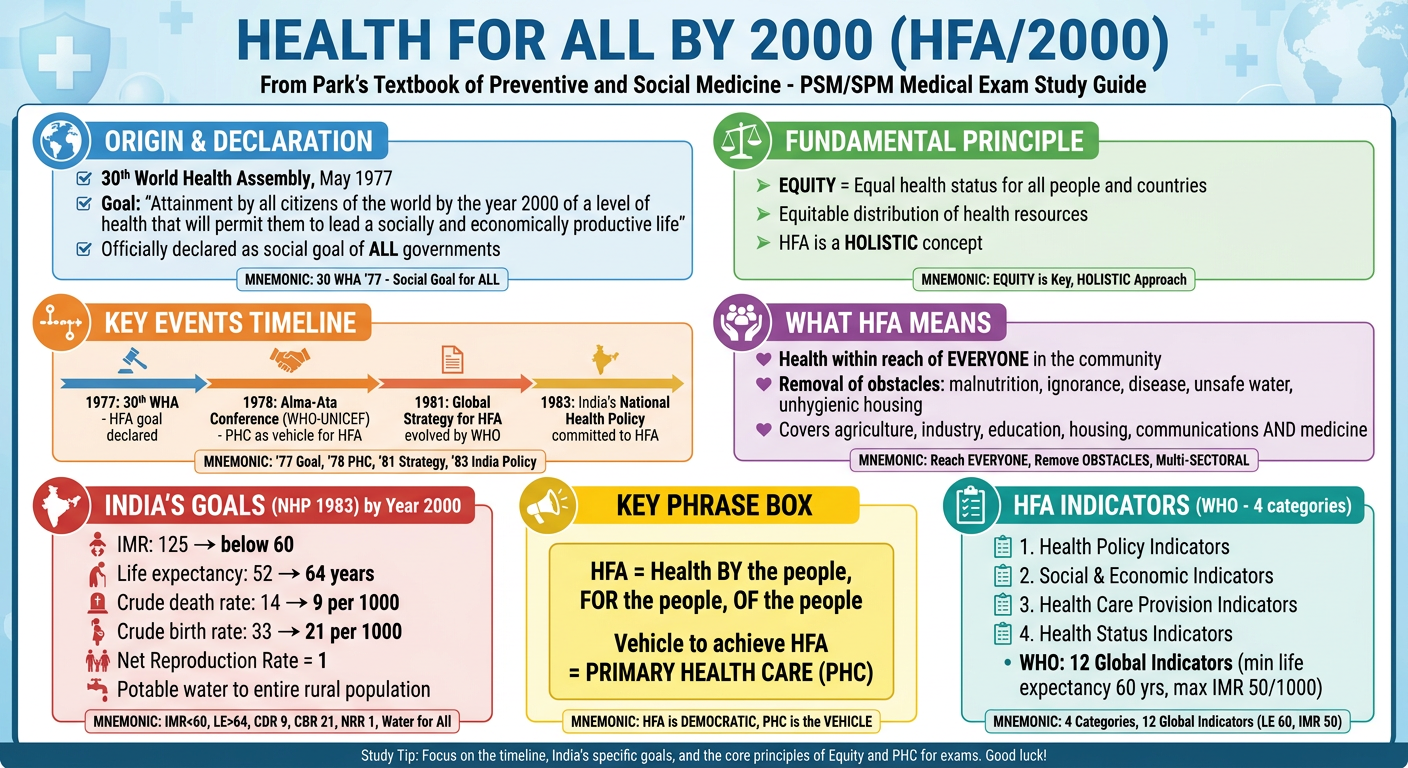
PSM/SPM medical exam study infographic titled "HEALTH FOR ALL BY 2000 (HFA/2000)" from Park's Textbook of Preventive and Social Medicine. Clean, colorful, exam-focused layout with clearly labeled sections and icons: SECTION 1 - ORIGIN & DECLARATION: - 30th World Health Assembly, May 1977 - Goal: "Attainment by all citizens of the world by the year 2000 of a level of health that will permit them to lead a socially and economically productive life" - Officially declared as social goal of ALL governments SECTION 2 - FUNDAMENTAL PRINCIPLE: - EQUITY = Equal health status for all people and countries - Equitable distribution of health resources - HFA is a HOLISTIC concept SECTION 3 - KEY EVENTS TIMELINE: - 1977: 30th WHA - HFA goal declared - 1978: Alma-Ata Conference (WHO-UNICEF) - PHC as vehicle for HFA - 1981: Global Strategy for HFA evolved by WHO - 1983: India's National Health Policy committed to HFA SECTION 4 - WHAT HFA MEANS: - Health within reach of EVERYONE in the community - Removal of obstacles: malnutrition, ignorance, disease, unsafe water, unhygienic housing - Covers agriculture, industry, education, housing, communications AND medicine SECTION 5 - INDIA'S GOALS (National Health Policy 1983) by Year 2000: - IMR: 125 → below 60 - Life expectancy: 52 → 64 years - Crude death rate: 14 → 9 per 1000 - Crude birth rate: 33 → 21 per 1000 - Net Reproduction Rate = 1 - Potable water to entire rural population SECTION 6 - HFA INDICATORS (WHO - 4 categories): 1. Health Policy Indicators 2. Social & Economic Indicators 3. Health Care Provision Indicators 4. Health Status Indicators - WHO: 12 Global Indicators (min life expectancy 60 yrs, max IMR 50/1000) SECTION 7 - KEY PHRASE BOX: "HFA = Health BY the people, FOR the people, OF the people" "Vehicle to achieve HFA = PRIMARY HEALTH CARE (PHC)" Bright colors, exam mnemonics, icons for each section, professional medical infographic style.
| Topic | Key Point |
|---|---|
| Origin | 30th World Health Assembly, May 1977 |
| Fundamental principle | Equity - equal health status for all |
| Vehicle for HFA | Primary Health Care (PHC) - Alma-Ata 1978 |
| Global strategy | Evolved by WHO in 1981 |
| India's commitment | National Health Policy 1983 |
| India's goals by 2000 | IMR <60, Life expectancy 64 yrs, CBR 21, CDR 9 |
| WHO global indicators | 12 indicators (min LE 60 yrs, max IMR 50/1000) |
| HFA indicators | 4 categories: Policy, Social/Economic, Health care provision, Health status |

Create three separate images for these three separate questions. These are the VSAQs asked in, in my university exams. Answer only from the Parks PSM textbook.
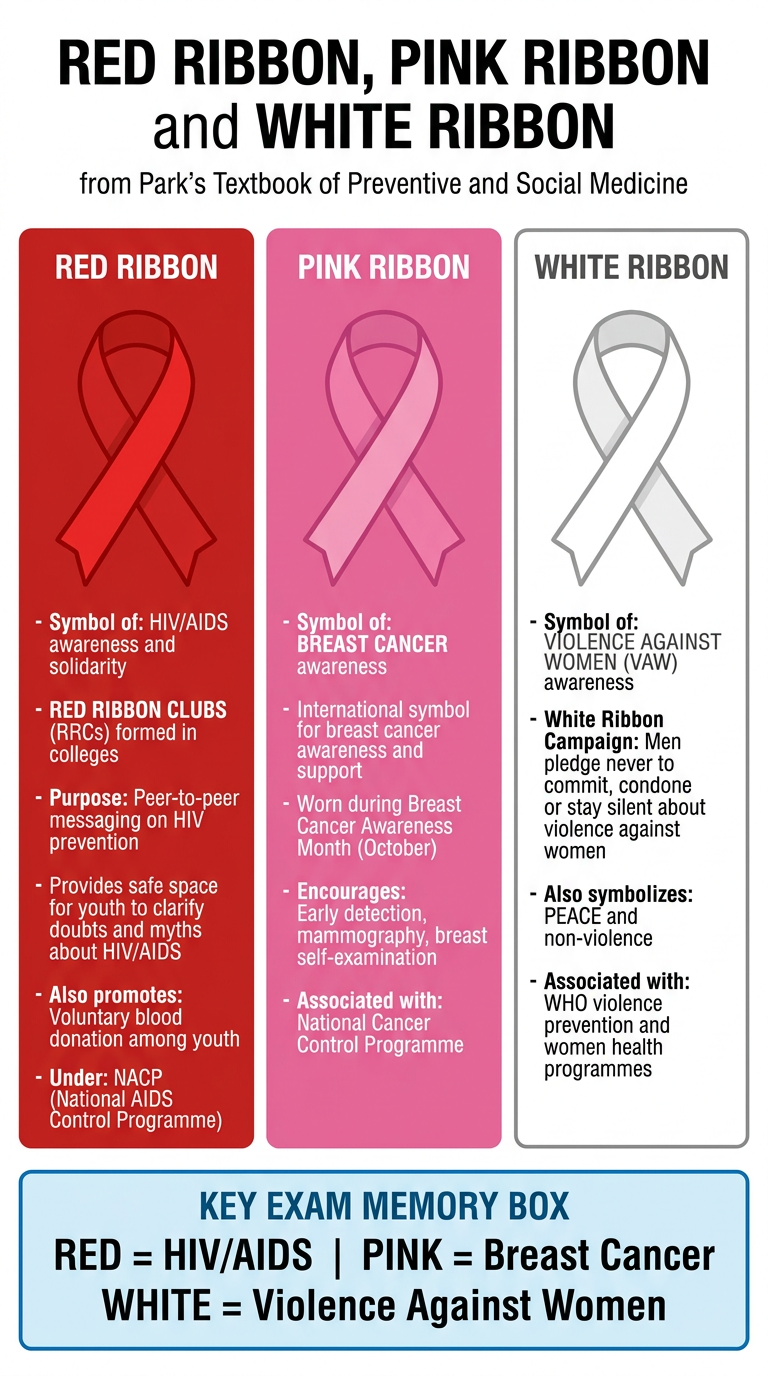
PSM medical exam VSAQ infographic titled "RED RIBBON, PINK RIBBON & WHITE RIBBON" for Park's Textbook of Preventive and Social Medicine students. Three bold color-coded sections: RED RIBBON (RED colored section): - Symbol of: HIV/AIDS awareness and solidarity - RED RIBBON CLUBS (RRCs) in colleges - Purpose: Encourage peer-to-peer messaging on HIV prevention - Provide safe space for youth to seek clarifications about HIV/AIDS doubts and myths - Also promote: VOLUNTARY BLOOD DONATION among youth - Under: National AIDS Control Programme (NACP) - Adolescence Education Programme: 16-hour sessions in Class IX and XI in schools PINK RIBBON (PINK colored section): - Symbol of: BREAST CANCER awareness - International symbol of breast cancer awareness and support - Worn during Breast Cancer Awareness Month (October) - Encourages: Early detection, mammography, self-examination - Associated with: National Cancer Control Programme WHITE RIBBON (WHITE colored section with border): - Symbol of: VIOLENCE AGAINST WOMEN (VAW) awareness - White Ribbon Campaign: Men pledging never to commit, condone, or remain silent about violence against women - Also used as symbol of: PEACE and non-violence - Associated with: WHO violence prevention and women's health programmes KEY EXAM TIP BOX: RED = HIV/AIDS | PINK = Breast Cancer | WHITE = Violence Against Women Colorful, exam-focused infographic with ribbon icons for each color section. Clean medical study poster layout.
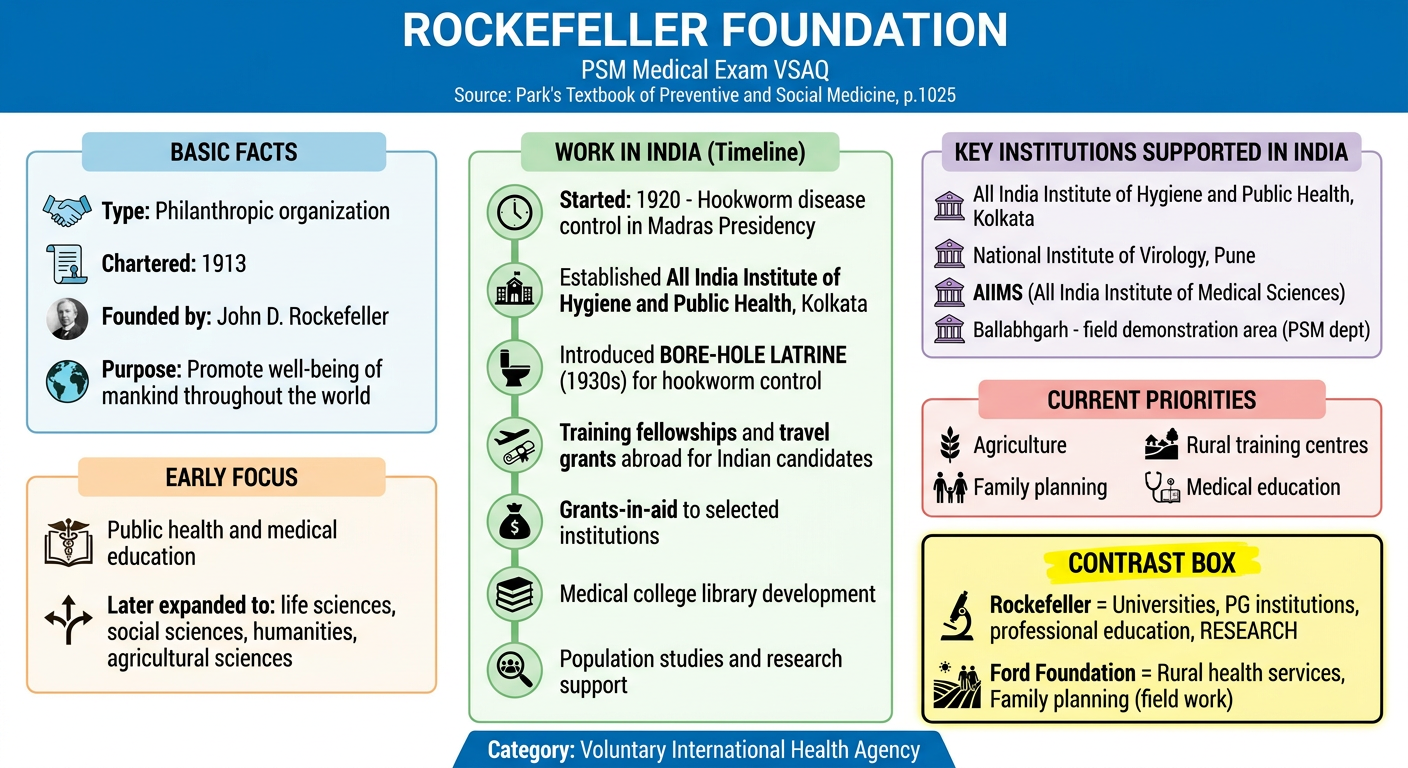
PSM medical exam VSAQ infographic titled "ROCKEFELLER FOUNDATION" from Park's Textbook of Preventive and Social Medicine. Clean, colorful, exam-focused layout: BASIC FACTS: - Type: Philanthropic organization - Chartered: 1913 - Founded by: Mr. John D. Rockefeller - Purpose: To promote the well-being of mankind throughout the world EARLY FOCUS: - Public health and medical education - Later expanded to: life sciences, social sciences, humanities, agricultural sciences WORK IN INDIA (started 1920): - 1920: Began with hookworm disease control in Madras Presidency - Established: All India Institute of Hygiene and Public Health, Kolkata - Introduced: BORE-HOLE LATRINE in 1930s for hookworm control campaigns - Training abroad through fellowships and travel grants for Indian candidates - Visits of US medical specialists sponsored to India - Grants-in-aid to selected institutions - Developed medical college libraries - Population studies and research project support KEY INSTITUTIONS SUPPORTED: - National Institute of Virology, Pune - All India Institute of Medical Sciences (AIIMS) - Ballabhgarh - field demonstration area for PSM department - All India Institute of Hygiene & Public Health, Kolkata CURRENT PRIORITIES: - Agriculture improvement - Family planning - Rural training centres - Medical education IMPORTANT COMPARISON BOX: Rockefeller Foundation = Universities, PG institutions, professional education, research Ford Foundation = Rural health services and family planning Category: Voluntary International Health Agency Park's PSM reference. Professional medical infographic style with timeline and icons.
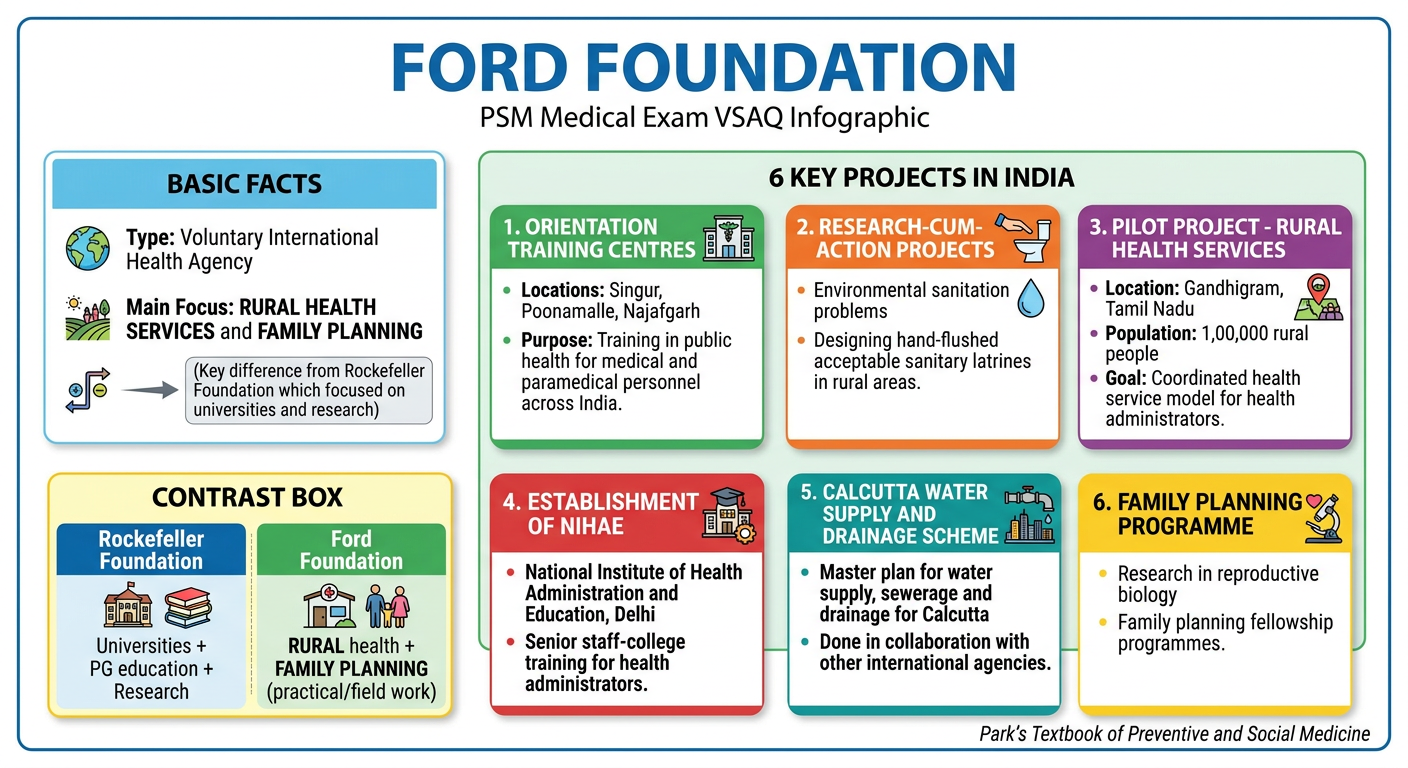
PSM medical exam VSAQ infographic titled "FORD FOUNDATION" from Park's Textbook of Preventive and Social Medicine. Clean, colorful, exam-focused layout: BASIC FACTS: - Type: Voluntary International Health Agency - Focus: Rural health services and Family Planning (key difference from Rockefeller Foundation) PROJECTS SUPPORTED IN INDIA (6 key projects - numbered list): 1. ORIENTATION TRAINING CENTRES: - Set up at: Singur, Poonamalle, and Najafgarh - Provide training in public health for medical and paramedical personnel from all over India 2. RESEARCH-CUM-ACTION PROJECTS: - Environmental sanitation problems - Designing and construction of hand-flushed acceptable sanitary latrines in rural areas 3. PILOT PROJECT - RURAL HEALTH SERVICES, GANDHIGRAM (Tamil Nadu): - Rural population of 1,00,000 people - Developed and operated coordinated type of health service - Useful model for health administrators 4. ESTABLISHMENT OF NIHAE (National Institute of Health Administration and Education), Delhi: - Senior staff-college type training - For health administrators 5. CALCUTTA WATER SUPPLY AND DRAINAGE SCHEME: - Master plan for water supply, sewerage and drainage for Calcutta - In collaboration with other international agencies 6. FAMILY PLANNING PROGRAMME: - Research in reproductive biology - Family planning fellowship programmes IMPORTANT COMPARISON BOX: Rockefeller Foundation = Universities, PG education, research Ford Foundation = Rural health services + Family planning (practical/field work) ALSO ACTIVE IN: UNFPA, USAID, Population Council, Pathfinder Fund - population & family planning sector Category: Voluntary International Health Agency Park's PSM reference. Professional medical infographic style with numbered project cards and icons.
Error calling model 'gemini-3-pro-image' (RESOURCE_EXHAUSTED): 429 RESOURCE_EXHAUSTED. {'error': {'code': 429, 'message': 'Resource has been exhausted (e.g. check quota).', 'status': 'RESOURCE_EXHAUSTED'}}
We encountered an error while processing your request. Please try again or reach out to us for help.
Create three separate images for these three separate questions. These are the VSAQs asked in, in my university exams. Answer only from the Parks PSM textbook.
- Red ribbon, Pink ribbon and White ribbon
- Rockefeller Foundation
- Ford Foundation
PSM medical exam VSAQ infographic titled "RED RIBBON, PINK RIBBON and WHITE RIBBON" from Park's Textbook of Preventive and Social Medicine. Three bold color-coded sections with ribbon icons: RED RIBBON section (red background): - Symbol of: HIV/AIDS awareness and solidarity - RED RIBBON CLUBS (RRCs) formed in colleges - Purpose: Peer-to-peer messaging on HIV prevention - Provides safe space for youth to clarify doubts and myths about HIV/AIDS - Also promotes: Voluntary blood donation among youth - Under: NACP (National AIDS Control Programme) PINK RIBBON section (pink background): - Symbol of: BREAST CANCER awareness - International symbol for breast cancer awareness and support - Worn during Breast Cancer Awareness Month (October) - Encourages: Early detection, mammography, breast self-examination - Associated with: National Cancer Control Programme WHITE RIBBON section (white background with grey border): - Symbol of: VIOLENCE AGAINST WOMEN (VAW) awareness - White Ribbon Campaign: Men pledge never to commit, condone or stay silent about violence against women - Also symbolizes: PEACE and non-violence - Associated with: WHO violence prevention and women health programmes KEY EXAM MEMORY BOX at bottom: RED = HIV/AIDS | PINK = Breast Cancer | WHITE = Violence Against Women Clean, colorful medical study poster, exam-focused, with large ribbon symbols for each section.
PSM medical exam VSAQ infographic titled "ROCKEFELLER FOUNDATION" from Park's Textbook of Preventive and Social Medicine. Professional, colorful, exam-focused layout with icons: BASIC FACTS box: - Type: Philanthropic organization - Chartered: 1913 - Founded by: John D. Rockefeller - Purpose: Promote well-being of mankind throughout the world EARLY FOCUS: - Public health and medical education - Later expanded to: life sciences, social sciences, humanities, agricultural sciences WORK IN INDIA (timeline): - Started: 1920 - Hookworm disease control in Madras Presidency - Established All India Institute of Hygiene and Public Health, Kolkata - Introduced BORE-HOLE LATRINE (1930s) for hookworm control - Training fellowships and travel grants abroad for Indian candidates - Grants-in-aid to selected institutions - Medical college library development - Population studies and research support KEY INSTITUTIONS SUPPORTED IN INDIA: - All India Institute of Hygiene and Public Health, Kolkata - National Institute of Virology, Pune - AIIMS (All India Institute of Medical Sciences) - Ballabhgarh - field demonstration area (PSM dept) CURRENT PRIORITIES: - Agriculture | Family planning | Rural training centres | Medical education CONTRAST BOX (yellow highlight): Rockefeller = Universities, PG institutions, professional education, RESEARCH Ford Foundation = Rural health services, Family planning (field work) Category: Voluntary International Health Agency | Source: Park's PSM p.1025
PSM medical exam VSAQ infographic titled "FORD FOUNDATION" from Park's Textbook of Preventive and Social Medicine. Professional, colorful, exam-focused layout with numbered cards: BASIC FACTS box: - Type: Voluntary International Health Agency - Main Focus: RURAL HEALTH SERVICES and FAMILY PLANNING - (Key difference from Rockefeller Foundation which focused on universities and research) 6 KEY PROJECTS IN INDIA (numbered cards): 1. ORIENTATION TRAINING CENTRES Locations: Singur, Poonamalle, Najafgarh Purpose: Training in public health for medical and paramedical personnel across India 2. RESEARCH-CUM-ACTION PROJECTS Environmental sanitation problems Designing hand-flushed acceptable sanitary latrines in rural areas 3. PILOT PROJECT - RURAL HEALTH SERVICES Location: Gandhigram, Tamil Nadu Population: 1,00,000 rural people Goal: Coordinated health service model for health administrators 4. ESTABLISHMENT OF NIHAE National Institute of Health Administration and Education, Delhi Senior staff-college training for health administrators 5. CALCUTTA WATER SUPPLY AND DRAINAGE SCHEME Master plan for water supply, sewerage and drainage for Calcutta Done in collaboration with other international agencies 6. FAMILY PLANNING PROGRAMME Research in reproductive biology Family planning fellowship programmes CONTRAST BOX (highlighted): Rockefeller = Universities + PG education + Research Ford Foundation = RURAL health + FAMILY PLANNING (practical/field work) Source: Park's Textbook of Preventive and Social Medicine. Clean, colorful, exam-ready infographic with icons.
| # | Topic | Key Exam Point |
|---|---|---|
| 5 | Red/Pink/White Ribbon | Red=HIV, Pink=Breast Cancer, White=Violence Against Women |
| 6 | Rockefeller Foundation | Chartered 1913, hookworm/India 1920, universities + research focus |
| 7 | Ford Foundation | Rural health + Family planning; 6 projects: Singur/Poonamalle/Najafgarh centres, Gandhigram, NIHAE, Calcutta water scheme |
Rockefeller foundation image
PSM medical exam VSAQ infographic titled "ROCKEFELLER FOUNDATION" from Park's Textbook of Preventive and Social Medicine. Professional, colorful, exam-focused layout with clear sections and icons: TOP HEADER - BASIC FACTS (blue box): - Type: Philanthropic organization - Chartered: 1913 - Founded by: John D. Rockefeller - Purpose: "To promote the well-being of mankind throughout the world" SECTION 1 - FOCUS AREAS (green): Early years: Public health + Medical education Later expanded to: Life sciences | Social sciences | Humanities | Agricultural sciences SECTION 2 - WORK IN INDIA (orange timeline): ★ 1920 - Started: Hookworm disease control, Madras Presidency ★ 1930s - Introduced BORE-HOLE LATRINE for hookworm control campaigns ★ Established: All India Institute of Hygiene and Public Health, Kolkata ★ Training: Fellowships and travel grants abroad for Indian candidates ★ Sponsored visits of US medical specialists to India ★ Grants-in-aid to selected institutions ★ Developed medical college libraries ★ Population studies support SECTION 3 - KEY INSTITUTIONS SUPPORTED IN INDIA (purple cards): 1. All India Institute of Hygiene and Public Health, Kolkata 2. National Institute of Virology, Pune 3. AIIMS - All India Institute of Medical Sciences 4. Ballabhgarh - PSM field demonstration area SECTION 4 - CURRENT PRIORITIES (teal): Agriculture | Family Planning | Rural Training Centres | Medical Education IMPORTANT CONTRAST BOX (yellow highlight at bottom): ROCKEFELLER = Universities + PG Institutions + Professional Education + RESEARCH FORD FOUNDATION = Rural Health Services + Family Planning Category: Voluntary International Health Agency Source: Park's PSM Large, clear fonts, colorful sections, exam-ready medical infographic poster style.
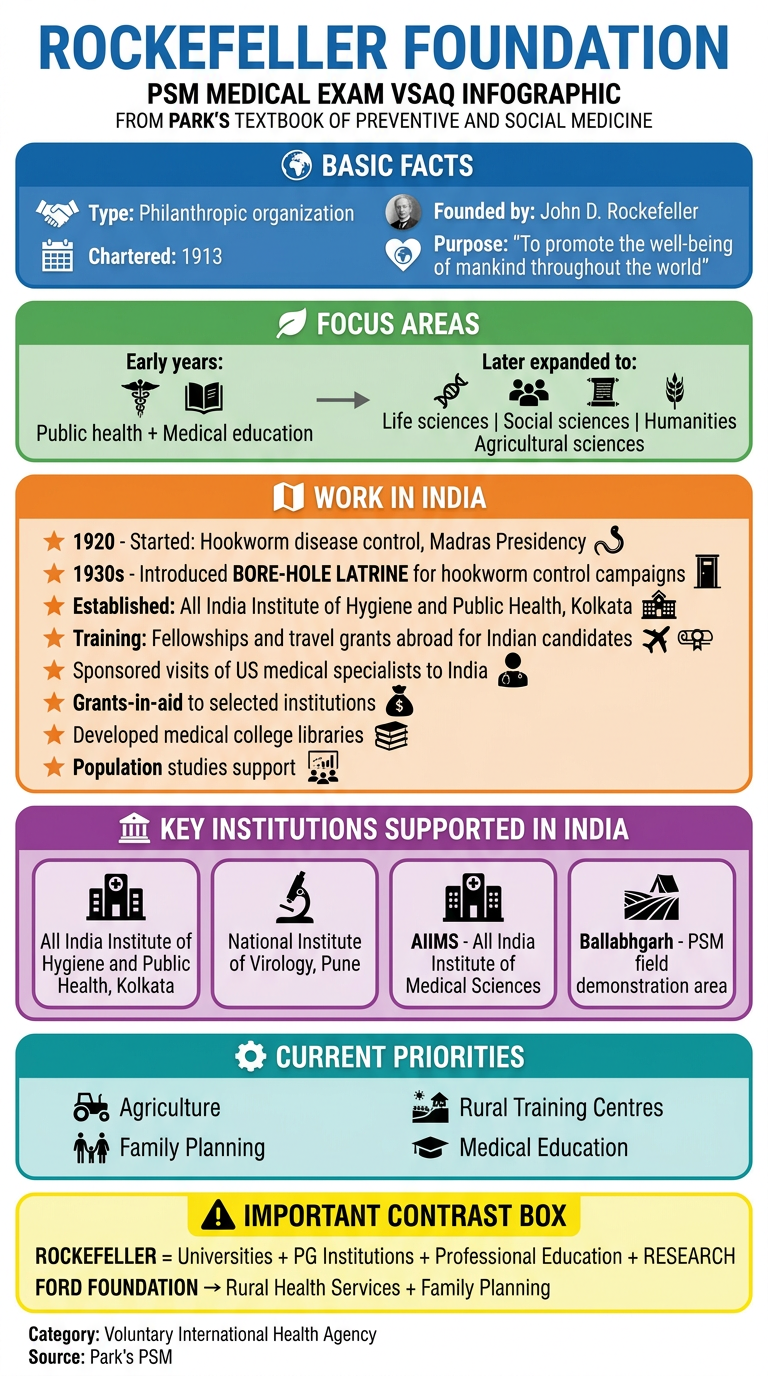
- Chartered 1913 by John D. Rockefeller
- India work began 1920 - hookworm, Madras Presidency
- Bore-hole latrine - introduced in 1930s
- Key institutions - AIIHPH Kolkata, NIV Pune, AIIMS, Ballabhgarh
- Key contrast - Rockefeller = research/universities vs Ford = rural health/family planning
Create image on care international health park psm textbook
PSM medical exam VSAQ infographic titled "CARE (Cooperative for Assistance and Relief Everywhere)" from Park's Textbook of Preventive and Social Medicine. Professional, colorful, exam-focused layout with clear sections and icons: TOP HEADER - BASIC FACTS (blue banner): - Full form: Cooperative for Assistance and Relief Everywhere - Founded: 1945 in North America (after World War II) - Type: Voluntary International Health Agency - Nature: Independent, Non-profit, Non-sectarian - Work: Emergency aid + Long-term development assistance - Began operations in India: 1950 SECTION 1 - EVOLUTION OF WORK IN INDIA (orange timeline): - Till end of 1980s: Primary objective = Food for children aged 6-11 years - From mid-1980s: Shifted focus to ICDS programme + health and income supplementation programmes SECTION 2 - KEY PROJECTS IN INDIA (green numbered cards): 1. Integrated Nutrition and Health Project 2. Better Health and Nutrition Project 3. Anaemia Control Project 4. Improving Women's Health Project 5. Improved Health Care for Adolescent Girls Project 6. Child Survival Project 7. Improving Women's Reproductive Health and Family Spacing Project 8. Konkan Integrated Development Project SECTION 3 - PARTNERSHIPS (purple box): CARE-India works with: - Government of India - State Governments - NGOs SECTION 4 - STATES OF OPERATION (teal box): Andhra Pradesh | Bihar | Madhya Pradesh | Maharashtra | Orissa | Rajasthan | Uttar Pradesh | West Bengal KEY EXAM MEMORY BOX (yellow at bottom): CARE = 1945 | India = 1950 | Focus = Women + Children + Nutrition + Health Category: Voluntary International Health Agency (like Rockefeller Foundation and Ford Foundation) Source: Park's Textbook of Preventive and Social Medicine. Clean, colorful, medical study infographic poster with icons for each section.
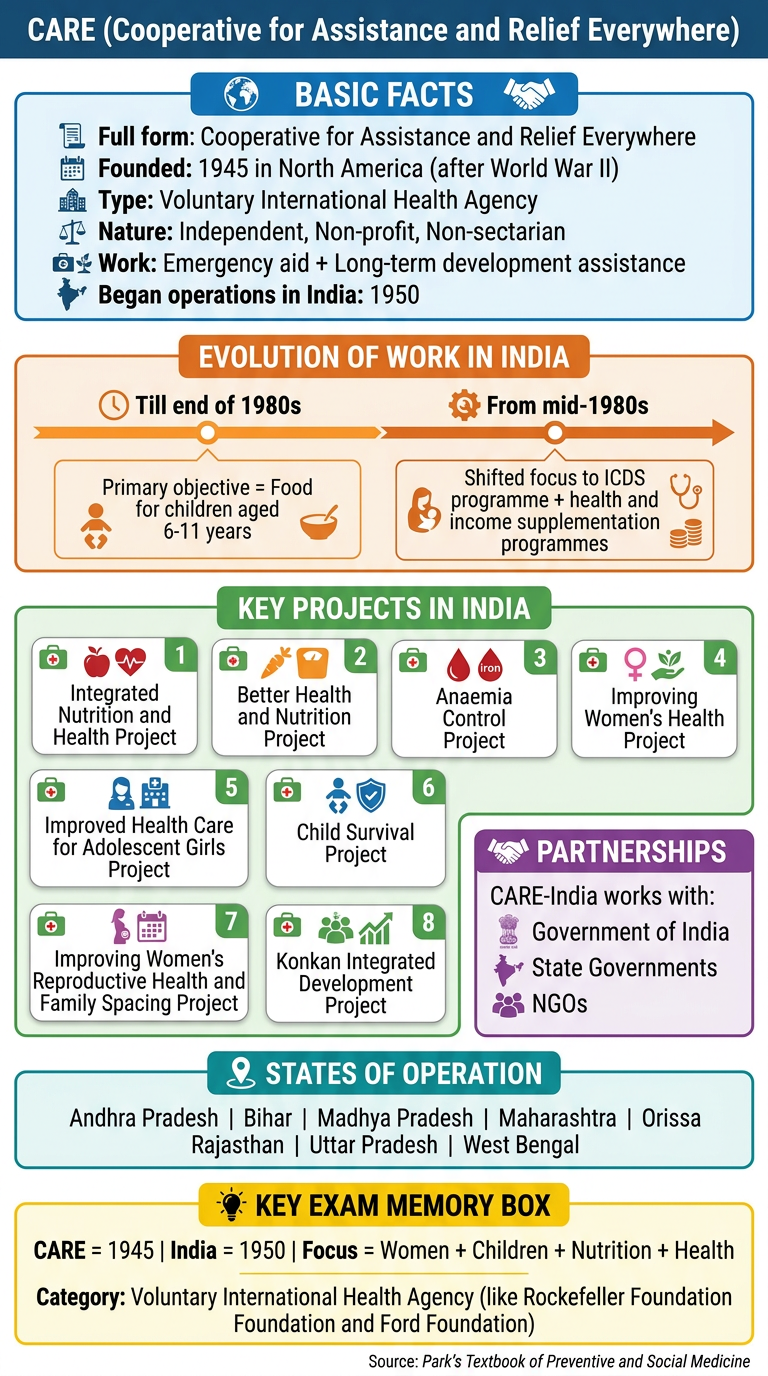
| Point | Detail |
|---|---|
| Full form | Cooperative for Assistance and Relief Everywhere |
| Founded | 1945, North America (post World War II) |
| India operations | Started 1950 |
| Nature | Independent, Non-profit, Non-sectarian |
| Early focus (till 1980s) | Food for children aged 6-11 years |
| Later focus (mid-1980s) | ICDS + health + income supplementation |
| Key projects | 8 projects - Anaemia, Child Survival, Women's Health, Nutrition, etc. |
| Category | Voluntary International Health Agency |
Create an image on WHO organization objectives and functions from park psm
PSM medical exam infographic titled "WHO - World Health Organization" from Park's Textbook of Preventive and Social Medicine. Large, colorful, detailed, exam-focused poster layout with clearly labeled sections: TOP BANNER (dark blue): WHO = World Health Organization Headquarters: Geneva | Type: Specialized, Non-political health agency of the United Nations Constitution drafted: 1946 | Constitution in force: 7th April 1948 (celebrated as WORLD HEALTH DAY every year) Members: 194 member states + 2 associate members OBJECTIVE (green box): "Attainment by ALL peoples of the HIGHEST possible level of health" = Attainment by all people of the world a level of health that will permit them to lead a socially and economically productive life WHO's DEFINITION OF HEALTH (yellow highlighted quote box): "Health is a state of complete physical, mental and social well-being and not merely the absence of disease or infirmity" STRUCTURE - 3 PRINCIPAL ORGANS (purple section): 1. WORLD HEALTH ASSEMBLY (WHA) - "Health Parliament of Nations" - Supreme governing body - Meets annually in May at Geneva - Each member = 1 vote - Functions: Determines international health policy, reviews past year work, approves budget, elects Executive Board members 2. EXECUTIVE BOARD - 34 technically qualified members elected for 3 years - Meets twice a year (January and May) - Functions: Gives effect to WHA decisions, acts as executing arm 3. SECRETARIAT - Administrative organ headed by Director General - DG elected by WHA on recommendation of Executive Board 8 KEY FUNCTIONS / WORK OF WHO (orange numbered cards): 1. Prevention & Control of Specific Diseases - communicable and non-communicable; eradicated smallpox; EPI programme; epidemiological surveillance; Weekly Epidemiological Record (WER) 2. Development of Comprehensive Health Services - national health policy, PHC-based health systems, ATH (Appropriate Technology for Health) 3. Family Health - MCH care, human reproduction, nutrition, health education (since 1970) 4. Environmental Health - air, water, food quality; WHO Environmental Health Criteria Programme 5. Health Statistics - WER, World Health Statistics Quarterly, ICD (updated every 10 years); ICD-10 from 1st Jan 1993 6. Biomedical Research - stimulates and coordinates research; WHO collaborating centres; 6 tropical diseases programme (malaria, schistosomiasis, trypanosomiasis, filariasis, leishmaniasis, leprosy) 7. Health Literature and Information - clearing house for health info; WHO library = satellite of MEDLARS 8. Cooperation with Other Organizations - UN, specialized agencies, international governmental organizations KEY EXAM MEMORY BOX at bottom (yellow): WHO Constitution = 7th April 1948 = World Health Day Structure: WHA (supreme) → Executive Board (34 members) → Secretariat (DG) Functions = 8 broad areas Source: Park's PSM. Clean, colorful medical infographic poster with icons and color-coded sections. Large text, easy to read and memorize.
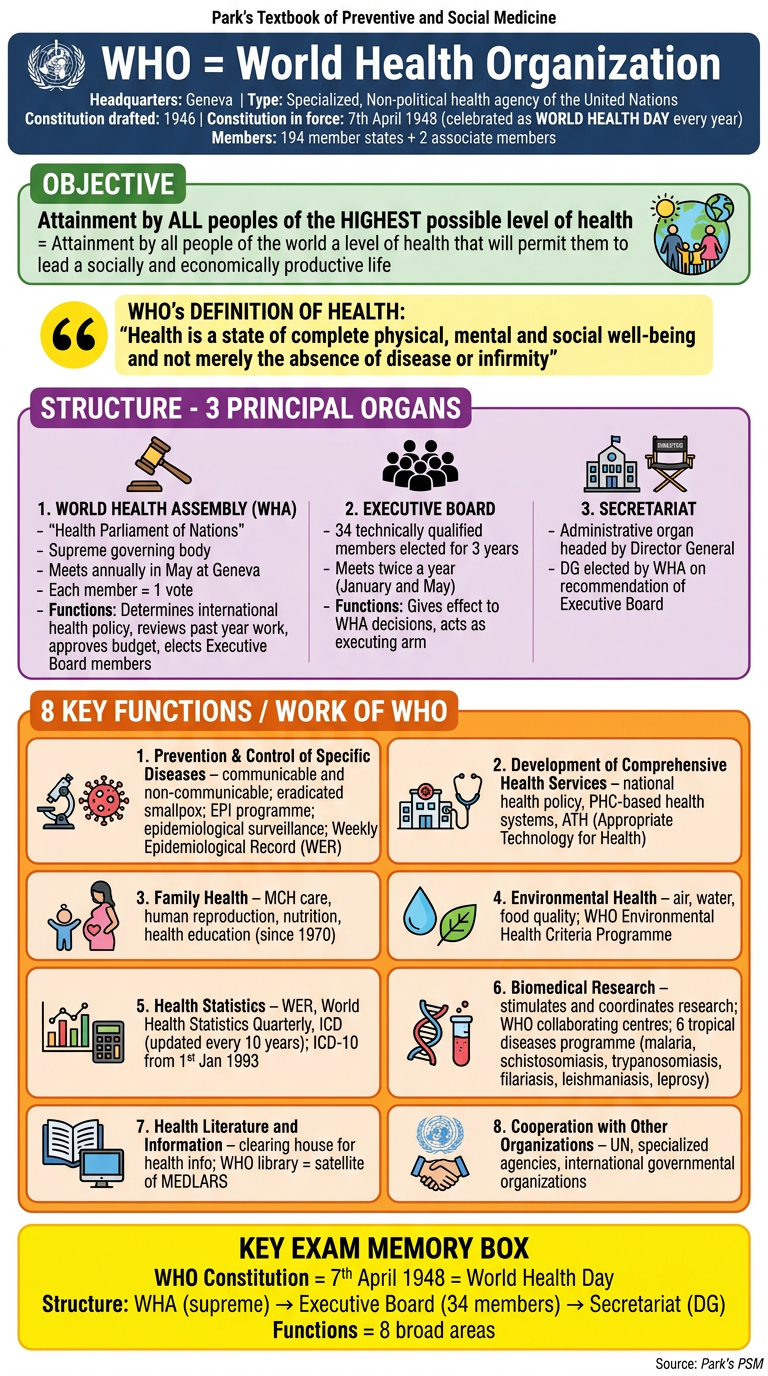
| Topic | Key Point |
|---|---|
| HQ | Geneva |
| Constitution in force | 7th April 1948 = World Health Day |
| Members | 194 member states + 2 associate members |
| Objective | Attainment by all peoples of the highest possible level of health |
| Structure | WHA (supreme) → Executive Board (34 members, 3 yrs) → Secretariat |
| WHA | "Health Parliament of Nations" - meets annually in May |
| Functions | 8 areas: Disease control, Health services, Family health, Environment, Statistics, Research, Literature, Cooperation |
| Key achievement | Global eradication of smallpox |
| ICD | Updated every 10 years; ICD-10 from 1st Jan 1993 |
| 6 tropical diseases | Malaria, Schistosomiasis, Trypanosomiasis, Filariasis, Leishmaniasis, Leprosy |
Create notes on cardiomyopathies from robbins
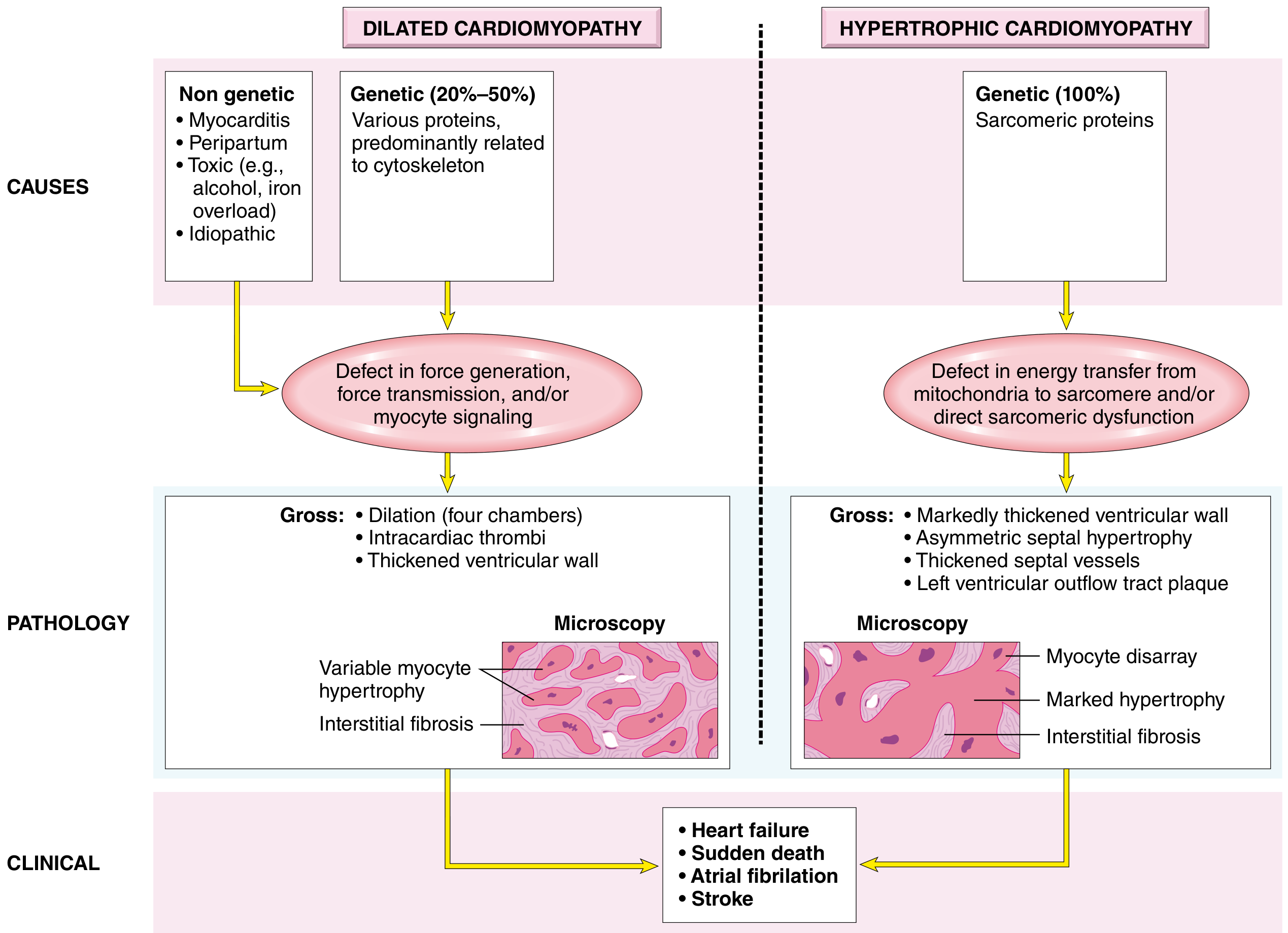
CARDIOMYOPATHIES
| Pattern | Frequency | Dysfunction |
|---|---|---|
| Dilated (DCM) | 90% (most common) | Systolic (contractile) |
| Hypertrophic (HCM) | Intermediate | Diastolic (relaxation) |
| Restrictive | Least common | Diastolic (compliance) |
1. DILATED CARDIOMYOPATHY (DCM)
Pathogenesis / Causes
- Autosomal dominant - most common; loss-of-function mutations
- Mutations in >20 genes encoding: cytoskeletal, sarcolemmal, or nuclear envelope proteins
- Titin (TTN) truncation mutations = most common genetic cause (~10-20% of all DCM)
- X-linked DCM - dystrophin mutations (associated with Duchenne/Becker muscular dystrophy)
- Mitochondrial gene deletions - affect oxidative phosphorylation; typically pediatric
- Myocarditis - Coxsackie B virus; sequential biopsies show progression to DCM
- Alcohol - ethanol/acetaldehyde direct toxicity; also thiamine deficiency → beriberi heart disease
- Peripartum cardiomyopathy - last trimester or months postpartum
- Iron overload - hereditary hemochromatosis or transfusion iron overload
- Cobalt toxicity, chemotherapy (doxorubicin)
- Catecholamine excess - pheochromocytoma, cocaine, vasopressors
- Takotsubo (broken heart syndrome) - extreme psychological stress; apical ballooning resembling a Japanese fishing pot
- Persistent tachycardia, hyperthyroidism
Morphology
- Heart enlarged, heavy (2-3x normal), flabby
- All 4 chambers dilated
- Mural thrombi (risk of thromboembolism) - from stasis in poorly contractile chambers
- No primary valvular alterations; mitral/tricuspid regurgitation is secondary (functional)
- Coronary arteries must be free of significant narrowing
- Histology: Variable myocyte hypertrophy, interstitial fibrosis, endocardial fibrosis
- In titin-DCM: hyperchromatic "ninja star" nuclei in myocytes
Clinical Features
- Age: any age but most common 20-50 years
- Presentation: slowly progressive CHF - dyspnea, fatigue, poor exertional capacity
- Secondary mitral regurgitation, arrhythmias
- Ejection fraction typically <25% (normal: 50-70%)
- Annual mortality: 10-50%
- Treatment: pharmacologic, biventricular pacing, cardiac transplantation, ventricular assist devices
2. HYPERTROPHIC CARDIOMYOPATHY (HCM)
- Leading cause of sudden cardiac death in young athletes
- Heart: thick-walled, heavy, hypercontracting (contrast to flabby DCM heart)
Pathogenesis
- Autosomal dominant with variable penetrance
- Mutations in sarcomeric proteins - gain-of-function mutations causing hypercontractility
-
400 mutations in 9 different genes (mostly missense mutations)
- Most common genes:
- Myosin-binding protein C (MYBP-C) - most common
- β-myosin heavy chain (β-MHC / MYH7) - >50 different mutations possible
- Cardiac TnI, TnT, α-tropomyosin
- Together account for 70-80% of all HCM cases
- Novel therapy: myosin inhibitors (mavacamten)
Morphology
- Massive myocardial hypertrophy without ventricular dilation
- Classic (2/3 of cases): Asymmetric septal hypertrophy - disproportionate thickening of ventricular septum vs. LV free wall
- LV cavity compressed into banana-like configuration
- Fibrous endocardial plaque + thickened anterior mitral leaflet (from contact with septum during systole)
- Echocardiographic systolic anterior motion (SAM) of anterior mitral leaflet → LV outflow tract obstruction = Hypertrophic Obstructive Cardiomyopathy (HOCM)
- Massive cardiomyocyte hypertrophy (diameter >40 μm; normal ~15 μm)
- Myofiber disarray - haphazard disarray of myocyte bundles and sarcomeres
- Fibrotic narrowing of small intramural arteries
- Interstitial and replacement fibrosis
Clinical Features
- Diastolic dysfunction; systolic function preserved
- Sudden cardiac death (especially exertion in young athletes)
- Atrial fibrillation, heart failure, stroke
- Mimics: amyloidosis, Fabry disease, hypertensive heart disease
3. RESTRICTIVE CARDIOMYOPATHY
- Idiopathic
- Amyloidosis (most important)
- Sarcoidosis
- Radiation-induced fibrosis
- Metastatic tumors
- Inborn errors of metabolism (metabolite accumulation)
Morphology
- Nonspecific gross features
- Biatrial dilation (restricted ventricular filling + pressure overload)
- Ventricles: approximately normal size, cavities NOT dilated
- Histology: Patchy or diffuse interstitial fibrosis (minimal to extensive)
Three Special Restrictive Conditions
| Condition | Key Features |
|---|---|
| Endomyocardial fibrosis | Children/young adults in Africa + tropics; fibrosis of ventricular endocardium from apex upward; involves tricuspid + mitral valves; linked to nutritional deficiency/parasitic infections (hypereosinophilia); most common restrictive CMP worldwide |
| Loeffler endomyocarditis | Similar morphology; peripheral eosinophilia + eosinophilic infiltrates in multiple organs; toxic major basic protein from eosinophils → necrosis → scarring → thrombus; may have myeloid neoplasm with tyrosine kinase mutations; responds to TK inhibitors |
| Endocardial fibroelastosis | Uncommon; fibroelastic thickening of endocardium; typically involves LV; young children |
4. ARRHYTHMOGENIC RIGHT VENTRICULAR CARDIOMYOPATHY (ARVC)
- Unlike DCM - predominantly involves right ventricle
- Right ventricular wall severely attenuated - loss of myocytes + massive fatty infiltration + focal fibrosis
- NOT primarily inflammatory
- Autosomal dominant, variable penetrance
- Mutations in desmosomal junctional proteins at intercalated disk: plakoglobin, desmin
- Naxos syndrome = ARVC + hyperkeratosis of palmar/plantar surfaces (plakoglobin mutations)
KEY CONCEPTS SUMMARY (from Robbins)
| Type | Dysfunction | Mutation type | Key mutation | Gross morphology | Histology |
|---|---|---|---|---|---|
| DCM | Systolic | Loss of function | Titin (TTN) | Dilated all 4 chambers, flabby | Variable hypertrophy, interstitial fibrosis, ninja star nuclei |
| HCM | Diastolic | Gain of function | MYBP-C, β-MHC | Thick walls, asymmetric septal hypertrophy, banana LV | Myofiber disarray, extreme hypertrophy, fibrosis |
| RCM | Diastolic | - | Amyloid, others | Biatrial dilation, normal ventricles | Interstitial fibrosis |
| ARVC | Right HF + arrhythmia | Desmosomal proteins | Plakoglobin | RV fatty infiltration, attenuation | Fat replacement, focal fibrosis |