
Anterior compartment of forearm muscle
Reading File
The anterior compartment of the forearm contains muscles primarily responsible for wrist/finger flexion and forearm pronation. They are organized in superficial, intermediate, and deep layers, all supplied mainly by the median nerve (with the ulnar nerve supplying a few).
Searching sources...
Finding Sources
Finding Sources
Reading File
Reading File
Reading File
Reading File
Reading File
Reading File
Reading File
Reading File
Now I have all the core content. Let me also fetch the key diagram images to include in the response.
Loading Image
Loading Image
Here is a complete overview of the anterior compartment of the forearm muscles, sourced from Gray's Anatomy for Students.
Anterior Compartment of the Forearm
The anterior (flexor) compartment lies anterior to the interosseous membrane and is separated from the posterior compartment by the radius, ulna, and medial/lateral intermuscular septa. Its muscles primarily flex the wrist and digits and pronate the hand.
Key innervation rule: All muscles are supplied by the median nerve, EXCEPT:
- Flexor carpi ulnaris - ulnar nerve
- Medial half of flexor digitorum profundus (ring + little fingers) - ulnar nerve
Layer 1: Superficial Layer (4 muscles)
All four share a common origin from the medial epicondyle of the humerus (common flexor origin).
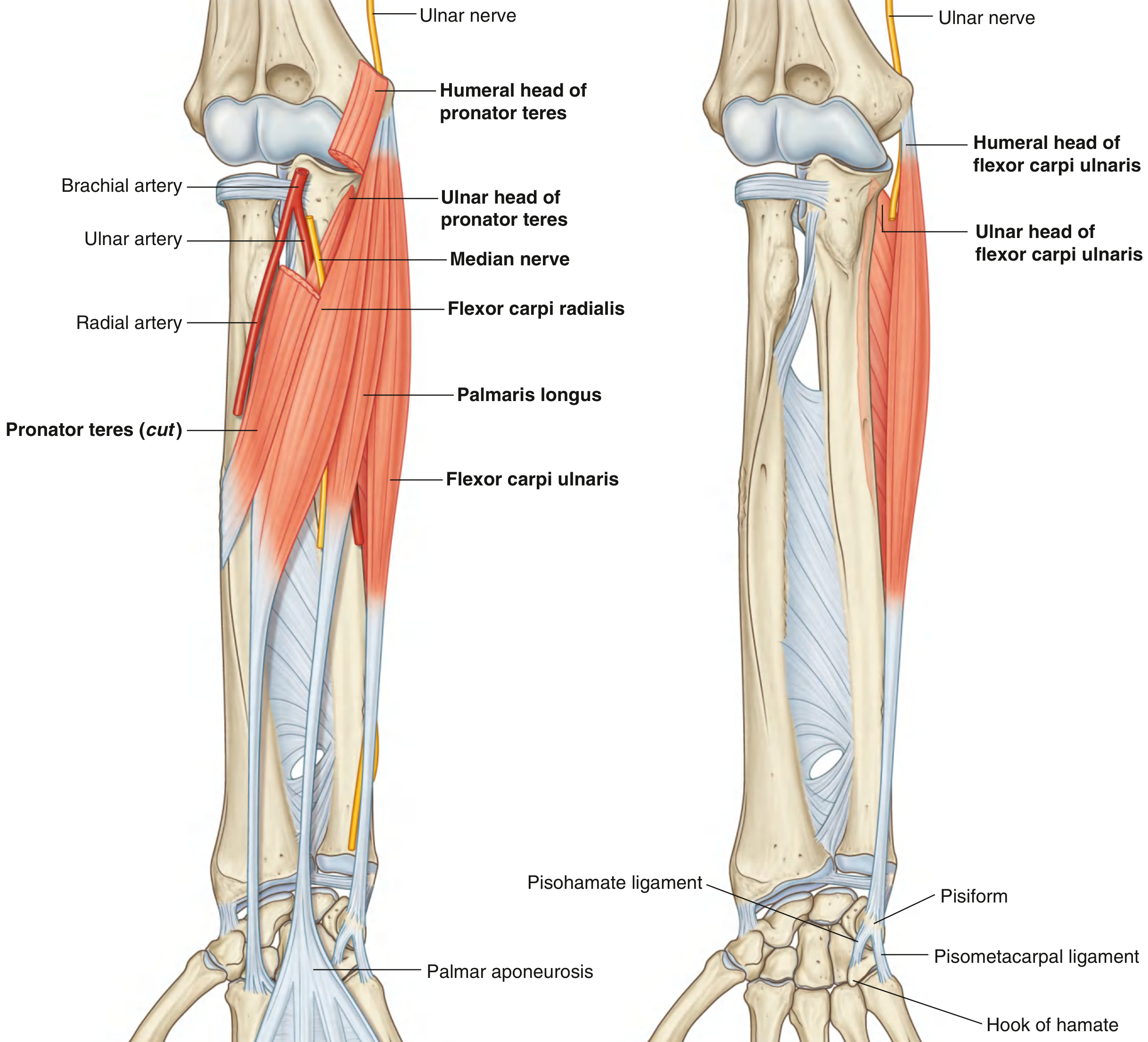
Fig. 7.85 - Superficial layer of muscles in the anterior compartment of the forearm (Gray's Anatomy for Students)
| Muscle | Origin | Insertion | Nerve | Function |
|---|---|---|---|---|
| Flexor carpi ulnaris | Medial epicondyle (humeral head) + olecranon/posterior ulna border (ulnar head) | Pisiform → hamate + base of metacarpal V via ligaments | Ulnar nerve (C7, C8, T1) | Flexes + adducts wrist |
| Palmaris longus | Medial epicondyle | Palmar aponeurosis | Median nerve (C7, C8) | Accessory wrist flexion; resists shearing on palm skin during grip. Absent in ~15% of population |
| Flexor carpi radialis | Medial epicondyle | Bases of metacarpals II and III | Median nerve (C6, C7) | Flexes + abducts wrist |
| Pronator teres | Medial epicondyle + supraepicondylar ridge (humeral head); coronoid process of ulna (ulnar head) | Roughening on lateral midshaft of radius | Median nerve (C6, C7) | Pronation |
Clinical note: The median nerve passes between the two heads of pronator teres into the forearm. The ulnar nerve enters the forearm through the gap between the two heads of flexor carpi ulnaris. The tendon of FCR is a landmark for the radial pulse (radial artery lies immediately lateral to it).
Layer 2: Intermediate Layer (1 muscle)
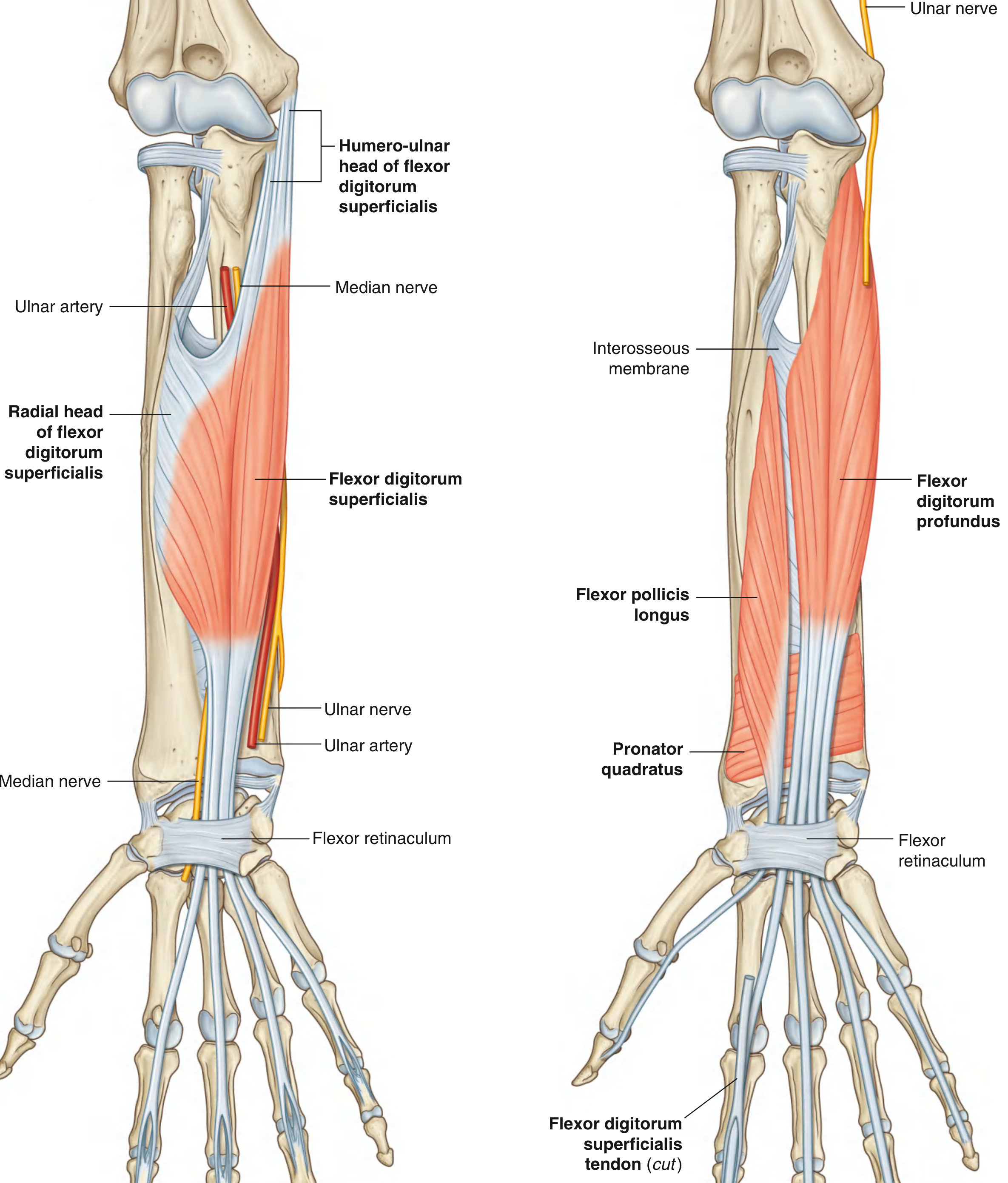
Fig. 7.86/7.87 - Intermediate and deep layers of the anterior forearm (Gray's Anatomy for Students)
| Muscle | Origin | Insertion | Nerve | Function |
|---|---|---|---|---|
| Flexor digitorum superficialis (FDS) | Humero-ulnar head: medial epicondyle + coronoid process margin; Radial head: oblique line of radius | Four tendons → middle phalanges of fingers 2-5 | Median nerve (C8, T1) | Flexes PIP joints of fingers 2-5; also flexes MCP joints and wrist |
Key detail: The median nerve and ulnar artery pass deep to FDS between its two heads. Near the proximal phalanx of each finger, the FDS tendon splits to allow the FDP tendon to pass through - this split is called Camper's chiasm.
Layer 3: Deep Layer (3 muscles)
| Muscle | Origin | Insertion | Nerve | Function |
|---|---|---|---|---|
| Flexor digitorum profundus (FDP) | Anterior + medial surfaces of ulna + medial half of interosseous membrane | Four tendons → distal phalanges of fingers 2-5 | Lateral half (index + middle): anterior interosseous nerve (median); Medial half (ring + little): ulnar nerve (C8, T1) | Flexes DIP joints + MCP joints of fingers 2-5; also flexes wrist |
| Flexor pollicis longus (FPL) | Anterior surface of radius + radial half of interosseous membrane | Base of distal phalanx of thumb | Anterior interosseous nerve (median) (C7, C8) | Flexes IP joint + MCP joint of thumb |
| Pronator quadratus | Linear ridge on distal anterior surface of ulna | Distal anterior surface of radius | Anterior interosseous nerve (median) (C7, C8) | Pronation (primary pronator) |
Key detail: The lumbrical muscles of the hand arise from the tendons of FDP in the palm.
Summary Table by Function
| Function | Muscles |
|---|---|
| Wrist flexion | FCR, FCU, PL (primary); FDS, FDP, FPL (secondary as they cross the wrist) |
| Wrist adduction (ulnar deviation) | FCU |
| Wrist abduction (radial deviation) | FCR |
| Finger flexion (PIP) | FDS |
| Finger flexion (DIP) | FDP |
| Thumb flexion | FPL |
| Pronation | Pronator teres (proximal, more powerful at speed), Pronator quadratus (distal, primary at low force) |
Nerve Supply Summary
| Nerve | Muscles |
|---|---|
| Median nerve (direct branches) | Pronator teres, FCR, Palmaris longus, FDS |
| Anterior interosseous nerve (branch of median) | Lateral FDP (index/middle), FPL, Pronator quadratus |
| Ulnar nerve | FCU, Medial FDP (ring/little) |
Source: Gray's Anatomy for Students, Chapter 7 (Upper Limb), pp. 897-902
This is a shared conversation. Sign in to Orris to start your own chat.