
Mechanism of action of lithium in antipsycotics
Reading File
Lithium's mechanism of action involves multiple pathways: it inhibits inositol monophosphatase (reducing phosphatidylinositol signaling), inhibits GSK-3beta (stabilizing mood via Wnt signaling), modulates neurotransmitter release (serotonin, dopamine, norepinephrine), and affects second messenger systems. It's primarily used as a mood stabilizer, not a classic antipsychotic, though it does have some antipsychotic properties.
Searching sources...
Finding Sources
Searching the Web
lithium mechanism of action antipsychotic mood stabilizer pharmacology
Good results. Now let me read the key textbook sections for detailed content.
Reading File
Reading File
Excellent content. Let me also fetch the Stahl's diagram image and check Rosen's EM content for more detail.
Loading Image
Reading File
I now have comprehensive information to give a detailed, well-sourced answer. Here is the complete breakdown:
Mechanism of Action of Lithium
Important clarification first: Lithium is not technically classified as an antipsychotic. It is a mood stabilizer with antimanic, antidepressant (adjunctive), and antisuicidal properties, primarily used in bipolar disorder. It does have some antipsychotic effects (particularly anti-manic), but its pharmacology is completely distinct from dopamine-receptor blocking antipsychotics.
Its exact mechanism is still not fully understood, but several overlapping pathways have been identified.
1. Inositol Monophosphatase Inhibition (Phosphatidylinositol / PI Signaling)
Lithium inhibits the enzyme inositol monophosphatase, which is required to recycle inositol back into the phosphatidylinositol (PI) second messenger cycle. This depletes free inositol inside neurons and dampens PI-mediated signal transduction (the pathway downstream of Gq-coupled receptors like muscarinic, alpha-1 adrenergic, and metabotropic glutamate receptors). The net effect is a dampening of excessive neural excitability.
2. GSK-3 Inhibition (Glycogen Synthase Kinase-3)
This is considered one of lithium's most significant and best-supported mechanisms. Lithium directly inhibits GSK-3 beta, a serine/threonine kinase that plays a major role in:
- Wnt signaling - GSK-3 normally phosphorylates and degrades beta-catenin, a key transcription factor. Lithium blocks this, stabilizing beta-catenin and activating gene expression related to neuronal survival and plasticity.
- Neuroprotection - Inhibiting GSK-3 promotes cell survival and prevents apoptosis.
- Circadian rhythm regulation - GSK-3 targets clock proteins; nuclear receptor Rev-erbalpha is a lithium-sensitive component of the circadian clock.
The diagram from Stahl's illustrates this pathway - lithium (shown as blue shapes) blocks GSK-3 and also blocks downstream signal transduction from neurotransmitter receptors (NT1/NT), ultimately promoting neuroprotection, long-term plasticity, and antimanic/mood-stabilizing effects.
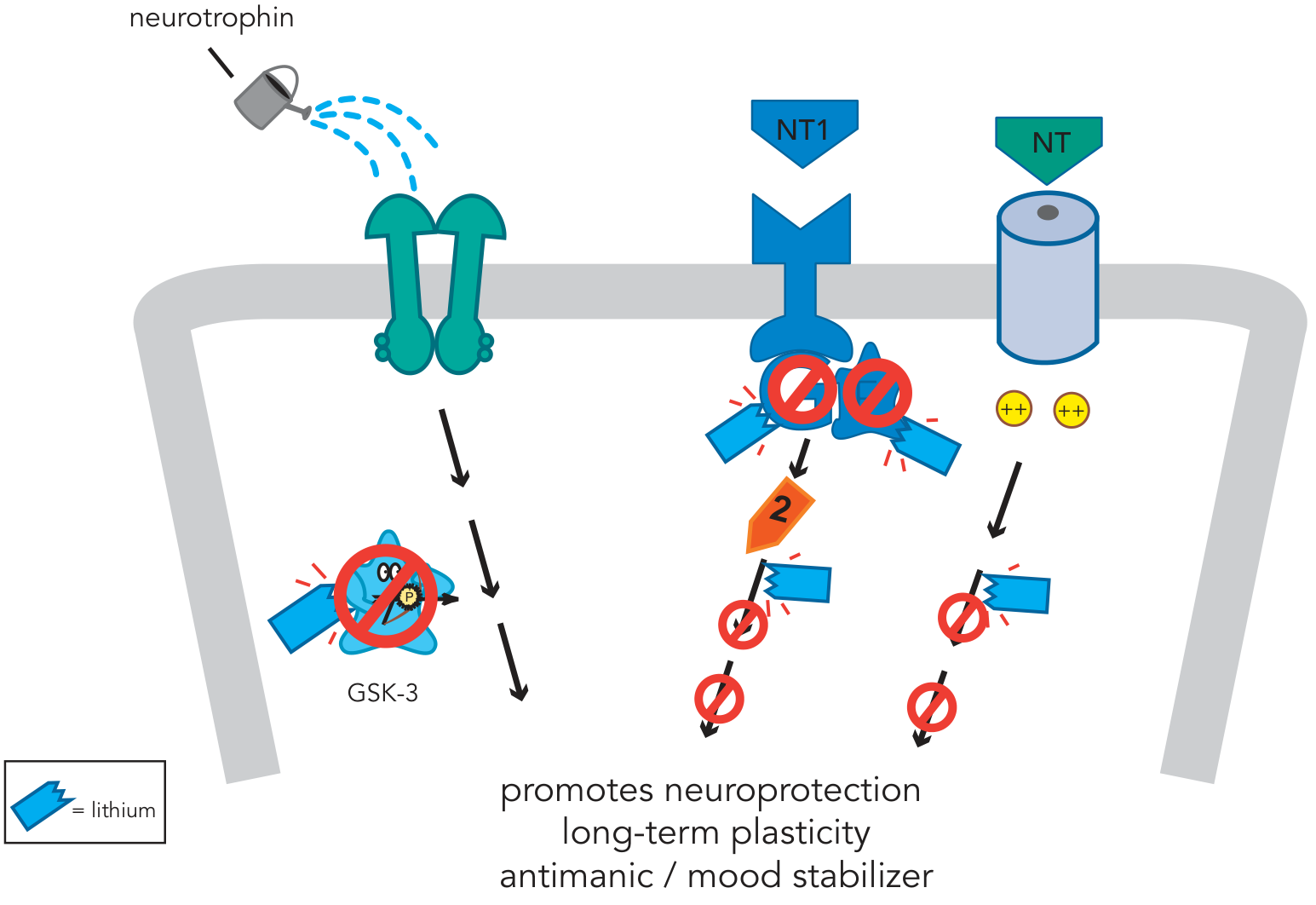
Figure 7-74 from Stahl's Essential Psychopharmacology - lithium inhibiting GSK-3 and downstream cascades to promote neuroprotection and mood stabilization.
3. Protein Kinase C (PKC) Inhibition
Lithium also inhibits protein kinase C, another kinase involved in intracellular signal transduction. PKC is activated downstream of the PI system. Chronic lithium treatment depletes diacylglycerol (DAG) - the activator of PKC - thereby reducing PKC activity. This may contribute to the anti-manic effect.
4. G Protein Modulation
Lithium modulates the activity of G proteins (the intermediary proteins linking surface receptors to second messengers). This may reduce the "gain" of multiple receptor systems simultaneously - including those for dopamine, serotonin, norepinephrine, and glutamate.
5. Neurotransmitter Effects
Lithium competes with sodium, potassium, magnesium, and calcium ions, displacing them from intracellular and extracellular sites. The downstream effects on neurotransmitters include:
| Neurotransmitter | Effect |
|---|---|
| Serotonin | Enhances release (especially from hippocampus); may contribute to augmentation in unipolar depression |
| Dopamine | Inhibits hyperactive dopaminergic tone (possibly via beta-arrestin complexes); may contribute to antimanic effect |
| Norepinephrine | Interferes with release and reuptake at nerve terminals |
6. BDNF / Neuroprotective Effects
Lithium's inhibition of GSK-3 leads to activation of CREB (cAMP response element-binding protein), which upregulates BDNF (brain-derived neurotrophic factor). Chronic lithium treatment is associated with:
- Increased grey matter volume in emotion-processing brain regions
- Higher white matter integrity compared to other mood stabilizers
- Antiapoptotic and neuroprotective effects
7. Ion Channel / Membrane Effects
Lithium competes with sodium at the sodium channel and the Na/K-ATPase pump. This is responsible for adverse effects on myocardial electrical activity (T-wave inversions on ECG). It also inhibits arginine vasopressin (ADH) signaling, leading to nephrogenic diabetes insipidus as a side effect.
Summary Table
| Mechanism | Target | Result |
|---|---|---|
| Inhibits inositol monophosphatase | PI signaling cascade | Dampens overactive receptor signaling |
| Inhibits GSK-3 beta | Wnt/beta-catenin pathway | Neuroprotection, plasticity, mood stability |
| Inhibits PKC | PKC signaling | Anti-manic effect |
| G protein modulation | Multiple receptor systems | Broad signal transduction dampening |
| Enhances serotonin release | Hippocampus and elsewhere | Antidepressant augmentation |
| Inhibits dopamine hyperactivity | Beta-arrestin complexes | Antimanic / mild antipsychotic effect |
| CREB activation -> BDNF upregulation | BDNF receptor signaling | Neuroprotection, grey matter preservation |
Sources:
- Stahl's Essential Psychopharmacology, p. 361 - "Candidates for its mechanism of action are various signal transduction sites beyond neurotransmitter receptors... lithium inhibits the enzyme inositol monophosphatase... regulation of gene expression for growth factors and neuronal plasticity by interaction with downstream signal transduction cascades, including inhibition of GSK-3 and protein kinase C."
- Tintinalli's Emergency Medicine - "Lithium is a simple ion with a complex mechanism of action... postulated to involve primary monoamine neurotransmission, via a direct interaction between the lithium ion and cellular enzymes, influencing the secondary signaling pathways of dopamine, serotonin, and norepinephrine."
- Rosen's Emergency Medicine - "Its efficacy in the treatment of psychiatric illnesses is thought to be due to the modulation of neurotransmitters, which has downstream effects through cell signaling and molecular mechanisms."
- PMC: The Mechanisms of Lithium Action (2025 review) for neurotransmitter details.
This is a shared conversation. Sign in to Orris to start your own chat.