I now have comprehensive data from all sources. Let me compile the full answer.
Acute Respiratory Distress Syndrome (ARDS): Comprehensive Review
1. CAUSES OF ARDS
ARDS represents the common final pathogenic process in response to a large variety of precipitating injuries. These are classified as direct (pulmonary) or indirect (systemic/extrapulmonary) causes.
Direct (Pulmonary) Causes
| Cause | Notes |
|---|
| Aspiration of gastric contents | Most common direct cause; highly acidic material causes chemical pneumonitis |
| Bacterial pneumonia (diffuse) | e.g., Legionella, S. pneumoniae, Gram-negative organisms |
| Viral pneumonia | Influenza, SARS-CoV-1, SARS-CoV-2 (COVID-19), MERS |
| Chest trauma with lung contusion | Direct mechanical injury to parenchyma |
| Near drowning | Fresh or salt water aspiration |
| Pneumocystis jiroveci pneumonia | Especially in immunocompromised |
| Toxic inhalations | Smoke inhalation, chlorine, ammonia, inhaled crack cocaine |
| Diffuse fungal pneumonias | Candida, Cryptococcus |
| Miliary tuberculosis | |
Indirect (Systemic/Extrapulmonary) Causes
| Cause | Notes |
|---|
| Severe sepsis & septic shock | Most common overall cause of ARDS; lung injury via inflammatory mediators in pulmonary circulation |
| Acute pancreatitis | Lipase and inflammatory mediators cause lung injury |
| Multiple trauma with fat emboli syndrome | Bone fractures → fat emboli → pulmonary capillary injury |
| Blood transfusions (TRALI) | Transfusion-related acute lung injury; leading cause of transfusion morbidity |
| Toxic ingestions | Aspirin, tricyclic antidepressants, heroin, opioids |
| Post-cardiopulmonary bypass | |
| Primary graft failure (lung transplantation) | |
| Diffuse alveolar hemorrhage | Post-bone marrow transplant; vasculitis (Goodpasture syndrome) |
| Acute eosinophilic pneumonia | |
| Lupus pneumonitis | |
Risk Factors That Increase ARDS Susceptibility
- Chronic alcohol abuse
- Hypoproteinemia
- Advanced age
- High APACHE/ISS scores
- Blood transfusions
- Cigarette smoking
- Blood group A
- Ambient air pollution
- Protective: Diabetes mellitus, pre-hospital antiplatelet therapy (appear to reduce risk)
Source: Fishman's Pulmonary Diseases and Disorders — Table 141-4
2. BERLIN DIAGNOSTIC CRITERIA FOR ARDS (2012)
The Berlin definition replaced the 1994 AECC criteria. Key improvements: eliminated the wedge pressure requirement, mandated PEEP ≥ 5 cmH₂O, abolished the term "Acute Lung Injury (ALI)," and added severity stratification.
The 4 Required Criteria
| Criterion | Requirement |
|---|
| Timing | Onset within 1 week of a known clinical insult or new/worsening respiratory symptoms |
| Chest Imaging | Bilateral opacities not fully explained by pleural effusions, lobar/lung collapse, or nodules |
| Origin of edema | Respiratory failure not fully explained by cardiac failure or fluid overload (no PCWP requirement) |
| Oxygenation | PaO₂/FiO₂ ≤ 300 mmHg with PEEP or CPAP ≥ 5 cmH₂O |
Severity Classification
| Severity | PaO₂/FiO₂ | PEEP Requirement | Mortality |
|---|
| Mild | 200–300 mmHg | PEEP ≥ 5 cmH₂O | ~27% |
| Moderate | 100–200 mmHg | PEEP ≥ 5 cmH₂O | ~32% |
| Severe | ≤ 100 mmHg | PEEP ≥ 5 cmH₂O | ~45% |
Note: The 2024 Global ARDS Definition (Matthay et al., AJRCCM 2024) expanded the Berlin criteria to include non-intubated patients (high-flow oxygen, NIV, CPAP) and allows lung ultrasound as an imaging modality. SpO₂/FiO₂ ≤ 315 can substitute for PaO₂/FiO₂ when ABG is unavailable.
Source: Fishman's Pulmonary Diseases and Disorders, Tables 141-1A/B; Tintinalli's Emergency Medicine, Table 29B-1
3. DIAGNOSIS OF ARDS IN THE EMERGENCY DEPARTMENT
Clinical Presentation
- Acute dyspnea (onset < 1 week)
- Tachypnea, tachycardia
- Hypoxemia refractory to supplemental oxygen
- Diffuse bilateral crackles
- Cyanosis
- Fever, cough (if infectious cause)
- ARDS is a diagnosis of exclusion — cardiogenic pulmonary edema must be ruled out
Diagnostic Approach
Step 1: Identify a precipitating cause
- History of sepsis, pneumonia, aspiration, trauma, pancreatitis, transfusion
Step 2: Chest Imaging
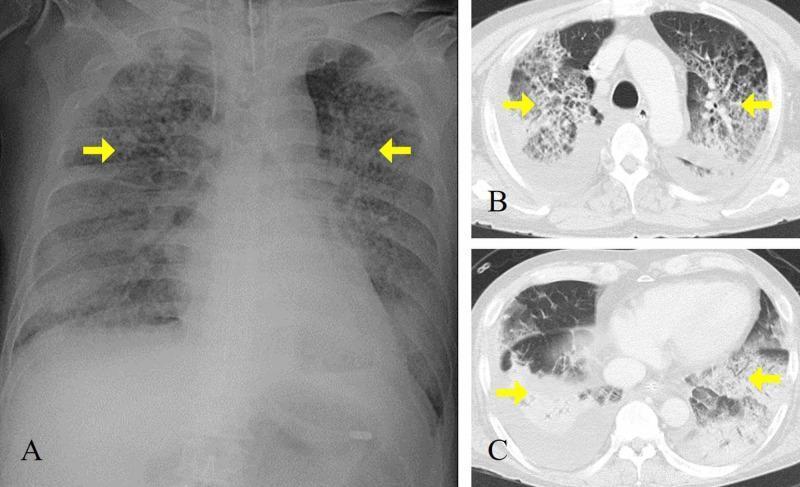
- CXR: Bilateral alveolar opacities obscuring pulmonary vascular markings; may appear as "bat-wing" or "white-out" pattern. No Kerley B lines or cardiomegaly (differentiates from cardiogenic edema).
- CT chest: More sensitive; shows bilateral ground-glass opacities + dependent consolidation; gravity-dependent distribution; detects pneumothorax, effusions, barotrauma
Step 3: Arterial Blood Gas (ABG)
- Calculate PaO₂/FiO₂ ratio (P/F ratio)
- Confirms severity classification
- Usually shows hypoxemia ± hypocapnia (early) or hypercapnia (late/severe)
Step 4: Rule Out Cardiac Etiology
- Echocardiography: Exclude left ventricular dysfunction, valvular disease; estimate PCWP indirectly
- BNP/NT-proBNP: Elevated in cardiogenic edema; normal/mildly elevated in ARDS
- Clinical context: No clinical evidence of left atrial hypertension
Differential Diagnosis of ARDS in ED
| Condition | Key Distinguishing Feature |
|---|
| Cardiogenic pulmonary edema | Elevated BNP, cardiomegaly, Kerley B lines, responds to diuretics |
| Bilateral pneumonia | May coexist; culture/serology positive |
| Diffuse alveolar hemorrhage | Hemoptysis, hemosiderin-laden macrophages on BAL |
| Acute eosinophilic pneumonia | Peripheral eosinophilia, BAL eosinophilia |
| Cryptogenic organizing pneumonia | Subacute onset, consolidation |
4. INVESTIGATIONS IN ARDS
Bedside / Initial
| Investigation | Purpose |
|---|
| ABG | P/F ratio calculation, ventilation assessment, acid-base status |
| SpO₂ monitoring | Continuous oxygenation; SpO₂/FiO₂ ≤315 can substitute for P/F when no ABG |
| Chest X-ray (AP) | Berlin criterion; bilateral infiltrates |
| ECG | Rule out cardiac cause, arrhythmias |
| Point-of-care US (POCUS) | Lung B-lines, consolidation; cardiac function; 2024 Global Definition accepts ultrasound for imaging criterion |
Laboratory
| Test | Purpose |
|---|
| FBC (CBC) | Leukocytosis (infection), thrombocytopenia (sepsis/DIC) |
| CMP (LFTs, U&E, creatinine) | Multiorgan failure monitoring |
| Lactate | Severity of tissue hypoperfusion |
| Coagulation (PT, PTT, fibrinogen, D-dimer) | DIC screen |
| CRP, procalcitonin | Infection/inflammatory markers |
| Blood cultures × 2 | Identify source of sepsis |
| Troponin, BNP/NT-proBNP | Exclude cardiogenic cause |
| Sputum/BAL cultures | Identify causative organisms |
| Serum amylase/lipase | If pancreatitis suspected |
| LDH, ferritin | Elevated in ARDS; marker of severity |
| Serum albumin | Hypoproteinemia is a risk factor |
| Magnesium, phosphate, Ca²⁺ | Electrolytes for ICU management |
Advanced / Targeted
| Investigation | Indication |
|---|
| CT chest | Assess complications (pneumothorax, effusion, fibrosis); barotrauma; atypical presentations |
| Echocardiography | Exclude cardiogenic edema; assess RV function (cor pulmonale) |
| Bronchoscopy + BAL | Identify infection, diffuse alveolar hemorrhage, eosinophilic pneumonia |
| Respiratory virus panel (PCR) | Influenza, SARS-CoV-2, RSV |
| HIV serology | If PJP suspected |
| ANCA, anti-GBM | If vasculitis/Goodpasture suspected |
5. VENTILATOR MANAGEMENT OF ARDS
Goals of Ventilation
- Maintain adequate oxygenation (SpO₂ 88–95%; PaO₂ 55–80 mmHg)
- Avoid ventilator-induced lung injury (VILI): volutrauma, barotrauma, atelectrauma, biotrauma
Core ARDSNet / Lung-Protective Ventilation Strategy (ARMA Trial)
| Parameter | Target |
|---|
| Tidal volume (TV) | 6 mL/kg predicted body weight (PBW) — can reduce to 4 mL/kg if needed |
| Plateau pressure (Pplat) | ≤ 30 cmH₂O |
| Driving pressure | < 15 cmH₂O (= Pplat − PEEP; emerging target) |
| PEEP | Higher PEEP strategy in moderate-severe ARDS (ATS 2024: conditional recommendation) |
| FiO₂ | Titrate to SpO₂ 88–95% |
| Respiratory rate | 6–35 breaths/min to maintain pH 7.30–7.45 |
| Mode | Volume-controlled (VC) preferred; pressure-controlled (PC) acceptable |
| I:E ratio | 1:1 to 1:3 (avoid inverse ratio routinely) |
ARMA Trial (ARDSNet, 2000): TV 6 mL/kg vs 12 mL/kg PBW → mortality reduced from 39.8% to 31.0% (p=0.007); more ventilator-free days (12 vs 10, p=0.007)
— Fishman's Pulmonary Diseases, Table 141-10
Calculating Predicted Body Weight (PBW)
- Male: PBW (kg) = 50 + 2.3 × (height in inches − 60)
- Female: PBW (kg) = 45.5 + 2.3 × (height in inches − 60)
PEEP Strategy (ATS 2024)
- Higher PEEP preferred over lower PEEP in moderate-to-severe ARDS (conditional, low-moderate certainty)
- Use ARDSNet PEEP/FiO₂ tables for titration
- No prolonged lung recruitment maneuvers (LRMs) — strong recommendation AGAINST (ART trial: increased mortality with sustained 45 cmH₂O inflation)
Permissive Hypercapnia
- Tolerate elevated PaCO₂ to allow safe low TV ventilation
- Accept pH as low as 7.20–7.25 if necessary
- Contraindications to permissive hypercapnia:
- Raised intracranial pressure
- Acute cerebrovascular disease/stroke
- Severe pulmonary hypertension / RV failure
- Acute myocardial ischemia
- Severe metabolic acidosis
- Pregnancy
Ventilator Mode Considerations
| Mode | Notes for ARDS |
|---|
| Volume Control (VC) | Most common; guarantees TV delivery |
| Pressure Control (PC) | Variable TV — risk of underestimating Pplat |
| APRV/Bilevel | High airway pressure release ventilation; controversial in ARDS |
| HFOV | Not routinely recommended (OSCILLATE/OSCAR trials: no benefit, possible harm) |
VILI Mechanisms and Prevention
| Mechanism | Definition | Prevention |
|---|
| Volutrauma | Overexpansion of alveoli during inspiration | Low TV (6 mL/kg PBW) |
| Barotrauma | High pressures causing alveolar rupture, pneumothorax | Pplat ≤ 30 cmH₂O |
| Atelectrauma | Repetitive opening/closing of alveoli | Adequate PEEP |
| Biotrauma | Inflammatory cytokine release causing remote organ injury | All of the above |
6. PRONE POSITIONING IN ARDS
Mechanism of Benefit
- Redistributes ventilation-perfusion; reduces V/Q mismatch and shunt
- Homogenizes distribution of tidal volumes (dorsal lung reopens)
- Reduces lung stress and strain
- Facilitates drainage of secretions
- Reduces pleural pressure gradient
Intubated Prone Positioning (Standard)
PROSEVA Trial (2013): 466 patients with severe ARDS (PaO₂/FiO₂ < 150); early (< 36 h) prone ≥ 16 h/day vs. supine
- 28-day mortality: 16% vs 32.8% (p<0.001) — NNT ≈ 6
- 90-day mortality: 23.6% vs 41%
Current Recommendation (ATS 2017, reaffirmed 2023/2024):
- Strong recommendation for prone positioning > 12–16 hours/day in severe ARDS (PaO₂/FiO₂ < 150 mmHg)
- Should be continued until reversal of severe hypoxemia or inability to tolerate
7. AWAKE PRONE POSITIONING IN ARDS
Awake proning refers to placing non-intubated spontaneously breathing patients in the prone position. It gained widespread use during COVID-19.
Rationale
- Improves oxygenation by the same V/Q redistribution mechanism as intubated proning
- May prevent or delay intubation
- Can be combined with HFNC or NIV
- Avoids risks of mechanical ventilation and sedation
Evidence
- COVID-19 context: Multiple RCTs and meta-analyses confirm improved oxygenation indices
- PMID: 37796372 (Graziani et al., Meta-analysis, 2024): Awake proning in COVID-related respiratory failure reduced intubation rates
- PMID: 38712558 (Freire et al., SR/MA, 2024): In unventilated severe COVID-19, awake proning did not significantly alter major outcomes (mortality, ICU LOS), though oxygenation improved
- PMID: 35909384 (Othman et al., RCT, 2023): Awake proning significantly improved SpO₂ and respiratory rate in non-intubated COVID ARDS patients
- Rosen's Emergency Medicine: "Awake proning... increases oxygenation... has shown some promise" — used alongside HFNC/NIV in ED
Protocol for Awake Proning
- Patient selection: Cooperative, spontaneously breathing, hypoxemic (SpO₂ < 94% on supplemental O₂); no contraindications
- Position: Full prone or lateral/semi-prone (30–45° head elevation)
- Duration: Target ≥ 3–4 hours per session; multiple sessions per day if tolerated (cumulative ≥ 8–12 hours/day)
- Monitoring: Continuous SpO₂, respiratory rate, work of breathing
- Response assessment: If SpO₂ fails to improve or work of breathing worsens → consider intubation
Contraindications to Awake Proning
- Altered mental status / uncooperative patient
- Immediate need for intubation
- Hemodynamic instability
- Facial/thoracic injury
- Recent abdominal surgery
- Pregnancy
- Morbid obesity (relative)
Response Criterion
A ≥ 3–5% improvement in SpO₂ or PaO₂/FiO₂ ratio is considered a positive response. Non-responders should not delay intubation.
8. OVERALL MANAGEMENT OF ARDS
Step-by-Step Approach
ARDS Diagnosed
      ↓
1. Treat Underlying Cause (sepsis → antibiotics, aspiration → supportive, etc.)
      ↓
2. Respiratory Support Escalation:
   Mild ARDS → HFNC ± Awake Proning
   Moderate/Severe → Intubation + Mechanical Ventilation
      ↓
3. Lung-Protective MV: TV 6 mL/kg PBW, Pplat ≤30, Higher PEEP
      ↓
4. Prone Positioning ≥16 h/day if PaO₂/FiO₂ <150
      ↓
5. Neuromuscular Blockade (early severe ARDS, first 48 h)
      ↓
6. Corticosteroids (conditional — suggest use across severity)
      ↓
7. Conservative Fluid Strategy (post-resuscitation)
      ↓
8. VV-ECMO (refractory severe ARDS at ECMO-capable center)
Pharmacological Management
| Intervention | ATS 2024 Recommendation | Strength |
|---|
| Corticosteroids | Suggest use | Conditional / Moderate certainty |
| VV-ECMO | Suggest use (selected severe) | Conditional / Low certainty |
| NMBAs | Suggest use (early severe, first 48h) | Conditional / Low certainty |
| Higher PEEP (mod-severe) | Suggest use (without LRMs) | Conditional / Low-Moderate |
| Prolonged LRMs | Recommend AGAINST | Strong / Moderate |
Corticosteroids — Practical Use
- Dexamethasone: 20 mg/day × 5 days → 10 mg/day × 5 days
- Methylprednisolone: 1–2 mg/kg/day, taper over 2–4 weeks
- Avoid if: active uncontrolled infection, late fibroproliferative phase (> 14 days)
- Monitor: hyperglycemia, ICU-acquired weakness, secondary infections
Supportive Care
| Element | Target |
|---|
| Fluid management | Conservative after initial resuscitation (FACTT trial: conservative = more VFDs) |
| Nutrition | Early enteral nutrition; avoid overfeeding |
| VTE prophylaxis | LMWH unless contraindicated |
| Stress ulcer prophylaxis | PPI or H₂ blocker |
| Sedation/analgesia | Analgesia-first approach; lightest effective sedation (PADIS guidelines) |
| DVT/PE prevention | Sequential compression devices + pharmacologic |
| Glycemic control | Target 140–180 mg/dL |
| Renal replacement | As needed for AKI/fluid overload |
| Head of bed | 30–45° (reduces VAP risk) |
Complications to Monitor
- Pneumothorax / barotrauma
- Ventilator-associated pneumonia (VAP)
- Multiorgan dysfunction (renal, hepatic, hematologic)
- Pulmonary fibrosis (late, fibroproliferative phase)
- ICU-acquired weakness
- PTSD / post-ICU syndrome
Key References:
- Qadir N et al. ATS Clinical Practice Guideline: Management of ARDS. AJRCCM 2024;209(1):24–36. PMID 38032683
- Matthay MA et al. A New Global Definition of ARDS. AJRCCM 2024;209(1):37–47
- PROSEVA Trial. Guérin C et al. NEJM 2013;368:2159–2168
- ARDSNet ARMA Trial. NEJM 2000;342:1301–1308
- Fishman's Pulmonary Diseases and Disorders, 2-Volume Set
- Rosen's Emergency Medicine, Concepts and Clinical Practice
- Tintinalli's Emergency Medicine: A Comprehensive Study GuideHere is the complete, structured overview covering all your requested topics:
ARDS: Complete Clinical Review
1. CAUSES OF ARDS
ARDS arises from either direct (pulmonary) or indirect (systemic) injury to the lung.
Direct (Pulmonary) Causes
| Cause | Key Points |
|---|
| Aspiration of gastric contents | Most common direct cause; chemical pneumonitis |
| Bacterial pneumonia (diffuse) | Legionella, Gram-negatives, S. pneumoniae |
| Viral pneumonia | Influenza, SARS-CoV-2 (COVID-19), MERS |
| Chest trauma / lung contusion | Direct mechanical parenchymal injury |
| Near drowning | |
| Pneumocystis jiroveci (PJP) | Immunocompromised hosts |
| Toxic inhalations | Smoke, chlorine, ammonia, crack cocaine |
| Diffuse fungal pneumonias | Candida, Cryptococcus |
| Miliary tuberculosis | |
Indirect (Systemic/Extrapulmonary) Causes
| Cause | Key Points |
|---|
| Severe sepsis / septic shock | Most common overall cause; inflammatory mediators damage alveolar-capillary membrane |
| Acute pancreatitis | Lipase + inflammatory mediators reach lung via circulation |
| Multiple trauma + fat emboli | Long-bone fractures → fat emboli → pulmonary capillary injury |
| Transfusion (TRALI) | Leading cause of transfusion-related morbidity/mortality |
| Toxic ingestions | Aspirin, tricyclic antidepressants, opioids |
| Post-cardiopulmonary bypass | |
| Primary graft failure (lung transplant) | |
| Diffuse alveolar hemorrhage | Vasculitis (Goodpasture, ANCA), post-BMT |
| Acute eosinophilic pneumonia | |
| Lupus pneumonitis | |
Risk Factors for Developing ARDS (Given an Underlying Cause)
- Chronic alcohol abuse
- Hypoproteinemia
- Advanced age
- High injury severity score (ISS) or APACHE score
- Multiple blood transfusions
- Cigarette smoking
- Blood group A
- Protective: Diabetes mellitus, pre-hospital antiplatelet therapy
Fishman's Pulmonary Diseases and Disorders, Table 141-4
2. BERLIN DIAGNOSTIC CRITERIA FOR ARDS (2012)
The Berlin definition replaced the 1994 AECC criteria, eliminating the PCWP ≤18 mmHg requirement, mandating PEEP, abolishing the "ALI" category, and adding severity stratification.
4 Required Criteria (ALL must be met)
| Criterion | Requirement |
|---|
| Timing | Onset within 1 week of a known clinical insult or new/worsening respiratory symptoms |
| Chest Imaging | Bilateral opacities not fully explained by pleural effusions, lobar/lung collapse, or nodules |
| Origin of Edema | Respiratory failure not fully explained by cardiac failure or fluid overload |
| Oxygenation | PaO₂/FiO₂ ≤ 300 mmHg with PEEP or CPAP ≥ 5 cmH₂O |
Severity Stratification
| Severity | PaO₂/FiO₂ | PEEP | Hospital Mortality |
|---|
| Mild | 200–300 mmHg | ≥ 5 cmH₂O | ~27% |
| Moderate | 100–200 mmHg | ≥ 5 cmH₂O | ~32% |
| Severe | ≤ 100 mmHg | ≥ 5 cmH₂O | ~45% |
2024 Global Definition Update (Matthay et al., AJRCCM 2024): Expanded to include non-intubated patients on HFNC/NIV; lung ultrasound accepted for imaging criterion; SpO₂/FiO₂ ≤ 315 can replace PaO₂/FiO₂ when ABG unavailable.
Fishman's Pulmonary Diseases, Tables 141-1B; Tintinalli's Emergency Medicine, Table 29B-1
3. DIAGNOSIS OF ARDS IN THE EMERGENCY DEPARTMENT
ARDS is a diagnosis of exclusion — cardiogenic pulmonary edema must be actively excluded.
Clinical Features
- Acute-onset dyspnea and tachypnea
- Hypoxemia refractory to supplemental O₂ (hallmark)
- Diffuse bilateral crackles on auscultation
- Tachycardia, cyanosis
- Fever, cough (if infectious etiology)
Emergency Diagnostic Approach
Step 1 — Identify precipitating cause: History of sepsis, pneumonia, aspiration, trauma, pancreatitis, transfusion within preceding 1 week
Step 2 — Chest X-ray (AP)
- Bilateral alveolar opacities obscuring vascular markings
- "Bat-wing" or "white-out" pattern
- Differentiates from cardiogenic edema: No Kerley B lines, no cardiomegaly, no upper lobe diversion (though overlap can occur)
Step 3 — ABG
- Calculate PaO₂/FiO₂ ratio (requires known FiO₂)
- Confirms severity and diagnosis
- Early ARDS: hypoxemia + hypocapnia (hyperventilation); Late/severe: hypercapnia + metabolic acidosis
Step 4 — Exclude Cardiac Cause
- BNP/NT-proBNP: Low or normal favors ARDS; markedly elevated favors cardiogenic edema
- Echocardiography (POCUS): Assess LV function, wall motion abnormalities, valvular disease
- Clinical: No orthopnea/PND, no peripheral edema pattern, not responsive to diuretics
ED Chest Imaging: ARDS Appearance
Panel A: CXR showing bilateral patchy alveolar infiltrates (yellow arrows). Panels B/C: CT thorax showing bilateral ground-glass opacities and dependent posterior consolidation — classic ARDS morphology
Differential Diagnosis in the ED
| Condition | Differentiating Feature |
|---|
| Cardiogenic pulmonary edema | Elevated BNP, cardiomegaly, bilateral effusions, Kerley B lines, responds to diuretics |
| Bilateral pneumonia | May coexist; positive cultures/PCR |
| Diffuse alveolar hemorrhage | Hemoptysis, hemosiderin-laden macrophages on BAL |
| Acute eosinophilic pneumonia | Peripheral eosinophilia, BAL eosinophilia |
| Cryptogenic organizing pneumonia | Subacute, peripheral consolidation pattern |
4. INVESTIGATIONS IN ARDS
Bedside / Immediate
| Investigation | Purpose |
|---|
| Arterial Blood Gas (ABG) | P/F ratio, ventilation status, acid-base |
| Continuous SpO₂ | Oxygenation monitoring |
| Chest X-ray | Berlin imaging criterion |
| ECG | Exclude cardiac cause, arrhythmias |
| POCUS (lung + cardiac) | B-lines, consolidation; LV/RV function |
Laboratory
| Test | Purpose |
|---|
| FBC / CBC | Leukocytosis, thrombocytopenia (sepsis/DIC) |
| Metabolic panel (U&E, LFTs, Cr) | Multiorgan failure monitoring |
| Lactate | Tissue hypoperfusion severity |
| Coagulation (PT, APTT, fibrinogen, D-dimer) | DIC screen |
| Blood cultures × 2 | Bacteremia/sepsis source |
| Troponin + BNP/NT-proBNP | Exclude cardiogenic cause |
| CRP, Procalcitonin | Infection/inflammatory markers |
| LDH, Ferritin | Elevated in ARDS; severity markers |
| Serum albumin | Hypoproteinemia = ARDS risk factor |
| Sputum culture + sensitivity | Causative organisms |
| Amylase/Lipase | If pancreatitis suspected |
| Respiratory PCR panel | Influenza A/B, SARS-CoV-2, RSV |
| Electrolytes (Mg²⁺, PO₄³⁻, Ca²⁺) | ICU management, arrhythmia prevention |
Targeted / Advanced
| Investigation | Indication |
|---|
| CT chest | Complications (pneumothorax, effusions, fibrosis); atypical features; barotrauma |
| Echocardiography (formal) | LV dysfunction, valvular disease, pulmonary hypertension, RV failure |
| Bronchoscopy + BAL | Identify infection, DAH, eosinophilic pneumonia; culture if VAP suspected |
| HIV serology | PJP risk |
| ANCA, anti-GBM antibodies | Vasculitis/Goodpasture syndrome |
| Urine Legionella antigen | If Legionella pneumonia suspected |
| Thyroid function | If amiodarone toxicity or thyroid disease considered |
5. VENTILATOR MANAGEMENT OF ARDS
Overall Goals
- Maintain SpO₂ 88–95% (PaO₂ 55–80 mmHg) — avoid excessive hyperoxia
- Prevent VILI (volutrauma, barotrauma, atelectrauma, biotrauma)
- Allow permissive hypercapnia if needed for safe low-volume ventilation
Lung-Protective Ventilation (ARDSNet ARMA Protocol)
| Parameter | Target |
|---|
| Mode | Volume Control (VC-AC) preferred |
| Tidal Volume | 6 mL/kg PBW (can reduce to 4 mL/kg if Pplat > 30) |
| Plateau Pressure (Pplat) | ≤ 30 cmH₂O |
| Driving Pressure | < 15 cmH₂O (Pplat − PEEP) |
| PEEP | Higher PEEP strategy (titrate per PEEP/FiO₂ table); ≥ 5 cmH₂O minimum |
| FiO₂ | Titrate to SpO₂ 88–95%; avoid prolonged high FiO₂ (toxicity risk) |
| Respiratory Rate | 6–35 breaths/min |
| pH Target | 7.30–7.45; accept down to 7.20 with permissive hypercapnia |
| I:E Ratio | Conventional 1:2 |
ARMA Trial Result: Low TV (6 mL/kg) vs Traditional (12 mL/kg) → mortality 31% vs 39.8% (p=0.007) — Fishman's Pulmonary Diseases, Table 141-10
Calculating Predicted Body Weight (PBW)
- Male: 50 + 2.3 × (height in inches − 60)
- Female: 45.5 + 2.3 × (height in inches − 60)
Use PBW, NOT actual body weight — critical in obese patients
PEEP/FiO₂ Table (ARDSNet Higher PEEP Table for Moderate-Severe ARDS)
| FiO₂ | 0.3 | 0.4 | 0.5 | 0.6 | 0.7 | 0.8 | 0.9 | 1.0 |
|---|
| PEEP (cmH₂O) | 5 | 8–10 | 10 | 10–14 | 14 | 14–18 | 16–18 | 18–24 |
Lung Recruitment Maneuvers (LRMs)
- Strong recommendation AGAINST prolonged LRMs (ATS 2024)
- ART Trial (2017): Sustained inflation at 45 cmH₂O → significantly increased 28-day mortality
- Brief, step-wise LRMs: insufficient evidence; may be used with caution in selected cases
Permissive Hypercapnia
- Allow PaCO₂ to rise to maintain safe low TV ventilation
- Accept pH ≥ 7.20–7.25
Contraindications:
| Contraindication |
|---|
| Raised intracranial pressure (trauma, mass lesion) |
| Acute cerebrovascular disease / stroke |
| Acute myocardial ischemia |
| Severe pulmonary hypertension / RV failure |
| Severe uncorrected metabolic acidosis |
| Pregnancy |
| Sickle cell disease |
| Tricyclic antidepressant overdose |
Mechanisms of VILI (and Prevention)
| Mechanism | Cause | Prevention |
|---|
| Volutrauma | Alveolar overdistension (high TV) | TV 6 mL/kg PBW |
| Barotrauma | Excess airway pressure → pneumothorax, pneumomediastinum | Pplat ≤ 30 cmH₂O |
| Atelectrauma | Repetitive alveolar opening/closing | Adequate PEEP |
| Biotrauma | Cytokine release → remote organ injury | All of the above |
6. PRONE POSITIONING (INTUBATED) IN ARDS
Mechanisms
- Homogenizes distribution of tidal volumes (recruits collapsed dorsal lung)
- Reduces V/Q mismatch and intrapulmonary shunt
- Reduces pleural pressure gradient
- Facilitates secretion drainage
PROSEVA Trial (2013)
- Population: Severe ARDS (PaO₂/FiO₂ < 150 mmHg), early (< 36 h), on lung-protective MV
- Intervention: Prone ≥ 16 h/day vs supine
- 28-day mortality: 16% vs 32.8% (p<0.001); 90-day mortality: 23.6% vs 41%
ATS 2017 / Current Recommendation
- Strong recommendation for prone positioning ≥ 12–16 hours/day in severe ARDS (PaO₂/FiO₂ < 150 mmHg)
- Initiate early (within 36 hours of MV)
- Continue until hypoxemia resolves
Complications of Prone Positioning
- Pressure ulcers (face, chest, knees)
- Endotracheal tube displacement/obstruction
- Central line/arterial line dislodgement
- Facial edema
- Temporary hemodynamic instability during turning
7. AWAKE PRONE POSITIONING IN ARDS
Definition
Placing a non-intubated, spontaneously breathing patient in the prone or semi-prone position, typically while on HFNC, NIV, or supplemental oxygen.
Physiologic Rationale
- Same V/Q redistribution as intubated proning
- Prevents "sinus" pattern lung injury (dorsal collapse in supine position)
- Reduces work of breathing over time
- May reduce risk of patient self-inflicted lung injury (P-SILI)
- Potential to avoid/delay intubation
Evidence
| Study | Finding |
|---|
| Graziani et al. Meta-analysis 2024 [PMID 37796372] | Awake proning in COVID-related ARDS → reduced intubation rates; improved oxygenation |
| Freire et al. SR/MA 2024 [PMID 38712558] | Improved oxygenation but no significant effect on mortality or ICU LOS in unventilated severe COVID-19 |
| Othman et al. RCT 2023 [PMID 35909384] | Significant improvement in SpO₂ and RR in non-intubated COVID ARDS |
| CATS Trial, PROF Trial (2021–2022) | Awake proning improved oxygenation; no clear reduction in intubation in general ARDS |
Key limitation: Most evidence is from COVID-19 ARDS. Benefit in general non-COVID ARDS is less clear. Should not delay necessary intubation.
Practical Protocol
| Step | Details |
|---|
| Patient selection | Cooperative, awake, spontaneously breathing; SpO₂ < 94% on ≥4 L/min O₂ or HFNC; no immediate intubation criteria |
| Positioning | Full prone or 3/4 prone; head turned to one side; pillow under chest and pelvis |
| Duration | ≥ 3–4 hours per session; target ≥ 8–16 hours/day cumulative if tolerated |
| Support device | Continue HFNC/NIV/supplemental O₂ during proning |
| Monitoring | SpO₂, RR, work of breathing (accessory muscle use), comfort |
| Response check | SpO₂ improvement ≥ 3–5%; PaO₂/FiO₂ improvement |
| Non-responders | Reassess for intubation; do not persist if worsening |
Contraindications to Awake Proning
- Altered consciousness / uncooperative
- Immediate intubation criteria (GCS < 13, hemodynamic instability, impending arrest)
- Facial/thoracic trauma
- Recent abdominal surgery
- Hemoptysis
- Pregnancy
- Severe claustrophobia or agitation
- Morbid obesity (relative)
8. COMPLETE MANAGEMENT SUMMARY
ARDS Suspected → Confirm Berlin Criteria
         ↓
1. TREAT UNDERLYING CAUSE
   Sepsis → broad-spectrum antibiotics + source control
   Pneumonia → antivirals/antibiotics
   Aspiration → supportive; antibiotics if secondary infection
   Pancreatitis → supportive; fluids
         ↓
2. RESPIRATORY SUPPORT (escalate based on severity)
   Mild ARDS → HFNC (target SpO₂ 92–96%) ± Awake Proning
   Moderate/Severe → Intubation + Mechanical Ventilation
         ↓
3. LUNG-PROTECTIVE VENTILATION
   TV: 6 mL/kg PBW | Pplat ≤ 30 | Driving pressure < 15
   Higher PEEP (without prolonged LRMs)
   Permissive hypercapnia if needed
         ↓
4. PRONE POSITIONING ≥16 h/day (if PaO₂/FiO₂ < 150)
         ↓
5. NMBAs — if early severe ARDS (first 48h), dyssynchrony
         ↓
6. CORTICOSTEROIDS — suggest use (conditional)
         ↓
7. CONSERVATIVE FLUID MANAGEMENT (post-resuscitation)
         ↓
8. VV-ECMO — refractory severe ARDS, ECMO-capable centre
ATS 2024 Recommendations Summary
| Intervention | Recommendation | Strength | Evidence |
|---|
| Corticosteroids | FOR | Conditional | Moderate |
| VV-ECMO (severe, selected) | FOR | Conditional | Low |
| NMBAs (early severe) | FOR | Conditional | Low |
| Higher PEEP (mod-severe) | FOR (no LRMs) | Conditional | Low–Moderate |
| Prolonged LRMs | AGAINST | Strong | Moderate |
Sources: Fishman's Pulmonary Diseases and Disorders |
Rosen's Emergency Medicine |
Tintinalli's Emergency Medicine | Qadir N et al. ATS Guideline,
AJRCCM 2024;209(1):24–36
PMID 38032683 | Matthay MA et al. Global ARDS Definition,
AJRCCM 2024 | PROSEVA Trial,
NEJM 2013 | ARDSNet ARMA Trial,
NEJM 2000