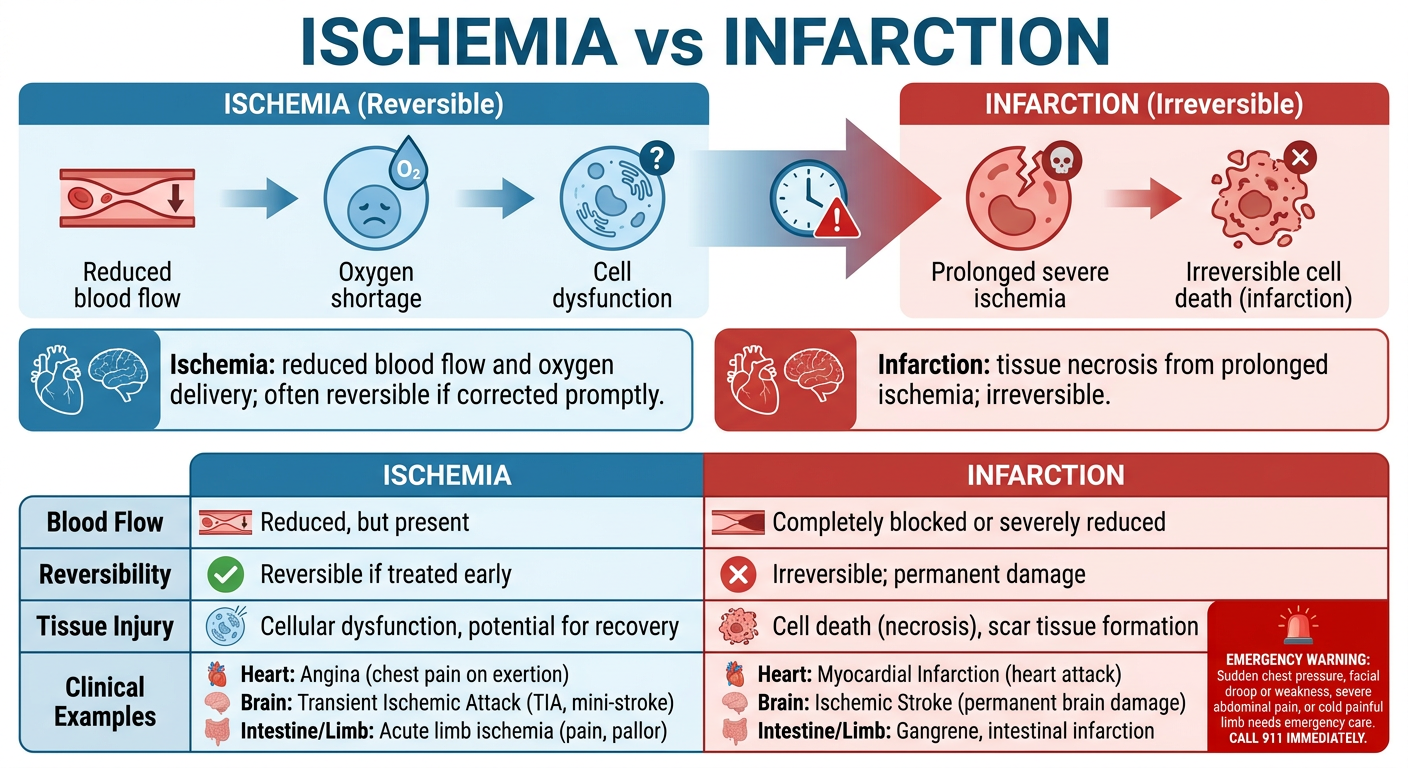
Ischemia and infraction
ischemia AND infarction
Merck Manual ischemia infarction definition
| Feature | Ischemia | Infarction |
|---|---|---|
| Blood supply | Reduced or interrupted | Prolonged interruption causes cell death |
| Tissue damage | Initially functional, potentially reversible | Permanent necrosis |
| Example in heart | Angina from transient coronary narrowing | Myocardial infarction (heart attack) |
| Example in brain | Transient ischemic attack may resolve | Ischemic stroke with brain infarction |
Reduced perfusion -> ischemia -> cellular dysfunction -> irreversible injury -> infarction.
Make one page image
One-page educational medical infographic titled “ISCHEMIA vs INFARCTION”. Clearly compare two concepts with simple icons and a central progression arrow: Reduced blood flow → Oxygen shortage → Cell dysfunction → Prolonged severe ischemia → Irreversible cell death (infarction). Include concise readable definitions: “Ischemia: reduced blood flow and oxygen delivery; often reversible if corrected promptly.” “Infarction: tissue necrosis from prolonged ischemia; irreversible.” Add a comparison panel with rows for blood flow, reversibility, tissue injury, and clinical examples. Include examples: heart: angina versus myocardial infarction; brain: transient ischemia versus ischemic stroke; intestine/limb: acute ischemia versus infarction. Add a small red emergency warning: sudden chest pressure, facial droop or weakness, severe abdominal pain, or cold painful limb needs emergency care. Use accurate professional medical educational content, simple anatomical heart and brain symbols, and make all wording legible.