
Iceberg phenomenon of disease Components introduction according to 1 marks Definition 1 marks Concept and explain Diagram of iceberg phenomenon with suitable labelling Example with explanation atleast 4 Public health significance Conclusions Reference in Vancouver style
Reading File
Now let me search the medical library for the iceberg phenomenon content in parallel with a web search.
Finding Sources
Finding Sources
Searching the Web
iceberg phenomenon of disease epidemiology public health significance components
I found the content in Park's Textbook. Let me read both blocks now in parallel along with searching for an iceberg image.
Reading File
Reading File
Searching Images
iceberg phenomenon of disease epidemiology diagram
I found the Park's textbook iceberg diagram. Let me fetch it.
Loading Image
I now have all the content needed from Park's textbook and the official diagram. Let me now compose the complete, well-structured answer.
Iceberg Phenomenon of Disease
Components - Introduction (1 mark)
The iceberg phenomenon of disease is a fundamental concept in epidemiology that forms part of the broader study of disease occurrence in communities. It is closely related to the natural history of disease and the spectrum of disease. The concept draws its understanding from three core areas:
- The spectrum of disease - the range of manifestations from subclinical to overt clinical illness
- Levels of disease in a community - what is visible (clinical cases) versus what is hidden (subclinical, undiagnosed, carrier states)
- Epidemiological surveillance - the role of active case-finding versus passive hospital-based reporting
Understanding the iceberg helps bridge the gap between what clinicians observe in practice and what epidemiologists uncover in the community.
Definition (1 mark)
The iceberg phenomenon of disease is the concept that states: "In a community, only a small fraction of the total disease burden (the 'tip') is clinically apparent and diagnosed, while a far larger proportion remains hidden below the surface as subclinical, undiagnosed, presymptomatic, and carrier states - analogous to the submerged bulk of an iceberg."
- Park K. Park's Textbook of Preventive and Social Medicine, p. 46 defines it as: "Disease in a community may be compared with an iceberg. The floating tip of the iceberg represents what the physician sees in the community, i.e., clinical cases. The vast submerged portion of the iceberg represents the hidden mass of disease, i.e., latent, inapparent, presymptomatic and undiagnosed cases and carriers in the community."
Concept and Explanation
The iceberg phenomenon is based on the premise that the pattern of disease seen in hospitals and clinics is fundamentally different from the true burden of disease in the community.
Key Idea
When a physician treats a patient, he/she sees only those individuals who:
- Developed symptoms severe enough to seek care
- Had access to and actually used healthcare services
- Received a proper clinical diagnosis
This represents only the tip of the iceberg - a small, visible fraction.
Below the "waterline" lies the far larger, invisible mass including:
- Subclinical (inapparent) cases - infected/affected individuals with no symptoms
- Presymptomatic cases - disease is present but symptoms have not yet appeared
- Undiagnosed cases - symptomatic but never formally diagnosed
- Carrier states - individuals harboring the pathogen without becoming ill themselves
The "waterline" is the critical demarcation between what is visible (apparent disease) and what is hidden (inapparent disease).
Why Does the Hidden Part Exist?
Several factors determine the size of the submerged portion:
- Agent factors - virulence, pathogenicity, infective dose
- Host factors - immunity, age, nutritional status, genetic susceptibility
- Environmental factors - access to healthcare, socioeconomic status, health literacy
- Healthcare system factors - availability of diagnostic tests, screening programs
In many chronic diseases such as hypertension, diabetes, and anaemia, the unknown morbidity (submerged portion) far exceeds the known morbidity. The hidden portion thus constitutes an important, undiagnosed reservoir of infection or disease, and its detection and control is a major challenge for preventive medicine.
Diagram of Iceberg Phenomenon
The following is the original diagram from Park's Textbook of Preventive and Social Medicine (Fig. 10):
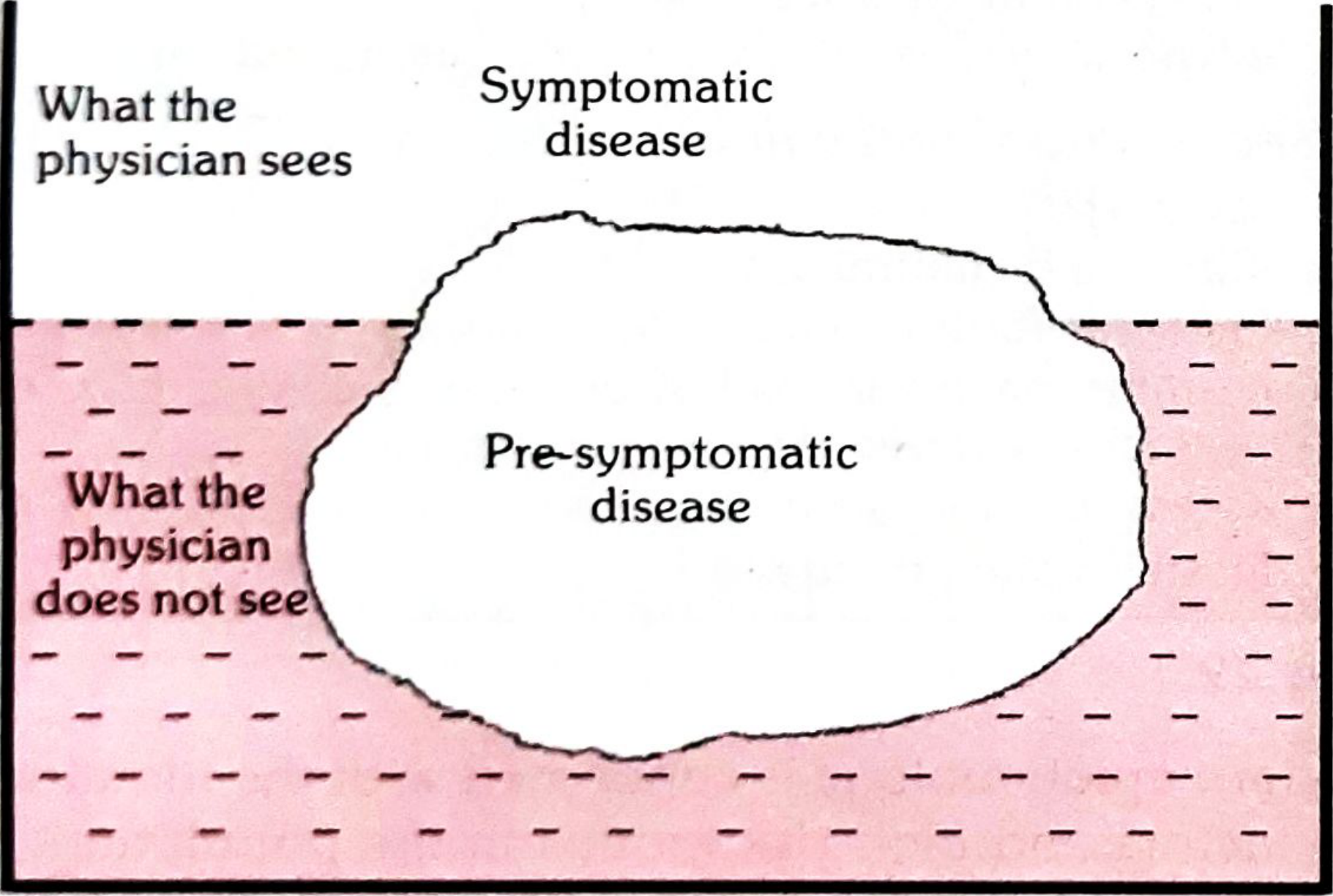
Fig. 10 - The Iceberg of Disease (Park's Textbook of Preventive and Social Medicine)
Labelled Components:
                 SEA LEVEL (WATERLINE)
                 ┌────────────────────────────────────────────┐
 ABOVE WATER     │          TIP OF ICEBERG                    │
 (Visible)       │   ▲  Symptomatic / Clinical Disease        │
                 │   ▲  Diagnosed Cases                       │
                 │   ▲  What the PHYSICIAN sees               │
                 ├─────────────────── WATERLINE ──────────────┤
                 │   ▼  Presymptomatic Cases                  │
 BELOW WATER     │   ▼  Subclinical / Inapparent Cases        │
 (Hidden)        │   ▼  Undiagnosed Cases                     │
                 │   ▼  Carrier States                        │
                 │   ▼  Latent Infections                     │
                 │   ▼  What the EPIDEMIOLOGIST uncovers      │
                 └────────────────────────────────────────────┘
| Part | Label | Significance |
|---|---|---|
| Above waterline | Tip of iceberg | Clinically apparent disease seen by physicians |
| The waterline | Sea level | Threshold of clinical detectability |
| Below waterline | Submerged bulk | Hidden disease reservoir in community |
Examples with Explanation (at least 4)
1. Hypertension
Hypertension is a classic example of the iceberg phenomenon. A large proportion of individuals in any community have elevated blood pressure without knowing it, because hypertension is largely asymptomatic until it causes end-organ damage (stroke, heart failure, renal failure). Studies consistently show that only about 50% of hypertensives in a community are aware of their condition. The remaining are the submerged part - undiagnosed, untreated, and at high cardiovascular risk.
- Tip: Diagnosed hypertensives on treatment presenting to clinics
- Submerged: Undiagnosed hypertensives in the community who feel well
2. Diabetes Mellitus
Type 2 diabetes is often called a "silent disease" because it can progress for years without noticeable symptoms. The WHO estimates that approximately 50% of all people with diabetes globally are undiagnosed. Many only discover their diabetes when they present with a complication such as diabetic retinopathy, neuropathy, or renal failure.
- Tip: Diagnosed diabetics attending OPD or on medication
- Submerged: Impaired fasting glucose, impaired glucose tolerance (prediabetes), asymptomatic T2DM cases in the community
3. Tuberculosis (TB)
Tuberculosis illustrates the iceberg with carrier and subclinical components. For every one case of active pulmonary TB visible to a clinician, there are many more with:
- Latent TB infection (LTBI) - infected with Mycobacterium tuberculosis but not yet diseased (estimated ~1.7 billion people worldwide)
- Subclinical TB - bacteriologically confirmed infection without classical symptoms
The WHO's End TB Strategy specifically targets this hidden reservoir, as smear-negative and subclinical cases silently transmit infection. Active case-finding and contact tracing aim to uncover the submerged iceberg.
- Tip: Symptomatic, sputum-positive TB cases
- Submerged: LTBI, subclinical TB, undiagnosed TB
4. Poliomyelitis
Polio is one of the most striking examples in the history of epidemiology. For every one case of paralytic polio (visible tip), there are:
- 200+ cases of non-paralytic (subclinical) infection
- Many more inapparent infections where the virus silently circulates in the gut
Before mass vaccination, poliovirus was silently spreading in communities through the submerged cases. This explains why outbreaks occurred even when paralytic cases appeared rare - the hidden reservoir was vast. This realisation drove the oral polio vaccine strategy targeting the entire iceberg, not just paralytic cases.
- Tip: Paralytic polio cases
- Submerged: Non-paralytic infections, inapparent gut-level infections (most common)
5. COVID-19
The COVID-19 pandemic dramatically illustrated the iceberg phenomenon. Early in the pandemic, only severely ill and hospitalised patients were tested in many countries. However, seroprevalence studies later revealed that for every detected case, many multiples of undetected infections existed (asymptomatic and mild cases). As published research in PMC confirms, the iceberg model was essential to understanding the true scale of COVID-19 and planning public health responses.
- Tip: Hospitalised and severe COVID-19 cases
- Submerged: Asymptomatic cases, mild symptomatic (home-isolated), untested individuals
6. Anaemia
Especially in developing countries, mild-to-moderate anaemia is extremely common but largely undiagnosed. Women of reproductive age, children, and the elderly may have haemoglobin levels below normal thresholds without presenting to a doctor. The visible tip - severe symptomatic anaemia requiring hospitalisation - represents only a fraction of the true community burden.
- Tip: Severe anaemia requiring transfusion or hospitalisation
- Submerged: Mild and moderate anaemia in the community, especially among women and children
Public Health Significance
The iceberg phenomenon has far-reaching implications for public health policy and practice:
1. Highlights the True Burden of Disease
Official morbidity statistics based on hospital records grossly underestimate the actual disease burden in a community. Planners who rely only on clinical data will systematically misjudge the scale of the problem.
2. Identifies Hidden Reservoirs of Infection
The submerged portion of the iceberg - subclinical cases and carriers - acts as a reservoir from which disease continues to spread. Control programs that only treat visible cases fail to interrupt transmission chains. For example, in cholera, typhoid, and polio, silent carriers perpetuate outbreaks.
3. Justifies Screening Programs
Understanding the iceberg is the primary rationale for population-level screening - the active search for unrecognised disease in apparently healthy individuals. Without screening, subclinical hypertension, diabetes, cervical cancer (via Pap smear), and many other conditions would remain hidden until complications appear.
4. Guides Epidemiological Surveillance
The concept demonstrates why passive surveillance (waiting for cases to be reported) is insufficient. Active surveillance - field surveys, contact tracing, community screening - is needed to uncover the submerged iceberg and get true incidence and prevalence data.
5. Informs Disease Control Strategies
Control programs must target not only clinically diagnosed cases but the entire iceberg. This principle underlies:
- Mass drug administration (MDA) in filariasis, leprosy
- Universal immunisation programs in polio, measles
- Contact tracing in TB and sexually transmitted infections
6. Reveals Differential Iceberg Sizes
Different diseases have different iceberg proportions. The iceberg concept helps compare:
- Large submerged portion: Polio, TB (LTBI), hypertension, hepatitis B
- Smaller submerged portion: Rabies, smallpox (more likely to manifest clinically)
This helps prioritise public health resources.
7. Challenges Clinician Bias
Clinicians develop their understanding of disease from those patients who seek care. The iceberg phenomenon corrects this clinician bias, reminding health professionals that their clinical picture is skewed toward severe cases and that milder forms of disease are far more common in the population.
Conclusion
The iceberg phenomenon of disease is a powerful conceptual framework that captures the fundamental difference between clinical medicine (what the physician sees) and community medicine/epidemiology (what actually exists in the population). The visible clinical cases at the tip of the iceberg represent only a small fraction of the total disease burden; the submerged bulk - comprising subclinical infections, presymptomatic disease, undiagnosed cases, and carriers - is far larger and often more significant epidemiologically.
Recognising this hidden mass of disease is indispensable for:
- Accurate assessment of disease burden
- Planning effective prevention and control programs
- Designing appropriate screening interventions
- Interrupting silent transmission chains
The concept remains as relevant today as when it was first described - from tuberculosis and polio to modern-day hypertension, diabetes, and COVID-19, the iceberg phenomenon continues to guide evidence-based public health practice.
References (Vancouver Style)
-
Park K. Epidemiology: principles and methods - Iceberg of disease. In: Park's Textbook of Preventive and Social Medicine. 26th ed. Jabalpur: Banarsidas Bhanot Publishers; 2021. p. 46.
-
Park K. Iceberg phenomenon of disease. In: Park's Textbook of Preventive and Social Medicine. 26th ed. Jabalpur: Banarsidas Bhanot Publishers; 2021. p. 154.
-
Gerstman BB. The spectrum of disease and the iceberg phenomenon. In: Epidemiology Kept Simple: An Introduction to Traditional and Modern Epidemiology. 3rd ed. Oxford: Wiley-Blackwell; 2013.
-
Moshkdanian G, Mohammadi M, Pourmontaseri M, Hosseini SA. How is the iceberg of COVID-19? Results from a rapid literature review. J Prev Med Public Health. 2021;54(4):241-8. Available from: https://pmc.ncbi.nlm.nih.gov/articles/PMC8285553
-
Singh BR. Iceberg concept of disease occurrence. Epidemiology Division, IVRI, Izatnagar. [Presentation document]. Available from: https://www.slideshare.net/slideshow/iceberg-concept-of-disease-occurrence/79399722
-
World Health Organization. Global tuberculosis report 2023. Geneva: WHO; 2023. Available from: https://www.who.int/teams/global-tuberculosis-programme/tb-reports
-
International Diabetes Federation. IDF Diabetes Atlas. 10th ed. Brussels: IDF; 2021. Available from: https://www.diabetesatlas.org
-
Dicker D, Nguyen G, Abate D, et al. Global, regional, and national age-sex-specific mortality and life expectancy, 1950-2017: a systematic analysis for the Global Burden of Disease Study 2017. Lancet. 2018;392(10159):1684-735.
This is a shared conversation. Sign in to Orris to start your own chat.