

IMG_0424.jpg
Ya sab kuch muja details ma btyo one by one in Hinglish
Yeh ek Operation Notes document hai. Main isko detail mein samjhata hoon - ek ek point karke.
Searching sources...
Reading File
Searching the Web
mastoidectomy tympanoplasty operation notes procedure explained
Finding Sources
Reading File
Finding Sources
Ab main document ka poora content detail mein samjhata hoon. Image mein jo likha hai uska ek ek point clear karta hoon:
Operation Notes - Poori Detail Hinglish Mein
Patient Ki Basic Information
| Field | Detail |
|---|---|
| Patient | Mr. Satish M. (Male) |
| Age | 43 saal |
| Anaesthesia | General Anaesthesia (GA) |
| Operation | Mastoidectomy + Tympanoplasty |
| Surgeon | BLAGAM (naam hai) |
| Indication | CSOM (Chronic Suppurative Otitis Media) |
| Date | 12/12/26 |
Step-by-Step Operation Kya Hua:
1. GA (General Anaesthesia)
Patient ko puri neend ki injection/gas di gayi taaki woh behosh ho jaye aur operation ke waqt kuch bhi feel na kare. Yeh ear surgery mein standard practice hai.
2. Post-Aural Incision (Kaan ke peeche chira)
Surgeon ne kaan ke peeche ki taraf (post-auricular area mein) ek chira lagaya. Yeh mastoid bone tak pahunchne ka sabse common rasta hai. Isse periosteal flap (haddi ke upar wali thin layer/cover) ko upar utha kar rakhte hain.
3. Mastoid Antrum Opened (Mastoid ka darwaza khola)
- Mastoid woh honeycomb-jaisi bone hai jo kaan ke bilkul peeche hoti hai
- Antrum us bone ka sabse pehla aur bada air cell hai
- Surgeon ne drill se yeh area open kiya taaki andar infection/cholesteatoma dekh sake
- Andar mucosa (andar ki lining) dikh rahi thi
4. TM - Post-Sub-Pt + Breakdown (Kaan ka parda)
- TM = Tympanic Membrane yaani kaan ka parda
- "Post-Sub" = Posterior-Inferior ya Posterior-Superior area mein perforation (chhed) tha
- Parda faata hua tha ya damaged tha - ise baad mein repair kiya gaya
5. Mucosa Thickening + Mucosa Noted
- Middle ear ki andar ki lining (mucosa) moti/inflamed ho gayi thi
- Yeh chronic infection ki wajah se hota hai - CSOM ka ek typical sign hai
- Surgeon ne is thickened mucosa ko note kiya
6. Cholesteatoma - Seen, Removed
Cholesteatoma ek bohot important finding hai:
- Yeh kaan ke parde ke peeche banne wali skin cells ki abnormal growth hoti hai
- Andar andar badhti rehti hai aur bones ko gala deti hai
- Isko poori tarah remove karna zaroori hota hai warna wapas aa jata hai
- Is case mein surgeon ne cholesteatoma dekha aur nikal diya
7. Incus Removed (Kaan ki haddi nikaali)
- Kaan mein 3 choti haddiyan hoti hain: Malleus, Incus, Stapes (sound conduct karti hain)
- Incus yahan destroy/erode ho chuka tha - cholesteatoma ne use khaa liya tha
- Ise nikaalna pada kyunki woh damaged tha
8. Malleus + Stapes - Intact (Dono theek the)
- Malleus (1st haddi) aur Stapes (3rd haddi, stirrup shape) dono intact the
- Yeh acha sign hai - matlab hearing chain poori tarah khatam nahi hui
- In dono ko bachaya gaya
9. Cortical Mastoidectomy Done
- Canal Wall Down ya Canal Wall Up mastoidectomy ki gayi
- Infected aur diseased mastoid air cells ko drill se saaf kiya gaya
- Mastoid ko ek badi cavity mein convert kar diya taaki drainage ho sake
10. Periosteal Flap Elevated, Left
- Jo periosteal flap pehle utha ke rakha tha (kaan ke peeche ki covering)
- Use wapas apni jagah rakh diya (repositioned/left in place)
- Yeh healing mein help karta hai
11. Persistent Flap / Reconstruction
- End mein surgeon ne tympanoplasty ki - matlab kaan ke parde ko repair kiya
- Kuch tissue (often temporalis fascia - sir ki muscle se li gayi thin layer) use kiya gaya parda banana ke liye
- Stitches lagaaye gaye
Poori Surgery Ka Summary
Patient Satish ko kaan ki puraani infection (CSOM) thi jisme andar cholesteatoma ban gaya tha. Is wajah se kaan ki ek haddi (incus) gal gayi thi. Surgeon ne:
- Kaan ke peeche chira lagaaya
- Mastoid bone drill ki, infected cells nikale
- Cholesteatoma poora remove kiya
- Damaged incus nikaal di
- Malleus aur Stapes bachaa liye
- Kaan ka parda repair kiya (Tympanoplasty)
- Stitches karke band kiya
Kya Iska Matlab Hai Patient Ke Liye?
- Achhi baat: Infection saaf ho gayi, cholesteatoma nikala gaya
- Sunnai: Pehle se better ho sakti hai kyunki 2/3 haddiyan intact hain
- Follow-up: Regular check-up zaroori hai - cholesteatoma wapas aa sakta hai
- Post-op care: Ear dry rakhna hai, paani se bachana hai
Koi bhi specific point aur detail mein chahiye toh bataao! 😊
Drill means
"Drill" Ka Matlab - Surgery Mein
Searching sources...
Finding Sources
Searching the Web
mastoid drill surgery ear bone burr explained
Loading Image
"Drill" Ka Matlab - Bilkul Simple Mein
Aasaan Zindagi Ka Example:
Socho ghar mein carpenter wall mein hole karta hai - woh ek electric drill use karta hai jo ghumti hai aur wall kata deti hai.
Surgery mein bhi bilkul same concept hai - bas woh drill:
- Size mein bohot choti hoti hai
- Specially designed hoti hai haddi ke liye
- Doctor ke haath mein hoti hai - patient ko kuch feel nahi hota (GA ki wajah se)
Medical Drill Ko "Burr" Kehte Hain
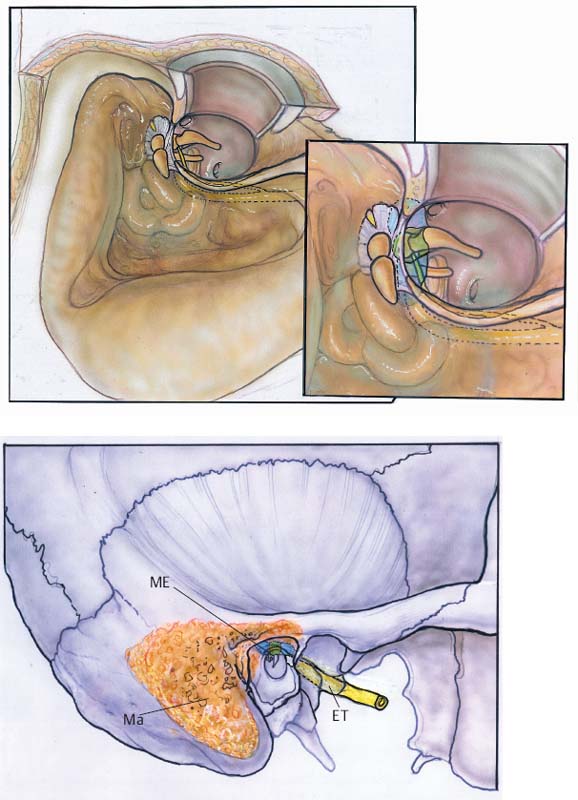
Upar image mein dekho - orange/yellow area = Mastoid bone (Ma), aur ME = Middle Ear. Surgeon ne is orange area ko drill karke infected cells nikale.
Mastoid Bone Kyun Drill Karte Hain?
Mastoid bone andar se honeycomb jaisi hoti hai - matlab usme chote chote air cells (hawa ke chote khane) hote hain:
Mastoid Bone (andar se):
[ air ] [ air ] [ air ]
[ air ] [infect] [ air ]
[ air ] [infect] [infect]
Jab infection hoti hai ya cholesteatoma banta hai, toh yeh chote khane band ho jaate hain aur pus/bacteria andar jam jaata hai. Sirf medicine se yeh saaf nahi hota.
Drill Se Kya Karte Hain?
| Step | Kya Hota Hai |
|---|---|
| 1. Cortical bone hata do | Upar ki sakht layer drill se kaato |
| 2. Air cells kholo | Andar ke infected khane ek ek karke drill se todo |
| 3. Sab mila ke ek badi cavity banao | Saari infected jagah ek badi khuli jagah ban jaaye |
| 4. Saaf karo | Ab cholesteatoma, pus, infected tissue sab nikaalo |
Drill Ke Types (Size)
- Badi drill (Cutting Burr) - pehle use hoti hai, hard bone kaatne ke liye - fast
- Choti drill (Diamond Burr) - baad mein, jab sensitive areas ke paas jaana ho (jaise facial nerve, kaan ki nazzuk haddiyan) - slow aur safe
Kya Yeh Dardnak Hota Hai?
Bilkul nahi - patient ko General Anaesthesia (GA) diya hua hota hai. Patient poori tarah behosh hota hai. Drill ki awaaz aur vibration patient ko feel nahi hoti.
Short mein: Surgery wali drill = ek mini electric tool jo doctor ke haath mein hota hai, aur use karke kaan ke peeche wali haddi (mastoid) ko carefully kaata/toda jaata hai taaki andar ki saari infection bahar nikaali ja sake. 🦷🔧
This is a shared conversation. Sign in to Orris to start your own chat.