
Hearing assessment in newborn in detail according to standard ENT textbook in simplified manner
Reading File
Now let me search the medical library for hearing assessment in newborns.
Finding Sources
Finding Sources
Finding Sources
Finding Sources
Finding Sources
Finding Sources
Finding Sources
Reading File
Finding Sources
Finding Sources
Reading File
Reading File
Reading File
Reading File
Reading File
Finding Sources
Now let me get the detailed chapter on hearing screening and surveillance from the textbook:
Reading File
Searching Images
newborn hearing screening otoacoustic emissions ABR
Reading File
Reading File
Reading File
Reading File
Reading File
Reading File
Reading File
I now have comprehensive information from Scott-Brown's Otorhinolaryngology Head & Neck Surgery (the standard ENT textbook) to give a thorough, simplified answer. Let me compile everything.
Hearing Assessment in Newborns
Based on Scott-Brown's Otorhinolaryngology Head & Neck Surgery, Vol. 2 and Cummings Otolaryngology
Why Is Newborn Hearing Assessment Important?
Hearing loss is the most common congenital sensory disability. The incidence of permanent childhood hearing impairment (PCHI) is approximately 1 per 1,000 live births (bilateral, ≥40 dBHL). If hearing loss is detected and treated before 6 months of age, children achieve significantly better receptive and expressive language skills compared to those identified later. Without universal screening, the median age of diagnosis was 18 months - far too late for optimal language development. With universal newborn hearing screening (UNHS), the median age in England has come down to just 10 weeks.
Background: Why the Old Method Failed
Before modern screening, the Infant Distraction Test (IDT) was used at 9 months by health visitors. It had poor sensitivity AND specificity - almost 1 in 4 deaf children were not identified until after 3.5 years of age. This led to a complete overhaul of the system.
Universal Newborn Hearing Screening (UNHS) - The Current Standard
The World Health Organization (WHO) recommends universal neonatal hearing screening in all countries with rehabilitation services. In England, the NHS Newborn Hearing Screening Programme (NHSP) was fully implemented nationwide by 2006.
Key facts:
-
95% of babies are screened by 4 weeks of age (hospital-based programmes) or within 5 weeks (community-based)
- Refer rate: ~2.5%, bilateral refer rate: ~0.5%
- Yield for bilateral PCHI: 1.01 per 1,000 screened
- Importantly, 40-50% of affected babies have NO risk factors at birth - this is why universal (not just targeted) screening is necessary
The Two Core Tests Used
1. Automated Otoacoustic Emissions (AOAE)
What it measures: Sounds produced by the outer hair cells of the cochlea in response to a click or tone stimulus. If the outer hair cells are functioning, they produce a tiny echo that bounces back and is detected by a probe in the ear canal.
How it works:
- A small soft probe is placed in the ear canal
- A click or tone is played
- A microphone in the probe detects the returning "echo" (the OAE)
- Result: PASS or REFER
Frequency range: Sensitive to hearing losses in the 1 to 4 kHz range
When used: First-line screening test for all well (non-NICU) babies
Limitation: OAE tests ONLY outer hair cell function. It will miss auditory neuropathy spectrum disorder (ANSD), where outer hair cells work normally but neural transmission is abnormal.
2. Automated Auditory Brainstem Response (AABR)
What it measures: The electrical response of the auditory nerve and brainstem to sound. Electrodes on the baby's head detect synchronized firing of auditory neurons.
How it works:
- Soft electrodes placed on the baby's scalp and forehead
- Clicks are delivered through small earphones
- The brainstem response (waves I-V) is recorded automatically
- Result: PASS or REFER
Frequency range: Detects hearing loss >40 dBHL in the 2-4 kHz range
When used: Mandatory for ALL babies who pass OAE in NICU. Also used as a second-stage test after AOAE refer in well babies.
Advantage over OAE: Can detect ANSD (absent ABR despite present OAEs)
Which Test for Which Baby? - The Protocol
| Baby Type | Protocol |
|---|---|
| Well baby (non-NICU) | AOAE first → If pass in both ears: discharge. If fail: AOAE retest → If still fail: AABR |
| NICU baby | AOAE + AABR both performed |
Why is NICU different? NICU babies have a higher incidence of ANSD (estimated at 0.9%). Because ANSD produces a normal OAE but absent ABR, relying on OAE alone would miss these babies. NICU babies who pass OAE but fail ABR on screening need further detailed assessment.
High-Risk Factors for Hearing Loss in Newborns
The following risk factors increase the likelihood of PCHI:
Prenatal/Perinatal causes:
- TORCH infections - Toxoplasmosis, Rubella, CMV (most common cause of non-hereditary congenital SNHL), Herpes
- Teratogen exposure
- Prematurity and low birth weight
- Low APGAR scores
- Hyperbilirubinemia (associated with ANSD and SNHL)
- Sepsis, meningitis
- Ototoxic medications (aminoglycosides)
Genetic/structural:
- Family history of congenital hearing loss
- Craniofacial anomalies
- Syndromes associated with hearing loss (e.g., Down syndrome)
Key fact: Nearly 60% of congenital hearing loss has a genetic cause. Of these, ~70% is non-syndromic, and ~80% of those are autosomal recessive. The most common defect accounts for ~50% of all non-syndromic hearing loss (connexin 26 / GJB2 gene mutation).
Auditory Neuropathy Spectrum Disorder (ANSD) - A Special Case
Definition: Normal outer hair cell function (present OAEs and/or cochlear microphonic) BUT absent or severely abnormal ABR.
Why it matters in neonatal screening:
- Accounts for up to 10% of all children with confirmed PCHI
- Predominantly found in the NICU population
- Only 5-7% come from the "well baby" population
- Hyperbilirubinemia is a major associated factor
- These babies are missed if OAE is the only screening tool
Recommendation: ABR and/or cochlear microphonic (CM) checks should be included in high-risk newborns who undergo OAE testing.
What Happens After a "Refer" Result?
A "refer" result does NOT mean the baby is definitely deaf - it means further testing is needed. The pathway:
- Refer on AOAE → Retest AOAE (many refer results are due to fluid/vernix in canal at birth)
- Refer on repeat AOAE → AABR testing
- Refer on AABR → Full audiological diagnostic assessment
The diagnostic assessment includes:
- Electrophysiological tests: ABR threshold series (click and tone-burst ABR), Cochlear Microphonic
- Behavioural Observation Audiometry (BOA): for very young infants - observing head turns, startle, eye widening
- Imaging: MRI/CT temporal bone to assess cochlear nerve and inner ear anatomy
- Medical history: full prenatal/perinatal history, family history, syndromic features
- Genetics referral
Behavioural Hearing Tests Used in Infants (Post-Neonatal Period)
Once hearing loss is confirmed or if a child needs assessment after the neonatal period:
| Test | Age | Method |
|---|---|---|
| BOA (Behavioural Observation Audiometry) | 0-6 months | Observer notes reflexive responses (startle, eye blink, cessation of movement) to sounds |
| VRA (Visual Reinforcement Audiometry) | 5-36 months | Child conditioned to turn head toward sound; reward is an illuminated toy. Sensitive test for threshold estimation |
| Cooperative Test | 18-30 months | Child follows simple verbal commands at decreasing volumes |
| McCormick Toy Test | 2-5 years | Child identifies paired similar-sounding toys (spoon/shoe, cup/duck) at decreasing volumes - WDT ≤40 dB(A) = normal |
| Speech Discrimination Tests | 30+ months | Formal word/picture identification tests |
Surveillance After a Pass Result
Passing the newborn screen does NOT guarantee lifelong normal hearing. Surveillance is needed for:
- Progressive hearing loss (normal at birth, deteriorates with time)
- Acquired hearing loss (meningitis, ototoxic drugs, trauma)
- Late-onset genetic hearing loss
- Mild hearing loss missed by the screen (screen only detects ≥40 dBHL)
- Babies who moved from countries without UNHS
Risk factors warranting ongoing surveillance after a "pass" result:
- Syndromes associated with hearing loss (other than Down)
- NICU baby who referred on OAE but passed AABR
- Craniofacial anomaly
- Down syndrome
- Congenital infection (especially CMV)
- Family history of progressive genetic hearing loss
Summary: The NHSP Protocol at a Glance
ALL NEWBORNS
      ↓
   AOAE Test
   /       \
PASS      REFER
  ↓          ↓
Discharge  Retest AOAE
           /        \
         PASS       REFER
           ↓           ↓
       Discharge    AABR Test
                   /        \
                PASS        REFER
                  ↓             ↓
              Discharge   Audiological
                          Diagnostic
                          Assessment

NICU BABIES → AOAE + AABR (both mandatory)
Key Points (from Scott-Brown's ENT Textbook)
- Newborn hearing screening of all babies is the most effective and cost-effective method to identify congenital hearing loss
- Early identification before 6 months leads to significantly better language outcomes
- AOAE alone is insufficient for NICU babies - AABR must be added due to risk of ANSD
- 40-50% of deaf babies have NO risk factors - universal screening beats targeted screening
- A pass result means the child can hear at the time of screening; late-onset or progressive hearing loss can still develop
- Screening and assessment must be the first steps in a family-centred, multidisciplinary service including ENT, audiology, education, and social services
Sources: Scott-Brown's Otorhinolaryngology Head & Neck Surgery, 8th edition, Vol. 2 - Chapters on Hearing Screening & Surveillance, Paediatric Hearing Loss, Auditory Neuropathy Spectrum Disorder
Types of paediatric deafness and pre requisite for cochlear implant
Paediatric deafness includes conductive, sensorineural, and mixed types, classified by onset (congenital vs acquired), timing (pre-/peri-/post-lingual), and cause (genetic, infectious, etc.). Cochlear implants are indicated for severe-to-profound SNHL when hearing aids provide insufficient benefit, with age, residual hearing, cochlear anatomy, and family support as key prerequisites.
Searching sources...
Finding Sources
Finding Sources
Finding Sources
Finding Sources
Finding Sources
Reading File
Reading File
Finding Sources
Finding Sources
Finding Sources
Reading File
Reading File
Reading File
Reading File
Reading File
Reading File
Reading File
Reading File
Reading File
Reading File
Reading File
Reading File
Reading File
Reading File
Your credits are exhausted. You can purchase a top-up or subscribe to a plan to continue using Orris. If you're already subscribed, your daily credits will reset tomorrow.
Types of paediatric deafness and pre requisite for cochlear implant
Reading File
Finding Sources
Finding Sources
Reading File
Reading File
Reading File
Reading File
Reading File
Reading File
Reading File
Reading File
Reading File
Reading File
Reading File
Loading Image
I now have comprehensive, detailed textbook content to compile a thorough answer. Let me write the full response.
Types of Paediatric Deafness and Prerequisites for Cochlear Implantation
Based on Scott-Brown's Otorhinolaryngology Head & Neck Surgery, Vol. 2 and Cummings Otolaryngology Head and Neck Surgery
PART 1: TYPES OF PAEDIATRIC DEAFNESS
How to Classify Childhood Hearing Loss
Paediatric deafness is best understood through four classification axes used together:
Axis 1: TYPE (Anatomical)
| Type | Site of Lesion | Common Causes in Children |
|---|---|---|
| Conductive | Outer/middle ear - sound transmission impaired | Otitis media with effusion (glue ear), atresia, ossicular abnormalities, Down syndrome, Treacher Collins syndrome |
| Sensorineural (SNHL) | Cochlea (hair cells) or cochlear nerve | Genetic mutations, TORCH infections, meningitis, ototoxic drugs, prematurity |
| Mixed | Both conductive and SNHL components | Combined pathology |
| Auditory Neuropathy Spectrum Disorder (ANSD) | Inner hair cells / cochlear nerve / brainstem (dys-synchrony) | Prematurity, hyperbilirubinemia, genetic (GJB2, DFNB59 mutations) |
ANSD is a special category: outer hair cells work normally (OAEs present), but neural transmission is disrupted (ABR absent or abnormal). Up to 10% of children with confirmed permanent hearing impairment have ANSD.
Axis 2: SEVERITY (Hearing Level in dBHL)
| Grade | WHO | NHSP (UK) | BSA |
|---|---|---|---|
| Normal | ≤25 | ≤20 | <20 |
| Mild | - | 21-39 | 20-40 |
| Moderate | 41-60 | 40-69 | 41-70 |
| Severe | 61-80 | 70-94 | 71-95 |
| Profound | ≥81 | ≥95 | >95 |
Permanent Childhood Hearing Impairment (PCHI) is defined as confirmed bilateral hearing loss ≥40 dBHL averaged over 0.5, 1, 2 and 4 kHz in the better ear. Incidence: ~1 per 1,000 live births. About one-third of children with PCHI have severe-to-profound SNHL.
Axis 3: TIMING (Onset Relative to Speech Development)
| Type | Definition | Implication |
|---|---|---|
| Pre-lingual | Before speech/language development | No auditory memory for speech; greater challenge for CI outcomes if late implantation |
| Peri-lingual | During speech development | Partial auditory memory |
| Post-lingual | After speech and language is established | Better CI outcomes - auditory memory preserved |
Axis 4: AETIOLOGY (Cause)
A. Congenital Deafness
Genetic causes (50% of all severe pre-lingual hearing loss):
-
Non-syndromic (70% of genetic): No other abnormalities
- Autosomal recessive 80% - usually pre-lingual. Most common mutation: Connexin 26 (GJB2) - accounts for ~50% of all non-syndromic AR hearing loss (ARNSHL). Next most common: Pendrin gene (SLC26A4)
- Autosomal dominant 15-20% - more often progressive/post-lingual
- X-linked 5%
- Mitochondrial - maternal inheritance
-
Syndromic (30% of genetic): Hearing loss as part of a syndrome:
- Pendred syndrome - SNHL + enlarged vestibular aqueduct + thyroid goitre
- Usher syndrome - SNHL + retinitis pigmentosa (progressive visual loss)
- Waardenburg syndrome - SNHL + heterochromia, white forelock
- Branchio-oto-renal syndrome - SNHL/CHL + branchial anomalies + renal defects
- Down syndrome - mainly conductive due to craniofacial abnormality
- Treacher Collins syndrome - conductive loss due to ossicular/external ear abnormalities
Non-genetic congenital causes:
- CMV (Cytomegalovirus) - now the most common cause of non-hereditary SNHL in the developed world. Affects 0.3-0.5% live births in UK. Hearing loss can be delayed onset and progressive; 30-50% begin as unilateral
- Congenital rubella syndrome (CRS) - deafness + cataracts/glaucoma + cardiac defects (PDA, pulmonary stenosis) + microcephaly. Almost eliminated in vaccinated countries
- Congenital syphilis - Hutchinson's triad: SNHL (VIII nerve) + interstitial keratitis + Hutchinson's teeth. Usually appears at 8-10 years
- Toxoplasmosis - SNHL, requires annual audiological monitoring if untreated
- Drugs in pregnancy - aminoglycosides, anti-epileptics, cytotoxics, diuretics
- Maternal diabetes / thyroid dysfunction
- Hyperbilirubinemia, low birth weight, birth asphyxia
B. Acquired Deafness
Perinatal causes:
- Hypoxia (low Apgar, difficult delivery, ventilation) - apoptosis of hearing cells can occur
- Hyperbilirubinemia - damages auditory brainstem nuclei and inferior colliculi; often causes ANSD; associated with ototoxic drug exposure (aminoglycosides, furosemide) in NICU
Postnatal causes:
| Cause | Notes |
|---|---|
| Bacterial meningitis | Most common cause of acquired PCHI (~10% risk per episode). Haemophilus influenzae B and Meningococcus C most common (now reduced by vaccination). Risk of cochlear ossification - urgent CI referral needed |
| Chronic otitis media (glue ear) | Most common cause of temporary hearing loss in children. Point prevalence 20%, period prevalence under 5 years = 80% |
| Measles, Mumps | SNHL; largely prevented by MMR vaccine |
| Herpes, Varicella, HIV | Viral causes of SNHL |
| Ototoxic drugs | Aminoglycosides (gentamicin, tobramycin, amikacin), furosemide, cisplatin. Mitochondrial 12S rRNA A1555G mutation confers genetic susceptibility |
| Trauma / Noise exposure | Direct temporal bone or cochlear trauma |
| Neoplastic | Acoustic neuroma, neurofibromatosis type II |
| Immune disorders | Autoimmune SNHL |
Aetiology at a Glance (Figure from Scott-Brown's)
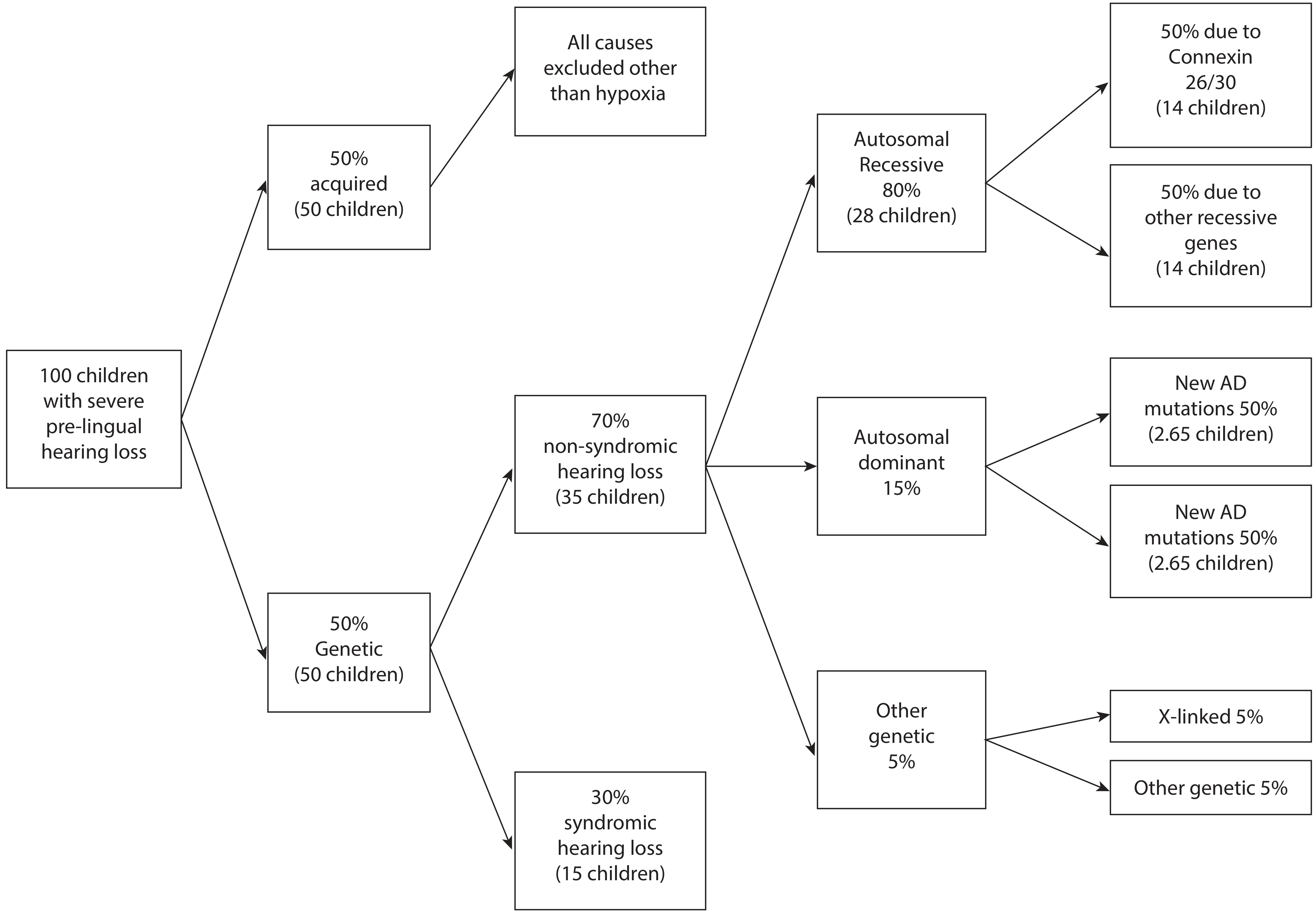
Figure 10.1 - Aetiology of hearing loss in children. Scott-Brown's Otorhinolaryngology Head & Neck Surgery, Vol. 2
PART 2: PREREQUISITES FOR COCHLEAR IMPLANTATION IN CHILDREN
A cochlear implant (CI) electrically stimulates the spiral ganglion cells of the cochlear nerve directly, bypassing non-functional cochlear hair cells. CI candidacy in children is determined by audiological, medical/surgical, and social criteria - assessed by a multidisciplinary team.
1. AUDIOLOGICAL PREREQUISITES
FDA-approved (USA) criteria:
| Age Group | Criteria |
|---|---|
| 12-23 months | Profound SNHL (>90 dBHL) |
| ≥2 years | Severe to profound SNHL (>70 dBHL) |
| All ages | Limited benefit from hearing aid trial |
NICE guidelines (UK): Severe to profound deafness with thresholds of ≥90 dBHL at 2 kHz and 4 kHz without amplification that preclude the child from attaining adequate speech, language and listening skills appropriate to age.
Specific audiological requirements:
- Failure to reach auditory milestones despite adequate hearing aid use
- Speech perception score <20-30% on word tests (MLNT or LNT) in verbal children
- Poor and declining speech discrimination
- Evidence of increasing educational disadvantage despite amplification
Special circumstances allowing implantation before 12 months:
- Post-meningitic hearing loss with risk of cochlear ossification - this is a surgical emergency; delay makes insertion difficult or impossible
- Known genetic mutations causing profound deafness
- Off-label implantation <12 months is increasingly common and has shown language comprehension comparable to normal hearing children
Hearing aid trial: All children must complete an adequate hearing aid trial FIRST (usually 3-6 months), except where rapid ossification is anticipated (post-meningitis).
Assessment tests used:
- ABR (acoustic + electric) to establish true thresholds
- Cochlear microphonic / ECoG (especially in ANSD)
- Aided thresholds and soundfield testing
- Behavioural audiometry age-appropriately (BOA, VRA, play audiometry)
- IT-MAIS scale (Infant-Toddler Meaningful Auditory Integration Scale) for very young infants
2. MEDICAL/SURGICAL PREREQUISITES
Absolute contraindications (very rare):
- Complete absence of a cochlea
- Severe cochlear ossification that completely precludes electrode placement (consider Auditory Brainstem Implant/ABI in these cases)
Conditions requiring special consideration (NOT absolute contraindications):
| Condition | Consideration |
|---|---|
| Cochlear nerve deficiency (CND) | Not absolute contraindication - MRI cannot always distinguish aplasia from hypoplasia. CI results variable. Bilateral CND: try CI first before ABI |
| Cochleo-vestibular malformations (Mondini, common cavity) | CI possible but more surgically challenging. Risk of CSF gusher, facial nerve anomalies, incomplete insertion |
| Cochlear ossification (post-meningitis) | Fast-track CI; custom/split electrodes may be needed |
| Ventriculo-peritoneal shunt | Can interfere with device placement; magnetically programmable shunts can be reprogrammed by CI magnet - neurosurgery consultation mandatory |
| ANSD | MRI of cerebellopontine angle mandatory (rule out CND). CI outcomes are generally good |
| Neurodevelopmental comorbidities | Not a contraindication but temper expectations; benefit may be limited to environmental awareness |
Imaging required:
- MRI temporal bone - to assess cochlear nerve, cochlear anatomy, internal auditory canal
- CT temporal bone - to assess cochlear patency, ossification, cochlear malformations
Vaccinations mandatory (CDC recommendations):
- Pneumococcal vaccine (PCV13 + PPSV23) before implantation - CI recipients have increased susceptibility to meningitis
- PCV13 at least 2 weeks before surgery
3. SOCIAL/FAMILY PREREQUISITES
Absolute contraindication:
- Patient or caregivers unwilling to permit access to auditory input
Requirements:
- Family commitment to post-operative rehabilitation (device use, therapy appointments, school support)
- Understanding that CI does not produce "normal" hearing - gains require intensive habilitation and consistent device use
- Willingness to comply with long-term follow-up, speech therapy, and audiology appointments
- Realistic expectations counselled throughout the process
4. THE COCHLEAR IMPLANT TEAM (Multidisciplinary)
Assessment must be conducted in a specialised multidisciplinary CI centre. Core team includes:
- ENT surgeon (cochlear implant surgeon)
- Audiologist (pre- and post-operative assessment, device mapping)
- Speech and Language Therapist (assessment + post-CI rehabilitation)
- Educational specialist (IEP planning, classroom support)
- Psychologist (cognitive assessment, autism screening, family coping)
- Social worker (family support, access to care)
- Community providers: early interventionists, teachers of the deaf
5. BILATERAL vs. UNILATERAL IMPLANTATION
- NICE (UK) 2009 guidelines: All eligible children should receive bilateral simultaneous CI
- Bilateral CIs improve speech in noise, sound localization, and reduce fatigue
- The European Bilateral Paediatric CI Consensus (2010): Any child who is an unambiguous CI candidate should receive bilateral simultaneous CI as soon as possible after diagnosis
- Sequential bilateral implants with >1 year delay show asymmetries in brainstem/cortical function and poorer scores in the second ear
- Children implanted earlier have quicker language acquisition, earlier binaural skills, better language scores, and higher rates of mainstream school attendance
Summary Box: Prerequisite Checklist for Paediatric CI
| Domain | Requirement |
|---|---|
| Hearing loss | Severe-to-profound SNHL (≥90 dBHL at 2-4 kHz for infants; >70 dBHL for older children) |
| Hearing aid trial | Completed, inadequate benefit demonstrated |
| Speech/language | Failure to reach auditory milestones; <20-30% speech scores in verbal children |
| Cochlea | Present; functional cochlear nerve (MRI/CT confirmed) |
| No absolute contraindication | Cochlea present; not completely ossified |
| Immunization | Pneumococcal vaccination ≥2 weeks before surgery |
| Family | Motivated, committed to post-operative rehabilitation |
| MDT assessment | Completed at a specialised CI centre |
| Imaging | MRI + CT temporal bone |
| Realistic expectations | Counselled - CI is not "normal hearing" |
Sources: Scott-Brown's Otorhinolaryngology Head & Neck Surgery, 8th ed., Vol. 2 (Chapters 10, 11); Cummings Otolaryngology Head and Neck Surgery, 7th ed. (Chapter 196 - Paediatric Cochlear Implants)
This is a shared conversation. Sign in to Orris to start your own chat.