
Hi
Hi there! How can I help you today?

IMG_7321.jpeg
Solve this
The classic triad here points strongly to IgA Vasculitis (Henoch-Schönlein Purpura / HSP), though the question says "look at the photograph" - the photograph likely shows palpable purpura on the lower limbs/buttocks, which is the hallmark skin finding.
Searching sources...
Reading File
Finding Sources
Finding Sources
Reading File
Reading File
Reading File
Loading Image
Diagnosis: IgA Vasculitis (Henoch-Schönlein Purpura / HSP)
The photograph the question refers to would show palpable purpura on the lower extremities - exactly like this classic textbook image:
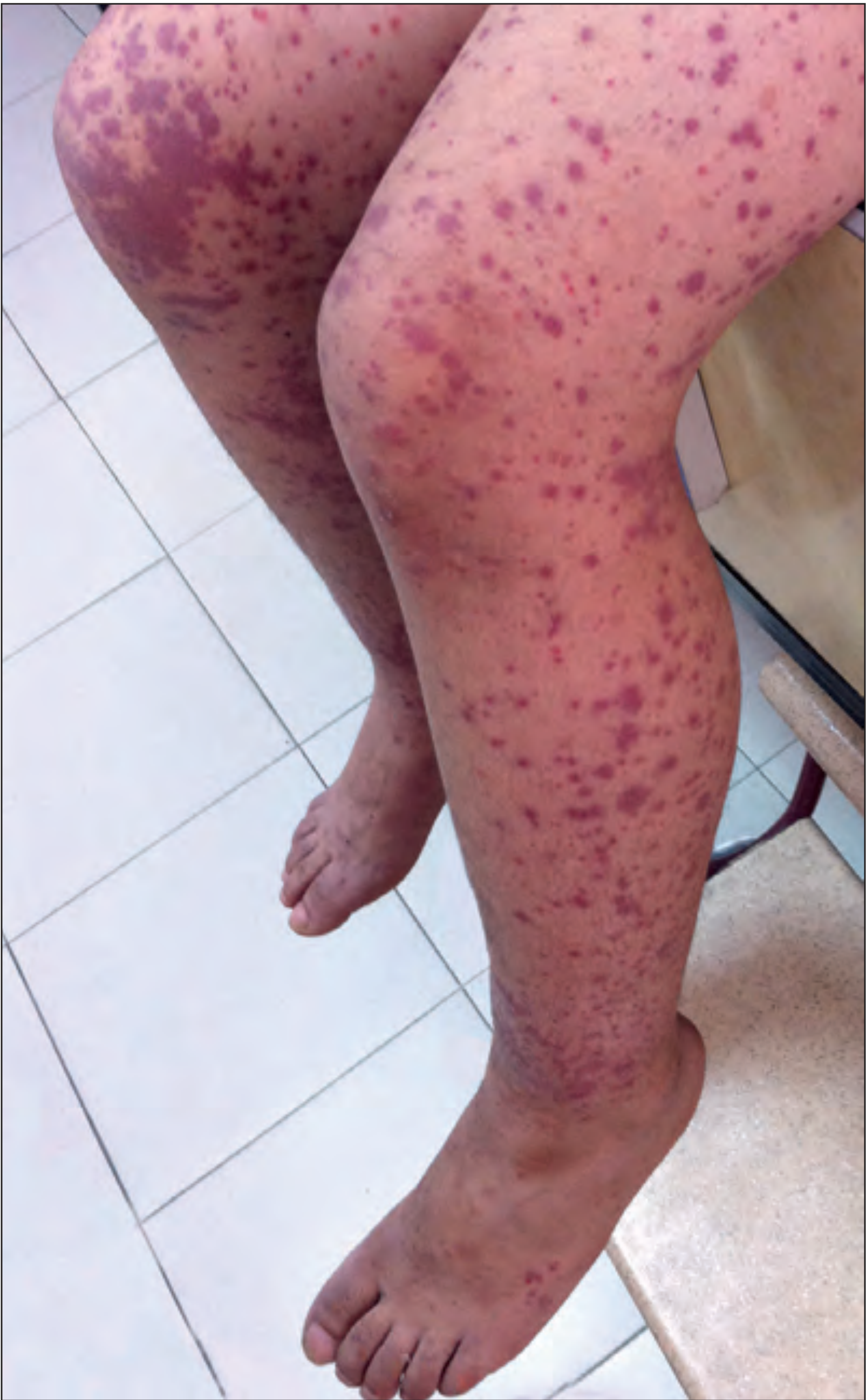
Palpable purpura on the lower extremities - the hallmark skin finding of HSP/IgA Vasculitis
Why this diagnosis fits perfectly:
| Feature in the case | HSP explanation |
|---|---|
| 22-year-old male | Can occur in young adults (though more common in children) |
| Abdominal pain | GI involvement - colicky pain from bowel vasculitis |
| Arthralgia | Joint involvement (arthritis/arthralgia is one of the diagnostic criteria) |
| Haematuria | Renal involvement (IgA nephropathy/glomerulonephritis) |
| BP 180/100 mmHg | Hypertension from renal involvement |
| Photograph (implied) | Palpable purpura on lower limbs - the mandatory criterion |
Classic Tetrad of HSP/IgA Vasculitis:
- Palpable purpura (lower limb predominance) - MANDATORY for diagnosis
- Arthralgia / Arthritis
- Abdominal pain (colicky, GI bleeding possible)
- Renal involvement (haematuria, proteinuria)
Diagnostic Criteria (EULAR/PRINTO/PRES Ankara 2008):
- Purpura is mandatory + at least one of: abdominal pain, histopathology (IgA deposition on leukocytoclastic vasculitis), arthritis/arthralgia, or renal involvement
- This patient satisfies all four additional criteria
Pathogenesis:
- Small-vessel IgA immune complex vasculitis (formerly called Henoch-Schönlein Purpura; renamed IgA Vasculitis at the 2012 Chapel Hill Consensus)
- IgA1 deposits in vessel walls trigger complement and inflammation
- Often preceded by an upper respiratory tract infection
Key points to remember for exams:
- The skin biopsy shows leukocytoclastic vasculitis with IgA deposits (IgA on immunofluorescence)
- Renal involvement (IgA nephropathy-like) determines long-term prognosis
- Adults tend to have a more severe course than children
- Treatment: supportive; steroids for severe abdominal/renal involvement
(Rheumatology, 2-Volume Set (Elsevier, 2022), Chapter 169)
This is a shared conversation. Sign in to Orris to start your own chat.