
Modified duke criteria for infective endocarditis
Reading File
The Modified Duke Criteria use major and minor criteria to classify infective endocarditis (IE) as definite, possible, or rejected. Definite IE requires 2 major, 1 major + 3 minor, or 5 minor criteria. Let me pull the detailed criteria from the textbooks and recent literature simultaneously.
Searching sources...
Finding Sources
Searching PubMed
"infective endocarditis" AND "Duke criteria" AND diagnosis
I found excellent sources. Let me now read the detailed content from the most comprehensive sources - the echocardiography textbook (which has the 2023 updated criteria) and Fuster's Heart + Tintinalli's.
Reading File
Reading File
Reading File
Let me get the full major criteria table from Fuster's Heart and the Tintinalli text for completeness.
Reading File
Reading File
I also have a clinical image from the textbook showing splinter hemorrhages. Let me also fetch the Fuster's Table 33-5 continuation and fetch the clinical image.
Reading File
Loading Image
I now have comprehensive data from multiple authoritative sources. Here is the complete answer:
Modified Duke Criteria for Infective Endocarditis
The Modified Duke Criteria (Li JS et al., 2000) are the standard diagnostic and research framework for infective endocarditis (IE). They combine pathologic and clinical evidence to classify cases as Definite, Possible, or Rejected.
Classification
| Category | Clinical Requirement |
|---|---|
| Definite IE | 2 major criteria, OR 1 major + 3 minor, OR 5 minor criteria |
| Possible IE | 1 major + 1 minor criteria, OR 3 minor criteria |
| Rejected | Firm alternate diagnosis; resolution with antibiotics <4 days; no pathologic evidence at surgery/autopsy with antibiotics <4 days; does not meet "possible" threshold |
MAJOR CRITERIA
1. Blood Culture Positive for IE
Typical organisms from 2 separate blood cultures:
- Viridans streptococci
- Streptococcus bovis
- HACEK group (Haemophilus, Aggregatibacter, Cardiobacterium, Eikenella, Kingella)
- Staphylococcus aureus
- Community-acquired Enterococcus (in the absence of a primary focus)
Persistently positive blood cultures (any of the following):
- At least 2 positive cultures from blood drawn >12 hours apart
- All 3, or a majority of ≥4 separate cultures (first and last sample ≥1 hour apart)
Single positive blood culture for Coxiella burnetii (Q fever) OR anti-phase I IgG antibody titer >1:800
2. Evidence of Endocardial Involvement
Echocardiogram positive for IE (TEE recommended for prosthetic valves, "possible IE," or complicated IE; TTE as first test otherwise):
- Oscillating intracardiac mass on valve or supporting structures, in the path of regurgitant jets, or on implanted material - without an alternative anatomic explanation (i.e., vegetation)
- Abscess (perivalvular/periannular)
- New partial dehiscence of a prosthetic valve
- New valvular regurgitation - worsening or changing of a pre-existing murmur alone is not sufficient
Note: The echocardiographic minor criterion from the original Duke Criteria was eliminated in the Modified Duke Criteria.
MINOR CRITERIA
| # | Criterion | Details |
|---|---|---|
| 1 | Predisposition | Predisposing heart condition (rheumatic heart disease, MVP with regurgitation, congenital heart disease, degenerative valvular disease, prior IE, prosthetic valve) OR injection drug use |
| 2 | Fever | Temperature >38°C (>100.4°F) |
| 3 | Vascular phenomena | Major arterial emboli, septic pulmonary infarcts, mycotic aneurysm, intracranial hemorrhage, conjunctival hemorrhages, Janeway lesions |
| 4 | Immunologic phenomena | Glomerulonephritis, Osler nodes, Roth spots, positive rheumatoid factor |
| 5 | Microbiologic evidence | Positive blood culture not meeting major criterion, OR serologic evidence of active infection with an organism consistent with IE |
Pathologic Criteria (Definite IE - either alone is sufficient)
- Microorganisms demonstrated by culture or histologic examination of a vegetation, embolized vegetation, or intracardiac abscess
- Pathologic lesions - vegetation or intracardiac abscess confirmed by histology showing active endocarditis
Key Clinical Pearls
- S. aureus bacteremia is itself a major criterion organism; a single positive blood culture in a patient without an alternative source should prompt echocardiography
- Coxiella burnetii (Q fever endocarditis) is culture-negative IE - serology is therefore a major criterion
- Echocardiographic minor criterion (from original Duke 1994) was removed in the 2000 modifications because echo findings were promoted to major criterion status
- TEE is significantly more sensitive (~90-94%) than TTE (~40-63%) for detecting vegetations, especially on prosthetic valves
- The criteria were originally developed by Durack et al. in 1994 and modified by Li et al. in 2000 to improve sensitivity for culture-negative and S. aureus IE
The Peripheral Stigmata (Vascular & Immunologic Minor Criteria)
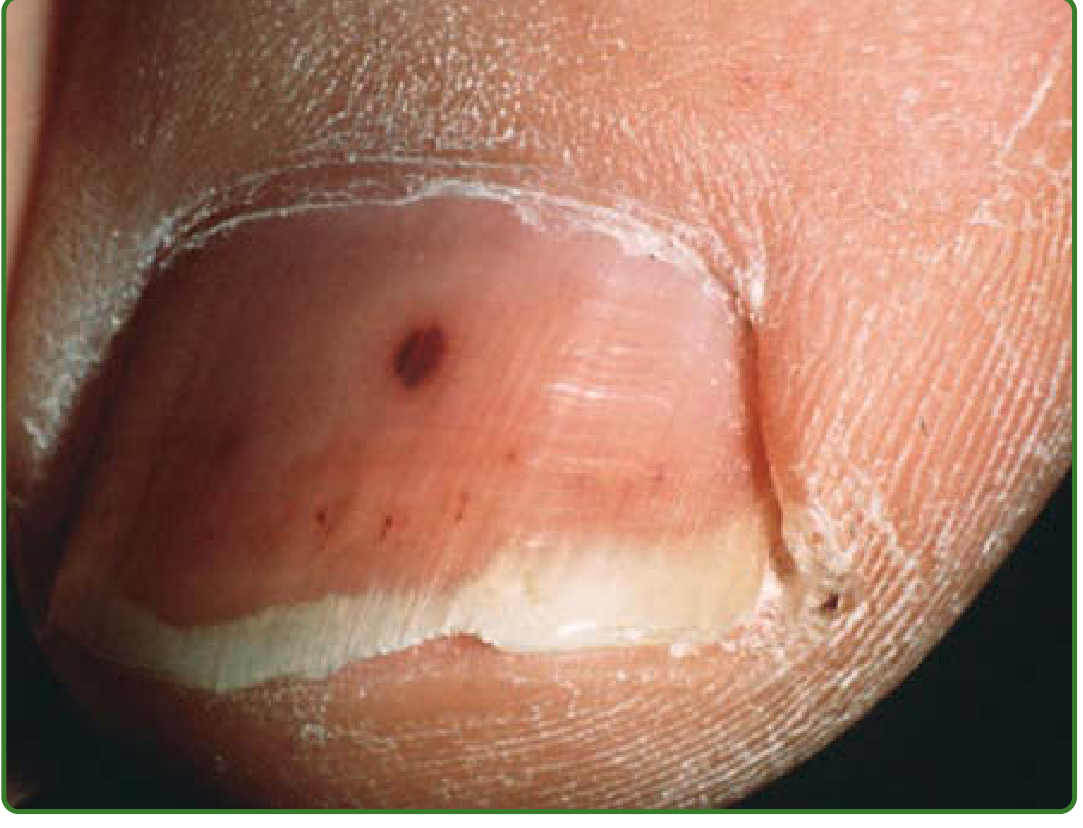
| Sign | Type | Description |
|---|---|---|
| Janeway lesions | Vascular (embolic) | Non-tender, hemorrhagic macular lesions on palms/soles |
| Osler nodes | Immunologic | Painful, raised, violaceous nodules on fingertips/toes (immune complex deposition) |
| Roth spots | Immunologic | Oval retinal hemorrhages with pale centers |
| Splinter hemorrhages | Vascular | Linear dark streaks under fingernails |
| Conjunctival petechiae | Vascular | Seen in subacute IE |
2023 Updated Duke Criteria (ESC)
The European Society of Cardiology and others have proposed further updates (2023), expanding imaging criteria to include:
- 18F-FDG PET/CT - abnormal metabolic activity around a prosthetic valve or CIED (at least 3 months after implantation) as a major imaging criterion
- Cardiac CT - vegetation, abscess, pseudoaneurysm, or intracardiac fistula as major criteria
- Expanded microbiologic criteria to include PCR/nucleic acid-based tests for Coxiella, Bartonella, and Tropheryma whipplei from blood
(Textbook of Clinical Echocardiography, Table 14.1; Fuster and Hurst's The Heart 15th Ed., Tables 33-4 and 33-5; Fitzpatrick's Dermatology, Table 155-1)
This is a shared conversation. Sign in to Orris to start your own chat.