
Tonsillectomy instruments name
Reading File
Finding Sources
Finding Sources
Searching Images
tonsillectomy surgical instruments
Reading File
Reading File
Loading Image
Reading File
Loading Image
Loading Image
Reading File
Here is a comprehensive overview of tonsillectomy instruments, sourced from Pfenninger and Fowler's Procedures for Primary Care and Cummings Otolaryngology:
Tonsillectomy Instruments
Complete Instrument Set (Cold Knife & Snare Method)
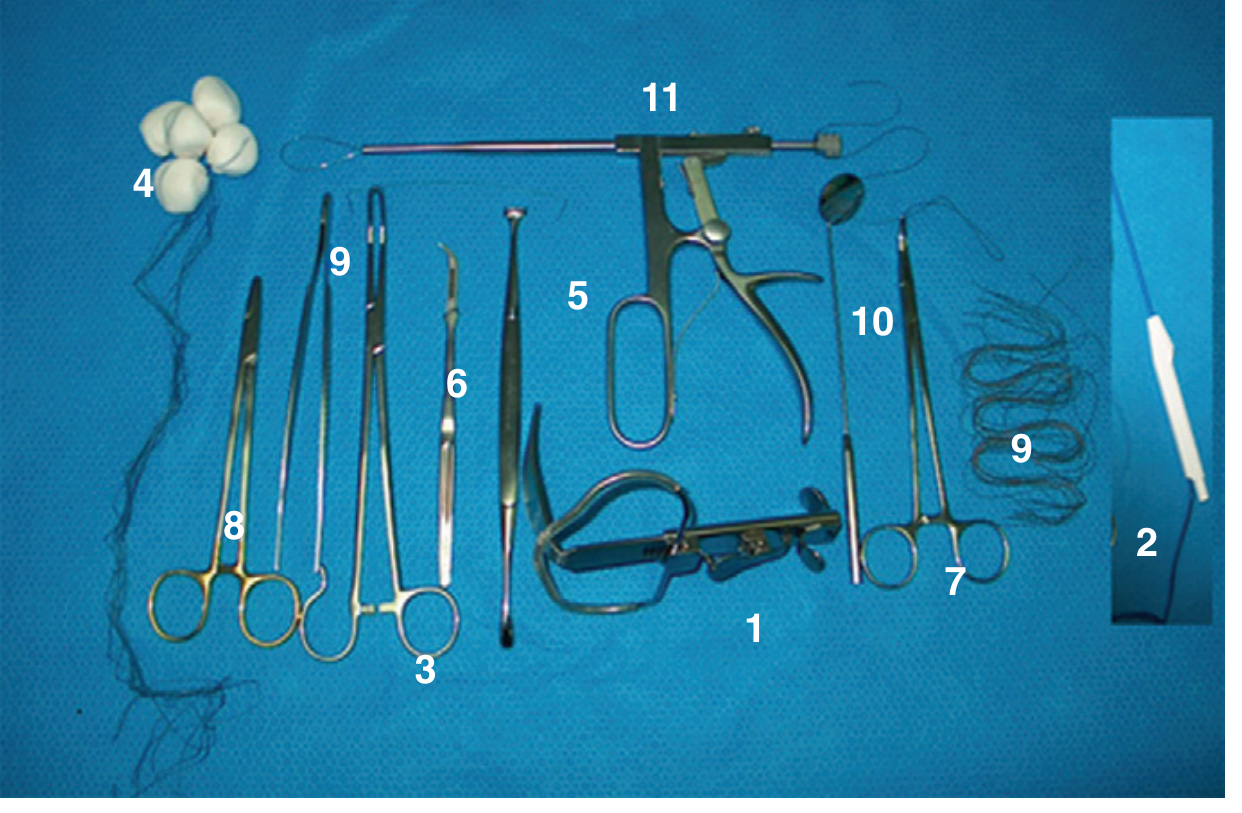
| # | Instrument | Purpose |
|---|---|---|
| 1 | Self-retaining mouth gag & tongue retractor (e.g., Boyle-Davis, McIvor, Dingman) | Holds the mouth open and depresses the tongue to expose the tonsils |
| 2 | Operative suction & cautery | Suctions blood/secretions; electrocautery for hemostasis |
| 3 | Curved tonsillar tenaculum | Grasps the tonsil at its midpoint and applies medial traction |
| 4 | Posterior throat pack (with attached retrieval string + small hemostat) | Prevents blood from entering the airway |
| 5 | Tonsil dissector and pillar retractor (e.g., Mollison's dissector) | Blunt dissection of the tonsil from its bed; retracts pillars |
| 6 | Curved tonsil knife | Makes the initial incision along the anterior pillar |
| 7 | Tonsillar bed hemostat | Clamps bleeders in the tonsillar fossa |
| 8 | Needle holder | Holds suture needle for ligature |
| 9 | 0 or 2-0 plain gut suture on tonsil needle | Ligates vessels and closes bleeding points |
| 10 | Laryngeal mirror | Inspects the nasopharynx and adenoid bed post-procedure |
| 11 | Tonsil snare and wire (e.g., Eve's tonsillar snare) | Loops around the inferior pole to transect and remove the tonsil |
Additional / Accessory Instruments
| Instrument | Role |
|---|---|
| Allis forceps | Alternative grasping clamp for the tonsil during dissection |
| Three sizes of tongue blades | Graduated exposure/retraction |
| Red rubber catheter (via nostril) | Optional soft palate retraction |
| Bipolar electrocautery forceps | Targeted hemostasis with less collateral thermal damage |
| Monopolar electrocautery pencil | Dissection and coagulation (hot dissection technique) |
| Coblation (radiofrequency) wand | Low-heat (~60°C) tissue ablation — used in intracapsular/Coblation tonsillectomy |
| Harmonic (ultrasonic) scalpel | Simultaneous cutting and sealing; minimal thermal spread |
| Kelly clamps / Curved hemostats | Medial traction on the tonsil during electrocautery dissection |
Mouth Gag Types (Most Important Instrument)
| Name | Notes |
|---|---|
| Boyle-Davis mouth gag | Most commonly used; has tongue depressor blade and self-retaining frame |
| McIvor mouth gag | Wide blade for good exposure |
| Dingman mouth gag | Often used in children and robotic-assisted cases |
| Crowe-Davis retractor | Used in robotic (TORS) tonsillectomy |
Intraoperative View
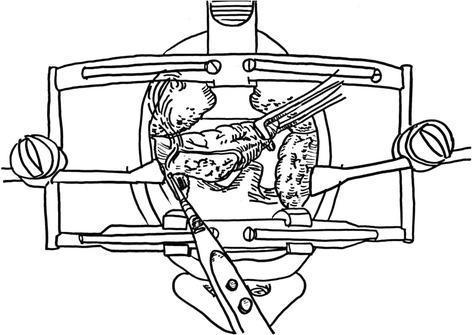
Mouth gag holding the oral cavity open; Kelly clamps retracting the tonsil medially; monopolar electrocautery at the dissection plane.
Technique Summary (Instrument Use in Sequence)
- Mouth gag (1) → placed to open mouth and expose tonsils
- Throat pack (4) → inserted posteriorly with string secured
- Tonsillar tenaculum (3) → grasps tonsil body for medial traction
- Curved tonsil knife (6) → incision along anterior pillar
- Tonsil dissector (5) → blunt dissection superior → inferior
- Tonsil snare (11) → applied to inferior pole; tonsil transected
- Tonsillar hemostat (7) + suture (9) → hemostasis
- Laryngeal mirror (10) → inspect for residual tissue/bleeding
Sources: Pfenninger and Fowler's Procedures for Primary Care, 3rd ed., Ch. 83; Cummings Otolaryngology Head and Neck Surgery
This is a shared conversation. Sign in to Orris to start your own chat.