
Snakebbite clinical features and manegement
Reading File
Now let me search the medical library for snakebite content in parallel.
Finding Sources
Finding Sources
Searching the Web
snakebite clinical features management WHO guidelines 2024
Good - I found relevant blocks in Harrison's, Tintinalli's, and Sabiston. Let me now read the most comprehensive sections in parallel.
Finding Sources
Reading File
Excellent - Harrison's has a rich snakebite chapter starting at line 1724. Let me read more of it comprehensively.
Reading File
Reading File
Now let me read the clinical features section (around line 1730-1800) and Tintinalli's section too.
Reading File
Reading File
I have excellent content. Let me now read the Harrison's clinical features section (1750-1800) and the Tintinalli's Elapidae/management sections.
Reading File
Reading File
I now have very comprehensive content from Harrison's and Sabiston. Let me also get the Tintinalli snakebite content for additional details, and fetch one of the clinical images.
Reading File
Loading Image
I now have comprehensive content from Harrison's, Sabiston, and Tintinalli's. Let me compile the complete, detailed answer.
Snakebite: Clinical Features and Management
Sources: Harrison's Principles of Internal Medicine 22e, Tintinalli's Emergency Medicine, Sabiston Textbook of Surgery
Epidemiology
Snakebite envenomation is the deadliest neglected tropical disease in the world. There are an estimated 1.2 to 5.5 million snakebites annually worldwide, causing 63,000+ deaths per year (2019 data), with projections of ~68,800 deaths by 2030. Most occur in developing countries with tropical/temperate climates. In developed countries like the USA, mortality has dropped to <0.5% due to antivenom availability and modern critical care.
Classification of Venomous Snakes
| Family | Examples | Venom Type |
|---|---|---|
| Viperidae - Viperinae | Old World vipers (Russell's viper, saw-scaled viper) | Cytotoxic, hemotoxic |
| Viperidae - Crotalinae (pit vipers) | Rattlesnakes, copperheads, cottonmouths | Hemotoxic, some neurotoxic |
| Elapidae | Cobras, kraits, mambas, coral snakes, sea snakes, all Australian venomous snakes | Neurotoxic |
| Colubridae | Rear-fanged snakes | Variable |
- ~20-25% of pit viper bites are "dry" bites (no venom injected); up to 75% for sea snakes.
- Fangs of vipers are long and mobile (foldable); elapids have shorter, fixed erect fangs.
Venom Composition and Mechanisms
Snake venoms are complex mixtures of enzymes, polypeptides, glycoproteins, and other constituents (>90% protein by dry weight). Key components:
- Phospholipases A2 - membrane destruction, myotoxicity, neurotoxicity
- Proteases/hyaluronidases - local tissue necrosis, spread of venom
- Coagulation-altering enzymes - consume fibrinogen and platelets, causing consumptive coagulopathy
- Neurotoxins - block neuromuscular junction (pre- or post-synaptic)
- Cytotoxins - direct tissue damage
(Harrison's, p. 3762)
Clinical Features
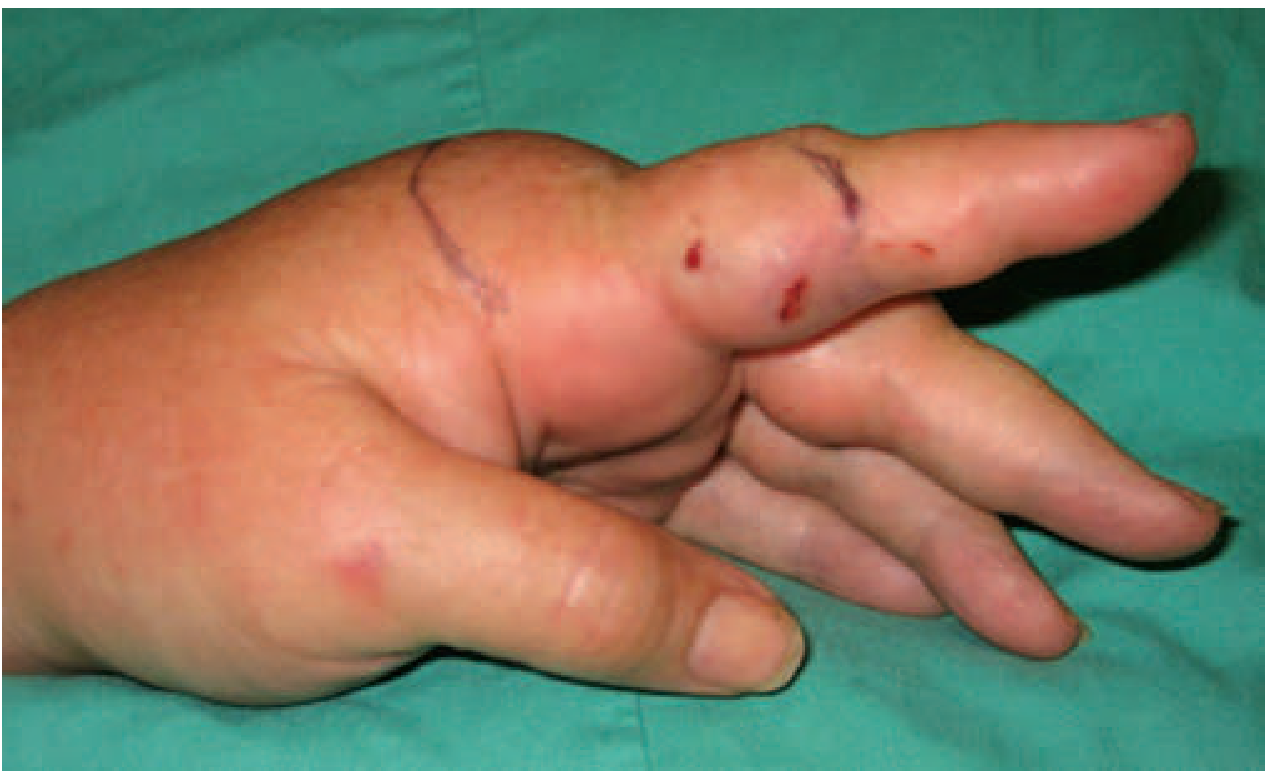
1. Local Effects (Vipers, most Elapids)
- Fang marks - one or two puncture wounds (may be absent in elapid bites)
- Pain - immediate, burning/throbbing at bite site
- Swelling and edema - progressive, can spread up entire limb within hours
- Ecchymosis - bruising around bite site
- Vesicles and bullae - hemorrhagic or serum-filled, developing over hours to days
- Tissue necrosis - in serious envenomations; can cause significant tissue loss
2. Systemic Effects (Vipers)
- Generalized fatigue, nausea, vomiting
- Changes in taste, mouth numbness
- Tachycardia or bradycardia
- Hypotension and shock (from capillary leak and hypovolemia)
- Muscle fasciculations
- Pulmonary edema
- Renal dysfunction (from nephrotoxins, myoglobinuria)
- Spontaneous hemorrhage from any site (coagulopathy)
- DIC-like picture in severe envenomation
3. Neurotoxic Effects (Elapids: kraits, death adders, cobras; some vipers)
Neurotoxic species include Bungarus (kraits), Acanthophis (death adders), Notechis (tiger snakes), Naja (cobras), and some Crotalus/Daboia species.
Progression:
- Early: nausea, vomiting, headache, paresthesias, altered mental status
- Cranial nerve palsies: ptosis (earliest and most sensitive sign), diplopia, difficulty swallowing, dysarthria
- Peripheral motor weakness - descending flaccid paralysis
- Diaphragmatic paralysis → respiratory failure → death
4. Sea Snake Envenomation
- Local pain (variable, often minimal)
- Generalized myalgias, trismus
- Rhabdomyolysis (myoglobinuria, acute renal failure)
- Progressive flaccid paralysis
- Manifestations can be delayed several hours
5. Envenomation Grading (Dart Classification)
| Grade | Features |
|---|---|
| 0 (dry bite) | No envenomation; fang marks only, no symptoms |
| 1 (minimal) | Local effects confined to immediate bite site |
| 2 (moderate) | Swelling extends across <full extremity; mild systemic signs (nausea, mild tachycardia, mild hypotension) |
| 3 (severe) | Swelling beyond extremity; severe hypotension/tachycardia, blood dyscrasias, clinically significant coagulopathy |
(Sabiston, p. 879)
Investigations
| Test | Purpose |
|---|---|
| CBC | Hemorrhage, hemolysis, thrombocytopenia |
| Blood type & cross-match | Preparation for transfusion |
| PT/INR, fibrinogen, D-dimer | Coagulopathy (venom-induced consumptive coagulopathy) |
| Creatine kinase | Rhabdomyolysis |
| Renal function (BUN, Creatinine) | Nephrotoxicity |
| Liver function tests | Hepatotoxicity |
| Urine (blood/myoglobin) | Hemolysis, rhabdomyolysis |
| ECG | Arrhythmias in severe envenomation |
| Chest X-ray | Pulmonary edema |
20-minute whole blood clotting test (20WBCT): In resource-limited settings - place 1-2 mL venous blood in a clean dry glass tube, leave undisturbed for 20 min. If blood remains liquid (no clot forms), coagulopathy is present. Simple, cheap, no equipment needed.
Management
Field Management (Prehospital)
DO:
- Rapid transport to a medical facility - this is the single most important intervention
- Remove jewelry and tight clothing near the bite (anticipate swelling)
- Clean wound with soap and water, apply sterile dressing
- Splint the extremity, keep it at or below heart level
- Note time of bite and any symptoms
DO NOT:
- Apply tourniquets or ligatures (release causes acidotic venom-laden blood to flood circulation, causing shock/dysrhythmia)
- Incise the bite wound
- Apply mouth suction
- Apply ice (worsens tissue injury)
- Use electric shock therapy
- Use steroids in the field
Hospital Management
Monitoring
- Mark the leading edge of swelling, ecchymosis, and tenderness with pen and time
- Measure limb circumference at 3 points (bite site, joint proximal, joint distal) every 15 min until stable, then every 1-2 h
- Watch for cranial nerve signs in neurotoxic bites (ptosis as early warning of airway compromise)
Antivenom - The Mainstay of Treatment
Antivenom is the only definitive treatment. It works by providing antibodies (or antibody fragments, Fab) that bind and neutralize circulating venom before it attaches to target tissues.
Types:
- Monospecific - for a single species
- Polyspecific - covers multiple species in a geographic region
- Produced by immunizing horses or sheep with venom, then harvesting and purifying the antibodies
Indications for antivenom (WHO criteria):
- Shock
- Spontaneous systemic bleeding
- Uncoagulable blood (positive 20WBCT)
- Neurotoxicity (ptosis, weakness, respiratory involvement)
- Significant local envenomation with rapid progression
- Rhabdomyolysis
Administration:
- Intravenous only (IV infusion, never IM)
- Antivenom selection must match the offending species - wrong antivenom = no benefit + complications
- Seek expert advice (regional poison control center) if uncertain
- Observe for anaphylaxis during infusion; pretreatment with adrenaline/antihistamine may be considered in high-risk patients
- Repeat labs every 6 h after antivenom until clinical stability
Common antivenoms:
- CroFab / Anavip - North American crotalid
- SAIMR polyvalent antivenom - African snakes
- VINS polyvalent antivenom - Indian Big 4 (Russell's viper, saw-scaled viper, spectacled cobra, common krait)
Neurotoxic Envenomation - Acetylcholinesterase Inhibitors
For snakes with post-synaptic neurotoxins (e.g., some cobras), anticholinesterase agents can provide neurologic improvement:
| Drug | Dose |
|---|---|
| Atropine (pretreatment) | 0.6 mg IV (children: 0.02 mg/kg, min 0.1 mg) |
| Edrophonium (test dose) | 10 mg IV (children: 0.25 mg/kg) |
| OR Neostigmine (test dose) | 0.02 mg/kg IV or IM (children: 0.04 mg/kg) |
| Neostigmine (if improvement at 30 min) | 0.5 mg IV/IM/SC q1h as needed |
These are adjuncts only - not a substitute for antivenom or airway management. Not effective for pre-synaptic neurotoxins (e.g., kraits).
Airway Management
- Neurotoxic envenomations require close monitoring for ptosis as an early warning
- Early endotracheal intubation before frank respiratory failure if swallowing difficulty or respiratory insufficiency develops
Compartment Syndrome
- Rare (<1% of snakebites)
- Best managed with antivenom first (reduces compartment pressure)
- Fasciotomy is NOT recommended for North American crotalid bites - modern antivenom is effective and fasciotomy increases morbidity
- If intracompartmental pressure remains >55 mmHg after 6 h despite antivenom, surgical consult may be obtained (limited data, last resort)
Wound Care
- Clean with soap and water
- Apply dry sterile dressing
- Splint extremity with padding between digits
- After antivenom initiated: elevate to heart level to reduce swelling
- Tetanus immunization as appropriate
- Prophylactic antibiotics - not routinely needed after North American bites (low infection rate); may be appropriate in some regions where secondary infection is common or if wound suction/incision was performed
Pain Management
- Acetaminophen or opioid analgesics
- Avoid NSAIDs and salicylates (antiplatelet effects worsen coagulopathy)
What NOT to Do
- Steroids - no proven benefit in humans (commonly used in veterinary medicine, not for humans)
- Heparin - not recommended for venom-induced coagulopathy
- Routine correction of thrombocytopenia or coagulopathy without active bleeding - treat the venom, not the lab value
Admission
- Any confirmed envenomation: admit for minimum 24 h monitoring
- Elapid bites: extend observation even if local skin changes are minimal, as systemic effects can be delayed
Special Considerations: Indian Big 4
In the Indian subcontinent, the "Big 4" medically important species are:
- Russell's viper (Daboia russelii) - hemotoxic + some neurotoxic strains
- Saw-scaled viper (Echis carinatus) - hemotoxic, coagulopathy
- Spectacled cobra (Naja naja) - neurotoxic + cytotoxic
- Common krait (Bungarus caeruleus) - neurotoxic (bites often nocturnal, painless, minimal local effects)
Krait bites are particularly dangerous because bites are often painless (occurring during sleep), with no local swelling, but life-threatening neurotoxicity develops after a few hours - meaning victims may not seek care early.
Summary: DO vs. DO NOT in Snakebite
| DO | DO NOT |
|---|---|
| Transport rapidly | Apply tourniquets |
| IV antivenom (species-specific) | Incise/suck the wound |
| Mark swelling progression | Apply ice |
| Monitor airway in neurotoxic bites | Use oral suction |
| 20WBCT for coagulopathy | Give steroids |
| Tetanus prophylaxis | Give NSAIDs |
| Acetylcholinesterase inhibitors for post-synaptic neurotoxins | Routine fasciotomy |
- Harrison's Principles of Internal Medicine 22e, Chapter 471 (pp. 3760-3765)
- Tintinalli's Emergency Medicine, Chapter 212 (p. 2701+)
- Sabiston Textbook of Surgery, Chapter 44 (pp. 877-882)
This is a shared conversation. Sign in to Orris to start your own chat.