
Describe structure of nail with its functions
Reading File
Finding Sources
Finding Sources
Reading File
Reading File
Reading File
Reading File
Loading Image
Loading Image
Loading Image
I now have comprehensive information from the textbooks. Here is a detailed account of the structure and functions of the nail.
Structure and Functions of the Nail
The nail is a skin appendage (part of the integumentary system) located on the dorsal surface of the distal phalanx of each finger and toe. It begins embryonic development at week 15 and grows continuously throughout life.
Gross Anatomy — Surface View
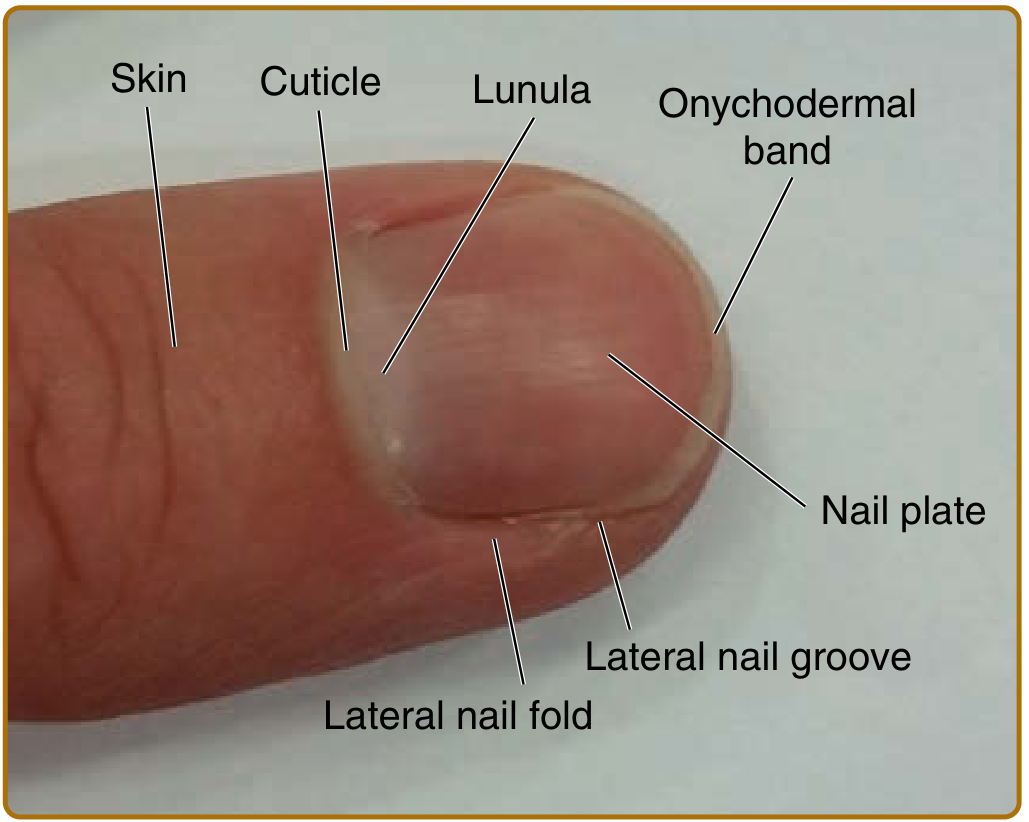
Figure 8-1 — Fitzpatrick's Dermatology, Vol. 1
Sagittal Cross-Section — Internal Anatomy
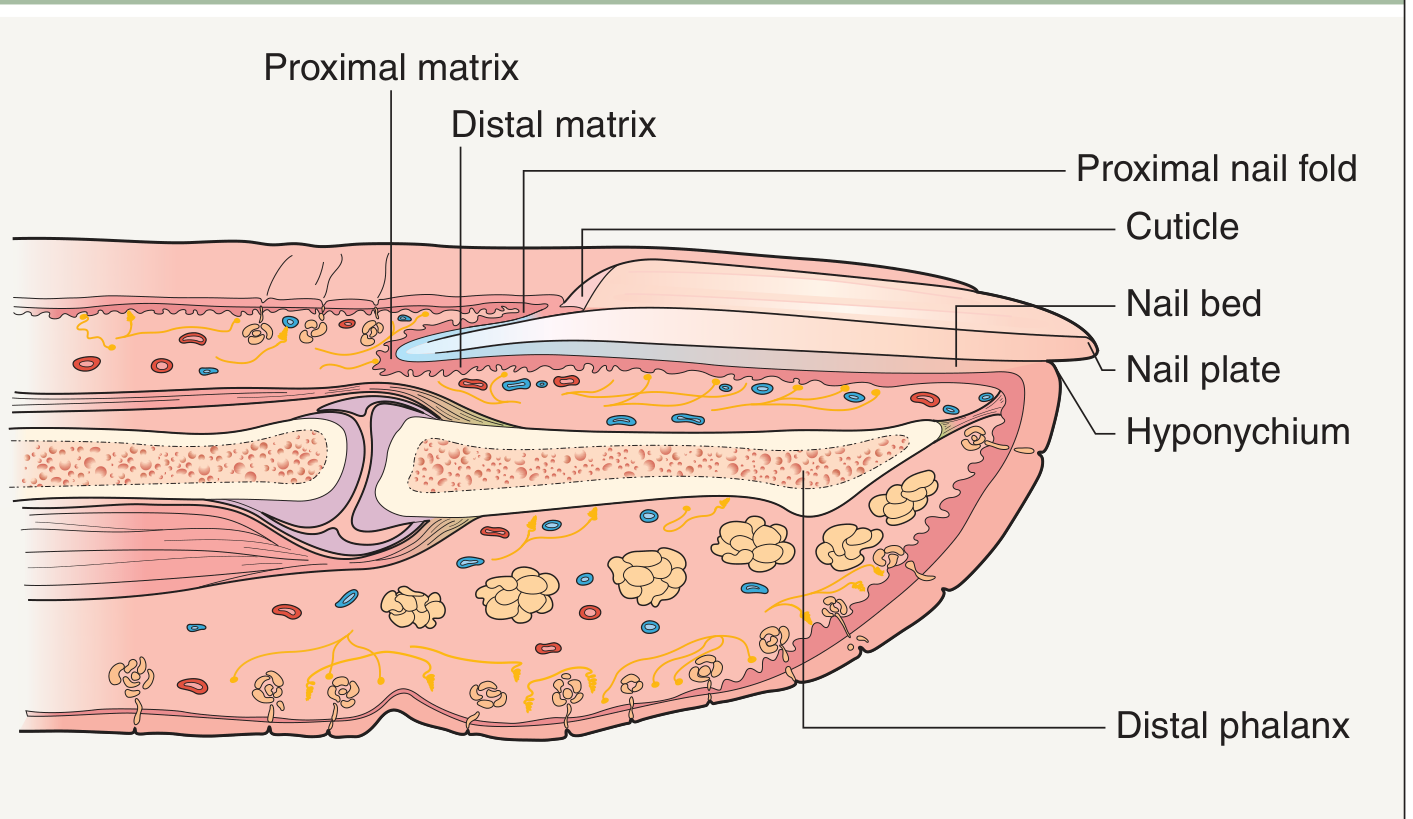
Cross-section of the nail apparatus — Dermatology 2-Volume Set, 5e
Components and Their Structure
1. Nail Plate
- The nail plate is the hard, visible, fully keratinized structure overlying the distal phalanx.
- Composed of flattened, anucleated corneocytes (derived from onychocytes).
- Organized into three layers: dorsal (produced by proximal matrix), middle, and ventral (produced by distal matrix/lunula).
- Unlike normal epidermis, it lacks a granular layer during formation — keratinization here is "hard" keratinization.
- Grows distally at ~3 mm/month for fingernails and ~1 mm/month for toenails.
2. Nail Matrix
The germinal engine of the nail — responsible for all nail plate production.
| Region | Produces |
|---|---|
| Proximal matrix | Dorsal (outer) portion of nail plate |
| Distal matrix (lunula) | Ventral (inner) portion of nail plate |
- Matrix cells (onychocytes) proliferate, differentiate in the keratogenous zone (KZ), flatten, and die, depositing into the overlying nail plate.
- Contains melanocytes that are normally quiescent; activation leads to melanonychia (pigmented nail bands).
- Damage to the matrix = structural changes to the nail plate (thickening, fissuring, atrophy, discoloration).
3. Lunula
- The whitish, crescent-shaped structure visible at the base of the nail plate — literally meaning "small moon."
- Represents the visible distal portion of the nail matrix through the translucent nail plate.
- Most prominent on the thumb; may be hidden by the proximal nail fold in the 2nd–5th fingers and concealed by thick nail plates in toes.
4. Nail Bed
- Extends from the distal margin of the lunula to the onychodermal band.
- Composed of a basal layer and one or two suprabasal keratinocyte layers — contributes a small number of horn cells to the undersurface of the nail plate.
- Features longitudinal rugose rete ridges that interdigitate with corresponding ridges on the ventral nail plate — this greatly increases surface area for adhesion.
- Like the matrix, it lacks a granular layer normally; its presence indicates pathology (e.g., subungual hyperkeratosis in psoriasis).
5. Nail Folds
Three folds surround the nail plate:
| Fold | Location | Function |
|---|---|---|
| Proximal nail fold (PNF) | Proximal end | Protects the matrix; dorsal layer is skin continuation; ventral layer is continuous with the matrix |
| Lateral nail folds | Two sides of the nail plate | Stabilize and seal lateral margins |
| Cuticle (eponychium) | Extends from PNF edge onto nail plate | Seals the proximal nail against toxins and foreign substances |
6. Eponychium
- The border where skin epidermis transitions into nail epidermis at the proximal end.
- The epidermis bends inward here, forming the proximal nail fold.
- Normal epidermal differentiation (granular layer) ceases just after this bend.
7. Hyponychium
- Located distally, beneath the free edge of the nail plate where it lifts from the nail bed.
- Seals the nail plate to the nail bed at the onychodermal band (a thin pinkish transverse strip at the junction).
- Acts as a barrier against infection and foreign material entry.
8. Onychodermal Band
- A thin pinkish transverse strip just proximal to the free edge, marking the point of nail plate detachment from the nail bed.
- Distal to it is the onychocorneal band (whitish zone), where the free edge begins.
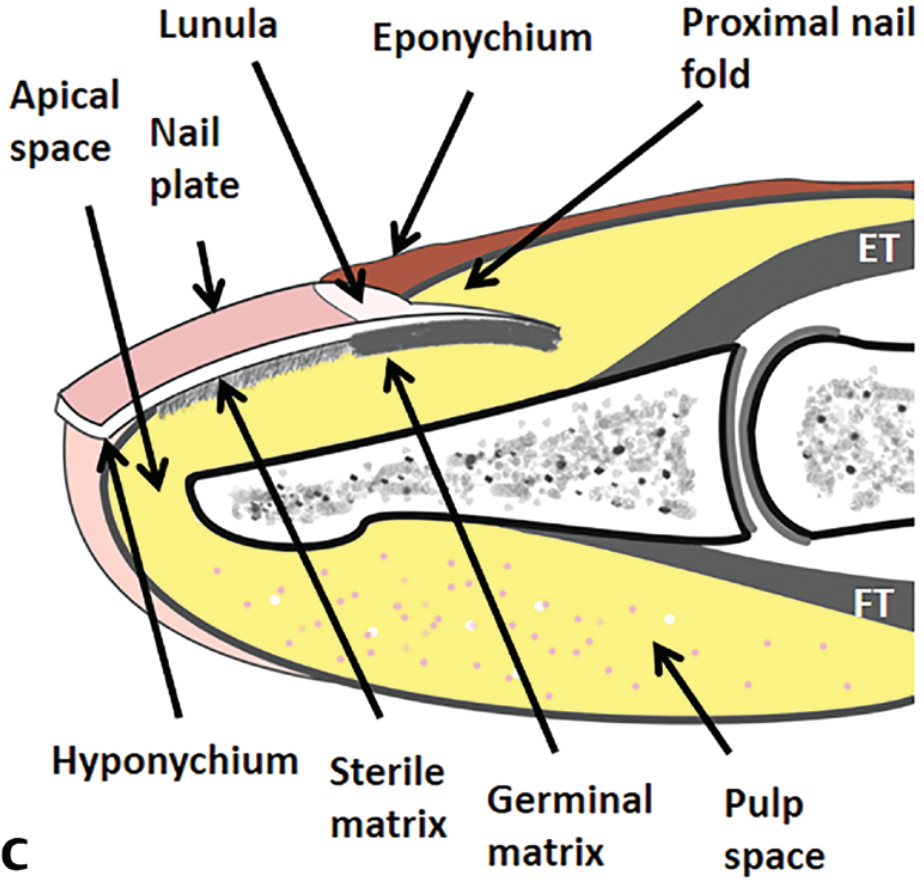
Nail anatomy schematic — Imaging Anatomy: Bones, Joints, Vessels and Nerves
Functions of the Nail
| Function | Mechanism |
|---|---|
| Protection | The hard nail plate shields the dorsal tip of the distal phalanx from mechanical trauma |
| Counterpressure & tactile sensitivity | The nail plate provides counterpressure against the fingertip pulp, enhancing fine touch discrimination and tactile sensitivity |
| Fine manipulation | Acts as a rigid lever for picking up small objects; the adhesion between nail plate and bed (via rete ridges) allows the free edge to lever without lifting the nail |
| Defense against infection | The cuticle and hyponychium form tight seals proximally and distally, blocking entry of pathogens and foreign substances |
| Scratch/grooming | Enables scratching, an important mechanosensory and social behavior |
| Clinical indicator | Nail changes (clubbing, koilonychia, pitting, Beau's lines, melanonychia) serve as visible markers of systemic disease |
Nail Growth Facts
- Nail production begins at week 15 of embryonic life and continues until death.
- Fingernail growth: ~3 mm/month
- Toenail growth: ~1 mm/month
- Growth rate is influenced by age, systemic illness, medications, and nutritional status.
- The nail is in close structural and developmental relationship with the underlying distal phalanx — congenital or inflammatory disease of the phalanx typically produces corresponding nail changes (e.g., psoriatic nail dystrophy).
Sources: Fitzpatrick's Dermatology (Vol. 1, p. 136); Dermatology 2-Volume Set, 5e (Ch. 68, 71, 149); Imaging Anatomy: Bones, Joints, Vessels and Nerves (Vol. 3)
This is a shared conversation. Sign in to Orris to start your own chat.