
adies pupil
Adie's pupil (also called tonic pupil) is a neurological condition caused by damage to the ciliary ganglion or short ciliary nerves, leading to a dilated pupil that reacts poorly to light but slowly to near stimulation. It is usually benign and unilateral.
Searching sources...
Reading File
Finding Sources
Finding Sources
Searching PubMed
"Adie pupil" OR "tonic pupil" pathophysiology
Good sources found. Now reading the key textbook sections in parallel.
Reading File
Reading File
Reading File
Reading File
Excellent - rich content gathered. Let me also fetch the clinical photo and read the remaining Wills Eye Manual content on management.
Loading Image
Reading File
All key information is in hand. Here is the complete answer:
Adie's Pupil (Tonic Pupil / Holmes-Adie Syndrome)
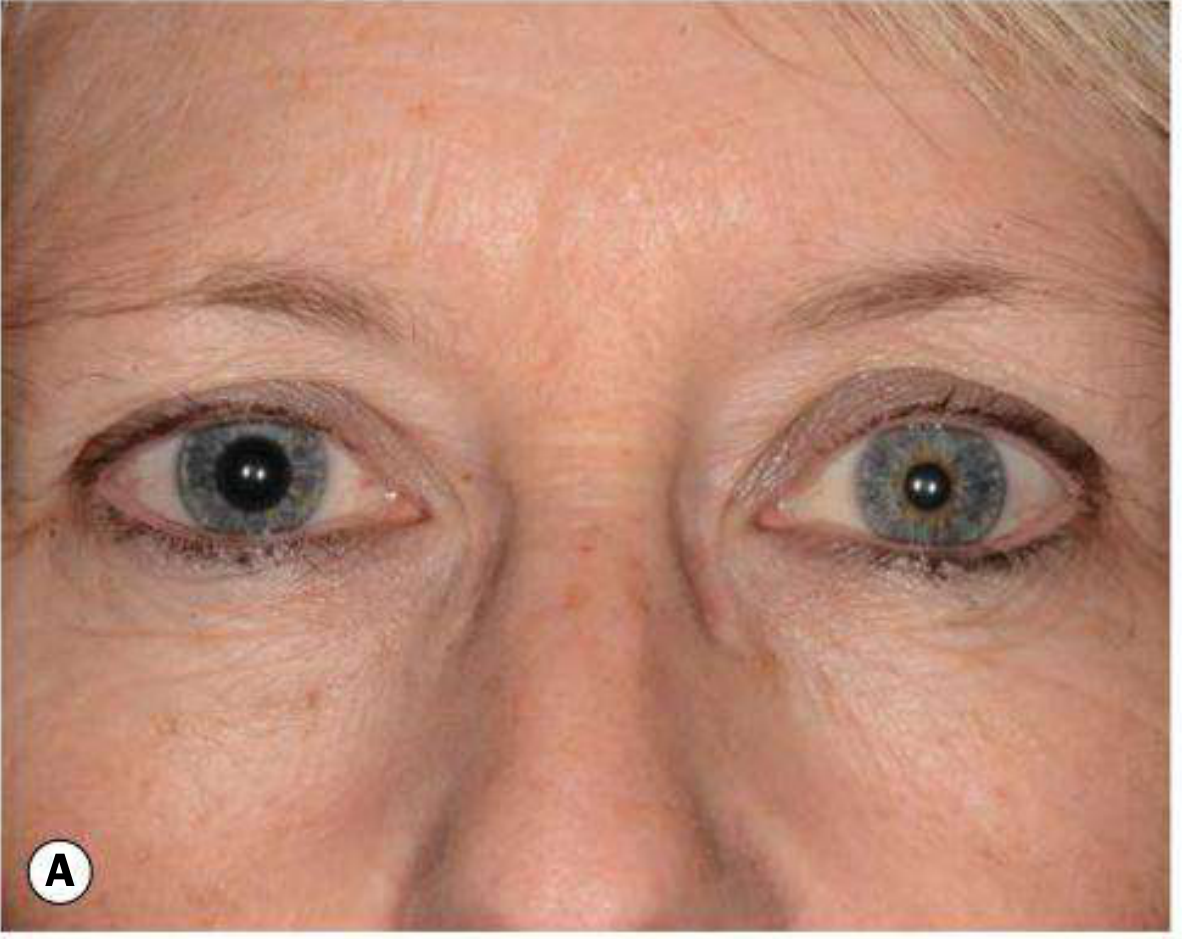
Pathophysiology
Adie's pupil results from denervation of the postganglionic parasympathetic supply to the sphincter pupillae and ciliary muscle, due to damage to the ciliary ganglion or short ciliary nerves. This leads to two key functional deficits:
- Loss of the pupillary light reflex (sphincter pupillae denervated)
- Impaired accommodation (ciliary muscle denervated)
The light-near dissociation (near response relatively preserved) is explained by aberrant regeneration: accommodative fibers (which outnumber pupillomotor fibers ~30:1) regenerate and misdirect into the sphincter, partly restoring near constriction but not the light reflex. The near response is therefore not "spared" but "restored" by aberrant reinnervation.
- Localization in Clinical Neurology, 8e, p. 513; Adams and Victor's Principles of Neurology, 12th Ed., p. 300
Epidemiology
- Predominantly affects young women (3rd-4th decade), more common in females than males
- Unilateral in ~80% at onset; the second eye often becomes involved over months to years
- May occasionally be inherited in an autosomal dominant pattern
Clinical Features
| Feature | Description |
|---|---|
| Pupil size | Large, irregular (or regular) dilation - anisocoria |
| Light reflex | Absent or markedly sluggish (both direct and consensual) |
| Near response | Slow, tonic constriction with convergence; redilation also slow (the "tonic" feature) |
| Vermiform movements | Segmental, worm-like movements of the iris border at slit lamp - highly characteristic |
| Sectoral palsy | Segmental paralysis of the pupillary sphincter visible on slit-lamp |
| Accommodation | Impaired (paresis); tends to recover over time |
| Long-standing cases | Pupil becomes progressively miotic ("little old Adie") as the ciliary muscle dysfunction resolves while the light reflex does not recover |
- Kanski's Clinical Ophthalmology, p. 809-810; Wills Eye Manual, p. 645
Holmes-Adie Syndrome
When tonic pupils are associated with diminished or absent deep tendon reflexes (especially knee and ankle jerks), the combination is called Holmes-Adie syndrome. It may also include:
- Features of autonomic nerve dysfunction (excessive sweating = Ross syndrome)
- Orthostatic hypotension
- Occasionally bowel obstruction or urinary retention
- Impaired corneal sensation (trigeminal ophthalmic division fibers in ciliary ganglion)
- Kanski's Clinical Ophthalmology, p. 810; Wills Eye Manual, p. 645
Etiology
| Category | Causes |
|---|---|
| Most common | Idiopathic |
| Infections | Varicella zoster, herpes simplex, herpes zoster, CMV, herpesvirus 6, Campylobacter jejuni, diphtheria, syphilis (bilateral - must exclude) |
| Orbital/ocular | Trauma, surgery, panretinal photocoagulation |
| Systemic | Sjögren syndrome, paraneoplastic (e.g., small cell lung cancer with anti-Hu antibodies), giant cell arteritis, Guillain-Barré syndrome (recovery), Lambert-Eaton syndrome |
| Rare | Endometriosis, seminomas, neurologic Lyme disease, parvovirus B19, botulism |
- Wills Eye Manual, p. 645; Localization in Clinical Neurology, 8e, p. 514
Diagnosis
Pharmacological Test (Key)
Dilute pilocarpine test (0.1-0.125%): Instill in both eyes, recheck in 10-15 minutes.
- Adie pupil: constricts (denervation hypersensitivity to cholinergic agent)
- Normal pupil: does not constrict
Note: Hypersensitivity may be absent in an acute Adie pupil - retest a few weeks later if index of suspicion is high.
Additional Workup
- Bilateral simultaneous Adie pupils: send syphilis serology, Sjögren antibodies, paraneoplastic panel, and screen for other causes listed above
- Unilateral Adie pupil: no further lab workup necessary in a typical young woman
- Infant (<1 year): refer to pediatric neurology to rule out familial dysautonomia (Riley-Day syndrome)
Differential Diagnosis
| Condition | Key Distinguishing Feature |
|---|---|
| CN III palsy | Ptosis + ophthalmoplegia + ptosis; pupil fully dilated; may indicate aneurysm |
| Argyll Robertson pupil | Bilateral, miotic (small) pupils; light-near dissociation; associated with syphilis/diabetes |
| Parinaud syndrome | Bilateral mid-dilated pupils; upgaze palsy, Collier sign, convergence-retraction nystagmus; not tonic |
| Pharmacological mydriasis | No constriction with 1% pilocarpine (unlike Adie, which responds to dilute pilocarpine) |
| Physiological anisocoria | <1 mm difference; varies day to day; symmetric in all lighting conditions |
Treatment & Follow-up
- Pilocarpine 0.125% eye drops (b.i.d. to q.i.d.) for cosmesis and to aid accommodation
- No treatment reverses the underlying denervation
- If diagnosis is certain and unilateral: routine follow-up only
- Prognosis is generally benign; accommodation tends to recover but the light reflex does not
- Wills Eye Manual - Office and Emergency Room Diagnosis and Treatment of Eye Disease, p. 646
Summary mnemonic - "TONIC":
- Tonic (slow) near response with light-near dissociation
- One eye usually (80% unilateral)
- No light reflex (absent/sluggish)
- Iris vermiform (segmental palsy on slit lamp)
- Cholinergic hypersensitivity (pilocarpine 0.125% test)
Pg exam 10 marks essay la isthava?
Sure! Adie's pupil is a classic PG exam favourite - ophthalmology and neurology both ask this as a 10-mark essay. Let me give you the perfect structured answer.
Adie's Pupil - 10 Mark Essay (PG Exam Format)
Introduction (1 mark)
Adie's pupil (tonic pupil) is a postganglionic parasympathetic denervation of the eye, caused by damage to the ciliary ganglion or short ciliary nerves, resulting in a tonically dilated pupil with light-near dissociation. When associated with absent deep tendon reflexes, it is called Holmes-Adie syndrome.
Etiology & Epidemiology (1 mark)
- Predominantly affects young women (20-40 years)
- Usually idiopathic
- Other causes: viral illness (VZV, HSV), orbital trauma/surgery, syphilis, Sjögren syndrome, paraneoplastic syndrome, GCA, Guillain-Barré syndrome
- Unilateral in 80% at onset; second eye may get involved later
Pathophysiology (2 marks) ⭐ High-yield
Two-step mechanism:
Step 1 - Denervation:
- Ciliary ganglion or short ciliary nerves are damaged
- Loss of postganglionic parasympathetic supply to:
- Sphincter pupillae → absent light reflex, dilated pupil
- Ciliary muscle → impaired accommodation
Step 2 - Aberrant Regeneration (explains light-near dissociation):
- Accommodative fibers outnumber pupillomotor fibers by 30:1
- During regeneration, accommodative fibers misdirect into the iris sphincter
- Result: near response is partially "restored" (not truly spared)
- Light reflex does NOT recover → light-near dissociation
Clinical Features (2 marks)
Symptoms
- Anisocoria (patient notices unequal pupils)
- Blurring of near vision (ciliary muscle paresis)
- Photophobia
Signs
| Sign | Detail |
|---|---|
| Dilated pupil | Large, irregular pupil (anisocoria) |
| Absent/sluggish direct light reflex | Both direct and consensual |
| Tonic near response | Slow constriction; slow re-dilation after convergence |
| Vermiform movements | Segmental worm-like iris border movements on slit lamp - pathognomonic |
| Sectoral sphincter palsy | Seen on slit lamp with high plus lens |
| Accommodation paresis | Tends to recover over time |
| "Little old Adie" | In long-standing cases - pupil becomes miotic (ciliary muscle recovers, light reflex does not) |
Associations - Holmes-Adie Syndrome (1 mark)
- Absent/diminished knee jerk and ankle jerk
- Ross syndrome: + anhidrosis (segmental)
- Orthostatic hypotension
- Impaired corneal sensation
Diagnosis & Pharmacological Testing (2 marks) ⭐⭐ Most Important
Dilute Pilocarpine Test
- Instill 0.1% or 0.125% pilocarpine in both eyes
- Wait 10-15 minutes
- Adie pupil constricts → denervation hypersensitivity ✅
- Normal pupil: no response
⚠️ Hypersensitivity may be absent in acute Adie pupil - repeat test after a few weeks
When to investigate further?
| Situation | Action |
|---|---|
| Unilateral Adie, young woman | No further workup needed |
| Bilateral Adie pupils | Syphilis serology, ANA, anti-Ro/La, paraneoplastic panel |
| Infant < 1 year | Rule out familial dysautonomia (Riley-Day syndrome) |
Differential Diagnosis (1 mark)
| Condition | Key Difference |
|---|---|
| CN III palsy | Ptosis + ophthalmoplegia; not tonic; may indicate PComm aneurysm |
| Argyll Robertson pupil | Bilateral, miotic pupils; syphilis/DM; no accommodation paresis |
| Parinaud syndrome | Upgaze palsy, Collier sign; not tonic; MRI needed |
| Pharmacological mydriasis | No response even to 1% pilocarpine |
| Physiologic anisocoria | < 1mm; equal in all lighting; variable |
Treatment (0.5 mark)
- Pilocarpine 0.125% drops b.i.d. to q.i.d. - for cosmesis and to aid accommodation
- No treatment reverses underlying denervation
- Reassurance - condition is benign
- Routine follow-up if diagnosis is certain
Prognosis (0.5 mark)
- Generally benign course
- Accommodation tends to recover over time
- Light reflex does NOT recover and may worsen
- Pupil progressively becomes miotic ("little old Adie") in chronic cases
- Tendency to involve the fellow eye over time
Quick Recall Box 🧠
| Mnemonic | TONIC |
|---|---|
| T | Tonic (slow) near response |
| O | One eye (unilateral 80%) |
| N | No light reflex |
| I | Iris vermiform movements (slit lamp) |
| C | Cholinergic hypersensitivity (pilocarpine 0.125%) |
Most commonly asked PG one-liners from this topic:
- "Denervation hypersensitivity is tested by?" → Pilocarpine 0.125%
- "Light-near dissociation in dilated pupil?" → Adie's pupil
- "Light-near dissociation in miotic pupil?" → Argyll Robertson pupil
- "Tonic pupil + areflexia?" → Holmes-Adie syndrome
- "Little old Adie?" → Long-standing Adie pupil becomes miotic
This is a shared conversation. Sign in to Orris to start your own chat.