
Bro mujhe pneumonia ka managemnt bata skta for medicine 1
pneumonia management antibiotic treatment algorithm
![<table><tr><td>Pneumonia</td><td><ul><li>Manage according to the WHO Clinical care for severe acute respiratory infection toolkit [111].</li><li>See the WHO Essential Medicines List antibiotic book for guidance on correct antimicrobial selection and appropriate use [192].</li></ul></td></tr><tr><td>Acute respiratory distress syndrome (ARDS)</td><td><ul><li>Oxygen, non-invasive ventilation, mechanical ventilation.</li><li>Manage according to the WHO Clinical care for severe acute respiratory infection toolkit [111].</li></ul></td></tr><tr><td>Severe dehydration</td><td><ul><li>Severe dehydration and hypovolemic shock can be seen in patients with mpox due to intravascular volume loss due to extensive rash and/or gastrointestinal losses due to diarrhoea and vomiting accompanied by poor oral intake.</li><li>The treatment for severe dehydration is resuscitation with intravenous or intraosseous (IV/IO) fluid, given as one or multiple boluses with close monitoring of fluid responsiveness. Adequate IV fluid intake refers to the volume that will correct signs of hypovolemia. See Pocket book of hospital care for children [146,141].</li></ul></td></tr><tr><td>Sepsis and septic shock</td><td><ul><li>Sepsis and septic shock differ from severe dehydration as it results from an immune response to an infection. Management of sepsis requires early identification, management of infection and supportive care, including fluid resuscitation to maintain organ perfusion to reduce and prevent further organ injury; and may also require vasopressors as well as control of infection [146].</li><li>See the WHO Clinical care for severe acute respiratory infection toolkit for more information about sepsis [111].</li><li>See the WHO Essential Medicines List antibiotic book for guidance on correct antimicrobial selection and appropriate use [192].</li></ul></td></tr><tr><td>Encephalitis</td><td><ul><li>Consider lumbar puncture for cerebrospinal fluid (CSF) evaluation to evaluate for other treatable conditions.</li><li>Monitor and assess airway, breathing, circulation, disability (ABCD) and give emergency treatments.</li><li>Monitor neurological status (AVPU).</li><li>Control seizures with anti-epileptics [135].</li><li>Antibiotics/antivirals if indicated for co-infections.</li><li>See WHO Essential Medicines List antibiotic book for guidance on correct antimicrobial selection and appropriate use [192].</li></ul></td></tr></table>
• Vitamin A supplementation, especially to malnourished children [141].
• Good eye care that includes eye lubrication and saline-soaked protective eye pads [141].
• Avoid steroid ointments (may prolong presence of mpox virus in ocular tissue) [146,193].
• Trifluridine eye drops (sometimes used for other orthopoxviruses or herpetic eye infections) may be considered to hasten resolution of symptoms and prevent long-term damage from scarring, where available [146,63,193,194].](https://cdn.orris.care/cdss_images/GLGCA_4623919_1766418967526_25206047-5582-4e69-b587-54fefa9a2cdb_b63c4188-7834-41c9-910e-b554b426a860.png)
<table><tr><td>Pneumonia</td><td><ul><li>Manage according to the WHO Clinical care for severe acute respiratory infection toolkit [111].</li><li>See the WHO Essential Medicines List antibiotic book for guidance on correct antimicrobial selection and appropriate use [192].</li></ul></td></tr><tr><td>Acute respiratory distress syndrome (ARDS)</td><td><ul><li>Oxygen, non-invasive ventilation, mechanical ventilation.</li><li>Manage according to the WHO Clinical care for severe acute respiratory infection toolkit [111].</li></ul></td></tr><tr><td>Severe dehydration</td><td><ul><li>Severe dehydration and hypovolemic shock can be seen in patients with mpox due to intravascular volume loss due to extensive rash and/or gastrointestinal losses due to diarrhoea and vomiting accompanied by poor oral intake.</li><li>The treatment for severe dehydration is resuscitation with intravenous or intraosseous (IV/IO) fluid, given as one or multiple boluses with close monitoring of fluid responsiveness. Adequate IV fluid intake refers to the volume that will correct signs of hypovolemia. See Pocket book of hospital care for children [146,141].</li></ul></td></tr><tr><td>Sepsis and septic shock</td><td><ul><li>Sepsis and septic shock differ from severe dehydration as it results from an immune response to an infection. Management of sepsis requires early identification, management of infection and supportive care, including fluid resuscitation to maintain organ perfusion to reduce and prevent further organ injury; and may also require vasopressors as well as control of infection [146].</li><li>See the WHO Clinical care for severe acute respiratory infection toolkit for more information about sepsis [111].</li><li>See the WHO Essential Medicines List antibiotic book for guidance on correct antimicrobial selection and appropriate use [192].</li></ul></td></tr><tr><td>Encephalitis</td><td><ul><li>Consider lumbar puncture for cerebrospinal fluid (CSF) evaluation to evaluate for other treatable conditions.</li><li>Monitor and assess airway, breathing, circulation, disability (ABCD) and give emergency treatments.</li><li>Monitor neurological status (AVPU).</li><li>Control seizures with anti-epileptics [135].</li><li>Antibiotics/antivirals if indicated for co-infections.</li><li>See WHO Essential Medicines List antibiotic book for guidance on correct antimicrobial selection and appropriate use [192].</li></ul></td></tr></table> • Vitamin A supplementation, especially to malnourished children [141]. • Good eye care that includes eye lubrication and saline-soaked protective eye pads [141]. • Avoid steroid ointments (may prolong presence of mpox virus in ocular tissue) [146,193]. • Trifluridine eye drops (sometimes used for other orthopoxviruses or herpetic eye infections) may be considered to hasten resolution of symptoms and prevent long-term damage from scarring, where available [146,63,193,194].
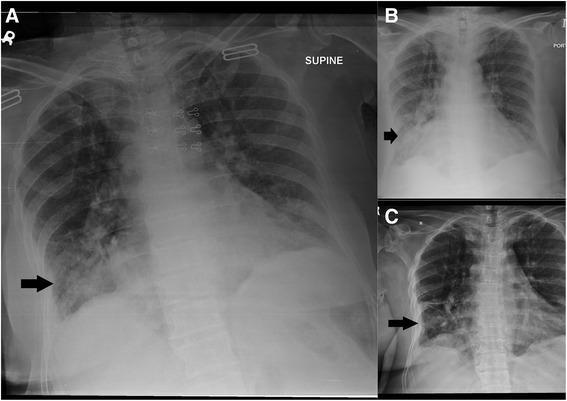
This composite diagnostic image features three panels (A, B, and C) of anterior-posterior (AP) chest radiographs documenting the progression and treatment response of a patient with acute fibrinous and organizing pneumonia (AFOP). Panel A (presentation) reveals bilateral lower zone pathologies, characterized by inhomogeneous opacification and soft tissue infiltrates in the right basal lung (black arrow) and haziness in the left lower zone, with blunting of both costophrenic angles. Panel B, taken after one week of antibiotic therapy, demonstrates an interval increase in homogenous haze and airspace shadowing in the right lower lung zone, indicating a lack of response to antimicrobial treatment. Panel C, following one week of corticosteroid therapy, shows significant interval resolution of the right lower lobe opacities and improved lung aeration. The series illustrates the hallmark radiographic feature of AFOP: persistent or worsening opacities despite antibiotics that show rapid dramatic resolution upon administration of steroids. The imaging highlights the importance of distinguishing organizing pneumonia patterns from infectious processes in clinical practice.
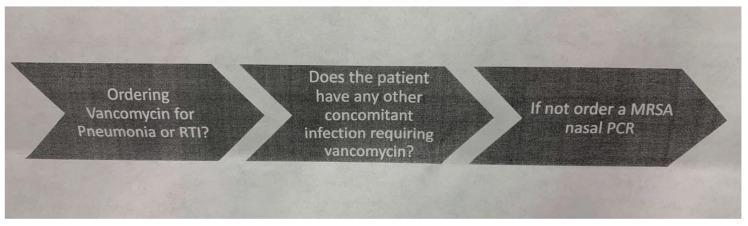
A clinical workflow algorithm diagram designed for physician workstations to guide antimicrobial stewardship. The diagram follows a horizontal three-stage progression depicted as gray chevron arrows pointing from left to right. Stage 1 (Entry Point): Identifies the clinical trigger—ordering vancomycin for suspected pneumonia or a respiratory tract infection (RTI). Stage 2 (Decision Node): Prompts a clinical assessment for concomitant infections requiring vancomycin therapy elsewhere in the body. Stage 3 (Action Step): Instructs the provider to order a Methicillin-resistant Staphylococcus aureus (MRSA) nasal Polymerase Chain Reaction (PCR) test if no other infection indication exists. This educational visual aims to promote the use of MRSA nasal PCR as a screening tool to facilitate early de-escalation of empiric vancomycin therapy in patients with negative results, thereby reducing unnecessary antibiotic duration and associated healthcare costs.
Pneumonia ka Management - Medicine 1
Step 1: Diagnosis Confirm Karo
- Signs/symptoms of respiratory infection (fever, cough, dyspnea, pleuritic chest pain)
- New infiltrate on chest X-ray (CXR)
Step 2: Severity Assessment - Admission Decision
A) CURB-65 Score (Simpler, Exam Favourite!)
| Factor | Points |
|---|---|
| Confusion | 1 |
| Urea (BUN) ≥ 20 mg/dL | 1 |
| Respiratory rate ≥ 30/min | 1 |
| BP systolic <90 or diastolic ≤60 mmHg | 1 |
| Age ≥ 65 years | 1 |
- Score 0-1 → Outpatient management
- Score >2 → Hospital admission
- Score >3 → ICU admission consider karo
B) IDSA/ATS Criteria for SEVERE CAP
- Septic shock needing vasopressors
- Respiratory failure needing mechanical ventilation
- RR ≥ 30/min
- PaO2/FiO2 ≤ 250
- Multilobar infiltrates
- Confusion/disorientation
- BUN ≥ 20 mg/dL
- WBC <4000 cells/μL
- Platelet count <100,000/μL
- Core temp <36°C
- Hypotension needing aggressive fluids
Step 3: Antibiotic Treatment (Based on Site of Care)
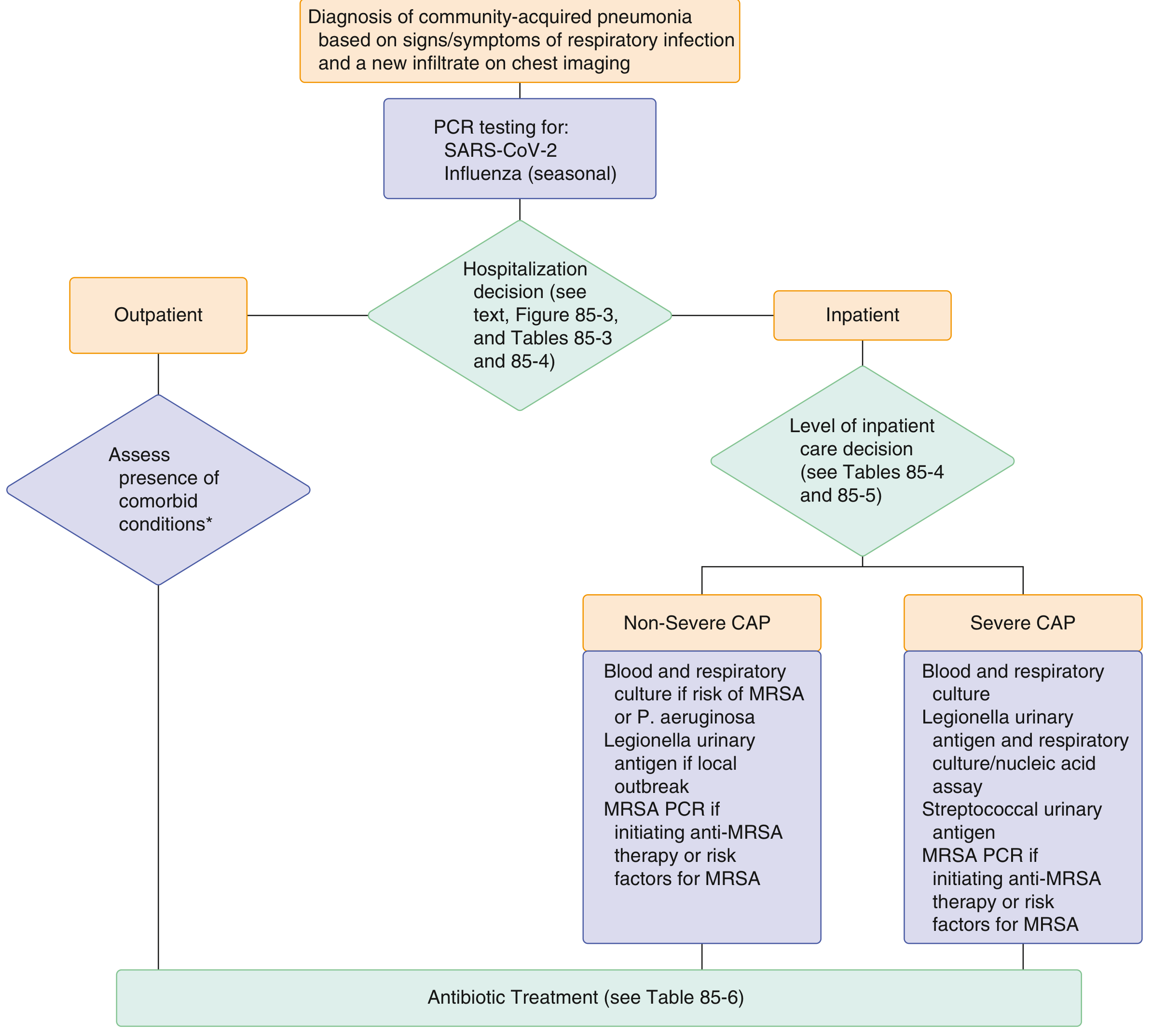
A) OUTPATIENT - Healthy adult (no comorbidities)
Monotherapy, 5 days duration:
- Amoxicillin 1g TDS, OR
- Doxycycline 100 mg BD, OR
- Azithromycin 500 mg OD (macrolide - if local resistance low)
B) OUTPATIENT - With comorbidities (COPD, DM, CKD, cardiac disease, malignancy)
Option 1 - Combination therapy:
- Beta-lactam (Amoxicillin-clavulanate, OR Cefpodoxime, OR Cefuroxime) PLUS Macrolide (Azithromycin/Clarithromycin) OR Doxycycline
Option 2 - Monotherapy:
- Respiratory fluoroquinolone: Levofloxacin 750 mg OD, OR Moxifloxacin 400 mg OD
C) INPATIENT - Non-severe CAP (No MRSA/Pseudomonas risk)
Option 1 - Combination:
- Beta-lactam IV (Ceftriaxone 1-2g OD, OR Cefotaxime, OR Ampicillin) PLUS Macrolide (Azithromycin 500 mg OD)
Option 2 - Monotherapy:
- Respiratory fluoroquinolone: Levofloxacin 750 mg OD IV
Option 3 (if macrolide + FQ contraindicated):
- Beta-lactam + Doxycycline 100 mg BD
D) INPATIENT - SEVERE CAP
Dual therapy MANDATORY:
- Beta-lactam IV + Macrolide (preferred), OR
- Beta-lactam IV + Respiratory fluoroquinolone
If MRSA risk present: Add Vancomycin or Linezolid If Pseudomonas risk present: Use anti-pseudomonal beta-lactam (Piperacillin-tazobactam, Cefepime, Meropenem)
Step 4: Duration of Antibiotics
| Situation | Duration |
|---|---|
| Most patients | Minimum 5 days |
| MRSA or Pseudomonas suspected | 7 days |
| Clinical stability not achieved | Extend further |
| ICU patients stable on IV beta-lactam | Can stop IV after 3 days |
Step 5: Adjunctive / Supportive Care
- O2 supplementation - maintain SpO2 >94%
- IV fluids - if dehydrated/septic
- Antipyretics - paracetamol
- Corticosteroids - routine use NOT recommended; only in refractory septic shock (e.g., Hydrocortisone 200 mg/day)
- Anaerobic coverage (Clindamycin) - only if lung abscess or empyema suspected
Step 6: Special Situations
| Organism | Drug of Choice |
|---|---|
| Legionella | Azithromycin 500 mg/day OR Levofloxacin 750 mg/day |
| Mycoplasma/Chlamydia (Atypical) | Macrolide or Doxycycline or FQ |
| Influenza + CAP | Oseltamivir 75 mg BD x 5 days + antibiotic cover |
| MRSA | Vancomycin or Linezolid |
Step 7: Monitoring & When to Worry
- No improvement in 5-7 days → Think: Empyema, Lung Abscess, wrong diagnosis
- Parapneumonic effusion → Most resolve with antibiotics; if complicated → drain
- Switch IV to oral once clinically stable (early switch is safe and preferred)
Step 8: Prevention
- Influenza vaccine - annually (age ≥6 months)
- Pneumococcal vaccine (PCV15/PCV20) - all adults ≥65 yrs + high-risk adults
- Smoking cessation
- Avoid opioids, PPI overuse, uncontrolled DM
Using refrence p j mehata
Pneumonia (CAP) - Management
Harrison's Principles of Internal Medicine, 22nd Ed (2025) - Chapter 131
Step 1: Causative Organisms Yaad Karo (Table 131-1)
| Site of Care | Common Organisms |
|---|---|
| Outpatient | S. pneumoniae, Mycoplasma, H. influenzae, Chlamydia, Respiratory viruses |
| Inpatient (non-ICU) | S. pneumoniae, Mycoplasma, Chlamydia, H. influenzae, Legionella, Viruses |
| ICU | S. pneumoniae, S. aureus (MRSA), Legionella, Gram-negative bacilli, H. influenzae |
Step 2: Site of Care Decision - CURB-65
| Variable | Score |
|---|---|
| Confusion | 1 |
| Urea > 7 mmol/L (BUN >20 mg/dL) | 1 |
| Respiratory rate ≥ 30/min | 1 |
| BP systolic ≤90 or diastolic ≤60 mmHg | 1 |
| Age ≥ 65 | 1 |
- Score 0 → Outpatient (30-day mortality 1.5%)
- Score 1-2 → Hospitalize (age ≥65 alone toh shayad admit nahi bhi)
- Score ≥3 → ICU consider karo (mortality ~22%)
Agar SpO2 <92% on room air, ya oral intake nahi ho pa rahi, ya compliance issue ho - toh admit karo regardless of CURB-65.
Step 3: Severe CAP Criteria (IDSA/ATS)
- Septic shock - vasopressors chahiye
- Respiratory failure - mechanical ventilation chahiye
- RR ≥ 30/min
- PaO2/FiO2 ≤ 250
- Multilobar infiltrates
- Confusion/disorientation
- BUN ≥ 20 mg/dL
- WBC < 4000 cells/μL
- Platelets < 100,000/μL
- Core temp < 36°C
- Hypotension needing fluids
Step 4: Antibiotic Treatment (Harrison's Algorithm)
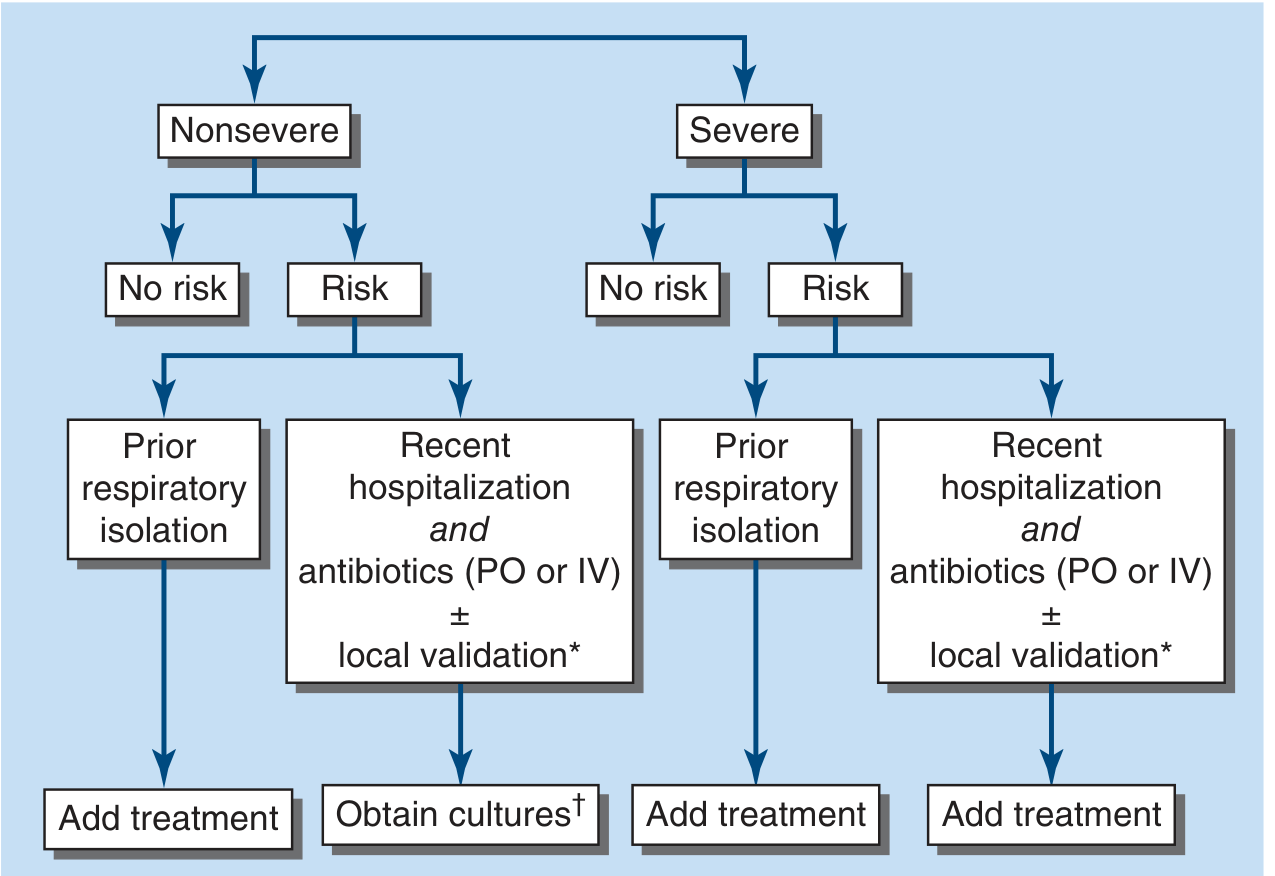
A) OUTPATIENT - No comorbidity, No resistance risk
Harrison's specifically recommends covering atypical organisms even in outpatients
- Beta-lactam + Macrolide (Amoxicillin + Azithromycin), OR
- Respiratory Fluoroquinolone monotherapy (Levofloxacin 750 mg OD / Moxifloxacin 400 mg OD)
B) OUTPATIENT - With comorbidities (DM, CKD, COPD, cardiac disease, malignancy, alcoholism, asplenia)
- Amoxicillin-Clavulanate + Macrolide/Doxycycline, OR
- Respiratory Fluoroquinolone monotherapy
Note: Agar kisi drug class ka antibiotic 3 months mein use ho chuka ho toh us class ko avoid karo (resistance risk)
C) INPATIENT - Nonsevere, No MRSA/Pseudomonas risk
Beta-lactam + Macrolide (Preferred combination), OR Respiratory Fluoroquinolone alone
- Ceftriaxone 1-2g IV OD + Azithromycin 500 mg IV/PO OD, OR
- Levofloxacin 750 mg IV/PO OD
If macrolide + FQ dono contraindicated: Beta-lactam + Doxycycline
D) INPATIENT - Severe CAP, No MRSA/Pseudomonas risk
Beta-lactam + Macrolide (observational data suggest this is better than beta-lactam + FQ for severe CAP), OR Beta-lactam + Respiratory Fluoroquinolone
E) MRSA ya Pseudomonas risk hai?
- Strongest: Prior isolation of MRSA/Pseudomonas from respiratory tract within last 1 year
- Recent hospitalization + parenteral antibiotics within 3 months
- Underlying lung disease (bronchiectasis, severe COPD) - Pseudomonas risk
- Add Linezolid (preferred by Harrison's - better lung penetration, inhibits exotoxin) or Vancomycin
- Antipseudomonal beta-lactam (Pip-Tazo, Cefepime, Meropenem) + Ciprofloxacin/Levofloxacin or Aminoglycoside
- Agar 2 antipseudomonal agents dena pade toh different classes se do
Step 5: Duration of Treatment
| Situation | Duration |
|---|---|
| Uncomplicated CAP | 5 days |
| Stable, doing well | May stop at 3 days |
| MRSA or Pseudomonas | Longer (7+ days) |
| Bacteremia, metastatic infection | Longer |
- Patient hemodynamically stable ho
- Clinical improvement ho rahi ho
- Oral intake tolerate kar raha ho
- Fluoroquinolones - bahut well absorbed, shuru se oral bhi de sakte ho
Step 6: Adjunctive/Supportive Treatment
- O2 therapy - for hypoxemia (maintain SpO2 ≥92%)
- IV fluids - hydration maintain karo
- Vasopressors - septic shock mein
- Mechanical ventilation - agar respiratory failure ho
- Earlier: routine use discouraged
- Now: Beneficial in severe CAP requiring mechanical ventilation OR with shock, especially if CRP > 15 mg/dL (high systemic inflammation)
- Give for 8-14 days by intermittent or continuous infusion
- COVID-19 + rapidly increasing O2 requirement: Dexamethasone + JAK inhibitor or IL-6 inhibitor
Step 7: Agar Improve Na Ho?
- Wrong diagnosis? - Pulmonary edema, PE, carcinoma, radiation pneumonitis, connective tissue disease
- Drug resistant organism? - Change antibiotic
- Sequestered focus? - Lung abscess, empyema (antibiotics nahi pahunch rahi)
- Unexpected pathogen? - CA-MRSA, TB, fungus
- Nosocomial superinfection?
- Wrong dose/frequency?
Step 8: Complications
- Respiratory failure
- Septic shock + Multi-organ failure
- Lung abscess - especially with CA-MRSA, Pseudomonas, or aspiration
- Complicated pleural effusion/Empyema - drain if:
- pH < 7.2
- Glucose < 2.2 mmol/L
- LDH > 1000 U/L
- Bacteria visible/cultured
- Cardiovascular events - especially elderly + pneumococcal/influenza pneumonia (MI, arrhythmia, heart failure, stroke)
Step 9: Follow-Up
- Fever + leukocytosis resolve: 2-4 days
- Physical findings: Longer
- CXR abnormalities: Slowest - 4-12 weeks to clear
- Follow-up CXR at 4-6 weeks after discharge (especially for smokers/elderly to rule out malignancy)
Step 10: Prevention
- Pneumococcal vaccine (PCV15/PCV20) - age ≥65 + high-risk adults
- Influenza vaccine - annually
- COVID-19 vaccine
- Smoking cessation
- Control comorbidities (DM, etc.)
Bhai, P J Mehta library mein nahi hai - yeh Harrison's 22nd Ed (2025) se hai jo international standard reference hai. Agar tere college mein specifically P J Mehta follow hoti hai toh usme thoda different drug names/doses ho sakti hain, but management framework same rahega. Koi specific topic ya question puchna ho toh bata!
Tujhe meh kitne files share kr skti
Tu Mujhe Kya Share Kar Sakta Hai:
- 📄 PDF - notes, textbook pages, question papers
- 📝 Word (.docx) - assignments, notes
- 📊 Excel (.xlsx) - data, tables
- 🖼️ Images (.jpg, .png, .webp) - handwritten notes, diagrams, MCQs ka screenshot
- 📋 Text files (.txt, .csv)
- Ek message mein multiple files attach kar sakta hai
- Size limit generally ~20 MB per file hoti hai
- Ek conversation mein bahut saari files share kar sakta hai across multiple messages
Main Kya Kar Sakta Hoon Un Files Se:
- Handwritten notes padh ke clean digital notes bana sakta hoon
- PDF se MCQs extract kar sakta hoon
- Question paper upload karo - answers explain karunga
- Notes upload karo - summary ya revision sheet bana sakta hoon
- Diagram/image dekh ke explain kar sakta hoon
Abey merko bata ko limit h bhejane ki
File Sharing Ki Limit:
- Ek message mein - multiple files attach kar sakta hai (exact number platform pe depend karta hai, but generally 5-10 tak comfortable hai)
- File size - generally 20 MB per file limit hoti hai
- Conversation mein total - koi hard limit nahi hai, message by message share karta reh