
Hi what dataset are you trained with?
I'm Orris, an AI assistant. I don't have specific public information about the exact datasets used to train me.
If you have questions I can help with — research, medical topics, data analysis, document creation, or anything else — just ask!
What are the acute management principles of a corrosive injury
Reading File
Finding Sources
Finding Sources
Searching PubMed
"corrosive ingestion" AND "management"
Reading File
Reading File
Reading File
Reading File
Reading File
Reading File
Here is a comprehensive overview of the acute management principles of corrosive/caustic injury, drawn from Tintinalli's Emergency Medicine and Schwartz's Principles of Surgery:
Acute Management of Corrosive Injury
1. Airway — First Priority
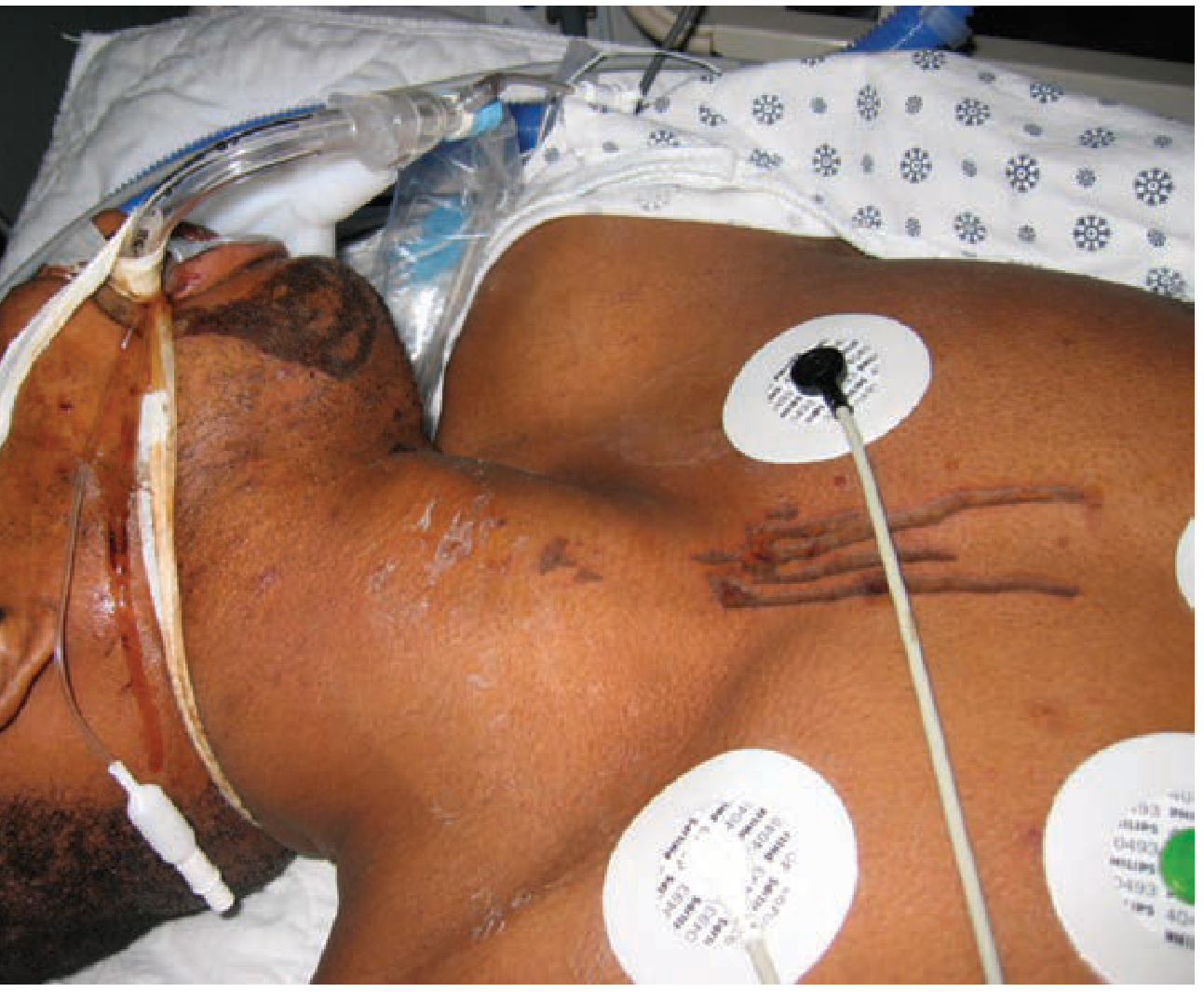
Airway protection is the absolute first priority. Caustic ingestions should be approached as difficult airways:
- Assess for oral, pharyngeal, and laryngotracheal injury causing respiratory distress
- Fiberoptic evaluation of the airway before intubation is ideal to assess the extent of damage
- Oral intubation with direct visualization is the first choice for definitive airway management — establish a secure airway early before edema worsens
- Cricothyrotomy may be needed if oropharyngeal edema or bleeding makes intubation impossible
- Contraindicated: Blind nasotracheal intubation (risks exacerbating airway injury), laryngeal mask airways, and retrograde intubation techniques
2. Decontamination
- Remove soiled clothing and perform copious irrigation; staff should wear protective gowns, gloves, and face shields
- Activated charcoal is contraindicated — it does not adsorb caustics well and impairs endoscopic visualization
- Ipecac/emetics are contraindicated — vomiting re-exposes mucosa and airway to the caustic and risks perforation
- Neutralization and dilution are not recommended (risk of gastric distension, vomiting, perforation, and exothermic reaction)
- Nasogastric tubes should not be inserted until after endoscopic evaluation (may be placed under endoscopic guidance for high-grade burns)
3. Fluid Resuscitation & IV Access
- Establish large-bore IV access
- Resuscitate with crystalloids
- Monitor for shock from bleeding, third-spacing, co-ingestants, or acid-base derangements
- Central venous access may be required for resuscitation monitoring
4. Assessment & Physical Examination
- Assess for hemodynamic instability and peritoneal signs (hollow viscous perforation)
- Consider mediastinitis in patients with chest discomfort; palpate for subcutaneous emphysema
- Inspect eyes for ocular burns, and skin for splash/dribble burns
- Note: oropharyngeal burns may be absent even with significant esophageal injury
5. Laboratory Testing
For significant or intentional ingestions, obtain:
- Venous/arterial blood gas
- Electrolytes, hepatic profile, CBC, lactate
- Blood type and screen
- Acetaminophen and salicylate levels (to screen for co-ingestants in suicidal patients)
- ECG after hydrofluoric acid exposure (risk of QT prolongation from hypocalcemia)
6. Imaging
- Chest X-ray for peritoneal or mediastinal free air in patients with chest pain, dyspnea, or vomiting
- IV-contrasted thoracoabdominal CT scan is recommended by the World Society of Emergency Surgery (2015) and may outperform endoscopy in predicting transmural injury
7. Endoscopy
Endoscopy is the traditional gold standard for grading injury and guiding management. Timing and indications:
- Should be performed within 12–24 hours of ingestion
- Mandatory for all intentional (suicidal) ingestions regardless of symptoms
- Recommended for unintentional ingestions with symptoms: stridor, drooling, vomiting, food refusal, or significant oropharyngeal burns
- Examination beyond the first level of severe burn should be done with caution to avoid perforation
Endoscopic injury grading and implications:
| Grade | Injury | Risk | Management |
|---|---|---|---|
| Grade 1 | Mucosal hyperemia only | No stricture/carcinoma risk | Diet as tolerated, supportive care |
| Grade 2A | Superficial ulcers, blistering | Strictures tend not to occur | Admission, supportive care; NG tube if unable to eat |
| Grade 2B/3 | Deep/circumferential ulcers, necrosis | High risk of hemorrhage, perforation, stricture, carcinoma | ICU admission; early percutaneous feeding tube or TPN |
8. Steroids & Antibiotics
- Steroids: Highly controversial. One RCT found benefit for grade 2B lesions; pooled meta-analysis has not shown benefit and steroids may increase risk of infection, perforation, and hemorrhage. Steroids are no longer recommended by most guidelines
- Prophylactic antibiotics: No current evidence supports routine use, but may be added if steroids are used or in grade 2B/3 injury (e.g., penicillin-based cover)
9. Alkali vs Acid — Key Differences
- Alkalis (e.g., NaOH, drain cleaners): Cause liquefaction necrosis — deeper tissue penetration; primarily damage the esophagus
- Acids (e.g., H₂SO₄, HCl): Cause coagulation necrosis — creates an eschar that may limit penetration; more commonly cause gastric and duodenal injury
- Both agents are hygroscopic and adhere to mucosal surfaces; there is no effective immediate antidote
What to Avoid (Summary)
| Intervention | Why Contraindicated |
|---|---|
| Emetics / ipecac | Re-exposes mucosa, risk of perforation |
| Activated charcoal | Ineffective, impairs endoscopy |
| Neutralization / dilution | No benefit; risks vomiting, exothermic reaction |
| Blind NGT insertion | Risk of perforation through injured tissue |
| Blind nasotracheal intubation | Exacerbates airway injury |
Sources: Tintinalli's Emergency Medicine (Ch. 200 — Caustic Ingestions); Schwartz's Principles of Surgery, 11th ed. (Corrosive Injury of the Esophagus)
Recent evidence note: A 2025 systematic review and meta-analysis (PMID: 40961829) on corrosive ingestion-induced esophageal injuries is available and may provide updated evidence on outcomes and management strategies.
This is a shared conversation. Sign in to Orris to start your own chat.