
Pt c/o hairfall for past 3 years, dry lips for past 1 and half year , frequent application of lip balm , worsens during periods and scanty menstrual flow and period lasts for only two days. Serum ferritin, calcium , thyroid and fbs all normal. What can be the diagnosis
hairfall dry lips scanty periods hypomenorrhea diagnosis differential hormonal
Most Likely Diagnosis: Polycystic Ovary Syndrome (PCOS)
How the Symptoms Map to PCOS
| Symptom | Explanation in PCOS |
|---|---|
| Hair fall (3 years) | Androgen-mediated (DHT) - causes female pattern / androgenic alopecia (frontal/crown thinning) |
| Dry lips (1.5 years) | Relative estrogen deficiency + excess androgens impair mucosal hydration; also seen with nutritional co-deficiencies in PCOS |
| Frequent lip balm use | Secondary to chronic lip dryness |
| Scanty periods (hypomenorrhea) | Chronic anovulation - thin, under-stimulated endometrium sheds minimally |
| Periods lasting only 2 days | Same - inadequate endometrial proliferation |
| Worsens during periods | Androgen fluctuation around menstruation exacerbates hair loss (telogen shedding triggered by hormonal shift) |
Why PCOS Fits After Ruling Out Common Causes
- Ferritin normal - rules out iron deficiency alopecia (most common cause of hair loss in young women)
- Thyroid normal - rules out hypothyroidism (would cause dry skin/lips + hair loss + heavy/irregular periods)
- Calcium normal - rules out hypoparathyroidism
- FBS normal - but does NOT rule out insulin resistance (PCOS can have insulin resistance with a normal fasting glucose; need fasting insulin / HOMA-IR)
PCOS Diagnostic Criteria (Rotterdam - requires 2 of 3)
- Oligo/anovulation - present (scanty flow, 2-day periods = hypomenorrhea/oligomenorrhea)
- Clinical or biochemical hyperandrogenism - present clinically (androgenic alopecia)
- Polycystic ovaries on USG - not yet assessed
Investigations Still Needed
| Test | Rationale |
|---|---|
| Free testosterone / total testosterone | Confirm biochemical hyperandrogenism |
| DHEA-S | Rule out adrenal source of excess androgens |
| LH:FSH ratio | Often >2:1 in PCOS (LH>FSH) |
| Fasting insulin / HOMA-IR | FBS normal but insulin resistance can be present |
| Pelvic USG (transvaginal preferred) | Look for polycystic ovaries (≥12 follicles 2-9mm or ovarian volume >10 mL) |
| Prolactin | Hyperprolactinemia also causes scanty periods and hair loss - must exclude |
| Serum zinc | Zinc deficiency causes hair loss + dry lips; common co-deficiency in PCOS |
| Vitamin B2/B6/B12 | Deficiency causes angular cheilitis / dry lips |
| AMH (Anti-Mullerian Hormone) | Elevated in PCOS; supports diagnosis |
Additional Differential Diagnoses to Consider
- Late-onset Congenital Adrenal Hyperplasia (non-classic CAH) - 21-hydroxylase deficiency; mimics PCOS; test with early morning 17-OH progesterone
- Hyperprolactinemia - causes scanty periods + hair changes; check serum prolactin
- Premature Ovarian Insufficiency (POI) - low estrogen = hair loss + scanty/absent periods; check FSH/estradiol
- Nutritional deficiency (zinc, biotin, EFA) - can co-exist and worsen all mucocutaneous symptoms
- Androgen-secreting ovarian/adrenal tumor - less likely given 3-year gradual course
Key Takeaway
Ayurvedic treatment plan
Ayurvedic treatment PCOS hair loss scanty periods hypomenorrhea herbs classical formulations
Ayurveda PCOS polycystic ovary syndrome herbal treatment
https://ayurvaid.com/diseases/hypomenorrhea
Shatavari Ashwagandha polycystic ovary hormonal
Ayurvedic Treatment Plan
Dosha-Based Understanding of This Case
- Vata (specifically Apana Vata) - governs downward movement including menstrual flow. When disturbed, it causes scanty, short, and difficult menstruation (Artavakshaya)
- Pitta - excess pitta causes hair loss (Khalitya), inflammation of hair follicles, and dry mucosal surfaces (dry lips)
- Kapha - blocks the Artavaha srotas (channels carrying menstrual fluid), obstructing proper flow and contributing to ovarian pathology
Phase 1 - Purification (Shodhana / Pre-treatment)
- Shatavari ghrita or Phala ghrita - 10-15 ml at bedtime with warm milk
- Clears Vata, nourishes Shukra and Artava dhatu
- Dashamoola kwath steam to the lower abdomen
- Softens Kapha obstruction in pelvis
- Triphala churna at night OR Trivrit lehyam 10g
- Clears Pitta ama, improves liver metabolism of androgens
- (Note: Virechana is generally avoided in active menstruation; plan it in mid-cycle)
- Apana Vata is the primary driver of this condition; Basti directly corrects it
- Anuvasana basti: Dashamoola taila or Ksheerabala taila
- Niruha basti: Dashamoola kwath + honey + saindhava lavana
- Recommended as a course of 8-16 bastis (Karma basti cycle)
Phase 2 - Classical Herbal Formulations
For Artavakshaya (Hypomenorrhea / Scanty Periods)
| Formulation | Dose | Timing | Action |
|---|---|---|---|
| Sukumaram kashayam | 15 ml + equal water, twice daily | Before food | Anulomana of Apana Vata; regulates menstrual flow |
| Ashokarishtam | 15-20 ml + equal water | After food | Uterine tonic; Ashoka bark regulates endometrial growth |
| Kumaryasava | 15-20 ml + equal water | After food | Deepana-pachana; improves Agni; oestrogenic action of Aloe vera |
| Raja pravartini vati | 2 tabs twice daily | With warm water | Specifically indicated for Artavakshaya (promotes menstrual flow) |
| Chandraprabha vati | 2 tabs twice daily | After food | Insulin sensitizing, corrects Kapha-Meda imbalance |
For Khalitya (Hair Fall)
| Formulation | Dose | Timing | Action |
|---|---|---|---|
| Bhringaraja churna | 3-5g with warm water/milk | At night | Rasayana for Keshya (hair); reduces Pitta in Romakupa (hair follicles) |
| Triphala churna | 3g at bedtime | With warm water | Clears Ama, anti-androgenic effect on follicles |
| Narasimha rasayana | 10g | With warm milk at night | Asthi dhatu rasayana (hair = byproduct of asthi dhatu) |
| Thikthakam kashayam | 15 ml + equal water | Before food | Reduces excess Pitta; blood purifier |
For Dry Lips (Oshtha Shushkata)
| Formulation | Action |
|---|---|
| Shatavari kalpa / Shatavari churna (5g with milk twice daily) | Estrogen-like phytoestrogens; moistens all mucous membranes |
| Yashtimadhu (Licorice) churna (3g with honey) | Anti-androgenic, demulcent, anti-inflammatory |
| Ashwagandha churna (3-5g with warm milk at bedtime) | Adaptogen, balances cortisol, supports hormonal axis |
Phase 3 - Single Herb (Dravya) Highlights
| Herb | Sanskrit Name | Specific Role |
|---|---|---|
| Shatavari (Asparagus racemosus) | Shatavari | Phytoestrogenic; replenishes Rasa-Artava dhatu; moistens membranes |
| Ashoka (Saraca asoca) | Ashoka | Uterine tonic; promotes endometrial proliferation |
| Bhringaraja (Eclipta alba) | Bhringaraja | Premier Keshya herb; reduces Pitta-driven hair loss |
| Ashwagandha (Withania somnifera) | Ashwagandha | Balances HPA axis; improves insulin sensitivity; reduces DHT |
| Yashtimadhu (Glycyrrhiza glabra) | Madhuka | Anti-androgenic; reduces testosterone; moistens mucosa |
| Kanchanar (Bauhinia variegata) | Kanchanar | Resolves Kapha-based obstructions; indicated for cysts/growths |
| Guduchi (Tinospora cordifolia) | Amrita | Immunomodulator; Tridosha shamaka; improves Dhatvagni |
| Triphala | Triphala | Rasayana; clears ama from Artavaha srotas |
| Fenugreek (Trigonella foenum) | Methi | Insulin sensitizing; reduces androgenic hair loss |
External Therapies (Bahya Chikitsa)
- Shiro abhyanga (head oil massage) with Bhringamalakadi taila or Neelibhringadi taila - 2-3 times/week; leave for 30-60 minutes before washing
- Shirodhara with Ksheerabala taila - series of 7 sessions; reduces Pitta, calms neuro-hormonal axis
- Avoid chemical shampoos; use Shikakai/Reetha-based hair wash
- Apply Go-ghrita (cow ghee) or Jatyadi ghrita twice daily; no lip balm needed
- Gandush (oil pulling) with sesame oil or coconut oil - reduces oral/mucosal dryness systemically
Diet (Pathya-Apathya)
- Warm, cooked, easily digestible food - dal, rice, khichdi, seasonal vegetables
- Sesame seeds, flaxseeds, pumpkin seeds (phytoestrogenic, zinc-rich)
- Warm cow's milk with Shatavari/Ashwagandha at night
- Pomegranate, beetroot, dates, figs (Artava-vardhaka)
- Cinnamon in food and tea (insulin sensitizing)
- Methi (fenugreek) seeds soaked overnight - eat in morning
- Copper-vessel water (oligodynamic effect; corrects Kapha imbalance)
- Cold drinks, refrigerated food, ice cream
- Excess dairy (curd especially), processed/packaged food
- White sugar, maida (refined flour)
- Excessive sour, salty, and spicy food
- Dieting/skipping meals (aggravates Vata, worsens Artavakshaya)
- Chemical hair products, heat styling tools
Yoga and Pranayama
| Practice | Benefit |
|---|---|
| Baddha Konasana (Butterfly pose) | Opens pelvis; improves ovarian circulation |
| Suptabaddha Konasana | Relaxes pelvic floor; promotes Apana Vata regulation |
| Sarvangasana (Shoulder stand) | Stimulates thyroid/pituitary axis |
| Vajrasana after meals | Improves Agni (digestive fire) |
| Surya Namaskar - 8-12 rounds daily | Full hormonal regulation; reduces insulin resistance |
| Nadi Shodhana pranayama (alternate nostril breathing) | Balances Vata; calms the hypothalamic-pituitary axis |
| Kapalbhati (60 strokes/min x 5 min) | Stimulates Agni; reduces Kapha; insulin sensitizing |
Sample Daily Routine (Dinacharya)
| Time | Practice |
|---|---|
| 6:00 AM | Wake up; drink warm water with lemon + pinch of cinnamon |
| 6:15 AM | Abhyanga (self-oil massage with sesame oil); Yoga/Surya Namaskar |
| 7:00 AM | Kapalbhati + Nadi Shodhana pranayama |
| 8:00 AM | Breakfast - warm, cooked; take Thikthakam kashayam before eating |
| Midday | Light lunch; take Chandraprabha vati after food |
| Evening | Flaxseed/sesame snack; Kumaryasava/Ashokarishtam after dinner |
| Night | Warm milk with Shatavari + Ashwagandha; Bhringaraja churna; Triphala |
| Before bed | Apply ghee to lips; head oil if wash day |
Treatment Duration and Monitoring
- Minimum commitment: 3-6 months - Ayurvedic treatment of hormonal conditions is gradual and sustained
- Reassess menstrual flow at end of each cycle; expect improvement by 2nd-3rd cycle
- Hair loss typically reduces in 2-3 months; regrowth visible by 4-6 months
- Repeat hormonal bloodwork (testosterone, LH/FSH) at 3 months to track progress
Important note: This plan should be supervised by a qualified Ayurvedic physician (BAMS/MD Ayurveda) who can adjust formulations based on individual Prakriti (body constitution), Vikriti (current imbalance state), and seasonal timing (Ritucharya). Some of the formulations listed (especially Raja pravartini vati, Virechana) require professional guidance and are contraindicated in pregnancy.
How to manage pcos
And also she gets periods on regular correct date , no missing or delaying of periods. If 10 means , next month 10 sharp
regular cycle 28 days but scanty flow 2 days only hair loss diagnosis differential PCOS vs other
regular periods on time but only 2 days short duration scanty flow hair loss diagnosis causes
Key Clinical Revision
Why PCOS Becomes Less Likely Now
- Irregular/infrequent cycles = hallmark of PCOS
- Regular, predictable cycles on the same date = argues strongly AGAINST classic PCOS
Revised Differential Diagnosis
Top Priority: Asherman's Syndrome (Intrauterine Adhesions / Synechiae)
| Feature | This Patient |
|---|---|
| Regular cycle (on-time every month) | Yes - Asherman's does NOT disrupt cycle timing because ovulation continues normally |
| Scanty flow, 2 days only | Yes - hallmark feature; adhesions physically reduce the amount of endometrium that can shed |
| Hair loss | Can occur secondary to the underlying hormonal/nutritional state |
| Dry lips | Non-specific |
- D&C (dilation and curettage)
- MTP (medical termination of pregnancy) / abortion
- Hysteroscopy
- Postpartum curettage (for retained placenta)
- Myomectomy
- Pelvic infection / septic abortion / severe endometritis
Second Priority: Low Estrogen State (Relative Hypoestrogenism)
- Thin endometrium → scanty, short flow
- Dry mucous membranes → dry lips (this symptom fits very well here)
- Hair thinning/loss
- Libido changes, vaginal dryness
- Poor nutrition / low body weight
- Excessive exercise
- Chronic stress (mild HPA-HPG axis suppression)
- Early/subclinical Premature Ovarian Insufficiency (POI) - check FSH, LH, E2, AMH
- Hypothalamic suppression
Third: Androgenic Alopecia (Female Pattern Hair Loss) as a Separate Entity
- Female Pattern Hair Loss (FPHL / Ludwig pattern) - genetic predisposition to DHT sensitivity at the follicle level, even with normal serum androgens
- Mild hyperandrogenism that is not affecting ovulation
- Nutritional (zinc, biotin, Vitamin D deficiency - even though ferritin is normal, check Vitamin D)
Fourth: Thyroid (Subclinical)
Revised Priority Investigation Checklist
| Investigation | What it Rules Out |
|---|---|
| Saline Infusion Sonography (SIS) | Asherman's syndrome (intrauterine adhesions) |
| Hysteroscopy | Gold standard for Asherman's |
| Day 2-3 FSH, LH, Estradiol, AMH | Low estrogen state, POI |
| Free testosterone, DHEA-S | Hyperandrogenism (still needed) |
| Prolactin | Hyperprolactinemia |
| Vitamin D (25-OH) | Very common cause of hair loss, missed because not in routine panel |
| Free T3, Free T4 (if only TSH done) | Subclinical hypothyroidism |
| Pelvic USG | Uterine pathology, endometrial thickness, ovarian morphology |
| Endometrial thickness measurement | If <7mm in proliferative phase = hypoestrogenism or Asherman's |
Updated Most Likely Diagnosis
- Asherman's Syndrome - top priority to exclude (regular cycle + scanty flow + 2 days)
- Relative hypoestrogenism (thin endometrium from low E2) causing both the scanty flow AND the dry lips
- Female Pattern Hair Loss (FPHL) - possibly co-existing, from androgenic sensitivity or nutritional deficit
- Ovulatory PCOS - still possible but lower on the list now
No history of uterine procedures
regular cycle scanty periods 2 days hair loss dry lips no uterine procedure diagnosis estrogen deficiency PCOS
Revised Diagnosis After Ruling Out Asherman's
- Scanty, 2-day periods - on time, every month
- Hair loss for 3 years + dry lips for 1.5 years - both worsen during menstruation
The Unifying Diagnosis: Relative Hypoestrogenism (Low Estrogen State)
How it explains each symptom:
| Symptom | Mechanism via Low Estrogen |
|---|---|
| Scanty 2-day periods | Low E2 = thin endometrium = minimal shedding. Cycle timing preserved because ovulation still occurs |
| Dry lips | Estrogen maintains mucosal hydration throughout the body. Low E2 = dry oral mucosa, vaginal dryness, dry skin. Lips are mucosa |
| Worsens during periods | Estrogen is at its absolute lowest during menstruation. This is when dryness and hair shedding peak |
| Hair loss 3 years | Estrogen is hair-protective - it prolongs the anagen (growth) phase. Low E2 shortens anagen, increases telogen shedding |
| Normal thyroid, ferritin, calcium, FBS | Consistent - none of these causes low estrogen directly |
Primary Differential Diagnoses (Ranked)
1. Subclinical / Early Premature Ovarian Insufficiency (POI)
- Age of patient matters here - if she is under 40, this is important
- POI can present with regular cycles initially before progressing to irregular or absent periods
- Ovarian reserve declines silently; estrogen output gradually falls
- FSH rises compensatorily (but may be intermittently normal early on)
- AMH will be low even before FSH rises - this is the most sensitive early marker
- Hair loss, dry skin/lips, reduced flow are early symptoms before amenorrhea sets in
- Key test: AMH + Day 2-3 FSH + Estradiol (E2)
2. Luteal Phase Deficiency (Inadequate Corpus Luteum)
- Ovulation occurs (hence regular timing) but the corpus luteum produces insufficient progesterone
- Low progesterone in the second half of the cycle = inadequate endometrial development = scanty, short shedding
- Also contributes to hair loss (progesterone normally blocks DHT at the follicle level)
- Key test: Mid-luteal progesterone (Day 21 serum progesterone in a 28-day cycle)
- A level <10 ng/mL suggests inadequate luteal function
3. Ovulatory PCOS (Mild / Non-classic Variant)
- Cannot be fully dismissed even with regular cycles
- 12-21% of women with hyperandrogenism and PCOS still ovulate and have regular menses
- In this variant: androgens are mildly elevated, causing hair loss, but not enough to disrupt ovulation
- Androgen-mediated thin endometrium + shortened periods can occur even with regular cycles
- Key test: Free testosterone, DHEA-S, LH:FSH ratio, pelvic USG for ovarian morphology
4. Non-Classic Congenital Adrenal Hyperplasia (NC-CAH)
- 21-hydroxylase deficiency presenting in adulthood
- Causes androgen excess with preserved regular cycles (unlike classic PCOS)
- Hair loss, acne, mild menstrual changes
- Clinically indistinguishable from PCOS without testing
- Key test: Early morning (8 AM) serum 17-OH Progesterone
- If >2 ng/mL, do ACTH stimulation test
5. Hyperprolactinemia (Mild)
- Mild prolactin elevation can cause scanty periods with preserved cycle timing
- Also causes dry skin and hair changes
- Key test: Serum prolactin (must be checked in a fasting, non-stressed state; repeat if elevated)
The "Dry Lips + Periods" Connection - Refined Thinking
Focused Investigation Plan (Priority Order)
| Test | Priority | Target |
|---|---|---|
| Serum AMH | Highest | Ovarian reserve; earliest POI marker |
| Day 2-3 FSH + LH + Estradiol (E2) | Highest | Confirm estrogen status + POI |
| Day 21 Serum Progesterone | High | Luteal phase adequacy |
| Serum Prolactin | High | Hyperprolactinemia |
| Free testosterone + DHEA-S | High | Hyperandrogenism / NC-CAH / PCOS |
| Early morning 17-OH Progesterone | Moderate | NC-CAH |
| Pelvic USG + Endometrial thickness | High | Thin endometrium confirms hypoestrogenism; ovarian morphology |
| Vitamin D (25-OH D3) | Moderate | Very common missed cause of hair loss |
| Serum Zinc | Moderate | Hair loss + mucosal dryness |
| Free T3, Free T4 (if only TSH tested) | Moderate | Subclinical hypothyroidism |
Summary
| Most Likely | Why |
|---|---|
| Relative Hypoestrogenism (possibly early POI or Luteal Phase Deficiency) | Regular timing + scanty flow + dry lips worsening DURING periods (estrogen nadir) + hair loss = classic low-estrogen picture without cycle disruption |
| Ovulatory PCOS still possible | Hair loss + mildly elevated androgens with preserved ovulation is a known PCOS variant |
| NC-CAH | Must exclude; mimics PCOS exactly |
Is poi reversible or
premature ovarian insufficiency reversible spontaneous pregnancy recovery
PMID: 39266563
PMID: 34884349
premature ovarian insufficiency POI reversible spontaneous remission pregnancy rate prognosis 2024
Is POI Reversible?
The Short Answer
Key Facts on Reversibility
1. Spontaneous Remission Does Occur
- In a study of 358 idiopathic POI patients, 24% had spontaneous remission of ovarian function - meaning their FSH normalized and/or menstrual cycles resumed on their own
- Approximately 5-10% of POI patients conceive spontaneously after diagnosis, even without any fertility treatment
- Spontaneous pregnancy has been documented even after 10 years of amenorrhea - so ovarian activity can resume unpredictably at any time
- Nearly 3 out of 4 women with POI still have residual follicles in their ovaries (van Kasteren & Schoemaker) - the ovary is not empty, it is just underperforming
2. Why It Can Reverse
- POI is caused by accelerated follicle depletion or follicle dysfunction, not necessarily total absence of follicles
- Residual follicles can be recruited and ovulate spontaneously
- In autoimmune POI, treating the underlying autoimmunity can restore function
- Estrogen therapy itself has been shown to have a positive effect on folliculogenesis - paradoxically, replacing estrogen can prime the remaining follicles to be recruited
3. Why It Is Not Reliably Reversible
- The remissions are intermittent and unpredictable - you cannot force or predict when they will happen
- Overall spontaneous pregnancy rate is only 4.4-10% - meaning 90%+ of POI patients cannot conceive naturally
- The earlier the age of onset and the lower the AMH, the less likely reversal is
- Genetic causes (Turner mosaic, FMR1 premutation) are less likely to reverse than idiopathic or autoimmune causes
- Without treatment, the ovarian decline continues and the window for spontaneous remission narrows over time
What Can Improve the Situation
| Approach | Evidence | What It Does |
|---|---|---|
| HRT (Estrogen + Progesterone) | Strong | Treats estrogen deficiency symptoms; preserves bone, cardiovascular, brain health; may prime follicles for spontaneous ovulation |
| DHEA supplementation | Moderate | Improves ovarian reserve markers; combined with HRT + melatonin, pregnancy rates of 17-19% reported in some studies |
| Melatonin | Emerging | Reduces oxidative stress on follicles; delays ovarian aging; used adjunctively |
| Intraovarian PRP (Platelet-Rich Plasma) | Experimental | Meta-analysis of 2256 patients: 323 biochemical pregnancies; 177 live births - promising but not yet standard of care |
| Stem cell therapy / IVA (In Vitro Activation) | Experimental | Early-stage research; small studies showing fertility restoration |
| Autoimmune workup + treatment | Important | If autoimmune cause found (anti-ovarian antibodies, thyroid antibodies), immunosuppression may restore function |
| Egg donation (IVF-OD) | Best established | Highest success rates for pregnancy in POI - ~14-17% live birth rates per cycle |
Practical Message for This Patient
- It is not a death sentence for her ovaries - remission is possible and documented
- Start HRT early - it protects bones, heart, brain, AND may improve chances of spontaneous ovulation
- AMH + FSH/E2 should be repeated every 6 months - to track trajectory; a rising AMH or normalizing FSH signals spontaneous recovery
- Do not delay fertility planning if she wants children - the window is uncertain and narrowing
- Avoid OCP (oral contraceptive pills) as the primary treatment - they suppress the rare spontaneous ovulations that do occur, reducing her already small natural pregnancy chances
- Autoimmune panel (anti-thyroid antibodies, anti-adrenal antibodies, anti-ovarian antibodies) - if autoimmune cause found, treating it gives the best chance of reversal
One Important Reminder
But pt is only 24 and unmarried
premature ovarian insufficiency young women management guidelines HRT fertility preservation
PMID: 39647506
Age 24, Unmarried - How This Changes Everything
1. First - Reassess the Diagnosis Probability
- POI affects 1 in 1000 women under 30
- It affects 1 in 100 women under 40 overall
- At 24 with preserved, regular ovulation - this is early/subclinical territory at most
2. What the Age and Marital Status Mean Clinically
For Fertility Counselling
- She is 24 and unmarried - fertility is not an immediate concern right now but it is a future concern that must be protected today
- If POI is confirmed or even suspected (low AMH, borderline high FSH), she needs to be counselled that her fertile window may be shorter than average
- The conversation must be sensitively but clearly had - she deserves to know so she can plan her life with full information
For Treatment Choice
- Since she is unmarried and sexually inactive (presumed), combined oral contraceptive pill is NOT the right choice for her as sole management - it suppresses the rare spontaneous ovulations and does nothing to protect ovarian reserve
- HRT (estrogen + cyclic progesterone) is preferred over OCP in POI - it replaces what is missing without suppressing the hypothalamic-pituitary axis
- At 24, she should NOT be on long-term OCP masking a POI diagnosis
For Oocyte Preservation
- If POI is confirmed, oocyte cryopreservation (egg freezing) should be offered urgently while she still has viable follicles
- The 2024 ESHRE POI guideline specifically added fertility preservation as a new recommendation
- At 24, with residual ovarian function, egg freezing now gives her the best chance of biological motherhood later
- This is time-sensitive - every month of delay means fewer retrievable oocytes
3. Psychological and Social Dimension
- Shock and grief - feels like "premature aging" or loss of womanhood
- Anxiety about marriage and fertility - especially in Indian/South Asian cultural context where fertility is often tied to marriageability
- Social pressure - family may not understand; she may feel alone with this
- Identity disruption - at 24, she did not expect to be dealing with menopausal-type physiology
- Empathetic, clear communication - not blunt delivery of "your ovaries are failing"
- Emphasise: "Your cycles are regular, you are ovulating, we caught this early - that is the best case scenario"
- Refer to counselling / psychologist alongside medical management
- Connect her with POI support groups if available
4. Practical Management Plan for a 24-Year-Old with Suspected POI
Step 1 - Confirm the Diagnosis First
- FSH >25 IU/L on two samples taken 4-6 weeks apart (one elevated reading is not enough)
- Low AMH confirmed
- E2 low on Day 2-3
Step 2 - If POI Confirmed
| Priority | Action |
|---|---|
| Bone protection | Start HRT immediately - her estrogen deficiency at 24 puts her at serious risk of osteoporosis by 35 if untreated. Check baseline DEXA scan |
| Cardiovascular protection | Low estrogen at 24 accelerates atherosclerosis; HRT protects cardiovascular risk |
| Fertility preservation | Refer urgently to reproductive endocrinologist for oocyte cryopreservation while AMH still allows retrieval |
| Autoimmune workup | Anti-thyroid Ab, anti-adrenal Ab, anti-ovarian Ab - autoimmune POI has the best chance of reversal with immunomodulation |
| Genetic testing | Karyotype, FMR1 premutation (Fragile X carrier) - if FMR1 found, family members need counselling |
| HRT regimen | Estradiol (transdermal preferred) + cyclic micronised progesterone (not OCP) - cyclic progesterone preserves the possibility of detecting spontaneous ovulation |
| Monitor FSH/AMH every 6 months | To track whether ovarian function is recovering or declining |
| DHEA + Melatonin (adjunctive) | Evidence emerging for slowing ovarian reserve decline |
Step 3 - If Tests Are Normal / POI Not Confirmed
- Redirect to Luteal Phase Deficiency or Ovulatory PCOS as primary diagnosis
- Much more favourable outlook; fully manageable
- No fertility urgency
5. Key Message for This Patient
"You are 24, your periods come regularly, and we caught this at the earliest possible stage. This means you have time to act, and acting now gives you the best possible outcome for your health and your future fertility. The tests we do now will tell us exactly what is happening, and then we can make a plan that fits your life."
Can we find any other associated symptoms
Associated Symptoms to Ask About - Complete Checklist
Category 1 - Symptoms Supporting PCOS / Hyperandrogenism
| Ask About | Positive Finding Means |
|---|---|
| Acne - facial, jawline, chin, chest, back | Androgen excess - classic PCOS pattern |
| Oily skin / greasy scalp | Sebaceous gland stimulation by androgens |
| Hirsutism - upper lip, chin, neck, chest, inner thighs, lower abdomen | Androgen excess; PCOS or NC-CAH |
| Darkening of skin at neck, armpits, inner thighs, groin (Acanthosis Nigricans) | Insulin resistance - very specific for PCOS |
| Weight gain especially around abdomen | Central obesity; insulin resistance |
| Difficulty losing weight despite diet/exercise | Insulin resistance pattern |
| Skin tags (acrochordon) at neck, axilla | Insulin resistance marker |
| Voice changes (deepening) | Virilisation - suggests more severe androgen excess; look for adrenal/ovarian tumour |
Category 2 - Symptoms Supporting Relative Hypoestrogenism / Early POI
| Ask About | Positive Finding Means |
|---|---|
| Vaginal dryness during intercourse or otherwise | Low estrogen - hallmark symptom; often under-reported by young unmarried women |
| Reduced libido | Low estrogen + low testosterone |
| Hot flushes / heat intolerance at night or during day | Vasomotor instability from estrogen deficiency |
| Night sweats | Same as above |
| Mood changes - anxiety, low mood, brain fog | Estrogen has strong neuro-modulatory role; deficiency causes mood instability |
| Poor concentration / memory lapses | Estrogen deficiency affects cognitive function |
| Sleep disturbance | Estrogen deficiency disrupts sleep architecture |
| Joint pains, body aches | Estrogen is anti-inflammatory; deficiency causes musculoskeletal symptoms |
| Dry eyes | Part of generalised mucosal dryness from low estrogen (same mechanism as dry lips) |
| Palpitations | Vasomotor symptom of estrogen deficiency |
Important note: Many of these symptoms - hot flushes, vaginal dryness, night sweats - are classically thought of as "menopausal" and a 24-year-old will not volunteer them. You must ask specifically. She may have normalised them or be embarrassed to mention them.
Category 3 - Symptoms Supporting Nutritional Deficiency (Co-existing)
| Ask About | Positive Finding Means |
|---|---|
| Brittle, ridged, or spoon-shaped nails | Iron deficiency (even with normal ferritin - check serum iron + TIBC), zinc deficiency |
| Cracks at corners of mouth (Angular cheilitis) | B2 (riboflavin), B6, iron, zinc deficiency |
| Burning sensation on tongue / smooth tongue | B12, folate, iron deficiency |
| Fatigue and easy tiredness | B12, iron, Vitamin D deficiency |
| Muscle cramps | Calcium, magnesium, Vitamin D deficiency |
| Bone pains / low back pain | Vitamin D deficiency - very common at this age in India |
| Poor wound healing | Zinc deficiency |
| Loss of taste or smell | Zinc deficiency - classic sign |
| Increased infections / frequent colds | Zinc, Vitamin C deficiency; immune compromise |
Category 4 - Symptoms Supporting Thyroid Dysfunction (Subclinical)
| Ask About | Positive Finding Means |
|---|---|
| Constipation | Hypothyroidism |
| Cold intolerance - always feeling cold | Hypothyroidism |
| Puffiness of face, swelling of legs | Hypothyroidism (myxoedema) |
| Slow pulse, tiredness, weight gain | Hypothyroidism |
| Anxiety, palpitations, heat intolerance | Hyperthyroidism - can also cause hair loss |
| Goitre / neck swelling | Thyroid pathology |
Category 5 - Symptoms Supporting Autoimmune Cause (Ties to POI + other)
| Ask About | Positive Finding Means |
|---|---|
| Family history of thyroid disease, diabetes, vitiligo, rheumatoid arthritis | Autoimmune diathesis - increases POI probability |
| Patches of white skin / depigmentation | Vitiligo - autoimmune co-morbidity |
| Chronic fatigue, salt craving, dizziness on standing | Adrenal insufficiency (Addison's) - associated with autoimmune POI |
| Recurrent mouth ulcers | Autoimmune, B12, zinc |
| Joint swelling or pain | Autoimmune inflammatory condition |
Category 6 - General Symptoms Helping Grade Severity
| Ask About | Clinical Relevance |
|---|---|
| Sleep quality | Poor sleep drives cortisol dysregulation, worsening hormonal balance |
| Stress levels (chronic stress history) | HPA-HPG axis suppression can cause all symptoms in this patient |
| Exercise habits | Over-exercise suppresses GnRH = low estrogen = all symptoms (hypothalamic amenorrhea - rare with regular cycles but possible) |
| Diet quality - vegetarian/vegan? | Vegan diet = B12 deficiency; low fat diet = low cholesterol = insufficient sex hormone production |
| Sun exposure | Minimal sun = Vitamin D deficiency = hair loss + bone pain |
| Bowel habits | Constipation (hypothyroid); diarrhoea (celiac - can cause all her symptoms) |
| Family history of early menopause | Mother/sister with menopause <45 = strongly supports POI in this patient |
Most Diagnostically Valuable Questions to Ask Right Now
- "Do you notice any dark patches on your neck or underarms?" - Acanthosis nigricans = insulin resistance = PCOS
- "Do you have any hair on your face, chin, or chest?" - Hirsutism = hyperandrogenism
- "Do you ever feel hot flushes, or sweat at night for no reason?" - Vasomotor symptoms = low estrogen / early POI
- "Has your mother or any aunts had early menopause?" - Family history = strongest POI predictor
- "Do you feel your skin or eyes are also dry, not just lips?" - Generalised mucosal dryness = systemic estrogen deficiency
No dark patches , but darkness is present , slightly darker than normal skin tone
acanthosis nigricans neck skin darkening insulin resistance
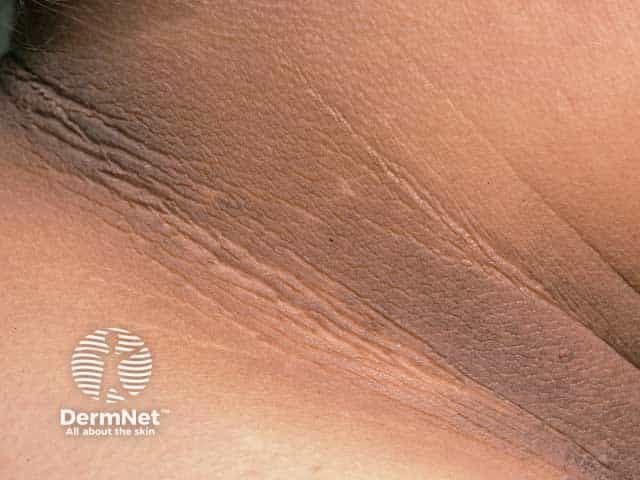
Imaging modality and technique: High-resolution clinical photograph of the neck with close-up frontal/anterolateral view, non-dermoscopic, natural lighting. Anatomical location: Cervical skin folds in the neck (anterior/lateral neck) with intertriginous distribution. Visual features: Velvety, hyperpigmented plaques extending along the lateral neck folds and base of the neck; smooth to slightly coarse surface; skin appears thickened with subtle linear furrowing and reduced elasticity; color ranges from dark brown to slate-brown; edges are well defined where patches meet normal skin. Pathology: In clinical context, consistent with acanthosis nigricans; underlying epidermal hyperplasia and papillomatosis are recognized histologically, though not shown in this image. Diagnostic relevance: sign of insulin resistance/metabolic syndrome and obesity; could reflect type 2 diabetes risk; in older patients or rapidly progressive, raise concern for malignant acanthosis nigricans associated with gastrointestinal cancers. Differential diagnoses include frictional hyperpigmentation, other dermatoses causing darkening in flexures. Clinical use cases: dermatology and endocrinology assessment, metabolic screening, monitoring response to weight loss or diabetes treatment, education for patients about skin changes and associated systemic risk. This image serves as a visual teaching example of classic neck involvement in acanthosis nigricans, highlighting morphology, distribution, and clinical significance for medical students and clinicians.
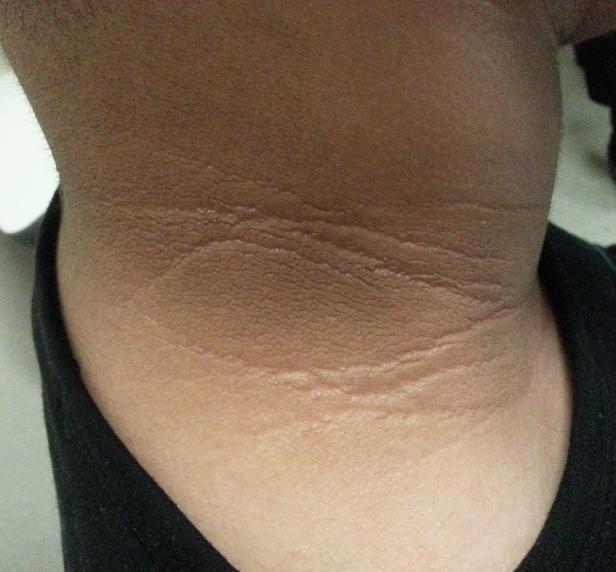
Clinical photograph of the posterior and lateral aspect of a patient's neck demonstrating classic features of acanthosis nigricans. The affected skin shows significant hyperpigmentation and symmetric, velvety thickening (lichenification) with prominent, exaggerated skin folds. The texture appears roughened and 'dirty' in appearance, with the most intense darkening occurring within the deeper cutaneous creases. The boundaries of the lesion are poorly defined, blending gradually into the surrounding normal skin. This dermatological manifestation is a key clinical marker often associated with systemic conditions such as insulin resistance, type 2 diabetes mellitus, and metabolic syndrome, or as part of specific genetic syndromes like Alström syndrome. The image serves as an educational example of metabolic-related skin changes and is essential for clinical recognition and diagnosis in endocrinology and dermatology.
Subtle Skin Darkening = Early / Mild Acanthosis Nigricans
What This Finding Does to the Diagnosis
The Updated Complete Picture
| Symptom | What it Indicates |
|---|---|
| Hair loss 3 years | Androgenic alopecia - elevated DHT/androgens |
| Dry lips worsening during periods | Relative estrogen deficiency from androgen-estrogen imbalance |
| Scanty 2-day periods | Androgen-mediated thin endometrium (even with regular ovulation) |
| Regular cycle timing | Preserved ovulation - rules out classic PCOS but fits ovulatory PCOS |
| Subtle skin darkening | Insulin resistance - even with normal FBS |
| Normal FBS | Consistent - FBS is the LAST marker to rise; insulin resistance precedes diabetes by years |
Why Normal FBS Does NOT Rule Out Insulin Resistance
- Insulin resistance develops (cells stop responding to insulin)
- Pancreas pumps out MORE insulin to compensate
- Blood glucose stays normal because of this excess insulin
- Fasting glucose appears normal - but insulin levels are already elevated
- Eventually the pancreas exhausts → FBS rises → pre-diabetes → diabetes
The Specific Syndrome: HAIR-AN
- Hyperandrogenism (HA) - hair loss, androgenic features
- Acanthosis Nigricans (AN) - her subtle skin darkening
- Insulin Resistance (IR) - the linking mechanism
And Also Consider: SAHA Syndrome
- Seborrhoea
- Acne
- Hirsutism
- Androgenetic Alopecia
Now Ask These Follow-Up Questions
- Where exactly is the darkening? - Neck (back/sides), underarms, inner thighs, below breasts, knuckles → each location increases insulin resistance probability
- Does the skin feel rough or velvety to touch there? - Even subtle texture change = early AN
- Any dandruff or oily scalp? - SAHA syndrome clue
- Any acne - even occasional? - Hyperandrogenism clue
- Family history of diabetes? - Strong genetic link with insulin resistance
- Any weight gain over the past 3 years (same duration as hair loss)? - Insulin resistance timeline
Revised Top Diagnosis
- Regular cycles → mild form with preserved ovulation
- Hair loss → androgenic alopecia from elevated DHT
- Dry lips worsening during periods → androgen-estrogen imbalance at menstrual nadir
- Scanty flow → androgen-mediated thin endometrium
- Subtle skin darkening → early acanthosis nigricans from hyperinsulinemia
- Normal FBS → expected - insulin resistance precedes glucose abnormality
Revised Investigations - Now More Focused
| Test | Why Critical Now |
|---|---|
| Fasting Insulin + HOMA-IR | Confirms insulin resistance (will be elevated even with normal FBS) |
| Fasting glucose + 2hr OGTT | Catches impaired glucose tolerance not visible on FBS alone |
| Free testosterone + Total testosterone | Confirm biochemical hyperandrogenism |
| DHEA-S | Adrenal androgen contribution |
| LH:FSH ratio | Often >2:1 in PCOS |
| AMH | Elevated in PCOS (opposite of POI) |
| Pelvic USG | Ovarian morphology - polycystic appearance |
| Fasting lipid profile | Insulin resistance drives dyslipidaemia |
| HbA1c | Better long-term glucose marker than FBS |
1) darker than normal skin 2)mild not thick but thick hair on lower abdomen , below the umblicus 3)Mostly no , only during periods I feel hot at night. 4)No 5)yes my face skin and eyes also feels dry
1) darker than normal skin 2)mild not thick but thick hair on lower abdomen , below the umblicus 3)Mostly no , only during periods I feel hot at night. 4)No 5)yes my face skin and eyes also feels dry
Clinical Synthesis - All 5 Answers Decoded
| Finding | Clinical Significance | Diagnosis It Points To |
|---|---|---|
| 1. Darker than normal skin | Early acanthosis nigricans (subtle, pre-velvety stage) | Insulin resistance |
| 2. Mild thick hair below umbilicus | Male-escutcheon pattern - androgen-dependent hair zone | Hyperandrogenism / PCOS |
| 3. Hot at night ONLY during periods | Vasomotor symptom at estrogen nadir (lowest point of cycle) | Relative hypoestrogenism - cyclic |
| 4. No (no voice changes, no virilisation) | Mild-moderate androgen excess only, not severe | Reassuring - no tumour |
| 5. Face + eyes also dry | Generalised mucosal/glandular dryness - not just lips | Systemic estrogen deficiency |
Unpacking Each Finding
Finding 2 - Hair Below Umbilicus (Male Escutcheon Pattern)
Finding 3 - Hot at Night ONLY During Periods
-
Estrogen levels follow a predictable cycle:
- Day 1-5 (menstruation): Estrogen at its LOWEST
- Day 6-12: Rising estrogen (follicular phase)
- Day 13-14: Estrogen peaks at ovulation
- Day 15-24: Moderate estrogen (luteal phase)
- Day 25-28: Estrogen drops again before next period
-
Vasomotor symptoms (hot flushes, night sweats) occur when estrogen drops sharply
-
In this patient they occur ONLY during menstruation = ONLY when estrogen is at its absolute nadir
-
This means her estrogen levels are borderline - just enough to suppress vasomotor symptoms through most of the cycle, but when estrogen drops during menstruation, she crosses below the threshold and gets nocturnal hot flushes
Finding 5 - Face Skin + Eyes Also Dry
| Feature | PCOS alone | PCOS + Relative Hypoestrogenism |
|---|---|---|
| Hair loss | Yes | Yes |
| Scanty periods | Sometimes | Yes |
| Skin darkening | Yes (insulin) | Less prominent |
| Dry lips | Occasional | Yes |
| Dry eyes + dry face skin | No | Yes |
| Hot flushes | No | Yes (at menstrual nadir) |
- Estrogen receptors are present in the lacrimal gland
- Low estrogen reduces lacrimal gland secretion → dry eyes
- This is well-documented in peri/post-menopausal women but can occur at any age with low estrogen
Final Unified Diagnosis
Ovulatory PCOS with co-existing Relative Hypoestrogenism
- Thick hair below umbilicus (clinical hyperandrogenism)
- Androgenic alopecia (scalp hair loss)
- Early acanthosis nigricans (insulin resistance)
- Regular cycles preserved (ovulatory PCOS - mild form)
- Scanty 2-day periods (thin endometrium from low E2)
- Dry lips, dry face skin, dry eyes (generalised mucosal/glandular dryness)
- Hot flushes ONLY during menstruation (vasomotor symptoms at estrogen nadir)
- Hair loss also amplified (estrogen normally protects hair follicles)
How This Changes Management
For Hormonal Balance - Both Arms Need Addressing
| Target | Treatment |
|---|---|
| Insulin resistance | Metformin (500mg → 1g BD); lifestyle - diet + exercise is first line |
| Hyperandrogenism | Anti-androgen: Spironolactone 50-100mg/day (reduces DHT, helps hair + hirsutism) |
| Relative estrogen deficiency | Low-dose estradiol supplementation OR combined OCP with anti-androgenic progestogen (e.g. Drospirenone, Cyproterone acetate) |
| Hair loss | Topical minoxidil 2% + treating the underlying hormonal cause |
| Dry eyes | Preservative-free artificial tears; addressing estrogen deficiency systemically |
The Right OCP Choice Here
- Ethinyl estradiol (for estrogen deficiency symptoms)
- Drospirenone (anti-androgenic progestogen) - e.g. Yasmin / Yaz
- OR Cyproterone acetate 2mg + EE 35mcg (Diane-35) - strongest anti-androgen OCP, specifically approved for hirsutism and androgenic alopecia
Investigations Now Clearly Defined
| Test | Expected Finding in This Patient |
|---|---|
| Fasting insulin + HOMA-IR | Elevated - confirms insulin resistance |
| Free testosterone | Mildly elevated |
| DHEA-S | May be mildly elevated (adrenal contribution) |
| LH:FSH | Likely >2:1 |
| AMH | Likely elevated (PCOS has high AMH) |
| Day 2-3 Estradiol | May be low-normal |
| Pelvic USG | Polycystic ovarian morphology likely |
| Fasting lipid profile | Dyslipidaemia common with insulin resistance |
| HbA1c + 2hr OGTT | To fully characterise glucose metabolism |
Summary Statement
Can I send my blood report