
Granulomatos poly angitis full details for md exams 15marks answer from fishman and murray only
Reading File
Now let me search the library for Granulomatosis with Polyangiitis (GPA/Wegener's) in Fishman and Murray textbooks.
Finding Sources
Finding Sources
Good. Now let me search for GPA in Fishman's specifically, and read the Murray & Nadel sections I found.
Finding Sources
Finding Sources
Reading File
Excellent! Now let me read the main Fishman's GPA section (block15) which has 14 paragraphs, and also the Murray & Nadel block20 section simultaneously.
Reading File
Reading File
Excellent content. Now let me read more of the Fishman block15 (treatment section) and also the Murray & Nadel block17 (GPA heading).
Reading File
Reading File
Now let me read the treatment section from Fishman's (block15, lines 2975 onwards) and also the GPA section from the Fishman block13.
Reading File
Reading File
I now have rich, comprehensive content from both Fishman and Murray & Nadel. Let me compile the full 15-mark MD exam answer.
Loading Image
I now have all the content needed to write a complete 15-mark MD exam answer. Here is the full answer sourced entirely from Fishman's Pulmonary Diseases and Disorders and Murray & Nadel's Textbook of Respiratory Medicine:
Granulomatosis with Polyangiitis (GPA) - MD Exam Answer (15 Marks)
Sources: Fishman's Pulmonary Diseases and Disorders, 2-Volume Set | Murray & Nadel's Textbook of Respiratory Medicine, 2-Volume
1. Definition and Classification
GPA (formerly Wegener's granulomatosis) is the most common form of vasculitis to involve the lung. The Chapel Hill Consensus Conference defined GPA as "necrotizing granulomatous inflammation usually involving the respiratory tract, and necrotizing vasculitis affecting predominantly small to medium-sized vessels."
GPA belongs to the ANCA-associated vasculitides (AAV), a group that also includes Microscopic Polyangiitis (MPA) and Eosinophilic Granulomatosis with Polyangiitis (EGPA/Churg-Strauss).
- Annual incidence: 4 to 12 cases per million
- Age at presentation: generally 40-60 years
- Sex: affects males and females equally
(Fishman's, p. 1320; Murray & Nadel, Ch. 87)
2. Pathogenesis
The disease results from a combination of necrotizing granulomatous inflammation and small vessel vasculitis. Key pathogenic mechanisms include:
- ANCA (Anti-neutrophil cytoplasmic antibodies) - predominantly PR3-ANCA (c-ANCA) - activate primed neutrophils, causing degranulation, respiratory burst, and endothelial damage
- Alternative complement pathway plays a critical role. Activated complement factor C5a is a potent attractant and activator of neutrophils. C5a stimulation of neutrophils together with ANCA results not only in the neutrophil respiratory burst and degranulation but also activates the coagulation system and generates thrombin, bridging the inflammation and coagulation systems
- Staphylococcus aureus is frequently cultured from the nostrils of patients with GPA, implicating an infectious trigger (basis for TMP-SMX therapy in localized disease)
(Fishman's, pp. 1323-1324)
3. Pathology
The three major histopathologic features of GPA are (Murray & Nadel, Ch. 87):
- Lung parenchymal necrosis - either geographic necrosis or neutrophilic microabscesses
- Vasculitis - involving small to medium-sized arteries, veins, and capillaries
- Granulomatous inflammation - often mixed, containing granulomas, giant cells, neutrophils, lymphocytes, plasma cells, histiocytes, and eosinophils
Minor histologic features include:
- Organizing pneumonia (70% of cases)
- Diffuse alveolar hemorrhage (DAH) from pulmonary capillaritis (10%)
- Eosinophilia
- Bronchocentric granulomatosis (1%)
On renal biopsy: focal segmental necrotizing glomerulonephritis with areas of fibrinoid necrosis is characteristic. The earlier the biopsy, the more likely some classic features will be absent.
4. Clinical Features
More than 90% of patients first seek medical attention for symptoms arising from the upper and/or lower airway.
A. Upper Airway (90-95%)
- Nasal congestion, epistaxis (mucosal friability and ulceration)
- Chronic sinusitis, recurrent serous otitis media
- Nasal septal perforation and saddle nose deformity from ischemia of nasal cartilage
- Oral: gingival hyperplasia, oropharyngeal ulcerations
- Subglottic stenosis (~20% of patients) - can cause life-threatening airway compromise
- Tracheobronchial involvement in 12-23% of patients; >90% of tracheal GPA occurs in women (unexplained female predominance)
B. Lungs (54-85%)
- Cough, chest pain, dyspnea, hemoptysis
- Chest imaging: nodular or cavitary lesions (most characteristic), alveolar opacities, interstitial patterns
- Diffuse alveolar hemorrhage (DAH) from pulmonary capillaritis in 5-15% - can be subclinical and recurrent; suggested by hemosiderin-laden macrophages on BAL
- A positive c-ANCA is found in 90-95% with active systemic disease, but only 60-65% with limited disease
C. Kidneys (51-80%)
- Focal segmental necrotizing glomerulonephritis - the hallmark renal lesion
- Rapidly progressive glomerulonephritis (RPGN) - present in >90% of patients with DAH
- Even though 80-90% may ultimately develop renal disease, only ~40% have renal involvement at initial presentation
D. Eyes
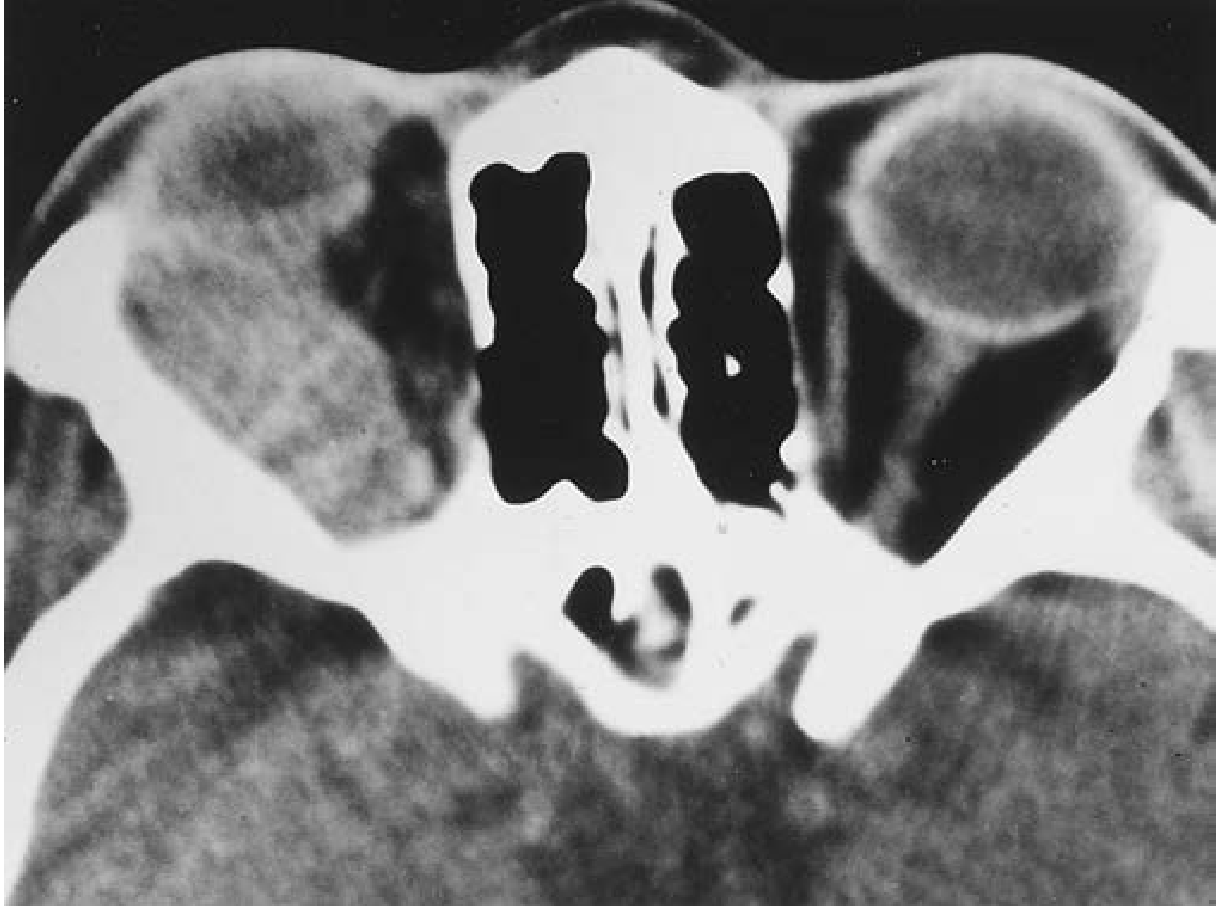
- Orbital involvement with mass lesions causing proptosis and external ophthalmoplegia (Fig. 74-15, Fishman's)
E. Nervous System (up to 1/3 of patients)
- Mononeuritis multiplex - caused by inflammation of the vasa nervorum
- CNS vasculitis and pachymeningitis - severe disease with risk of irreversible damage
F. Cardiovascular
- Regional wall motion abnormalities with non-coronary distribution (occult cardiomyopathy)
- Pericarditis, valvulitis, inflammatory pseudotumor
G. Skin
- Leukocytoclastic vasculitis presenting as palpable purpura (most common)
- Pyoderma gangrenosum-like lesions
- Churg-Strauss granulomas
| Organ System | GPA (%) | MPA (%) | EGPA (%) |
|---|---|---|---|
| Upper airway disease | 90-95% | None | 50-60% |
| Pulmonary parenchymal disease | 54-85% | 20% | 30% |
| Alveolar hemorrhage | 5-15% | 10-50% | <3% |
| Glomerulonephritis | 51-80% | 60-90% | 10-25% |
(Fishman's Table 74-2)
5. Disease Severity Classification
The 2021 ACR/Vasculitis Foundation guideline distinguishes:
- Nonsevere GPA ("limited"): pathology is predominantly necrotizing granulomatous inflammation; no immediate threat to patient's life or irreversible organ damage
- Severe GPA ("generalized"): either threatens the patient's life (e.g., alveolar hemorrhage) OR a vital organ with risk of irreversible damage (e.g., rapidly progressive GN, scleritis, mononeuritis multiplex)
(Fishman's, p. 1320)
6. Investigations / Diagnosis
Serology
- c-ANCA (PR3-ANCA): positive in 90-95% of active systemic GPA; 60-65% in limited disease
- Most labs perform reflex testing for IgG anti-PR3 when c-ANCA immunofluorescence is positive
Imaging
- CT chest: bilateral nodular lesions (often cavitary), alveolar opacities, consolidation
- CT of affected sinuses: mucosal thickening, bone erosion
- CT orbits: soft tissue orbital mass
Bronchoalveolar Lavage (BAL)
- Hemosiderin-laden macrophages - evidence of subclinical recurrent alveolar hemorrhage
Biopsy
- Surgical lung biopsy: geographic necrosis + vasculitis + granulomatous inflammation
- Transbronchial biopsy: insensitive, diagnostic in <20% of specimens
- Renal biopsy: focal segmental necrotizing glomerulonephritis with fibrinoid necrosis
(Murray & Nadel, Ch. 87; Fishman's, p. 1321)
7. Treatment
Treatment goals: (1) induce remission rapidly to minimize irreversible organ damage; (2) maintain remission with minimum side effects. (Fishman's, p. 1325)
A. Induction Therapy
Localized/indolent ANCA-negative disease:
- Trimethoprim/sulfamethoxazole 160/800 mg twice daily (mechanism possibly related to anti-staphylococcal effects or immune-modulatory effects)
- NOT to be used in ANCA-positive patients or with severe manifestations
Nonsevere GPA:
- Oral prednisone 0.5-1 mg/kg/day (max 80 mg/day) + methotrexate (target dose 20-25 mg once weekly, oral or subcutaneous)
- Supplemented by folic acid 1 mg/day + PCP prophylaxis
- Azathioprine or mycophenolate mofetil as alternatives if MTX not tolerated
Severe GPA:
- Rituximab (RTX) is now preferred over cyclophosphamide (CYC) based on two landmark 2010 studies showing RTX was at least as effective, with less morbidity
- RTX protocol: 4 weekly doses of 375 mg/m² + corticosteroids; CS can be tapered and discontinued within 3-6 months if remission is complete
- OR oral cyclophosphamide 2 mg/kg/day for 3-6 months + oral prednisolone
- Pulse IV CYC (3 pulses of 15 mg/kg at 2-week intervals then every 3 weeks for 6 months) is equally effective for induction
With standard therapy: remissions in 70-93% of patients, early mortality <15%
B. Maintenance Therapy
- After induction with CYC, switch to less toxic agents (azathioprine or MTX) at 3-6 months
- RTX can also be used for maintenance (500 mg at 6, 12, and 18 months after induction)
- Total treatment duration: minimum 12-18 months
- Relapse rate with RTX maintenance: 11.2 per 100 patient-years at mean 13.5 months after last dose
C. Tracheobronchial Stenosis
- Systemic corticosteroids + cyclophosphamide or rituximab for severe disease
- If stenosis persists despite immunosuppression: endobronchial therapies - tracheal dilatation, conservative laser surgery, stenting
D. Targeting the Complement Pathway
- C5a receptor antagonists (avacopan) - targeting the alternative complement pathway - is an effective option validated in clinical trials (Fishman's, p. 1323)
(Fishman's, pp. 1324-1330; Murray & Nadel, Ch. 87)
8. Prognosis
- 5-year survival rate with current therapy: 74-91%
- Significant improvement over the last 25 years: mortality hazard ratio declined from 5.6 (1997-2004 cohort) to 2.3 (2005-2012 cohort)
- Excess mortality is primarily due to cardiovascular disease, not cancer
- Increased mortality risk persists beyond 5 years
- GPA with isolated DAH and capillaritis (without other features): early mortality 37%, most often from acute respiratory or renal failure
(Murray & Nadel, Ch. 87, p. 1560)
Summary Table
| Feature | Details |
|---|---|
| Former name | Wegener's granulomatosis |
| Classification | ANCA-associated small vessel vasculitis |
| Key ANCA | c-ANCA / PR3-ANCA (90-95% active systemic) |
| Classic triad | Upper airway + Lungs + Kidneys |
| Histopathology | Geographic necrosis + vasculitis + granulomatous inflammation |
| Renal lesion | Focal segmental necrotizing GN |
| Induction (severe) | Rituximab (preferred) or cyclophosphamide + corticosteroids |
| Induction (nonsevere) | Methotrexate + corticosteroids |
| Maintenance | Azathioprine or MTX (or RTX) |
| 5-year survival | 74-91% |
References:
- Fishman's Pulmonary Diseases and Disorders, 2-Volume Set - Chapter 74 (ANCA-Associated Vasculitis), Chapter 68 (DAH)
- Murray & Nadel's Textbook of Respiratory Medicine, 2-Volume - Chapter 87 (Vasculitis and the Lung), Chapter 70 (Tracheobronchial Disease)
This is a shared conversation. Sign in to Orris to start your own chat.