
Dimorphic anemia meaning
Dimorphic anemia means there are two distinct populations of red blood cells on a blood smear - one normal/microcytic and one macrocytic (or two abnormal populations), giving a "dimorphic" picture.
Searching sources...
Reading File
Finding Sources
Searching the Web
dimorphic anemia definition causes peripheral smear
Reading File
Now let me fetch the dimorphic anemia smear image from the textbook:
Loading Image
Reading File
Here is a complete answer on dimorphic anemia:
Dimorphic Anemia
Definition
Dimorphic anemia is the presence of two distinct populations of red blood cells (RBCs) on a peripheral blood smear - classically a mixture of microcytic hypochromic cells alongside normocytic (or macrocytic) cells. The word "dimorphic" simply means "two forms."
The blood film shows marked anisocytosis (variation in size) and anisochromia (variation in hemoglobin content/color). Because the MCV is calculated as an average, it may appear deceptively normal or only mildly abnormal - hiding the true mixed picture. The RDW (Red Cell Distribution Width) is elevated, which is an important clue.
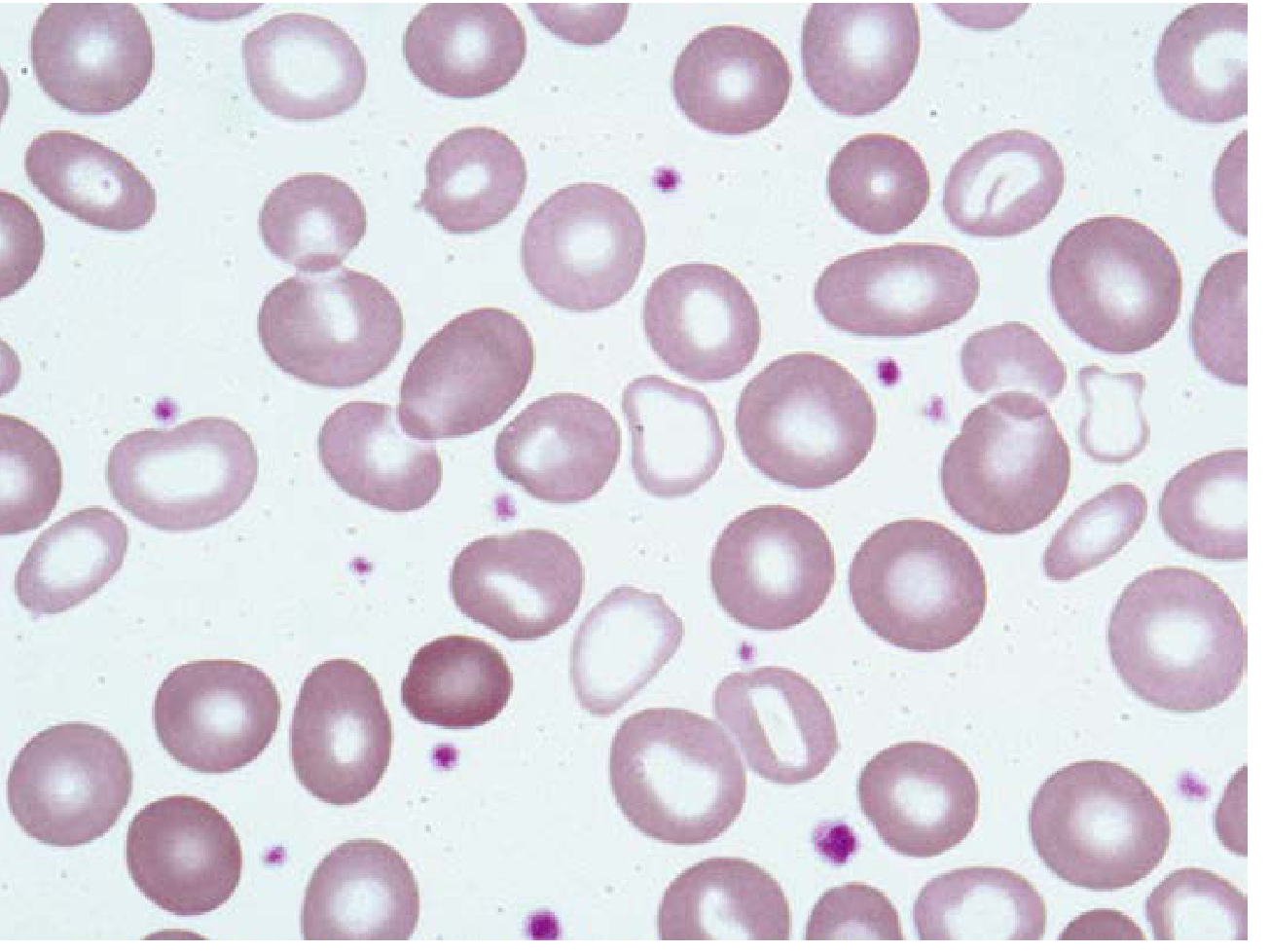
Dimorphic anemia (Fig 31.13): Anisocytosis and anisochromia with microcytic hypochromic cells, normocytic cells, and a few macrocytes (1000x) - Henry's Clinical Diagnosis and Management by Laboratory Methods
Causes
| Cause | Mechanism |
|---|---|
| Sideroblastic anemia (most classic) | Defective heme synthesis produces a mixed population of hypochromic microcytes + normocytic/macrocytic cells. Characteristic ringed sideroblasts seen on bone marrow. Both acquired (MDS) and congenital forms. |
| Iron deficiency responding to iron therapy | After iron supplementation begins, new normochromic cells emerge alongside old hypochromic cells - two populations coexist for weeks |
| Combined iron + B12/folate deficiency | Iron deficiency pushes MCV down; B12/folate deficiency pushes MCV up; peripheral smear shows both microcytes and macrocytes. Classic example: atrophic gastritis causing both blood loss (iron deficiency) and B12 malabsorption. |
| Post-transfusion | Transfused normal donor cells mix with the patient's own hypochromic microcytic cells |
| Lead poisoning | Impairs heme synthesis similarly to sideroblastic anemia |
Key Lab Features
- Peripheral smear: Two RBC populations - small pale cells + larger normal/macro cells
- MCV: May be falsely normal (averaging effect) - do not rely on it alone
- RDW: Elevated (key indirect indicator of two populations)
- Serum ferritin, B12, folate: Order all three to identify the underlying deficiency
- Bone marrow: Ringed sideroblasts (>15% of erythroblasts) confirm sideroblastic anemia
Classic Associations to Remember
- Sideroblastic anemia = the textbook cause of dimorphic smear
- Normal/high MCV + low MCV together = think combined deficiency (B12/folate + iron)
- Weeks after starting iron = transient dimorphic picture as old cells are replaced
- Post-transfusion = temporary mixed picture
Sources: Henry's Clinical Diagnosis and Management by Laboratory Methods, p. 636-637; Goldman-Cecil Medicine; Harrison's Principles of Internal Medicine 22E; Rosen's Emergency Medicine
lap appendectomy signs symptoms
The signs and symptoms of acute appendicitis (the condition requiring appendectomy) are well-established. Classic presentation includes periumbilical pain migrating to the right iliac fossa, nausea, fever, and rebound tenderness.
Searching sources...
Finding Sources
Searching the Web
acute appendicitis clinical signs symptoms diagnosis
Reading File
Finding Sources
Reading File
Reading File
Reading File
Finding Sources
Here is a complete clinical overview of acute appendicitis - the condition that leads to laparoscopic appendectomy:
Acute Appendicitis: Signs & Symptoms (Indications for Laparoscopic Appendectomy)
Pathophysiology in Brief
Luminal obstruction (fecalith, lymphoid hyperplasia, foreign body) leads to bacterial overgrowth, wall distension, vascular compromise, and ultimately perforation if untreated. Early pain is visceral (periumbilical); late pain is somatic (RLQ) as the parietal peritoneum becomes inflamed.
Symptoms (History)
| Symptom | Details |
|---|---|
| Periumbilical/epigastric pain | Classic early symptom - vague, crampy, colicky. Visceral in origin. |
| Pain migration to RLQ | Most specific symptom (LR+ 2.06). Pain shifts to McBurney's point as parietal peritoneum is involved. |
| Anorexia | Very common; loss of appetite is often an early warning (LR+ 1.27). |
| Nausea and vomiting | Usually follow pain onset - if vomiting precedes pain, think other diagnosis (LR+ 1.63 for vomiting). |
| Fever | Low-grade, rarely above 38.5°C in uncomplicated cases. High fever suggests perforation/abscess. |
| General malaise | Fatigue, feeling unwell. |
| Bowel changes | Diarrhea or constipation may occur; not dominant. |
| Dysuria | Burning with urination possible if appendix lies near ureter or bladder. |
Key rule: Pain BEFORE vomiting = appendicitis. Vomiting BEFORE pain = gastroenteritis.
Physical Examination Signs
Primary Signs
| Sign | How to Elicit | Significance |
|---|---|---|
| RLQ Tenderness | Direct palpation of RLQ | Most reliable single sign; absent tenderness makes appendicitis less likely |
| McBurney's Sign | Point tenderness at McBurney's point (1/3 distance from ASIS to umbilicus) | Indicates RLQ peritoneal inflammation |
| Rebound Tenderness | Pain worse on sudden release of deep pressure | Peritoneal irritation (LR+ 1.99) |
| Guarding | Voluntary/involuntary abdominal wall contraction | Peritoneal irritation (LR+ 2.48) |
| Percussion Tenderness | Gentle percussion over RLQ causes pain | Highest LR+ at 2.86 |
| Rigidity | Board-like abdominal wall stiffness | Suggests generalized peritonitis |
Special Signs (Location-Dependent)
| Sign | How to Elicit | Implication |
|---|---|---|
| Rovsing's Sign | LLQ palpation causes RLQ pain | Peritoneal irritation in RLQ (sensitivity 30-68%, specificity 58-91%) |
| Psoas Sign | Extension of right hip causes pain | Retrocecal appendix (LR+ 2.31; sensitivity 16-39%) |
| Obturator Sign | Internal rotation of flexed right hip causes RLQ pain | Pelvic appendix (sensitivity 21-34%, specificity 79-96%) |
| Dunphy's Sign | Sharp RLQ pain with coughing | Peritoneal inflammation |
| Heel Drop / Jar test | Pain on heel strike while standing | Peritoneal irritation |
Note: Special signs (Psoas, Obturator, Rovsing's) are specific but not sensitive - their absence does not rule out appendicitis.
Laboratory Findings
| Test | Finding |
|---|---|
| WBC | Leukocytosis (10,000-14,000/mL typical; >18,000 suggests perforation) |
| Neutrophils | Neutrophilia (>75%) - elevated polymorphs |
| CRP | >10 mg/mL suggests acute appendicitis; >50 mg/mL suggests complicated/perforated |
| Urinalysis | May show mild pyuria or hematuria (proximity to ureter); NO bacteria = rules out UTI |
| Pregnancy test | Must be negative in females to exclude ectopic pregnancy |
Scoring Systems for Diagnosis
Alvarado Score (MANTRELS)
| Variable | Points |
|---|---|
| Migration of pain to RLQ | 1 |
| Anorexia | 1 |
| Nausea/Vomiting | 1 |
| RLQ tenderness | 2 |
| Rebound tenderness | 1 |
| Elevated temperature (≥37.3°C) | 1 |
| Leukocytosis ≥10,000 | 2 |
| PMN shift (>75% neutrophils) | 1 |
| Total | 10 |
- Score 1-4: Low risk - discharge or observation
- Score 5-6: Compatible with appendicitis - observe, consider imaging
- Score 7-10: High probability - proceed to surgery
The Appendicitis Inflammatory Response (AIR) score outperforms Alvarado in adults. Both are validated aids, not standalone decision-makers.
Imaging
- Ultrasound: First-line in children and pregnant women. Look for non-compressible appendix >6 mm, periappendiceal fat stranding. Operator-dependent.
- CT abdomen/pelvis (with contrast): Most sensitive/specific in adults. Shows distended fluid-filled appendix with periappendiceal inflammation, fecalith, perforation, or abscess.
- MRI: Preferred in pregnancy when ultrasound is inconclusive.
Special Populations
- Children: Pain localization is unreliable; perforation rate is higher due to delayed diagnosis
- Elderly: Atypical presentation, lower fever, less tenderness; higher perforation risk
- Pregnant: Appendix is displaced superiorly by the gravid uterus; RLQ tenderness may be higher
When to Suspect Perforation
- Fever >38.5°C or >39°C
- WBC >18,000
- Sudden relief of pain followed by generalized abdominal pain
- Diffuse peritonitis on exam
- Symptoms >48-72 hours duration
Sources: Mulholland & Greenfield's Surgery 7e, p. 3607; Current Surgical Therapy 14e, p. 324; Schwartz's Principles of Surgery 11e
Post op what are the side effects symptoms
Post-op complications after laparoscopic appendectomy include wound infection, port-site pain, shoulder tip pain (from residual CO2 gas), nausea, and ileus. Serious but less common issues include intra-abdominal abscess, bleeding, and bowel injury.
Searching sources...
Finding Sources
Searching the Web
laparoscopic appendectomy postoperative complications side effects recovery
Finding Sources
Finding Sources
Finding Sources
Finding Sources
Finding Sources
Reading File
Finding Sources
Reading Web Page
https://pmc.ncbi.nlm.nih.gov/articles/PMC11512652
Here is a full breakdown of post-operative symptoms and complications after laparoscopic appendectomy:
Post-Op: Laparoscopic Appendectomy - Side Effects & Complications
Normal/Expected Symptoms (Usually Resolve Within Days)
| Symptom | Why It Happens | Duration |
|---|---|---|
| Abdominal pain at incision sites | 3 small port-site wounds healing | 3-7 days; managed with oral analgesics |
| Shoulder tip pain | Residual CO2 gas used to inflate abdomen rises and irritates the diaphragm (referred via phrenic nerve) | 24-48 hours; resolves as gas absorbs |
| Abdominal bloating/distension | Residual gas in peritoneal cavity | 1-3 days |
| Nausea and vomiting | General anesthesia effect; post-op ileus | 24-48 hours |
| Fatigue and weakness | Physiological stress response to surgery and anesthesia | Days to 1-2 weeks |
| Mild fever (< 38°C) | Normal inflammatory response to surgical trauma | Up to 48 hours post-op |
| Constipation or altered bowel habits | Anesthesia slows gut motility; reduced oral intake | First few days |
| Port-site bruising/swelling | Trocar insertion trauma | 5-7 days |
| Sore throat | Endotracheal intubation during anesthesia | 1-2 days |
Surgical Complications (Require Medical Attention)
Early Complications (within 1-2 weeks)
| Complication | Signs/Symptoms | Notes |
|---|---|---|
| Surgical Site Infection (SSI) | Redness, warmth, swelling, pus, fever at port sites | Most common complication overall (~75% of all complications); higher risk in perforated appendicitis |
| Intra-abdominal abscess | Persistent or worsening abdominal pain, spiking fever, raised WBC, not recovering as expected | Particularly common after perforated appendicitis (up to 7% need percutaneous drainage) |
| Paralytic ileus | Absent bowel sounds, abdominal distension, no passage of flatus/stool, nausea/vomiting | Usually resolves with conservative management |
| Bleeding / hematoma | Increasing abdominal pain, dropping blood pressure, bruising around port sites | Rare; may need re-operation |
| Bowel injury (unrecognized) | Worsening abdominal pain, distension, fever, elevated WBC after day 1-2 | Bowel injury during laparoscopy must be ruled out in anyone with unexpected post-op pain - plain X-ray may show ileus or free air |
| Urinary retention | Inability to urinate post-op | Common with spinal/general anesthesia; usually self-limiting |
| Appendix stump leak | Peritonitis signs - diffuse tenderness, fever, sepsis | Rare but serious; if staple/clip fails at stump |
Later Complications (weeks to months)
| Complication | Signs/Symptoms |
|---|---|
| Port-site hernia | Bulge at trocar site, discomfort, may become obstructed |
| Adhesion-related bowel obstruction | Crampy abdominal pain, vomiting, inability to pass stool/gas |
| Pulmonary embolism (PE) | Sudden shortness of breath, chest pain, tachycardia |
| Chronic port-site pain | Persistent discomfort at trocar sites |
Red Flag Symptoms - Return to Hospital Immediately
These warrant urgent re-evaluation:
- Fever > 38.5°C beyond post-op day 2
- Worsening (not improving) abdominal pain
- Abdominal rigidity or board-like abdomen
- Persistent vomiting and inability to eat/drink
- No passage of flatus or stool > 3-4 days
- Wound discharge (pus or foul smell)
- Sudden sharp chest pain or difficulty breathing
- Signs of sepsis - high fever, confusion, low BP, fast heart rate
Outcomes: What to Expect
| Parameter | Laparoscopic Appendectomy |
|---|---|
| Hospital stay | 24-36 hours (uncomplicated) |
| Return to full activity | ~2 weeks |
| Overall complication rate | ~5.5% (uncomplicated appendicitis) |
| Mortality (uncomplicated) | ~0.09% |
| Complication rate (perforated) | 12-25% |
| Mortality (perforated, elderly >70 yrs) | Up to 32% |
Laparoscopic approach is associated with fewer wound complications, shorter hospital stay, and faster recovery compared to open appendectomy. Wound infections and dehiscence are significantly reduced.
Sources: Sleisenger & Fordtran's Gastrointestinal and Liver Disease; Tintinalli's Emergency Medicine; PMC 2024 retrospective study (PMID: 11512652)
Pablocicilib and anastrozole epidemiology and risk at what age and which drug would most likely cause pneumonitis
Palbociclib (CDK4/6 inhibitor) combined with anastrozole (aromatase inhibitor) is used in HR+/HER2- breast cancer. Palbociclib is the drug more likely to cause pneumonitis - CDK4/6 inhibitors as a class carry this risk, while anastrozole rarely does.
Searching sources...
Reading File
Searching PubMed
palbociclib pneumonitis interstitial lung disease
Searching the Web
palbociclib anastrozole pneumonitis incidence risk age epidemiology breast cancer
Finding Sources
Reading Article
PMID: 37994878
Searching PubMed
CDK4/6 inhibitor palbociclib interstitial lung disease incidence
Reading Article
PMID: 40142360
Reading Article
PMID: 33939324
Finding Sources
Finding Sources
Reading Web Page
https://pmc.ncbi.nlm.nih.gov/articles/PMC7392360
Finding Sources
Reading Article
PMID: 39123221
Reading File
Finding Sources
Now I have enough data for a comprehensive, well-cited answer.
Palbociclib + Anastrozole: Epidemiology, Age Risk, and Pneumonitis
What This Combination Is Used For
Palbociclib (Ibrance) + anastrozole (Arimidex) is a first-line regimen for HR+/HER2- advanced or metastatic breast cancer in postmenopausal women. Palbociclib is a CDK4/6 inhibitor (blocks cell cycle progression at G1-S phase) and anastrozole is a non-steroidal aromatase inhibitor (blocks peripheral estrogen synthesis).
Epidemiology and Patient Age Profile
| Parameter | Detail |
|---|---|
| Target population | Postmenopausal women with HR+/HER2- breast cancer |
| Typical age at treatment | 50-70+ years (postmenopausal) |
| Median age in trials | ~62-65 years (PALOMA trials) |
| Breast cancer age peak | HR+ breast cancer incidence rises sharply after age 50; most metastatic patients are in their 60s |
| Male use | Approved in males with HR+/HER2- advanced breast cancer (rare, ~1% of BC) |
The combination was validated in the PALOMA-1 and PALOMA-2 trials, where palbociclib + letrozole (similar AI to anastrozole) improved median PFS from 14.5 months to 24.8 months compared to letrozole alone.
Which Drug Causes Pneumonitis?
Palbociclib is the drug responsible - not anastrozole.
Anastrozole and Lung Toxicity
Anastrozole's known adverse effects are: asthenia, headache, hot flashes, nausea, joint pain, osteoporosis, and thrombophlebitis. Pneumonitis is not a recognized toxicity of anastrozole. It is well-tolerated from a pulmonary standpoint. - Goldman-Cecil Medicine
Palbociclib (CDK4/6 Inhibitor) and Pneumonitis / ILD
| Feature | Data |
|---|---|
| Incidence in clinical trials | Underreported - pneumonitis was not captured as a primary endpoint in PALOMA trials; real-world rates appear higher than trial data |
| Real-world incidence | ~2.1% in a 2025 multicenter study (464 patients, Turkey) [PMID: 40142360] |
| Mean age of affected patients | 62.5 ± 9.85 years (range typically 51-89 years) [PMID: 40142360] |
| Onset timing | Median 53 days (~38 days IQR) from treatment initiation [PMID: 33939324] |
| Typical CT patterns | Hypersensitivity pneumonitis, NSIP (nonspecific interstitial pneumonia), ground-glass opacities, interlobular septal thickening, bilateral infiltrates |
| Severity | Grade 3 in most cases; Grade 4 in ~20%; fatal cases reported (1 death in the 2025 study) |
| Presenting symptoms | Worsening dyspnea (can start as early as 3 months post-initiation), dry cough, hypoxia |
Among CDK4/6 Inhibitors - Who Carries the Highest ILD Risk?
Based on the 2024 FDA-FAERS pharmacovigilance study (73,000+ patients) [PMID: 39123221]:
| Drug | Primary Toxicity Profile | ILD/Pneumonitis Signal |
|---|---|---|
| Palbociclib | Highest hematologic toxicity (neutropenia), fatigue, alopecia | ILD signal present but lower ROR vs. abemaciclib |
| Ribociclib | QT prolongation, hepatotoxicity, macrocytosis | ILD + pneumonitis shared signal |
| Abemaciclib | Diarrhea, GI toxicity, highest ILD/pneumonitis signal | Highest ROR for ILD among the three |
Key finding: Abemaciclib actually carries the highest ILD signal among CDK4/6 inhibitors. Palbociclib does cause ILD, but its strongest toxicity signature is myelosuppression (neutropenia). Abemaciclib has specific ILD/interstitial lung disease as its distinguishing pulmonary risk.
Risk Factors for Pneumonitis on Palbociclib
The 2025 multicenter study found no significant correlation between ILD and:
- Age
- Smoking status
- Lung metastases
- Prior thoracic radiotherapy
However, the 2023 expert review (Schlam et al., PMID: 37994878) recommends individualised risk counselling for:
- Pre-existing interstitial lung disease
- Prior thoracic radiation
- Drug-drug interactions
- Thrombosis risk
Management of Palbociclib-Induced Pneumonitis
- Discontinue palbociclib - mandatory on confirmed diagnosis
- Rule out infection (BAL, cultures) before diagnosing drug-induced ILD
- Corticosteroids - systemic steroids are the mainstay
- Supplemental oxygen as needed; some patients require home O2 for months
- Do not rechallenge in Grade 3-4 toxicity
Summary Answer
| Question | Answer |
|---|---|
| Which drug causes pneumonitis? | Palbociclib (CDK4/6 inhibitor) - anastrozole does not |
| Most ILD-prone CDK4/6 inhibitor? | Abemaciclib has the highest ILD signal; palbociclib's dominant toxicity is neutropenia |
| Age at risk? | Mean ~62-65 years (postmenopausal women); ILD observed across 51-89 age range |
| Incidence | ~2.1% real-world; onset typically within 53 days of starting treatment |
| Pattern | Hypersensitivity pneumonitis, NSIP - bilateral ground-glass opacities on CT |
Sources: PMID 40142360 (2025 multicenter study); PMID 39123221 (2024 FAERS analysis); PMID 37994878 (2023 Expert Opin review); PMID 33939324 (2022 JADER/FAERS analysis); Goldman-Cecil Medicine; Goodman & Gilman's Pharmacological Basis of Therapeutics
This is a shared conversation. Sign in to Orris to start your own chat.