
how to calculate R-R interval
The R-R interval is the time between two consecutive R peaks (the tallest spikes) on an ECG. Here's how to calculate it:
Basic Formula:
R-R interval (seconds) = Time between two consecutive R peaks
To calculate Heart Rate from R-R interval:
Heart Rate (bpm) = 60 / R-R interval (in seconds)
Searching sources...
Reading File
Searching the Web
R-R interval ECG calculation heart rate formula
Finding Sources
Reading File
Reading File
Loading Image
Here is a complete explanation of how to calculate the R-R interval, sourced from Harrison's Principles of Internal Medicine (2025) and Costanzo Physiology.
What is the R-R Interval?
The R-R interval (also called the cycle length) is the time between two consecutive R waves (the tallest peaks of the QRS complex) on an ECG. It represents one complete cardiac cycle - from one ventricular depolarization to the next.
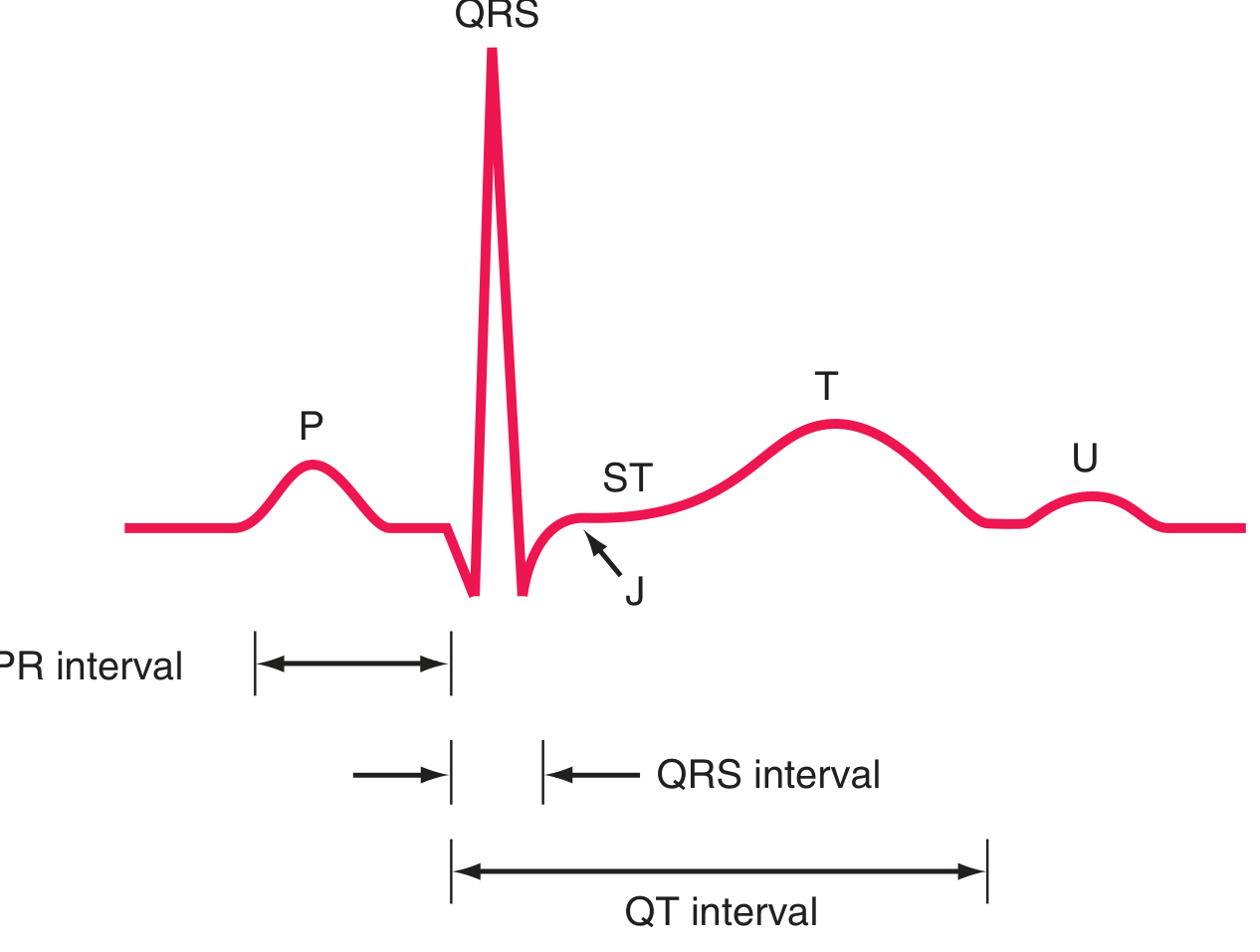
(ECG waveforms - Harrison's Principles of Internal Medicine, 22nd Ed.)
Methods to Calculate R-R Interval
Method 1 - From the ECG Paper (Standard Paper Speed: 25 mm/s)
Standard ECG paper has:
- Small boxes = 1 mm wide = 40 ms (0.04 s)
- Large boxes = 5 mm wide = 200 ms (0.20 s)
Steps:
- Identify two consecutive R peaks
- Count the number of small or large boxes between them
- Multiply by the time value per box
| Boxes Counted | Calculation |
|---|---|
| Small boxes (1 mm each) | R-R (ms) = number of small boxes × 40 ms |
| Large boxes (5 mm each) | R-R (ms) = number of large boxes × 200 ms |
Example: 20 small boxes between R peaks → R-R = 20 × 40 = 800 ms
Method 2 - From Heart Rate
R-R interval (s) = 60 / Heart Rate (bpm)
Or in milliseconds:
R-R interval (ms) = 60,000 / Heart Rate (bpm)
Example: Heart rate = 75 bpm → R-R = 60/75 = 0.8 s (800 ms)
Method 3 - Calculate Heart Rate from R-R Interval
Once you have the R-R interval, you can calculate heart rate using:
Heart Rate (bpm) = 60 / R-R interval (in seconds)
Or using the ECG box shortcut methods (as described in Harrison's Principles):
| Method | Formula |
|---|---|
| Large boxes | HR = 300 / number of large boxes between R waves |
| Small boxes | HR = 1500 / number of small boxes between R waves |
Example: 4 large boxes between R waves → HR = 300/4 = 75 bpm
Sample Problem (from Costanzo Physiology, 7th Ed.)
If the R-R interval is 800 ms (0.8 s), what is the heart rate?
Heart rate = 1 / 0.8 s = 1.25 beats/s = 75 beats/min
If the heart rate is 90 bpm, what is the cycle length?
Cycle length = 1 / 90 bpm = 0.66 s = 660 ms
Important Notes
- For regular rhythms, any two consecutive R-R intervals will give an accurate rate. For greater accuracy, measure across multiple beats (e.g., 10 R-R intervals and divide by 10).
- For irregular rhythms (e.g., atrial fibrillation), the R-R interval varies beat to beat - use the 6-second strip method (count QRS complexes in 6 seconds and multiply by 10) instead.
- Normal R-R interval at rest (60-100 bpm) is approximately 600-1000 ms.
- Paper speed matters: the above calculations assume standard 25 mm/s. At 50 mm/s (common in some countries), each small box = 20 ms and each large box = 100 ms.
Sources:
- Harrison's Principles of Internal Medicine, 22nd Ed., "Basic ECG Waveforms and Intervals"
- Costanzo Physiology, 7th Ed., "Electrocardiogram"
This is a shared conversation. Sign in to Orris to start your own chat.