
H crp
Reading File
Finding Sources
Finding Sources
Searching the Web
high sensitivity CRP hs-CRP clinical significance cardiovascular risk 2024
Reading File
Reading File
Reading File
Reading File
Loading Image
High-Sensitivity CRP (hs-CRP)
What It Is
CRP is an acute-phase reactant protein synthesized by the liver in response to inflammation, primarily induced by IL-6. High-sensitivity CRP (hs-CRP) refers to the same molecule as standard CRP, but measured with more sensitive immunoassays (detection limit ≤0.3 mg/L). The name "high-sensitivity" is somewhat misleading — it doesn't mean the protein is more sensitive biologically; rather, it refers to the analytical method's ability to detect CRP at low concentrations relevant to cardiovascular risk. - Henry's Clinical Diagnosis, p. 316
Reference Values & Risk Stratification (AHA/CDC)
| hs-CRP Level | Cardiovascular Risk Category |
|---|---|
| < 1.0 mg/L | Low risk |
| 1.0 – 3.0 mg/L | Average/intermediate risk |
| > 3.0 mg/L | High risk |
| > 10 mg/L | Likely acute infection/inflammation — disregard, repeat when stable |
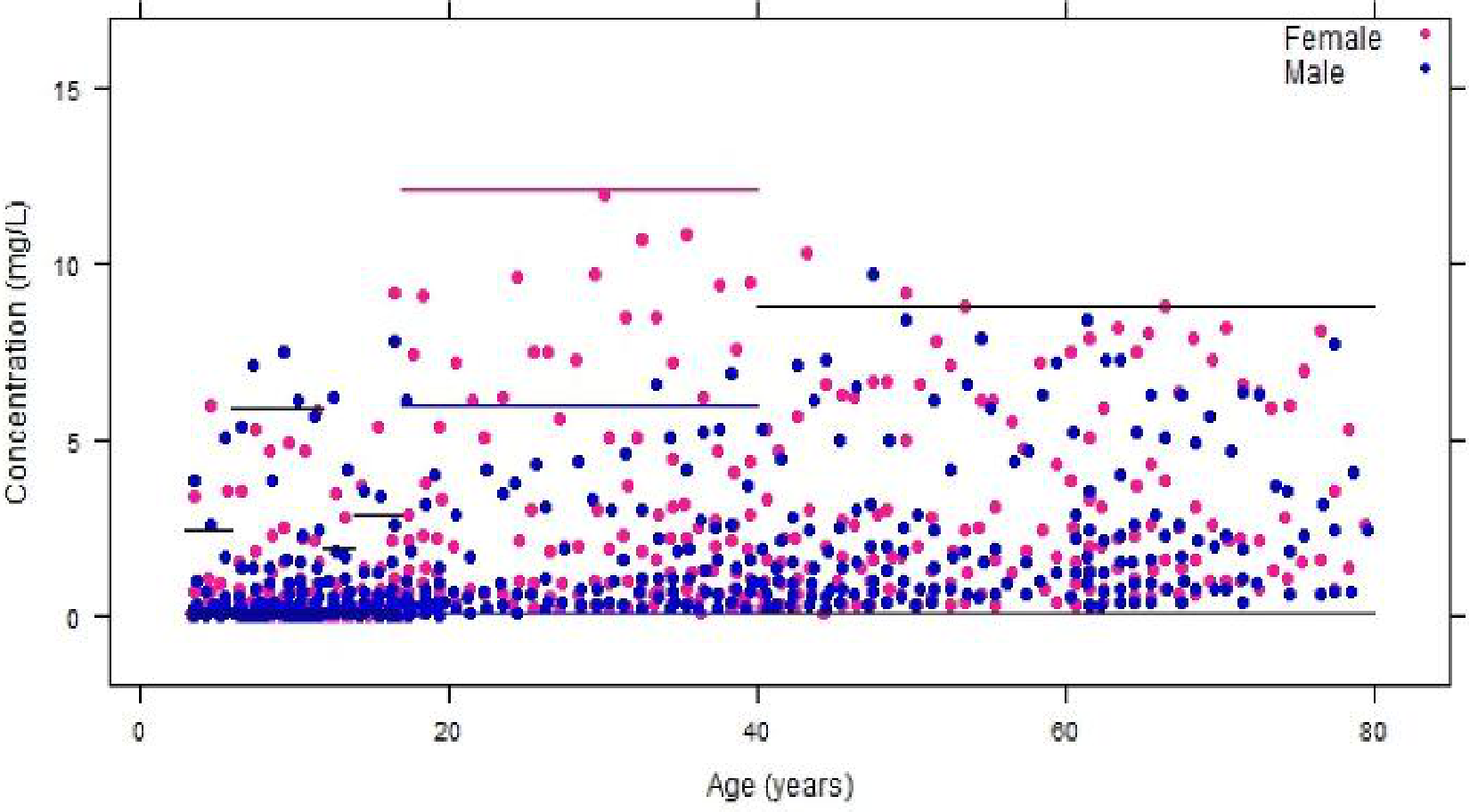
50th percentile for both men and women is approximately 1.5 mg/L. Women on oral HRT tend to have higher values.
Clinical Significance
Cardiovascular Risk
- Chronic low-grade inflammation drives atherosclerosis; hs-CRP at concentrations in the 1–3 mg/L range marks this process. - Tietz Textbook of Laboratory Medicine, p. 1208
- hs-CRP adds prognostic information at all LDL-C concentrations and across all traditional risk categories (age, sex, HTN, cholesterol).
- It does not replace lipid panels — it complements them. hsCRP and LDL-C are largely independent (lipid parameters account for only 3–5% of variance in hs-CRP).
- hs-CRP is the only non-lipid biomarker endorsed by US multi-society guidelines (AHA/CDC, NACB) for cardiovascular risk management.
- Per 2019 ACC/AHA guidelines, hs-CRP ≥ 2 mg/L is a risk-enhancing factor in primary prevention of ASCVD.
- In established ASCVD (secondary prevention), elevated hs-CRP is a better predictor of future events and death than LDL-C, reflecting residual inflammatory risk. - ACC 2025 review
Key Trials
- JUPITER trial: Rosuvastatin 20 mg in patients with hs-CRP ≥2 mg/L + LDL-C <130 mg/dL → 44% reduction in major cardiovascular events vs placebo. Trial stopped early due to overwhelmingly positive results.
- CANTOS trial (canakinumab, anti-IL-1β): Specifically targeting inflammation (not lipids) reduced cardiovascular events in post-MI patients with hs-CRP >2 mg/L. Patients achieving on-treatment hs-CRP <2 mg/L had the greatest benefit. - Tietz, p. 1209
Pathophysiology (Cause or Consequence?)
The precise causal role of CRP in ASCVD remains unresolved:
- Atherosclerotic lesions generate cytokines → mild CRP elevation
- CRP in turn may increase plaque vulnerability (proinflammatory effects)
- CRP is found within human atheromatous lesions
- An alternative hypothesis: CRP is a biochemical marker of metabolic syndrome, reflecting adipocyte cytokine production
Elevated TG and remnant cholesterol (but not LDL-C or Lp(a)) are causally related to increased hs-CRP, while elevated hs-CRP itself is not causally related to CHD (i.e., it's a marker, not a driver). - Tietz, p. 1208
When to Use (AHA/CDC Recommendations)
- Indicated in adults without known CVD at intermediate risk (10-year risk 10–20%) where the result would influence clinical decisions
- Not indicated for universal screening of the general adult population
- If hs-CRP >10 mg/L: repeat when the patient is clinically stable (likely reflects acute inflammation, not chronic cardiovascular risk)
- For risk monitoring: use two measurements ≥2 weeks apart (similar protocol to lipid panels)
- No fasting required; no circadian variation
Analytical Notes
- Dozens of commercial assays available (nephelometric, turbidimetric)
- CDC-led standardization program (2002) harmonizes cut points across assays
- Intraindividual biological variability is comparable to serum cholesterol in stable patients
This is a shared conversation. Sign in to Orris to start your own chat.