
Maleria
Reading File
Malaria is a parasitic infection caused by Plasmodium species, transmitted by Anopheles mosquitoes. It presents with cyclical fevers, chills, and sweating, and can progress to life-threatening complications. Treatment depends on species and drug resistance patterns.
Searching sources...
Finding Sources
Searching PubMed
"malaria"[MeSH Terms] AND "treatment"[MeSH Terms]
Searching the Web
malaria overview pathophysiology treatment 2025
I found good sections on malaria in multiple textbooks. Let me read from the most relevant ones in parallel.
Reading File
Reading File
Searching PubMed
"malaria" AND "artemisinin"
I have rich textbook content. Let me also fetch the malaria chest X-ray image and read more of the treatment section.
Loading Image
Reading File
I now have comprehensive information from the textbooks. Here is a complete overview:
Malaria
Definition and Epidemiology
Malaria is a life-threatening parasitic infection caused by Plasmodium species and transmitted by the bite of an infected female Anopheles mosquito. Over 41% of the world's population lives in endemic areas (Africa, Asia, Oceania, Central and South America). The WHO estimated 219 million cases and ~435,000 deaths per year, primarily children infected with P. falciparum in sub-Saharan Africa. - Rosen's Emergency Medicine, p. 1220; Murray & Nadel's Respiratory Medicine, p. 200
Causative Species
| Species | Fever Periodicity | Notes |
|---|---|---|
| P. falciparum | Every 48 h | Most virulent; can cause multiorgan failure |
| P. vivax | Every 48 h | Relapse via liver hypnozoites |
| P. ovale | Every 48 h | Relapse via liver hypnozoites |
| P. malariae | Every 72 h | Chronic, low-grade |
| P. knowlesi | Every 24 h | Zoonotic (SE Asia); can be fatal, often misidentified as P. malariae |
Life Cycle and Pathophysiology
- Bite: Female Anopheles injects sporozoites into the bloodstream
- Liver phase (pre-erythrocytic, clinically silent): Sporozoites travel to hepatocytes, replicate over 6-7 days into thousands of merozoites; P. vivax and P. ovale form dormant hypnozoites
- Red cell phase (erythrocytic - causes disease): Merozoites invade RBCs, undergo cycles of asexual replication, rupturing cells and releasing more merozoites
- Pathogenesis of severe malaria: Cytokine/chemokine storm + adhesion of P. falciparum-infected RBCs to microvasular endothelium (via variant antigens) causes sequestration in tissue microvessels, driving cerebral malaria and other severe manifestations
Human genetics have been shaped by malaria - sickle cell trait (HbAS), thalassemias, and G6PD deficiency are most prevalent in high-malaria regions and confer some protection against severe disease. - Murray & Nadel's, p. 203
Clinical Features
Classic triad: Fever, chills, sweating (cyclical pattern - but not reliable, especially with P. falciparum)
Common symptoms:
- Headache
- Myalgia
- Nausea/vomiting
- Diarrhea
- Splenomegaly
- Thrombocytopenia, anemia, jaundice
Severe/Complicated Malaria (predominantly P. falciparum, non-immune patients):
- Cerebral malaria - altered consciousness, seizures, coma
- Severe malarial anemia
- Acute respiratory distress syndrome (ARDS) / pulmonary edema
- Acute kidney injury
- Hypoglycemia
- Multiorgan failure
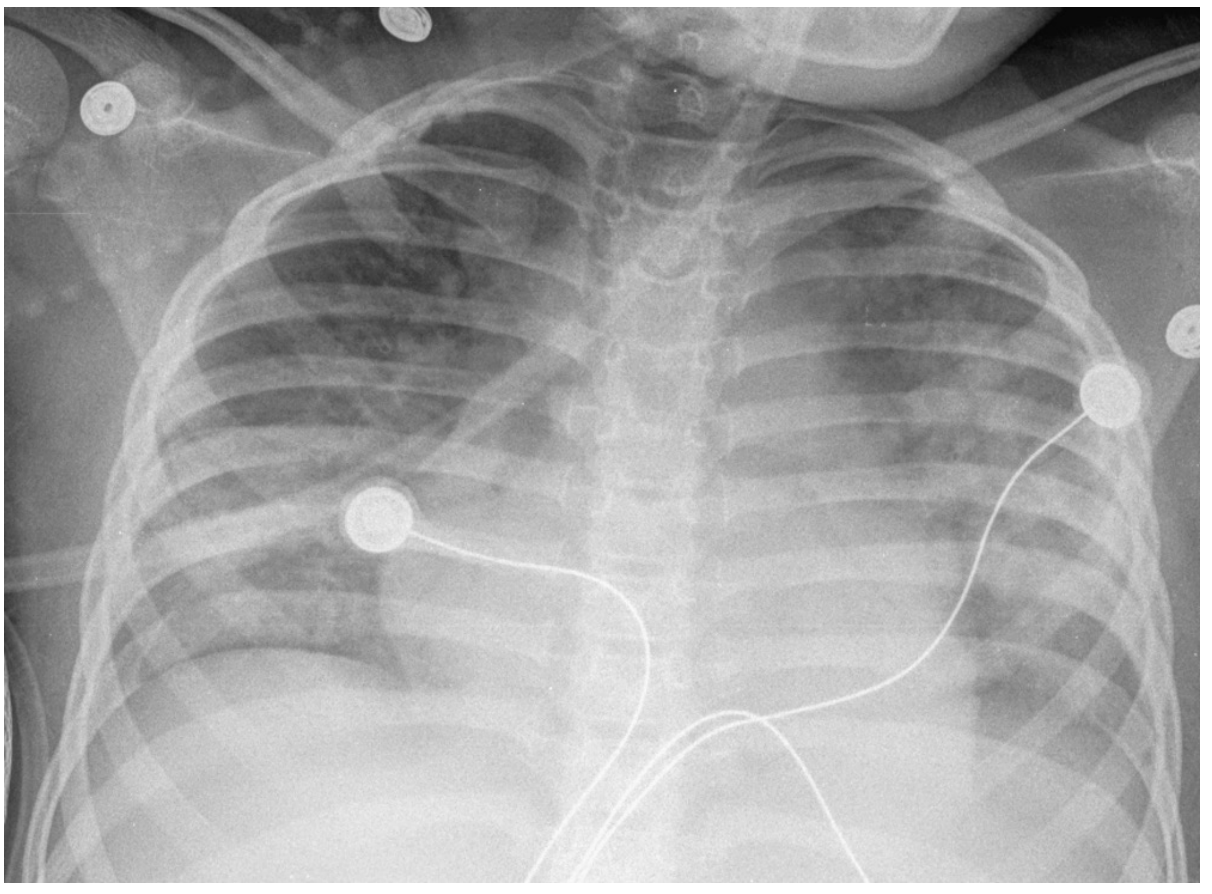
Children, pregnant women, and non-immune travelers are at highest risk for pulmonary complications.
Diagnosis
- Thick and thin blood smear (gold standard): Identifies species and quantifies parasitemia
- Rapid diagnostic tests (RDTs): Detect parasite antigens (HRP-2 for P. falciparum); quick but may miss low parasitemia
- PCR: Most sensitive; useful for species confirmation and drug resistance genotyping
- CBC findings: Anemia, thrombocytopenia, elevated LDH
- Always take a detailed travel history (endemic area exposure, prophylaxis compliance, mosquito net/repellent use)
Treatment
Treatment is guided by species, severity, and geographic drug-resistance patterns.
Uncomplicated Malaria
| Species | First-line Treatment |
|---|---|
| P. falciparum (chloroquine-sensitive areas) | Chloroquine phosphate: 600 mg base, then 300 mg base at 6, 24, and 48 hours |
| P. falciparum (resistant areas) | Artemisinin-based combination therapy (ACT): e.g., artemether-lumefantrine |
| P. vivax / P. ovale | Chloroquine + primaquine (to eliminate hypnozoites and prevent relapse) |
| P. malariae | Chloroquine |
Severe/Complicated Malaria
- IV artesunate (drug of choice globally; superior to quinine)
- Follow-up with oral ACT once able to tolerate oral medications
- Supportive care: airway management, fluid resuscitation, blood transfusion for severe anemia, seizure management, glucose monitoring
Note on drug resistance: Artemisinin partial resistance is an emerging global threat, first documented in Southeast Asia and now spreading to Africa. A 2024 review (White & Chotivanich, Clin Microbiol Rev) highlights that artemisinin-resistant malaria represents a serious challenge for current treatment strategies.
Prevention and Chemoprophylaxis
Personal protection:
- Insecticide-treated bed nets (ITNs)
- DEET-based mosquito repellents
- Protective clothing (long sleeves, especially at night)
Chemoprophylaxis (travelers):
- Chloroquine (sensitive areas)
- Atovaquone-proguanil (Malarone) - most commonly used for travelers
- Mefloquine
- Doxycycline
- Primaquine (for areas with predominantly P. vivax)
Vaccines: The RTS,S/AS01 (Mosquirix) vaccine is now recommended by WHO for children in high-transmission areas of sub-Saharan Africa.
Key Clinical Pearls
- Fever for 7 or more days in anyone with recent travel to an endemic region must be evaluated for malaria
- P. falciparum can progress to death within hours to days if untreated - empiric treatment should never be delayed
- Most fatalities in non-endemic countries result from delayed diagnosis
- Chloroquine resistance is widespread - never treat P. falciparum with chloroquine unless the region is confirmed sensitive
- Primaquine requires G6PD testing before use (causes hemolytic anemia in G6PD deficiency)
- P. vivax and P. ovale can relapse months to years later due to dormant liver stages
Sources: Rosen's Emergency Medicine (9e), Murray & Nadel's Respiratory Medicine, Henry's Clinical Diagnosis and Management by Laboratory Methods; supplemented by Li et al. 2024 - J Epidemiol Glob Health and Li et al. 2025 - Signal Transduct Target Ther
Maleria
I just covered malaria in detail in my previous response above. Here's a quick summary of the key points:
Malaria is a parasitic infection caused by Plasmodium species (falciparum, vivax, ovale, malariae, knowlesi), transmitted by the female Anopheles mosquito.
Key points at a glance:
- Symptoms: Cyclical fever, chills, sweating, headache, anemia, splenomegaly
- Diagnosis: Blood smear (gold standard), rapid antigen tests, PCR
- Severe disease (P. falciparum): Cerebral malaria, ARDS, AKI, multiorgan failure
- Treatment: Artemisinin-based combination therapy (ACT) for falciparum; chloroquine + primaquine for vivax/ovale; IV artesunate for severe cases
- Prevention: Bed nets, repellents, chemoprophylaxis for travelers, RTS,S vaccine for children in endemic Africa
Is there a specific aspect of malaria you'd like me to go deeper on? For example:
- Pathophysiology in detail
- Drug treatment regimens and dosing
- Complications (cerebral malaria, blackwater fever)
- Pediatric or pregnancy considerations
- Drug resistance
- Diagnosis and lab findings
This is a shared conversation. Sign in to Orris to start your own chat.