
Describe foetal attitudes,and different lie of the foetus with their presentation and position in simplified language
fetal lie presentation position attitude obstetrics
fetal attitude flexion head neck obstetrics diagram
cephalic vertex face brow presentation fetal head flexion extension obstetrics
Foetal Attitude, Lie, Presentation & Position — Simplified
1. Foetal Attitude
- Head bent forward (chin on chest)
- Arms folded across the chest
- Knees and hips bent (curled up)
- Back curved outward (like a ball)
| Degree of deviation | Name |
|---|---|
| Head fully flexed (chin on chest) | Vertex presentation (normal) |
| Head partially flexed | Sinciput presentation |
| Head partially extended (neck straightened a little) | Brow presentation |
| Head fully extended (face looking down the canal) | Face presentation |
The more the head is extended from its normal flexed posture, the larger the diameter that presents — making delivery harder.
2. Foetal Lie
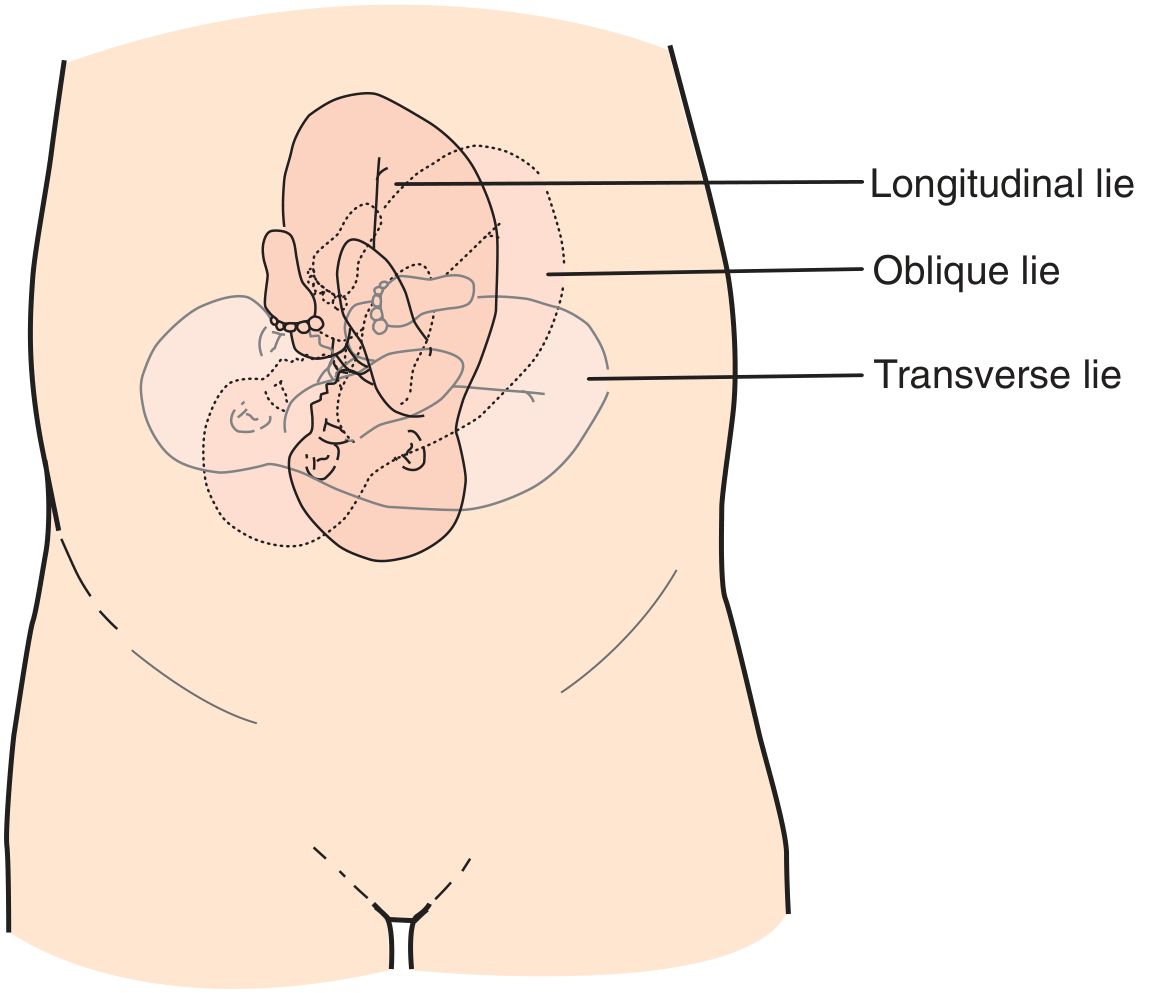
Types of Lie:
| Type | What it means | Outcome |
|---|---|---|
| Longitudinal lie | Baby's spine runs parallel to mother's spine (up-down) | Normal — occurs in >99% of term pregnancies |
| Transverse lie | Baby lies sideways (crosswise) | Cannot deliver vaginally — requires C-section |
| Oblique lie | Baby at a diagonal angle | Unstable — will shift to longitudinal or transverse during labour |
3. Presentation
Based on the lie:
A. Longitudinal Lie → Two types of presentation:
| Presentation | Head position | Part presenting | Diameter |
|---|---|---|---|
| Vertex | Fully flexed | Back of head (occiput) | Smallest — most favourable |
| Sinciput | Partially flexed | Bregma (forehead area) | Larger |
| Brow | Partially extended | Brow | Very large — usually needs C-section |
| Face | Fully extended | Face/chin (mentum) | Large but can sometimes deliver vaginally if chin is anterior |
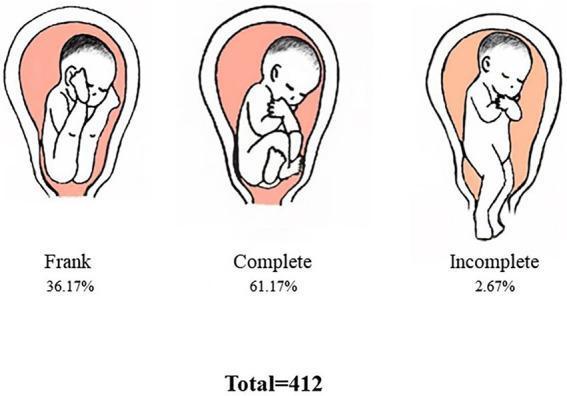
| Type | What it looks like |
|---|---|
| Frank breech | Hips flexed, knees straight — buttocks first, legs up beside the head |
| Complete breech | Hips and knees both flexed — baby sitting cross-legged, buttocks first |
| Incomplete (footling) breech | One or both feet are the lowest part |
B. Transverse Lie → Shoulder Presentation
C. Compound Presentation
4. Position
Reference landmarks used:
| Presentation | Landmark used |
|---|---|
| Vertex (head) | Occiput (back of head) |
| Face | Mentum (chin) |
| Breech | Sacrum |
| Shoulder | Acromion |
Common positions in vertex presentation:
| Abbreviation | Full name | Meaning |
|---|---|---|
| OA | Occiput Anterior | Back of head facing mother's front — most common, easiest delivery |
| OP | Occiput Posterior | Back of head facing mother's back — longer, harder labour |
| LOA | Left Occiput Anterior | Back of head facing left-front — most common of all |
| ROA | Right Occiput Anterior | Back of head facing right-front |
| LOT / ROT | Left/Right Occiput Transverse | Head sideways in the pelvis |
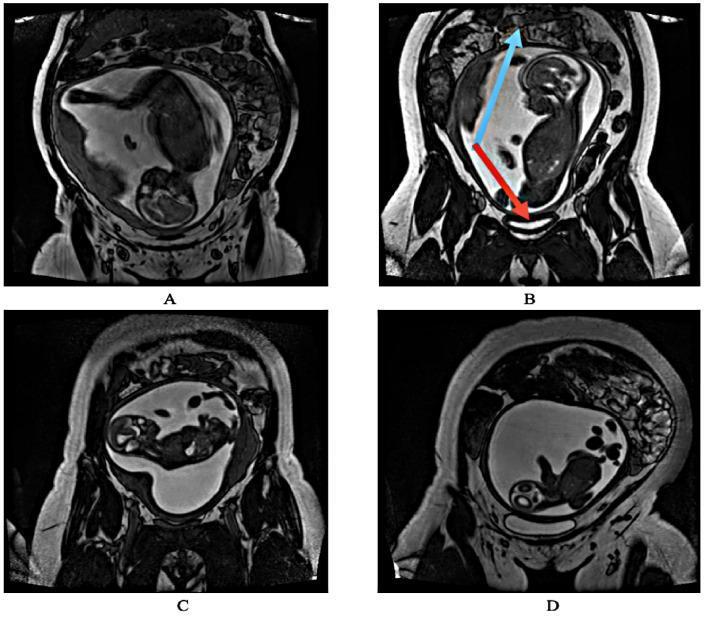
MRI Showing All Four Lie Types
Quick Summary Table
| Term | Question it answers | Normal finding |
|---|---|---|
| Attitude | How is the baby's body postured? | Flexion (curled up) |
| Lie | Which direction does the baby lie? | Longitudinal |
| Presentation | Which part comes out first? | Vertex (back of head) |
| Position | Which way does the presenting part face in the pelvis? | Left occiput anterior (LOA) |
Explain the DEFINITION Etiopathogenesis(CHART), Diagnosis(CLINICAL FEATURES, INVESTIGATION), Principles of management (NON PHARMACOLOGICAL & PHARMACOLOGICAL )and Ayurvedic perspective( SHODHAN & SAMANANA of Ashu Vrikka-nishkriyata (Acute Renal Failure) & Chirakaari vrikka-nishkriyata ( Chronic Renal Failure)
Ayurvedic perspective acute renal failure ARF Vrikka nishkriyata Shodhana Shamana treatment
https://www.jcdr.net/articles/PDF/20374/74317_CE[Ra1]_F(IS)_…
Ayurveda acute renal failure ARF pathogenesis Mutravaha srotas Vata Pitta Kapha dosha kidney Ayurvedic herbs
https://www.slideshare.net/slideshow/management-of-acute-kid…