
This is biotechnology syllabus explain me topic after cloning vector
Reading File
Let me first read the PDF to find the syllabus and the topic after "cloning vector."
Running Command
python3 -c " from pypdf import PdfReader reader = PdfReader('/home/daytona/workspace/attachments/c85b9ba9-05ed-4177-8c6f-c2467c18df6f/PHBP3050_Pharmaceutical Biotechnology.pdf') print(f'Total pages: {len(reader.pages)}') for i in range(min(5, len(reader.pages))): print(f'--- PAGE {i+1} ---') print(reader.pages[i].extract_text()) "
I can see the syllabus clearly. In Module 2, the topic after "cloning vectors" is:
- Restriction endonucleases and DNA ligase
- Recombinant DNA technology
- Applications in medicine
- Production of Interferon, Vaccines (Hepatitis-B), Insulin
- Brief introduction to PCR
Now let me pull rich content from the medical library on all these topics in parallel.
Reading File
Now let me search the medical library for the key topics after cloning vectors in parallel:
Finding Sources
Finding Sources
Finding Sources
Reading File
Reading File
Excellent - I have very rich content. Let me now read the PCR section and the applications (interferon, insulin, vaccines) sections:
Reading File
Finding Sources
Finding Sources
Finding Sources
Finding Sources
Finding Sources
Reading File
Reading File
Reading File
Reading File
I now have enough rich content from authoritative textbooks. Let me also fetch the key diagram for recombinant DNA cloning:
Loading Image
Loading Image
I now have all the content needed for a thorough explanation. Here is the complete, well-structured answer:
Module 2 (After Cloning Vectors) - Pharmaceutical Biotechnology (PHBP3050)
Based on your syllabus, Module 2 covers the following topics after cloning vectors:
- Restriction Endonucleases and DNA Ligase
- Recombinant DNA Technology
- Applications of Genetic Engineering in Medicine
- Production of Interferon, Hepatitis-B Vaccine, Insulin
- Polymerase Chain Reaction (PCR)
1. Restriction Endonucleases
Restriction endonucleases (restriction enzymes) are enzymes that cut double-stranded DNA at specific, short sequences called restriction sites. They are the molecular "scissors" of genetic engineering.
Origin and Function
These enzymes were first discovered in bacteria, where they serve as a defense mechanism - they recognize and cleave foreign (viral/phage) DNA, while the host's own DNA is protected by site-specific methylation of the same sequences. Sequence-specific DNA methylases and restriction endonucleases always exist in pairs in the same bacterium.
Naming Convention
Restriction enzymes are named after the organism from which they are isolated:
- EcoRI - from Escherichia coli strain R (first enzyme isolated = I)
- BamHI - from Bacillus amyloliquefaciens H
- HindIII - from Haemophilus influenzae Rd
Format: First letter of genus + first two letters of species + strain designation + roman numeral
Key Common Restriction Enzymes
| Enzyme | Recognition Site | Source Organism |
|---|---|---|
| EcoRI | G↓AATTC | E. coli RY13 |
| BamHI | G↓GATCC | Bacillus amyloliquefaciens H |
| HindIII | A↓AGCTT | H. influenzae Rd |
| SmaI | CCC↓GGG (blunt) | Serratia marcescens |
| PstI | CTGCA↓G | Providencia stuartii |
Types of Cuts
- Sticky ends (cohesive ends): The enzyme cuts at staggered positions, leaving short single-stranded overhangs (e.g., BamHI, EcoRI). These are very useful for joining DNA fragments because the overhangs are complementary and can base-pair with each other before ligation.
- Blunt ends: The enzyme cuts directly across both strands at the same position (e.g., SmaI, HpaI). No overhangs are generated.
Frequency of Cutting
The shorter the recognition sequence, the more frequently it cuts:
- 4-bp recognition site → cuts every ~256 bp (4⁴)
- 6-bp recognition site → cuts every ~4,096 bp (4⁶)
- 12-bp recognition site → cuts very rarely (useful for cutting large genomic DNA into a small number of fragments)
- Harper's Illustrated Biochemistry, 32nd Ed.
2. DNA Ligase
DNA ligase is the molecular "glue" - it forms covalent phosphodiester bonds between adjacent DNA fragments. In genetic engineering, bacteriophage T4 DNA ligase is most commonly used.
- It joins the cut ends of vector DNA and the inserted foreign DNA fragment
- Works on both sticky ends (easier - the cohesive overhangs hold the pieces together temporarily) and blunt ends (harder - requires higher enzyme concentration)
- Without ligase, you can cut DNA but cannot create a stable recombinant molecule
3. Recombinant DNA Technology
Recombinant DNA (rDNA) technology is the entire process of isolating, cutting, joining, introducing, and expressing a gene of interest in a host organism to produce a desired protein.
Step-by-Step Process
The core steps are illustrated below:
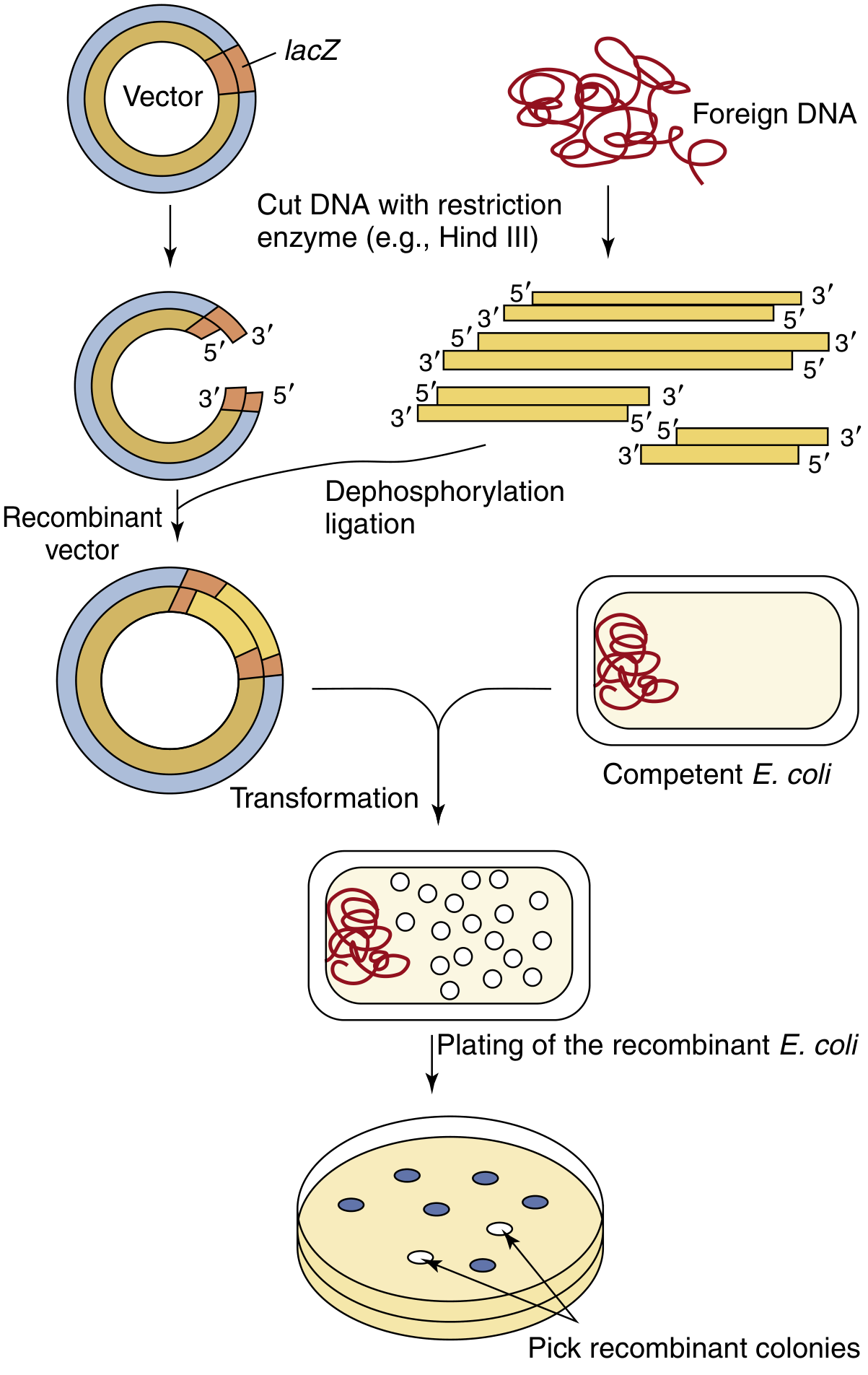
Step 1 - Obtain the gene of interest:
- Isolate chromosomal DNA from the source organism, OR
- Use reverse transcriptase to convert mRNA into complementary DNA (cDNA) - this approach is preferred when working with eukaryotic genes because cDNA lacks introns
Step 2 - Cut with restriction enzymes:
- Both the vector (e.g., plasmid pUC, pBR322) and the foreign DNA are digested with the same restriction enzyme
- This produces compatible sticky ends on both molecules
Step 3 - Ligation:
- DNA ligase joins the foreign DNA fragment into the linearized vector
- The product is called recombinant DNA (chimeric DNA)
- The collection of all recombinant vectors from a whole genome is called a genomic library; if made from cDNA, it is a cDNA library
Step 4 - Transformation:
- The recombinant plasmid is introduced into a competent host (usually E. coli) by transformation
- Bacteria that took up the plasmid are selected using antibiotic resistance (e.g., ampicillin resistance gene on the vector)
Step 5 - Screening/Selection:
- The lacZ blue-white screening system is commonly used:
- Bacteria with empty vector (no insert) → produce β-galactosidase → blue colonies
- Bacteria with recombinant vector (insert disrupts lacZ gene) → no β-galactosidase → white colonies (desired)
- White colonies are picked and grown - each contains bacteria expressing the desired gene
Step 6 - Expression:
- The host bacteria transcribe and translate the foreign gene
- Large amounts of the desired protein are harvested
- Medical Microbiology 9e; Harper's Illustrated Biochemistry, 32nd Ed.
4. Applications of Genetic Engineering in Medicine
A. Production of Interferon
Interferons (IFNs) are antiviral proteins produced by host cells in response to viral infection. Before rDNA technology, they could only be obtained in tiny quantities from human blood cells - far too little for clinical use.
- The human interferon gene was isolated and cloned into bacterial or yeast expression vectors
- Host cells (E. coli or Saccharomyces cerevisiae) now produce large amounts of recombinant interferon
- Applications: treatment of hepatitis C, multiple sclerosis, hairy cell leukemia, and as antiviral/anticancer agents
- Types produced include IFN-α (Interferon alfa), IFN-β, and IFN-γ
B. Recombinant Hepatitis B Vaccine
The Hepatitis B vaccine is the first vaccine approved for human use produced by recombinant DNA technology.
- The gene encoding Hepatitis B surface antigen (HBsAg) was isolated and cloned into the yeast Saccharomyces cerevisiae
- The yeast expresses and secretes HBsAg protein in large amounts
- This protein is purified and used as the vaccine antigen
- Advantages over older plasma-derived vaccines: safe (no risk of live virus), consistently pure, scalable production
- The immune system produces antibodies against HBsAg, conferring long-term protection against HBV infection
- Medical Microbiology 9e (Jawetz)
C. Recombinant Human Insulin
Before genetic engineering, insulin was extracted from porcine or bovine pancreas - it was foreign protein and caused immune reactions in some patients.
- The human insulin gene was synthesized (since it has introns, the cDNA approach was used)
- The genes for A-chain and B-chain of insulin were separately cloned and expressed in E. coli
- After separate purification, the A and B chains are combined chemically to form active insulin
- Alternatively, human proinsulin cDNA is expressed and then enzymatically converted to active insulin
- Humulin (by Eli Lilly) was the first recombinant human insulin approved (1982) - a landmark in pharmaceutical biotechnology
- It is identical to human insulin, eliminating allergic reactions common with animal-derived insulin
- Harper's Illustrated Biochemistry, 32nd Ed.
5. Polymerase Chain Reaction (PCR)
PCR is a technique that amplifies a specific target DNA sequence exponentially in vitro - making millions of copies from just a single molecule of DNA.
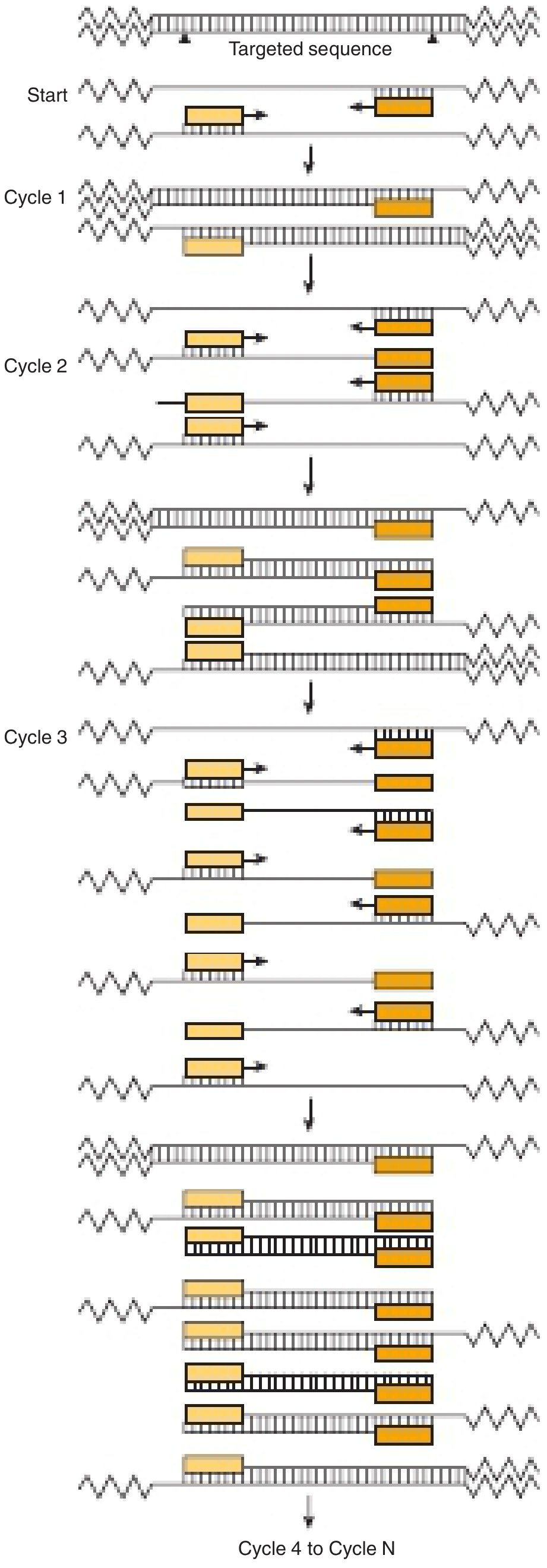
Components Required
| Component | Role |
|---|---|
| Template DNA | The DNA containing the target sequence |
| Two oligonucleotide primers | Short sequences complementary to the flanking regions of the target on opposite strands |
| Thermostable DNA polymerase (Taq polymerase) | Synthesizes new DNA at high temperatures; withstands denaturation cycles |
| dNTPs (dATP, dTTP, dCTP, dGTP) | Building blocks for new DNA strands |
| Buffer with Mg²⁺ | Provides optimal conditions for polymerase |
Three Steps of Each PCR Cycle
- Denaturation (>90°C): Heat separates the two strands of double-stranded template DNA
- Annealing (50-75°C): The two primers bind (anneal) to their complementary sequences on opposite strands, flanking the target region
- Extension (72°C): Taq DNA polymerase extends from each primer, synthesizing a new DNA strand complementary to the template
Amplification
Each cycle doubles the amount of target DNA:
- 20 cycles = 2²⁰ = ~10⁶ (one million) copies
- 30 cycles = 2³⁰ = ~10⁹ (one billion) copies
- Each cycle takes 5-10 minutes; the process is automated in a thermocycler
Applications of PCR in Pharmacy/Medicine
- Detection of infectious agents - detect viral DNA/RNA even at very low copy numbers (HIV, HBV, HCV, SARS-CoV-2)
- Genetic disease diagnosis - amplify genes to detect mutations (sickle cell disease, cystic fibrosis)
- Forensic medicine - DNA fingerprinting from minimal samples (single hair follicle, blood spot)
- Tissue typing - for organ transplantation compatibility
- Cancer diagnosis - detect oncogene mutations
- Quantitative PCR (qPCR/RT-PCR) - measure gene expression levels and viral load
- Harper's Illustrated Biochemistry, 32nd Ed.; Quick Compendium of Clinical Pathology 5th Ed.
Quick Summary Table for Module 2
| Topic | Key Points |
|---|---|
| Restriction endonucleases | Cut DNA at specific 4-8 bp palindromic sequences; produce sticky or blunt ends; named after source bacteria |
| DNA ligase | Joins DNA fragments; T4 DNA ligase used in cloning |
| Recombinant DNA technology | Cut → Ligate → Transform → Select → Express |
| Interferon | Produced in E. coli/yeast; antiviral and anticancer uses |
| Hepatitis B vaccine | HBsAg expressed in yeast (S. cerevisiae); first rDNA vaccine |
| Insulin | Human insulin gene expressed in E. coli; Humulin (1982) |
| PCR | Exponential amplification; 3 steps per cycle; Taq polymerase; used in diagnosis, forensics, research |
Explaub recombinant DNA technology topic
Recombinant DNA technology is the process of cutting DNA from one organism and inserting it into another organism's DNA (usually a bacterium or yeast) so that the foreign gene is expressed to produce a desired protein. The key tools are restriction enzymes (scissors), DNA ligase (glue), and vectors (carriers).
Searching sources...
Finding Sources
Finding Sources
Reading File
Reading File
Reading File
Finding Sources
Reading File
Loading Image
Loading Image
Reading File
I now have all the content and diagrams needed for a thorough, exam-ready explanation. Here is the complete answer:
Recombinant DNA Technology
Definition
Recombinant DNA (rDNA) technology is the isolation and manipulation of DNA from different organisms to create chimeric (hybrid) DNA molecules - molecules that contain sequences from two or more sources (e.g., both human and bacterial DNA) - and expressing them in a host organism to produce a desired protein or study gene function.
"Isolation and manipulation of DNA, including end-to-end joining of sequences from very different sources to make chimeric molecules is the essence of recombinant DNA research."
- Harper's Illustrated Biochemistry, 32nd Ed.
Basic Components / Tools Required
| Tool | Function |
|---|---|
| Restriction endonucleases | Cut DNA at specific sequences ("molecular scissors") |
| DNA ligase | Joins DNA fragments together ("molecular glue") |
| Cloning vector | Carries the foreign DNA into the host cell |
| Host cell | Replicates the recombinant DNA and expresses the gene |
| Selectable markers | Genes (e.g., antibiotic resistance) used to identify successful transformants |
Step-by-Step Process of rDNA Technology
Step 1 - Obtaining the Gene of Interest
There are two main ways to get the target gene:
a) Direct isolation from genomic DNA:
- Extract chromosomal DNA from the source organism
- Digest with restriction enzymes to get fragments
- This gives a genomic library - a collection of all DNA fragments from an organism
b) Using cDNA (complementary DNA) - preferred for eukaryotic genes:
- Isolate the specific mRNA from cells that express the gene
- Use the enzyme reverse transcriptase (RNA-dependent DNA polymerase) to convert mRNA → single-stranded cDNA → double-stranded cDNA
- Advantage: cDNA has no introns (already processed), so it can be directly expressed in bacterial hosts that cannot splice introns
- A collection of cDNA clones from a particular cell type is called a cDNA library
Step 2 - Cutting DNA with Restriction Enzymes
Both the vector (plasmid) and the gene of interest are cut with the same restriction enzyme.
The diagram below shows this process with EcoRI:
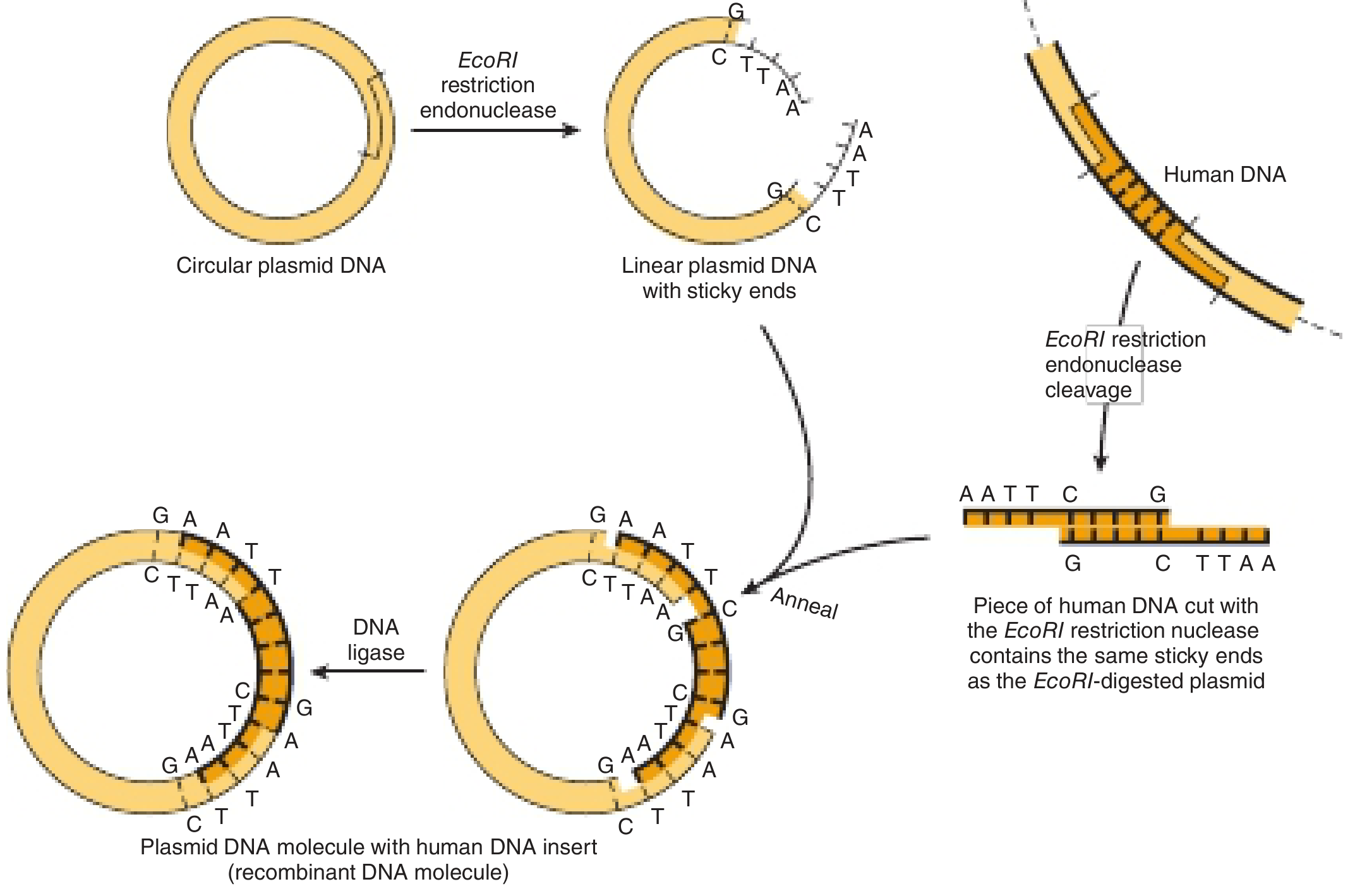
- Both pieces now have identical sticky ends (e.g., -AATT overhangs for EcoRI)
- This is why both must be cut with the same enzyme - only then will the ends be compatible for annealing
Step 3 - Ligation (Joining)
- The vector (now linearized with sticky ends) and the gene of interest (with compatible sticky ends) are mixed
- The complementary sticky ends base-pair (anneal) with each other
- T4 DNA ligase seals the nicks by forming phosphodiester bonds
- The result is a recombinant DNA molecule (chimeric plasmid) - a circular plasmid now containing the foreign gene
Step 4 - Transformation into Host
- The recombinant plasmid is introduced into a bacterial host (usually E. coli) by a process called transformation
- Bacteria are made "competent" (permeable to DNA) by calcium chloride (CaCl₂) treatment or electroporation
- Typically only one plasmid enters one bacterial cell
- Each bacterium that takes up the plasmid then divides repeatedly, creating a clone - millions of identical bacteria all carrying the same recombinant DNA
Step 5 - Selection of Transformed Bacteria
Only bacteria that took up the plasmid must be identified. Two strategies:
A) Antibiotic resistance selection (pBR322 system):
- The plasmid pBR322 carries two antibiotic resistance genes: tetracycline (Tet) and ampicillin (Amp)
- Foreign DNA is inserted into the Amp resistance gene (PstI site), disrupting it
- Bacteria are first plated on Tet medium - only bacteria with plasmids (recombinant or empty vector) grow
- Replica plating on Amp medium: bacteria with empty vector = Amp resistant; bacteria with recombinant vector (insert disrupted Amp gene) = Amp sensitive (white/no growth)
- Amp-sensitive colonies from the Tet plate carry the recombinant plasmid
B) Blue-white screening (lacZ system - pUC plasmids):
- Foreign DNA inserted into the lacZ gene disrupts it
- Blue colonies = bacteria with empty vector (lacZ intact → produces β-galactosidase → cleaves X-gal substrate → blue color)
- White colonies = bacteria with recombinant vector (lacZ disrupted → no enzyme → no blue color)
- White colonies are the desired recombinants
Step 6 - Screening the Library
Once recombinant colonies are identified, further screening is done to find the correct clone with the desired gene:
Nucleic acid hybridization (Southern blot):
- Use a labeled DNA/RNA probe (a known sequence complementary to part of the target gene)
- The probe hybridizes only to colonies/plasmids containing the target sequence
- Detected by autoradiography or fluorescence
Southern, Northern, and Western Blotting are key analytical tools used alongside rDNA technology:
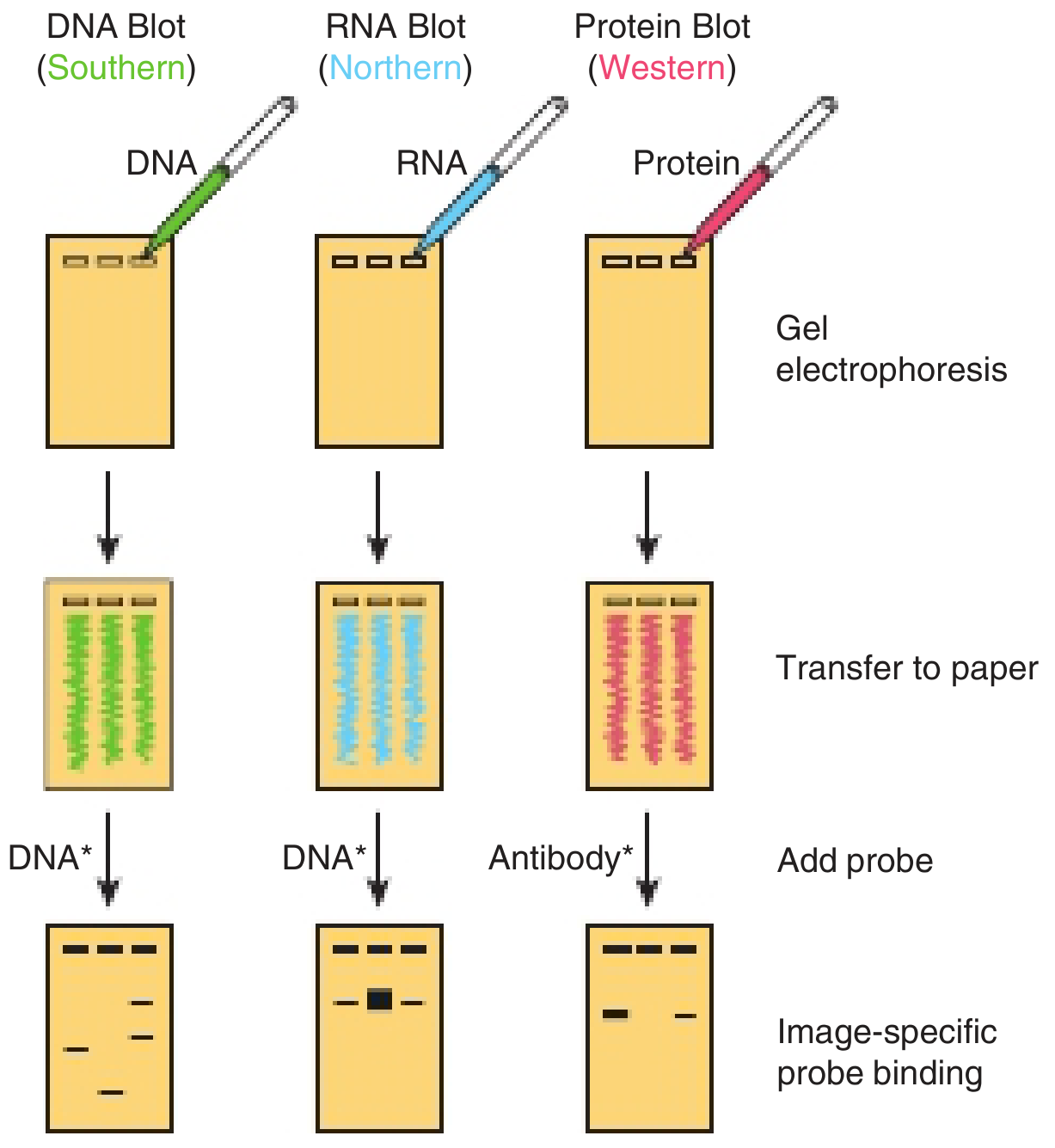
| Blot Type | Molecule Detected | Probe Used |
|---|---|---|
| Southern | DNA | Labeled DNA probe |
| Northern | RNA (mRNA) | Labeled DNA probe |
| Western | Protein | Specific antibody |
Step 7 - Expression of the Cloned Gene
- The correct clone (containing the desired gene) is grown in large quantities
- The expression vector carries a strong promoter that drives high-level transcription of the inserted gene
- Host bacteria (or yeast/mammalian cells) transcribe and translate the gene
- Large amounts of the desired protein are harvested and purified
Types of Cloning Vectors and Their Capacity
Different vectors can carry different sizes of DNA inserts:
| Vector | DNA Insert Size | Notes |
|---|---|---|
| Plasmid (e.g., pUC19) | 0.01 - 10 kb | Most common; easy to manipulate |
| Lambda phage | 10 - 20 kb | Larger inserts than plasmids |
| Cosmids | 35 - 50 kb | Hybrid of plasmid + phage features |
| BAC (Bacterial Artificial Chromosome) | 50 - 250 kb | Used in genome projects |
| YAC (Yeast Artificial Chromosome) | 500 - 3000 kb | Largest capacity; used in Human Genome Project |
- Harper's Illustrated Biochemistry, 32nd Ed.
Pharmaceutical Applications of rDNA Technology
| Protein Produced | Disease/Use |
|---|---|
| Insulin (Humulin) | Diabetes mellitus - first approved rDNA drug (1982) |
| Interferon (α, β, γ) | Hepatitis C, multiple sclerosis, cancers |
| Hepatitis B vaccine | Prevention of HBV - first rDNA vaccine approved for humans |
| Growth hormone | Growth hormone deficiency |
| Factor VIII | Hemophilia A |
| Factor IX | Hemophilia B |
| Erythropoietin (EPO) | Anemia |
| Tissue plasminogen activator (tPA) | Myocardial infarction, stroke |
Why rDNA products are preferred over natural sources:
- Purity - no contamination from animal pathogens
- Safety - no immune/allergic reactions from foreign species proteins (e.g., porcine insulin)
- Quantity - large-scale production possible in bioreactors
- Human sequence - identical to the human protein
"Biosynthetically derived products have the dual advantages of providing a pure product that is unlikely to induce a sensitivity reaction, as well as being free of chemical or biological contamination."
- Emery's Elements of Medical Genetics and Genomics
Summary Flowchart
Gene of Interest
      │
      ▼
Cut with Restriction Enzyme → Sticky ends
      │
      ▼
Mix with similarly cut Vector
      │
      ▼
DNA Ligase seals → Recombinant DNA
      │
      ▼
Transform into E. coli
      │
      ▼
Select transformed bacteria (antibiotic resistance / blue-white)
      │
      ▼
Screen for correct clone (Southern blot / colony hybridization)
      │
      ▼
Culture the clone → Express protein → Harvest & Purify
This is the foundation of modern pharmaceutical biotechnology and has led to drugs like insulin, vaccines, monoclonal antibodies, and growth factors that have transformed the treatment of human disease.
Also roles or Enzymes in Rdna Technology
Multiple enzymes play specific, essential roles in rDNA technology - restriction enzymes cut DNA, ligase joins it, reverse transcriptase makes cDNA, DNA polymerase synthesizes new strands, and several others assist in different steps.
Searching sources...
Finding Sources
Finding Sources
Reading File
Finding Sources
Reading File
Finding Sources
Loading Image
Finding Sources
I have all the information needed from the authoritative Harper's Illustrated Biochemistry source. Here is the complete, well-organized answer:
Roles of Enzymes in Recombinant DNA Technology
Recombinant DNA technology depends on a toolkit of specialized enzymes, each performing a precise and irreplaceable role. These are divided into major categories:
Category 1: Enzymes that CUT DNA
1. Restriction Endonucleases ("Molecular Scissors")
- What they do: Recognize short, specific palindromic DNA sequences (4-8 bp) and cut both strands of double-stranded DNA at or near that site
- Types of cuts:
- Sticky ends (cohesive ends): Staggered cuts leaving short single-stranded overhangs (e.g., EcoRI leaves -AATT overhangs) → most useful for cloning
- Blunt ends: Cut straight across both strands (e.g., SmaI, HpaI) → no overhangs
- Origin: Derived from bacteria (named after source organism - e.g., EcoRI from E. coli, BamHI from Bacillus amyloliquefaciens)
- Key role in rDNA: Cut both the vector and the gene of interest with the same enzyme so that compatible ends are generated for ligation
| Enzyme | Recognition Site | Cut Type |
|---|---|---|
| EcoRI | G↓AATTC | Sticky |
| BamHI | G↓GATCC | Sticky |
| HindIII | A↓AGCTT | Sticky |
| SmaI | CCC↓GGG | Blunt |
| PstI | CTGCA↓G | Sticky |
2. DNase I
- What it does: Under controlled conditions, introduces single-stranded nicks (cuts one strand only) into double-stranded DNA
- Role in rDNA: Used in nick translation (a method of radiolabeling DNA probes); also used to map protein-DNA interactions and identify hypersensitive sites in chromatin
3. S1 Nuclease
- What it does: Specifically degrades single-stranded DNA (and RNA); leaves double-stranded DNA intact
- Role in rDNA: Used during cDNA synthesis to remove the hairpin loop that forms at the 3' end of the first cDNA strand; also used in RNA mapping studies
Category 2: Enzymes that JOIN / BUILD DNA
4. DNA Ligase (T4 DNA Ligase) - "Molecular Glue"
- What it does: Forms phosphodiester bonds between adjacent nucleotides, sealing nicks in DNA strands
- Role in rDNA: The most important joining enzyme - ligates the foreign DNA insert into the linearized vector to create the recombinant DNA molecule
- Can join both:
- Sticky ends (easy - complementary overhangs hold the fragments together first)
- Blunt ends (harder - requires higher enzyme concentration and special conditions)
- Source: Bacteriophage T4 DNA ligase is most commonly used in labs
"DNA ligase catalyzes bonds between DNA molecules - primary use: joining of DNA molecules."
- Harper's Illustrated Biochemistry, 32nd Ed.
5. DNA Polymerase I (Pol I)
- What it does: Synthesizes double-stranded DNA from a single-stranded DNA template; also has 5'→3' exonuclease activity (can remove nucleotides ahead of synthesis)
- Roles in rDNA:
- Converts single-stranded cDNA → double-stranded cDNA during cDNA synthesis
- Nick translation - used to make radiolabeled DNA probes for hybridization
- Converts sticky ends → blunt ends (by filling in or chewing back overhangs)
6. Thermostable DNA Polymerases (Taq Polymerase)
- What they do: Synthesize DNA at elevated temperatures (60-80°C) and survive repeated cycles of heating to >90°C
- Source: Originally isolated from Thermus aquaticus (a thermophilic bacterium) → called Taq polymerase
- Role in rDNA: Essential for PCR - amplifies specific DNA sequences exponentially; also used in site-directed mutagenesis
7. Reverse Transcriptase (RNA-Dependent DNA Polymerase)
- What it does: Synthesizes DNA from an RNA template (the reverse of normal transcription)
- Source: Derived from retroviruses (e.g., Moloney Murine Leukemia Virus - MMLV)
- Role in rDNA:
- Converts mRNA → complementary DNA (cDNA)
- This is the key step in making cDNA libraries
- Critical for cloning eukaryotic genes because the cDNA produced has no introns and can be directly expressed in bacterial host cells
Workflow:
mRNA  →(reverse transcriptase)→  single-stranded cDNA
                                        ↓ (DNA Pol I / RNase H)
                              double-stranded cDNA
                                        ↓ (clone into vector)
                              cDNA library
Category 3: Enzymes that REMOVE Nucleotides
8. Exonuclease III
- What it does: Removes nucleotides from the 3' ends of double-stranded DNA (3'→5' exonuclease)
- Role in rDNA: DNA sequencing; mapping of DNA-protein interactions (ChIP-Exo)
9. Lambda (λ) Exonuclease
- What it does: Removes nucleotides from the 5' ends of double-stranded DNA (5'→3' exonuclease)
- Role in rDNA: DNA sequencing; mapping DNA-protein interaction sites
10. RNase H
- What it does: Specifically degrades the RNA strand of a DNA:RNA hybrid molecule (leaves the DNA strand intact)
- Role in rDNA: Essential during cDNA synthesis - after reverse transcriptase makes the first cDNA strand (DNA:RNA hybrid), RNase H degrades the RNA, leaving a single-stranded DNA template for second-strand synthesis by DNA Pol I
Category 4: Enzymes that MODIFY Ends
11. Alkaline Phosphatase (Phosphatases)
- What it does: Removes the 5'-phosphate group from DNA/RNA ends
- Role in rDNA: Critically used to prevent self-ligation of the vector
- After the vector is cut with a restriction enzyme, its own sticky ends can re-join with themselves (self-ligation), giving no insert
- Treating the linearized vector with alkaline phosphatase removes the 5'-phosphate → the vector can no longer self-ligate
- The insert (which still has 5'-phosphate) can still be ligated into the vector → favors productive ligation
12. Polynucleotide Kinase (T4 PNK)
- What it does: Transfers the terminal phosphate from ATP to the 5'-OH end of DNA or RNA (opposite of phosphatase)
- Role in rDNA:
- Radiolabeling DNA/RNA at the 5' end (using γ-³²P-ATP) → makes labeled probes for hybridization studies
- Re-phosphorylates ends after phosphatase treatment when needed
13. Terminal Transferase (Terminal Deoxynucleotidyl Transferase / TdT)
- What it does: Adds nucleotides to the 3' end of DNA in a template-independent manner
- Role in rDNA: Homopolymer tailing technique:
- Add poly-dC tails to the 3' end of the insert
- Add poly-dG tails to the 3' end of the vector
- The complementary G-C tails anneal and allow ligation → useful when no convenient restriction sites are available
Category 5: Enzymes for RECOMBINATION and GENE EDITING
14. Recombinases (CRE, FLP, INT)
- What they do: Catalyze site-specific recombination between DNA sequences carrying specific recognition sites (loxP for CRE, FRT for FLP, att sites for INT)
- Role in rDNA: Used to precisely insert, delete, or rearrange DNA sequences in vitro and in vivo (e.g., conditional knockout mouse models)
15. CRISPR-Cas9 Nuclease
- What it does: An RNA-guided DNA nuclease - a guide RNA (20 nt) directs the Cas9 protein to a specific DNA sequence (adjacent to a PAM sequence), where it makes a double-strand cut in the target DNA
- Discovered: 2012 (derived from bacterial adaptive immunity)
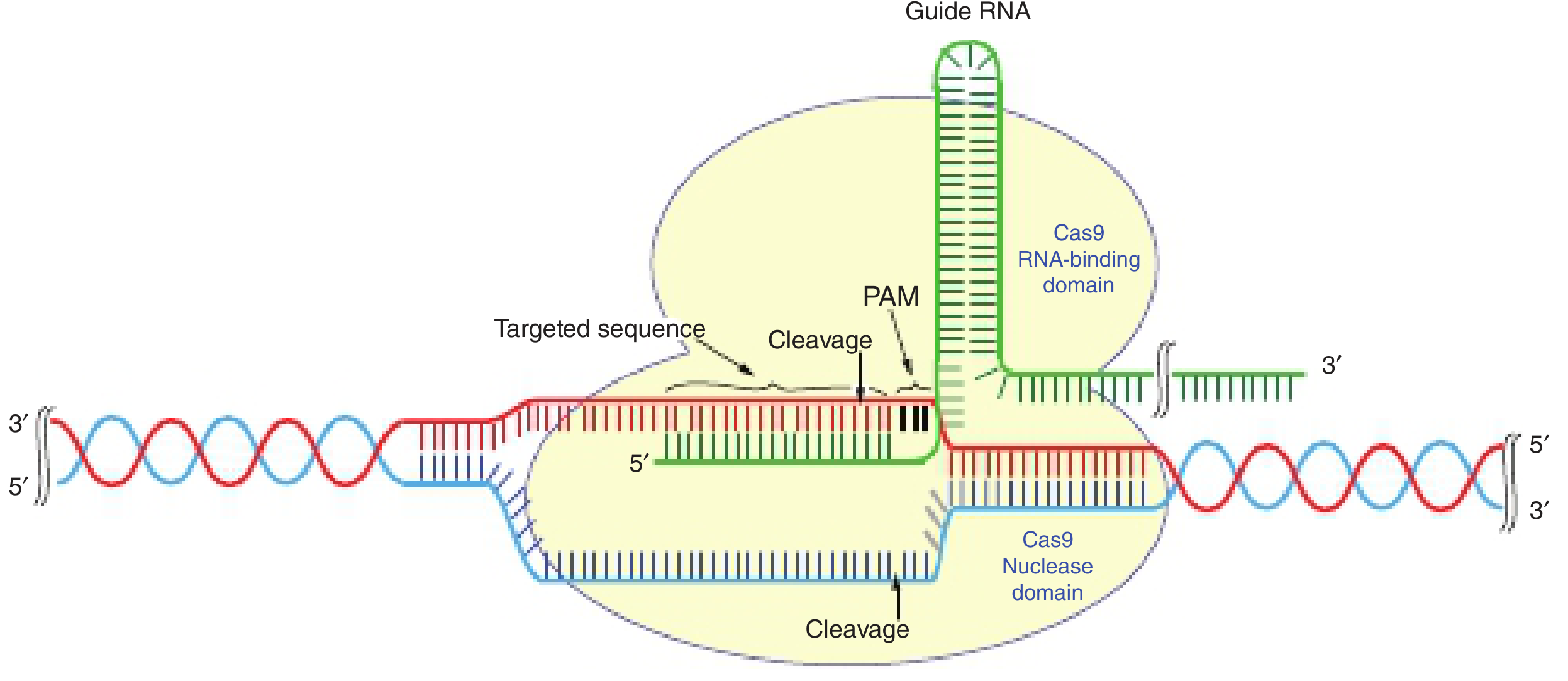
- Role in rDNA/Biotechnology:
- Gene deletion - knock out a gene
- Gene editing - correct a mutation (base editing)
- Gene activation/repression - modified Cas9 without nuclease activity
- Genome visualization - fluorescent Cas9 to label genomic loci
- Applications in gene therapy, drug target identification, agriculture
Complete Summary Table
| Enzyme | Reaction | Role in rDNA Technology |
|---|---|---|
| Restriction endonuclease | Cuts dsDNA at specific sequences | Generating compatible ends for cloning |
| DNA ligase (T4) | Joins DNA strands by phosphodiester bonds | Sealing insert into vector |
| DNA Polymerase I | Synthesizes dsDNA from ssDNA | cDNA second-strand synthesis; probe labeling; blunt-end generation |
| Taq polymerase | Synthesizes DNA at 60-80°C | PCR amplification |
| Reverse transcriptase | Synthesizes DNA from RNA | mRNA → cDNA conversion; making cDNA libraries |
| RNase H | Degrades RNA in DNA:RNA hybrid | Removes RNA template during cDNA synthesis |
| S1 nuclease | Degrades ssDNA | Removes hairpin in cDNA synthesis |
| DNase I | Nicks one strand of dsDNA | Nick translation (probe labeling) |
| Alkaline phosphatase | Removes 5'-phosphate | Prevents vector self-ligation |
| Polynucleotide kinase | Adds 5'-phosphate from ATP | 5' end labeling of probes |
| Terminal transferase | Adds nucleotides to 3' ends | Homopolymer tailing |
| Exonuclease III | Removes nucleotides from 3' ends | DNA sequencing |
| λ Exonuclease | Removes nucleotides from 5' ends | DNA sequencing |
| Recombinases | Site-specific recombination | Precise DNA insertion/deletion |
| CRISPR-Cas9 | RNA-guided dsDNA cleavage | Genome editing, gene therapy |
- Harper's Illustrated Biochemistry, 32nd Ed.
The most exam-important enzymes for your PHBP3050 syllabus are:
- Restriction endonucleases (cut DNA)
- DNA ligase (join DNA)
- Reverse transcriptase (mRNA → cDNA)
- Taq DNA polymerase (PCR)
- Alkaline phosphatase (prevent self-ligation)
What is cloning
Cloning means producing identical copies - in molecular biology it refers to making identical copies of a DNA fragment, gene, or even an entire organism. The term covers both molecular cloning (copying genes) and reproductive cloning (copying whole organisms like Dolly the sheep).
Searching sources...
Finding Sources
Finding Sources
Reading File
Finding Sources
Finding Sources
Finding Sources
Reading File
Reading File
I now have all the information needed. Here is a thorough, well-structured answer:
What is Cloning?
Definition
"A clone is a large population of identical molecules, cells, or organisms that arise from a common ancestor."
- Harper's Illustrated Biochemistry, 32nd Ed.
In simple terms, cloning = making exact identical copies. The word comes from the Greek klon meaning "twig" (as in taking a cutting from a plant to grow an identical plant).
In biotechnology, cloning is used at three levels:
Types of Cloning
1. Molecular Cloning (DNA/Gene Cloning)
2. Cellular Cloning
3. Reproductive Cloning (Organism Cloning)
1. Molecular Cloning (Most Important for Your Syllabus)
Molecular cloning is the process of inserting a specific gene or DNA fragment into a vector and replicating it inside a host cell to produce millions of identical copies of that DNA.
Why is it needed?
- A single gene in the human genome is one part in 1,000,000,000 - far too small to study or use directly
- Cloning amplifies that one gene into billions of identical copies for study, analysis, or protein production
Basic Steps of Molecular Cloning
Target DNA (gene of interest)
         ↓
  Cut with restriction enzyme
         ↓
  Insert into cloning vector
  (ligation with DNA ligase)
         ↓
  Transform into host cell (E. coli)
         ↓
  Host cell replicates → clonal population
         ↓
  Millions of identical copies of the gene
Key Components
| Component | Role |
|---|---|
| Gene of interest | The DNA fragment you want to copy/express |
| Cloning vector | Carries the gene into the host; self-replicates |
| Restriction enzyme | Cuts vector and gene at matching sites |
| DNA ligase | Seals the gene into the vector |
| Host cell | Usually E. coli; replicates the recombinant vector |
Cloning Vectors - The Carriers
A cloning vector is a DNA molecule that:
- Can self-replicate inside a host cell
- Has a restriction site where foreign DNA can be inserted
- Carries a selectable marker (e.g., antibiotic resistance gene) to identify transformed cells
Types of Cloning Vectors
| Vector | Insert Size | Description |
|---|---|---|
| Plasmid (e.g., pUC19, pBR322) | up to 10 kb | Small, circular DNA; most commonly used |
| Bacteriophage (e.g., Lambda λ) | 10-20 kb | Bacterial virus; larger inserts than plasmids |
| Cosmid | 35-50 kb | Hybrid of plasmid + phage; even larger inserts |
| BAC (Bacterial Artificial Chromosome) | 50-250 kb | Used in genome sequencing projects |
| YAC (Yeast Artificial Chromosome) | 500-3000 kb | Largest capacity; used in Human Genome Project |
Properties of Plasmid Vectors (most important)
Plasmids are ideal cloning vectors because they:
- Are small, circular, double-stranded DNA molecules (separate from bacterial chromosome)
- Replicate independently inside bacteria as episomes (extra-chromosomal elements)
- Carry antibiotic resistance genes → used to select transformed bacteria
- Have multiple cloning sites (MCS) - a region containing many different restriction enzyme recognition sequences
- Can be easily isolated and purified from bacteria (since they are much smaller than the chromosome)
"Bacterial plasmids are small, circular, duplex DNA molecules whose natural function is to confer antibiotic resistance to the host cell."
- Harper's Illustrated Biochemistry, 32nd Ed.
DNA Libraries - Collections of Clones
When all fragments of an organism's DNA are cloned into vectors, the collection is called a library:
Genomic Library
- Made from total genomic DNA of an organism
- Total DNA is cut with restriction enzymes into fragments
- Every fragment is cloned → the library represents the entire genome
- Contains both exons + introns + non-coding DNA
- Used to study gene structure, regulation, and chromosomal organization
cDNA Library
- Made from mRNA of a specific tissue or cell type
- mRNA is converted to cDNA using reverse transcriptase
- Only contains sequences that are being expressed in that tissue
- Contains no introns (already spliced out in mRNA)
- Used to clone genes for protein expression in bacteria (bacteria cannot splice introns)
- Different tissues have different cDNA libraries (e.g., liver cDNA library ≠ brain cDNA library)
"A cDNA library comprises complementary DNA copies of the population of mRNAs in a tissue."
- Harper's Illustrated Biochemistry, 32nd Ed.
Screening a Library with Probes
Once a library is made, the desired clone must be found. This is done using probes:
- A probe is a labeled DNA or RNA molecule (radioactive ³²P or fluorescent label) complementary to the target sequence
- It hybridizes only to the clone containing the matching sequence
- The labeled clone is then detected by autoradiography or fluorescence
Expression Vectors - Making Protein from Cloned Genes
A special type of cloning vector called an expression vector is used when you want the cloned gene to actually produce a protein:
- Contains a strong inducible promoter (drives high-level transcription)
- Contains proper translation signals (Shine-Dalgarno sequence for bacteria)
- Contains termination signals
- The protein product can be harvested and purified
Examples of proteins made via expression vectors:
- Insulin (Humulin) for diabetes
- Interferon for viral infections and cancer
- HBsAg for Hepatitis B vaccine
- Growth hormone for growth disorders
- Factor VIII for haemophilia A
2. Cellular Cloning
- Growing identical cells from a single parent cell
- Every cell in the resulting colony is genetically identical
- Used in hybridoma technology to produce monoclonal antibodies (single B-cell clone produces one specific antibody)
- Used in stem cell research to expand specific cell lines
3. Reproductive Cloning (Whole Organism Cloning)
This involves creating a genetically identical copy of an entire organism using a technique called Somatic Cell Nuclear Transfer (SCNT):
Steps of SCNT / Reproductive Cloning:
- Take a somatic cell (body cell, e.g., skin cell) from the donor animal
- Remove the nucleus from an egg cell (enucleation)
- Transplant the donor nucleus into the enucleated egg
- The reconstructed egg resembles a fertilized zygote
- It is stimulated to divide and develops into an embryo
- The embryo is implanted into a surrogate mother
- The resulting offspring is genetically identical to the nucleus donor
Dolly the Sheep - Historical Milestone
- First mammal cloned from an adult somatic cell
- Cloned in 1996 by Ian Wilmut at the Roslin Institute, Scotland
- Her nucleus came from a mammary gland cell of a 6-year-old Finn Dorset sheep
- Proved that a fully differentiated adult cell nucleus could be reprogrammed to develop into a complete organism
- Since then, cloning has been achieved in dogs, cats, horses, monkeys, and mice
"The first mammal to be successfully cloned from an adult cell was Dolly the sheep in 1996. Reproductive cloning has since been successfully performed in a variety of species, including dogs and monkeys."
- Brenner and Rector's The Kidney
Limitations of Reproductive Cloning
- Highly inefficient (very low success rate)
- Cloned animals often suffer congenital defects due to incomplete reprogramming of the donor nucleus
- Significant ethical concerns - human reproductive cloning is banned in most countries
4. Therapeutic Cloning
- Similar to reproductive cloning (uses SCNT) but the embryo is NOT implanted into a uterus
- Instead, the embryo is used to derive embryonic stem (ES) cells at the blastocyst stage
- These stem cells are genetically matched to the patient → no immune rejection
- They can be differentiated into any cell type for cell-based therapy (e.g., neurons for Parkinson's disease, beta cells for diabetes)
Summary - Types of Cloning at a Glance
| Type | What is Copied | Purpose |
|---|---|---|
| Molecular/Gene cloning | DNA fragment or gene | Amplify genes; produce proteins |
| Cellular cloning | Single cells | Monoclonal antibodies; stem cell expansion |
| Reproductive cloning | Entire organism | Produce genetically identical animals (SCNT) |
| Therapeutic cloning | Stem cells from SCNT embryo | Patient-matched cell therapy |
Importance of Cloning in Pharmacy
- Drug production - recombinant insulin, interferon, erythropoietin
- Vaccine production - Hepatitis B vaccine (HBsAg cloned in yeast)
- Diagnosis - cloned gene probes used in molecular diagnostics (PCR, hybridization)
- Gene therapy - delivering corrective genes using viral vectors
- Research - understanding disease mechanisms at the molecular level
- Harper's Illustrated Biochemistry, 32nd Ed.; Brenner and Rector's The Kidney
Create a summary document on cloning techniques
Asking for Preferences
What format should the summary document be in?
This is a shared conversation. Sign in to Orris to start your own chat.