
How in incubation period useful in prognosis of disease
Reading File
Finding Sources
Finding Sources
Reading File
Reading File
Reading File
Reading File
Finding Sources
Loading Image
I now have everything needed for a thorough answer. Here is the complete response:
How the Incubation Period is Useful in Prognosis of Disease
Definition
The incubation period is defined as "the time interval between invasion by an infectious agent and appearance of the first sign or symptom of the disease in question." During this time, the pathogen multiplies within the host until it reaches a density sufficient to disturb the health equilibrium and produce overt disease.
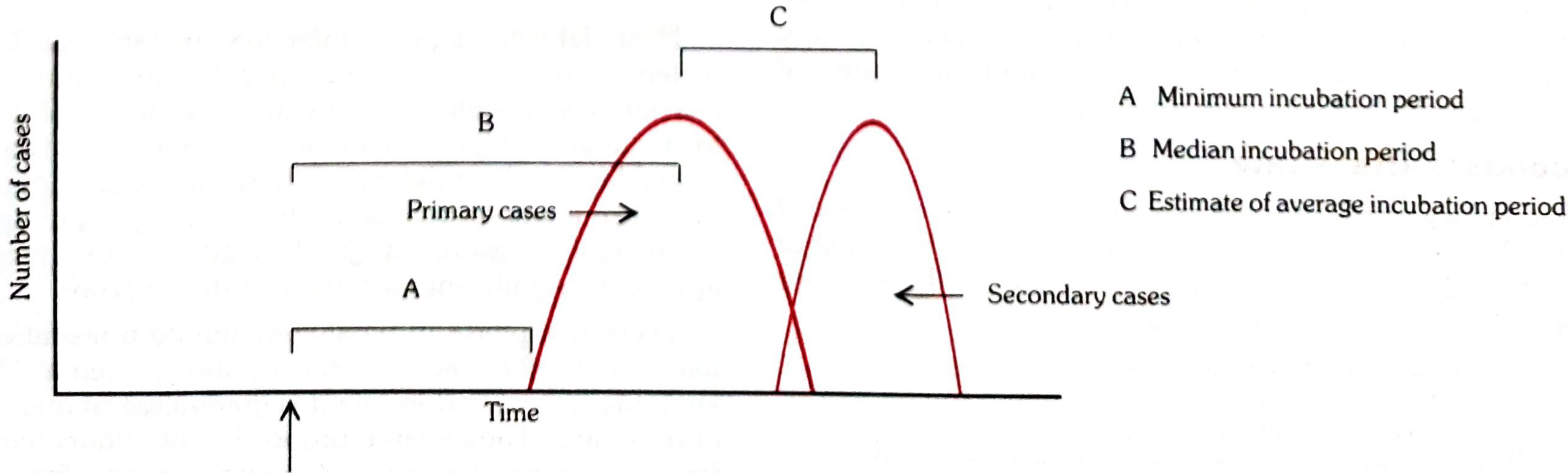
Uses of Incubation Period in Epidemiology (Broad Context)
Before addressing prognosis specifically, Park's identifies five major uses of incubation period in epidemiology:
| Use | How It Works |
|---|---|
| Tracing the source of infection | Short IP makes it easier to trace the source (e.g., food poisoning); longer IP makes the cause-effect relationship harder to establish |
| Period of surveillance/quarantine | Quarantine duration = maximum incubation period of the disease |
| Immunization timing | Knowledge of IP allows prophylactic use of immunoglobulins and antisera to prevent clinical illness |
| Identifying epidemic type | Point-source epidemic: all cases within one IP; Propagated epidemic: cases extend beyond the known IP |
| Prognosis | The IP can be used to estimate likely disease outcome (see below) |
Incubation Period as a Prognostic Tool
"Incubation period can also be used in estimating the prognosis of a disease. In some diseases (e.g., tetanus, rabies), the shorter the incubation period, the worse the prognosis of the disease. Thus prognosis is related to the incubation period of the disease."
- Park's Textbook of Preventive and Social Medicine, p. 112
The key principle: shorter incubation period = worse prognosis in several classic diseases. This is because a short incubation period generally reflects:
- A higher infective (inoculum) dose
- More virulent organisms
- A portal of entry that allows rapid spread to critical tissues
- Limited host immune resistance
Classic Disease Examples
1. Tetanus
This is the most extensively studied example of IP-prognosis correlation.
- The incubation period (time from wound to first symptom) and the period of onset (time from first symptom to first generalized or pharyngeal/laryngeal spasm) are both prognostic indicators.
- Shorter both periods = worse prognosis.
- Explanation: the closer the wound is to the CNS, the shorter the IP (the neurotoxin tetanospasmin travels up motor nerves - a face wound reaches the brainstem faster than a foot wound). More heavily contaminated wounds also produce greater toxin load.
- Overall mortality in established tetanus is ~45%; formal scoring systems (Tetanus Severity Score, Dakar Score, Phillips Score) incorporate IP into their calculations.
- The Tetanus Severity Score (TSS) has sensitivity 66% and specificity 91% for predicting death.
"In assessing prognosis, the incubation period (time from wound to first symptom) and the period of onset (time from first symptom to first generalized spasm or pharyngeal or laryngeal spasm) are of particular significance. The shorter these periods, the worse is the prognosis."
- Harrison's Principles of Internal Medicine 22E, p. 870
"Prognosis being determined by the incubation period and the time from the first symptom to the first tetanic spasm. In general, shorter intervals indicate a poorer prognosis."
- Bailey and Love's Short Practice of Surgery 28th Ed., p. 477
2. Rabies
- Incubation period ranges from days to years, but averages 1-3 months.
- Bites on the face/head or neck have shorter IPs (virus travels a shorter distance along peripheral nerves to reach the brain) and carry a worse prognosis.
- Bites on the extremities have longer IPs, giving more time for post-exposure prophylaxis to be effective.
- Once clinical rabies develops (regardless of IP), the disease is almost universally fatal - so IP is most useful here for guiding urgency of prophylaxis.
Underlying Mechanism: Why Short IP = Worse Prognosis?
The factors that shorten incubation period are the same factors that predict disease severity:
- Higher infective dose - more organisms = faster multiplication = faster tissue damage
- Portal of entry proximity to target organ - less distance for the pathogen/toxin to travel
- Virulence of the strain - more virulent organisms replicate faster
- Host susceptibility - immunocompromised hosts may show shorter IP and worse outcomes
Summary
| Principle | Clinical Application |
|---|---|
| Short IP in tetanus | Predicts severe spasms, respiratory compromise, higher mortality |
| Short IP in rabies | Reflects head/neck bite; worse prognosis, urgent prophylaxis |
| IP determines quarantine period | Public health isolation decisions |
| IP identifies epidemic type | Point-source vs. propagated outbreak investigation |
| Median IP | Epidemiologically defines 50% case onset timing after exposure |
The incubation period thus serves a dual purpose: it is both an epidemiological tool for outbreak investigation and a clinical prognostic marker in specific infections where the speed of pathogen transit or replication directly mirrors disease severity.
Sources:
- Park's Textbook of Preventive and Social Medicine, p. 111-112
- Harrison's Principles of Internal Medicine 22E, p. 870
- Bailey and Love's Short Practice of Surgery 28th Ed., p. 477
- Rosen's Emergency Medicine: Concepts and Clinical Practice
This is a shared conversation. Sign in to Orris to start your own chat.