
teach me concept and drugs of sulfonamides pharmacology
Reading File
Finding Sources
Finding Sources
Searching PubMed
sulfonamides AND pharmacology
Searching the Web
sulfonamides antimicrobial mechanism adverse effects CDC FDA
Reading File
Reading File
Reading File
Sulfonamides: core concept
Sulfonamides are synthetic, usually bacteriostatic antimicrobial drugs. They resemble PABA (para-aminobenzoic acid), a substrate bacteria need to make folate.
Humans obtain folate from diet, while susceptible bacteria must synthesize it. This difference provides selective toxicity.
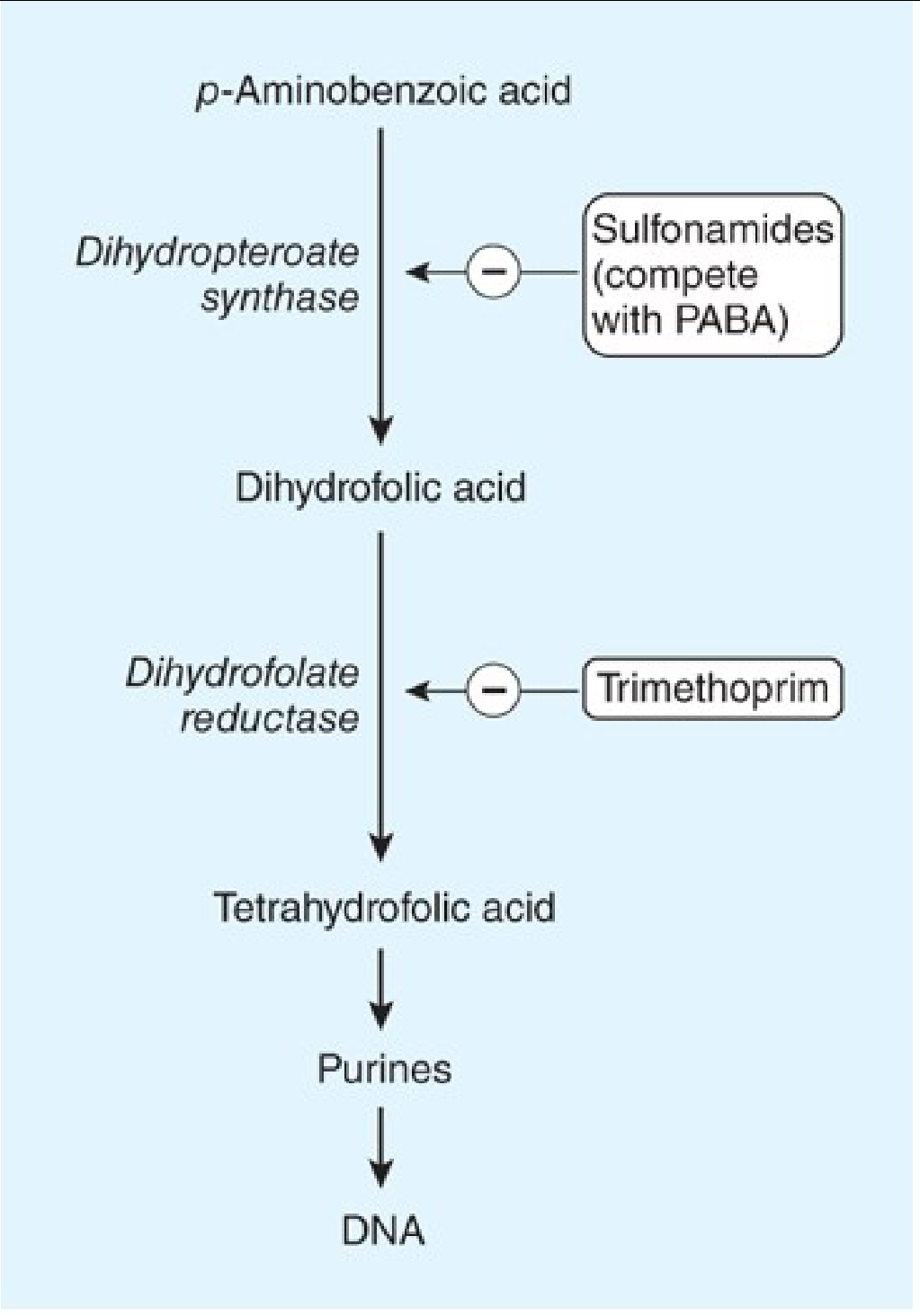
Mechanism of action
Normal bacterial pathway:
PABA → dihydrofolic acid → tetrahydrofolate → purines/DNA- Sulfonamide competes with PABA and inhibits dihydropteroate synthase.
- Therefore, bacterial dihydrofolate and ultimately DNA synthesis fall.
- Alone, sulfonamides are generally bacteriostatic.
Trimethoprim inhibits the next enzyme, dihydrofolate reductase. Combining it with sulfamethoxazole blocks sequential steps in folate synthesis, producing strong synergy and often bactericidal activity against susceptible organisms.
- Katzung's Basic and Clinical Pharmacology, 16th ed., pp. 1298-1299
Easy memory aid
“Sulfa stops PABA; TMP stops THF.”
- Sulfa: dihydropteroate synthase
- TMP: dihydrofolate reductase
- THF: tetrahydrofolate, required for DNA synthesis
Important drugs
| Drug | Main feature / use |
|---|---|
| Sulfamethoxazole | Most important systemic sulfonamide; almost always paired with trimethoprim |
| Trimethoprim-sulfamethoxazole (TMP-SMX, co-trimoxazole) | Key combination used for UTIs, some skin infections including susceptible community MRSA, Nocardia, Stenotrophomonas, shigellosis, and treatment/prophylaxis of Pneumocystis jirovecii pneumonia |
| Sulfadiazine | With pyrimethamine + leucovorin for toxoplasmosis; may be used with topical silver for burns in some settings |
| Silver sulfadiazine | Topical agent for burn wound infection management, though routine use may be limited because it can delay healing in some wounds |
| Sulfacetamide | Topical ophthalmic or dermatologic antibacterial agent |
| Sulfisoxazole | Oral urinary sulfonamide, less commonly used now |
| Sulfasalazine | A sulfonamide-containing anti-inflammatory drug for ulcerative colitis and rheumatoid arthritis. It is not used primarily as a systemic antibacterial. |
Do not confuse:
- Sulfonamide antibiotics: sulfamethoxazole, sulfadiazine, sulfacetamide.
- Sulfones: e.g., dapsone, related but distinct. Dapsone is used in leprosy and sometimes for Pneumocystis prophylaxis.
- Non-antibiotic sulfonamide-containing drugs: thiazide diuretics, furosemide, acetazolamide, sulfonylureas, celecoxib. They do not have the same antimicrobial structure or mechanism.
Antibacterial spectrum
Sulfonamides can act against selected:
- Gram-positive organisms, including some Staphylococcus
- Enteric Gram-negative bacilli, including susceptible E. coli, Klebsiella, Salmonella, Shigella, and Enterobacter
- Nocardia
- Chlamydia trachomatis
- Some protozoa, especially Toxoplasma when sulfadiazine is combined with pyrimethamine
Organisms where they are unreliable or ineffective
-
Pseudomonas aeruginosa: intrinsically resistant
-
Anaerobes: poor activity
-
Rickettsiae: may paradoxically grow better with sulfonamides
-
Many strains have acquired resistance, so local susceptibility data matter.
-
Katzung's Basic and Clinical Pharmacology, 16th ed., p. 1299
Pharmacokinetics
- Most systemic drugs are well absorbed orally.
- Distributed widely, including into CSF to varying degrees.
- Cross the placenta and enter fetal circulation.
- Usually metabolized in the liver and excreted by the kidneys.
- They are less soluble in acidic urine. This explains the risk of crystalluria and renal injury, particularly with poor fluid intake or high doses.
A practical precaution is maintaining good hydration when a systemic sulfonamide is prescribed.
- Katzung's Basic and Clinical Pharmacology, 16th ed., p. 1299
Resistance mechanisms
Bacteria become resistant by:
- Altered dihydropteroate synthase with lower sulfonamide affinity.
- Increased PABA production, which outcompetes the drug.
- Reduced intracellular drug accumulation or permeability changes.
- Acquisition of resistance genes, often carried on mobile genetic elements.
Adverse effects
A useful exam mnemonic is “Sulfa: rash, renal, red cells, newborns.”
1. Hypersensitivity reactions
- Rash, urticaria, fever
- Photosensitivity
- Drug fever
- Rare but serious: Stevens-Johnson syndrome (SJS) and toxic epidermal necrolysis (TEN)
- DRESS syndrome may occur
Stop the drug promptly if rash or other serious hypersensitivity symptoms develop. The current FDA label for TMP-SMX warns that rare fatal severe cutaneous, hepatic, and hematologic reactions have occurred, as described in the FDA product label.
2. Renal effects
- Crystalluria, hematuria, or obstructive nephropathy, especially with older, less-soluble agents
- Interstitial nephritis can occur
- Prevent crystalluria with hydration; alkalinization of urine may be used in selected cases
3. Hematologic toxicity
- Hemolytic anemia, particularly in G6PD deficiency
- Leukopenia, thrombocytopenia, agranulocytosis, or aplastic anemia, rarely
- TMP in TMP-SMX can also contribute to folate-related megaloblastic anemia with prolonged use or in susceptible patients
4. Bilirubin displacement in newborns
Sulfonamides displace bilirubin from albumin. This can raise the risk of kernicterus in neonates.
Therefore, avoid systemic sulfonamides:
-
Near term in pregnancy
-
In breastfeeding when the infant is premature, jaundiced, ill, or has G6PD deficiency
-
In infants younger than about 2 months, except where specialist-directed benefit outweighs risk
-
Katzung's Basic and Clinical Pharmacology, 16th ed., p. 1301
5. TMP-SMX-specific high-yield effects
These are mostly due to trimethoprim, but are clinically important for the combination:
- Hyperkalemia, especially with renal disease, ACE inhibitors, ARBs, spironolactone, or high doses
- Rise in serum creatinine from reduced tubular secretion, which may not reflect a true fall in GFR
- Folate-related cytopenias
Important drug interactions
- Warfarin: TMP-SMX can substantially raise INR and bleeding risk.
- Phenytoin: increased toxicity risk.
- Methotrexate: increased marrow toxicity risk.
- ACE inhibitors, ARBs, and spironolactone: increased risk of hyperkalemia with TMP-SMX.
“Sulfa allergy” clarification
A prior serious reaction to an antimicrobial sulfonamide warrants avoiding antimicrobial sulfonamides unless a specialist determines otherwise.
However, a sulfonamide antibiotic allergy does not automatically mean allergy to all non-antibiotic “sulfa” drugs. The chemical structures responsible for many antimicrobial-sulfonamide immune reactions differ from those of drugs such as thiazides, furosemide, acetazolamide, and sulfonylureas. A review of this distinction is available in this sulfonamide allergy review.
Exam-focused summary
- Class: folate-antagonist antimicrobials
- MOA: PABA analogues that inhibit dihydropteroate synthase
- Effect alone: bacteriostatic
- Best-known combination: TMP-SMX
- Synergy: sequential folate blockade
- Major uses: UTI, Pneumocystis, nocardiosis, selected CA-MRSA infections, toxoplasmosis with pyrimethamine
- Major adverse effects: rash/SJS-TEN, crystalluria, G6PD hemolysis, marrow suppression, kernicterus risk
- Avoid: late pregnancy, very young infants, significant prior severe sulfonamide reaction, and use carefully in renal impairment or G6PD deficiency.
This is a shared conversation. Sign in to Orris to start your own chat.