
Cushing reflex
Reading File
Finding Sources
Finding Sources
Searching PubMed
"Cushing reflex" OR "Cushing response" intracranial pressure
Reading File
Reading File
Reading File
Reading File
Searching Images
Cushing reflex intracranial pressure brainstem
Here is a comprehensive overview of the Cushing Reflex drawn from authoritative medical textbooks.
Cushing Reflex (Cushing Phenomenon)
Definition
The Cushing reflex is a protective cardiovascular response to life-threatening rises in intracranial pressure (ICP), characterized by the classic triad:
| Component | Feature |
|---|---|
| Hypertension | Marked rise in systemic arterial pressure |
| Bradycardia | Reflex slowing of heart rate |
| Respiratory irregularity | Slow, irregular breathing (Cheyne-Stokes or ataxic pattern) |
It is also called the Vasopressor Response, Kocher-Cushing reflex, or Cushing phenomenon.
Pathophysiology
-
Trigger — Raised ICP compresses brain vasculature, reducing cerebral blood flow (CBF). This is especially critical when ICP approaches or exceeds mean arterial pressure (MAP), compromising cerebral perfusion pressure (CPP = MAP − ICP).
-
Local ischemia at the medullary vasomotor center — compression or direct pressure to the floor of the medulla activates vasomotor neurons that sense the ischemia.
-
Sympathetic activation — the vasomotor center fires, increasing sympathetic outflow to the systemic circulation → rise in total peripheral resistance → marked hypertension (with associated tachycardia initially, from the sympathetic surge, increasing myocardial contractility).
-
Baroreceptor-mediated bradycardia — the acute hypertension is sensed by carotid sinus and aortic arch baroreceptors, which trigger a reflex vagal (parasympathetic) response → bradycardia, overriding the initial tachycardia.
-
Net result: The elevated MAP now offsets the raised ICP, restoring CPP and cerebral perfusion — a compensatory "last-ditch" autoregulatory mechanism.
"Increases in intracranial pressure compress the brain vasculature and tend to reduce blood flow despite autoregulatory vasodilation. In such cases, the brain regulates its blood flow by inducing reflexive changes in systemic arterial pressure." — Medical Physiology (Boron & Boulpaep)
"The Cushing reflex is a result of cerebral ischemia caused by increased intracranial pressure. Cerebral ischemia at the medullary vasomotor center induces initial activation of the sympathetic nervous system... As a result of the high vascular tone, reflex bradycardia mediated by baroreceptors will ensue." — Miller's Anesthesia, 10th Edition
Clinical Significance
- Ominous sign: Its appearance indicates ICP has reached life-threatening levels — it is a very late sign of raised ICP, signaling impending brainstem herniation.
- Incomplete triad is common: Only about one-third of cases with critically elevated ICP manifest the full triad of hypertension + bradycardia + respiratory irregularity (Rosen's Emergency Medicine).
- Age differences: In children, the reflex can be triggered by generalized supratentorial ICP rises. In adults, the more rigid intracranial compartmentalization usually requires a posterior fossa mass to directly compress the medullary floor (Plum & Posner's Diagnosis and Treatment of Stupor and Coma).
- Physician goal: Diagnose and treat elevated ICP before the Cushing reflex develops — its presence means standard compensatory mechanisms have failed (Goldman-Cecil Medicine).
Causes / Clinical Contexts
Conditions that can raise ICP enough to trigger the Cushing reflex include:
- Traumatic brain injury (TBI) with cerebral edema
- Brain tumors (gradual ICP rise)
- Intracerebral or subarachnoid hemorrhage
- Hydrocephalus
- Hypertensive encephalopathy
- Posterior fossa masses (particularly effective at compressing the medulla directly)
Therapeutic Implications
Once the Cushing reflex is observed, urgent measures to reduce ICP are required:
- Head of bed elevation to 30°, neutral neck position
- Osmotic therapy: Mannitol or hypertonic saline (HTS)
- CSF drainage (if EVD in place)
- Hyperventilation: Only as a temporizing measure (now known to cause harmful cerebral vasoconstriction if used long-term)
- Treat the underlying cause (hematoma evacuation, tumor decompression)
Key Distinctions
| Feature | Cushing Reflex | Normal Hypertension |
|---|---|---|
| Mechanism | Cerebral ischemia → medullary vasomotor center | Peripheral/cardiac causes |
| Heart rate | Bradycardia (baroreceptor reflex) | Usually normal or elevated |
| Clinical context | Comatose/obtunded patient with head injury or mass | Awake patient |
| Urgency | Neurosurgical emergency | Variable |
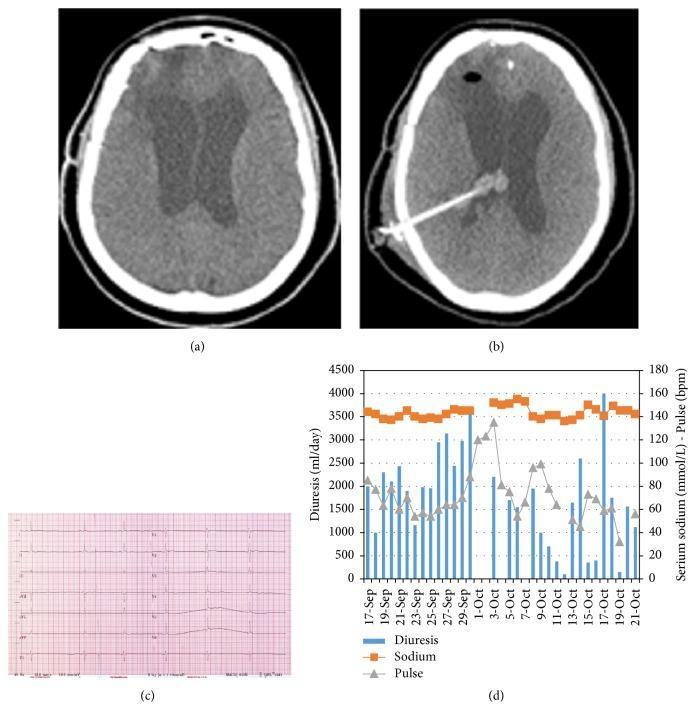
Sources: Miller's Anesthesia (10e) · Medical Physiology (Boron & Boulpaep) · Rosen's Emergency Medicine · Plum & Posner's Stupor and Coma · Goldman-Cecil Medicine · Bradley & Daroff's Neurology in Clinical Practice
This is a shared conversation. Sign in to Orris to start your own chat.