
017 Define cirrhosis, classify cirrhosis. Describe aetiopathogenesis, 20 Novem 2 PIMS morphology, clinical findings and complications of Alcoholic ber cirrhosis. L.Q 2017 Describe aetiopathology of cirrhosis of liver. 20 March 2 MS UNIVERS L.Q 2
Cirrhosis of the Liver - Comprehensive Long Question Answer
1. DEFINITION
"Cirrhosis refers to the diffuse transformation of the liver into regenerative parenchymal nodules surrounded by fibrous bands."
- Robbins & Kumar Basic Pathology
2. CLASSIFICATION OF CIRRHOSIS
A. Morphological Classification
| Type | Nodule Size | Common Causes |
|---|---|---|
| Micronodular (Laennec's cirrhosis) | Nodules <3 mm, uniform size | Alcohol, biliary obstruction, hemochromatosis |
| Macronodular (post-necrotic) | Nodules >3 mm, variable size | Viral hepatitis (HBV, HCV), autoimmune |
| Mixed | Both micro- and macronodules | Many causes; micronodular may evolve into macronodular |
B. Aetiological Classification
| Category | Examples |
|---|---|
| Alcohol-associated | Chronic alcohol use disorder |
| Viral | Chronic HBV, HCV infection |
| Metabolic | MASLD (formerly NAFLD), Wilson's disease, haemochromatosis, Alpha-1 antitrypsin deficiency |
| Biliary | Primary biliary cholangitis, primary sclerosing cholangitis, secondary biliary cirrhosis |
| Autoimmune | Autoimmune hepatitis |
| Vascular | Budd-Chiari syndrome, cardiac cirrhosis (right heart failure) |
| Cryptogenic | No identifiable cause (~10-15% of cases) |
3. AETIOPATHOGENESIS OF CIRRHOSIS (General)
Step 1 - Repeated/Sustained Hepatocellular Injury
Step 2 - Stellate Cell Activation and Fibrogenesis
- Damaged hepatocytes and Kupffer cells release TGF-β, TNF-α, IL-1, and platelet-derived growth factor (PDGF).
- These cytokines activate hepatic stellate cells (Ito cells) in the space of Disse.
- Activated stellate cells transform into myofibroblast-like cells and produce large amounts of type I and III collagen, fibronectin, and other extracellular matrix (ECM) components.
- Result: progressive perisinusoidal fibrosis leading to "capillarization of sinusoids" (loss of fenestrations in the sinusoidal endothelium), which impairs exchange between blood and hepatocytes.
Step 3 - Regeneration and Nodule Formation
- Surviving hepatocytes undergo regenerative hyperplasia, forming nodules without the normal lobular architecture.
- These nodules are enclosed by fibrous septa that link portal tracts to central veins (bridging fibrosis), disrupting normal lobular architecture.
Step 4 - Vascular Distortion
- Perivenular fibrosis and fibrous obliteration of terminal hepatic venules (phlebosclerosis)
- Veno-occlusive lesions → sinusoidal hypertension → portal hypertension
- Portosystemic shunting: blood bypasses functioning hepatocytes
4. AETIOPATHOGENESIS OF ALCOHOLIC CIRRHOSIS
4.1 Epidemiology
- Alcohol accounts for 48% of cirrhosis worldwide, causing 1.16 million deaths annually
- Only 10-20% of heavy drinkers develop cirrhosis - other cofactors are important
- Threshold: 80 g/day of ethanol (80-proof liquor); cirrhosis typically takes 10-20 years to develop
4.2 Risk Factors for Progression
| Factor | Mechanism |
|---|---|
| Amount/duration | Dose-dependent hepatotoxicity |
| Sex (female) | Lower threshold; estrogen increases gut permeability to endotoxins → Kupffer cell TLR4 activation |
| Genetics | PNPLA3, MBOAT7, TM6SF2 polymorphisms; ALDH2 variants (common in Asians) |
| Obesity/MASLD | Synergistic hepatotoxicity |
| Viral hepatitis (HBV/HCV) | Additive liver injury |
| Malnutrition | Impaired hepatic repair |
| Smoking | Independent risk factor |
| Gut microbiome dysbiosis | Increased intestinal permeability → endotoxaemia |
4.3 Mechanisms of Alcohol-Induced Hepatocyte Injury
Ethanol → (ADH1) → Acetaldehyde → (ALDH) → Acetate
Ethanol → (CYP2E1, induced by chronic drinking) → Acetaldehyde + ROS
-
Altered redox state (NADH/NAD+ ratio):
- Ethanol oxidation converts NAD+ to NADH
- High NADH/NAD+ inhibits beta-oxidation of fatty acids and gluconeogenesis
- Promotes fatty acid synthesis → hepatic steatosis
-
Acetaldehyde toxicity:
- Induces lipid peroxidation
- Forms acetaldehyde-protein adducts → cytoskeletal and membrane disruption
- May generate neoantigens triggering immune injury
-
CYP2E1-induced oxidative stress:
- Induction by chronic alcohol consumption increases reactive oxygen species (ROS)
- ROS damage cellular proteins, membranes, and mitochondria
- May promote hepatocyte apoptosis
-
Impaired methionine metabolism:
- Alcohol decreases hepatic glutathione levels → sensitisation to oxidative injury
- Homocysteine production → endoplasmic reticulum (ER) stress
-
Gut-derived endotoxaemia (LPS/PAMPs):
- Alcohol increases gut permeability
- Bacterial lipopolysaccharide (LPS) enters portal circulation
- Activates Kupffer cells via TLR4/CD14
- Triggers NLRP3 inflammasome, releasing IL-1β and caspase-1
- Sustained Kupffer cell activation → chronic hepatic inflammation
-
Mitochondrial dysfunction:
- Impaired beta-oxidation → fat accumulation
- Reduced oxidative phosphorylation → cellular energy deficiency
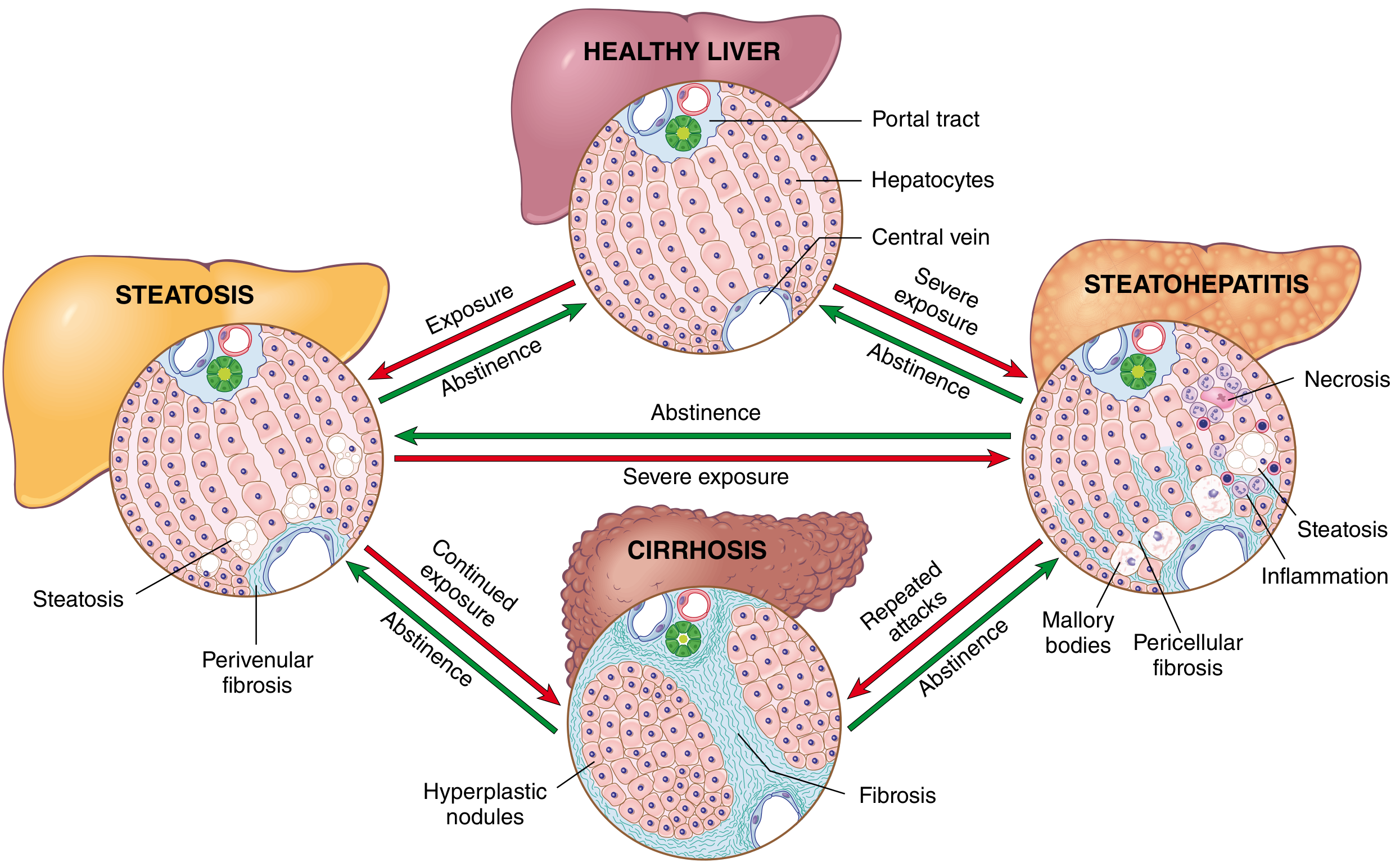
5. MORPHOLOGY OF ALCOHOLIC CIRRHOSIS
5.1 Gross Morphology
- Liver enlarged (up to 4-6 kg), soft, yellow, greasy
- Changes begin in centrilobular zone 3 and extend outward
- Reversible with abstinence
- Liver may be enlarged or normal in size
- Yellow-tan cut surface; may show irregular nodularity beginning
- Liver is shrunken and firm in end-stage disease
- Surface is diffusely nodular (bumpy texture); normal smooth capsule replaced by irregular surface with depressed scarring and bulging nodules
- Micronodular pattern (Laennec's cirrhosis) initially: nodules <3 mm, uniform in size; with abstinence may evolve into a macronodular or mixed pattern
- Cut surface shows alternating tan-yellow regenerative nodules separated by grey-white fibrous septa
5.2 Microscopic Morphology
- Lipid droplets begin as small (microvesicular) then coalesce into large (macrovesicular) droplets
- Macrovesicular steatosis predominates: fat displaces nucleus to periphery
- Most prominent around central vein (zone 3)
| Feature | Description |
|---|---|
| Ballooned hepatocytes | Swollen hepatocytes with cleared cytoplasm; cytoskeletal damage |
| Mallory-Denk bodies (Mallory hyaline) | Intracytoplasmic eosinophilic inclusions = tangled skeins of ubiquitinated intermediate filaments (keratins 8 and 18) |
| Neutrophilic inflammation | Neutrophils surround ballooned hepatocytes ("satellitosis"); more prominent than in MASLD |
| Lobular lymphocytic infiltrates | Also portal lymphocytic infiltrates |
| Necrosis/apoptosis | Usually spotty; can be confluent in severe cases |
| Pericellular/perisinusoidal fibrosis | "Chicken wire" fibrosis in zone 3; most characteristic early fibrotic pattern |
- Fibrous septa interconnect portal tracts and central veins (bridging fibrosis)
- Parenchyma replaced by regenerative nodules with disrupted lobular architecture
- Perivenular fibrosis → phlebosclerosis (fibrous obliteration of terminal hepatic venules)
- Loss of bile ductules in fibrous septa (ductular reaction)
- Variable steatosis and residual inflammation
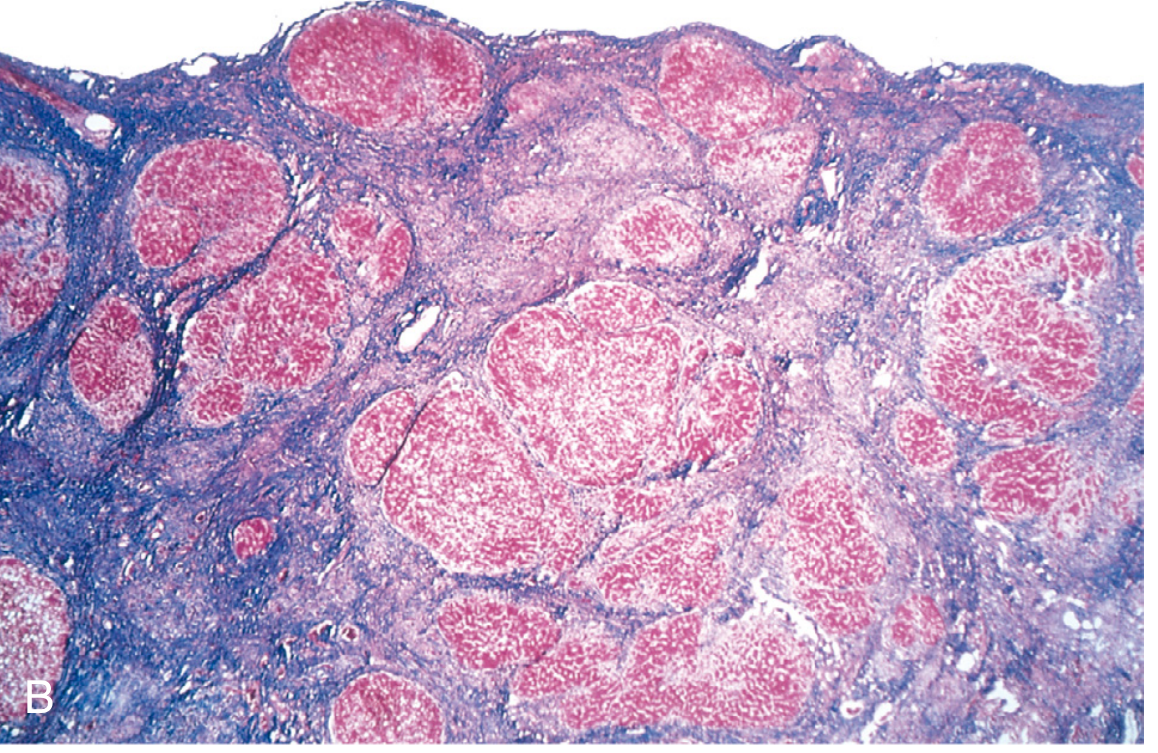
Regression: With prolonged abstinence, fibrous septa become thin and incomplete. Most scars can regress (Fig. 14.6B from Robbins Basic Pathology), but complete regression of cirrhosis is rare.
6. CLINICAL FINDINGS
6.1 Compensated Cirrhosis (~40% asymptomatic)
- Fatigue, weakness, anorexia, weight loss
- Hepatomegaly (early); shrunken liver (late)
- Mild elevation of liver enzymes
6.2 Specific Signs in Alcoholic Cirrhosis
- Hepatomegaly (tender in active hepatitis)
- Jaundice (hyperbilirubinemia)
- Dupuytren's contracture (palmar fibromatosis - classic in alcoholics)
- Spider angiomata (arterial spider naevi)
- Palmar erythema
- Gynecomastia, testicular atrophy, loss of libido (males)
- Amenorrhoea (females)
- Rhinophyma (bulbous red nose)
- Jaundice and pruritus (from cholestasis; bile salt accumulation)
- Ascites
- Caput medusae (dilated periumbilical veins)
- Splenomegaly
- Haemorrhoids
- Hepatic encephalopathy (asterixis/flapping tremor, confusion, coma)
- Peripheral neuropathy (from vitamin B1/B12 deficiency)
- Malnutrition and sarcopenia
- Ecchymoses/bleeding tendency (coagulopathy from decreased clotting factor synthesis)
- Oedema (hypoalbuminaemia)
- Parotid enlargement
6.3 Laboratory Findings
| Test | Finding |
|---|---|
| AST/ALT ratio | >2:1 (rarely >300 IU/L) - characteristic of ALD |
| AST, ALT | Elevated (AST > ALT) |
| GGT | Elevated (sensitive marker) |
| Bilirubin | Elevated |
| Albumin | Decreased |
| PT/INR | Prolonged |
| Platelets | Decreased (hypersplenism) |
| CBC | Anaemia (multifactorial) |
| Serum bilirubin >3 mg/dL | Suggests hepatitis component |
7. COMPLICATIONS
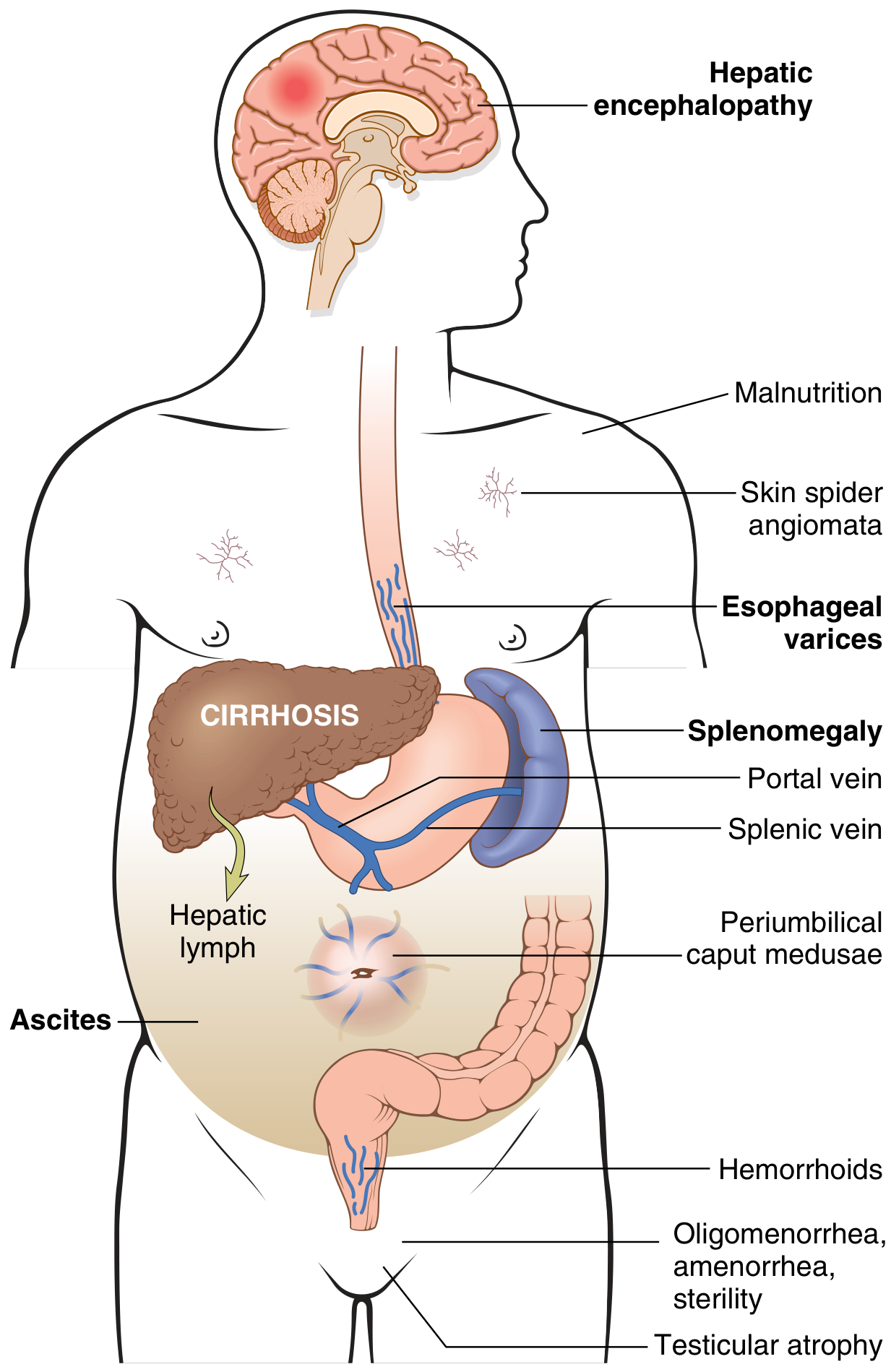
A. Portal Hypertension
- Mechanism: increased sinusoidal resistance (fibrosis + stellate cell contraction) + increased portal blood flow (splanchnic vasodilation)
- Leads to all downstream complications
B. Oesophageal and Gastric Varices
- Develop in ~40% of patients with advanced cirrhosis
- Portosystemic collaterals at oesophago-gastric junction
- Variceal bleeding: massive haematemesis; frequently fatal especially with coagulopathy
C. Ascites
- ~85% of ascites cases are due to portal hypertension from cirrhosis
- Transudate: protein <3 g/dL; serum-to-ascites albumin gradient (SAAG) ≥1.1 g/dL
- Mechanism: portal hypertension + hypoalbuminaemia + renal sodium/water retention (RAAS activation)
- Risk: Spontaneous Bacterial Peritonitis (SBP)
D. Hepatic Encephalopathy
- Accumulation of neurotoxins (ammonia, manganese, false neurotransmitters) due to portosystemic shunting and reduced hepatocyte function
- Clinical stages: from subtle personality changes → confusion → stupor → coma
- Precipitants: GI bleeding, infection, sedatives, hypokalemia, constipation
E. Hepatorenal Syndrome (HRS)
- Functional renal failure without intrinsic renal disease
- Mechanism: liver failure → vasodilator production (NO) → splanchnic vasodilation → decreased renal perfusion → renal vasoconstriction via renin-angiotensin and renal sympathetic activation
- Reversible if liver function restored (e.g., liver transplantation)
F. Splenomegaly and Hypersplenism
- Congestive splenomegaly from portal hypertension
- Spleen may reach 1000 g
- Hypersplenism → thrombocytopenia, anaemia, leukopenia (pancytopenia)
G. Coagulopathy
- Decreased synthesis of clotting factors (I, II, V, VII, IX, X) by failing hepatocytes
- Risk of spontaneous bleeding
H. Hepatocellular Carcinoma (HCC)
- Annual risk: 1-6% in alcoholic cirrhosis
- Cirrhosis of any cause is the single most important risk factor for HCC
- Most chronic liver diseases predispose to HCC
I. Portopulmonary Hypertension
- Pulmonary vasoconstriction due to vasoactive substances bypassing liver
J. Acute-on-Chronic Liver Failure
- Sudden decompensation triggered by: infection, GI bleed, superimposed acute hepatitis, drugs
8. PROGNOSIS
- 5-year survival in abstainers (free of jaundice, ascites, hematemesis): ~90%
- 5-year survival with continued drinking: 50-60%
- Common causes of death:
- Hepatic coma (liver failure)
- Massive GI haemorrhage (variceal bleeding)
- Intercurrent infection (sepsis, SBP)
- Hepatorenal syndrome
- Hepatocellular carcinoma
Discuss the pathology of regenerative and neoplastic helatocellular nodules
Pathology of Regenerative and Neoplastic Hepatocellular Nodules
OVERVIEW: THE NODULAR SPECTRUM
Cirrhotic/Regenerative Nodule
↓
Large Cell Change
Small Cell Change
↓
Low-Grade Dysplastic Nodule
↓
High-Grade Dysplastic Nodule (+ "nodule-in-nodule")
↓
Early / Well-differentiated HCC
↓
Overt / Advanced HCC
- Focal Nodular Hyperplasia (FNH)
- Hepatocellular Adenoma
I. REGENERATIVE NODULES
A. Cirrhotic (Regenerative) Nodules
- Microscopically: nodules composed of hepatocytes with preserved lobular architecture (though simplified); cells are normal in size and cytology
- Surrounded by fibrous bands (portal-to-portal or portal-to-central bridging fibrosis)
- No cytologic atypia
- Micronodular (<3 mm, seen in alcoholic/metabolic disease) or macronodular (>3 mm, seen in post-viral disease)
B. Large Cell Change (Large Cell Dysplasia)
- Hepatocytes that are enlarged with large, often atypical nuclei (nuclear enlargement proportional to cytoplasmic enlargement)
- Scattered throughout the lobule; do not form discrete nodules
- Not a truly dysplastic lesion in a strict sense - may represent a senescent, stress-induced change
- Associated with HCV infection and cirrhosis
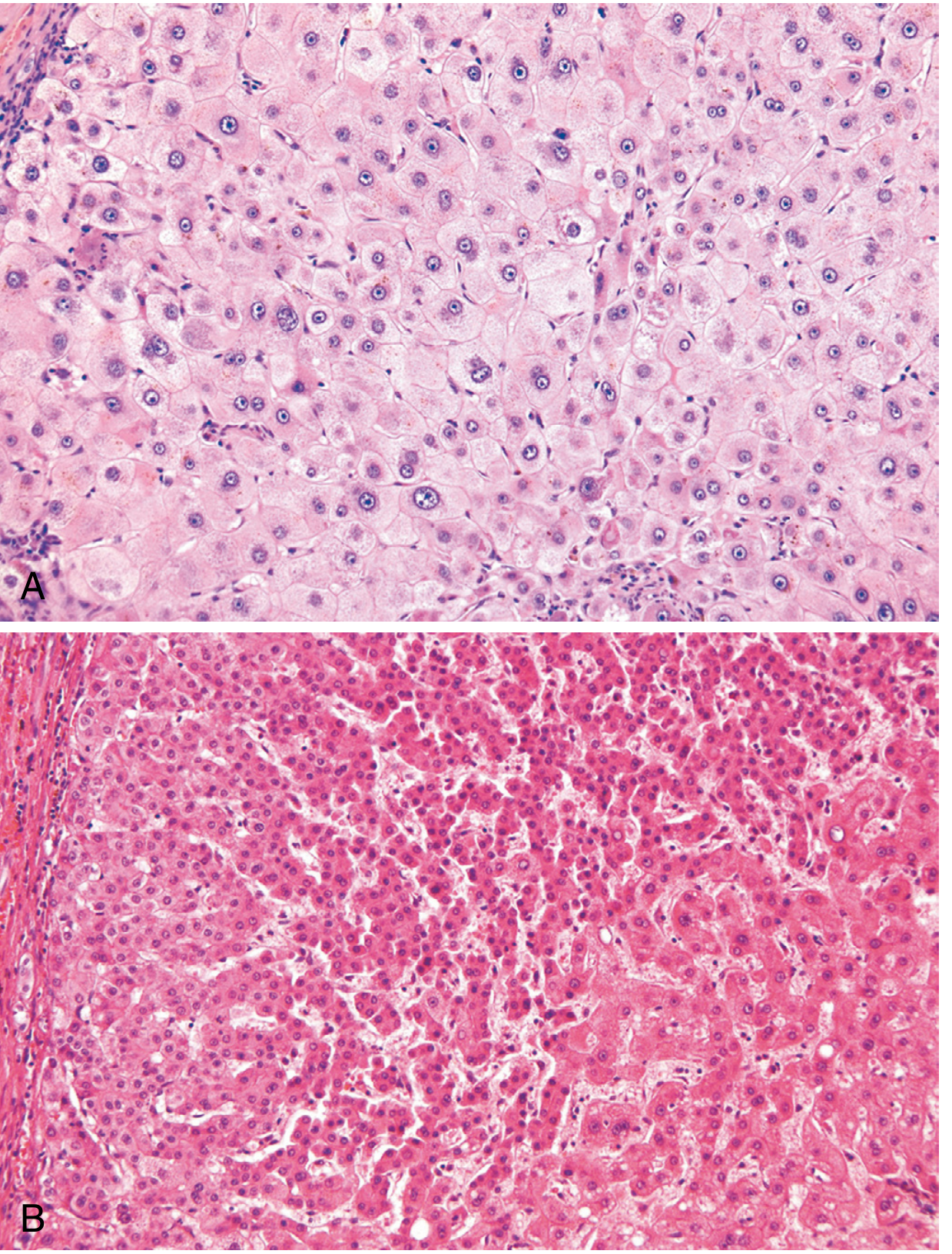
C. Small Cell Change
- Hepatocytes are smaller than normal with a high nuclear-to-cytoplasmic (N:C) ratio
- Cells grow in thickened plates (2-3 cell plates thick vs normal 1-2)
- Clusters may form and are clonal
- Most closely associated with early HCC and high-grade dysplastic nodules
D. Focal Nodular Hyperplasia (FNH)
- Well-demarcated but poorly encapsulated nodule, may be several centimeters in diameter
- Central stellate (star-shaped) fibrous scar - pathognomonic feature - from which fibrous septa radiate to periphery
- Normal background liver
- Central scar contains large anomalous (thick-walled) arteries and ductular reactions along the fibrous septa
- Hepatocytes appear normal histologically
- No encapsulation; no portal tracts in nodular parenchyma
- No cytologic atypia, no malignant potential
II. HEPATOCELLULAR ADENOMA (Benign Neoplasm)
- Reproductive-age women (historically linked to oral contraceptive pills, now more linked to obesity and metabolic syndrome)
- Anabolic steroid use in men
- Glycogen storage disease
| Subtype | Mutation | Features |
|---|---|---|
| HNF1α-inactivated | HNF1α loss | Marked steatosis; LFABP absent on IHC; low malignant risk |
| β-catenin-activated | CTNNB1 gain-of-function | High risk of malignant transformation to HCC; nuclear β-catenin on IHC |
| Inflammatory | IL6ST/STAT3 pathway | Marked sinusoidal dilation; serum amyloid A/CRP positive on IHC |
| Unclassified | Unknown | ~10% of cases |
- Usually solitary, well-demarcated mass; no fibrous capsule (or thin capsule)
- May have areas of haemorrhage or necrosis (particularly when large, >5 cm)
- No central scar (distinguishes from FNH)
- Cut surface: pale-tan to yellow
- Sheets and cords of hepatocytes resembling normal hepatocytes
- Arterial vascular supply (unpaired arteries without portal tracts) - key diagnostic feature
- No portal tracts within the tumour
- No bile ducts within the tumour
- Variable degree of cytologic atypia depending on subtype; β-catenin-activated type shows most atypia
- Haemorrhage and rupture (especially >5 cm) → life-threatening intra-abdominal bleeding
- Malignant transformation to HCC (especially β-catenin-activated subtype)
III. DYSPLASTIC NODULES (Premalignant)
A. Low-Grade Dysplastic Nodule (LGDN)
- Slightly larger than surrounding cirrhotic nodules
- Mild cytologic atypia: slightly increased N:C ratio, mild nuclear irregularity
- Architecture largely preserved; no increased cell density
- Clonal, but few molecular aberrations
- No increased arterialization
- Low but not zero risk of progression
B. High-Grade Dysplastic Nodule (HGDN)
- Distinctly larger than surrounding cirrhotic nodules
- Significant cytologic atypia: prominent nuclear irregularity, increased N:C ratio, mitotic figures
- Increased cell density; thickened plates
- Small cell change prominent
- Clonal aberrations associated with overt HCC (TERT promoter mutations, etc.)
- Increased unpaired arteries (arterial neovascularisation begins)
- "Nodule-in-nodule" appearance: small foci of overt HCC visible within the dysplastic nodule
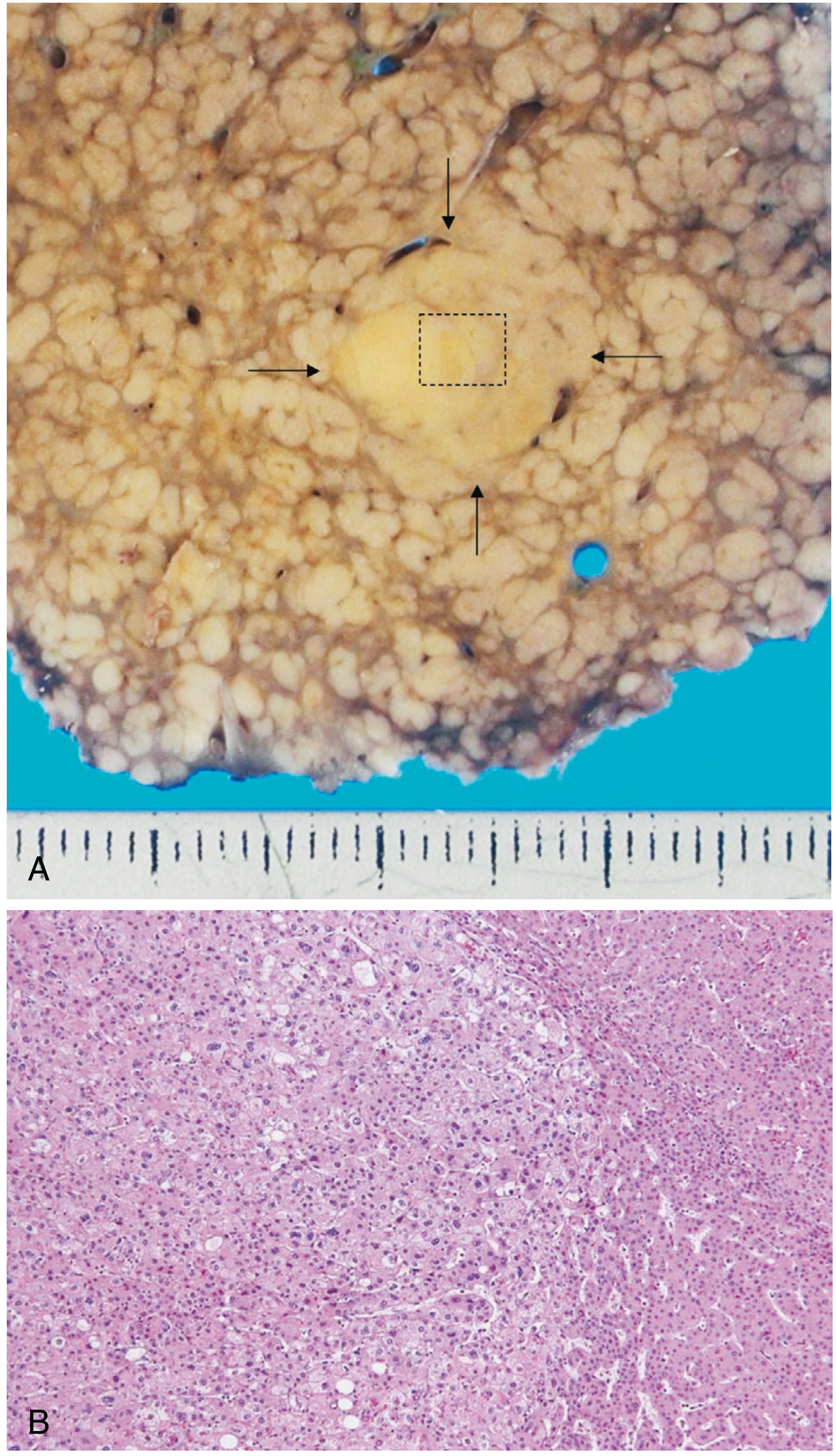
IV. HEPATOCELLULAR CARCINOMA (HCC)
Epidemiology
- ~5-5.4% of all cancers worldwide
-
85% of cases occur in Asia (SE China, Korea, Taiwan) and sub-Saharan Africa (endemic HBV)
- Male predominance: 3:1 (low-incidence areas) to 8:1 (high-incidence areas)
- Rising in Western countries due to HCV and MASLD
Risk Factors / Aetiology
| Factor | Mechanism |
|---|---|
| HBV (most important globally) | Integration into host genome disrupts tumour suppressors; HBx protein inhibits p53 |
| HCV | Chronic inflammation + cirrhosis drives mutagenesis |
| Aflatoxin B1 (Aspergillus) | Mutagen: G:C→T:A transversion in codon 249 of TP53; synergises with HBV |
| Alcohol | Via cirrhosis; synergises with HBV, HCV |
| MASLD/NAFLD | Via metabolic syndrome and cirrhosis |
| Hereditary haemochromatosis | Iron-induced oxidative DNA damage |
| α1-antitrypsin deficiency | Protein accumulation drives hepatocyte injury |
| Wilson disease | Copper-induced oxidative damage |
| Cirrhosis (any cause) | Chronic regeneration increases mutation acquisition |
Pathogenesis / Molecular Biology
- Chronic liver injury → hepatocyte regeneration → acquisition of driver mutations
- Viruses and toxins are not directly oncogenic; rather, inflammation drives proliferation and mutagenesis
- Key driver mutations in HCC:
- TERT promoter mutations (50-60% of tumours) - upregulate telomerase, prevent replicative senescence
- β-catenin (CTNNB1) activating mutations (~40%) - activate Wnt signalling, promote proliferation
- TP53 inactivating mutations (up to 60%) - loss of cell cycle arrest/apoptosis
- CDKN2A (p16) loss, PI3K/AKT/mTOR pathway activation
- In noncirrhotic liver, HCC can arise from malignant transformation of hepatocellular adenoma (especially β-catenin-activated)
- Aflatoxin causes a characteristic TP53 "hotspot" mutation at codon 249 (Arg→Ser)
Gross Morphology
- Unifocal (usually large) mass - most common; may replace an entire lobe
- Multifocal, widely distributed nodules of variable size
- Diffusely infiltrative - permeates widely through liver, sometimes involving entire liver; may be mistaken for cirrhosis grossly
- Pale yellow (fatty change) or green (bile production) cut surface
- Tumours >2 cm more likely to show vascular invasion and intrahepatic metastases
- Portal vein invasion: snake-like tumour thrombus extending into portal vein → portal hypertension
- Extension into inferior vena cava and even right ventricle in advanced cases
- Satellite nodules around primary mass (intrahepatic metastases)
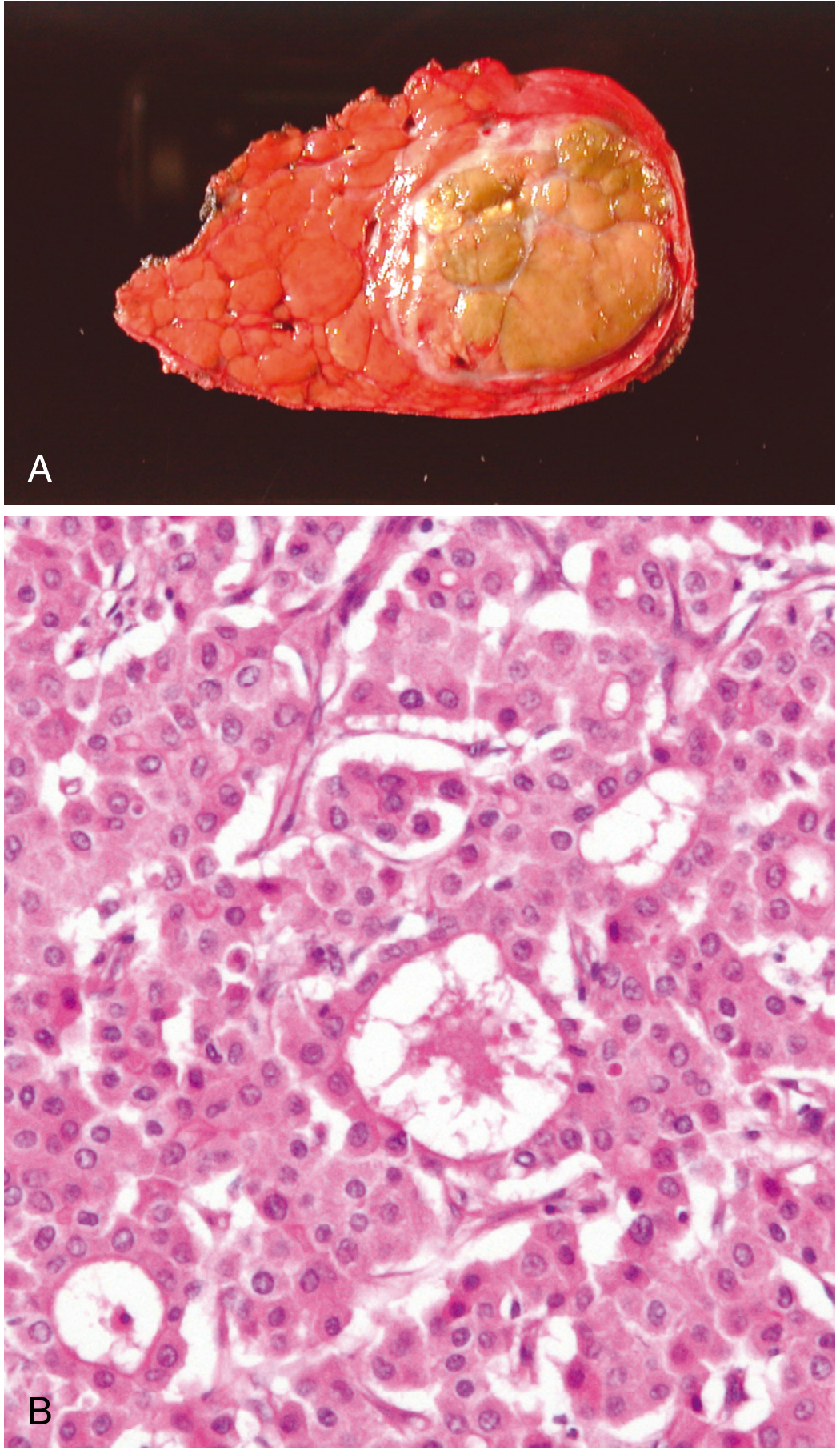
Microscopic Morphology
| Grade | Features |
|---|---|
| Well-differentiated | Cells closely resemble normal hepatocytes; grow as thick trabeculae (2-3 cell plates) or pseudoglandular/acinar patterns; bile plugs in pseudoacini; mild nuclear atypia |
| Moderately differentiated | Recognisable hepatocytes; more nuclear atypia; mitoses; vascular invasion may be seen |
| Poorly differentiated / Anaplastic | Marked nuclear pleomorphism; giant cells; frequent mitoses; may lose hepatocellular differentiation; spindle cell areas |
- Trabecular (sinusoidal) - most common; thickened liver cell plates separated by sinusoids lined by flattened endothelial cells
- Pseudoglandular (acinar) - dilated bile canaliculi form pseudoacini; bile plugs present
- Solid/compact - sheets of cells with minimal sinusoidal stroma
- Scirrhous - prominent fibrous stroma (must be distinguished from cholangiocarcinoma)
- HepPar-1 (hepatocyte paraffin antigen 1) - most specific hepatocellular marker
- Glypican-3 (GPC3) - sensitive for HCC, especially well-differentiated
- AFP - in tumour cells (correlates with serum levels)
- Arginase-1 - highly sensitive and specific
- Polyclonal CEA - canalicular/bile canalicular pattern (pCEA)
The Fibrolamellar Variant
- Affects adolescents and young adults (median age 25 years)
- No preexisting liver disease or cirrhosis
- No elevated AFP
- Better prognosis than conventional HCC (up to 40% survive 10 years)
- Molecular hallmark: DNAJB1::PRKACA fusion gene → excessive protein kinase A activity
- Large polygonal cells with abundant granular eosinophilic cytoplasm (due to abundant mitochondria - oncocytic change)
- Vesicular nuclei with a single prominent nucleolus
- Parallel lamellae of dense collagen (lamellar fibrosis) separating tumour cells
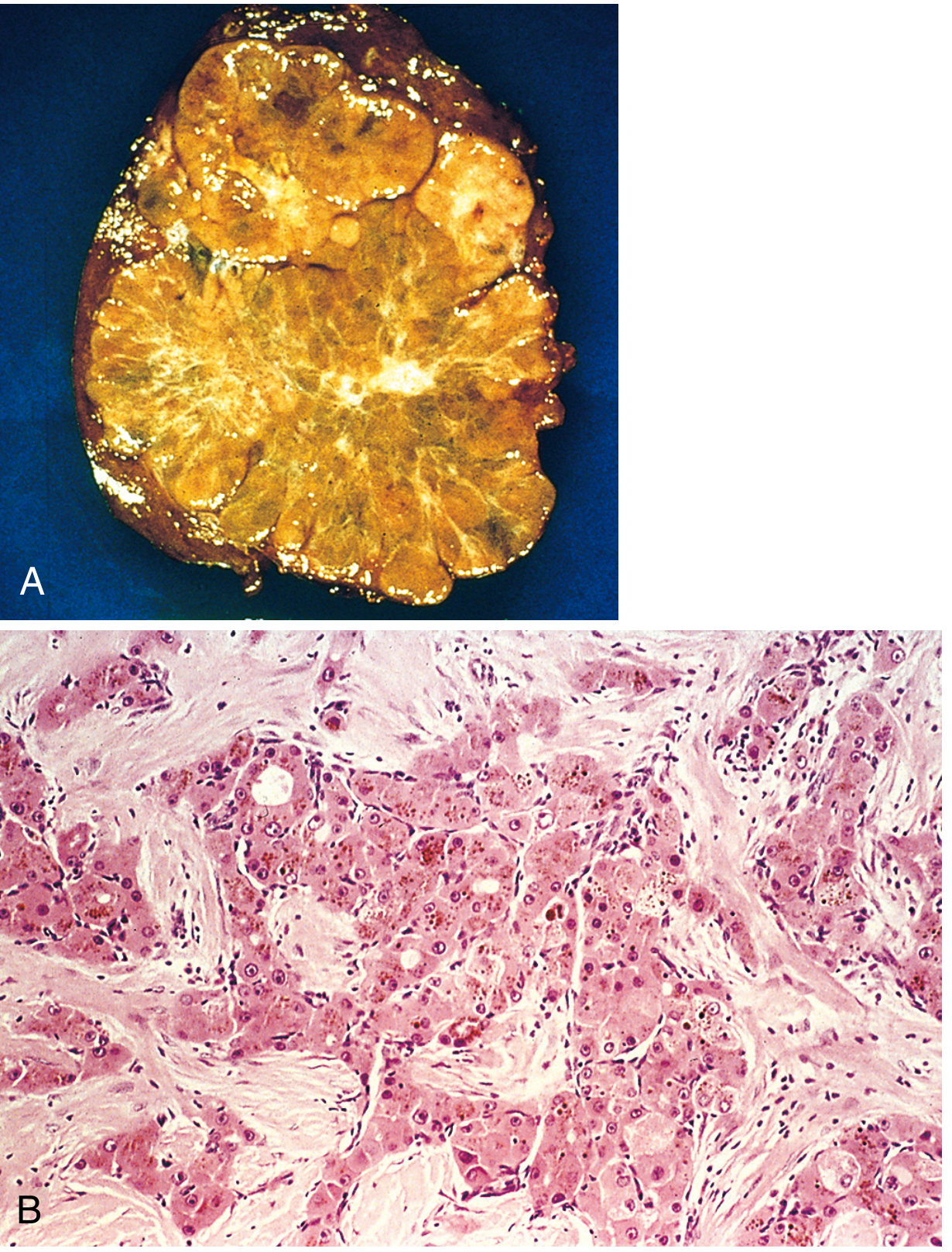
V. COMPARATIVE SUMMARY TABLE
| Feature | Regenerative Nodule (Cirrhosis) | FNH | HCA | Low-Grade DN | High-Grade DN | HCC |
|---|---|---|---|---|---|---|
| Background liver | Cirrhotic | Normal | Normal/non-cirrhotic | Cirrhotic | Cirrhotic | Cirrhotic (85%) |
| Fibrous scar | Surrounding septa | Central stellate scar | No | No | No | No |
| Portal tracts | Present | Absent in nodule | Absent | Reduced | Absent | Absent |
| Bile ducts | Present | Present (ductular rx) | Absent | Reduced | Absent | Absent |
| Arteries | Normal (paired) | Thick-walled central | Unpaired arteries | Slightly increased | Increased unpaired | Markedly increased |
| Cytologic atypia | None | None | Minimal-moderate | Mild | Moderate-marked | Marked |
| Cell plates | 1-2 cells thick | 1-2 | 1-2 | 1-2 | 2-3 | >3 (trabecular) |
| AFP | Normal | Normal | Normal | Normal | Normal/slightly elevated | Elevated (50-60%) |
| Malignant potential | None | None | Low-moderate (β-cat type) | Low | High | N/A (is malignant) |
VI. CLINICAL FEATURES OF HCC
- Symptoms: Upper abdominal pain, malaise, fatigue, weight loss, awareness of abdominal mass
- Jaundice and ascites: Due to underlying cirrhosis or portal vein invasion
- Haemoperitoneum: From spontaneous rupture (especially in sub-Saharan Africa)
- Paraneoplastic syndromes: Hypoglycaemia (insulin-like activity), erythrocytosis (ectopic EPO), hypercalcaemia, hypercholesterolaemia
Laboratory Findings
- Serum AFP elevated in ~50% of advanced HCC; not sensitive for early disease; not elevated in fibrolamellar variant
- AST, ALT, ALP: May be elevated or normal (HCC can arise in relatively preserved liver)
- LDH: Often elevated
Imaging Hallmark
- Contrast-enhanced CT/MRI: Arterial phase enhancement followed by rapid venous washout - pathognomonic of HCC (reflects high arterialization)
- LI-RADS scoring system used for standardised radiological reporting
Prognosis and Treatment
| Stage/Treatment | 5-year Survival |
|---|---|
| Confined to liver (small, resectable) | ~30-40% |
| Extrahepatic spread | ~5% |
| Fibrolamellar variant | Up to 40% at 10 years |
- Surgical resection (curative; requires adequate liver reserve)
- Liver transplantation (Milan criteria: single tumour ≤5 cm or ≤3 tumours each ≤3 cm; no vascular invasion)
- Radiofrequency ablation / microwave ablation / ethanol injection (unresectable small tumours)
- Transarterial chemoembolisation (TACE) - exploits HCC arterialization
- Sorafenib (kinase inhibitor) - palliative; prolongs survival in advanced disease
- Immune checkpoint inhibitors (atezolizumab + bevacizumab) - current first-line systemic therapy
- Cachexia
- GI/variceal haemorrhage
- Liver failure / hepatic coma
- Tumour rupture with haemoperitoneum (less common)
Please give pff
ls /home/daytona/workspace/ 2>/dev/null && echo "---" && ls /home/daytona/workspace/attachments/ 2>/dev/null || echo "No attachments folder"
mkdir -p /home/daytona/workspace/liver-pathology && echo "done"
~/liver-pathology/generate_pdf.py
from reportlab.lib.pagesizes import A4
from reportlab.lib.styles import getSampleStyleSheet, ParagraphStyle
from reportlab.lib.units import cm
from reportlab.lib import colors
from reportlab.platypus import (
SimpleDocTemplate, Paragraph, Spacer, Table, TableStyle,
HRFlowable, KeepTogether, ListFlowable, ListItem, PageBreak
)
from reportlab.lib.enums import TA_LEFT, TA_CENTER, TA_JUSTIFY
from reportlab.platypus import Flowable
OUTPUT = "/home/daytona/workspace/liver-pathology/Hepatocellular_Nodules_Pathology.pdf"
doc = SimpleDocTemplate(
OUTPUT,
pagesize=A4,
rightMargin=2*cm,
leftMargin=2*cm,
topMargin=2.2*cm,
bottomMargin=2*cm,
)
W = A4[0] - 4*cm # usable width
styles = getSampleStyleSheet()
# Custom styles
TITLE = ParagraphStyle('Title', parent=styles['Normal'],
fontName='Helvetica-Bold', fontSize=16, textColor=colors.HexColor('#1a3557'),
spaceAfter=6, alignment=TA_CENTER, leading=20)
SUBTITLE = ParagraphStyle('Subtitle', parent=styles['Normal'],
fontName='Helvetica', fontSize=10, textColor=colors.HexColor('#444444'),
spaceAfter=14, alignment=TA_CENTER)
H1 = ParagraphStyle('H1', parent=styles['Normal'],
fontName='Helvetica-Bold', fontSize=13, textColor=colors.HexColor('#1a3557'),
spaceBefore=14, spaceAfter=4, borderPad=2,
backColor=colors.HexColor('#e8f0f7'), leading=16,
leftIndent=0)
H2 = ParagraphStyle('H2', parent=styles['Normal'],
fontName='Helvetica-Bold', fontSize=11, textColor=colors.HexColor('#2e5c8a'),
spaceBefore=10, spaceAfter=3, leading=14)
H3 = ParagraphStyle('H3', parent=styles['Normal'],
fontName='Helvetica-BoldOblique', fontSize=10, textColor=colors.HexColor('#3a7bd5'),
spaceBefore=7, spaceAfter=2, leading=13)
BODY = ParagraphStyle('Body', parent=styles['Normal'],
fontName='Helvetica', fontSize=9.5, textColor=colors.HexColor('#222222'),
spaceAfter=5, leading=14, alignment=TA_JUSTIFY)
BULLET = ParagraphStyle('Bullet', parent=styles['Normal'],
fontName='Helvetica', fontSize=9.5, textColor=colors.HexColor('#222222'),
spaceAfter=3, leading=13, leftIndent=14, bulletIndent=4)
CODE = ParagraphStyle('Code', parent=styles['Normal'],
fontName='Courier', fontSize=9, textColor=colors.HexColor('#333333'),
backColor=colors.HexColor('#f0f4f8'), spaceAfter=6, leading=12,
leftIndent=10, rightIndent=10)
SOURCE = ParagraphStyle('Source', parent=styles['Normal'],
fontName='Helvetica-Oblique', fontSize=8, textColor=colors.HexColor('#666666'),
spaceAfter=14, alignment=TA_CENTER)
NOTE = ParagraphStyle('Note', parent=styles['Normal'],
fontName='Helvetica-Oblique', fontSize=8.5, textColor=colors.HexColor('#555555'),
spaceAfter=4, leading=12, leftIndent=8, borderPad=4,
backColor=colors.HexColor('#fffbe6'))
def hr():
return HRFlowable(width="100%", thickness=0.5, color=colors.HexColor('#c8d8e8'), spaceAfter=4, spaceBefore=2)
def h1(text):
return Paragraph(f" {text}", H1)
def h2(text):
return Paragraph(text, H2)
def h3(text):
return Paragraph(text, H3)
def body(text):
return Paragraph(text, BODY)
def bullet(text):
return Paragraph(f"• {text}", BULLET)
def sp(h=6):
return Spacer(1, h)
def make_table(headers, rows, col_widths=None):
data = [headers] + rows
if col_widths is None:
n = len(headers)
col_widths = [W/n] * n
t = Table(data, colWidths=col_widths, repeatRows=1)
t.setStyle(TableStyle([
('BACKGROUND', (0,0), (-1,0), colors.HexColor('#1a3557')),
('TEXTCOLOR', (0,0), (-1,0), colors.white),
('FONTNAME', (0,0), (-1,0), 'Helvetica-Bold'),
('FONTSIZE', (0,0), (-1,0), 8.5),
('FONTNAME', (0,1), (-1,-1), 'Helvetica'),
('FONTSIZE', (0,1), (-1,-1), 8.5),
('ROWBACKGROUNDS', (0,1), (-1,-1), [colors.white, colors.HexColor('#f0f5fb')]),
('GRID', (0,0), (-1,-1), 0.4, colors.HexColor('#c0cfe0')),
('VALIGN', (0,0), (-1,-1), 'MIDDLE'),
('TOPPADDING', (0,0), (-1,-1), 4),
('BOTTOMPADDING', (0,0), (-1,-1), 4),
('LEFTPADDING', (0,0), (-1,-1), 6),
('RIGHTPADDING', (0,0), (-1,-1), 6),
('WORDWRAP', (0,0), (-1,-1), True),
]))
return t
story = []
# ── COVER ──────────────────────────────────────────────────────────────────
story.append(sp(30))
story.append(Paragraph("PATHOLOGY OF LIVER NODULES", TITLE))
story.append(Paragraph("Regenerative & Neoplastic Hepatocellular Nodules", ParagraphStyle('ST2',
parent=TITLE, fontSize=12, textColor=colors.HexColor('#2e5c8a'), spaceBefore=4, spaceAfter=4)))
story.append(sp(6))
story.append(hr())
story.append(Paragraph("Based on Robbins, Cotran & Kumar — Pathologic Basis of Disease | Robbins & Kumar Basic Pathology | Harrison's Principles of Internal Medicine 22E", SOURCE))
story.append(sp(20))
# ── SPECTRUM OVERVIEW ──────────────────────────────────────────────────────
story.append(h1("THE NODULAR SPECTRUM"))
story.append(body(
"Hepatocellular nodules form a continuous spectrum from benign regenerative responses through premalignant "
"dysplasia to frank hepatocellular carcinoma. This progression reflects accumulating molecular damage during chronic liver injury."))
story.append(sp(6))
spectrum_data = [
["Stage", "Type", "Setting", "Malignant Risk"],
["1", "Regenerative / Cirrhotic Nodule", "Cirrhosis", "None"],
["2", "Large Cell Change", "Chronic hepatitis / cirrhosis", "Low"],
["3", "Small Cell Change", "Cirrhosis", "Moderate"],
["4", "Low-Grade Dysplastic Nodule (LGDN)", "Cirrhosis", "Low–Moderate"],
["5", "High-Grade Dysplastic Nodule (HGDN)", "Cirrhosis", "High"],
["6", "Early / Well-differentiated HCC", "Cirrhosis", "Malignant"],
["7", "Overt / Advanced HCC", "Cirrhosis (85%) / non-cirrhotic (15%)", "Malignant"],
]
story.append(make_table(spectrum_data[0], spectrum_data[1:],
col_widths=[1.0*cm, 5.8*cm, 5.0*cm, 3.0*cm]))
story.append(sp(4))
story.append(Paragraph("Non-cirrhotic nodular lesions: Focal Nodular Hyperplasia (FNH) and Hepatocellular Adenoma are discussed separately.", NOTE))
# ── I. REGENERATIVE NODULES ────────────────────────────────────────────────
story.append(h1("I. REGENERATIVE NODULES"))
story.append(h2("A. Cirrhotic (Regenerative) Nodules"))
story.append(body(
"These are the basic structural units of cirrhosis — clonal clusters of surviving hepatocytes enclosed by fibrous septa. "
"They are <b>not premalignant</b> per se. Following repeated cycles of hepatocyte injury and death, surviving cells "
"undergo compensatory regenerative hyperplasia."))
story.append(bullet("<b>Gross:</b> Micronodular (<3 mm, uniform — alcoholic/metabolic) or macronodular (>3 mm, variable — post-viral)"))
story.append(bullet("<b>Micro:</b> Normal hepatocyte cytology; preserved (though simplified) lobular architecture; no cytologic atypia"))
story.append(bullet("Surrounded by fibrous bands (portal-to-portal or portal-to-central bridging fibrosis)"))
story.append(sp(4))
story.append(h2("B. Large Cell Change (Large Cell Dysplasia)"))
story.append(body(
"An early <b>at-risk alteration</b> seen in chronic liver disease, particularly viral hepatitis (HCV). "
"May represent a senescent, stress-induced change rather than true dysplasia."))
story.append(bullet("<b>Micro:</b> Hepatocytes enlarged; large, often atypical nuclei — nuclear enlargement proportional to cytoplasmic enlargement"))
story.append(bullet("Scattered throughout lobule; do not form discrete nodules"))
story.append(bullet("Associated with HCV infection and cirrhosis"))
story.append(sp(4))
story.append(h2("C. Small Cell Change"))
story.append(body("Considered to carry a <b>higher premalignant risk</b> than large cell change; most closely associated with early HCC."))
story.append(bullet("<b>Micro:</b> Hepatocytes smaller than normal with a <b>high nuclear-to-cytoplasmic (N:C) ratio</b>"))
story.append(bullet("Cells grow in thickened plates (2–3 cell layers vs normal 1–2)"))
story.append(bullet("Clusters are clonal; prominent in high-grade dysplastic nodules"))
# ── II. FNH ───────────────────────────────────────────────────────────────
story.append(h1("II. FOCAL NODULAR HYPERPLASIA (FNH)"))
story.append(body(
"A <b>non-neoplastic, regenerative</b> mass lesion in an otherwise normal liver. Second most common benign hepatic lesion "
"after haemangioma. Thought to arise in response to a pre-existing arterial malformation causing local hepatocyte hyperplasia. "
"<b>No malignant potential.</b>"))
story.append(sp(3))
fnh_data = [
["Feature", "Detail"],
["Demographics", "Young–middle-aged women; usually asymptomatic, found incidentally"],
["Gross", "Well-demarcated, poorly encapsulated nodule; central stellate (star-shaped) fibrous scar — PATHOGNOMONIC"],
["Central scar", "Contains large anomalous (thick-walled) arteries and ductular reactions; fibrous septa radiate to periphery"],
["Microscopy", "Normal hepatocyte histology; no cytologic atypia; no portal tracts within nodule"],
["Distinguishes from HCA", "Central scar present; bile ducts present (ductular reaction); not associated with OCP"],
["Malignant risk", "None — management is conservative unless symptomatic"],
]
story.append(make_table(fnh_data[0], fnh_data[1:], col_widths=[4.5*cm, 10.3*cm]))
# ── III. HEPATOCELLULAR ADENOMA ───────────────────────────────────────────
story.append(h1("III. HEPATOCELLULAR ADENOMA (Benign Neoplasm)"))
story.append(body(
"A <b>true benign neoplasm</b> of hepatocytes arising in a non-cirrhotic liver. "
"Historically linked to oral contraceptive pills (OCP); now more associated with obesity and metabolic syndrome."))
story.append(sp(4))
story.append(h2("Molecular Subtypes"))
subtype_data = [
["Subtype", "Mutation", "Key Features", "Malignant Risk"],
["HNF1α-inactivated\n(~35%)", "HNF1α loss-of-function", "Marked steatosis; LFABP absent on IHC", "Low"],
["β-catenin-activated\n(~10%)", "CTNNB1 gain-of-function", "Nuclear β-catenin on IHC; cytologic atypia", "HIGH — resect"],
["Inflammatory\n(~40%)", "IL6ST/STAT3 pathway", "Sinusoidal dilation; serum amyloid A/CRP+ on IHC", "Low–Moderate"],
["Unclassified\n(~10%)", "Unknown", "No specific markers", "Uncertain"],
]
story.append(make_table(subtype_data[0], subtype_data[1:], col_widths=[3.5*cm, 4.5*cm, 5.0*cm, 1.8*cm]))
story.append(sp(6))
story.append(h2("Morphology"))
story.append(bullet("<b>Gross:</b> Usually solitary, well-demarcated; no central scar (distinguishes from FNH); may show areas of haemorrhage/necrosis especially when >5 cm"))
story.append(bullet("<b>Micro:</b> Sheets/cords of normal-appearing hepatocytes; <b>unpaired arteries without portal tracts</b>; no bile ducts within tumour"))
story.append(bullet("Variable cytologic atypia — most marked in β-catenin-activated subtype"))
story.append(sp(4))
story.append(h2("Complications"))
story.append(bullet("<b>Haemorrhage and rupture</b> (especially >5 cm) → life-threatening intra-abdominal bleeding"))
story.append(bullet("<b>Malignant transformation to HCC</b> (especially β-catenin-activated subtype)"))
story.append(bullet("<b>Management:</b> Resection recommended for male patients (regardless of size), β-catenin-activated tumours, and tumours ≥5 cm"))
# ── IV. DYSPLASTIC NODULES ────────────────────────────────────────────────
story.append(h1("IV. DYSPLASTIC NODULES (Premalignant)"))
story.append(body(
"Dysplastic nodules arise in <b>cirrhotic liver</b> and represent clonal proliferations with molecular alterations "
"overlapping with HCC. They are recognised by the International Consensus Group for Hepatocellular Neoplasia. "
"They differ from adjacent cirrhotic nodules in size, colour, and vascularisation."))
story.append(sp(4))
dn_compare = [
["Feature", "Low-Grade DN (LGDN)", "High-Grade DN (HGDN)"],
["Size", "Slightly larger than cirrhotic nodules", "Distinctly larger than cirrhotic nodules"],
["Cytologic atypia", "Mild — slight ↑ N:C ratio, mild nuclear irregularity", "Significant — prominent nuclear irregularity, mitoses"],
["Cell density", "Near-normal", "Increased; thickened plates (2–3 cells)"],
["Small cell change", "Minimal", "Prominent"],
["Arterialization", "No increase", "Increased unpaired arteries"],
["Molecular changes", "Few clonal aberrations", "TERT promoter mutations; overlapping with HCC"],
["'Nodule-in-nodule'", "Absent", "Present — small HCC foci visible within nodule"],
["Malignant potential", "Low–Moderate", "HIGH"],
]
story.append(make_table(dn_compare[0], dn_compare[1:], col_widths=[3.8*cm, 6.5*cm, 4.5*cm]))
story.append(sp(4))
story.append(body(
"<b>Nodule-in-nodule appearance:</b> A focus of well-differentiated HCC developing within a high-grade dysplastic nodule, "
"visible as a distinct subnodule that differs in colour, texture, or histologic grade from the surrounding dysplastic tissue. "
"This is the morphologic hallmark of early hepatocarcinogenesis."))
# ── V. HEPATOCELLULAR CARCINOMA ───────────────────────────────────────────
story.append(PageBreak())
story.append(h1("V. HEPATOCELLULAR CARCINOMA (HCC)"))
story.append(body(
"The most common primary malignant liver tumour; the neoplastic end of the hepatocellular nodule spectrum. "
"Accounts for ~5–5.4% of all cancers worldwide."))
story.append(h2("Epidemiology"))
story.append(bullet(">85% of cases occur in Asia (SE China, Korea, Taiwan) and sub-Saharan Africa (endemic HBV)"))
story.append(bullet("Male predominance: 3:1 (low-incidence) to 8:1 (high-incidence areas)"))
story.append(bullet("Rising incidence in Western countries due to HCV and MASLD/metabolic syndrome"))
story.append(bullet("15–20% arise in non-cirrhotic livers (especially in HBV-endemic regions and aflatoxin-exposed populations)"))
story.append(sp(4))
story.append(h2("Risk Factors and Aetiology"))
rf_data = [
["Risk Factor", "Mechanism"],
["HBV (most important globally)", "Viral integration disrupts tumour suppressors; HBx protein inhibits p53; vertical transmission in infancy"],
["HCV", "Chronic inflammation + cirrhosis drives mutagenesis"],
["Aflatoxin B1 (Aspergillus spp.)", "G:C→T:A transversion at TP53 codon 249; synergises with HBV dramatically"],
["Alcohol", "Via cirrhosis; synergises with HBV, HCV; annual HCC risk 1–6% in alcoholic cirrhosis"],
["MASLD/NAFLD", "Via metabolic syndrome and cirrhosis; increasing importance in Western countries"],
["Hereditary haemochromatosis", "Iron-induced oxidative DNA damage"],
["α1-antitrypsin deficiency", "Protein accumulation drives chronic hepatocyte injury"],
["Wilson disease", "Copper-induced oxidative damage; somewhat lower risk"],
["Cirrhosis (any cause)", "Chronic regeneration increases rate of driver mutation acquisition"],
]
story.append(make_table(rf_data[0], rf_data[1:], col_widths=[5.0*cm, 9.8*cm]))
story.append(sp(6))
story.append(h2("Pathogenesis / Molecular Biology"))
story.append(body(
"Viruses and toxins are not directly oncogenic. Rather, <b>chronic inflammation, cytokines, and growth factors "
"promote hepatocyte proliferation and predispose to acquisition of driver mutations</b>. "
"Progression to cirrhosis and liver carcinogenesis run in parallel."))
story.append(sp(3))
mol_data = [
["Driver Mutation/Event", "Frequency", "Effect"],
["TERT promoter mutations", "50–60%", "Upregulate telomerase → prevent replicative senescence"],
["β-catenin (CTNNB1) activating mutations", "~40%", "Activate Wnt signalling → promote proliferation"],
["TP53 inactivating mutations", "Up to 60%", "Loss of cell cycle arrest and apoptosis"],
["CDKN2A (p16) loss", "Variable", "Loss of G1/S checkpoint"],
["Aflatoxin → TP53 codon 249 hotspot", "Endemic regions", "Arg→Ser transversion — specific molecular signature"],
["DNAJB1::PRKACA fusion (fibrolamellar)", "~100% of fibrolamellar HCC", "Excessive protein kinase A activity"],
]
story.append(make_table(mol_data[0], mol_data[1:], col_widths=[5.8*cm, 2.5*cm, 6.5*cm]))
story.append(h2("Gross Morphology — Three Patterns"))
story.append(bullet("<b>Unifocal (usually large) mass:</b> Most common; may replace an entire lobe; pale yellow (fatty change) or green (bile production)"))
story.append(bullet("<b>Multifocal, widely distributed nodules</b> of variable size — intrahepatic metastases from vascular invasion"))
story.append(bullet("<b>Diffusely infiltrative:</b> Permeates widely through liver; may involve entire liver; may mimic cirrhosis grossly"))
story.append(sp(3))
story.append(bullet("Tumours >2 cm: likely vascular invasion and intrahepatic metastases"))
story.append(bullet("<b>Portal vein invasion:</b> Snake-like tumour thrombus → portal hypertension"))
story.append(bullet("Extension into inferior vena cava and right ventricle in advanced cases"))
story.append(sp(4))
story.append(h2("Microscopic Morphology — Histological Grades"))
grade_data = [
["Grade", "Key Features"],
["Well-differentiated", "Cells closely resemble hepatocytes; thick trabeculae (2–3 cell plates) or pseudoglandular/acinar pattern; bile plugs in pseudoacini; mild nuclear atypia"],
["Moderately differentiated", "Recognisable hepatocytes; more nuclear atypia; mitoses present; vascular invasion may be seen"],
["Poorly differentiated / Anaplastic", "Marked nuclear pleomorphism; giant cells; frequent mitoses; may lose hepatocellular differentiation; spindle cell areas"],
]
story.append(make_table(grade_data[0], grade_data[1:], col_widths=[3.5*cm, 11.3*cm]))
story.append(sp(4))
story.append(h3("Histological Growth Patterns"))
story.append(bullet("<b>Trabecular (sinusoidal):</b> Most common; thickened liver cell plates separated by sinusoids lined by flat endothelium"))
story.append(bullet("<b>Pseudoglandular (acinar):</b> Dilated bile canaliculi form pseudoacini; bile plugs present — characteristic of HCC"))
story.append(bullet("<b>Solid/compact:</b> Sheets of cells with minimal sinusoidal stroma"))
story.append(bullet("<b>Scirrhous:</b> Prominent fibrous stroma (must be distinguished from cholangiocarcinoma)"))
story.append(sp(4))
story.append(h3("Immunohistochemistry"))
ihc_data = [
["Marker", "Sensitivity / Specificity", "Notes"],
["HepPar-1", "High specificity", "Most widely used hepatocellular marker"],
["Glypican-3 (GPC3)", "Sensitive, esp. well-diff HCC", "Negative in normal hepatocytes and benign lesions"],
["Arginase-1", "Highly sensitive and specific", "Best single marker for hepatocellular differentiation"],
["AFP (tumour cells)", "Correlates with serum AFP", "Especially in poorly differentiated HCC"],
["Polyclonal CEA (pCEA)", "Canalicular pattern", "Bile canalicular staining pattern is specific for HCC"],
]
story.append(make_table(ihc_data[0], ihc_data[1:], col_widths=[3.8*cm, 4.5*cm, 6.5*cm]))
# ── FIBROLAMELLAR ────────────────────────────────────────────────────────
story.append(h2("The Fibrolamellar Variant — Distinct Clinicopathological Entity"))
story.append(body(
"A special subtype of HCC with entirely different epidemiology, molecular biology, and prognosis from conventional HCC."))
story.append(sp(3))
fl_data = [
["Feature", "Detail"],
["Age/Demographics", "Adolescents and young adults (median age ~25 yrs); equal sex distribution"],
["Liver background", "NO pre-existing liver disease or cirrhosis"],
["Serum AFP", "Normal — NOT elevated (unlike conventional HCC)"],
["Molecular hallmark", "DNAJB1::PRKACA fusion gene → excessive protein kinase A activity"],
["Gross", "Large, well-demarcated nodule; often with a central scar (may mimic FNH)"],
["Micro: Triad", "1. Large polygonal cells with granular eosinophilic cytoplasm (abundant mitochondria — oncocytic)\n2. Vesicular nuclei with a single large prominent nucleolus\n3. Parallel lamellae of dense collagen (lamellar fibrosis) separating tumour cells"],
["Prognosis", "BETTER than conventional HCC — up to 40% survive 10 years; extensive surgical resection possible"],
]
story.append(make_table(fl_data[0], fl_data[1:], col_widths=[4.5*cm, 10.3*cm]))
# ── VI. CLINICAL FEATURES HCC ─────────────────────────────────────────────
story.append(PageBreak())
story.append(h1("VI. CLINICAL FEATURES OF HCC"))
story.append(h2("Symptoms"))
story.append(bullet("Upper abdominal pain, malaise, fatigue, weight loss, awareness of abdominal mass"))
story.append(bullet("Jaundice and ascites (due to underlying cirrhosis or portal vein invasion)"))
story.append(bullet("Haemoperitoneum from spontaneous tumour rupture (especially sub-Saharan Africa)"))
story.append(sp(4))
story.append(h2("Paraneoplastic Syndromes"))
story.append(bullet("Hypoglycaemia (insulin-like activity)"))
story.append(bullet("Erythrocytosis (ectopic erythropoietin production)"))
story.append(bullet("Hypercalcaemia"))
story.append(bullet("Hypercholesterolaemia"))
story.append(sp(4))
story.append(h2("Laboratory Findings"))
lab_data = [
["Test", "Finding / Significance"],
["Serum AFP", "Elevated in ~50% of advanced HCC; NOT sensitive for early disease; NORMAL in fibrolamellar variant"],
["AST, ALT", "May be elevated or normal"],
["ALP", "May be elevated"],
["GGT", "Often elevated"],
["LDH", "Often elevated in advanced HCC"],
]
story.append(make_table(lab_data[0], lab_data[1:], col_widths=[4.0*cm, 10.8*cm]))
story.append(sp(4))
story.append(h2("Imaging Hallmark"))
story.append(body(
"<b>Contrast-enhanced CT/MRI:</b> <b>Arterial phase enhancement</b> of HCC (due to high arterialization) "
"followed by rapid venous <b>washout</b> — this pattern is pathognomonic for HCC and may preclude the need for biopsy. "
"The <b>LI-RADS</b> scoring system is used for standardised radiological reporting in high-risk patients."))
story.append(sp(4))
story.append(h2("Prognosis and Treatment"))
prog_data = [
["Stage / Treatment", "5-year Survival / Notes"],
["Confined to liver (small, resectable)", "~30–40%"],
["Extrahepatic spread", "~5%"],
["Fibrolamellar variant", "Up to 40% at 10 years"],
["Surgical resection", "Curative; requires adequate liver reserve; preferred for non-cirrhotic liver"],
["Liver transplantation", "For HCC in advanced cirrhosis; Milan criteria: single ≤5 cm or ≤3 lesions each ≤3 cm, no vascular invasion"],
["Radiofrequency/microwave ablation", "Unresectable small tumours; tumours not meeting transplant criteria"],
["TACE (chemoembolisation)", "Exploits HCC arterialization; local control for unresectable tumours"],
["Sorafenib", "Kinase inhibitor; prolongs survival in advanced HCC (palliative)"],
["Atezolizumab + Bevacizumab", "Current first-line systemic therapy (immune checkpoint inhibitor combination)"],
]
story.append(make_table(prog_data[0], prog_data[1:], col_widths=[5.5*cm, 9.3*cm]))
story.append(sp(4))
story.append(h2("Causes of Death"))
story.append(bullet("Cachexia (most common in non-cirrhotic HCC)"))
story.append(bullet("GI / oesophageal variceal haemorrhage"))
story.append(bullet("Liver failure / hepatic coma"))
story.append(bullet("Tumour rupture with haemoperitoneum (less common; dramatic presentation)"))
# ── VII. COMPARATIVE TABLE ────────────────────────────────────────────────
story.append(PageBreak())
story.append(h1("VII. COMPREHENSIVE COMPARATIVE TABLE"))
story.append(sp(4))
comp_data = [
["Feature", "Regen. Nodule", "FNH", "HCA", "LGDN", "HGDN", "HCC"],
["Liver background", "Cirrhotic", "Normal", "Normal", "Cirrhotic", "Cirrhotic", "Cirrhotic (85%)"],
["Central scar", "No\n(septa)", "Yes —\npathognomonic", "No", "No", "No", "No"],
["Portal tracts", "Present", "Absent in nodule", "Absent", "Reduced", "Absent", "Absent"],
["Bile ducts", "Present", "Ductular rxn", "Absent", "Reduced", "Absent", "Absent"],
["Arteries", "Normal\n(paired)", "Thick-walled\ncentral", "Unpaired", "Slight ↑", "Increased\nunpaired", "Markedly ↑"],
["Cell plates", "1–2 cells", "1–2 cells", "1–2 cells", "1–2 cells", "2–3 cells", ">3 cells"],
["Cytologic atypia", "None", "None", "Mild–mod", "Mild", "Moderate–\nmarked", "Moderate–\nmarked"],
["AFP (serum)", "Normal", "Normal", "Normal", "Normal", "Normal/↑", "Elevated\n(50–60%)"],
["Malignant risk", "None", "None", "Low–mod\n(β-cat: high)", "Low", "High", "N/A\n(malignant)"],
["Treatment", "Manage\ncirrhosis", "Conservative", "Resect if\n≥5cm/high risk", "Surveillance", "Close\nf/u or resect", "Resect /\nTransplant"],
]
story.append(make_table(comp_data[0], comp_data[1:],
col_widths=[3.2*cm, 2.0*cm, 2.0*cm, 2.0*cm, 2.0*cm, 2.0*cm, 1.6*cm]))
story.append(sp(20))
story.append(hr())
story.append(Paragraph(
"Sources: Robbins, Cotran & Kumar — Pathologic Basis of Disease (9780443264528) · "
"Robbins & Kumar Basic Pathology (9780323790185) · Harrison's Principles of Internal Medicine 22E",
SOURCE))
# ── BUILD ──────────────────────────────────────────────────────────────────
def on_page(canvas, doc):
canvas.saveState()
canvas.setFont('Helvetica', 7.5)
canvas.setFillColor(colors.HexColor('#888888'))
canvas.drawString(2*cm, 1.3*cm, "Orris Medical Education | Pathology of Hepatocellular Nodules")
canvas.drawRightString(A4[0] - 2*cm, 1.3*cm, f"Page {doc.page}")
canvas.restoreState()
doc.build(story, onFirstPage=on_page, onLaterPages=on_page)
print(f"PDF created: {OUTPUT}")
cd /home/daytona/workspace/liver-pathology && python generate_pdf.py
ls -lh /home/daytona/workspace/liver-pathology/Hepatocellular_Nodules_Pathology.pdf
Hepatocellular Nodules Pathology
PDF Document · PDF
- Nodular spectrum overview table - all stages from regenerative nodule → HCC
- Regenerative nodules - cirrhotic nodules, large cell change, small cell change
- FNH - pathogenesis, gross/micro morphology, distinguishing features
- Hepatocellular Adenoma - 4 molecular subtypes with risk stratification table
- Dysplastic nodules - LGDN vs HGDN comparison table; nodule-in-nodule concept
- HCC - epidemiology, risk factors, molecular biology, gross/micro morphology, growth patterns, IHC markers
- Fibrolamellar variant - full characterisation table
- Clinical features, lab findings, imaging hallmark, prognosis, treatment tables
- Master comparative table spanning all nodule types side-by-side