https://orris.care/shared/chat/c15ce463-e9f8-4ab5-ad65-5d73b28ae6d4

Reading Web Page

medical question chat conversation

It looks like you're sharing a previous conversation about AlphaFold — specifically a conference presentation script and slide deck on how AlphaFold works. The session covered:
  • A full conference script (opening hook through closing one-liner)
  • An 18-slide deck with topics like protein structure basics, the AlphaFold approach, AF2 vs AF3 comparison, the diffusion model, Nobel Prize impact, competing tools, limitations, and Q&A prep
  • Audience-specific emphasis guides (general, biology/medical, CS/AI, pharma)
What would you like to do with this? For example:
  • Continue building on the presentation
  • Get a deeper explanation of a specific section
  • Create or refine the actual PPTX file
  • Prepare for specific conference questions

Search for high-quality protein structure images to add to specific slides

Asking for Preferences
Searching Images

protein 3D ribbon cartoon structure alpha helix beta sheet

Searching Images

AlphaFold predicted protein structure ribbon colored by confidence pLDDT

Searching Images

protein folding mechanism multiple sequence alignment coevolution

Searching the Web

AlphaFold high quality ribbon protein structure images free use RCSB PDB visualization

Loading Image
Loading Image
Loading Image
Loading Image
Loading Image
Loading Image
Loading Image
Here's a curated set of high-quality 3D ribbon/cartoon protein structure images matched to your specific slides:

🧬 Slide 1 — What is a Protein? (Secondary Structure Basics)
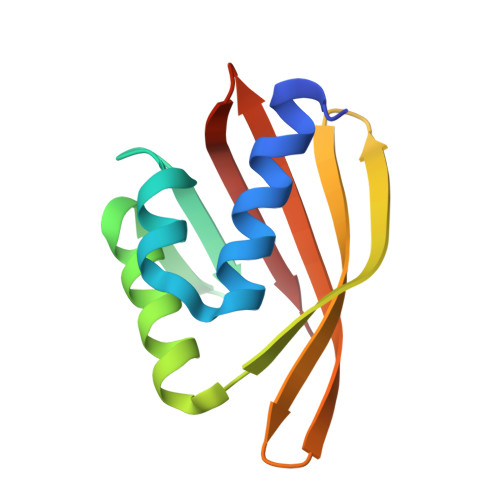
Best pick — clean, white-background ribbon showing alpha-helices + beta-sheets:
Clean ribbon structure from RCSB PDB
This is a textbook-quality rainbow-colored ribbon diagram (N→C: blue to red) showing both alpha-helices (coiled ribbons) and beta-sheets (flat arrows) clearly. Perfect for introducing protein structure to any audience.
  • Source: RCSB PDB — free to use for educational/presentation purposes

🧬 Slide 3-5 — The AlphaFold Approach (3D Structure Representations)

Best pick — three representations side by side (stick, sphere, ribbon):
3 representations of protein structure from RCSB
This shows the same protein in three styles — atomic stick model, space-filling spheres, and ribbon diagram — great for explaining why ribbon diagrams are used and what they represent.

🧬 Slide 6-8 — AlphaFold Mechanism (Evoformer / MSA)
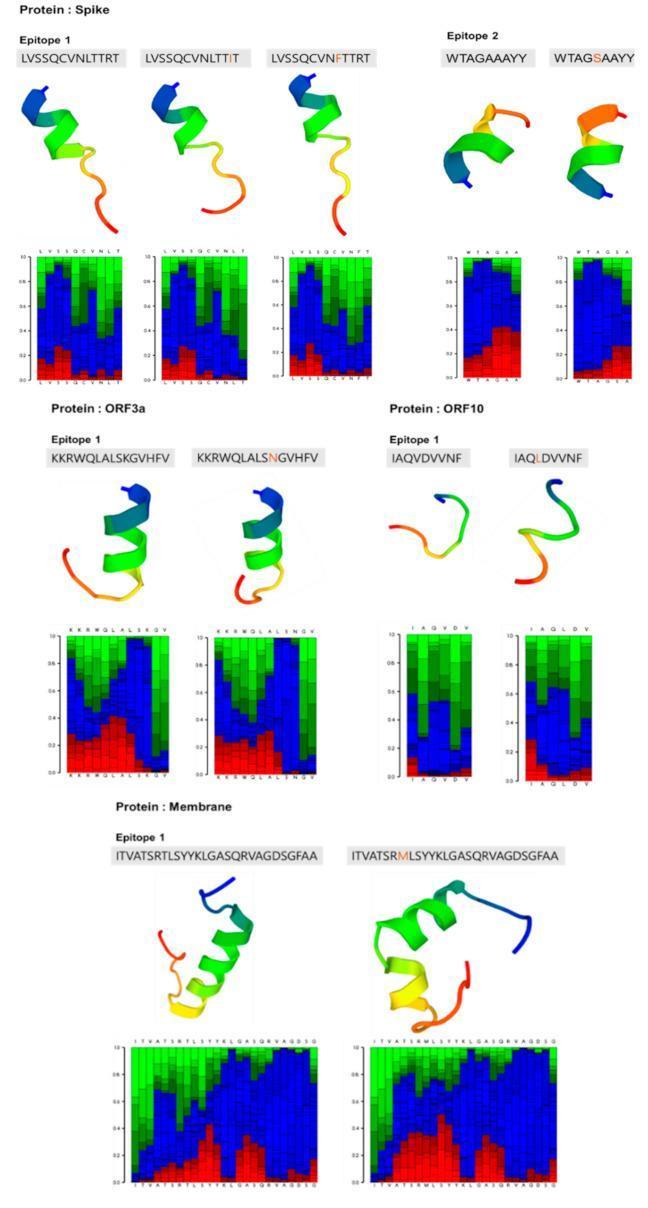
Pick for MSA + pLDDT confidence concept:
SARS-CoV-2 epitope ribbon structures with confidence heatmaps
Shows ribbon structures color-coded N→C (blue to red) alongside local structure confidence profiles — directly mirrors how AlphaFold outputs work. Good visual bridge between "amino acid sequence → structure prediction."

🧬 Slide 11 — AF2 vs AF3 Comparison

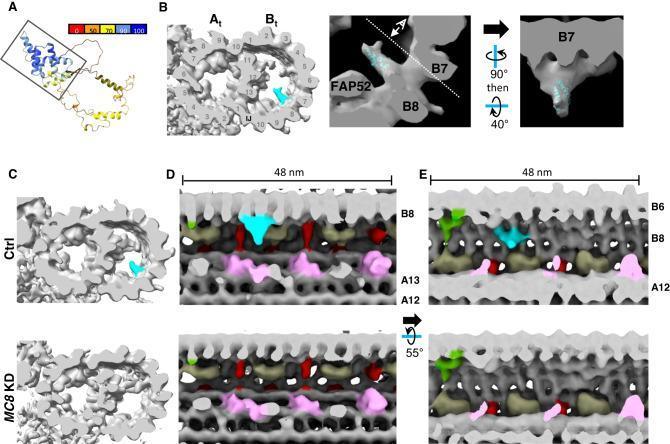
Best pick — AlphaFold ribbon model colored by pLDDT confidence score:
AlphaFold MC8 model colored by pLDDT confidence
Panel A shows an authentic AlphaFold ribbon output with the classic pLDDT color scale (red = very high confidence → blue = low confidence). This is exactly what the AlphaFold Database displays. Use this to show what AF2 outputs look like.

🧬 Slide 1 or 13 — Complex/Tetrameric Protein Assembly (Impact Slide)
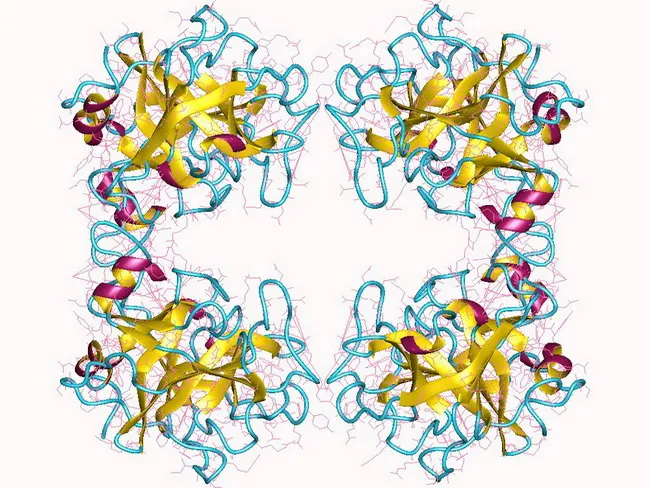
Best pick — tetramer showing biological assembly:
Alpha-tryptase tetramer ribbon diagram
A beautiful symmetric tetramer in yellow/cyan/magenta — illustrates protein complexity and why structure prediction matters for understanding real biological machines. Good for the impact/Nobel Prize slide.

🧬 Slide 8 — BDNF Mutation / Drug Target Slide (Bonus)
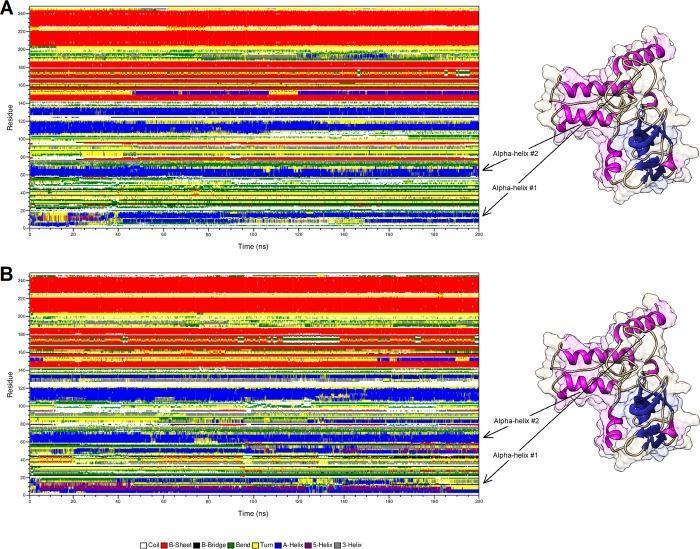
Pick for showing how mutations alter structure (mutation analysis slide):
BDNF wild-type vs V66M variant with 3D ribbon
Pairs a molecular dynamics heatmap with a 3D ribbon highlighting specific alpha-helices — useful for the "disease mutations / drug targets" section (pLDDT + variant analysis).

Summary Table

SlideImageBest For
Slide 1 (Protein basics)5l33_chain-A.jpeg (RCSB)Clean ribbon, alpha-helix + beta-sheet
Slide 3-5 (AF approach)3pgk-representations.jpg (RCSB)3 structure representations
Slide 6-8 (Evoformer/MSA)SARS-CoV-2 epitope ribbonsMSA → structure confidence
Slide 11 (AF2 vs AF3)MC8 AlphaFold pLDDT ribbonAuthentic AF output colors
Slide 13 (Impact/Nobel)Tryptase tetramerComplex assembly, drug discovery
Slide 8 (Mutations/drugs)BDNF variant ribbonMutation → structure change

Licensing note: RCSB PDB images are free for educational and presentation use. The PMC images are from open-access publications — always good practice to credit the source paper if shown publicly.
Would you like me to insert any of these images directly into the PPTX file, or search for more specific visuals (e.g., diffusion model denoising, protein-ligand docking)?

Search for AlphaFold diffusion model visualizations

Searching Images

AlphaFold3 diffusion model denoising protein structure generation steps

Searching Images

diffusion model noisy to clean protein 3D structure visualization iterative refinement

Searching the Web

AlphaFold 3 diffusion model visualization denoising steps protein structure image

Loading Image
Loading Image
Loading Image
Loading Image
Excellent results. Here's the full curated set of AlphaFold diffusion model visualizations, mapped to your Slide 12 (Diffusion Model) and surrounding slides:

🔬 Slide 12 — Diffusion Module (AF3 Architecture Overview)
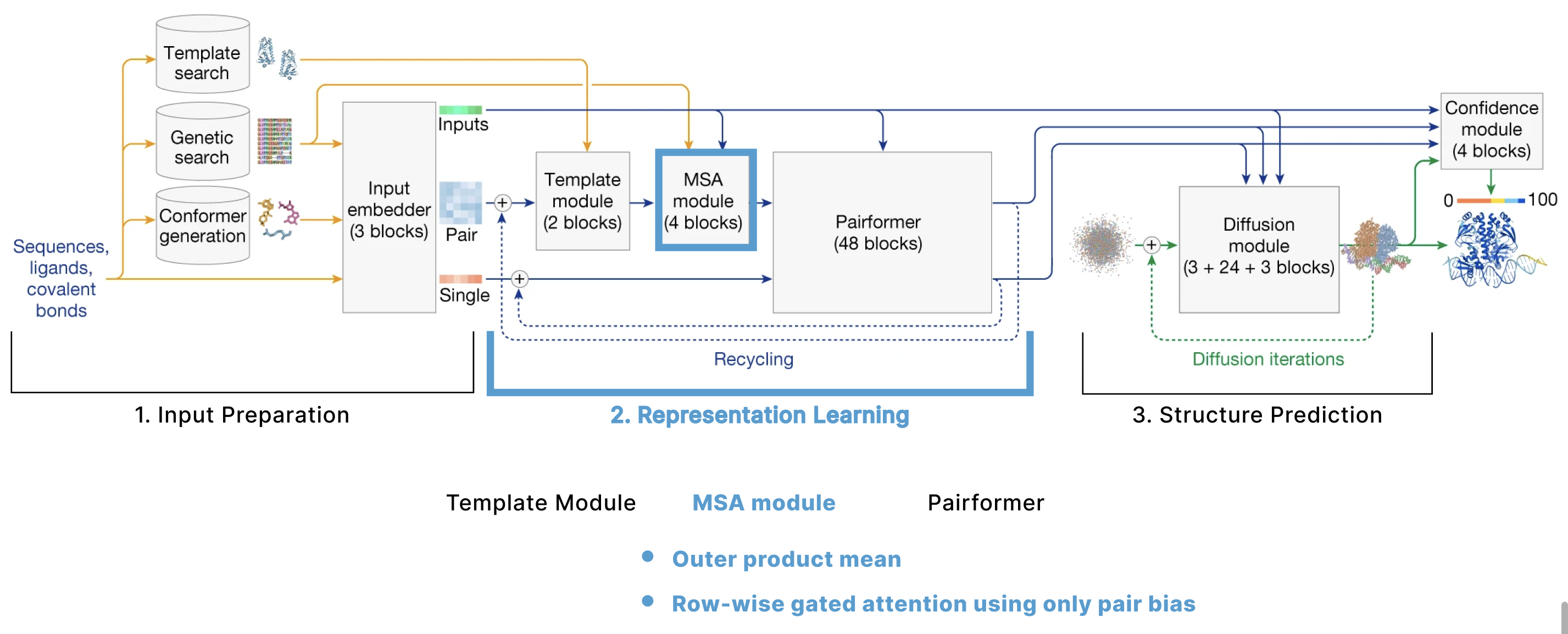
Best pick — The Illustrated AlphaFold full pipeline diagram:
AF3 full architecture: Input → Representation Learning → Diffusion Module → Structure
This is a gold-standard visualization from The Illustrated AlphaFold by Elana Simon. It shows the complete AF3 pipeline in 3 stages:
  1. Input Preparation (sequences, ligands, genetic search)
  2. Representation Learning (Template Module → MSA Module → Pairformer, 48 blocks)
  3. Structure Prediction — the Diffusion Module takes a cloud of atoms (shown as gray dots) and iteratively refines them into a final structure, outputting pLDDT confidence scores (0–100 color bar)
The "cloud of atoms → final structure" is exactly the denoising metaphor from your slide script. 🎯

🔬 Slide 12 — Forward & Reverse Diffusion Process (Concept Explainer)
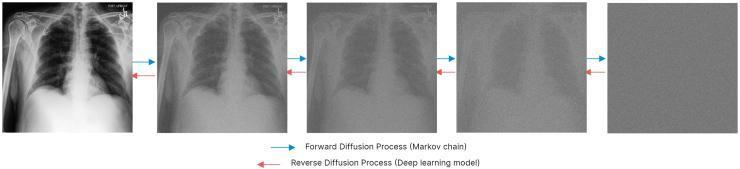
Best pick — DDPM forward/reverse diffusion illustrated with medical imaging:
Forward and reverse diffusion process Markov chain
This is the clearest conceptual diagram you'll find for explaining diffusion to a non-ML audience. It shows:
  • Blue arrows (→): Forward diffusion — adding noise step by step until pure noise
  • Red arrows (←): Reverse diffusion — the deep learning model denoising back to structure
Perfect caption for your slide: "AF3 learns the reverse process: starting from a cloud of random atom coordinates, it iteratively denoises to predict the true molecular structure."

🔬 Slide 12 — AF3 Diffusion Trajectory (Advanced Audience)

Best pick — BLOPIG research visualization of actual AF3 denoising steps:
AF3 diffusion trajectory showing noise level, constraint energy, violations, drift
From the Oxford Protein Informatics Group (BLOPIG) analysis of real AF3 runs. Shows 4 quantities tracked across ~200 diffusion steps:
  • (a) Constraint energy collapses after step ~160
  • (b) Number of geometric violations drops sharply at the same point
  • (c) Noise level t (exponential decay — the key transition happens at t ≈ 1.074)
  • (d) Drift norm suddenly converges
Use for CS/AI or pharma audiences — it demonstrates the "coarse → fine" two-phase structure of AF3's denoising.

🔬 Bonus — Iterative Refinement Concept (Noise → Structure)
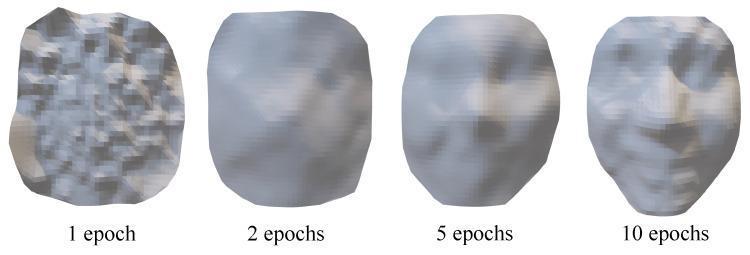
3D shape refinement across training epochs:
3D face model iterative refinement 1 epoch to 10 epochs noise to structure
Shows how an object emerges from noise across epochs (1 → 2 → 5 → 10). While this shows a 3D face (not a protein), it's an intuitive analogy slide insert to explain diffusion to non-technical audiences before showing the protein-specific version.

Summary for Slide 12

PurposeImageAudience
AF3 full pipeline + diffusion module locationIllustrated AlphaFold diagramAll audiences
Forward/reverse diffusion conceptDDPM forward/reverse arrowsGeneral / medical
Real AF3 trajectory (200 steps, noise→structure)BLOPIG trajectory plotsCS/AI / pharma
Intuitive denoising analogy3D shape emergence across epochsGeneral / non-scientist

Source credits:
Would you like me to embed any of these into the PPTX file on Slide 12, or search for more visuals for a specific slide (e.g., competing tools, protein-ligand docking)?
This is a shared conversation. Sign in to Orris to start your own chat.