hi
can you simplify given text for me?
NRTTIs are potent nucleoside analogs that are converted to their pharmacologically active triphosphate (TP) form via endogenous intracellular kinases. As shown in Fig 1, in contrast to all approved NRTIs, NRTTIs maintain a 3′-OH and are not obligate chain terminators. They inhibit reverse transcription by multiple distinct mechanisms. Firstly, the 4′ substituent blocks translocation of reverse transcriptase (RT) along the primer:template, preventing additional deoxynucleotide triphosphate (dNTP) binding and incorporation and resulting in immediate chain termination (ICT). Secondly, in the event that translocation does occur, the 3′-OH allows for the addition of one extra nucleotide before structural changes or distortion in the viral DNA occur, preventing further incorporation; this results in delayed chain termination (DCT) [23,24,30,31]. The mechanism resulting in DCT protects NRTTI-terminated primers from excision, thereby reducing the number of potential mechanisms of resistance to NRTTIs compared with approved NRTIs
-
Immediate stop (ICT): A chemical tag on the drug physically blocks the virus's copying machine (reverse transcriptase) from moving forward, halting the process right away.
-
Delayed stop (DCT): If the copying machine somehow moves past that block, the drug still allows one more building block to be added — but then the viral DNA becomes distorted and copying stops shortly after.
how hiv viral RT creates DNA from RNA?
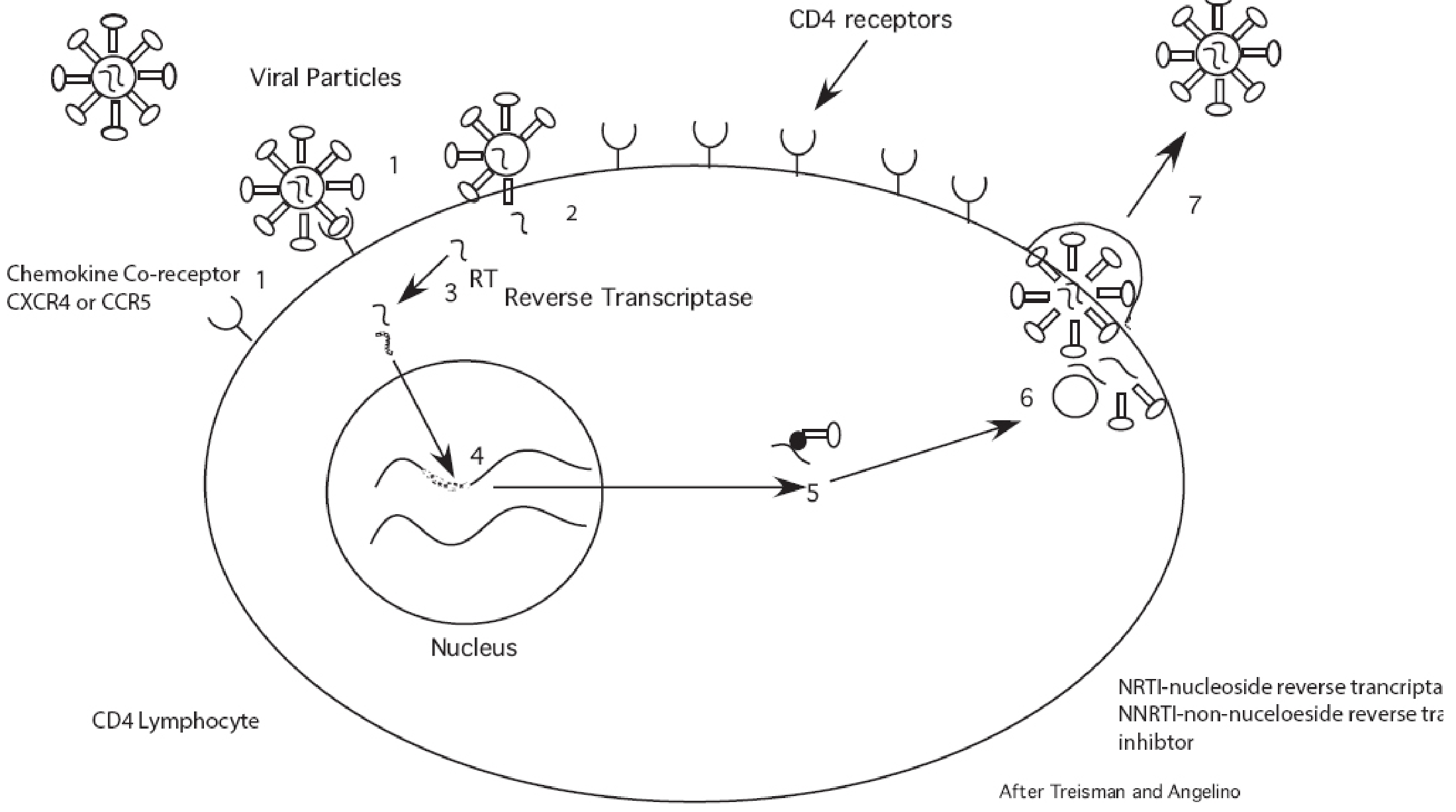
HIV Reverse Transcription: RNA → DNA
Step-by-Step Process
| Activity | What happens |
|---|---|
| RNA-dependent DNA polymerase | RT uses the viral RNA as a template to synthesize a complementary DNA strand → forming an RNA:DNA hybrid |
| RNase H activity | RT degrades the original RNA strand from the hybrid |
| DNA-dependent DNA polymerase | RT uses the remaining DNA strand as a template to synthesize the second DNA strand → producing double-stranded DNA (dsDNA) |
Why RT is a Key Drug Target