
Carpopedal spasm
carpopedal spasm obstetrician hand tetany hypocalcemia
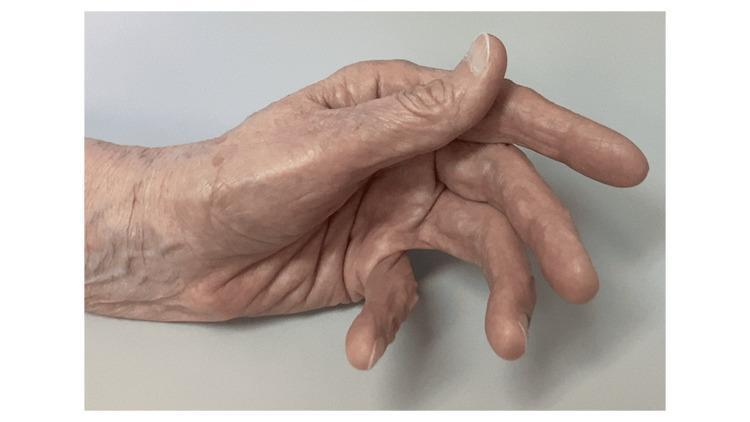
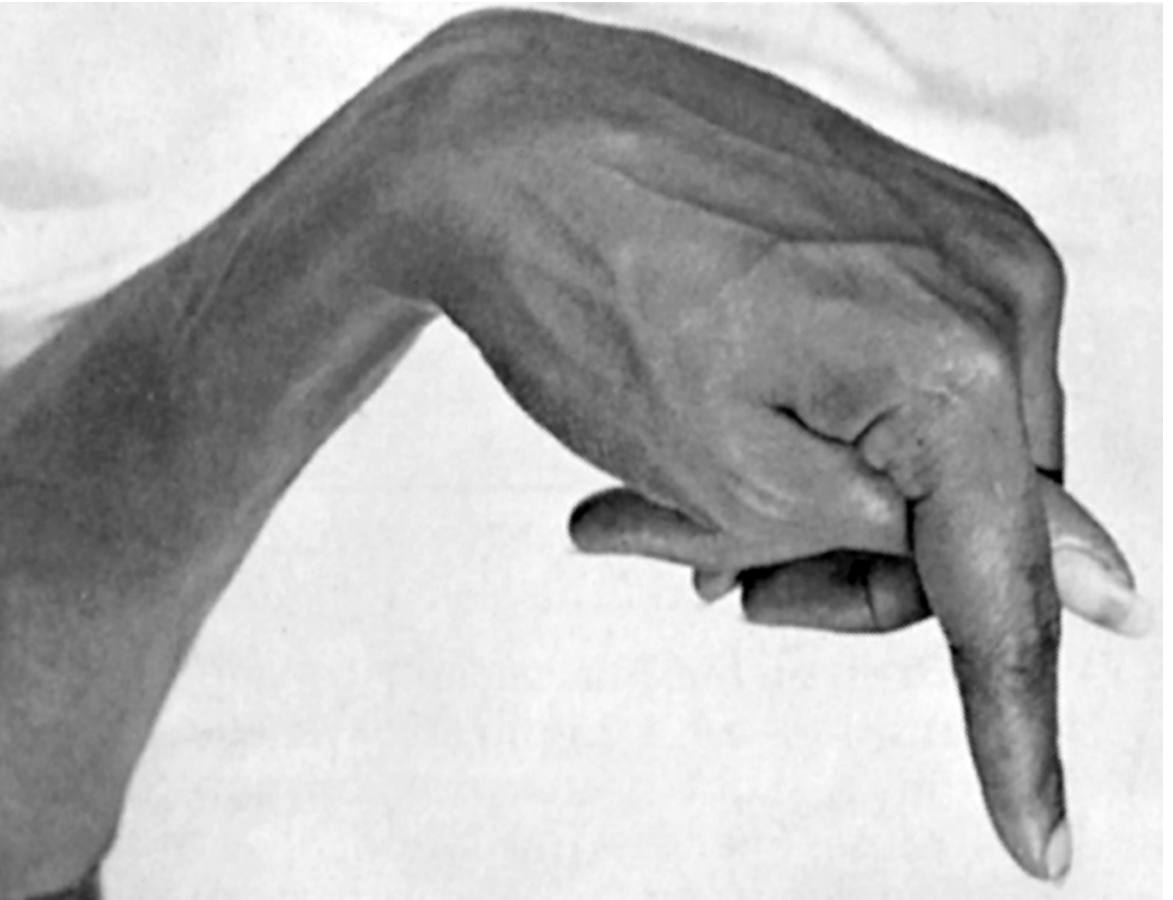
This clinical photograph displays a positive Trousseau sign of latent tetany in a human hand, typically associated with hypocalcemia. The image demonstrates a characteristic carpopedal spasm induced by ischemia (such as after blood pressure cuff inflation). Key visual features include the 'main d'accoucheur' (obstetrician's hand) posture, characterized by flexion at the wrist, flexion at the metacarpophalangeal (MCP) joints, extension of the interphalangeal (IP) joints, and marked adduction of the thumb and fingers toward the palm. The skin on the dorsal surface of the hand shows visible aging, with prominent wrinkling and slight thinning of the dermis. This sign is a critical diagnostic physical exam finding in endocrinology and internal medicine, indicating neuromuscular irritability. The clinical context suggests an electrolyte imbalance, likely secondary to medications like denosumab or dasatinib as mentioned in associated records.
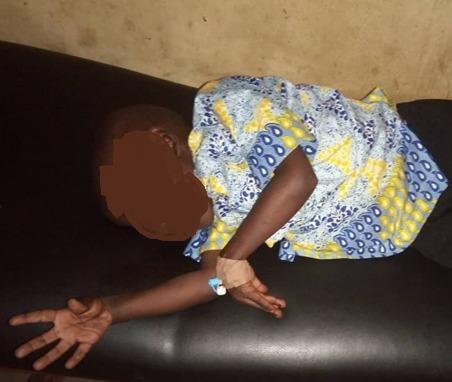
This clinical photograph displays a pediatric patient demonstrating classic carpopedal spasm, a clinical sign of hypocalcemia (Trousseau sign of latent tetany) often secondary to dyselectrolytemia. The child is shown in a recumbent position on an examination surface. The left hand and forearm are prominently featured, revealing a characteristic posture: flexion at the wrist and metacarpophalangeal (MCP) joints, with extension of the interphalangeal (IP) joints and adduction of the thumb ('obstetrician's hand' appearance). An intravenous (IV) catheter is visible on the left forearm, secured with medical tape and a hub, indicating ongoing medical intervention for fluid or electrolyte resuscitation. This visual serves as a primary diagnostic indicator for neuromuscular irritability and tetany, frequently associated with metabolic disturbances such as hypocalcemia, hypomagnesemia, or metabolic alkalosis.
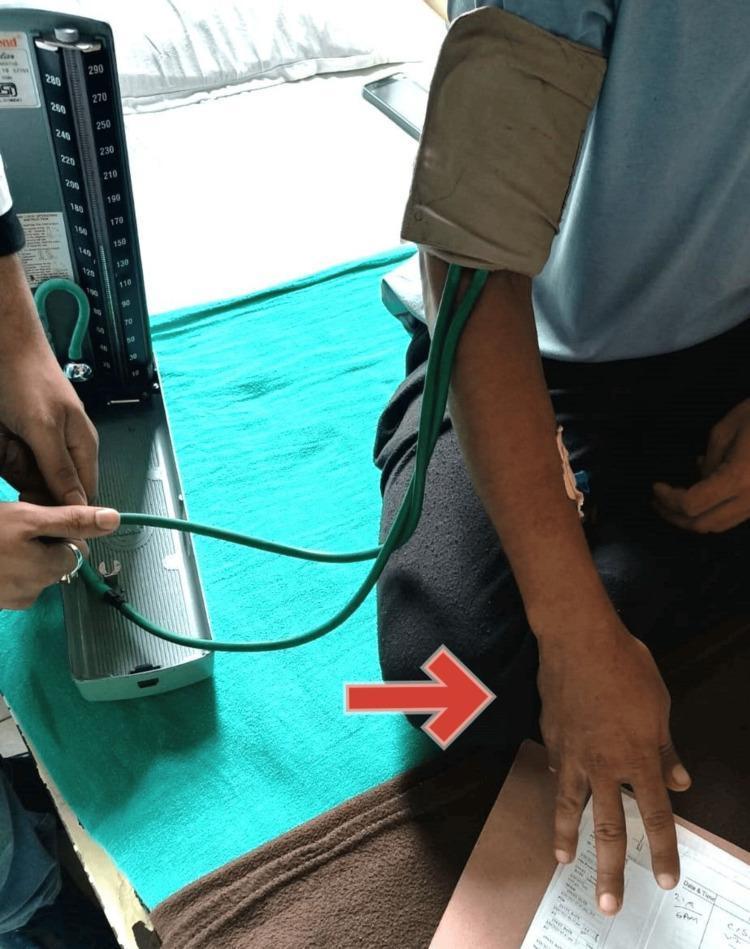
This clinical photograph demonstrates Trousseau’s sign of latent tetany in a patient. The image shows the patient's right arm with a blood pressure cuff inflated on the upper arm. The resulting carpopedal spasm is clearly visible, characterized by flexion of the wrist, flexion of the metacarpophalangeal joints, adduction of the thumb, and hyperextension of the interphalangeal joints, often referred to as 'main d'accoucheur' or obstetrician's hand. To the left, a healthcare worker is shown operating a vertical mercury-style sphygmomanometer (mercury-free design) with green tubing connected to the cuff. The medical context indicates this sign was elicited during a routine physical examination and is highly suggestive of hypocalcemia, often associated with conditions such as hypoparathyroidism. The photograph serves as a classic educational example of neuromuscular irritability triggered by transient ischemia from the inflated cuff.
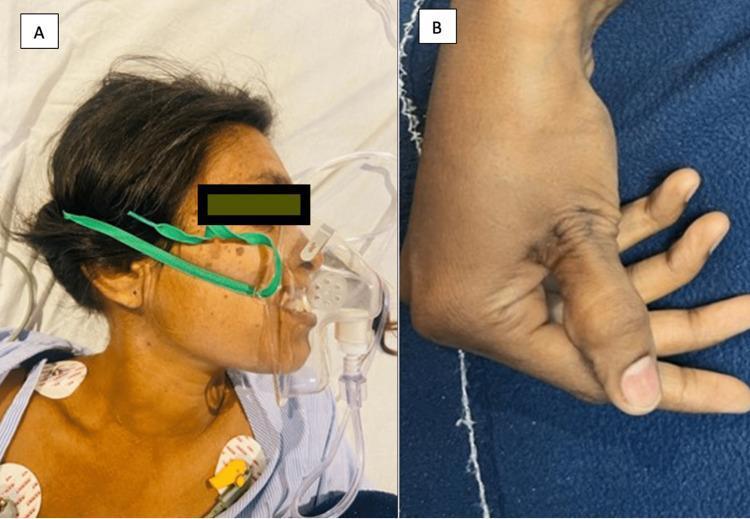
This composite clinical photograph illustrates acute neuromuscular manifestations of tetany. Image A shows a female patient in a supine position under intensive monitoring, featuring a high-flow oxygen mask (simple face mask) secured with a green strap. Visible clinical support includes multiple electrocardiogram (ECG) chest leads for cardiac monitoring, indicative of an acute medical emergency such as severe laryngospasm. Image B provides a close-up of a carpopedal spasm, a hallmark sign of hypocalcemia-induced tetany. The hand displays characteristic adduction of the thumb, flexion at the wrist and metacarpophalangeal joints, and extension at the interphalangeal joints (often referred to as 'main d'accoucheur' or obstetrician's hand). This visual documentation is critical for medical education in recognizing the physical signs of acute electrolyte imbalances, such as hypocalcemia or respiratory alkalosis, and the secondary complications like laryngospasm requiring immediate airway management and intensive care.
carpopedal spasm tetany hypocalcemia
Carpopedal Spasm
Definition
- Wrist flexion
- Metacarpophalangeal (MCP) joint flexion
- Interphalangeal (IP) joint extension
- Thumb adduction into the palm
Pathophysiology
- Calcium ions stabilize neuronal membranes by reducing sodium permeability
- When extracellular calcium falls, neuronal membrane permeability to Na+ increases, lowering the threshold for action potential generation
- Peripheral nerve fibers begin to discharge spontaneously, sending repetitive trains of impulses to skeletal muscle
- This produces the sustained, involuntary contraction seen as tetany/carpopedal spasm
Causes
1. Hypocalcemia (most common)
| Cause | Mechanism |
|---|---|
| Hypoparathyroidism (post-thyroid/parathyroid surgery) | Low PTH → low serum Ca²⁺, high phosphate |
| Pseudohypoparathyroidism | PTH resistance → same biochemistry, but PTH is markedly elevated |
| Vitamin D deficiency / osteomalacia | Poor GI calcium absorption |
| Chronic renal failure | Low 1,25-(OH)₂D₃, hyperphosphatemia chelates calcium |
| Tumor lysis syndrome | Hyperphosphatemia chelates calcium acutely |
| Hypomagnesemia | Impairs PTH secretion and action → secondary hypocalcemia |
| Pancreatitis | Saponification of calcium in peripancreatic fat |
2. Respiratory Alkalosis
3. Metabolic Alkalosis
4. Hypomagnesemia (direct)
Clinical Features of Tetany (Spectrum)
| Severity | Features |
|---|---|
| Mild | Paresthesias of fingers, toes, circumoral region |
| Moderate | Carpopedal spasm, muscle cramps, Chvostek sign, Trousseau sign |
| Severe | Laryngospasm, bronchospasm, seizures (focal/generalized) |
| Cardiac | QT prolongation, reduced contractility, arrhythmias |
Key Clinical Signs
Trousseau Sign
Chvostek Sign
Treatment
Acute (Symptomatic) - Medical Emergency
- IV Calcium chloride (CaCl₂): 3-5 mL of 10% solution (10 mL contains 272 mg elemental Ca²⁺)
- IV Calcium gluconate: 10-20 mL of 10% solution (10 mL contains 93 mg elemental Ca²⁺, gentler on veins)
- Do not mix IV calcium with bicarbonate or phosphate-containing solutions (precipitation risk)
- Repeat boluses or continuous infusion at 1-2 mg/kg/h if needed
- Monitor serial ionized calcium levels
Chronic
- Oral calcium carbonate (CaCO₃) + Vitamin D supplementation
Special Considerations
- Check and correct hypomagnesemia - refractory hypocalcemia will not respond to calcium alone until magnesium is repleted
- Avoid alkalosis (e.g., intraoperatively) - worsens ionized hypocalcemia
- For respiratory alkalosis-induced tetany: reassurance, rebreathing, anxiolysis, treat underlying cause
Key Differentials
- Heat cramps - distinguished from hyperventilation tetany by the absence of carpopedal spasm and paresthesias in heat cramps
- Hysterical tetany - no biochemical abnormality
- Focal seizure - no typical hand posture, EEG abnormal