

IMG-20260606-WA0167.jpg
Kia Masla Hai Urinary Tract Infection Hai
Reading File
Yeh lab report dekh li hai. Abhi medical library se UTI ke baare mein information leta hoon aur aapko detail mein samjhata hoon.
Finding Sources
Finding Sources
Finding Sources
Finding Sources
Reading File
Finding Sources
Reading File
Reading File
Ab mujhe aapki report ki poori analysis aur detail samajh aa gayi hai. Yeh lo complete explanation Urdu mein:
Shehla Bibi ki Lab Report - Mukammal Jaiza
Makhsoos Results Jo Dikhe
| Test | Result | Kya Matlab |
|---|---|---|
| Pus Cells | 2-4 /HPF | Thodi takleef ki nishani |
| Epithelial Cells | 8-10 /HPF | Zyada hain - neeche wajah |
| RBC (Khoon ke zarre) | 6-8 /HPF | Thodi quantity mein khoon |
| Blood (Chemical) | Trace | Ek haasi si miqdar |
| pH | 5.0 | Tezaabi (normal range 4.5-8.0) |
| Sp. Gravity | 1.020 | Theek hai |
| Bacteria | Nil | Koi bacteria nahi dikhay |
| Yeast Cells | Nil | Koi fungus nahi |
Kya Ye UTI Hai?
Mukhtasar jawab: Pure clear UTI nahi hai, lekin kuch nishaniyan zaroor hain.
Yeh reasons hain:
1. Bacteria Nil Hai
Agar seedha UTI hoti to microscopy mein bacteria nazar aate. Yahan bacteria bilkul nahi hain - yeh ek important baat hai.
2. Pus Cells Sirf 2-4 Hain
Normal mein 0-5 pus cells tak acceptable hote hain. 2-4 borderline hain - zyada nahi, lekin kuch inflammation zaroor hai.
3. Epithelial Cells Zyada Hain (8-10)
Yeh 8-10 epithelial cells zyada hain. Aksar yeh sample lene ki galat technique ki wajah se hota hai - matlab urine lene waqt contamination ho gayi. Zyada epithelial cells matlab sample itna saaf nahi tha jitna hona chahiye.
4. RBC 6-8 Hai
Choti miqdar mein khoon hai. Yeh UTI ke ilawa in cheezoon mein bhi ho sakta hai:
- Kidney stones (pathri)
- Interstitial cystitis (bladder ki sujan)
- Contamination (masik khoon ki wajah se agar mahwari ke qareeb sample liya ho)
Possible Wajoohat
Sabse zyada likely:
- Sample contamination - Zyada epithelial cells + bacteria nil = urine theek se collect nahi hua
- Mild bladder inflammation - Bina bacteria ke bhi sujan ho sakti hai
- Early/mild UTI - Jisme bacteria abhi FU mein nazar nahi aye
Kya karna chahiye:
- Clean-catch midstream urine dobara lein - is baar aaram se, front se back ki taraf saaf kar ke, beech ki stream pakdein
- Urine C&S (Culture & Sensitivity) test karwaein - isse pata chalega koi bacteria hai ya nahi aur agar hai to kaunsi dawai karegi
- Dr. Uzma Tahir se milen (jo pehle se consultant hain) - woh clinical symptoms ke saath lab report mil ke theek diagnosis karein gi
Aam Alamaat Jo Ho Sakte Hain
Agar aapko yeh cheezein hain to zaroor doctor ko batao:
- Peshab karte waqt jalan
- Baar baar peshab aana
- Peshab mein khoon
- Neeche pet mein dard
- Bukhaar
Khatarnak Baat Nahi Hai - Lekin...
Is report se ghabrana nahi chahiye. Yeh koi alarming report nahi. Lekin khud dawai bilkul na lein - khaskar antibiotics - jab tak doctor ki salah nahi ho. Agar doctor ne pehle hi antibiotics likh di hain to woh poori karein.
Yaad rakhein: Lab report akele diagnosis nahi deti. Dr. Uzma Tahir aapki symptoms aur is report ko mila kar sahi batayein gi. - Schwartz's Surgery & Comprehensive Clinical Nephrology textbooks ke mutabiq
Koi aur sawaal hai to poochh saktay hain! 🙂
What Is the Indications of Epithelial Increase In Urine
Urine mein epithelial cells badhne ki kai wajoohat hain - contamination sabse aam hai, lekin kabhi kabhi kidney ya bladder ki real problem bhi ho sakti hai. Types ke mutabiq diagnosis badalti hai.
Searching sources...
Finding Sources
Finding Sources
Reading File
Finding Sources
Reading File
Finding Sources
Reading File
Loading Image
Ab poori tarah se samajh aa gaya. Yeh lo complete aur detailed jawab:
Urine Mein Epithelial Cells Badhne Ki Wajoohat
Pehle yeh samajhna zaroori hai ke urine mein teen qism ke epithelial cells hote hain - aur har qism ki apni alag wajah aur alag clinical significance hai.
Microscopic Image - Urine Ke Cells
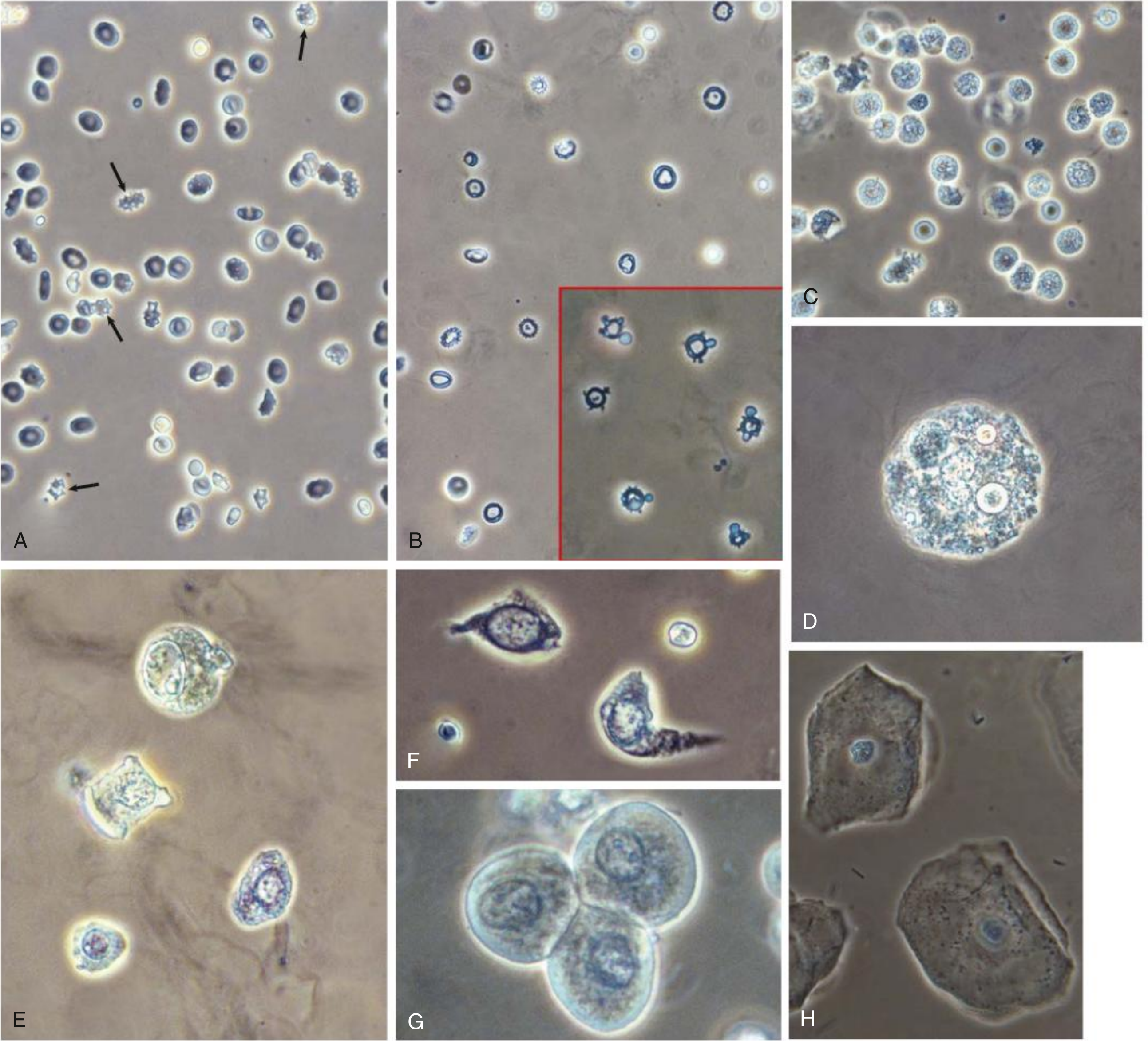
Fig. 4.1 - Urine Sediment ke makhtalif cells. (E) Renal Tubular Epithelial Cells, (F) Deep layer Uroepithelial cells, (G) Superficial layer Uroepithelial cells, (H) Squamous Epithelial Cells - Comprehensive Clinical Nephrology, 7th Ed.
3 Qisam ke Epithelial Cells aur Unki Wajoohat
1. Squamous Epithelial Cells (SECs) - Sab se Aam
Normal size: ~50 µm - Sab se bari cells (Image mein H)
Kahan se aati hain: Urethra ya bahari genitals (bahri hissay) se
| Kab zyada hoti hain | Wajah |
|---|---|
| Sample lene ki galat technique | Sabse aam wajah - urine collect karte waqt contamination |
| Vaginal secretions ka mix hona | Khawateen mein zyada hoti hai |
| Irregular cleaning | Front-to-back saaf na karna |
Ahem baat: Zyada squamous cells ka matlab almost hamesha contamination hota hai - koi serious bimari nahi. Shehla Bibi ki report mein 8-10 epithelial cells issi category ki hain. - Comprehensive Clinical Nephrology, 7th Ed.
2. Transitional (Uroepithelial) Cells
Normal size: ~18-25 µm (Image mein F aur G)
Kahan se aati hain: Bladder, ureter, renal pelvis ki inner lining se
| Kab zyada hoti hain | Wajah |
|---|---|
| Cystitis (Bladder infection) | Superficial layer ki mild damage |
| Kidney stones (Pathri) | Uroepithelium ko damage karte hain |
| Bladder catheter | Long-term catheter se tissue damage |
| Ureteral stent | Stent se irritation |
| Bladder cancer (Rare) | Deep layer cells zyada hon to serious sign |
| Urinary tract obstruction | Ruk ruka peshab |
Warning sign: Agar deep layer transitional cells ≥1 per HPF hon, to yeh serious uroepithelial damage ki nishani hai jaise neoplasia (tumor), stones, ya obstruction. - Comprehensive Clinical Nephrology, 7th Ed.
3. Renal Tubular Epithelial Cells (RTECs)
Normal size: ~9-25 µm, average 14 µm (Image mein E)
Kahan se aati hain: Kidney ke tubules ki lining se
Yeh cells normal urine mein bilkul nahi honi chahiye. Agar hain to kidney ko serious masla hai:
| Bimari | Kya hota hai |
|---|---|
| ATN - Acute Tubular Necrosis | Kidney tubules ko nuksaan - zyada RTECs + "muddy brown" granular casts |
| AIN - Acute Interstitial Nephritis | Kidney tissue ki sujan - allergy ya drugs ki wajah se |
| Kidney Transplant Rejection | Naye kidney ka reject hona |
| Viral Infection | CMV (cytomegalovirus) infection |
| Heavy Metal Poisoning | Lead, mercury zeher |
| Drug Toxicity | Kuch khaas dawaiyan |
Shehla Bibi Ki Report Ke Liye
Unki report mein 8-10 epithelial cells hain aur bacteria NIL hai. Yeh almost certainly squamous epithelial cell contamination hai - matlab sample lene ki technique mein masla tha, koi serious bimari nahi.
Yeh confirm karta hai:
- Bacteria nahi hain - seedhi UTI nahi
- RTECs nahi hain - kidney theek hai
- Sirf squamous cells hain - vaginal contamination
Summary Table
| Cell Ka Qisam | Normal Miqdar | Zyada Hone Ki Wajah | Urgency |
|---|---|---|---|
| Squamous | Thodi acceptable | Contamination, galat sample | Koi fikar nahi |
| Transitional (Superficial) | Kuch acceptable | Cystitis, mild irritation | Halki chek |
| Transitional (Deep) | NIL honi chahiye | Stones, tumor, obstruction | Doctor zaroor milein |
| Renal Tubular (RTECs) | NIL honi chahiye | Kidney injury, drug toxicity | Urgent doctor |
Takeaway: Aapki (Shehla Bibi ki) report mein jo epithelial cells hain woh contamination ki wajah se hain - kidneys theek hain. Lekin RBC (6-8) aur trace blood ki wajah se doctor se milna abhi bhi zaroori hai. - Comprehensive Clinical Nephrology 7th Edition, p. 66-67
This is a shared conversation. Sign in to Orris to start your own chat.