
Explain Type C RVH on ECG
I'll start with a quick answer, then consult the medical library for authoritative detail.
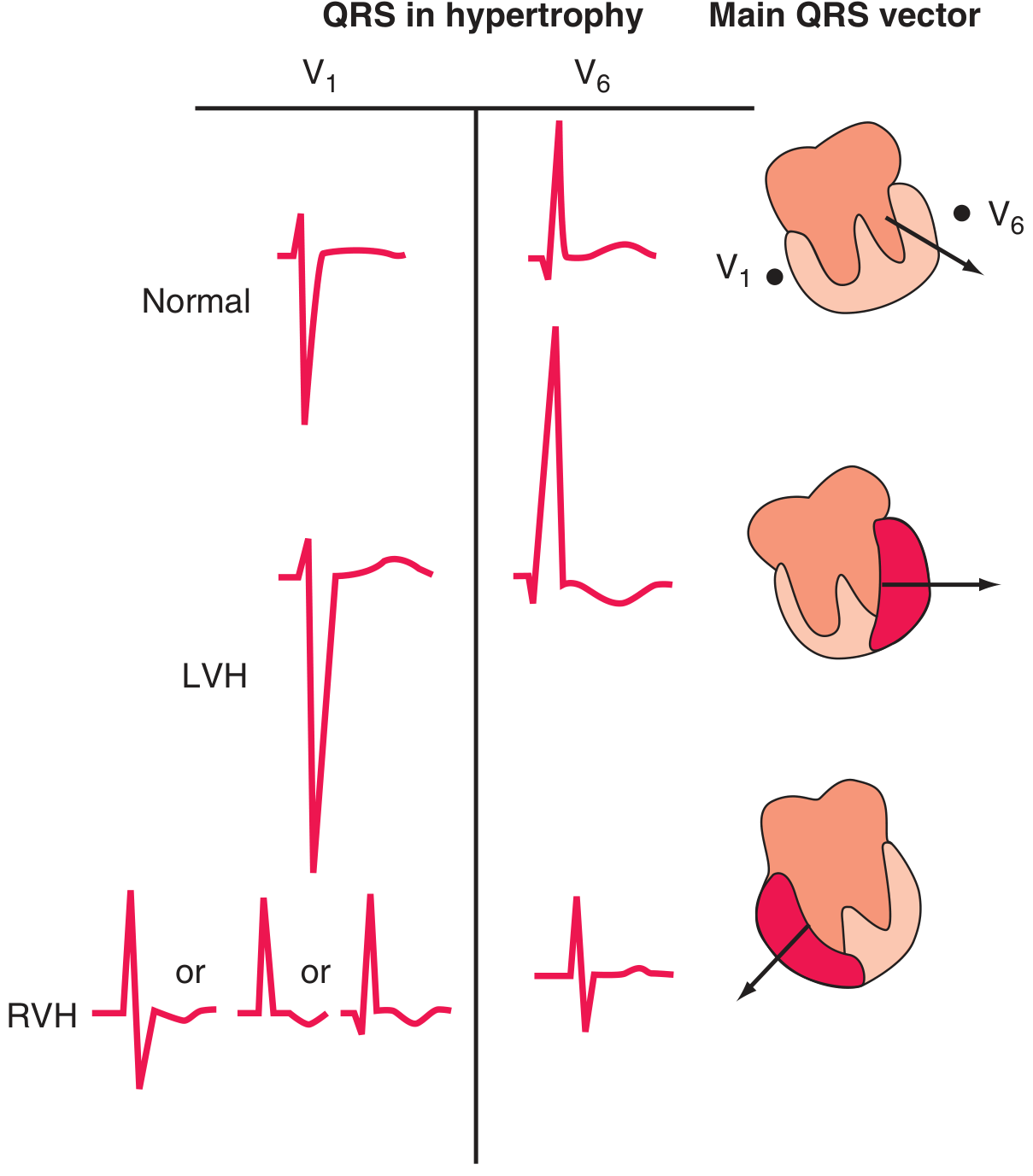
Right ventricular hypertrophy (RVH) on ECG is classified into three patterns (A, B, C) based on the QRS morphology in V1. Type C RVH shows a deep S wave pattern (rS pattern) in right precordial leads, associated with right ventricular pressure or volume overload in the setting of a dilated, failing RV - often seen in COPD/emphysema and chronic cor pulmonale.
Searching sources...
Reading File
Now let me search the medical library and PubMed in parallel.
Finding Sources
Finding Sources
Searching PubMed
"right ventricular hypertrophy" AND "electrocardiogram" AND "pattern"
Finding Sources
Finding Sources
Searching the Web
Type C RVH ECG pattern criteria COPD emphysema
Reading File
Reading Web Page
https://litfl.com/right-ventricular-hypertrophy-rvh-ecg-libr…
Reading File
Searching the Web
Type A Type B Type C RVH ECG classification Chou's electrocardiography
Let me fetch the Harrison's RVH image and search for more specific Type A/B/C classification.
Loading Image
Finding Sources
Searching the Web
"type C" RVH ECG "rS pattern" "deep S" right precordial COPD cor pulmonale classification
Reading Web Page
https://drsvenkatesan.com/tag/copd-ecg
I now have comprehensive information to write a detailed, well-structured answer. Here is the full explanation:
Type C RVH on ECG
The Three-Pattern Classification of RVH
RVH on ECG is traditionally classified into three types (A, B, and C) based on QRS morphology, primarily in lead V1. Understanding each helps decode the underlying pathophysiology:
| Type | V1 morphology | Mechanism | Classic cause |
|---|---|---|---|
| Type A | Tall dominant R wave (R > S, or monophasic R) | Severe pressure overload dominating the LV vector | Severe pulmonary arterial hypertension, critical pulmonary stenosis |
| Type B | rSr' / RSr' pattern (incomplete RBBB-like) | Volume overload with mild pressure | ASD (ostium secundum), moderate mitral stenosis |
| Type C | Persistent rS or S1S2S3 - no tall R in V1 | RV dilatation masking RVH; insulation + heart displacement | COPD/emphysema, acute cor pulmonale (PE) |
Type C RVH - In Detail
Core Concept
Type C RVH is the "paradoxical" pattern: the RV is genuinely hypertrophied and/or dilated, but the classic hallmarks of RVH (tall R in V1, R/S > 1 in V1) are absent. RVH is diagnosed by proxy rather than by direct voltage criteria.
Pathophysiology - Why the Tall R Wave Is Missing
Two key mechanisms account for this in COPD/emphysema:
-
Diaphragmatic descent and vertical heart position - Hyperinflated lungs push the diaphragm and heart downward, rotating the QRS vector inferiorly. This makes the heart more vertical, moving electrical forces away from V1.
-
Pulmonary insulation effect - Hyperaerated lung tissue between the heart and precordial electrodes attenuates QRS voltages, especially in right-to-mid precordial leads. Even a hypertrophied RV cannot generate a tall R in V1 through a thick cushion of low-density emphysematous lung.
-
RV dilatation > RV hypertrophy - In COPD-related cor pulmonale, the quantum of hypertrophy is relatively modest compared to primary PAH or critical mitral stenosis. The RV dilates more than it hypertrophies, and dilation shifts forces posteriorly (away from V1) rather than anteriorly.
As Harrison's notes: "Chronic cor pulmonale due to obstructive lung disease usually does not produce the classic ECG patterns of right ventricular hypertrophy. Instead of tall right precordial R waves, emphysema is more typically associated with diminished r waves in right to mid-precordial leads (slow R-wave progression) due in part to downward displacement of the diaphragm and the heart. Low-voltage complexes are commonly present, owing to hyperaeration." - Harrison's Principles of Internal Medicine 22E
ECG Features of Type C RVH
Direct QRS findings (the "negative" pattern):
- Persistent rS or QS complexes in V1-V3 (poor R-wave progression / "SV1-SV2-SV3" pattern)
- Low-voltage QRS complexes in precordial and/or limb leads
- Right axis deviation (QRS axis > +90°, often + 90° to +110°)
- S1-S2-S3 pattern: dominant S wave in leads I, II, and III simultaneously
- Short QRS duration (sometimes < 75 ms due to LV disuse atrophy)
- Clockwise rotation of the heart with delayed R/S transition zone (transition zone pushed to V5-V6 or absent)
Indirect "proxy" criteria (how you actually diagnose it):
- Right atrial enlargement (P pulmonale): peaked P waves ≥ 2.5 mm in II, III, or aVF - this is your strongest clue. For all practical purposes, P pulmonale = RVH (except isolated tricuspid stenosis).
- P-wave axis verticalization: P-wave axis > +60° to +75°, with inverted/flat P in lead I (the "Lead I sign")
- Rightward P-wave and QRS axis together pointing to cor pulmonale
Classic Causes of Type C RVH
-
COPD / Emphysema with cor pulmonale - the prototype. Chronic hypoxic pulmonary vasoconstriction causes slowly progressive RV pressure and volume overload with dilatation. The emphysematous lung insulates and displaces the heart.
-
Acute cor pulmonale (massive pulmonary embolism) - acutely, the RV cannot generate tall R waves in the timescale of hours. The S1Q3T3 pattern may co-exist. Type C in this context reflects acute RV dilatation under sudden pressure load.
-
Interstitial lung disease with pulmonary hypertension - similar mechanism to COPD.
Clinical Importance - Why Type C RVH Matters
1. You can miss it if you look only for tall R in V1. Many clinicians only screen for the Type A pattern and miss Type C entirely. In a COPD patient, the absence of tall R waves does NOT exclude significant RVH/cor pulmonale.
2. It helps differentiate chronic vs. acute RV disease. A classic clinical scenario: a patient presents with acute dyspnea and RV dilatation on echo, with a filling defect in the pulmonary artery.
- Type A RVH on ECG (tall monophasic R in V1) = the RV has had time to hypertrophy = chronic PAH (e.g., in-situ thrombus from PAH, not acute PE)
- Type C RVH on ECG (poor R progression, no tall R) = acute or subacute process, favoring acute massive PE where the RV hasn't had time to develop hypertrophy
This distinction can guide management between thrombolysis vs. anticoagulation-only approaches.
3. Confounds anterior MI interpretation. The persistent QS or rS pattern in V1-V3 can mimic anterior wall myocardial infarction (poor R-wave progression = pseudoinfarct pattern). Always correlate with clinical history and biomarkers.
Summary Table: Type C RVH at a Glance
| Feature | Finding |
|---|---|
| V1 morphology | rS or QS (no dominant R) |
| QRS axis | Right (+90° to +110° or beyond) |
| P wave | Peaked (P pulmonale), rightward axis (P-wave verticalization) |
| Precordial voltage | Low, especially left-sided (V4-V6) |
| R-wave progression | Poor or absent (SV1-SV2-SV3 pattern) |
| S1-S2-S3 | Often present |
| Clockwise rotation | Transition zone delayed to V5-V6 or not reached |
| Key indirect sign | Right atrial enlargement (P pulmonale) |
| Prototype cause | COPD/emphysema, acute massive PE |
| Mechanism | RV dilatation + pulmonary insulation + heart displacement |
Bottom line: Type C RVH is RVH without its classical fingerprint. The RV is under stress, but the ECG evidence is "masked" by pulmonary hyperinflation, dilatation rather than true hypertrophy, and inferior displacement of the heart. Look for P pulmonale, right axis deviation, and poor R-wave progression together in the appropriate clinical context (COPD, acute PE) - that constellation IS your Type C RVH diagnosis.
This is a shared conversation. Sign in to Orris to start your own chat.