
Natural history of disease from park book
Reading File
Now let me search the library for "Park book" (which refers to Park's Textbook of Preventive and Social Medicine) and the topic of natural history of disease.
Finding Sources
Finding Sources
Found it. Now let me read the Park's Textbook section on Natural History of Disease.
Reading File
Reading File
I have enough content from Park's textbook. Let me also fetch the key diagram images to display them.
Loading Image
Loading Image
Here is the complete topic of Natural History of Disease from Park's Textbook of Preventive and Social Medicine.
Natural History of Disease
Park's Textbook of Preventive and Social Medicine
Disease results from a complex interaction between man (host), the disease agent, and the environment. This interaction is best understood through the concept of the natural history of disease, originally described by Leavell and Clark.
The Epidemiological Triad
Before disease begins, three forces interact: Agent, Host, and Environment (the "epidemiological triad"). Disease arises from their combined interaction, not from any single factor alone.
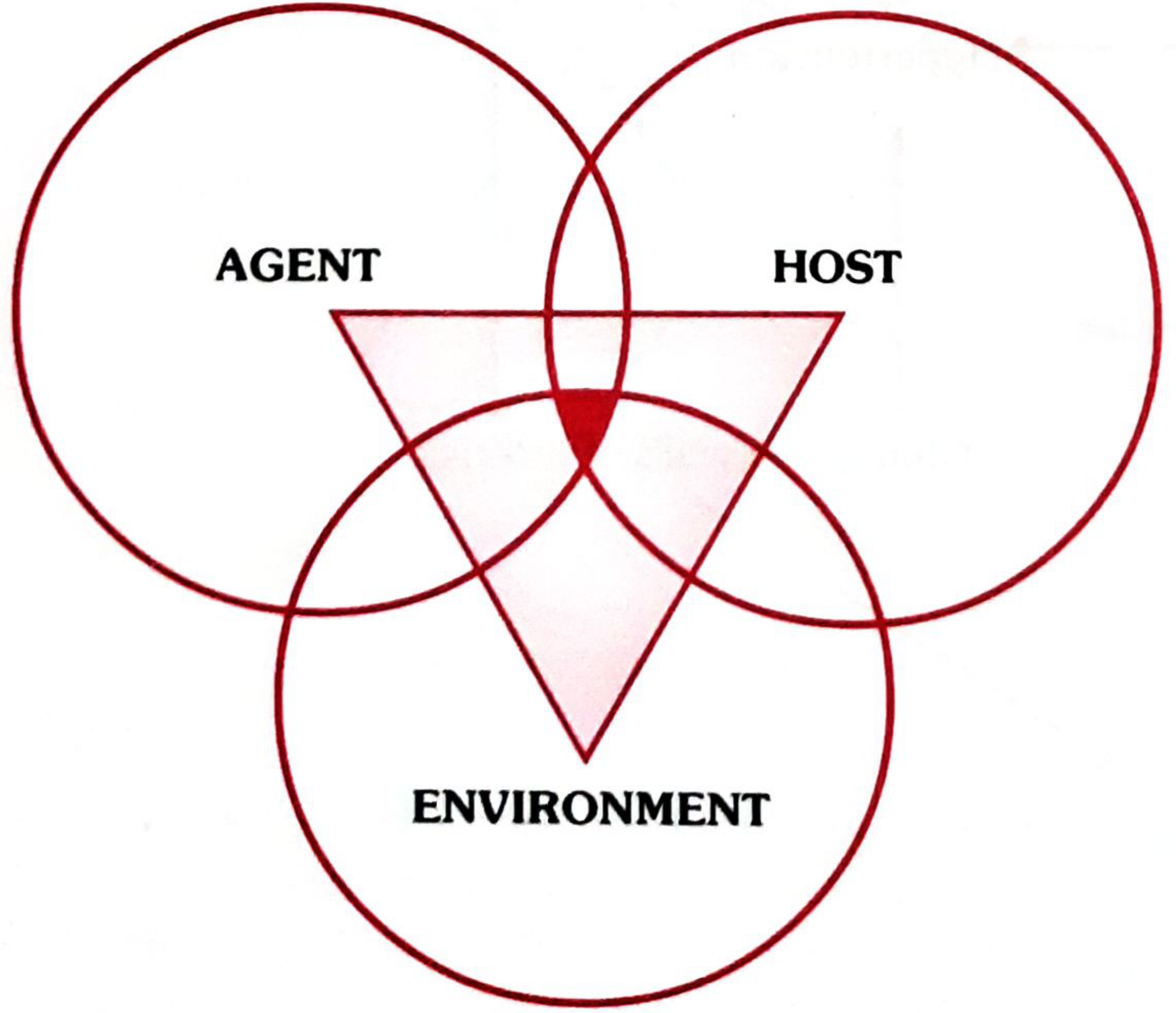
Fig. 9 - Epidemiological concept of interactions of Host and Environment (adapted from Health Services Reports, Vol. 87, p. 672)
The Natural History of Disease Diagram (Leavell & Clark)
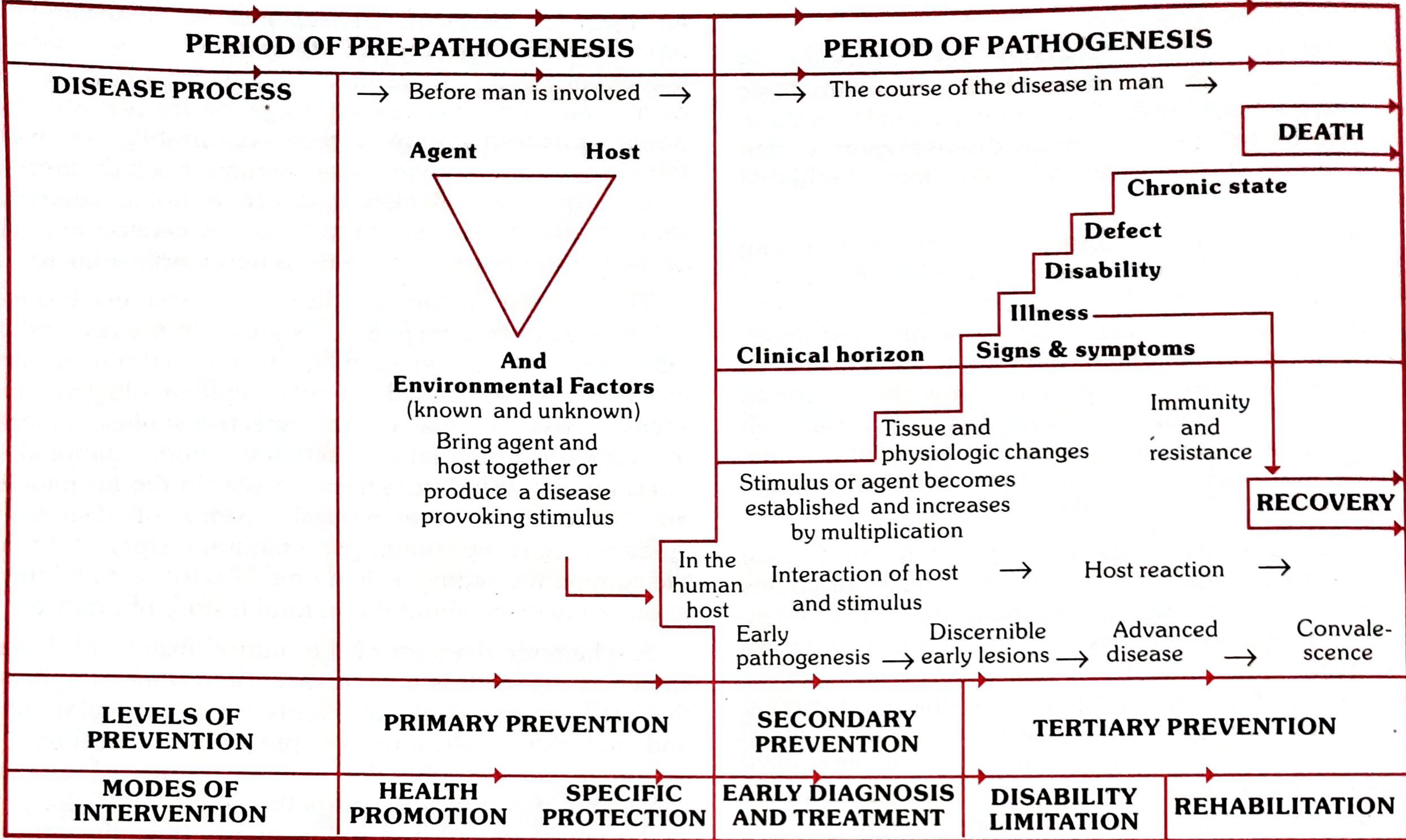
Fig. 8 - Natural history of disease (From Preventive Medicine for the Doctor in His Community, by Leavell & Clark, McGraw-Hill)
Phase 1: Pre-Pathogenesis Phase
This is the period before the onset of disease in man. The disease agent has not yet entered the host, but the factors that favour agent-host interaction already exist in the environment. This situation is called "man in the midst of disease" or "man exposed to the risk of disease".
- Potentially, all humans are in the pre-pathogenesis phase of many diseases (communicable and non-communicable) at any point in time.
- The causative factors (Agent, Host, Environment) are present but have not yet interacted to initiate disease.
- The interaction of all three determines whether a single case or an epidemic results.
Levels of prevention applicable: Primary Prevention
- Health Promotion
- Specific Protection
Phase 2: Pathogenesis Phase
The pathogenesis phase begins with the entry of the disease agent into the susceptible host. It has two sub-stages:
Early Pathogenesis
The agent multiplies and induces tissue and physiological changes. The disease progresses through:
- Incubation period (in infectious diseases)
- Tissue and physiological changes
- Early pathogenesis → Discernible early lesions
Important note on host reaction: The host's response to infection is not always predictable:
- Infection may be clinical or subclinical
- It may be typical or atypical
- The host may become a carrier (with or without clinical disease, e.g., diphtheria, hepatitis B)
In chronic diseases (coronary heart disease, hypertension, cancer), the early pathogenesis phase is referred to as the presymptomatic phase - pathological changes exist below the level of the "clinical horizon" and are not yet manifest as symptoms.
Late Pathogenesis (Clinical Stage)
The clinical stage begins when recognizable signs and symptoms appear (crossing the clinical horizon). By this point, the disease is already in the late pathogenesis phase. Progression can lead to:
| Outcome | Description |
|---|---|
| Recovery | Host immune response / treatment leads to resolution |
| Disability | Functional impairment persists |
| Defect | Structural or physiological defect remains |
| Chronic state | Disease becomes ongoing / persistent |
| Death | Fatal outcome |
Levels of prevention applicable:
- Secondary Prevention - Early diagnosis and treatment (during early pathogenesis)
- Tertiary Prevention - Disability limitation and rehabilitation (during advanced disease / convalescence)
Agent Factors
The disease "agent" is defined as:
"A substance, living or non-living, or a force, tangible or intangible, the excessive presence or relative lack of which may initiate or perpetuate a disease process."
A disease may have a single agent, independent alternative agents, or a complex of factors whose combined presence is essential.
Classification of Agents:
1. Biological agents - viruses, rickettsiae, fungi, bacteria, protozoa, metazoa
- Key properties:
- Infectivity - ability to invade and multiply in a host
- Pathogenicity - ability to induce clinically apparent illness
- Virulence - proportion of clinical cases with severe manifestations (measured by case fatality rate)
2. Nutrient agents - proteins, fats, carbohydrates, vitamins, minerals, water
- Excess or deficiency causes nutritional disorders (PEM, anaemia, goitre, obesity, vitamin deficiencies)
3. Physical agents - heat, cold, radiation, pressure, sound, electricity
4. Chemical agents - drugs, toxins, allergens, occupational chemicals
5. Social agents - poverty, smoking, substance abuse, social isolation
Summary Table: Natural History and Prevention Levels
| Phase | Stage | Prevention Level | Intervention Mode |
|---|---|---|---|
| Pre-pathogenesis | Agent-host-environment interaction | Primary | Health promotion, Specific protection |
| Early pathogenesis | Subclinical / presymptomatic | Secondary | Early diagnosis & treatment |
| Late pathogenesis | Signs & symptoms, advanced disease | Tertiary | Disability limitation, Rehabilitation |
Source: Park's Textbook of Preventive and Social Medicine, pp. 46-47
This is a shared conversation. Sign in to Orris to start your own chat.