
A 28-year-old married Nulliparous woman presents to gynecology OPD with chronic pelvic pain and dyspareunia. She also experiences severe dysmenorrhea starting two days before menstruation and lasting for first three days of the cycle. She is undergoing treatment for primary infertility. Diagnose the condition. Describe its clinical features in detail.
Diagnosis: Endometriosis
- Secondary dysmenorrhea - starting 2 days before menstruation and persisting through the first 3 days of the cycle
- Deep dyspareunia - pain during intercourse
- Chronic pelvic pain
- Primary infertility (the presenting complaint in 30-40% of women with endometriosis)
Definition
- Berek & Novak's Gynecology, p. 617
- Robbins & Kumar Pathologic Basis of Disease, p. 2754
Clinical Features in Detail
1. Pain Symptoms
- The hallmark feature. Secondary dysmenorrhea in endometriosis classically starts before the onset of menstrual bleeding and continues throughout the period - exactly as in this patient (2 days pre-menstrual onset, lasting 3 days into the cycle).
- It may begin after years of pain-free menses (distinguishing it from primary dysmenorrhea), though in adolescents it may be present from menarche.
- The pain is typically bilateral and may radiate to the lower back, thighs, and rectum.
- Berek & Novak's Gynecology, p. 628
- A highly characteristic symptom, described as deep dyspareunia - pain felt deep in the pelvis rather than at the introitus.
- It is caused by endometriotic deposits in the uterosacral ligaments, posterior cul-de-sac, or rectovaginal septum.
- There is a strong association between posterior cul-de-sac lesions and dyspareunia.
- Berek & Novak's Gynecology, p. 628-629
- Constant or intermittent pelvic pain unrelated to the menstrual cycle.
- Results from intrapelvic bleeding, periuterine adhesions, and the release of inflammatory mediators (prostaglandins, cytokines).
- All endometriosis lesion types - including minimal to mild disease - are associated with pelvic pain.
- Robbins & Kumar, p. 2765
- Pain on opening the bowels, particularly during menstruation, due to endometriotic deposits on the bowel serosa, rectovaginal septum, or uterosacral ligaments.
- Deep lesions are consistently associated with gastrointestinal symptoms and painful defecation.
- Bailey and Love's Surgery, p. 1602
- Lower back pain
- Dysuria and hematuria if bladder involvement
- Cyclic shoulder tip pain if diaphragmatic involvement
- Cyclic hemoptysis or pneumothorax if pulmonary (rare)
2. Menstrual Abnormalities
- Menstrual irregularities are common.
- Premenstrual spotting may occur.
- Heavy menstrual bleeding (menorrhagia) in some cases.
- Associated with luteinized unruptured follicle syndrome, anovulation, and hyperprolactinemia.
- Berek & Novak's Gynecology, p. 629
3. Infertility
- Distorted pelvic anatomy with adhesions - interference with tubal pick-up of the oocyte
- Altered peritoneal environment - increased macrophages, cytokines, prostaglandins in peritoneal fluid that are toxic to sperm and embryos
- Endocrine/ovulatory abnormalities - impaired folliculogenesis, abnormal LH surge, luteal phase defects
- Immunological factors - increased autoantibodies to endometrial antigens
- Endometriomas compressing normal ovarian cortex and reducing ovarian reserve
- Fallopian tube involvement impeding ovum transport
- Berek & Novak's Gynecology, pp. 625-626
- Goodman & Gilman's Pharmacological Basis of Therapeutics, p. 299
4. Gastrointestinal and Urinary Symptoms
- Nausea, vomiting, bloating, early satiety, altered bowel habits (cyclic)
- Cyclic rectal bleeding, constipation, or obstruction if bowel involvement
- Dysuria, urinary frequency, or hematuria if bladder/ureteral involvement
- Berek & Novak's Gynecology, p. 628
5. Physical Examination Findings
| Finding | Significance |
|---|---|
| Uterosacral / cul-de-sac nodularity | Palpable tender nodules along the uterosacral ligaments on rectovaginal exam - pathognomonic when present |
| Fixed retroverted uterus | Advanced disease with posterior adhesions; reduced uterine mobility ("frozen pelvis") |
| Lateral/cervical displacement | Due to uterosacral scarring |
| Adnexal mass/tenderness | Ovarian endometrioma (chocolate cyst), often densely adherent |
| Painful swelling of rectovaginal septum | Deep infiltrating endometriosis |
| Pinpoint cervical ostium | Associated risk factor |
| Blue-domed lesions in posterior fornix | Deep lesions growing into the vagina, visible on speculum examination |
| Tenderness on bimanual examination | Particularly in the posterior pelvis |
- Berek & Novak's Gynecology, pp. 630-631
Key point: The severity of pain does NOT correlate well with the extent/stage of disease. Women with minimal lesions may have severe pain, while some with extensive endometriomas may be nearly asymptomatic.
6. Extra-pelvic Manifestations
- Intestinal tract (colon) - most common extra-pelvic site: abdominal/back pain, cyclic rectal bleeding, obstruction
- Urinary tract (ureter/bladder): dysuria, hematuria, ureteral obstruction
- Diaphragm: cyclic shoulder tip pain
- Lung/pleura: hemoptysis, pneumothorax, hemothorax during menses (catamenial pneumothorax)
- Umbilicus: palpable mass with cyclic pain
- Scars (e.g., episiotomy, Caesarean section scars): palpable nodule with cyclic pain
- Berek & Novak's Gynecology, p. 629
7. Macroscopic Pathology / Laparoscopic Appearance
- Classic "powder burn" or "gunshot" lesions: black, dark brown, or bluish puckered nodules containing old hemorrhage
- Red implants: petechial, vesicular, polypoid, "red flame-like" - active early lesions
- White/clear lesions: serous/clear vesicles, white plaques, fibrotic scarring
- Endometriomas ("chocolate cysts"): ovarian cysts 3-5 cm filled with thick dark brown fluid (old blood), densely adherent to peritoneum
- Deep infiltrating endometriosis (DIE): tissue >5 mm beneath the peritoneum, in uterosacral ligaments, vagina, bowel, bladder, or ureters
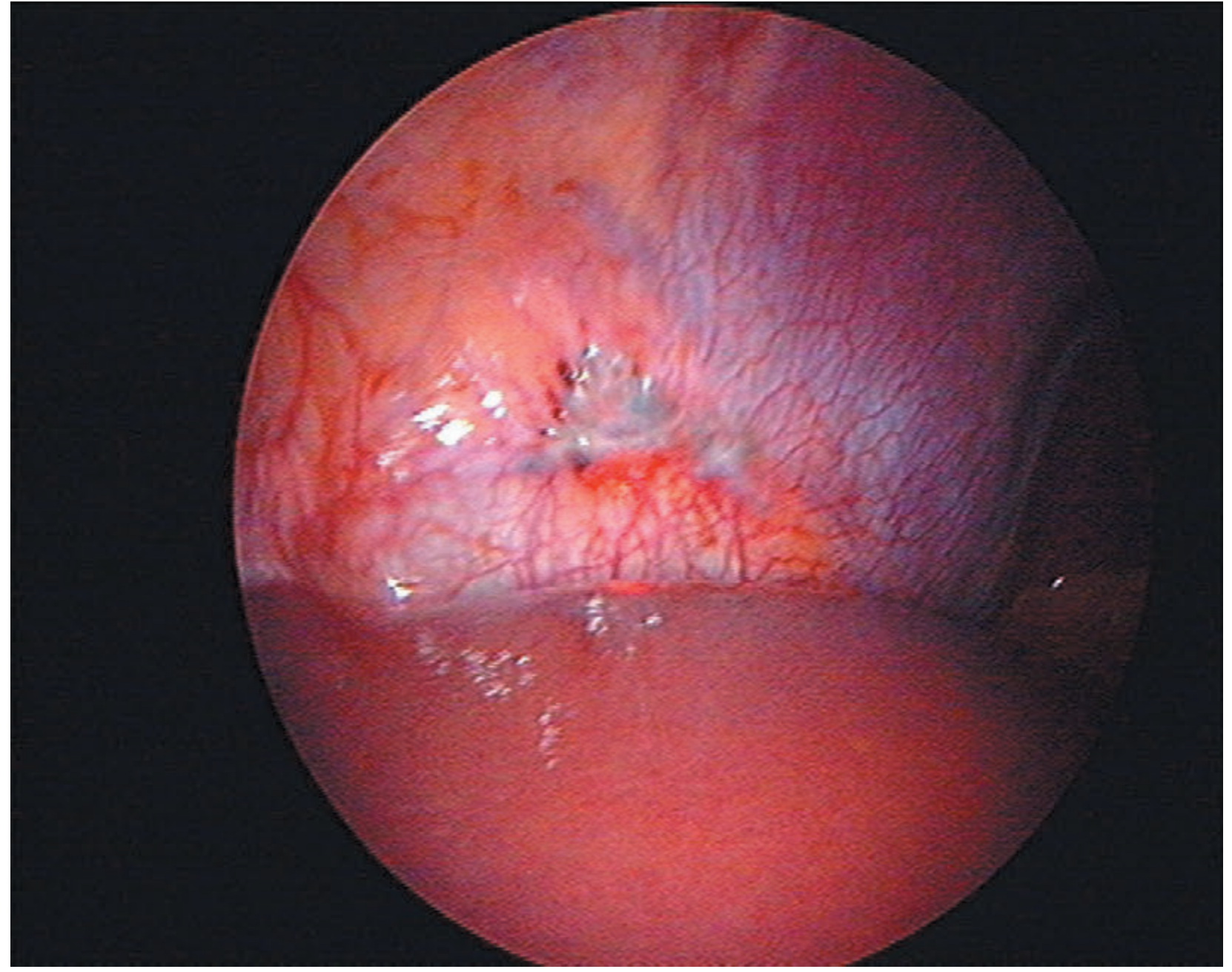
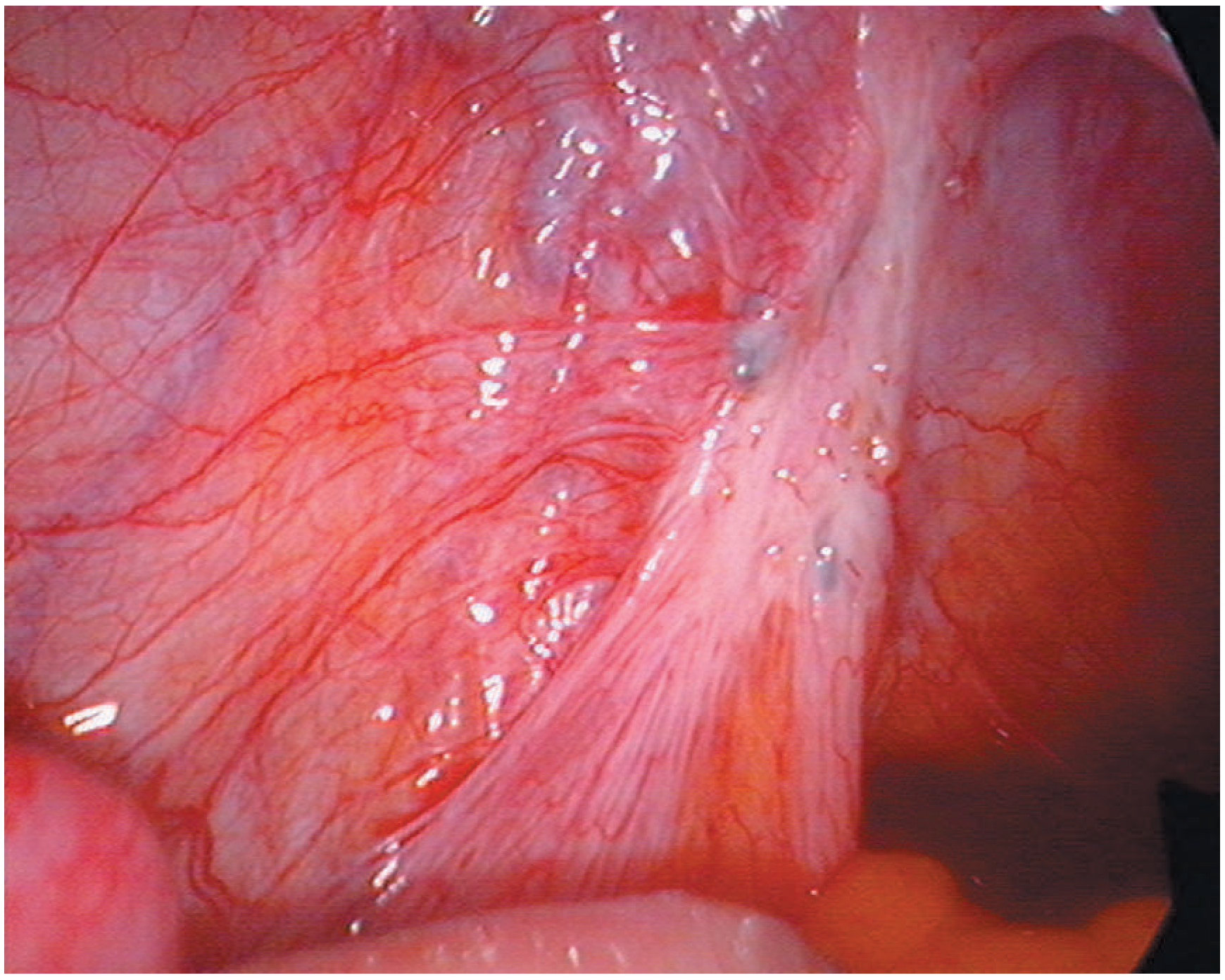
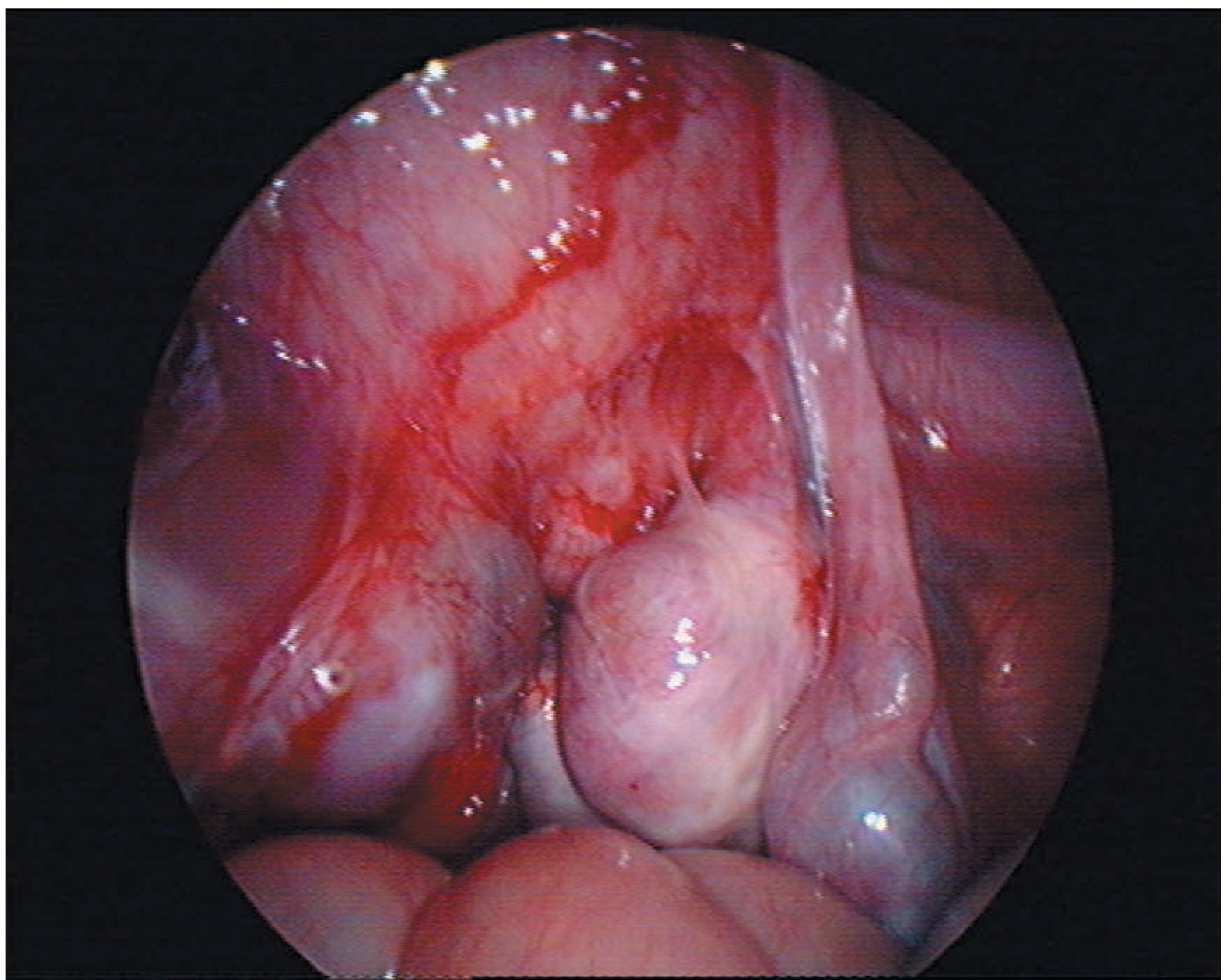
- Bailey and Love's Surgery, pp. 1602-1603
- Robbins & Kumar, p. 2754
8. Histology
- Endometrial glands AND stroma outside the uterus
- With or without hemosiderin (evidence of prior bleeding)
- In long-standing cases, secondary fibrosis may obscure the tissue
- Atypical endometriosis (cytologic atypia) is a precursor to endometrioid and clear cell ovarian carcinoma
- Robbins & Kumar, p. 2756-2758
Staging (ASRM Classification)
| Stage | Description |
|---|---|
| I - Minimal | Few superficial implants |
| II - Mild | More/deeper implants |
| III - Moderate | Endometriomas, filmy adhesions |
| IV - Severe | Large endometriomas, dense adhesions, obliterated cul-de-sac |
Epidemiological Risk Factors in this Patient
- Reproductive age (peak incidence 25-35 years)
- Nulliparity - "career women" or delayed childbearing
- Family history - 7x increased risk if first-degree relative affected
- The average delay between symptom onset and diagnosis is 8-12 years due to symptom overlap with other conditions
Diagnosis Confirmation
-
Gold standard: Laparoscopy with histological confirmation - the definitive diagnostic procedure
-
Transvaginal ultrasound (TVUS): reliably detects endometriomas and severe pelvic disease; cannot detect peritoneal implants
-
MRI: detects hemosiderin deposits suggesting deep endometriosis
-
Serum CA-125: elevated in moderate-severe disease (13-95 U/mL) but of limited diagnostic value compared to laparoscopy
-
Empiric treatment with hormonal therapy may be justified without laparoscopy in women with classic symptoms
-
Berek & Novak's Gynecology, pp. 633-634
-
Bailey and Love's Surgery, pp. 1603-1604
Differential diagnosis of endometriosis
Differential Diagnosis of Endometriosis
I. GYNECOLOGIC DIFFERENTIALS
1. Adenomyosis (Closest Mimic)
| Feature | Adenomyosis | Endometriosis |
|---|---|---|
| Age | Typically 35-50, multiparous | Younger, nulliparous |
| Uterus | Enlarged, globular, tender ("boggy") | Normal size or fixed/retroverted |
| Pain | Dysmenorrhea, premenstrual pelvic pain | Dysmenorrhea + chronic non-cyclic pain |
| Bleeding | Menorrhagia prominent | Irregular/normal |
| Dyspareunia | Less prominent | Prominent (deep) |
| Infertility | Less common | Common |
| Diagnosis | MRI/TVUS, histology | Laparoscopy |
- Robbins & Kumar Basic Pathology, p. 550
2. Primary Dysmenorrhea
- Cyclic pain beginning at or just after onset of menstruation (not days before, unlike endometriosis)
- Normal pelvic examination and ultrasound - no underlying pelvic pathology
- Responds well to NSAIDs and combined oral contraceptives
- No dyspareunia, no infertility, no adnexal masses
- Predominantly affects adolescents and young women soon after menarche
- Berek & Novak's Gynecology, p. 571
3. Pelvic Inflammatory Disease (PID) / Chronic Salpingo-oophoritis
- Caused by ascending infection (Neisseria gonorrhoeae, Chlamydia trachomatis)
- Presents with pelvic pain, dyspareunia, abnormal vaginal discharge, fever
- Cervical motion tenderness (chandelier sign) - highly characteristic
- Elevated WBC, ESR, CRP; positive NAAT for gonorrhoea/chlamydia
- Can cause infertility through tubal occlusion and adhesions
- Unlike endometriosis, symptoms are not cyclical; acute episodes with systemic features
- Chronic PID may create pelvic adhesions mimicking endometriosis closely
4. Uterine Leiomyomata (Fibroids)
- Benign smooth muscle tumors causing heavy menstrual bleeding and pressure symptoms
- Subserosal and intramural fibroids may cause chronic pelvic pain and dysmenorrhea
- Submucosal fibroids cause menorrhagia and may contribute to infertility
- Uterus is enlarged and irregularly nodular on bimanual examination
- No true dyspareunia or cyclical pre-menstrual onset of pain
- Diagnosed on TVUS (hyperechoic masses, uterine enlargement)
- No uterosacral nodularity or cul-de-sac obliteration
5. Ovarian Cysts / Ovarian Neoplasms
- Functional cysts (follicular, corpus luteum) cause unilateral pelvic pain
- May present with adnexal mass on examination and ultrasound
- Torsion gives acute severe unilateral pain - not chronic or cyclic
- Dermoid cysts (mature teratomas) may cause chronic pain
- Ovarian malignancy may mimic endometriomas on imaging
- Distinguished from endometriomas by: TVUS (ground-glass, homogeneous appearance of endometrioma vs. complex features of other cysts); CA-125; MRI; laparoscopy
6. Pelvic Adhesions
- Can result from previous pelvic surgery, PID, or endometriosis itself
- Cause chronic pelvic pain through tethering and restricted organ mobility
- No cyclical pattern of worsening
- No dyspareunia unless posterior cul-de-sac involved
- Diagnosed only at laparoscopy
- Berek & Novak's Gynecology (Table 12-3): listed separately as a distinct cause of non-cyclic chronic pelvic pain
7. Pelvic Congestion Syndrome
- Caused by reflux in ovarian and internal iliac veins leading to pelvic varicosities
- Chronic dull, aching pelvic pain - worsens with prolonged standing, end of day, after intercourse (postcoital ache lasting hours)
- Pain is less cyclical than endometriosis
- Deep dyspareunia may occur
- Diagnosed by Doppler ultrasound or pelvic venography showing dilated ovarian veins (>6 mm)
- Uterus mobile, no nodularity on examination
- Mulholland & Greenfield's Surgery, p. 1116
8. Asherman Syndrome (Intrauterine Synechiae)
- Intrauterine adhesions from prior curettage, myomectomy, or infection
- Causes hypomenorrhoea or amenorrhoea with cyclic crampy pain (hematometra if obstructed)
- Infertility and recurrent pregnancy loss
- Diagnosed by hysteroscopy or saline infusion sonohysterography
- No extra-uterine pathology; normal pelvic exam
- Berek & Novak's Gynecology, Table 12-3
9. Congenital Outflow Tract Obstruction
- Obstructed rudimentary uterine horn, imperforate hymen, transverse vaginal septum
- Presents at menarche with cyclical pain, primary amenorrhoea, and hematocolpos/hematometra
- Can itself cause secondary endometriosis from retrograde menstruation
- Distinguished by developmental history and imaging
10. Ovarian Remnant / Retained Ovary Syndrome
- After bilateral oophorectomy, residual ovarian tissue trapped in adhesions
- Cyclical pelvic pain, pelvic mass
- Diagnosed by FSH/LH levels, TVUS, or laparoscopy
II. GASTROINTESTINAL DIFFERENTIALS
11. Irritable Bowel Syndrome (IBS)
- One of the four most common causes of chronic pelvic pain (along with endometriosis, pelvic adhesions, and interstitial cystitis)
- Crampy abdominal pain, bloating, altered bowel habits (diarrhoea/constipation)
- Up to 70% of women with chronic pelvic pain have more than one overlapping diagnosis
- IBS pain is not strictly cyclic with menses; often relieved by defecation
- No dyspareunia or infertility; normal pelvic examination
- Rome IV criteria for diagnosis
- Textbook of Family Medicine, p. 2020
12. Inflammatory Bowel Disease (Crohn's Disease / Ulcerative Colitis)
- Crohn's disease can cause pelvic/abdominal pain, perianal disease, and bowel symptoms
- Rectal bleeding, weight loss, fever, elevated inflammatory markers
- Deep infiltrating endometriosis involving bowel can radiologically and clinically mimic colorectal carcinoma
- Colonoscopy, CT enterography, and histology distinguish these
13. Diverticulitis / Appendicitis
- Diverticulitis: left iliac fossa pain, fever, change in bowel habits - not cyclical
- Appendicitis: acute right iliac fossa pain - important acute differential
- Chronic appendiceal disease can occasionally mimic endometriosis
III. UROLOGICAL DIFFERENTIALS
14. Interstitial Cystitis / Painful Bladder Syndrome
- Chronic pelvic pain with urinary urgency, frequency, and dysuria
- Pain worsens with bladder filling and is relieved by voiding
- No cyclical pattern; no dysmenorrhoea or infertility
- Often coexists with endometriosis and IBS (shared central sensitization)
- Diagnosed by cystoscopy with hydrodistension
- Textbook of Family Medicine, p. 321
15. Recurrent Urinary Tract Infections / Urethral Syndrome
- Dysuria, frequency, urgency - can be confused with bladder endometriosis
- Distinguishable by urine culture, NAAT; cyclical hematuria should raise suspicion for bladder endometriosis
IV. MUSCULOSKELETAL DIFFERENTIALS
16. Myofascial Pain / Pelvic Floor Dysfunction
- Trigger points in pelvic floor muscles, abdominal wall, or hip flexors
- Constant or activity-related pain, not cyclically worsening
- Dyspareunia due to levator ani spasm (vaginismus/hypertonicity)
- Normal pelvic organs; diagnosed by physiotherapy assessment
17. Low Back Pain Syndromes
- Spondylolysis, spondylolisthesis, disc disease
- Lower back pain radiating to pelvis/thighs may overlap with endometriosis pain
- Not cyclical; musculoskeletal features on examination
V. PSYCHOLOGICAL / SYSTEMIC DIFFERENTIALS
18. Fibromyalgia
- Widespread musculoskeletal pain, fatigue, sleep disturbance
- Often coexists with endometriosis (central sensitization overlap)
- Tender points on examination; no pelvic pathology
19. Depression / Somatization
- Chronic pain disorders have a bidirectional relationship with depression
- Does not exclude organic pathology; must not be a diagnosis of exclusion without adequate work-up
Summary Comparison Table
| Condition | Dysmenorrhea | Dyspareunia | Cyclic Pattern | Infertility | Key Distinguishing Feature |
|---|---|---|---|---|---|
| Endometriosis | Pre-menstrual onset | Deep | Yes | Yes | Uterosacral nodularity; laparoscopy |
| Adenomyosis | +++ | Mild | Yes | Less common | Globular uterus; MRI |
| Primary dysmenorrhea | At menses onset | No | Yes | No | Normal exam; NSAID responsive |
| PID/Chronic salpingitis | Variable | Yes | No | Yes | Fever; cervical motion tenderness |
| Fibroids | ++ | No | Partial | Yes | Irregular nodular uterus; TVUS |
| Pelvic congestion | No | Post-coital ache | No | No | Worsens evening/standing |
| IBS | No | No | No | No | Rome IV criteria; GI symptoms |
| Interstitial cystitis | No | No | No | No | Bladder pain; cystoscopy |
| Ovarian cyst | Unilateral | Variable | No | Possible | Unilateral adnexal mass |
| Asherman syndrome | + | No | Yes | Yes | Hypo/amenorrhea; hysteroscopy |
- Berek & Novak's Gynecology, pp. 571-577, Table 12-3
- Robbins & Kumar Basic Pathology, p. 550
- Textbook of Family Medicine, pp. 2020-2030
homoeopathic medicines and their indication for endometriosis
homoeopathic medicines indications endometriosis materia medica
homeopathy endometriosis treatment
homoeopathic remedies endometriosis Sepia Lachesis Belladonna Colocynthis Mag phos indications keynotes
https://www.ijfmr.com/papers/2024/2/13692.pdf
https://www.healthyhomeopathy.co.uk/alternative-homeopathic-…
homoeopathic treatment endometriosis Thuja Calcarea Natrum mur Viburnum Xanthoxylum repertory
Homoeopathic Medicines and Their Indications for Endometriosis
Important note on homoeopathic prescribing: Homoeopathy treats the patient, not the disease. Remedy selection is based on the totality of symptoms - mental, emotional, and physical - individualized to each patient. The medicines listed below are indicated when the symptom picture matches, not simply because the diagnosis is endometriosis. A qualified homoeopath selects the simillimum (the single best-matching remedy) through proper case-taking and repertorization.
Key Rubrics Used in Repertorization
- Female genitalia - Pain - menses - before / during
- Female genitalia - Dysmenorrhoea
- Female genitalia - Menses - painful
- Female genitalia - Pain - ovaries / uterus
- Female genitalia - Leucorrhoea
- Back - Pain - sacral - during menses
- Rectum - Pain - during menses (dyschezia)
- Generalities - Infertility
- Mind - Sadness / Irritability / Weeping
The Principal Homoeopathic Medicines
1. Sepia officinalis (Inky juice of cuttlefish)
- Bearing-down sensation in the pelvis - feels as if pelvic organs will fall out; must cross legs to prevent it
- Dysmenorrhoea with gripping, stitching pains, worse during coition - marked dyspareunia
- Aversion to sexual intercourse - characteristic and strong
- Menses - irregular, late, scanty or profuse; dark, offensive
- Infertility - one of the chief remedies; history of repeated abortions
- Fixed retroversion of uterus with dragging pain
- Leucorrhoea - yellowish, offensive, excoriating
- Mental picture: Indifferent to loved ones, irritable, sad, wants to be left alone, weeps when telling symptoms; better with vigorous exercise (dancing)
- Worse: cold, morning, before menses; Better: exercise, warmth
- Chilly patient, sallow complexion, saddle-shaped brown patch across nose
2. Lachesis mutus (Bushmaster snake venom)
- Pelvic pain and heaviness worse BEFORE menses - markedly relieved once flow begins
- Left-sided ovarian pain and ovarian cysts (especially left)
- Cannot bear anything tight around the waist or abdomen
- Dysmenorrhoea with dark, offensive, scanty flow - flow relieves the pain
- Jealousy, suspicion, loquacity - characteristic mental symptoms
- Hot flushes, palpitations
- Worse: sleep, tight clothing, touch; Better: onset of menses, warm applications
- Hot patient; worse on left side
3. Pulsatilla pratensis (Wind flower)
- Menses - delayed, scanty, irregular, with dark clotted or thick discharge
- Pain is changeable in character and location
- Dysmenorrhoea with bearing-down feeling; nausea and vomiting during menses
- Profuse heavy menstrual bleeding with clots
- Infertility - hormonal irregularity, suppressed menses
- Emotional: mild, gentle, weepy, craves sympathy and consolation
- Thirstless despite dryness of mouth
- Worse: warmth, stuffy rooms, evening; Better: open air, gentle motion, cold applications
- Hormonal remedy - useful in adolescent menstrual irregularities progressing to endometriosis
4. Belladonna (Deadly nightshade)
- Sudden, intense, throbbing pelvic pain coming and going rapidly
- Pain is hot, red, throbbing, and bursting in character
- Dysmenorrhoea with bright red profuse flow
- Uterine congestion - fullness, heaviness, bearing down
- Pain worse from jar, motion, touch; Better: pressure, bending backward
- Face flushed, pupils dilated, skin hot and dry
- Worse: 3 PM, touch, jar, noise, light; Better: rest, warmth, bending backward
5. Calcarea carbonica (Calcium carbonate - from oyster shell)
- Heavy, prolonged menstruation - menses too early, too profuse, too long
- Cold hands and feet, sweaty head (especially at night)
- Dysmenorrhoea with profuse, pale blood; fatigue
- Ovarian cysts - tendency to form cystic tumours
- Infertility in a sluggish, overweight patient
- Leucorrhoea - milky, profuse
- Anxiety about health, fear of cancer, fear of losing reason
- Desire for eggs, sweets; aversion to meat
- Worse: cold, wet, exertion, full moon; Better: dry weather, constipation
- Repertorial rubric: Fatigue and weight gain in endometriosis
6. Magnesia phosphorica (Magnesium phosphate)
- Colicky, crampy, spasmodic dysmenorrhoea - pain comes in spasms and waves
- Relieved dramatically by heat and pressure (hot water bottle, bending double)
- Pain radiates down the thighs
- Menses - early, dark, stringy, clotted
- Often used as Mag Phos 6X in water (tissue salt) as an acute pain remedy
- Nervous, sensitive, thin, dark-haired constitution
- Worse: cold, touch, right side; Better: warmth, pressure, doubling up
7. Colocynthis (Bitter cucumber)
- Violent, cramping, boring pelvic/abdominal pain - must press hard on abdomen or double up
- Pain comes in waves; associated with irritability, anger
- Dysmenorrhoea - pain radiates from ovaries down thighs
- Ovarian pain - especially left-sided (compare with Lachesis)
- Worse: indignation, anger, eating; Better: hard pressure, doubling over, heat
8. Sabina (Savin - Juniper species)
- Profuse, bright red menstrual bleeding with dark clots
- Labour-like pains extending from sacrum to pubis (low back to front)
- Dysmenorrhoea with violent bearing-down pains
- Tendency to miscarriage (history of recurrent abortions)
- Coexisting uterine fibroids - Sabina is one of the top remedies
- Pain worse from least motion; Better: cool, open air
- Great tendency to uterine/pelvic haemorrhage
9. Cimicifuga racemosa (Black cohosh / Actaea racemosa)
- Severe dysmenorrhoea - the heavier the flow, the MORE intense the pain (characteristic inversion)
- Bearing-down pain in uterus and lower back; darting pain from hip to hip
- Profuse, clotted, dark menstrual flow
- Menopausal-type symptoms (hot flushes, palpitations)
- Mental picture: Gloom, despondency, "feels a black cloud over everything"; sighing
- Muscle pains, neck stiffness - rheumatic element
- Worse: cold, damp, menses; Better: warmth, continued motion
- Also known as a great parturient and uterine tonic
10. Xanthoxylum fraxineum (Prickly ash)
- Periods are very painful with pain radiating into the back, thighs, and legs (neuralgic character)
- Menstrual bleeding is excessive and exhausting with marked bearing-down pain
- Weakness and exhaustion from menstrual loss
- Influence on nervous system and female sexual organs
11. Platina (Metallic platinum)
- Violent cramping, bearing-down pain with dark, clotted menstrual flow
- Markedly increased sexual desire (contrasted with Sepia's aversion)
- Burning and soreness in the genitalia
- Hypersensitivity of genitalia - cannot bear touch
- Mental picture: Pride, haughtiness, contempt for others, feeling of superiority (delusion of grandeur)
- Worse: touch, before menses; Better: walking
12. Thuja occidentalis (Arbor vitae)
- Ovarian cysts and endometriomas - tendency to form abnormal growths and tumours
- Left-sided ovarian pain
- Menses - scanty, delayed, retarded
- Associated with history of suppressed gonorrhoea (sycotic miasm)
- Warts, polyps, fibromas - all overgrowths of the sycotic constitution
- Worse: cold, damp, night; Better: warmth
13. Phosphorus
- Heavy menstrual bleeding - bright red, profuse, prolonged
- Anaemia from menstrual loss
- Anxiety, fear (dark, thunderstorms, being alone)
- Desire for cold drinks, ice cream; thirsty
- Burning pains in pelvis
- Sympathetic, impressionable, sensitive patient
- Worse: cold, touch, exertion; Better: cold food/drinks, sleep, rubbing
14. Ammonium carbonicum
- Menses - acrid, corrosive, watery flow that excoriates the thighs
- Dysmenorrhoea with fatigue and debility
- Profuse, early menses
- Worse: cold wet weather, morning; chilly patient
15. Apis mellifica (Honey bee)
- Ovarian pain and cysts - burning, stinging, sharp pain in right ovary
- Pain worse from heat, better from cold applications (opposite of most pelvic remedies)
- Scanty menses with pelvic heaviness
- Suppressed menses with ovarian symptoms
- Oedema, puffiness; thirstless
- Worse: heat, pressure, touch; Better: cold applications, open air
Summary Reference Table
| Medicine | Pain Character | Menstrual Bleeding | Key Mental Feature | Side | Modalities |
|---|---|---|---|---|---|
| Sepia | Bearing down, gripping, dyspareunia | Irregular, dark, scanty | Indifferent, irritable, wants to be alone | - | Worse: cold; Better: exercise |
| Lachesis | Pre-menstrual, left-sided | Dark, scanty, offensive | Jealous, loquacious, suspicious | Left | Better: onset of flow |
| Pulsatilla | Changeable, crampy | Delayed, scanty, clotted | Mild, weepy, craves sympathy | - | Worse: heat; Better: open air |
| Belladonna | Sudden, throbbing, violent | Bright red, profuse | Acute, restless | Right | Worse: jar, touch; Better: pressure |
| Calc carb | Dragging, heavy | Profuse, prolonged | Anxious, fearful | - | Worse: cold, wet, exertion |
| Mag Phos | Spasmodic, crampy | Dark, stringy, early | Nervous, sensitive | Right | Better: heat, pressure, doubling up |
| Colocynthis | Violent, colicky, boring | - | Anger, indignation | Left | Better: doubling over, hard pressure |
| Sabina | Labour-like, sacrum to pubis | Bright red, profuse, clotted | Sensitive, sad | - | Worse: motion; Better: cool air |
| Cimicifuga | Bearing down, hip to hip | Profuse (pain ∝ flow) | Gloomy, depressed, sighing | - | Worse: cold, damp |
| Platina | Violent cramping | Dark, clotted | Haughty, contemptuous | - | Worse: touch, before menses |
| Thuja | Left ovarian | Scanty, delayed | Secretive, fixed ideas | Left | Worse: cold, damp, night |
| Apis | Burning, stinging, ovarian | Scanty, suppressed | Restless, weeping | Right | Worse: heat; Better: cold |
Miasmatic Consideration
- Sycotic miasm (tendency to proliferative/overgrowth pathology - endometriomas, adhesions, fibrosis) - remedies: Thuja, Calc carb, Natrum sulph
- Psoric miasm (functional disturbances, pain without structural change) - Sulphur, Pulsatilla
- Syphilitic miasm (destructive pathology, deep infiltrating disease) - Mercurius, Nitric acid