
Teratoma of Testis -gross, microscopic features ; Seminoma - gross and microscopic features; Labelled diagram; Classical Seminoma - morphology, modes of spread Classify Testicular Tumors Teratoma - define, classify, Extragonadal sites of appearance ; Testicular Germ Cell Tumors - enumerate, describe any one ; Fibroid Uterus - gross, microscopic, complications ; Germ Cell Tumors of Ovary - classify, Dysgerminoma - gross, microscopic findings ; Teratoma - define, classify, Extragonadal sites of appearance; refer robbins 2nd yr mbbs pathology answer each question in detail add diagrams as well
Reading File
Now let me search the library in parallel for all the major topics:
Finding Sources
Finding Sources
Finding Sources
Finding Sources
Finding Sources
Finding Sources
Finding Sources
Finding Sources
Finding Sources
Good - found key sections. Now let me read the most relevant blocks in parallel:
Reading File
Reading File
Reading File
Excellent content found. Now let me fetch the key images and read the Robbins block on testicular tumors:
Reading File
Loading Image
Loading Image
Now let me read the Robbins testicular tumors section and the leiomyoma images:
Reading File
I need to find the correct block for testicular tumors in Robbins. Let me search more specifically:
Finding Sources
Reading File
Reading File
Excellent! Found the crucial Robbins table on testicular tumors. Let me read more to get full seminoma and teratoma descriptions:
Reading File
Loading Image
Reading File
Reading File
Loading Image
Now let me get the Teratoma gross image and the remaining clinical features + leiomyoma images:
Reading File
Reading File
I now have all the key content needed. Let me fetch the teratoma microscopic image and leiomyoma gross image:
Loading Image
I now have all the information needed. Let me compile the comprehensive answer:
Pathology: Testicular & Ovarian Tumors + Fibroid Uterus
(Robbins Pathology - 2nd Year MBBS)
PART 1: CLASSIFICATION OF TESTICULAR TUMORS
WHO Classification
A. Germ Cell Tumors (95% of all testicular tumors - nearly all malignant)
I. Derived from Germ Cell Neoplasia In Situ (GCNIS) - Postpubertal type:
- Seminoma (classic seminoma)
- Spermatocytic tumor (NOT derived from GCNIS - older males)
- Non-Seminomatous Germ Cell Tumors (NSGCTs):
- Embryonal carcinoma
- Yolk sac tumor (endodermal sinus tumor)
- Choriocarcinoma
- Teratoma (postpubertal - malignant)
- Mixed germ cell tumors (most common: teratoma + embryonal carcinoma)
II. Prepubertal type (NOT derived from GCNIS - benign behavior):
- Yolk sac tumor (most common in children <3 yrs)
- Teratoma (prepubertal - benign)
B. Sex Cord-Stromal Tumors (uncommon, usually benign):
- Leydig cell tumor
- Sertoli cell tumor
- Granulosa cell tumor
C. Mixed Germ Cell-Sex Cord-Stromal Tumors:
- Gonadoblastoma
Summary Table of Testicular Germ Cell Tumors (Robbins)
| Tumor | Peak Age | Morphology | Tumor Marker |
|---|---|---|---|
| Seminoma | 40-50 yrs | Sheets of uniform polygonal cells, clear cytoplasm, lymphocytes in stroma | hCG elevated in ~10% |
| Embryonal carcinoma | 20-30 yrs | Poorly differentiated pleomorphic cells in cords, sheets, papillae | AFP may be elevated |
| Spermatocytic tumor | 50-60 yrs | Small, medium, large polygonal cells; no inflammatory infiltrate | Negative |
| Yolk sac tumor | <3 yrs | Poorly differentiated cells; Schiller-Duval bodies | AFP elevated in 90% |
| Choriocarcinoma | 20-30 yrs | Cytotrophoblast + syncytiotrophoblast without villus formation | hCG elevated in 100% |
| Teratoma | All ages | Tissues from all 3 germ layers, varying differentiation | AFP in 20-25% |
| Mixed tumor | 15-30 yrs | Variable; commonly teratoma + embryonal carcinoma | AFP and hCG variably elevated |
- Robbins & Kumar Basic Pathology, Table 16.1
PART 2: SEMINOMA - GROSS AND MICROSCOPIC FEATURES
Pathogenesis
- Seminoma is the most common testicular germ cell tumor, accounting for ~50% of all testicular GCTs
- Nearly all arise from a precursor lesion - Germ Cell Neoplasia In Situ (GCNIS)
- Virtually all have extra copies of chromosome 12p - i(12p) (isochromosome 12p)
- KIT oncogene mutations in up to 25% of tumors
- Risk factors: cryptorchidism (10% of cases), intersex syndromes, family history, contralateral testicular tumor
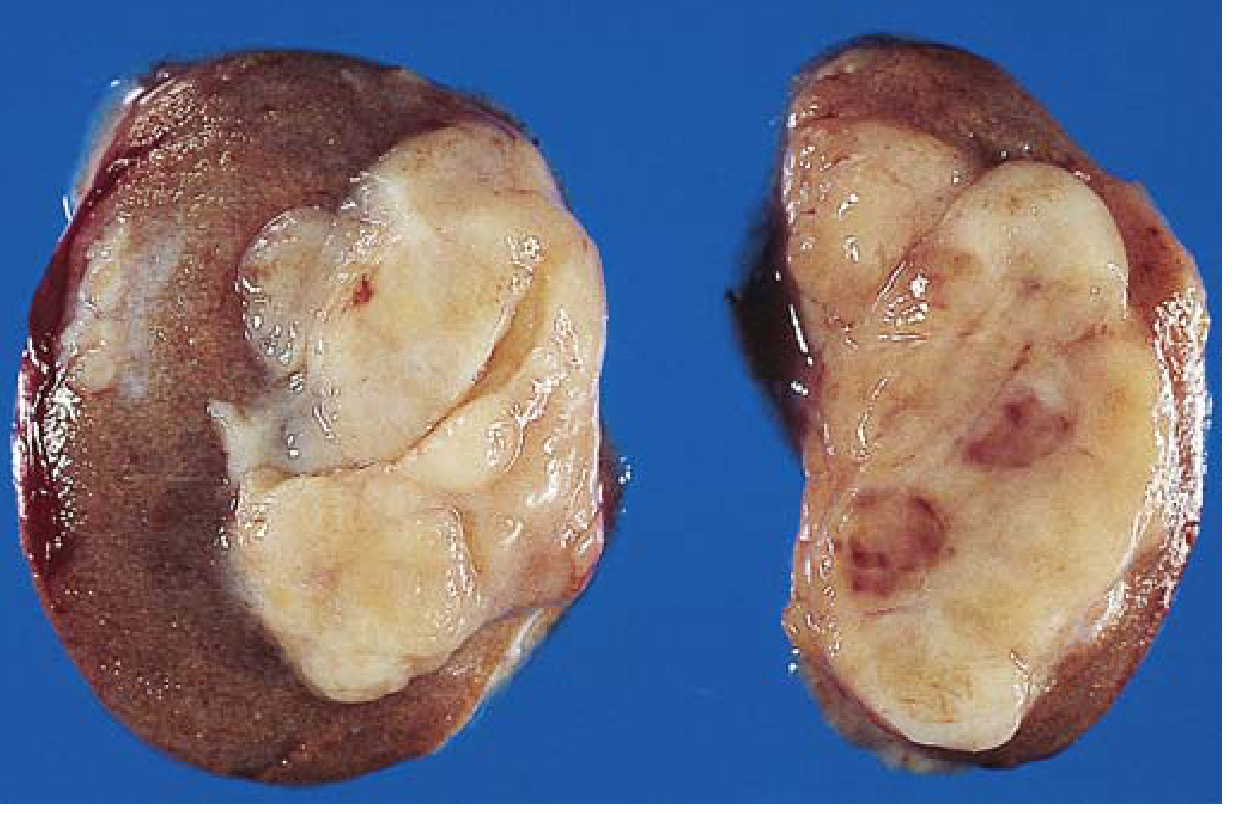
Gross Features
- Soft, well-demarcated, lobulated gray-white tumor that bulges prominently from the cut surface
- Homogeneous, "fish flesh" appearance
- May be very large before diagnosis - tends to remain confined to the testis for a long time
- Large tumors may contain foci of coagulative necrosis (usually without hemorrhage - distinguishes from embryonal carcinoma)
- The right testis is affected slightly more than the left
Microscopic Features
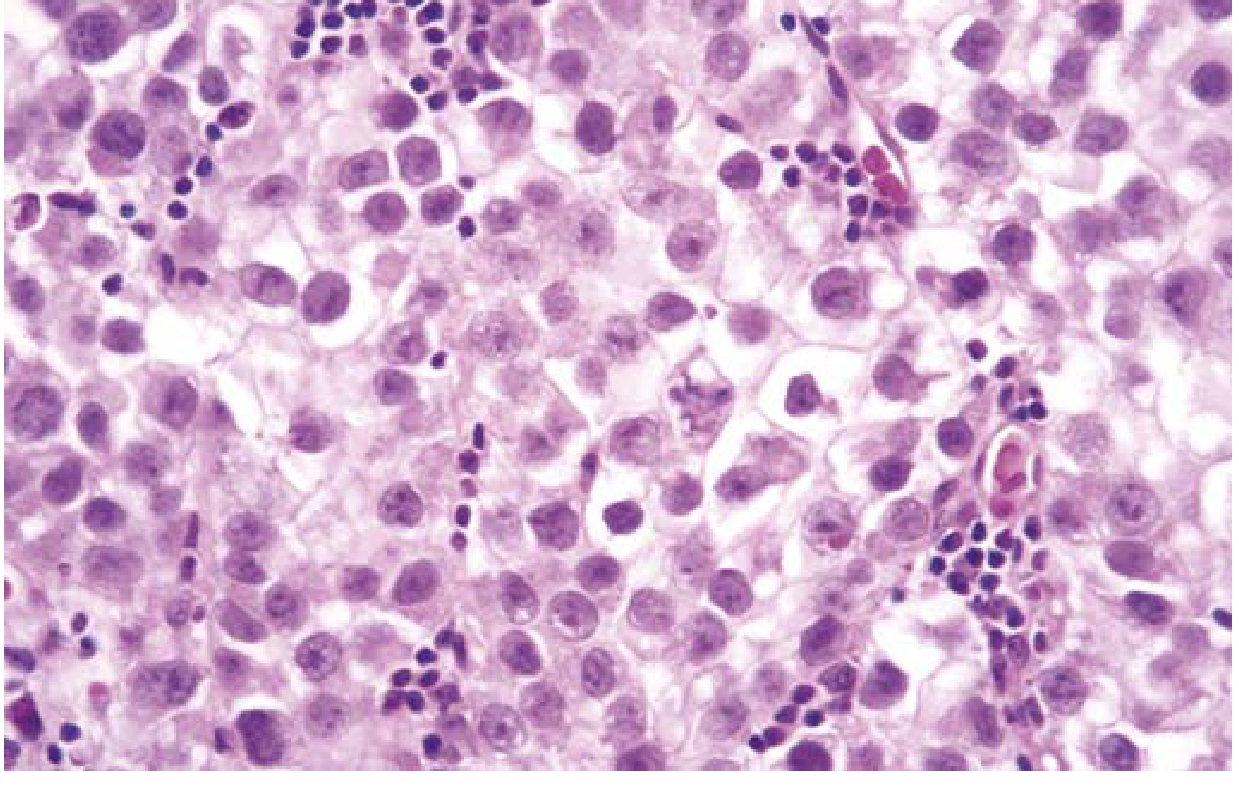
- Large, uniform, polygonal cells with distinct cell borders
- Clear, glycogen-rich cytoplasm (PAS positive)
- Round nuclei with coarsely clumped chromatin
- Conspicuous nucleoli (1-2 prominent nucleoli)
- Cells are arrayed in small lobules separated by fibrous septa
- A characteristic lymphocytic infiltrate is present in the stroma (T-lymphocytes)
- May elicit a granulomatous reaction (epithelioid granulomas with giant cells)
- In ~15% of cases, syncytiotrophoblast cells are present (source of mildly elevated hCG)
Labeled Diagram - Classical Seminoma Morphology
SEMINOMA - HISTOLOGICAL FEATURES
═══════════════════════════════════════
┌─────────────────────────────────────────┐
│ FIBROUS SEPTUM (divides into lobules) │
└──────────┬──────────────────────────────┘
│
┌───────────▼──────────────────────────────┐
│ LOBULE OF TUMOR CELLS │
│ │
│ ○ ○ ○ ○ ○ ○ ○ ○ ○ ○ ○ ○ ○ ○ ○ │
│ ○ Large polygonal cell │
│ ○ Clear cytoplasm (glycogen) │
│ ○ Distinct cell borders │
│ ○ Round nucleus │
│ ○ Prominent nucleolus │
│ │
│ • • • • • (Lymphocytes in stroma) │
│ [G] [G] [G] (Granuloma formation) │
│ *ST* = Syncytiotrophoblast (15% cases) │
└──────────────────────────────────────────┘
Immunohistochemistry:
(+) PLAP (placental alkaline phosphatase)
(+) OCT3/4, D2-40, CD117 (KIT)
(-) AFP, CD30
hCG: mildly elevated in 10-15% stage I
Modes of Spread
Seminoma spreads in a predictable, stepwise manner:
-
Lymphatic spread (most common and early):
- First to iliac and para-aortic (retroperitoneal) lymph nodes - follows the lymphatics of the testis (testis embryologically from retroperitoneum)
- NOT to inguinal nodes (unless scrotal skin invaded)
- This predictable lymphatic spread makes seminoma highly amenable to radiation therapy
-
Hematogenous spread (late):
- Occurs late in the disease course
- Common sites: lungs, liver, bone, brain
- Note: Seminoma tends to remain confined to testis longer than NSGCTs
-
Direct spread:
- Late involvement of epididymis, spermatic cord, scrotal wall
- Rare - usually confined by tunica albuginea early on
Key clinical point: Seminoma often remains confined to testis for long periods and may reach considerable size before diagnosis. This, combined with exquisite radiosensitivity, explains its excellent prognosis.
PART 3: TERATOMA OF THE TESTIS
Definition
A teratoma is a germ cell tumor in which the neoplastic germ cells differentiate along multiple somatic (non-germ) cell lineages, producing tissues derived from two or three embryonic germ layers (ectoderm, mesoderm, endoderm). The term comes from Greek "teratos" (monster).
Classification
A. By Age / Pathogenesis:
| Feature | Prepubertal (Pediatric) | Postpubertal (Adult) |
|---|---|---|
| Precursor | NOT from GCNIS | From GCNIS |
| i(12p) | Absent | Present |
| Behavior | Benign | Malignant (regardless of maturity) |
| Age | Infants/children | Adults (rare pure form) |
| Pure form frequency | Second most common after YST | Only 2-3% pure; often mixed |
B. By Degree of Differentiation (Histological):
-
Mature teratoma - tissues closely resemble adult somatic tissues
- Contains well-differentiated elements from ≥2 germ layers
- In the ovary: "dermoid cyst" - predominantly ectodermal differentiation
- In prepubertal testis: benign
- In postpubertal testis: still considered malignant (metastatic potential)
-
Immature teratoma - contains embryonal/fetal-type tissues
- Neural tissue is the most common immature element
- More aggressive behavior
- Graded 0-3 based on amount of immature neural tissue (neuroepithelial tubules)
-
Teratoma with somatic-type malignancy (previously "malignant" teratoma)
- A non-germ cell cancer arises within a teratoma
- Examples: squamous cell carcinoma, adenocarcinoma, sarcoma, primitive neuroectodermal tumor (PNET)
Gross Features of Testicular Teratoma
- Heterogeneous appearance - mixture of solid, cystic, and sometimes cartilaginous areas
- Cut surface shows multiple cysts of varying sizes containing serous, mucinous, or sebaceous material
- Solid areas may contain cartilage (white/blue-grey), bone (yellow-white), or firm fibrous tissue
- Hair may be present
- May show foci of hemorrhage and necrosis (especially in postpubertal/malignant forms)
- No characteristic uniform color - variegated appearance distinguishes it from seminoma
Microscopic Features of Testicular Teratoma
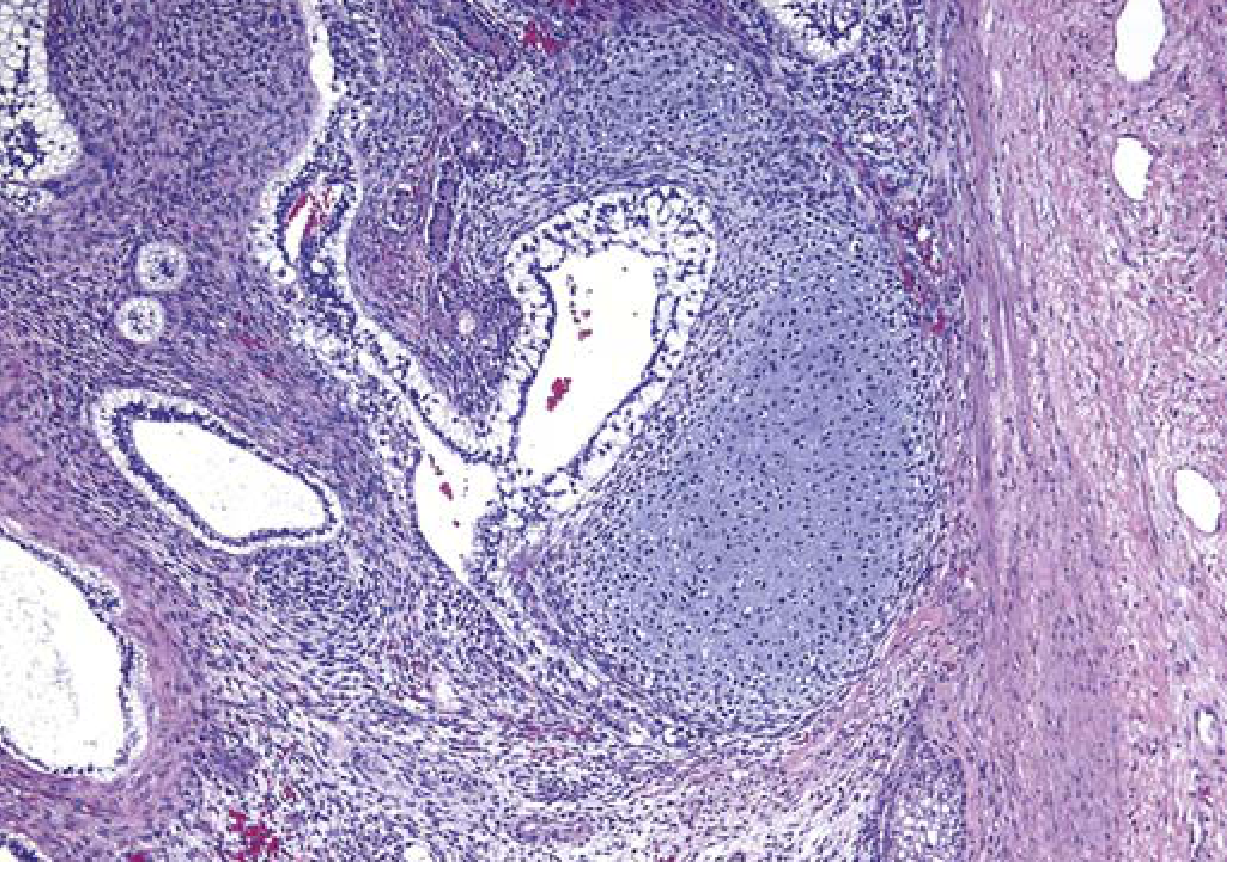
- Collections of differentiated cells or organoid structures representing all three germ layers:
- Ectoderm: Squamous epithelium, skin adnexal structures (sebaceous glands, hair follicles), neural tissue, brain substance
- Mesoderm: Muscle bundles (smooth/skeletal), cartilage islands, bone, connective tissue
- Endoderm: Bronchial epithelium, intestinal wall, thyroid gland-like structures, glandular epithelium
- All embedded in a fibrous or myxoid stroma
- Elements may be mature (adult-type) or immature (fetal/embryonal-type)
- In postpubertal adult teratomas - malignant behavior regardless of presence of immature elements
Extragonadal Sites of Teratoma
Teratomas occur along the midline migration path of primordial germ cells:
EXTRAGONADAL TERATOMA SITES
(Along the midline, cranial to caudal)
CRANIAL
│
[Pineal gland] ──── CNS germinoma/teratoma
│
[Anterior mediastinum] ──── Most common extragonadal site in adults
│ (50% of mediastinal GCTs)
[Retroperitoneum] ──── Second most common extragonadal site
│
[Sacrococcygeal region] ──── Most common site in NEONATES/infants
│ (most common solid tumor of newborn)
CAUDAL
Other sites:
- Neck/cervical region
- Intracranial (pineal/suprasellar)
- Liver (rare)
- Orbit (rare)
Key facts about extragonadal teratomas:
- Sacrococcygeal teratoma - most common solid tumor in newborns; 4:1 female predominance; usually benign in neonates, risk of malignancy increases with age
- Mediastinal teratoma - most common in anterior mediastinum; more common in males
- Retroperitoneal teratoma - second most common in adults; may be very large
- Intracranial teratoma - pineal and suprasellar regions; germinomas are histologically identical to seminoma/dysgerminoma
PART 4: TESTICULAR GERM CELL TUMORS - ENUMERATION & DESCRIPTION (Seminoma - Detailed)
Enumeration of Testicular GCTs:
- Seminoma (~50%)
- Embryonal carcinoma (~2-3% pure; common in mixed tumors)
- Yolk sac tumor (Endodermal sinus tumor)
- Choriocarcinoma (rare pure form, ~1%)
- Teratoma (2-3% pure in adults)
- Mixed GCTs (~30-40% - most common is teratoma + embryonal carcinoma)
- Spermatocytic tumor (rare; distinct pathogenesis)
(Full description of Seminoma - already covered in Part 2 above)
PART 5: FIBROID UTERUS (LEIOMYOMA)
Definition
Uterine leiomyoma (commonly called "fibroid") is a benign smooth muscle neoplasm of the uterus. It is perhaps the most common tumor in females.
Pathogenesis / Molecular Features
- Most have normal karyotypes; ~40% have simple chromosomal abnormalities
- MED12 mutations (~70% of cases) - encodes a component of Mediator complex (gene transcription)
- Rearrangements of chromosomes 12q14 and 6p (HMGC and HMGIY genes)
- Associated with HLRCC syndrome (Hereditary Leiomyomatosis and Renal Cell Carcinoma) - germline fumarate hydratase (FH) gene mutations
Gross Features
- Sharply circumscribed, discrete, round, firm, gray-white tumors
- Vary in size from barely visible nodules to massive tumors filling the pelvis
- Usually multiple (often described as "bag of worms")
- Located in the myometrium of the uterine corpus:
- Intramural - within the myometrium (most common)
- Submucosal - just beneath the endometrium (causes most bleeding)
- Subserosal - just beneath the serosa (can become pedunculated)
UTERINE LEIOMYOMA - LOCATIONS
[UTERUS - cross section]
┌───────────────────────────────┐
│ ___________________________ │
│ │ ENDOMETRIUM │ │
│ │ ┌───┐ │ │
│ │ │(S)│ Submucosal │ │ (S) = Submucosal
│ │ └───┘ │ │
│ │__________________________│ │
│ ┌───────┐ ┌───┐ │
│ │ (I) │ │(I)│INTRAMURAL│ │ (I) = Intramural
│ └───────┘ └───┘ │
│ ┌─────┐ │
│ │ (SS)│ Subserosal │ │ (SS) = Subserosal
│ └──┬──┘ │
└───────────│─────────────────┘
│ (P) Pedunculated subserosal
- Characteristic whorled pattern of smooth muscle bundles on cut section
- Large tumors develop yellow-brown to red softening (hyaline or red/carneous degeneration)
Microscopic Features
- Bundles of smooth muscle cells resembling normal myometrium
- Individual cells uniform in size and shape
- Oval nuclei with long, slender bipolar cytoplasmic processes (cigar-shaped nuclei)
- Mitotic figures are scarce (key distinction from leiomyosarcoma)
- Tumors separated from surrounding myometrium by a pseudo-capsule
- Variants:
- Leiomyoma with bizarre nuclei - nuclear atypia and giant cells; still low mitotic index
- Cellular leiomyoma - increased cellularity
- Intravenous leiomyomatosis - extends into vessels, may reach vena cava/right atrium (benign behavior)
- Disseminated peritoneal leiomyomatosis - multiple peritoneal nodules (benign)
Complications / Clinical Features
Symptoms:
- May be asymptomatic (even if large/multiple)
- Abnormal uterine bleeding (menorrhagia, especially submucosal)
- Urinary frequency - compression of urinary bladder
- Pelvic pressure/pain
- Sudden pain from infarction of large or pedunculated tumor
- Infertility (distorts endometrial cavity)
Complications in Pregnancy:
- Increased risk of spontaneous abortion
- Fetal malpresentation
- Uterine inertia (failure of adequate uterine contractions)
- Postpartum hemorrhage
Degenerative changes:
- Hyaline degeneration (most common)
- Cystic degeneration
- Carneous (red) degeneration - especially in pregnancy (painful)
- Calcification ("womb stones")
- Fatty degeneration
Malignant transformation: Extremely rare - to leiomyosarcoma (arises de novo, not from fibroid)
- Robbins, Cotran & Kumar Pathologic Basis of Disease, p.937
PART 6: GERM CELL TUMORS OF THE OVARY
Classification
A. Dysgerminoma (~30-40% of malignant ovarian GCTs; histologically = Seminoma)
B. Teratomas:
- Mature (dermoid cyst) - most common ovarian GCT overall; benign
- Immature teratoma - malignant
- Monodermal/specialized teratoma:
- Struma ovarii (thyroid tissue)
- Carcinoid tumor
- Neural tumors
C. Yolk Sac Tumor (Endodermal Sinus Tumor)
D. Embryonal Carcinoma
E. Choriocarcinoma (non-gestational)
F. Mixed Germ Cell Tumors (most common mixed: dysgerminoma + EST)
G. Gonadoblastoma (mixed GCT + sex cord-stromal; in dysgenetic gonads)
PART 7: DYSGERMINOMA - GROSS AND MICROSCOPIC FEATURES
Epidemiology
- Most common malignant ovarian GCT (30-40% of all malignant ovarian GCTs)
- Accounts for 1-3% of all ovarian cancers, but 5-10% of ovarian cancers in patients <20 years
- 75% occur between ages 10-30 years; rare after age 50
- 20-30% of ovarian malignancies in pregnancy are dysgerminomas
- Histologically identical to seminoma (testis) and germinoma (CNS/extragonadal)
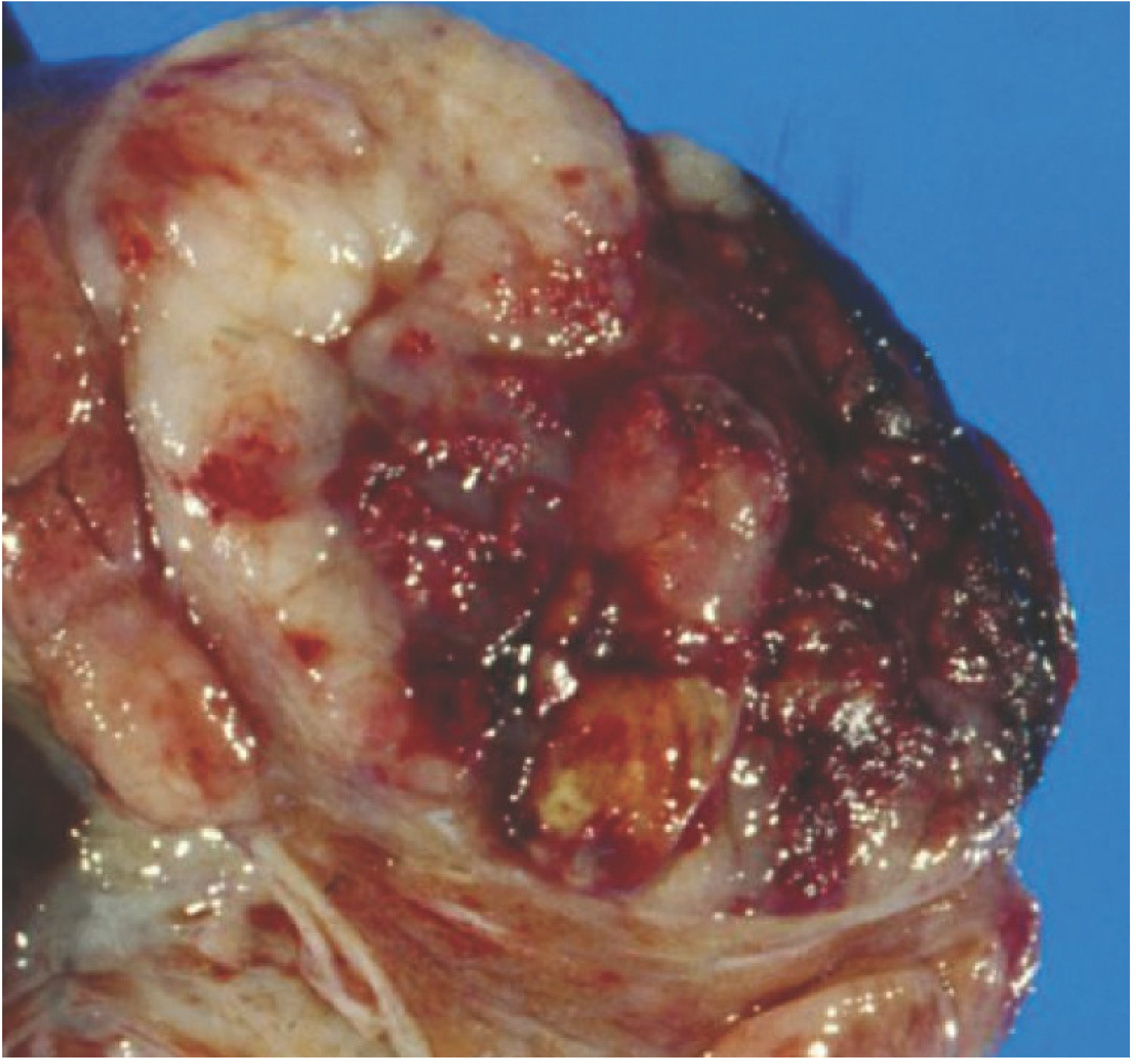
Gross Features
- Size usually 5 to 15 cm in diameter
- Slightly bosselated (lobulated) capsule
- Cut surface: fleshy and pale tan to gray-brown in color
- Principally solid with some cystic areas and necrosis
- Usually unilateral (10-15% bilateral)
Microscopic Features
The histologic characteristics are very distinctive:
- Large, round, ovoid, or polygonal cells - "primitive germ cells"
- Abundant, clear, very-pale-staining cytoplasm
- Large and irregular nuclei with prominent nucleoli
- Numerous mitotic figures
- Cells arranged in lobules and nests separated by fibrous septa
- Fibrous septa extensively infiltrated with lymphocytes, plasma cells, and granulomas (epithelioid cells and multinucleated giant cells)
- When necrosis is extensive, may mimic tuberculosis
- May contain syncytiotrophoblastic giant cells (associated with precocious puberty or virilization; does not alter prognosis)
- Presence of calcifications - search for underlying gonadoblastoma
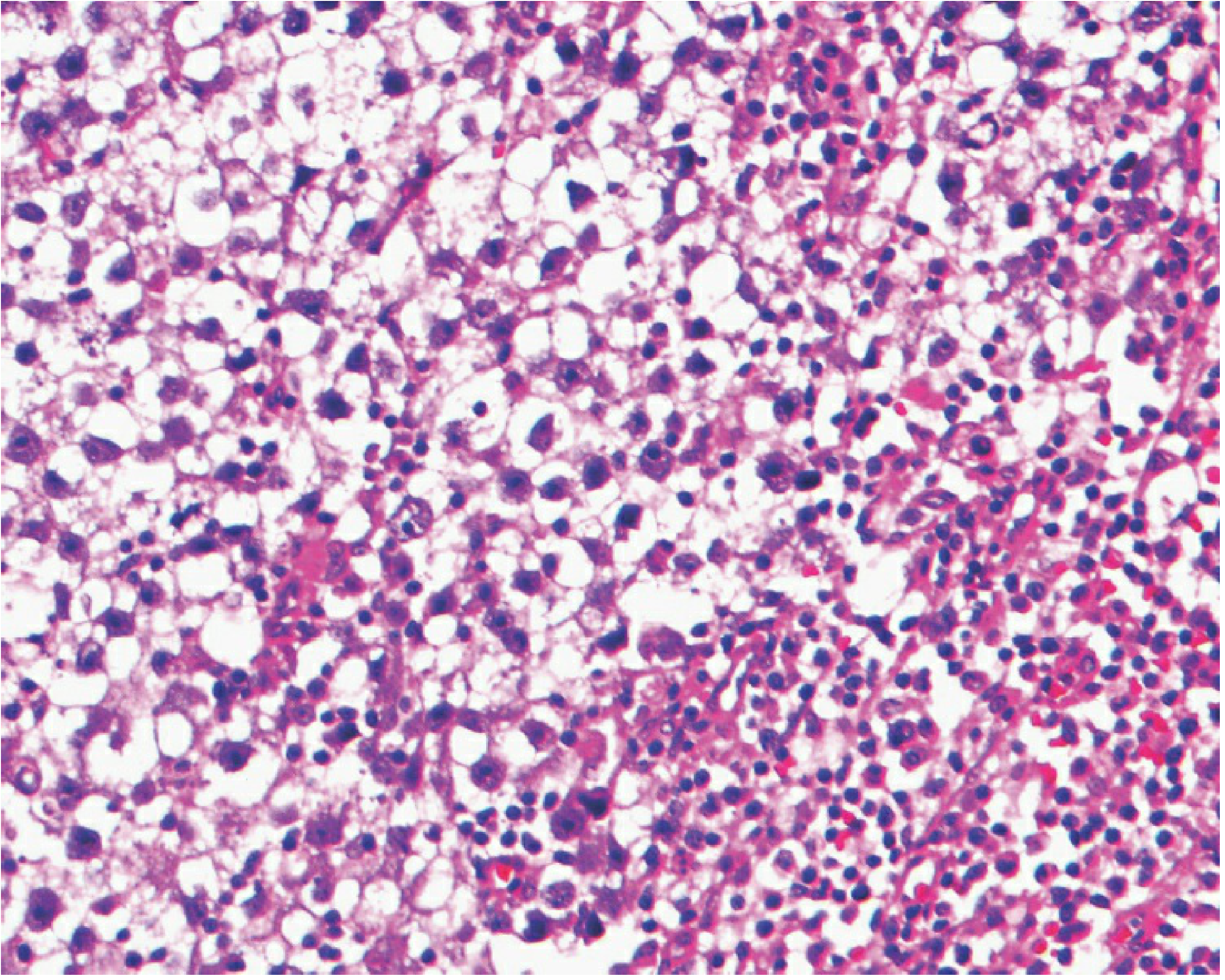
Labeled Diagram - Dysgerminoma Microscopy
DYSGERMINOMA - HISTOLOGICAL FEATURES
══════════════════════════════════════════
┌─────────────────────────────────────────┐
│ FIBROUS SEPTUM │
│ with lymphocytes (•) and │
│ epithelioid granulomas [G] │
└──────────┬──────────────────────────────┘
│
┌───────────▼──────────────────────────────┐
│ LOBULE / NEST │
│ │
│ O O O O O O O O O O O O │
│ O = Large round/polygonal cell │
│ - Clear, pale cytoplasm │
│ - Large irregular nucleus │
│ - Prominent nucleolus (1-2) │
│ - Mitotic figures present │
│ │
│ *ST* = Syncytiotrophoblast (some cases)│
│ [Ca2+] = Calcification (→ gonadoblast?)│
└──────────────────────────────────────────┘
IHC: PLAP (+), OCT3/4 (+), D2-40 (+), KIT (+)
AFP: Negative | hCG: Negative (unless ST cells present)
LDH: Often elevated (useful tumor marker)
Associations and Behavior
-
Because dysgerminoma is a GCT, it may coexist with other GCT elements (teratoma, choriocarcinoma, EST)
-
Germinomas also found in extragonadal sites: midline structures from pineal gland to mediastinum and retroperitoneum
-
Spreads via lymphatics to para-aortic nodes (similar to seminoma)
-
Highly radiosensitive and chemosensitive (BEP regimen: bleomycin, etoposide, cisplatin)
-
Prognosis is excellent with appropriate treatment
-
Fertility-sparing surgery (unilateral oophorectomy) is appropriate for stage I disease
-
Berek & Novak's Gynecology, pp. 2378-2380
PART 8: SUMMARY COMPARISON TABLE
| Feature | Seminoma (Testis) | Dysgerminoma (Ovary) | Teratoma (Testis) |
|---|---|---|---|
| Histological equivalent | Dysgerminoma | Seminoma | Immature/Mature teratoma (ovary) |
| Peak age | 40-50 yrs | 10-30 yrs | Any age |
| Gross | Homogeneous gray-white | Solid, tan-gray, bosselated | Heterogeneous, cystic + solid |
| Microscopy | Uniform clear cells, lymphocytes, fibrous septa | Same pattern; same cells | Tissues from all 3 germ layers |
| Spread | Lymphatic (para-aortic) then hematogenous | Lymphatic (para-aortic) | Lymphatic + hematogenous (adults) |
| Radiosensitivity | Exquisitely sensitive | Exquisitely sensitive | Resistant |
| Tumor marker | hCG 10% | LDH, hCG (if ST cells) | AFP 20-25% |
| Behavior | Malignant but favorable | Malignant but favorable | Benign (prepubertal); Malignant (adults) |
Sources:
- Robbins & Kumar Basic Pathology (Robbins Pathology), Chapter 16 - Male Genital System
- Robbins, Cotran & Kumar Pathologic Basis of Disease, Chapter 22 - Female Genital Tract
- Berek & Novak's Gynecology, Chapter 39 - Germ Cell Malignancies of the OvaryHere is the complete, detailed pathology answer covering all your questions, sourced directly from Robbins:
Pathology: Testicular & Ovarian Tumors + Fibroid Uterus
(Robbins Pathology - 2nd Year MBBS)
PART 1: CLASSIFICATION OF TESTICULAR TUMORS
WHO Classification
A. Germ Cell Tumors (95% of all testicular tumors; nearly all malignant)
I. Postpubertal type (derived from Germ Cell Neoplasia In Situ - GCNIS):
- Seminoma (~50%)
- Embryonal carcinoma
- Yolk sac tumor
- Choriocarcinoma
- Teratoma (malignant in adults)
- Mixed GCTs (~30-40%; most common: teratoma + embryonal carcinoma)
II. Spermatocytic tumor - distinct entity; NOT from GCNIS; older males (50-60 yrs); benign
III. Prepubertal type (NOT from GCNIS; benign behavior):
- Yolk sac tumor (most common in children <3 yrs)
- Teratoma (prepubertal; benign)
B. Sex Cord-Stromal Tumors (uncommon, usually benign):
- Leydig cell tumor, Sertoli cell tumor, Granulosa cell tumor
C. Mixed GCT-Sex Cord-Stromal: Gonadoblastoma
Summary Table of Testicular GCTs (Robbins & Kumar Basic Pathology, Table 16.1)
| Tumor | Peak Age | Morphology | Tumor Marker |
|---|---|---|---|
| Seminoma | 40-50 yrs | Sheets of uniform polygonal cells, clear cytoplasm; lymphocytes in stroma | hCG in 10% |
| Embryonal carcinoma | 20-30 yrs | Poorly differentiated pleomorphic cells; cords, sheets, papillae | AFP may be elevated |
| Spermatocytic tumor | 50-60 yrs | Small, medium, large polygonal cells; no inflammatory infiltrate | Negative |
| Yolk sac tumor | <3 yrs | Schiller-Duval bodies; microcysts, reticular pattern | AFP in 90% |
| Choriocarcinoma | 20-30 yrs | Cytotrophoblast + syncytiotrophoblast; no villus formation | hCG in 100% |
| Teratoma | All ages | Tissues from all 3 germ layers, varying differentiation | AFP in 20-25% |
| Mixed GCT | 15-30 yrs | Variable; depends on mixture | AFP + hCG variably elevated |
PART 2: SEMINOMA - GROSS AND MICROSCOPIC FEATURES + MORPHOLOGY + MODES OF SPREAD
Classical Seminoma - Pathogenesis
- Most common testicular GCT (~50% of all testicular GCTs)
- Virtually all arise from Germ Cell Neoplasia In Situ (GCNIS)
- Nearly all have isochromosome 12p [i(12p)] - extra copies of chromosome 12p short arm
- KIT oncogene mutations in up to 25%
- Risk factors: cryptorchidism (10% of cases), intersex syndromes, family history
GROSS FEATURES
- Soft, well-demarcated, lobulated gray-white homogeneous tumor
- Bulges prominently from the cut surface of the affected testis
- "Fish flesh" or "fleshy" appearance
- No hemorrhage (unlike embryonal carcinoma - key distinguishing feature)
- Large tumors may show foci of coagulative necrosis
- May be very large at diagnosis (remains confined to testis for long periods)
MICROSCOPIC FEATURES
- Large, uniform, polygonal cells with distinct cell borders
- Clear, glycogen-rich cytoplasm (PAS positive)
- Round nuclei with coarsely clumped chromatin
- Conspicuous nucleoli (1-2 prominent nucleoli per cell)
- Cells arranged in small lobules separated by delicate fibrous septa
- Lymphocytic infiltrate in the stroma (hallmark - T lymphocytes)
- May elicit granulomatous reaction (epithelioid cells, giant cells)
- In ~15% of cases, syncytiotrophoblast cells present (source of mildly elevated hCG)
Labeled Diagram - Classical Seminoma Histology
CLASSICAL SEMINOMA - HISTOLOGICAL FEATURES
═══════════════════════════════════════════
┌──────────────────────────────────────────────────────┐
│ FIBROUS SEPTUM │
│ (divides tumor into lobules) │
│ Contains: Lymphocytes (•) + Granulomas [G] │
└──────────────────┬───────────────────────────────────┘
│
┌──────────────────▼───────────────────────────────────┐
│ LOBULE OF TUMOR CELLS │
│ │
│ ○ ── ○ ── ○ ── ○ ── ○ ── ○ ── ○ │
│ │ │ │ │ │ │ │ │
│ ○ ○ ○ ○ ○ ○ ○ │
│ │
│ ○ = Large polygonal tumor cell: │
│ - Distinct cell borders │
│ - CLEAR glycogen-rich cytoplasm (PAS+) │
│ - Round nucleus │
│ - 1-2 PROMINENT NUCLEOLI │
│ │
│ • = Lymphocytes in stroma (HALLMARK) │
│ [G] = Epithelioid granuloma │
│ *ST* = Syncytiotrophoblast (15% cases; hCG+) │
└──────────────────────────────────────────────────────┘
IHC: PLAP (+), OCT3/4 (+), D2-40 (+), CD117/KIT (+)
AFP (-), CD30 (-)
hCG: mildly elevated in 10-15% (stage I)
MODES OF SPREAD of Seminoma
1. Lymphatic spread (primary and early route):
- First drains to iliac and para-aortic (retroperitoneal) lymph nodes
- This reflects the embryologic origin of the testis from the retroperitoneum
- NOT to inguinal nodes (unless scrotal skin is invaded - scrotal nodes only if skin infiltrated)
- Predictable, stepwise lymphatic progression
2. Hematogenous spread (late in course):
- Occurs late - distinguishes seminoma from NSGCTs
- Common metastatic sites: lungs, liver, bone, brain
- Seminoma characteristically spreads hematogenously much later than embryonal carcinoma
3. Direct local spread:
- Late involvement of epididymis, spermatic cord
- Usually well-contained by tunica albuginea early on
Clinical significance: Seminoma spreads in a predictable, stepwise lymphatic pattern and is exquisitely sensitive to radiation therapy and platinum-based chemotherapy. Stage I disease has ~99% cure rate.
PART 3: TERATOMA - DEFINITION, CLASSIFICATION & EXTRAGONADAL SITES
Definition
A teratoma is a germ cell tumor in which neoplastic germ cells differentiate along multiple somatic (non-germ) cell lineages, producing tissues derived from two or more (usually all three) embryonic germ layers: ectoderm, mesoderm, and endoderm. Elements may be mature or immature.
Classification
A. By Age/Pathogenesis:
| Feature | Prepubertal (Pediatric) | Postpubertal (Adult) |
|---|---|---|
| Origin | NOT from GCNIS | From GCNIS |
| i(12p) | Absent | Present |
| Behavior | Benign | Malignant (regardless of maturity) |
| Pure form | Common in infants/children | Rare (2-3%); usually mixed |
B. By Degree of Differentiation (Histological Classification):
-
Mature teratoma - well-differentiated adult-type tissues
- In ovary ("dermoid cyst"): mainly ectodermal (skin, hair, teeth, sebaceous glands) - almost always benign
- In prepubertal testis: benign
- In postpubertal testis: still malignant despite mature appearance
-
Immature teratoma - embryonal/fetal-type tissues
- Most common immature element: primitive neuroepithelium
- Graded 0-3 (based on amount of immature neural tissue per slide)
- Grade 0 = all mature; Grade 3 = >2 low-power fields immature neuroepithelium per slide
- More aggressive - can metastasize
-
Teratoma with somatic-type malignancy (rare)
- A secondary non-germ cell malignancy arises within the teratoma
- Examples: squamous cell carcinoma, adenocarcinoma, rhabdomyosarcoma, PNET
Gross Features of Testicular Teratoma
- Heterogeneous, variegated appearance - hallmark distinguishing from uniform seminoma
- Multiple cysts of varying sizes containing serous, mucinous, or sebaceous material, hair, teeth
- Solid areas with cartilage (white/grey), bone, or fibrous tissue
- Foci of hemorrhage and necrosis in postpubertal/malignant forms
Microscopic Features of Testicular Teratoma
- Tissues from all 3 germ layers in disorganized arrangement, embedded in fibrous/myxoid stroma:
- Ectoderm: Squamous epithelium, skin adnexa (sebaceous glands, hair follicles), neural tissue
- Mesoderm: Smooth/skeletal muscle bundles, islands of cartilage, bone, connective tissue
- Endoderm: Bronchial epithelium, intestinal wall structures, thyroid gland-like tissue, glandular epithelium
- Elements may be mature (adult-type) or immature (fetal-type)
Extragonadal Sites of Teratoma
Teratomas arise along the midline migration path of primordial germ cells (cranial to caudal):
EXTRAGONADAL TERATOMA SITES
(Midline migration path of primordial germ cells)
CRANIAL
│
[Intracranial] - Pineal gland, suprasellar region
│ (germinoma = seminoma equivalent in CNS)
│
[Anterior Mediastinum] - Most common ADULT extragonadal site
│ (50% of mediastinal GCTs)
│
[Retroperitoneum] - 2nd most common adult extragonadal site
│
[Sacrococcygeal] - Most common in NEONATES/infants
│ Most common solid tumor of newborns!
CAUDAL 4:1 female predominance
Other (rare): Neck, orbit, liver
Key facts:
- Sacrococcygeal teratoma - most common solid tumor of newborns; benign in neonates; malignant risk increases with age (if not excised early)
- Anterior mediastinal teratoma - most common in adults; right-sided; may be very large
- Intracranial teratoma - pineal region most common; may cause Parinaud syndrome
- Extragonadal teratomas arise because primordial germ cells migrate along the midline and may arrest at any site during migration
PART 4: TESTICULAR GERM CELL TUMORS - DESCRIBE ANY ONE (Seminoma, with full description above)
(See Part 2 for complete description of Seminoma)
All 7 GCT types enumerated in Table 16.1 above. For examination purposes, Seminoma is the most commonly asked "describe any one" GCT.
PART 5: FIBROID UTERUS (LEIOMYOMA) - GROSS, MICROSCOPIC, COMPLICATIONS
Definition
Uterine leiomyoma (fibroid) is a benign smooth muscle neoplasm of the uterus - the most common tumor in females.
Pathogenesis
- Most have normal karyotypes; ~40% have simple chromosomal abnormalities
- MED12 gene mutations (~70%) - encodes a component of the Mediator transcription complex
- Chromosomal rearrangements at 12q14 and 6p (HMGC/HMGIY genes)
- Associated with HLRCC syndrome (germline FH gene mutations)
GROSS FEATURES
- Sharply circumscribed, discrete, round, firm, gray-white tumors
- Multiple in most cases ("bag of worms" feel on palpation)
- Vary from tiny nodules to massive tumors filling the pelvis
- Locations in myometrium:
UTERINE LEIOMYOMA - LOCATIONS
══════════════════════════════
┌─────────────────────────────────────┐
│ [ENDOMETRIUM] │
│ ┌────┐ │
│ │(SM)│ SUBMUCOSAL │
│ └────┘ (causes most bleeding) │
│ ─────────────────────────────────── │
│ ┌──────────┐ ┌───┐ │
│ │ (IM) │ │(IM│ INTRAMURAL │
│ └──────────┘ └───┘ (most common)│
│ ─────────────────────────────────── │
│ [MYOMETRIUM] │
│ ┌──────────┐ │
│ │ (SS) │ SUBSEROSAL │
│ └────┬─────┘ │
│ │ pedunculated │
│ ─────┼───── SEROSA │
└──────────│─────────────────────────-┘
↓ (P) Pedunculated subserosal - can undergo torsion
- Cut section shows characteristic whorled pattern of smooth muscle bundles
- Large tumors show yellow-brown to red softening (degeneration)
MICROSCOPIC FEATURES
- Bundles of smooth muscle cells resembling normal myometrium
- Cells uniform: oval "cigar-shaped" nuclei, long slender bipolar cytoplasmic processes
- Scarce mitotic figures (key feature - distinguishes from leiomyosarcoma)
- Sharp demarcation from surrounding myometrium (pseudo-capsule)
- Hyalinization common in older/larger tumors
COMPLICATIONS
Symptoms and local complications:
- Abnormal uterine bleeding (menorrhagia) - especially submucosal
- Urinary frequency / hydronephrosis from compression
- Pelvic pain and pressure
- Infertility (distortion of endometrial cavity)
- Pedunculated tumors - torsion, ischemic necrosis
Degenerative changes (complication of growth):
- Hyaline degeneration - most common; replacement by collagen
- Cystic degeneration - liquefaction of hyalinized areas
- Carneous (Red) degeneration - infarction with hemolysis; especially in pregnancy (painful)
- Calcification - late, post-menopausal "womb stones"
- Fatty degeneration - rare
- Myxoid degeneration - gelatinous appearance
Pregnancy-related complications:
- Spontaneous abortion
- Fetal malpresentation
- Uterine inertia (failure to contract adequately during labor)
- Postpartum hemorrhage
Malignant transformation: Extremely rare; leiomyosarcomas arise de novo, not from fibroids
- Robbins, Cotran & Kumar Pathologic Basis of Disease, p.937
PART 6: GERM CELL TUMORS OF OVARY - CLASSIFICATION + DYSGERMINOMA
Classification of Ovarian Germ Cell Tumors
| Category | Examples |
|---|---|
| Dysgerminoma | Malignant; most common malignant GCT |
| Teratoma | Mature (dermoid cyst - benign); Immature (malignant); Monodermal (struma ovarii, carcinoid) |
| Yolk Sac Tumor | Endodermal sinus tumor; AFP elevated |
| Embryonal Carcinoma | Rare |
| Choriocarcinoma (non-gestational) | Rare; hCG elevated |
| Mixed GCT | 2+ elements; most common: dysgerminoma + EST |
| Gonadoblastoma | In dysgenetic gonads; often with dysgerminoma |
PART 7: DYSGERMINOMA - GROSS AND MICROSCOPIC FEATURES
Epidemiology
- Most common malignant ovarian GCT (30-40%)
- 75% occur between ages 10-30 years; 5% before age 10; rare after 50
- 20-30% of ovarian malignancies in pregnancy are dysgerminomas
- Histologically identical to testicular seminoma and CNS germinoma
GROSS FEATURES
- Usually 5-15 cm in diameter
- Slightly bosselated (lobulated) capsule
- Cut surface: fleshy, pale tan to gray-brown
- Principally solid with some cystic areas and necrosis
- Usually unilateral (bilateral in 10-15%)
MICROSCOPIC FEATURES
- Large, round/ovoid/polygonal "primitive germ cells"
- Abundant, clear, very-pale-staining cytoplasm
- Large, irregular nuclei with prominent nucleoli
- Numerous mitotic figures
- Cells in lobules and nests separated by fibrous septa
- Septa extensively infiltrated with lymphocytes, plasma cells, epithelioid granulomas with giant cells
- When necrosis is extensive, may mimic tuberculosis
- May contain syncytiotrophoblastic giant cells (→ precocious puberty/virilization; does not alter prognosis)
- Calcifications should prompt search for underlying gonadoblastoma
Labeled Diagram
DYSGERMINOMA - HISTOLOGICAL FEATURES
══════════════════════════════════════
┌──────────────────────────────────────────┐
│ FIBROUS SEPTUM │
│ • = Lymphocytes │
│ [G] = Epithelioid granuloma │
│ PC = Plasma cells │
└──────────────┬───────────────────────────┘
│
┌──────────────▼───────────────────────────┐
│ NEST / LOBULE │
│ │
│ ○ ○ ○ ○ ○ ○ ○ ○ ○ ○ ○ ○ ○ │
│ ○ = Large round primitive germ cell: │
│ - Clear/pale cytoplasm │
│ - Large irregular nucleus │
│ - 1-2 PROMINENT NUCLEOLI │
│ - Mitoses frequent │
│ │
│ *ST* = Syncytiotrophoblast (some cases)│
│ [Ca] = Calcifications → gonadoblastoma?│
└──────────────────────────────────────────┘
IHC: PLAP (+), OCT3/4 (+), D2-40 (+), KIT/CD117 (+)
Tumor markers: LDH elevated | hCG: only if ST cells present
AFP: Negative
Behavior and Spread
- Spreads via lymphatics to para-aortic lymph nodes (similar to seminoma)
- Hematogenous metastases occur late
- Exquisitely radiosensitive and chemosensitive (BEP regimen)
- Fertility-sparing surgery appropriate for Stage I
- Prognosis: excellent (5-year survival >90% for localized disease)
QUICK REVISION: TERATOMA vs. DYSGERMINOMA vs. SEMINOMA
| Feature | Teratoma | Dysgerminoma | Seminoma |
|---|---|---|---|
| Germ cell derivation | Pluripotent GC differentiates to somatic lines | Primordial GC (undifferentiated) | Primordial GC (undifferentiated) |
| Gross | Cystic + solid, heterogeneous | Solid, lobulated, tan-gray | Solid, homogeneous, gray-white |
| Microscopy | All 3 germ layers in disorganized arrangement | Large clear cells, fibrous septa, lymphocytes | Same as dysgerminoma |
| Tumor marker | AFP (20-25%) | LDH; hCG if ST cells present | hCG (10%) |
| Spread | Lymphatic + hematogenous (adults) | Lymphatic (para-aortic) | Lymphatic (para-aortic) |
| Radiosensitivity | Resistant | Exquisitely sensitive | Exquisitely sensitive |
Sources consulted:
- Robbins & Kumar Basic Pathology - Chapter 16 (Male Genital System), Table 16.1, Figs. 16.3, 16.4, 16.9
- Robbins, Cotran & Kumar Pathologic Basis of Disease - Chapter 22 (Female Genital Tract), p.937
- Berek & Novak's Gynecology - Chapter 39 (Germ Cell Malignancies), Figs. 39-18, 39-19
This is a shared conversation. Sign in to Orris to start your own chat.