
Multimorbidity
Reading File
Multimorbidity refers to the co-occurrence of two or more chronic conditions in the same person, with no single condition designated as the primary one. It is increasingly common, especially in older adults, and poses challenges for both patients and healthcare systems.
Searching sources...
Finding Sources
Searching PubMed
multimorbidity chronic conditions management
Searching the Web
multimorbidity definition epidemiology management 2024 2025
Good - I have strong sources. Let me now read the textbook sections in parallel.
Reading File
Reading File
Reading File
Reading File
Reading File
Finding Sources
I have rich textbook content. Let me now fetch the RA multimorbidity accumulation figure and search for management/polypharmacy content.
Loading Image
Finding Sources
Finding Sources
Reading File
Reading File
I now have comprehensive textbook content from multiple authoritative sources. Let me compile the full response.
Multimorbidity
Definition and Conceptual Framework
Multimorbidity is the co-occurrence of two or more chronic conditions in the same individual, with no single condition designated as the "index" disease. This is the definition adopted by the World Health Organization and is the most widely applied in both clinical practice and research.
It is distinct from comorbidity, which takes one condition as the primary focus and treats others as secondary. In multimorbidity, all conditions are viewed equally and their interactions are central to care - the patient, not the disease, is the unit of concern.
| Feature | Multimorbidity | Comorbidity |
|---|---|---|
| Focus | No index disease; patient-centered | Index disease is central |
| Conditions | All treated equally | Hierarchical importance |
| Interactions | Strong interaction among all conditions | Interaction only with index disease |
| Scope | Chronic conditions only | Any coexisting condition |
| Framework | Distinct entity, not sum of parts | Cluster of individual conditions |
- Rheumatology, 2-Volume Set (2022, Elsevier)
A related concept is complex multimorbidity: three or more chronic conditions affecting three or more different body systems within one person, which is expected to identify patients with the greatest care complexity.
Epidemiology and Prevalence
- In the general population, prevalence of multimorbidity is approximately 25%, but this varies enormously with age distribution.
- Over 65% of adults aged 65+ have two or more chronic conditions; nearly 25% have four or more.
- Multimorbidity is present in more than 70% of adults aged ≥75 years and in up to 90% of older heart failure patients.
- Prevalence is increasing globally and accrues earlier and faster in certain populations: Black adults have the earliest onset and highest prevalence; Latino adults develop multimorbidity most rapidly with aging.
- In rheumatoid arthritis (RA), approximately two-thirds of patients are multimorbid, with higher rates of cardiovascular disease, respiratory disease, depression, and osteoporosis. Multimorbidity accrues significantly faster in RA than in age-matched controls (mean slope difference 1.43, p <0.001):
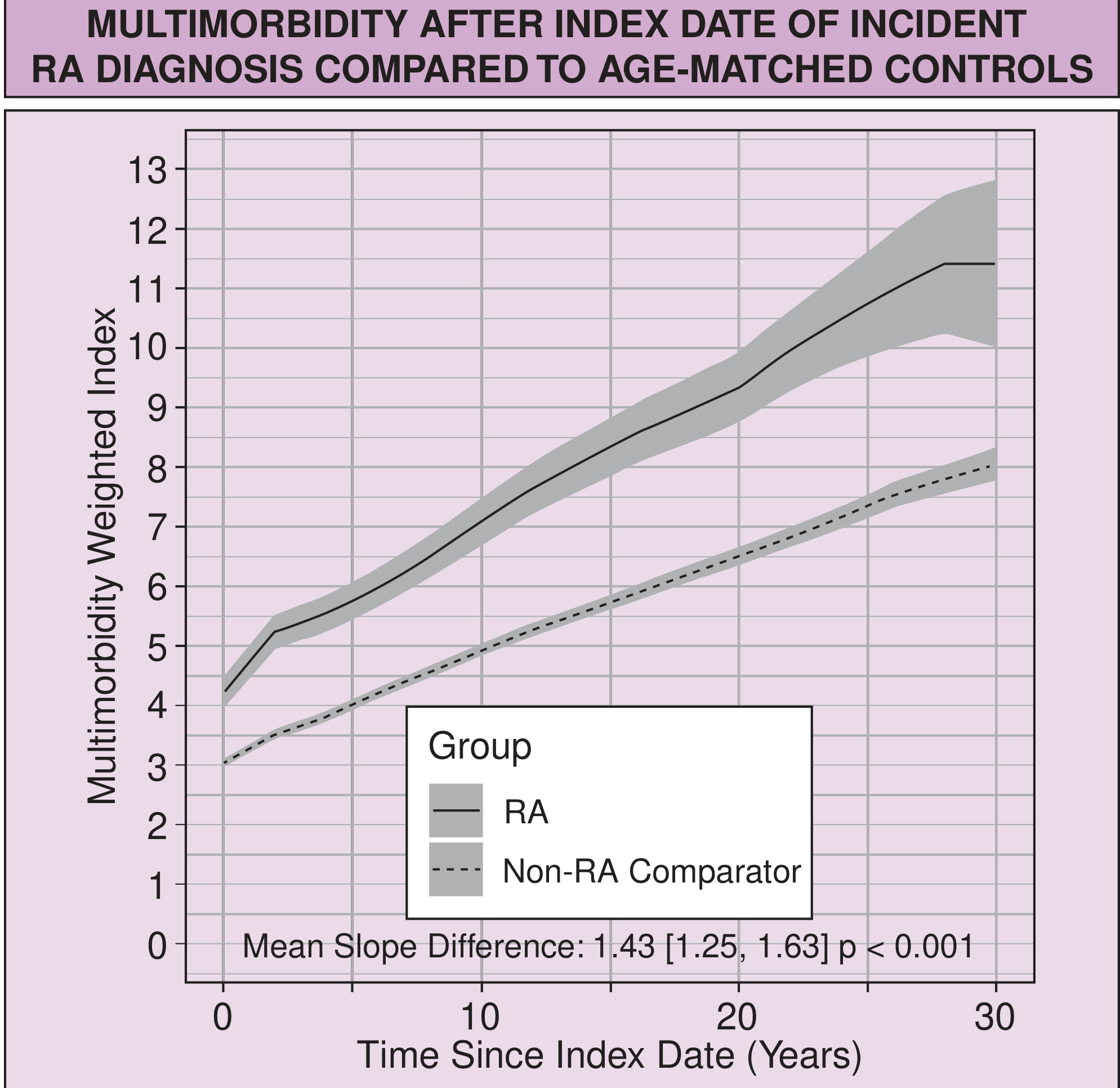
Fig. 42.1 - Multimorbidity after index date of incident RA diagnosis vs. age-matched controls (Rheumatology, 2-Volume Set, Elsevier)
The most common chronic conditions in older adults are hypertension, hyperlipidemia, arthritis, heart disease, and diabetes. Prevalence varies significantly by sex, race, and ethnicity. - Goldman-Cecil Medicine
Assessment and Measurement
No gold standard exists for measuring multimorbidity. A systematic review identified 39 different tools, with wide variation in the number and type of morbidities included. Most indices were developed for research (mortality prediction, cost estimation) and are poorly suited to direct clinical care.
A 2025 systematic review confirmed ongoing heterogeneity in multimorbidity assessment methods, with no consensus on what conditions should be included, by whom, or how frequently assessment should occur.
EULAR has developed points to consider for reporting, screening, and preventing selected comorbidities in chronic inflammatory conditions, recommending that conditions including cardiovascular disease, malignancies, infections, osteoporosis, peptic ulcer, and depression be assessed at least every 5 years in a standardized manner. - Rheumatology, 2-Volume Set
Clinical Impact
Disability and Functional Decline
The degree of multimorbidity directly predicts future disability. Self-reported difficulty in activities of daily living (ADL) increases stepwise as the number of medical conditions rises. Multiple chronic diseases have more than additive effects on physical functioning - the combined burden exceeds the sum of individual impairments. - Goldman-Cecil Medicine
Mortality Gap
Despite treatment advances (e.g., biologics in RA), a "mortality gap" persists in multimorbid patients. Multimorbidity accelerates decline through systemic inflammation, medication side effects, organ damage, and infections.
Cardiovascular Disease Context
In a Medicare study of patients with heart failure, stroke, or atrial fibrillation, 50% had five or more comorbidities. The number of comorbidities correlates strongly with hospitalizations, cost of care, and mortality. - Braunwald's Heart Disease
Multimorbidity shifts the therapeutic paradigm away from CVD-specific care toward one that considers CVD in the context of competing conditions and priorities. Many "evidence-based" CVD guidelines excluded patients with significant comorbidities, making their applicability to typical multimorbid patients uncertain.
Polypharmacy: A Core Challenge
Polypharmacy (generally defined as 5-9 or more simultaneous medications) is both a consequence of and contributor to multimorbidity:
- ~40% of U.S. adults aged 65+ take 5-9 medications; ~20% take 10 or more.
- An 80-year-old with multimorbidity (diabetes, COPD, hypertension, osteoporosis, degenerative joint disease) might reasonably be prescribed 12+ medications based on condition-specific guidelines - with potential for multiple drug-drug and drug-disease interactions.
- Adverse drug events cause >100,000 hospitalizations per year in older adults, primarily from anticoagulants, antiplatelet agents, insulin, cardiovascular drugs, and CNS drugs.
Drug-drug interactions arise especially when medications share metabolic pathways (e.g., amiodarone inhibiting CYP enzymes).
Drug-disease interactions occur when therapy for one condition harms another - beta-blockers for cardiac ischemia triggering bronchospasm in COPD; calcium channel blockers exacerbating constipation; diuretics worsening incontinence.
Management: Internists should serve as the "quarterback" for all prescribing, performing medication reconciliation at every visit and at care transitions. - Harrison's Principles of Internal Medicine 22E (2025)
Management Principles
1. Patient-Centered Care
People become progressively more heterogeneous with age. A fundamental challenge is integrating all conditions, geriatric syndromes, and patient values into a management plan that gives the greatest weight to what matters most to the patient while remaining sensitive to competing comorbidities. - Braunwald's Heart Disease
2. Shared Decision Making (SDM)
Patient preferences strongly affect adherence. Discrepancies between patients' and clinicians' treatment goals are well-documented. SDM tools improve alignment with patient priorities, though RCT evidence in treat-to-target rheumatic disease strategies remains limited.
3. Multidisciplinary and Integrated Care
Integrated care - connecting healthcare with human services and family/community support - is essential for patients with complex multimorbidity. Multidisciplinary teams (general practitioners, specialists, specialist nurses) improve coordination and reduce care fragmentation. A 2025 systematic review on multimorbidity management interventions found that comprehensive, individualized care plans with integrated team approaches produce the best outcomes.
4. Guideline Limitations
Clinical practice guidelines (CPGs) are typically developed for single diseases and often exclude multimorbid patients from trials. Applying multiple disease-specific CPGs simultaneously can produce contradictory recommendations and result in over-treatment. This is a recognized challenge requiring clinical judgment to prioritize among competing recommendations.
5. Health Economic Burden
- More than 75% of U.S. healthcare expenditures are for chronic conditions.
- More than 80% of Medicare expenses are devoted to patients with four or more chronic conditions.
- Costs rise exponentially with increasing number of conditions.
Associated Geriatric Syndromes
Multimorbidity frequently co-occurs with geriatric syndromes - conditions that arise from accumulated impairments across multiple domains rather than from a single disease process. These include:
- Frailty (vulnerability to stressors; shares inflammatory pathophysiology with CVD)
- Falls and balance impairment
- Cognitive impairment and dementia (nearly 14% of Americans over 70 have dementia)
- Sarcopenia (muscle loss and weakness, linked through IL-6/IGF-1 dysregulation)
- Delirium, urinary incontinence, malnutrition, sleep impairment, pressure ulcers
Multimorbidity, frailty, sarcopenia, polypharmacy, and geriatric syndromes compound each other, especially during hospitalizations, where older adults are particularly vulnerable to functional decline, medication errors, and delirium during care transitions. - Braunwald's Heart Disease
Recent Evidence (2023-2026)
| Study | Finding |
|---|---|
| Yao et al., 2025 (PMID 40213437) | Systematic review: no consensus on assessment methods; 39 tools identified with high heterogeneity |
| Grant et al., 2025 (PMID 40113476) | Systematic review: analgesic-related harms significantly higher in multimorbid patients |
| Hu et al., 2024 (PMID 38096988) | Meta-analysis: rising multimorbidity prevalence in China 2002-2022, mirroring global trends |
| Seakamela et al., 2025 | Scoping review: comprehensive, team-based interventions with individualized care plans most effective |
Key takeaway: Multimorbidity is the norm, not the exception, in older adults and in patients with chronic inflammatory diseases. It demands a patient-centered, multidisciplinary approach that prioritizes patient goals over single-disease targets, actively manages polypharmacy, and integrates care across providers - since standard guidelines were largely not built for this population.
This is a shared conversation. Sign in to Orris to start your own chat.