
Teach me epilepsy
Reading File
Now let me search the library for comprehensive epilepsy content in parallel:
Finding Sources
Finding Sources
Searching PubMed
"epilepsy" AND "classification"
Excellent. Now let me read the core epilepsy sections from Bradley & Daroff's Neurology and Adams & Victor's in parallel:
Reading File
Reading File
Finding Sources
Searching Images
epilepsy seizure classification types diagram
Good material. Let me now read more key sections in parallel — the detailed clinical description of seizure types, antiepileptic drugs, and status epilepticus:
Reading File
Finding Sources
Finding Sources
Reading File
Reading File
Finding Sources
Finding Sources
Reading File
Reading File
Finding Sources
I now have comprehensive material. Let me fetch a key image to include:
Loading Image
Loading Image
I now have everything needed for a comprehensive teaching response. Let me synthesize it all.
Epilepsy — A Comprehensive Overview
1. Definition
Epilepsy is a chronic neurological disorder defined by a predisposition to generate spontaneous, recurrent epileptic seizures. The ILAE 2014 practical definition requires:
- ≥2 unprovoked seizures >24 hours apart, or
- 1 unprovoked seizure with ≥60% probability of recurrence over the next 10 years (e.g., after a stroke, brain tumor, or abnormal EEG), or
- Diagnosis of an epilepsy syndrome
A seizure is a transient occurrence of signs/symptoms due to abnormal, excessive, or synchronous neuronal activity in the brain.
2. Epidemiology
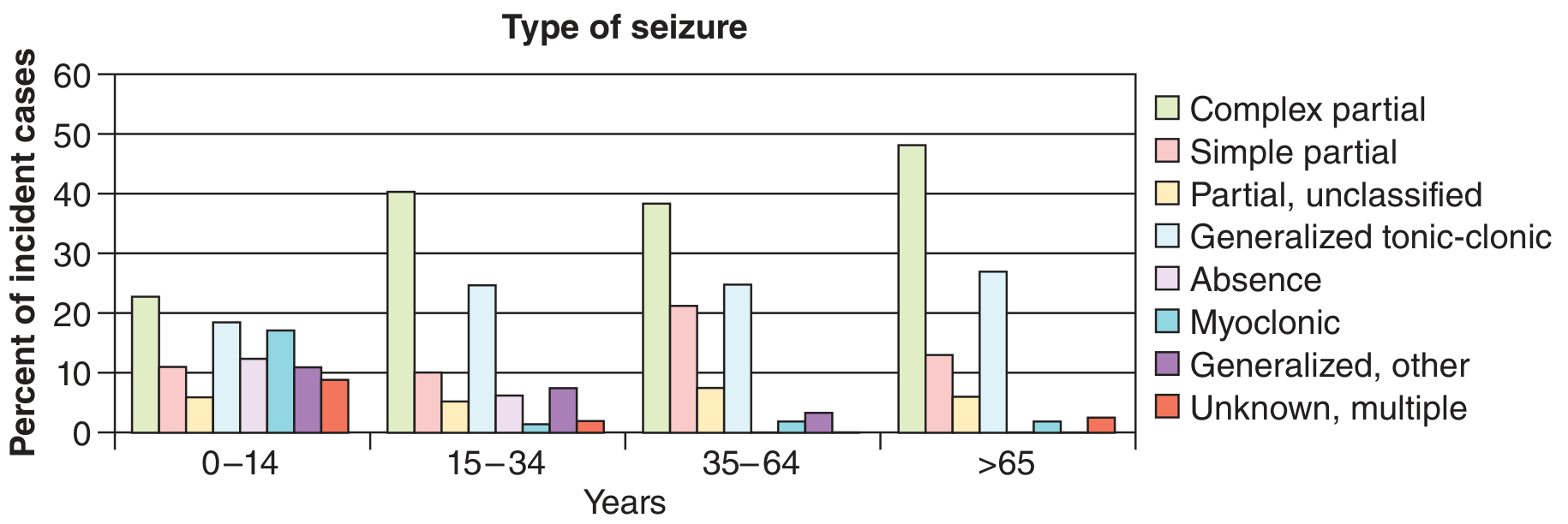
- Prevalence: ~1–2% of the global population (~50 million people worldwide)
- Incidence is bimodal: peaks in early childhood and again after age 65
- ~70% of patients achieve seizure control with appropriate medications; ~30% are treatment-resistant
3. Etiology
Etiology categories (ILAE 2017):
| Category | Examples |
|---|---|
| Structural | Stroke, tumor, traumatic brain injury, cortical malformations, hippocampal sclerosis |
| Genetic | SCN1A (Dravet), KCNQ2, juvenile myoclonic epilepsy |
| Infectious | Neurocysticercosis, meningitis/encephalitis, HIV |
| Metabolic | Hypoglycemia, hyponatremia, pyridoxine deficiency |
| Immune | Autoimmune encephalitis (anti-NMDAR, LGI1, CASPR2) |
| Unknown | No identifiable cause after full workup |
4. Pathophysiology
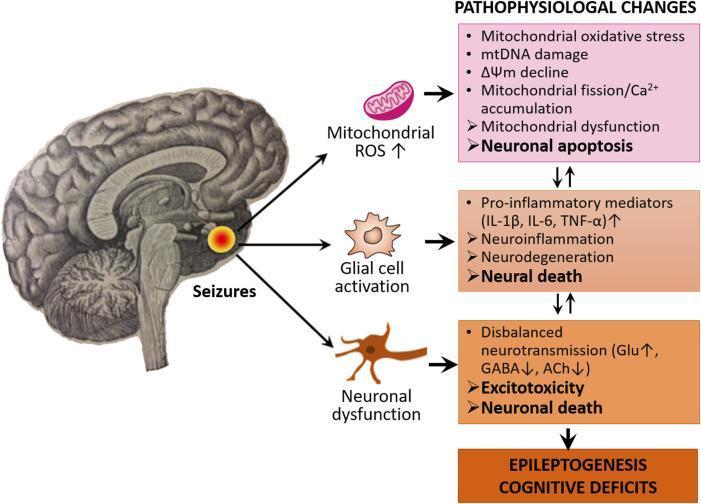
The core mechanism is an imbalance between excitatory (glutamatergic) and inhibitory (GABAergic) neurotransmission, resulting in abnormal synchronous neuronal firing.
At the cellular level:
- Ion channel dysfunction: Mutations in Na⁺, K⁺, Ca²⁺, and Cl⁻ channels alter neuronal excitability
- Burst firing: Neurons fire in high-frequency bursts (paroxysmal depolarization shifts, PDS) driven by voltage-gated Na⁺ and Ca²⁺ channels
- Loss of inhibition: Reduced GABA-A receptor function or GABAergic interneuron loss lowers the seizure threshold
- Excitotoxicity: Excess glutamate → excessive Ca²⁺ influx → neuronal injury
Epileptogenesis (the process of becoming epileptic):
After an initial brain insult (trauma, febrile seizure, stroke), a latent period of synaptic remodeling, mossy fiber sprouting, and neuroinflammation may transform normal brain into epileptic brain.
5. Classification (ILAE 2017)
Step 1 — Seizure Type
A. Focal Onset
Originate in one hemisphere. Subdivided by awareness:
- Focal aware (previously "simple partial"): Consciousness preserved; symptoms depend on focus location (motor, sensory, autonomic, psychic/aura)
- Focal impaired awareness (previously "complex partial"): Altered/lost awareness; often with automatisms (lip-smacking, hand-wringing)
- Focal to bilateral tonic-clonic: Focal onset that spreads to both hemispheres
B. Generalized Onset
Both hemispheres involved from onset — always impair consciousness:
| Type | Key Features |
|---|---|
| Tonic-clonic (grand mal) | Tonic phase (10–20 s rigidity, cyanosis, cry) → clonic phase (rhythmic jerks) → postictal confusion/sleep |
| Absence (petit mal) | 3–4 sec blank stare, subtle eye blinking; abrupt onset/offset; no postictal phase; 3 Hz spike-wave on EEG |
| Myoclonic | Brief, shock-like muscle jerks; often bilateral, no loss of consciousness |
| Tonic | Sudden muscle rigidity, no clonic phase |
| Atonic | Sudden loss of muscle tone → drop attack; high injury risk |
| Clonic | Rhythmic jerking without tonic phase |
C. Unknown Onset
Epileptic spasms (e.g., West syndrome in infants) fall here if onset is unclear.
Step 2 — Epilepsy Type
- Focal epilepsy (structural, immune, infectious, metabolic, genetic causes)
- Generalized epilepsy (largely genetic; associated with generalized spike-wave on EEG)
- Combined generalized and focal (e.g., Dravet syndrome)
- Unknown
Step 3 — Epilepsy Syndrome
A cluster of features (seizure type + EEG + imaging + age of onset + prognosis) that define a recognizable condition:
| Syndrome | Age | Key Features |
|---|---|---|
| West syndrome | Infancy | Infantile spasms, hypsarrhythmia EEG, intellectual disability |
| Dravet syndrome | Infancy | SCN1A mutation, febrile/prolonged seizures, cognitive decline |
| Childhood absence epilepsy | 4–12 yrs | Frequent brief absences, 3 Hz spike-wave, usually remits |
| Benign Rolandic epilepsy (BECTS) | 3–13 yrs | Centrotemporal spikes, nocturnal focal motor seizures, self-limited |
| Juvenile myoclonic epilepsy (JME) | Adolescence | Morning myoclonus, GTC seizures, lifelong |
| Lennox-Gastaut syndrome | Childhood | Multiple seizure types, slow spike-wave, severe intellectual disability |
| Temporal lobe epilepsy (TLE) | Any age | Focal impaired awareness, hippocampal sclerosis, most common drug-resistant epilepsy |
6. Clinical Presentation
Generalized Tonic-Clonic Seizure (GTCS) — the classic convulsion
- Prodrome (hours before, non-specific): mood change, irritability, myoclonic jerks on awakening
- Tonic phase (~10–20 s): sudden loss of consciousness; opisthotonos; vocalization ("epileptic cry"); cyanosis; pupils dilated and unreactive
- Clonic phase (~30 s): rhythmic, bilateral flexor spasms; autonomic surge (tachycardia, hypertension, salivation, sweating); possible tongue biting, urinary incontinence
- Postictal phase (minutes–hours): deep coma → confusion → drowsiness → headache; Todd's paralysis (transient focal weakness) may occur with focal onset
Temporal Lobe Seizure (most common focal seizure)
- Aura (focal aware portion): rising epigastric sensation (most common), déjà vu, fear, olfactory/gustatory hallucinations
- Impaired awareness phase: motionless stare, oro-alimentary automatisms (lip-smacking, chewing), hand automatisms
- Duration: 1–3 minutes
- Postictal confusion lasting minutes
Absence Seizure
- Abrupt onset: blank stare, subtle eyelid fluttering, cessation of activity
- Lasts 3–30 seconds; patient resumes immediately with no postictal period
- Can occur dozens to hundreds of times per day
- EEG: classic 3 Hz generalized spike-and-wave
7. EEG
The EEG is the most important diagnostic test. Key findings:
- Interictal epileptiform discharges (IEDs): spikes and sharp waves — present in ~90% of epilepsy patients on repeated EEGs (only ~2% of non-epileptic people show these)
- Ictal recording: capturing a seizure is the gold standard
- Photoparoxysmal response: generalized spike-wave triggered by photic stimulation (photosensitive epilepsy)
- Absence EEG: 3 Hz spike-wave with abrupt onset/offset
- Hypsarrhythmia: chaotic high-amplitude multi-focal spikes in West syndrome
- Normal interictal EEG does NOT exclude epilepsy
— Bradley & Daroff's Neurology in Clinical Practice
8. Diagnosis & Workup
| Test | Purpose |
|---|---|
| EEG (routine ± sleep-deprived) | Confirm epileptiform activity, classify seizure type |
| MRI brain (structural protocol) | Identify structural cause (hippocampal sclerosis, tumor, dysplasia) |
| Labs | Glucose, Na⁺, Ca²⁺, Mg²⁺, CBC, LFTs, toxicology |
| Prolonged video-EEG monitoring | Gold standard for pre-surgical evaluation; capture ictal event |
| Genetic testing | If onset in infancy or suspected genetic syndrome |
| Autoimmune panel | Anti-NMDAR, LGI1, CASPR2, GABA-B if autoimmune suspected |
| Lumbar puncture | If meningitis/encephalitis suspected |
First seizure evaluation: Rule out acute symptomatic causes (provoked seizures — do NOT require AED treatment); identify underlying etiology.
9. Antiepileptic Drugs (AEDs)
General Principles
- Start with monotherapy; ~50% of patients become seizure-free on first agent
- If first drug fails (efficacy or tolerability), try a second monotherapy
- After two adequate drug trials fail → drug-resistant epilepsy
- Drug choice depends on seizure/syndrome type, sex, age, comorbidities, teratogenicity
Major Drugs by Mechanism
| Drug | Mechanism | Indications | Key Limitations |
|---|---|---|---|
| Valproate | Na⁺ channel, GABA potentiation, NMDA inhibition, T-type Ca²⁺ channel | Broad-spectrum: focal, generalized, absence, JME | Teratogenicity (neural tube defects), weight gain, hepatotoxicity, PCOS; avoid in women of childbearing age |
| Phenytoin/Fosphenytoin | Na⁺ channel inhibitor | Focal and generalized; IV for status epilepticus | Nonlinear (saturable) pharmacokinetics, enzyme inducer, gingival hyperplasia, hirsutism, skin hypersensitivity (SJS) |
| Carbamazepine | Na⁺ channel inhibitor | Focal seizures, TLE | Enzyme inducer, hyponatremia, SJS (especially HLA-B*1502 in Asian patients), not for generalized epilepsy |
| Levetiracetam | SV2A (synaptic vesicle protein) binding | Broad-spectrum adjunctive | Behavioral side effects (irritability, aggression) |
| Lamotrigine | Na⁺ channel, glutamate release inhibition | Focal and generalized; safe in pregnancy | Slow titration required; SJS risk; reduced by enzyme inducers, doubled by valproate |
| Ethosuximide | T-type Ca²⁺ channel inhibitor | Absence seizures only | Narrow spectrum |
| Oxcarbazepine | Na⁺ channel inhibitor | Focal seizures | Less enzyme induction than carbamazepine; hyponatremia |
| Lacosamide | Na⁺ channel (slow inactivation enhancer) | Focal seizures | PR interval prolongation |
| Topiramate | Multiple: Na⁺ channel, GABA-A, AMPA/kainate inhibition | Focal, generalized; migraine prophylaxis | Cognitive dulling ("dope-a-max"), kidney stones, weight loss |
| Phenobarbital | GABA-A potentiation | Broad-spectrum; neonatal seizures; status epilepticus | Sedation, enzyme inducer, dependence |
| Perampanel | AMPA receptor antagonist | Focal and generalized (adjunctive) | Psychiatric side effects |
— Adams & Victor's Principles of Neurology, 12th ed., Table 15-5
Treatment-Resistant Epilepsy
~30% of patients fail to respond to adequate trials of ≥2 AEDs. Options:
- Ketogenic diet (especially children with Lennox-Gastaut, Dravet)
- Vagus nerve stimulation (VNS) — ~50% seizure reduction
- Surgical resection (best results: temporal lobectomy → 64% seizure-free)
- Responsive neurostimulation (RNS), deep brain stimulation (DBS)
10. Status Epilepticus (SE)
Definition: Seizure activity without return to baseline:
- GTCS: ≥5 minutes (previously 30 min, but brain injury begins earlier)
- Focal impaired awareness SE: ≥10 minutes
Most common cause: Acute brain insult in a person without epilepsy (also: AED non-compliance, autoimmune encephalitis, metabolic derangements)
Management (stepwise)
| Time | Stage | Treatment |
|---|---|---|
| 0–5 min | Premonitory | Airway, IV access, glucose, labs |
| 5–20 min | Early SE | Benzodiazepines: lorazepam 0.1 mg/kg IV, OR IM midazolam 10 mg (preferred prehospital); diazepam 5–10 mg IV |
| 20–40 min | Established SE | Second line: fosphenytoin 15–20 mg/kg, OR valproate 30–40 mg/kg, OR levetiracetam 30–60 mg/kg |
| >40 min | Refractory SE | ICU: continuous midazolam 0.1–0.4 mg/kg/h, propofol 1–3 mg/kg/h, pentobarbital 0.5–3 mg/kg/h; EEG monitoring |
— Goldman-Cecil Medicine, International Edition
11. Special Situations
Febrile Seizures
- Most common neurologic disorder in children < 5 years (4% incidence)
- Simple: brief, generalized, single episode per febrile illness; benign, minimal future risk
- Complex: focal, prolonged (>15 min), or repeated in one illness → increased risk of later epilepsy
- Temperature typically >38°C; herpesvirus 6 is a common trigger
- Prophylactic AEDs are NOT recommended for simple febrile seizures
Women with Epilepsy
- Catamenial epilepsy: seizure clustering around menstruation due to estrogen/progesterone fluctuations
- Valproate causes neural tube defects (risk ~1–2% if taken in first trimester), polycystic ovary syndrome, and intellectual disability in offspring — avoid in women of childbearing age
- Lamotrigine and levetiracetam are preferred in pregnancy
- Enzyme-inducing AEDs reduce efficacy of hormonal contraceptives
Driving and Social Restrictions
Patients must be seizure-free (jurisdiction-dependent, typically 3–12 months) before driving. Complete seizure control removes restrictions; physicians may have mandatory reporting obligations.
12. Prognosis
- ~70% achieve seizure freedom with medications
- ~50% of newly diagnosed epilepsy patients respond to the first AED
- Adding a second AED after first failure yields ~15% additional response
- After two drug failures: only ~5% respond to additional drugs → surgery should be considered
- ~65% of surgical candidates achieve long-term seizure freedom after resection
- Epilepsy carries a ~2–3× increased risk of premature death (SUDEP — sudden unexpected death in epilepsy; risk ~1/1000 per year)
Key Points Summary
| Concept | High-Yield Fact |
|---|---|
| 3 Hz spike-wave | Childhood absence epilepsy |
| Temporal lobe sclerosis | Most common cause of drug-resistant focal epilepsy |
| JME | Morning myoclonus + GTC; lifelong; valproate first-line (unless female) |
| Status epilepticus | ≥5 min GTCS; Rx: benzos → fosphenytoin/valproate/LEV → ICU sedation |
| Febrile seizure | Benign if simple; complex febrile seizures → increased epilepsy risk |
| AED + pregnancy | Avoid valproate; prefer lamotrigine or levetiracetam |
| Drug-resistant epilepsy | Failure of ≥2 adequate AED trials → surgery evaluation |
| SUDEP | Leading cause of death in young epilepsy patients; ~1/1000/year |
Primary sources: Adams & Victor's Principles of Neurology, 12th ed.; Bradley & Daroff's Neurology in Clinical Practice; Goldman-Cecil Medicine.
This is a shared conversation. Sign in to Orris to start your own chat.