
New placenta previa types
The classification of placenta previa has shifted away from the old 4-type system (complete, partial, marginal, low-lying) toward a simpler 2-category system.
Searching sources...
Reading File
Searching the Web
new classification placenta previa types 2023 2024 FIGO RCOG
Finding Sources
Searching Images
placenta previa classification types diagram
Finding Sources
Finding Sources
Finding Sources
Searching PubMed
placenta previa classification new terminology
I found a highly relevant passage in Creasy & Resnik's and the radiology textbook. Let me read those key sections in detail.
Reading File
Reading File
Reading File
I now have all the information I need. Let me also fetch the ultrasound image from Creasy & Resnik's for visual illustration.
Loading Image
Here is a comprehensive, up-to-date overview of placenta previa classification.
New Classification of Placenta Previa
The Old System (No Longer Used)
The historic 4-type system divided placenta previa into:
| Old Term | Definition |
|---|---|
| Complete (total) | Placenta completely covers the internal os |
| Partial | Placenta partially covers the internal os |
| Marginal | Placenta reaches but does not cover the internal os |
| Low-lying | Placenta in lower uterine segment, near but not reaching the os |
Multiple authoritative sources now explicitly state these terms are obsolete. As Creasy & Resnik's Maternal-Fetal Medicine states: "The previous categories of placenta previa - complete, partial, marginal - are no longer recommended." The radiology text Grainger & Allison's echoes this: "Terms such as partial, marginal or complete placenta previa are no longer used."
The New System (Current Standard)
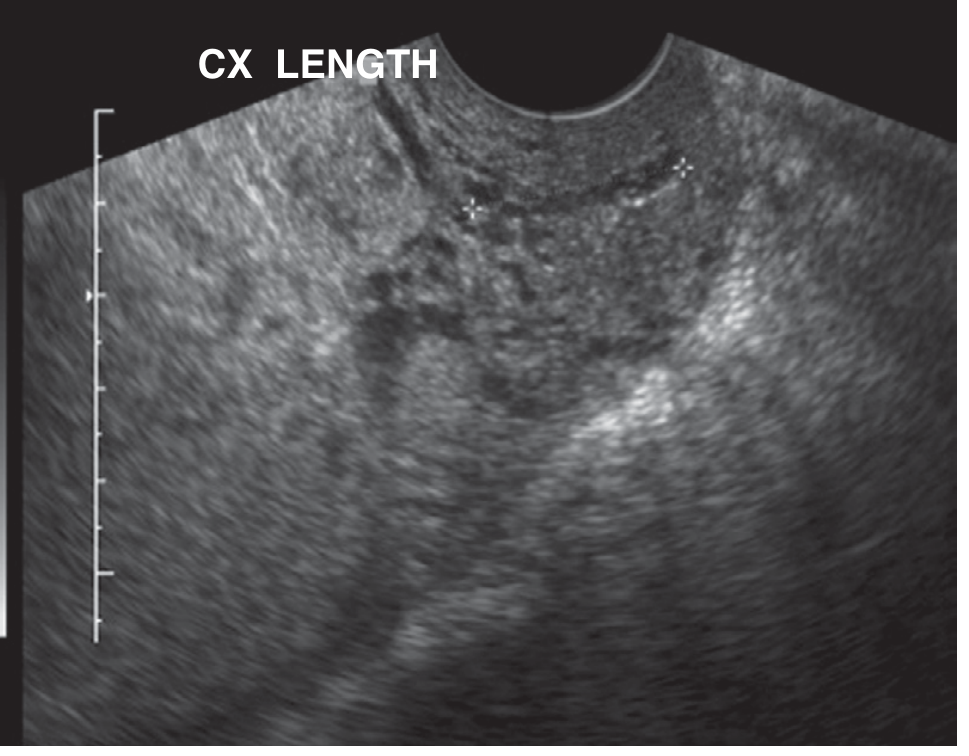
The modern classification uses sonographic measurement from the leading edge of the placenta to the internal cervical os (best done with transvaginal ultrasound):
| Current Term | Sonographic Finding | Clinical Implication |
|---|---|---|
| Normal placenta | Placental edge >20 mm from the internal os | No restriction on delivery route |
| Low-lying placenta | Placental edge ≤20 mm from the internal os but not covering it | Careful assessment; vaginal delivery possible if edge >10 mm from os in many guidelines |
| Placenta previa | Placenta covers the internal os | Cesarean delivery indicated |
The key diagnostic tool is transvaginal ultrasound (TVUS), which is safe even in active bleeding and gives far more accurate measurements than transabdominal scanning.
Why the Change?
- Intraobserver variability - The old categories relied on subjective description; measuring a distance in millimeters is objective and reproducible.
- Clinical relevance - Management decisions (especially whether vaginal delivery is safe) hinge on the exact distance from the os, not a category label.
- Dynamic nature - Placental position relative to the os can change as the lower uterine segment develops; a measurement reflects this precisely.
- Gestational age - Diagnosis should not be made before 18-20 weeks; a provisional diagnosis must be confirmed after 32 weeks, since up to 90% of "low-lying" placentas diagnosed in the second trimester resolve by term.
Ultrasound Measurement Thresholds
- >20 mm from os → normal, no further follow-up needed
- ≤20 mm but not covering → low-lying placenta; follow-up scan, delivery planning
- Covering the os by any amount → placenta previa
- ≤10 mm from os (or covering) → cesarean delivery generally recommended
- 10-20 mm from os → vaginal trial of labor may be considered with careful monitoring (some guidelines allow >10 mm, others use >20 mm as the safe threshold)
Important Associations to Know
- Placenta accreta spectrum (PAS) - always evaluate the underlying myometrium when previa is diagnosed, especially with a prior uterine scar
- Vasa previa - associated condition; fetal vessels cross the os and must be differentiated on Doppler
- Succenturiate lobe - important differential to exclude
Sources:
- Creasy & Resnik's Maternal-Fetal Medicine, Key Diagnostic Features (placenta previa chapter)
- Grainger & Allison's Diagnostic Radiology - Abnormal Placental Positions chapter
- Swanson's Family Medicine Review, p. 520 (Q12 explicitly states old terms are no longer used)
- RCOG Green-Top Guideline 27a update (2023-2024 review)
- SOGC Guideline No. 402 (JOGC): classifies as previa (covering os), low-lying (≤20 mm), or normal (>20 mm)
This is a shared conversation. Sign in to Orris to start your own chat.