

20260513_135944.jpg
What actually happen on the lower lip
Reading File
Looking at the image, I can see a small swelling/lump on the lower lip — it appears as a rounded, slightly raised lesion. Let me search the medical library for what this most likely is.
Finding Sources
Finding Sources
Searching the Web
lower lip swelling bump mucocele diagnosis clinical features
Now let me fetch the textbook image of a mucocele and read the relevant clinical description:
Reading File
Reading File
Loading Image
Based on the image and medical textbook evidence, here is what appears to be happening on your lower lip:
Most Likely: Mucocele (Oral Mucous Cyst)
Looking at your photo, there is a soft, rounded swelling on the inner/outer lower lip — this is highly characteristic of a mucocele, the most common inflammatory lesion of the minor salivary glands.
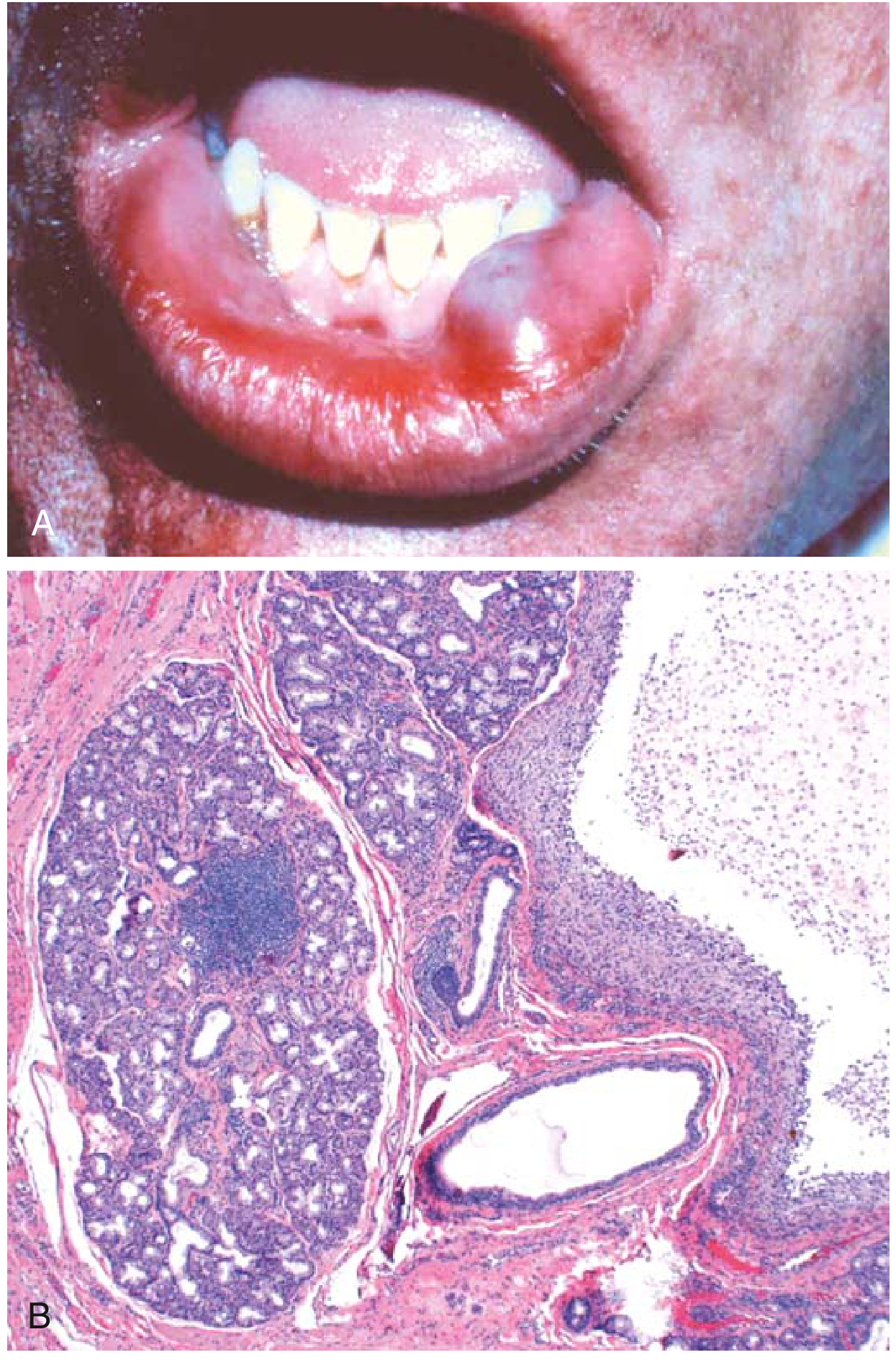
What is it?
A mucocele forms when a minor salivary gland duct is ruptured or blocked, usually from:
- Accidental lip biting (most common cause — the lower lip sits right between the teeth)
- Sucking or chewing habits
- Minor trauma to the mouth
Saliva (mucin) leaks out of the broken duct into the surrounding tissue, forming a cyst-like, fluid-filled pocket.
Typical Features (matching what's visible)
| Feature | Description |
|---|---|
| Location | Inner lower lip — 75% of all mucoceles occur here |
| Appearance | Soft, rounded, smooth-surfaced swelling; may look translucent or bluish |
| Size | Usually 2–10 mm |
| Texture | Fluctuant (squishy), painless |
| Behavior | May change size (especially around meals); can rupture and shrink, then refill |
"It presents as a soft, rounded, translucent projection and usually has a bluish tint... painless, fluctuant, and tense." — Andrews' Diseases of the Skin
Is it dangerous?
No — mucoceles are benign and harmless. They do not become cancerous. However, they often recur if not properly treated because the underlying gland keeps producing mucus.
Treatment Options
- Wait and watch — Small mucoceles sometimes rupture on their own
- Excision (minor surgery) — Most reliable; the lesion and the responsible minor salivary gland are removed together. This is the definitive treatment
- Cryotherapy (freezing) — Used for smaller, superficial lesions
- Laser ablation — Also reported as effective
When to See a Doctor
See a dentist or oral surgeon if:
- The swelling persists beyond 2–4 weeks
- It is growing in size
- It is interfering with eating, speaking, or biting
- You are unsure of the diagnosis (a biopsy will confirm it)
Important disclaimer: This is a visual assessment and general information only. Only a dentist or oral medicine specialist can give you a proper clinical diagnosis. If this lesion is firm rather than soft/fluctuant, or if it ulcerates or bleeds, see a clinician promptly.
No pain, like a scar , pt removes it when the pt is in deep thinking or anxiety no swelling white spot like
Finding Sources
Finding Sources
Searching the Web
white spot lower lip painless picking anxiety habit morsicatio lip biting keratosis
Reading File
Finding Sources
This changes the picture significantly. With those additional details — no pain, no swelling, white spot, picks/removes it during anxiety or deep thinking — this is most consistent with:
Morsicatio Labiorum (Chronic Lip Biting/Picking Habit)
This is not a mucocele. What you're describing is a behavioral-induced frictional keratosis of the lower lip.
What's Happening
When a person repeatedly bites, picks, or rubs their lower lip — especially subconsciously during stress or anxiety — it causes chronic low-grade trauma to the mucosal surface. The skin responds by thickening and producing extra keratin (a protective protein), creating a white, slightly raised, rough or scar-like patch.
The fact that the patient picks it off during anxious moments, and it keeps coming back, is the hallmark of this condition.
"A lip-biting habit can produce a slightly granular hyperkeratotic surface alteration — so-called morsicatio. No evidence suggests that chronic frictional trauma transforms into dysplastic or frankly malignant disease." — Cummings Otolaryngology
Key Features That Match
| Feature | In This Patient |
|---|---|
| White spot / scar-like | ✅ Hyperkeratotic (thickened) epithelium |
| No pain | ✅ Frictional keratosis is typically painless |
| No swelling | ✅ Not a cyst — just surface thickening |
| Picks it off during anxiety | ✅ Classic Body-Focused Repetitive Behavior (BFRB) |
| Keeps recurring | ✅ Because the habit perpetuates the trauma |
The Behavioral Component
This fits within a category called Body-Focused Repetitive Behaviors (BFRBs) — which includes lip biting, cheek chewing, skin picking — all triggered by:
- Anxiety
- Deep concentration / thinking
- Stress or boredom
It's subconscious — the person often doesn't notice they're doing it. The physical lesion (the white spot) actually reinforces the habit because the irregular texture makes the area feel "different," drawing the tongue and fingers back to it.
Is it Dangerous?
No — frictional keratosis from lip biting does not become cancer. However, if the white patch:
- Cannot be wiped off
- Is growing rapidly
- Has a red component (erythroleukoplakia)
- Persists after stopping the habit
...then a dentist/oral medicine specialist should evaluate it to rule out true leukoplakia (which carries a small malignant transformation risk).
What Helps
- Awareness — Recognizing the trigger (anxiety, deep thought) is the first step
- Habit replacement — Chewing gum, using a lip balm, or keeping hands busy
- Stress management — The root cause; CBT (Cognitive Behavioral Therapy) is effective for BFRBs
- Dental evaluation — If a sharp tooth edge is contributing, smoothing it helps remove the stimulus
- The white patch heals on its own once the habit stops
This is a shared conversation. Sign in to Orris to start your own chat.