
Pathogenesis and biochemical/ tissue effects of familial hypercholesterolemia/ ldl receptor mechanism md pathology exam robbins based exam
Reading File
Reading File
Finding Sources
Finding Sources
Finding Sources
Searching PubMed
"familial hypercholesterolemia" AND "LDL receptor"
Searching the Web
familial hypercholesterolemia LDL receptor pathway mechanism authoritative overview
Reading File
Reading File
Finding Sources
Finding Sources
Reading File
Reading File
Reading File
Searching Images
diagram LDL receptor mediated endocytosis receptor recycling familial hypercholesterolemia
Reading File
Reading File
Reading Web Page
https://www.genome.gov/Genetic-Disorders/Familial-Hyperchole…
Familial hypercholesterolemia (FH): Robbins-based pathology answer
Definition: Familial hypercholesterolemia is an autosomal dominant receptor disease characterized by markedly raised plasma LDL cholesterol from birth, most commonly due to loss-of-function mutations of the LDL receptor (LDLR). The principal consequence is premature atherosclerosis and ischemic heart disease. Robbins & Kumar Basic Pathology, p. 111.
1. Normal LDL receptor pathway
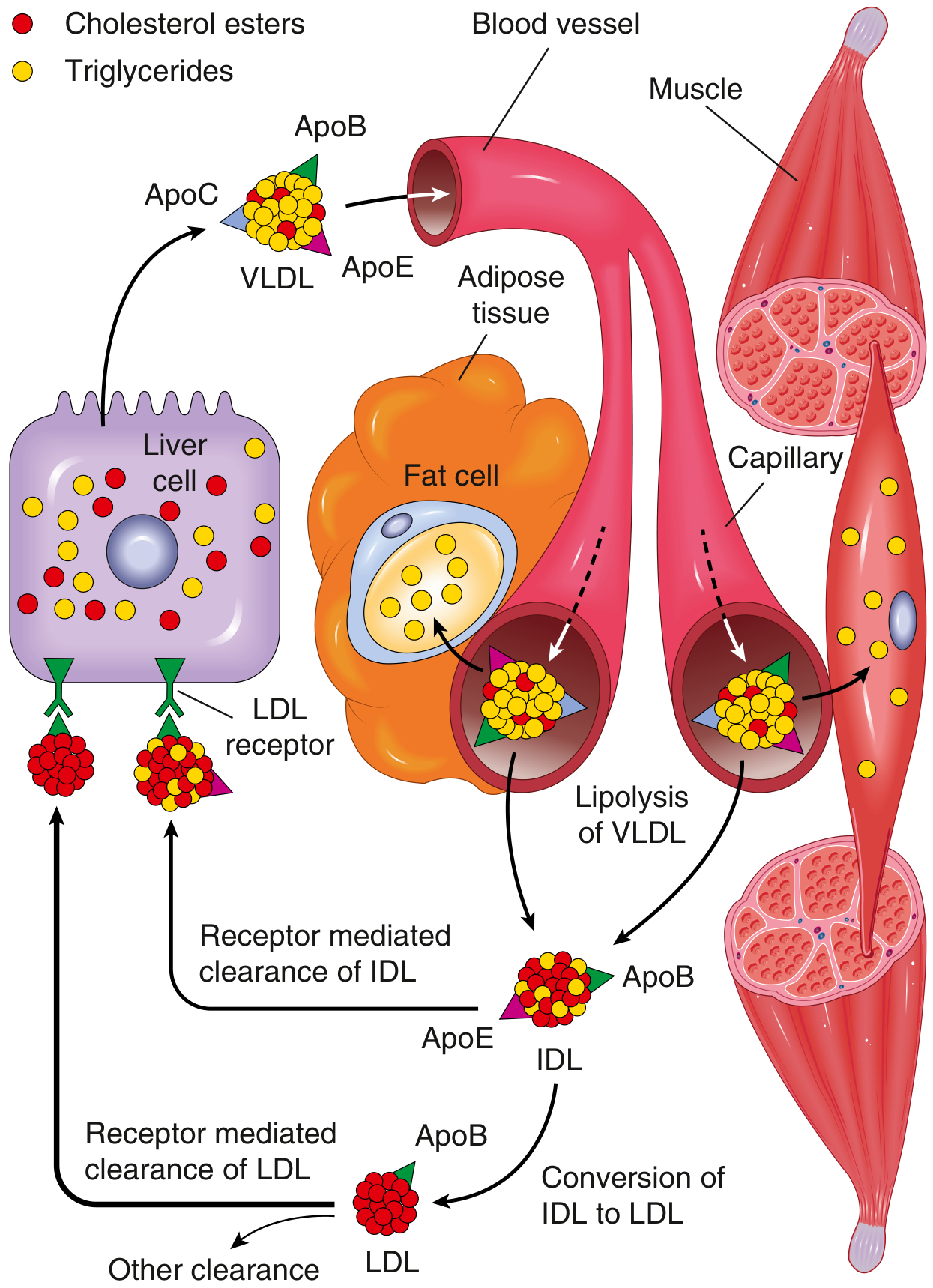
Normal LDL metabolism
- Liver secretes VLDL.
- VLDL loses triglyceride through lipoprotein lipase and becomes IDL.
- Most IDL is taken up by the liver; some loses apoE and becomes cholesterol-rich LDL.
- LDL contains apoB-100, its major receptor-binding apoprotein.
- The LDL receptor binds apoB-100 on LDL and apoE on IDL.
- About 75% of LDL receptors are on hepatocytes, making the liver the principal organ for clearing circulating LDL. The receptor pathway normally handles about two-thirds of LDL particles. Robbins & Kumar Basic Pathology, p. 111.
Receptor-mediated endocytosis
LDL (apoB-100) binds LDLR on hepatocyte surface
→ receptor-ligand complexes cluster in clathrin-coated pits
→ endocytosis into vesicles/endosomes
→ acidic endosomal environment separates LDL from receptor
→ receptor usually recycles to cell surface
→ LDL is delivered to lysosomes
→ cholesteryl esters are hydrolyzed, releasing free cholesterol.
→ receptor-ligand complexes cluster in clathrin-coated pits
→ endocytosis into vesicles/endosomes
→ acidic endosomal environment separates LDL from receptor
→ receptor usually recycles to cell surface
→ LDL is delivered to lysosomes
→ cholesteryl esters are hydrolyzed, releasing free cholesterol.
Effects of cholesterol entering a normal cell
Intracellular cholesterol exerts negative feedback:
- Inhibits HMG-CoA reductase → decreases de novo cholesterol synthesis.
- Activates ACAT → converts free cholesterol to cholesteryl esters for storage.
- Decreases LDL receptor synthesis → reduces further cholesterol uptake.
- Increases PCSK9 expression; PCSK9 promotes lysosomal degradation of endocytosed LDL receptors rather than their recycling. Robbins & Kumar Basic Pathology, p. 111.
2. Molecular basis of FH
Main genetic defects
| Defect | Mechanism | Approximate contribution |
|---|---|---|
| LDLR loss-of-function mutation | Decreased receptor synthesis, defective receptor transport to cell surface, defective LDL binding, internalization, or receptor recycling | 80%-85% |
| APOB mutation | Defective apoB-100 ligand, so LDL binds poorly to LDLR | 5%-10% |
| PCSK9 gain-of-function mutation | Excess LDLR degradation and reduced receptor recycling | 1%-2% |
The commonest mechanism is an LDLR mutation causing a folding defect. The mutant receptor fails to reach the plasma membrane. Robbins & Kumar Basic Pathology, p. 111.
3. Pathogenesis: why LDL cholesterol rises
A. Reduced hepatic LDL clearance
Defective or decreased surface LDL receptors mean that hepatocytes cannot efficiently remove LDL from plasma.
Result: decreased LDL catabolism → marked elevation of plasma LDL cholesterol.
B. More IDL becomes LDL
Normally, hepatocyte LDL receptors remove a large proportion of IDL. In FH, impaired hepatic receptor-mediated uptake means more IDL remains in the circulation and is converted to LDL.
Result: increased LDL production.
C. Loss of feedback inhibition on cholesterol synthesis
With reduced receptor-mediated entry of LDL into hepatocytes, intracellular hepatic cholesterol is relatively reduced. Therefore, normal inhibition of HMG-CoA reductase is lost.
Result: increased endogenous cholesterol synthesis.
Key one-line mechanism
FH causes hypercholesterolemia by the combined effects of decreased LDL clearance and increased LDL generation/synthesis.
This is the high-yield Robbins explanation. Robbins & Kumar Basic Pathology, p. 111.
4. Tissue and biochemical effects of excess LDL
1. Arterial wall: accelerated atherosclerosis
High circulating LDL crosses a dysfunctional endothelium and accumulates in the arterial intima.
LDL in intima
→ oxidation by reactive oxygen species from endothelial cells and macrophages
→ oxidized LDL
→ uptake by macrophage scavenger receptors
→ macrophage foam cells
→ fatty streak
→ cytokines, chemokines, growth factors, and chronic inflammation
→ smooth-muscle migration/proliferation and extracellular-matrix deposition
→ atheromatous plaque.
→ oxidation by reactive oxygen species from endothelial cells and macrophages
→ oxidized LDL
→ uptake by macrophage scavenger receptors
→ macrophage foam cells
→ fatty streak
→ cytokines, chemokines, growth factors, and chronic inflammation
→ smooth-muscle migration/proliferation and extracellular-matrix deposition
→ atheromatous plaque.
Scavenger receptors are not adequately downregulated by intracellular cholesterol. Thus macrophages continue taking up modified LDL and become lipid-laden foam cells.
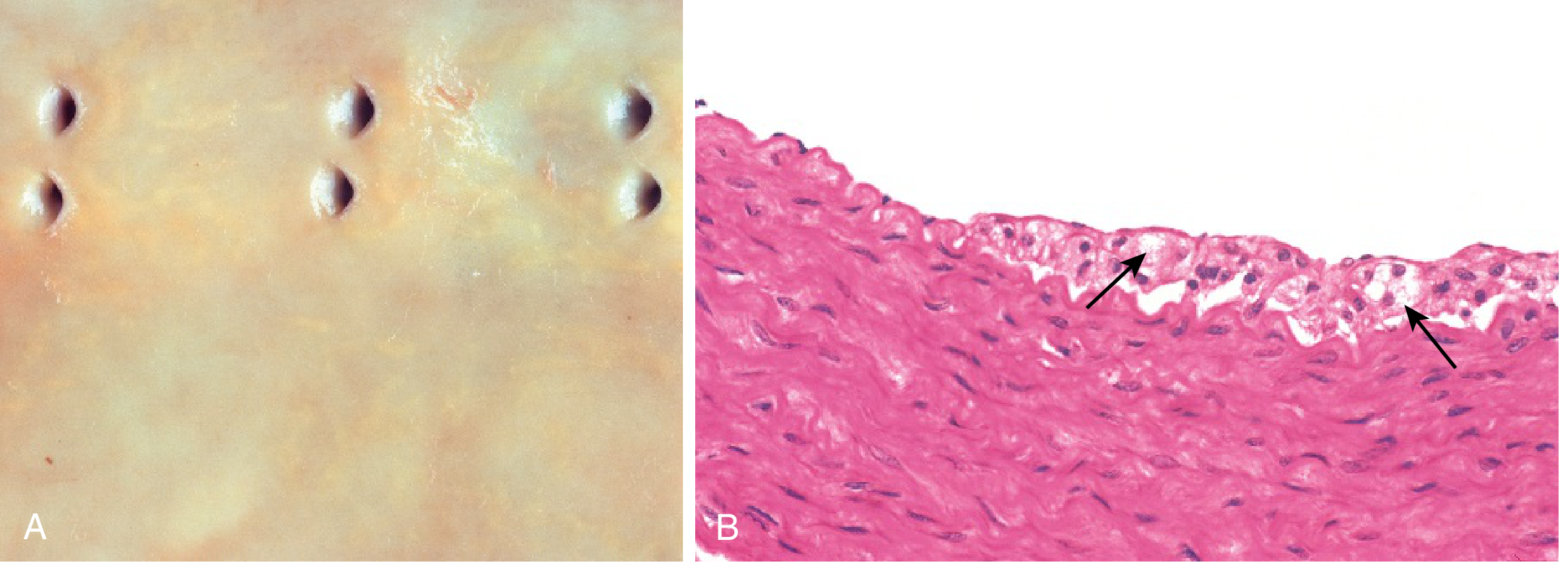
Robbins emphasizes that oxidized LDL is pro-inflammatory and cytotoxic to endothelial cells and smooth muscle cells; cholesterol crystals also stimulate inflammasome-mediated inflammation. Robbins & Kumar Basic Pathology, pp. 317-318.
Clinical tissue result: early and severe coronary atherosclerosis, potentially causing premature myocardial infarction.
2. Tendons and skin: xanthomas
Excess circulating cholesterol is taken up by monocytes/macrophages in tissues through scavenger receptors.
- Tendon xanthomas: particularly along tendon sheaths, classically Achilles tendon and extensor tendons of hands.
- Cutaneous xanthomas: especially prominent and early in severe homozygous disease.
- Histologically: aggregates of cholesterol-laden foam cells in connective tissue.
3. Cornea
Cholesterol deposition at the corneal periphery produces corneal arcus, especially significant when present in a young person.
4. Heart and major arteries
- Premature coronary artery disease
- Angina, myocardial infarction, sudden cardiac death
- Severe disease can affect aortic root and valves, especially in homozygous FH
5. Heterozygous versus homozygous FH
| Feature | Heterozygous FH | Homozygous FH |
|---|---|---|
| Inheritance | One abnormal allele | Two abnormal alleles |
| Plasma cholesterol | About 2-3 fold increased | Often more than 5 fold increased |
| Physical lesions | Tendon xanthomas often emerge later | Cutaneous xanthomas in childhood |
| Atherosclerosis | Premature, usually manifests in adult life | Severe, very early |
| Myocardial infarction | Early adulthood possible | May occur before age 20 |
Robbins & Kumar Basic Pathology, p. 111. The NHGRI overview similarly describes lifelong LDL elevation and much more severe premature cardiovascular disease in homozygotes.
6. Exam flowchart
LDLR loss-of-function mutation
        ↓
↓ LDL receptor expression / LDL binding / receptor-mediated endocytosis
        ↓
↓ Hepatic uptake and catabolism of LDL
        ↓
More IDL remains in plasma → conversion to LDL
        ↓
↓ Intracellular hepatic cholesterol feedback
        ↓
↑ HMG-CoA reductase activity and cholesterol synthesis
        ↓
Marked ↑ plasma LDL cholesterol
        ↓
LDL deposition in intima and connective tissues
        ├─ Oxidized LDL → macrophage scavenger uptake → foam cells
        │  → fatty streak → atherosclerotic plaque
        └─ Macrophage lipid deposition in tendons/skin
           → xanthomas
        ↓
Premature CAD and myocardial infarction
7. Short-note answer for an MD pathology exam
Familial hypercholesterolemia is an autosomal dominant disorder caused most commonly by loss-of-function mutations in LDLR. Less commonly, mutations in APOB impair LDL binding to the receptor, while gain-of-function PCSK9 mutations enhance receptor degradation. The LDL receptor, especially abundant on hepatocytes, normally binds apoB-100-containing LDL and apoE-containing IDL and internalizes them by receptor-mediated endocytosis. In FH, defective receptor surface expression or endocytosis causes decreased hepatic LDL clearance. Impaired hepatic IDL uptake also causes more IDL conversion to LDL. Reduced intracellular cholesterol removes normal feedback inhibition of HMG-CoA reductase, contributing to increased cholesterol synthesis. Thus plasma LDL rises markedly due to reduced catabolism and increased production. LDL accumulates in arterial intima, becomes oxidized, and is taken up by macrophage scavenger receptors, forming foam cells and promoting inflammation and atherosclerosis. Cholesterol accumulation in tissue macrophages causes tendon and cutaneous xanthomas and may produce corneal arcus. Heterozygotes have 2-3 fold elevated cholesterol and premature CAD in adult life; homozygotes have more than 5 fold elevations, childhood xanthomas, and may die of MI before age 20. Robbins & Kumar Basic Pathology, p. 111.
This is a shared conversation. Sign in to Orris to start your own chat.