
Banded krait mli
The banded krait (Bungarus fasciatus) is a highly venomous elapid snake found across South and Southeast Asia. Its venom is primarily neurotoxic, causing flaccid paralysis. Let me pull up detailed clinical information from the medical library.
Searching sources...
Reading File
Finding Sources
Finding Sources
Searching Images
banded krait Bungarus fasciatus snake envenomation
Good - I found dedicated sections. Let me read the content from all three sources simultaneously.
Reading File
Reading File
Reading File
Now let me fetch the banded krait image and search for venom/clinical features content in parallel.
Loading Image
Loading Image
Finding Sources
Now let me read the full venom and clinical section from the Essentials textbook.
Reading File
I now have enough comprehensive information to give a full answer. Let me compile it.
Banded Krait (Bungarus fasciatus)
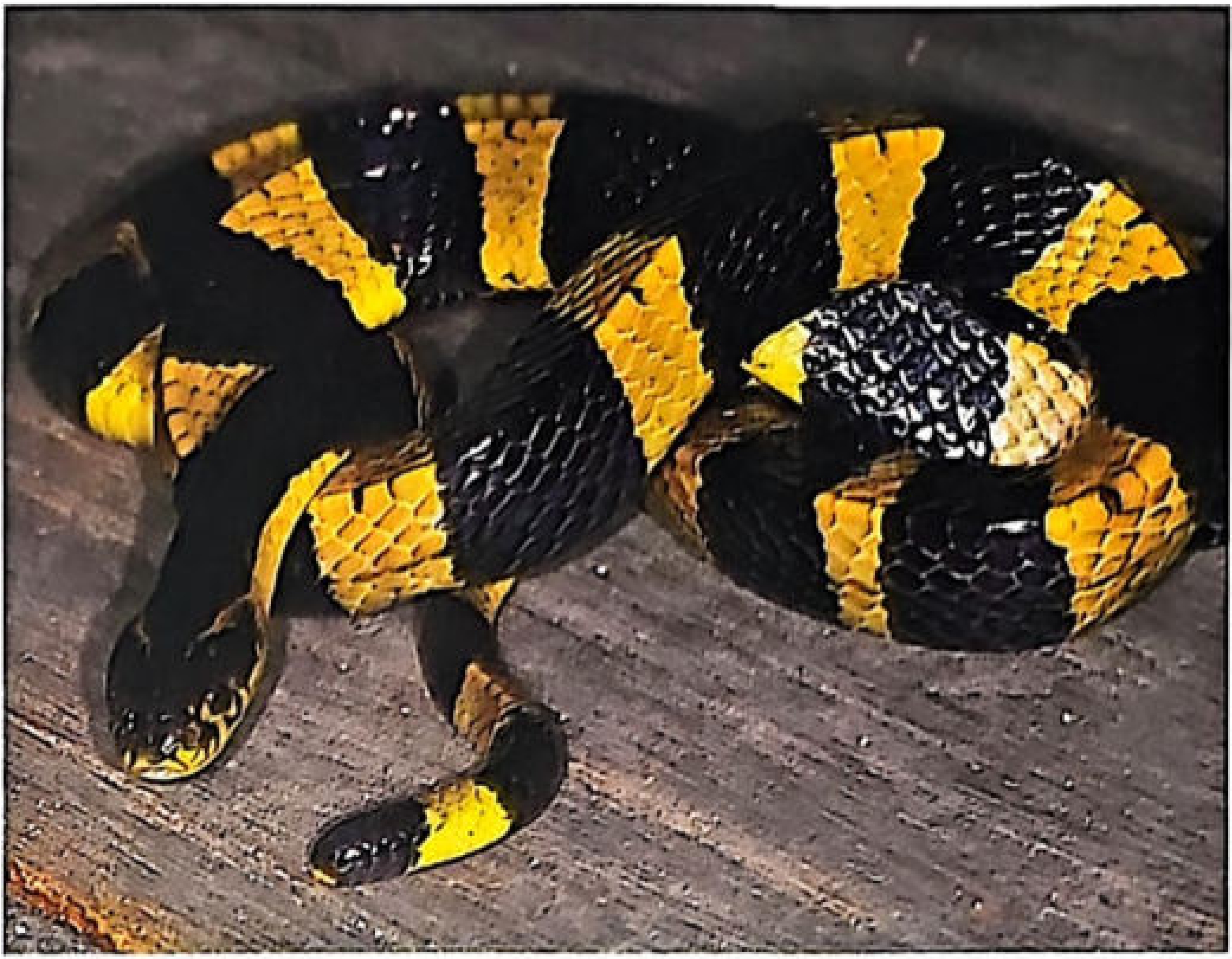
Fig. 32.3: Banded krait (KS Narayan Reddy's Essentials of Forensic Medicine & Toxicology)
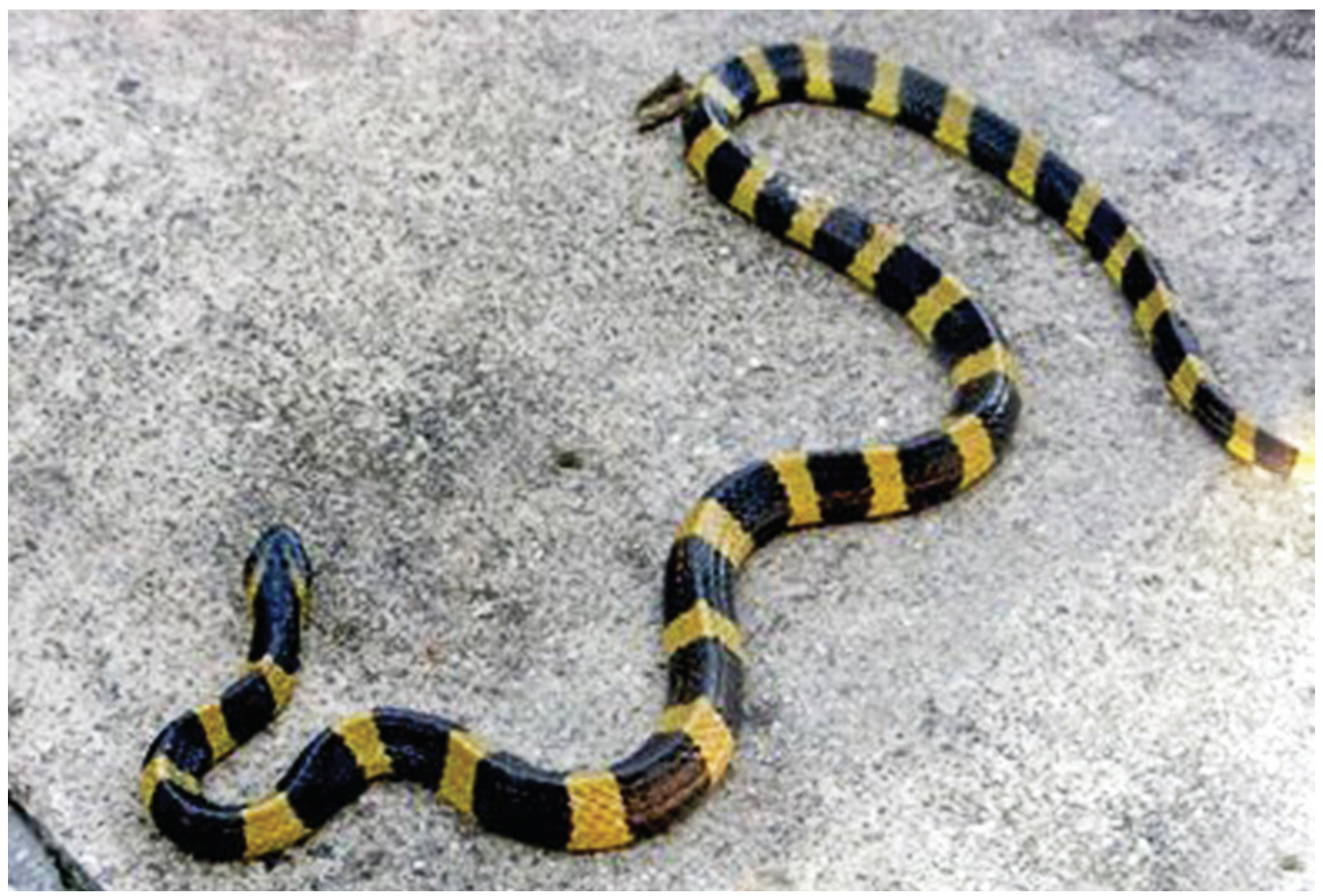
Fig. 45.12: Banded krait (Parikh's Textbook of Medical Jurisprudence)
Classification
- Family: Elapidae (same family as cobras and coral snakes)
- Scientific name: Bungarus fasciatus
- Synonyms / local names: Ahiraj, Raj sanp, Koelea krait, Sankhini (Dikshit), Bungarus fasciatus
Morphology / Identification
| Feature | Details |
|---|---|
| Length | 1.5 - 3.5 metres (bigger and stouter than the common krait) |
| Colour | Alternate jet-black (5 cm wide) and bright yellow cross-bands all along the back |
| Neck mark | Black mark on neck spreading up to the eyes |
| Tail | Ends bluntly, swollen at the tip |
| Scales | Hexagonal scales on the back (a constant key identification feature across all krait species) |
| Belly | Entire (undivided) belly plates |
| Subcaudal scales | Entire (not divided) - like all kraits |
The hexagonal dorsal scale is the most reliable diagnostic feature across all kraits. The alternating black-and-yellow banding is what distinguishes the banded krait from the common krait (B. caeruleus), which has narrower white arches on a black background.
Distribution in India
Found mainly in:
- Bengal, Odisha, Assam, Madhya Pradesh, Andhra Pradesh, parts of South India
- Less common than the common krait nationally
Related species in the region:
- Sind krait (B. sindanus) - Rajasthan
- Wall's Sind krait (B. sindanus walli) - Maharashtra, Bengal, UP, Bihar
- Black krait (B. niger) - North-East States, Sikkim, Bengal, Assam
Venom
| Property | Detail |
|---|---|
| Type | Neurotoxic (like all elapids) |
| Main toxins | Neuromuscular non-depolarizing blocking agents (curare-like effect) |
| Key enzyme | Cholinesterase - rich in cobra and krait venom; hydrolyses acetylcholine to choline + acetic acid |
| Effect | Paralysis, especially of the respiratory centre |
The venom acts as a post-synaptic neuromuscular blocker - it blocks acetylcholine receptors at the motor end-plate, producing flaccid paralysis. Unlike viper venom, there is no local tissue destruction (no necrotising/cytotoxic component).
Clinical Features of Envenomation
Because krait bites are often painless (especially at night when the victim is asleep), they are frequently underdiagnosed. Features develop over 1-4 hours:
Neurological (dominant):
- Ptosis (drooping eyelids) - often the first sign
- Diplopia, ophthalmoplegia
- Dysarthria, dysphonia, dysphagia
- Progressive descending flaccid paralysis
- Respiratory paralysis - the primary cause of death
Local features:
- Minimal or no local swelling
- Two small fang marks (distance 8 mm to 4 cm apart)
- No significant pain or necrosis (unlike viper bites)
Systemic:
- Autonomic features (less prominent than in cobra bites)
- No coagulopathy (no bleeding tendency - this is a key differentiator from vipers)
Management
- Immobilise the bitten limb; keep the patient calm
- Antivenom - Polyvalent anti-snake venom (ASV) is the specific treatment; covers B. caeruleus and B. fasciatus
- Respiratory support - most critical: mechanical ventilation if respiratory paralysis develops; this is what saves lives
- Atropine + neostigmine - may partially reverse the neuromuscular block (works better for post-synaptic blockers)
- Do NOT use tourniquet, incision, or sucking the wound
Medicolegal Significance
- The "Big 4" venomous snakes of India responsible for most snakebite deaths: Cobra, Common krait, Russell's viper, Saw-scaled viper. The banded krait is additionally important in eastern/northeastern India.
- Death from banded krait bite is respiratory failure due to paralysis of the diaphragm and intercostal muscles.
- Bites often occur at night while the victim is sleeping (nocturnal snake) - history of painless bite + morning paralysis should raise suspicion.
- Post-mortem findings: no specific marks; diagnosis relies on history, fang marks, and circumstantial evidence.
Sources: KS Narayan Reddy's Essentials of Forensic Medicine & Toxicology (36th ed., 2026), p. 8159-8175 | PC Dikshit's Textbook of Forensic Medicine & Toxicology, p. 491 | Parikh's Textbook of Medical Jurisprudence, p. 621
This is a shared conversation. Sign in to Orris to start your own chat.