
Biceps long head
Reading File
The biceps long head originates from the supraglenoid tubercle of the scapula, travels through the bicipital groove of the humerus, and inserts into the radial tuberosity. It acts as a forearm supinator and elbow flexor, and also weakly assists with shoulder flexion.
Searching sources...
Finding Sources
Searching the Web
biceps brachii long head anatomy origin insertion function tendon
Reading File
Reading File
Now let me also get the clinical/pathology section (tendon injuries, rupture) from Miller's and Campbell's:
Reading File
Reading File
Now let me fetch the anatomy diagram referenced in the Gray's text and also look for the rupture section:
Reading File
Finding Sources
Reading File
Loading Image
Here is a complete overview of the Long Head of the Biceps Brachii:
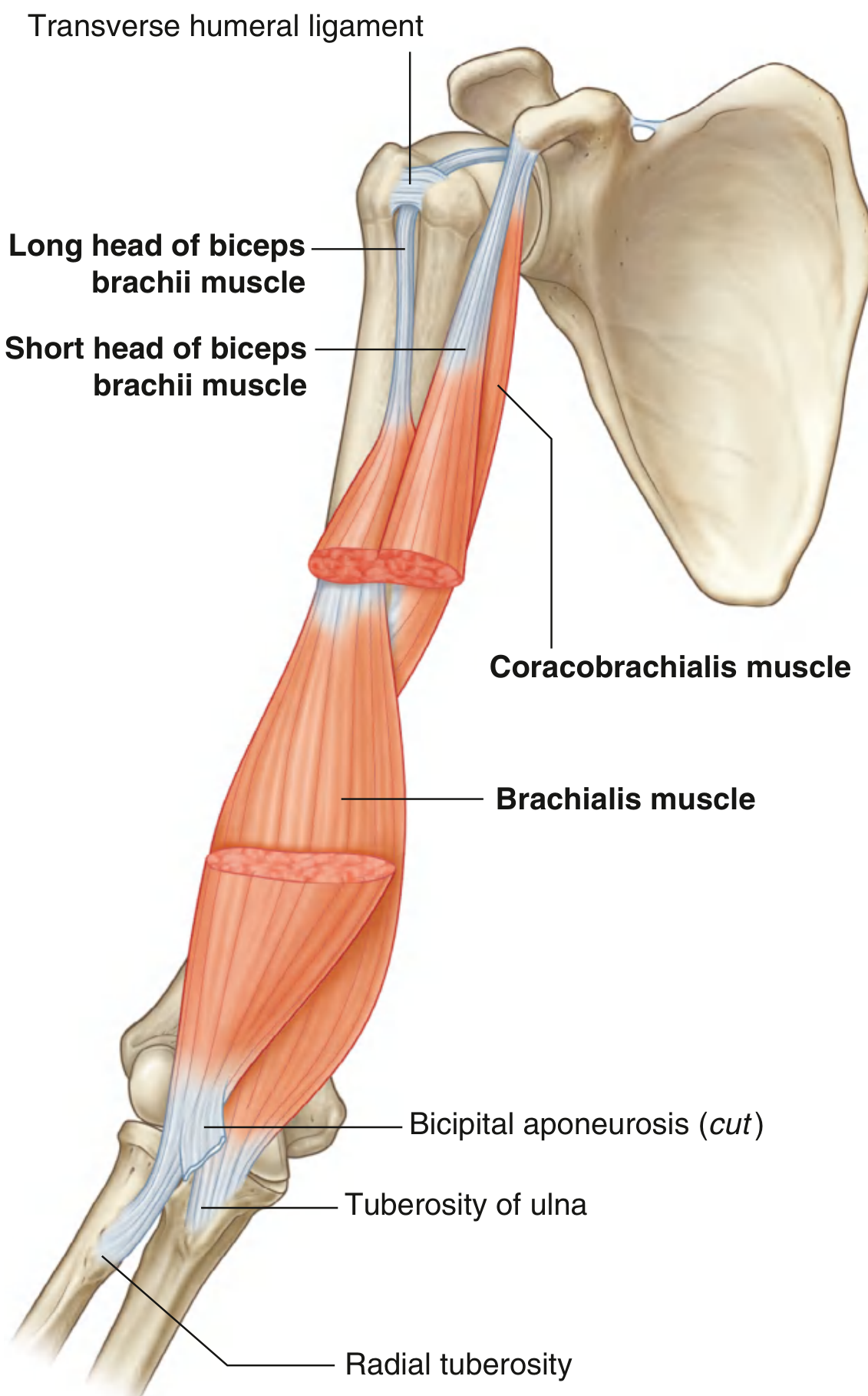
Fig. 7.64 - Coracobrachialis, Biceps Brachii, and Brachialis Muscles (Gray's Anatomy for Students)
Anatomy
| Feature | Long Head |
|---|---|
| Origin | Supraglenoid tubercle of the scapula |
| Course | Tendon passes intra-articularly through the glenohumeral joint, superior to the humeral head, exits at the intertubercular sulcus (bicipital groove) |
| Groove retainment | Held in the intertubercular sulcus by the transverse humeral ligament (spanning the greater and lesser tubercles) |
| Insertion | Radial tuberosity; also gives off the bicipital aponeurosis to the antebrachial fascia |
| Innervation | Musculocutaneous nerve (C5, C6) |
The long head tendon is unique in that it is the only muscle tendon in the body that travels through a synovial joint cavity before forming a muscle belly - Gray's Anatomy for Students, p. 852.
Functions
- Elbow flexion - powerful flexor, acting at the elbow joint
- Forearm supination - the most powerful supinator when the elbow is flexed at 90°; supination force is lost if the elbow is extended
- Shoulder flexion - accessory flexor at the glenohumeral joint (both heads cross the shoulder)
- Humeral head depression/stabilization - the long head prevents superior migration of the humeral head during deltoid contraction, providing dynamic shoulder stability - THIEME Atlas of Anatomy, p. (block 2909)
Clinical Relevance
1. Bicipital Tendinitis (Bicipital Tendinopathy)
- Caused by friction on the long head tendon as it passes through the bicipital groove
- Often co-exists with impingement syndrome, rotator cuff tears (especially subscapularis), and bicipital groove stenosis
- Clinically: anterior shoulder pain, tenderness over the bicipital groove with the arm externally rotated ~10°
- Positive tests: Speed's test, Yergason's test (pain on resisted supination at 90° elbow flexion)
- Management: strengthening + corticosteroid injection into biceps sheath → surgical release/tenodesis for refractory cases - Miller's Review of Orthopaedics, 9th Ed.
2. Tendon Subluxation/Dislocation
- Most commonly associated with a partial or complete subscapularis tear or tear of the transverse humeral ligament / coracohumeral ligament (CHL)
- Results in medial displacement of the tendon out of the groove
- In 200 patients with rotator cuff tears, biceps tendon instability was present in 45% - Campbell's Operative Orthopaedics, 15th Ed.
- Clinically: palpable click on shoulder abduction + external rotation
3. Acute Rupture
- Usually occurs proximally (at the bicipital groove) with vigorous exercise or eccentric loading
- Acute pain followed by the classic "Popeye deformity" - a visible ball of muscle belly that drops distally due to retraction of the long head
- In young, active patients: surgical repair is recommended promptly
- In older patients: rupture may be relatively painless; non-operative management often acceptable since significant functional loss is uncommon (strength deficit mainly in supination, not flexion) - Harrison's Principles of Internal Medicine, 22nd Ed.
4. Surgical Options
- Tenotomy (release without repair): risk of cosmetic "Popeye" deformity and subjective cramping; weakness is minimal
- Tenodesis (re-anchoring the tendon): preserves cosmesis and reduces cramping; subpectoral technique preferred to avoid residual "groove pain" from retained tendon in the intertubercular groove - Miller's Review of Orthopaedics, 9th Ed.
Quick Summary
The long head of the biceps is anatomically notable for its intra-articular course through the glenohumeral joint - a route that makes it prone to mechanical wear, tendinopathy, and rupture, particularly in the setting of shoulder impingement or rotator cuff pathology.
This is a shared conversation. Sign in to Orris to start your own chat.