

photo-1786510077666.jpg
Answer
The answer is B) 3, 4 - statements 3 and 4 are incorrect.
Searching sources...
Reading File
Finding Sources
Finding Sources
Finding Sources
Finding Sources
Finding Sources
Finding Sources
Finding Sources
The answer is B) 3, 4 - statements 3 and 4 are incorrect.
Here is a breakdown of all five statements:
Statement 1 - Propofol is the preferred IV anesthetic agent. ✅ CORRECT
Propofol is the gold-standard IV induction agent for daycare/ambulatory surgery. It produces rapid induction and recovery, has antiemetic properties, and causes less postoperative nausea and vomiting (PONV) than other agents - making it ideal for patients who need to go home the same day.
Statement 2 - Sevoflurane is the preferred inhaled anesthetic agent. ✅ CORRECT
Sevoflurane is the preferred inhalational agent for daycare procedures. It has a low blood-gas partition coefficient (rapid onset and offset), is non-irritating to airways, and allows fast, smooth recovery.
Statement 3 - The preferred muscle relaxant used is succinylcholine. ❌ INCORRECT
Succinylcholine is a depolarizing muscle relaxant with several undesirable properties for daycare surgery: prolonged muscle pain/myalgia, risk of malignant hyperthermia, hyperkalemia, and raised intraocular/intragastric pressure. The preferred muscle relaxants for daycare surgery are short-acting non-depolarizing agents like mivacurium or atracurium, which have a short duration of action and reliable reversal without the side-effect profile of succinylcholine.
Statement 4 - Thiopental is the preferred intravenous anesthetic. ❌ INCORRECT
Thiopental (thiopentone) is specifically avoided in daycare surgery because of its prolonged "hangover" effect - it accumulates in fat and causes prolonged sedation and psychomotor impairment. Propofol has replaced thiopental as the preferred IV agent for day surgery precisely because of its rapid, clear-headed recovery profile.
Statement 5 - Morphine increases the risk of PONV. ✅ CORRECT
Opioids, especially long-acting ones like morphine, are well-known emetogenic agents. They stimulate the chemoreceptor trigger zone (CTZ) and delay gastric emptying, increasing PONV. For daycare procedures, short-acting opioids (fentanyl, remifentanil) or non-opioid analgesics are preferred over morphine.
Answer: B) 3, 4
Statements 3 (succinylcholine is preferred muscle relaxant) and 4 (thiopental is preferred IV anesthetic) are both incorrect for daycare anaesthesia.


photo-1786510375753.jpg
photo-1786510380783.jpg
Answer
The answer is C) Birbeck granules.
Searching sources...
Finding Sources
Finding Sources
Reading File
Reading File
Loading Image
The answer is C) Birbeck granules
Diagnosis: Pulmonary Langerhans Cell Histiocytosis (LCH)
Clues in the question:
- Young chronic smoker (classic association)
- Dry cough, dyspnea, weight loss
- Recurrent pneumothoraces (hallmark complication)
- HRCT: multiple nodules and cysts (characteristic pattern)
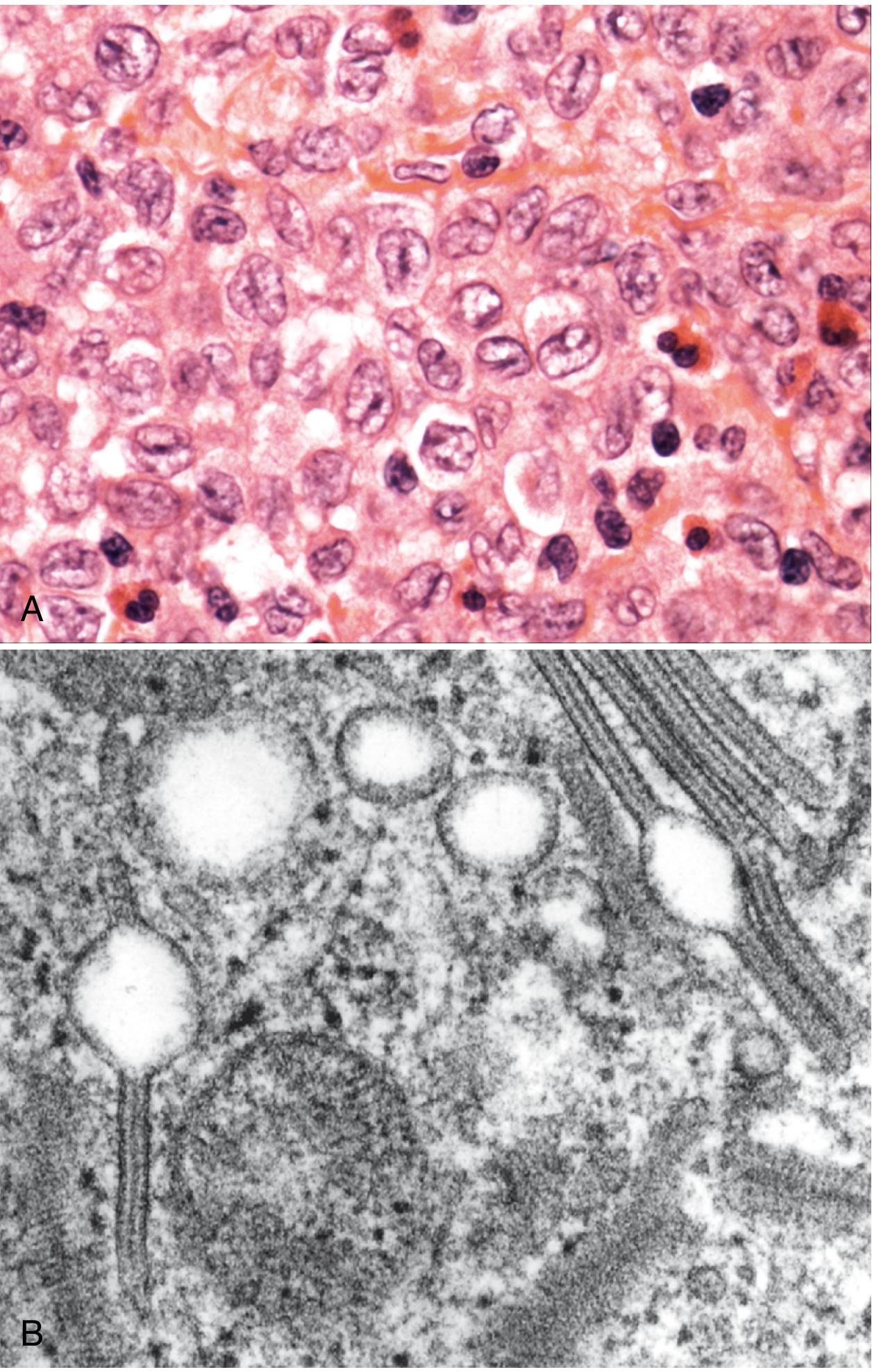
- Biopsy shows large cells with abundant pale/vacuolated cytoplasm and characteristic grooved/kidney-shaped nuclei mixed with eosinophils - exactly as seen in the image
This is the textbook presentation of Pulmonary Langerhans Cell Histiocytosis (PLCH), a smoking-related interstitial lung disease.
Characteristic Electron Microscopic Finding: Birbeck Granules
Birbeck granules are the pathognomonic ultrastructural finding of LCH cells on electron microscopy.
- Structure: Pentalaminar tubular organelles with a dilated terminal end, giving a classic tennis racket-shaped appearance (rod with a bulbous end)
- Composition: Contain the protein langerin (CD207)
- Origin: Represent endosomal compartments involved in antigen processing
As confirmed by Robbins Pathology:
"The presence of Birbeck granules in the cytoplasm is characteristic. Birbeck granules are pentalaminar tubules, often with a dilated terminal end producing a tennis racket-like appearance, which contain the protein langerin." - Robbins, Cotran & Kumar Pathologic Basis of Disease
Here is the actual EM image of Birbeck granules from Robbins (panel B shows the rod-shaped granules with their characteristic periodic structure):
Why the Other Options Are Wrong
| Option | Disease/Finding | Reason Wrong |
|---|---|---|
| A) Rosenthal fibres | Pilocytic astrocytoma / Alexander disease | Elongated eosinophilic intracytoplasmic inclusions in astrocytes - a CNS finding |
| B) Fried egg appearance | Oligodendroglioma | Perinuclear halo on LM - a brain tumor finding, not EM-specific |
| D) Corps ronds | Darier disease (keratosis follicularis) | Dyskeratotic cells in epidermis - a skin finding |
Answer: C) Birbeck granules

photo-1786510727499.jpg
Answer
The answer is C) Hyperthyroidism.
Searching sources...
Finding Sources
Reading File
The answer is C) Hyperthyroidism
Explanation
Octreotide is a long-acting somatostatin analogue that mimics the inhibitory actions of somatostatin. It is used here for late dumping syndrome (reactive hypoglycemia 1-3 hours after meals, driven by rapid GI transit and exaggerated insulin release).
Mechanism relevant to dumping syndrome:
Octreotide slows gastric emptying, inhibits release of gut peptides (GIP, glucagon, insulin), and reduces splanchnic blood flow - all of which reduce the postprandial hypoglycemia and vasomotor symptoms of late dumping.
Adverse Effects of Octreotide (the "EXCEPT" list):
| Adverse Effect | In Options | Explanation |
|---|---|---|
| Sinus bradycardia ✅ | A | Octreotide inhibits SA node; causes bradycardia and conduction abnormalities |
| Steatorrhea ✅ | B | Inhibits pancreatic exocrine secretion and bile release → fat malabsorption |
| Gallstones (cholelithiasis) ✅ | D | Inhibits cholecystokinin → impaired gallbladder motility → bile stasis → stones |
| Hypothyroidism (not listed but known) | - | Octreotide suppresses TSH secretion |
| Hyperthyroidism ❌ | C | NOT a side effect - octreotide actually suppresses TSH and can cause hypothyroidism, not hyperthyroidism |
As confirmed by Goodman & Gilman's:
"Side effects of octreotide...include cardiovascular, endocrine, and CNS [effects]...gallstone formation and hypo- or hyperglycemia occurring in the long term." - Goodman & Gilman's Pharmacological Basis of Therapeutics
Other well-documented adverse effects include: nausea, abdominal cramps, diarrhea, injection site pain, hyperglycemia/hypoglycemia, and hypothyroidism (not hyperthyroidism).
Answer: C) Hyperthyroidism - this is NOT an adverse effect of octreotide. The drug suppresses thyroid function (can cause hypothyroidism), not hyperthyroidism.

photo-1786510849048.jpg
Answer
The answer is B) Supposititious child.
Searching sources...
Finding Sources
Finding Sources
Finding Sources
Reading File
The answer is B) Supposititious Child
Explanation
This is a Forensic Medicine question about medico-legal terminology related to false pregnancy and child substitution.
Supposititious child is defined directly from Parikh's Textbook of Medical Jurisprudence:
"A supposititious child means a fictitious child. A woman may pretend pregnancy as well as delivery and later produce a child as if it is her own. She may substitute a living male child for a dead child or for a living female child born of her. The purpose is to extort money by blackmail or divert succession to property."
This perfectly matches the scenario: the woman faked a pregnancy and introduced a baby that was not born to her.
Why the Other Options Are Wrong
| Option | Term | Definition |
|---|---|---|
| A) Pseudocyesis | False pregnancy | The woman genuinely believes she is pregnant and shows signs (amenorrhea, abdominal distension, breast changes) but there is no fetus. It is a psychological condition - no deception of others. |
| C) Spurious pregnancy | Essentially synonymous with pseudocyesis | A false/phantom pregnancy; the woman herself is genuinely mistaken - no fraud intended. |
| D) Posthumous child | A child born after the father's death (>280 days after death can raise legitimacy questions in law) | No element of faking pregnancy here. |
Key distinction: Supposititious child = deliberate fraud (faking pregnancy + substituting another's child). Pseudocyesis/Spurious pregnancy = no fraud (woman genuinely believes she is pregnant).
Answer: B) Supposititious child

photo-1786511159024.jpg
Answer
The answer is B) Chronic hepatitis B infection with active viral replication.
Searching sources...
Finding Sources
Finding Sources
Reading File
The answer is B) Chronic hepatitis B infection with active viral replication
Serological Analysis
Let's decode each marker systematically:
| Marker | Result | Interpretation |
|---|---|---|
| HBsAg | Positive | Active HBV infection present (acute OR chronic) |
| HBeAg | Positive | Active viral replication occurring; high infectivity |
| Anti-HBc IgM | Negative | Rules out acute infection (IgM = recent/acute marker) |
| Anti-HBc IgG | Positive | Past or chronic infection (IgG = persistent/old exposure) |
| Anti-HBs | Negative | No immunity (not vaccinated, not resolved) |
| HBV DNA | Markedly elevated | Confirms active, high-level viral replication |
Interpretation
- HBsAg positive + Anti-HBc IgM negative = rules out acute infection, confirms this is chronic (>6 months)
- HBeAg positive + high HBV DNA = active viral replication - the virus is actively reproducing
- Anti-HBs negative = no protective immunity, not vaccinated (consistent with his history of no vaccination)
- Normal aminotransferases + no symptoms = this is the immune-tolerant phase of chronic HBV, where the body has not yet mounted an immune response against infected hepatocytes
As confirmed by Robbins Pathology:
"The hepatitis B e-antigen (HBeAg) is a secretory protein that is seen with active viral replication. HBeAg can be detected soon after HBV surface antigen appears."
Why Other Options Are Wrong
| Option | Why Wrong |
|---|---|
| A) Acute HBV during window period | Window period = HBsAg negative + anti-HBc IgM positive. Here HBsAg is positive and IgM is negative |
| C) Resolved HBV with protective immunity | Resolved = HBsAg negative + anti-HBs positive. Here anti-HBs is negative |
| D) Chronic HBV with inactive replication | Inactive = HBeAg negative, low/undetectable HBV DNA. Here HBeAg is positive and DNA is markedly elevated |
Answer: B) Chronic hepatitis B infection with active viral replication

photo-1786511354975.jpg
Answer
The answer is C) ANMOL.
Searching sources...
Searching the Web
ANMOL digital platform India antenatal care QR Mother Child Health card ANC
This is an important correction. The web search reveals the answer is actually B) JANANI.
Correction and Explanation
The platform described - QR-enabled Mother and Child Health (MCH) cards, automated reminders for ANC visits, and longitudinal tracking from pregnancy through the neonatal period - matches JANANI exactly.
JANANI stands for "Journey of Antenatal, Natal and Neonatal Integrated Care" - India's Ministry of Health and Family Welfare (MoHFW) national digital platform for maternal and child health, as reported by Healthcare IT News (May 2026).
Key Features of JANANI (matching the question exactly):
- QR-based Mother and Child Health (MCH) cards - portable digital records
- Automated alerts and reminders for ANC visits and immunisations
- Longitudinal digital health records - from pregnancy through postnatal/neonatal care
- Self-registration capability at primary health centres
- Real-time dashboards and tracking
Why the Other Options Are Wrong
| Option | Platform | Purpose |
|---|---|---|
| A) eSanjeevani | National telemedicine platform | Online OPD consultations, not ANC-specific |
| C) ANMOL | ANM Online - a tablet-based app for ASHAs/ANMs | An older field data-entry tool for community health workers, not the integrated national ANC platform |
| D) Kilkari | Mobile audio messaging service | Sends recorded voice messages about maternal/child health; not a QR-card or tracking platform |
Answer: B) JANANI

photo-1786511672024.jpg
Answer
The answer is A) Low estrogen, low progesterone, rising FSH, and low LH.
Searching sources...
Finding Sources
Finding Sources
Finding Sources
Reading File
Reading File
Loading Image
Loading Image
The answer is A) Low estrogen, low progesterone, rising FSH, and low LH
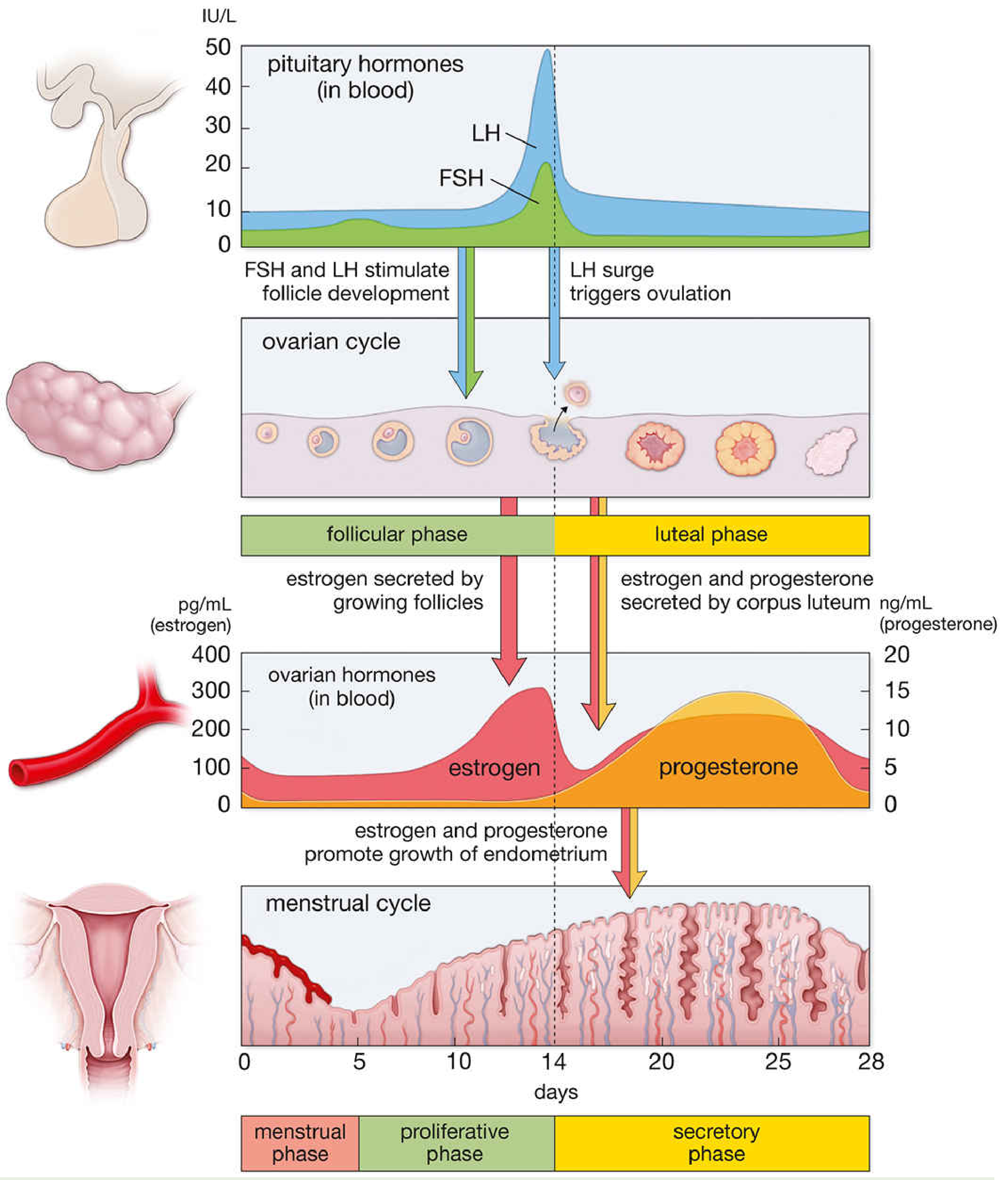
Days 1-4 = Early Menstrual/Follicular Phase
Days 1-4 mark the menstrual phase - the start of a new cycle when the corpus luteum from the previous cycle has regressed and the endometrial lining sheds. Here is exactly what happens to each hormone:
| Hormone | Days 1-4 Level | Reason |
|---|---|---|
| Estrogen | LOW | Corpus luteum has regressed; new follicles just starting to grow, not yet secreting estrogen |
| Progesterone | LOW | Corpus luteum regressed → progesterone withdrawal → menstruation |
| FSH | LOW but RISING | Released from negative feedback as estrogen/progesterone fall; begins rising to stimulate new follicle development |
| LH | LOW | Remains low at this early stage; LH surge doesn't occur until day ~13-14 just before ovulation |
As confirmed by Costanzo Physiology:
"Early in the follicular phase, FSH and LH stimulate the synthesis of estradiol. During the first 8-10 days of the cycle, FSH is the principal hormone influencing the growth of follicles."
The key insight: the drop in estrogen and progesterone at the end of the luteal phase removes negative feedback, allowing FSH to begin rising first - which is what drives the next cycle's follicular development.
Why Other Options Are Wrong
| Option | Why Wrong |
|---|---|
| B) Increased estrogen, low progesterone, low FSH, high LH | High LH = ovulation surge (day 13-14). High estrogen = late follicular phase. Neither applies to days 1-4 |
| C) Increased estrogen and progesterone, low FSH and LH | Both steroids high + low gonadotropins = mid-luteal phase (days 20-24) |
| D) Low estrogen, increased progesterone, high FSH and LH | Increased progesterone without estrogen is physiologically inconsistent as a standalone pattern; also FSH and LH are not both high during menses |
Answer: A) Low estrogen, low progesterone, rising FSH, and low LH
This is a shared conversation. Sign in to Orris to start your own chat.