
Kwashiorker vs marasmus
kwashiorkor vs marasmus child malnutrition
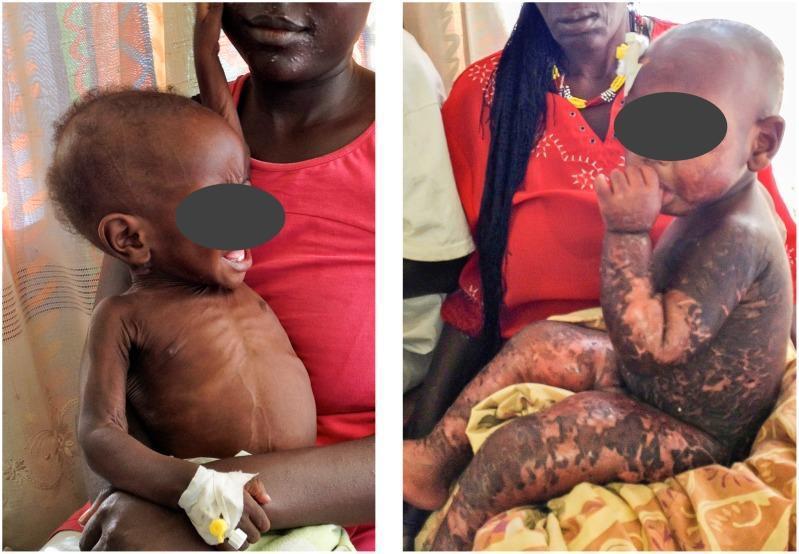
A side-by-side clinical photograph comparing two distinct presentations of severe acute malnutrition (SAM) in pediatric patients. The child on the left demonstrates non-oedematous malnutrition, also known as marasmus. Visual features include marked muscular wasting, loss of subcutaneous fat, and prominent skeletal structures, particularly the ribs. A peripheral venous cannula is secured to the child's left wrist. The child on the right demonstrates oedematous malnutrition, often referred to as kwashiorkor. Key clinical signs include generalized bilateral pitting oedema and extensive dermatological changes. These skin lesions present as a 'flaky paint' dermatosis, characterized by hyperpigmented patches with areas of desquamation, peeling, and underlying hypopigmentation distributed across the limbs and torso. The image serves as a teaching tool for distinguishing between marasmic wasting and the oedematous/skin-involved manifestations of kwashiorkor in global health and pediatric nutrition contexts.
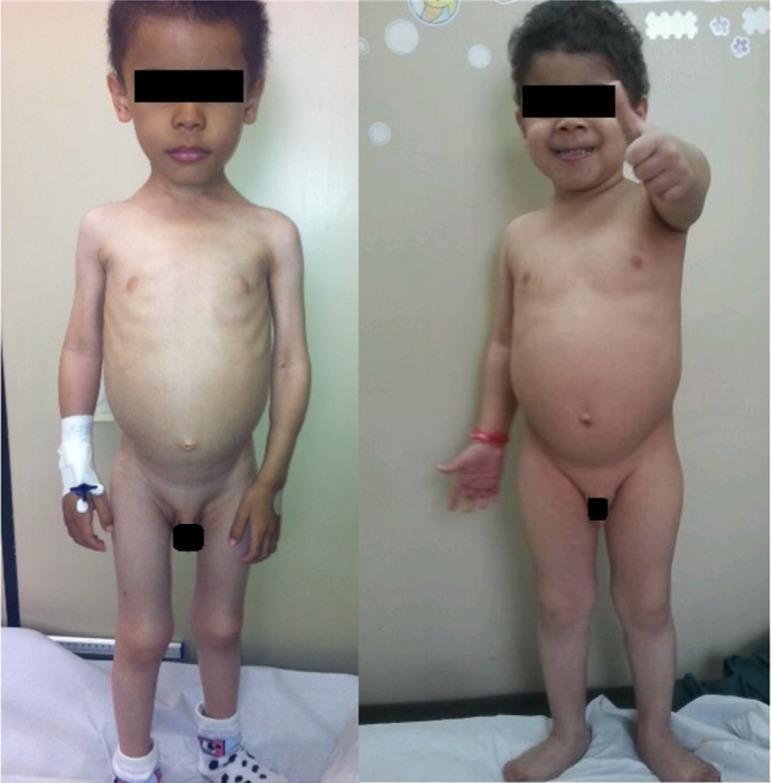
A clinical comparison photograph demonstrating the progression of nutritional recovery in a pediatric patient with severe protein-calorie malnutrition. The left image (initial consultation) shows a male child exhibiting signs of marasmus/kwashiorkor-like features: severe wasting of the limbs, prominent ribcage (skeletal prominence), and a distended, protuberant abdomen. The patient appears apathetic with an intravenous catheter in the right hand. The right image (two months post-intervention) shows the same patient after a high-calorie, high-protein dietary regimen. Visible clinical improvements include significant weight gain, replenishment of subcutaneous fat and muscle mass (limbs appear fuller, ribs no longer visible), and improved postural muscle tone. The patient's facial expression and a 'thumbs-up' gesture indicate improved mood and neurological status. This comparison illustrates the physical manifestations of successful nutritional rehabilitation in cases of severe malnutrition or neglect, serving as an educational example of catch-up growth and clinical recovery in pediatrics.
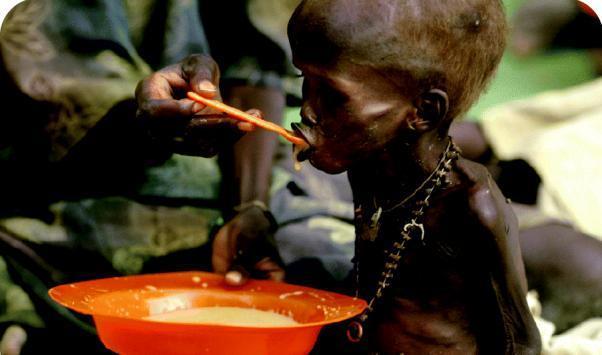
This clinical photograph illustrates severe pediatric malnutrition, likely marasmus, in a young child. The child exhibits profound emaciation characterized by a 'skin and bones' appearance, visible rib protrusion, and significant loss of subcutaneous fat and muscle mass. The skin is taut and the temporal region shows wasting. Thin, sparse hair is evident, which can be a sign of protein-energy malnutrition (PEM). An adult is seen providing nutritional support by spoon-feeding the child a light-colored, semi-liquid therapeutic porridge from a plastic bowl. This visual serves as an educational example of the physical manifestations of chronic calorie deficiency and global food insecurity. The image is relevant for medical studies in global health, pediatrics, and clinical nutrition, demonstrating the critical need for nutritional rehabilitation in severely malnourished populations.
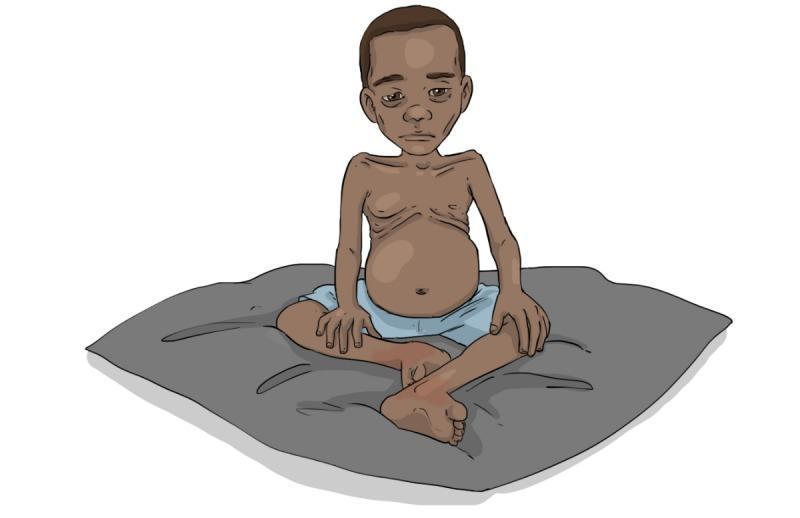
This medical illustration depicts a pediatric patient presenting with severe protein-energy malnutrition (PEM), specifically demonstrating clinical features associated with kwashiorkor or marasmic-kwashiorkor. The child is shown in a seated, cross-legged position. Key visual diagnostic signs include a protuberant, distended abdomen (ascites/hepatomegaly), marked muscle wasting in the upper and lower extremities, and a relative lack of subcutaneous fat, making the rib cage and clavicles visibly prominent. The facial features exhibit a gaunt appearance with sunken eyes and a flat, subdued affect, characteristic of the 'apathetic' demeanor often seen in severely malnourished children. The image serves as an educational tool for identifying the physical manifestations of chronic nutritional deficiency in global health settings, particularly emphasizing the paradox of a bloated abdomen despite generalized emaciation. This illustration is designed for healthcare worker training in malnutrition assessment and triage.
Kwashiorkor vs. Marasmus
Side-by-Side Clinical Photograph
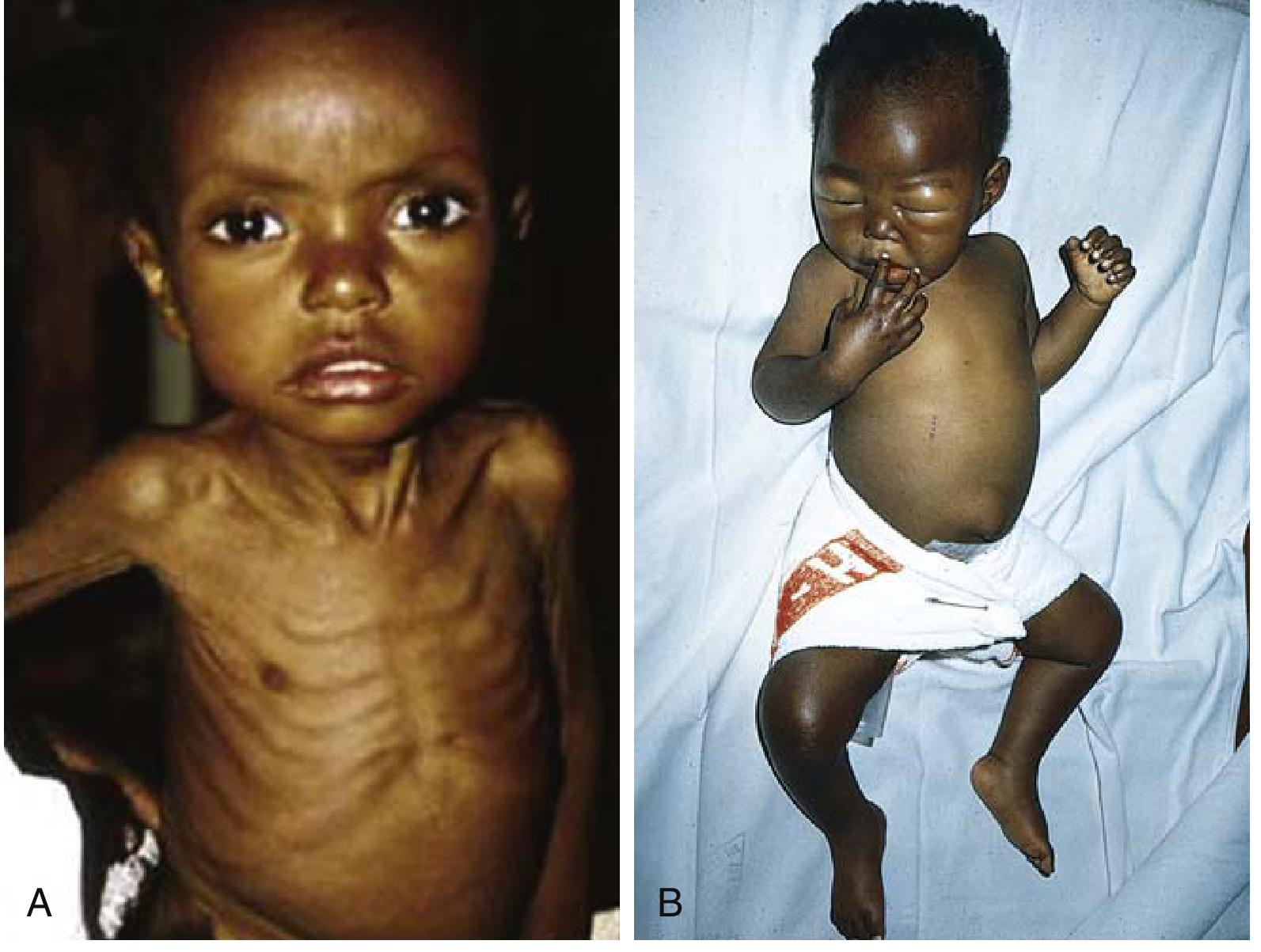
1. Definition and Cause
| Feature | Kwashiorkor | Marasmus |
|---|---|---|
| Core deficiency | Protein deficiency (with relative calorie adequacy) | Total calorie (and protein) deficiency |
| Diet | High-carb, low-protein (e.g., early weaning to starchy foods) | Grossly inadequate intake of everything |
| Name origin | Ga language (Ghana): "disease of the displaced child" - illness after weaning when a new baby arrives | Greek "marasmos" = wasting |
2. Pathophysiology
| Kwashiorkor | Marasmus | |
|---|---|---|
| Visceral protein compartment | Severely depleted | Only marginally depleted |
| Serum albumin | Low (hypoalbuminemia) - causes edema | Normal or near-normal |
| Somatic protein (muscle) | Relatively spared (masked by edema) | Severely depleted (catabolism) |
| Subcutaneous fat | Relatively spared | Severely depleted (used as fuel) |
| Adaptation | Maladaptive - body cannot maintain visceral proteins | Adaptive - body catabolizes muscle/fat to protect visceral proteins |
| Cortisol/leptin | - | Low leptin stimulates HPA axis -> high cortisol -> lipolysis |
3. Clinical Features
| Feature | Kwashiorkor | Marasmus |
|---|---|---|
| Edema | Present (generalized/dependent) - hallmark | Absent or minimal |
| Weight | 60-80% of normal (masked by edema) | <60% of normal |
| Wasting | Mild (masked by edema) | Severe - "skin and bones" |
| Muscle wasting | Mild | Severe |
| Subcutaneous fat | Relatively preserved | Severely reduced |
| Abdomen | Distended (ascites/hepatomegaly) | Scaphoid (sunken) |
| Face | "Moon face" (puffy from edema) | "Old man face" (drawn, sunken eyes) |
| Head | Normal | Appears too large for emaciated body |
| Skin | "Flaky paint" dermatosis - alternating hyper/hypopigmentation, desquamation | Thin, dry, wrinkled - no dermatosis |
| Hair | Dyspigmentation, bands of pale/dark ("flag sign"), easily plucked, fine texture | Sparse, thin |
| Liver | Enlarged and fatty (reduced lipoprotein synthesis) | Not enlarged |
| Mood/affect | Apathy, listlessness, anorexia | Irritable but alert |
| Appetite | Poor | Often preserved initially |
4. Lab Findings
| Lab | Kwashiorkor | Marasmus |
|---|---|---|
| Serum albumin | Low (<2.8 g/dL) | Normal or mildly low |
| Total protein | Low | Near normal |
| Electrolytes | Hypokalemia, hypomagnesemia | Hypokalemia |
| Blood glucose | Hypoglycemia | Hypoglycemia |
| Anemia | Present | Present |
| Immunity | Impaired (T-cell mediated) | Impaired |
5. Morphological / Anatomical Changes (from Robbins)
- Growth failure - present in both
- Peripheral edema - kwashiorkor only
- Loss of body fat and muscle atrophy - more marked in marasmus
- Fatty liver - kwashiorkor only (due to reduced synthesis of carrier protein components of lipoproteins, causing fat accumulation)
"The main anatomic changes in severe acute malnutrition are (1) growth failure; (2) peripheral edema in kwashiorkor; and (3) loss of body fat and atrophy of muscle, more marked in marasmus. The liver in kwashiorkor, but not in marasmus, is enlarged and fatty." - Robbins & Kumar Basic Pathology
6. Marasmic-Kwashiorkor
7. MUAC (Mid-Upper Arm Circumference) for Screening
| MUAC | Interpretation |
|---|---|
| >13.5 cm | Normal |
| 12.5-13.5 cm | Mild-moderate malnutrition |
| <12.5 cm | Severe malnutrition |
8. Treatment Overview
- F-75 (stabilization phase - low-protein/calorie therapeutic milk)
- F-100 or RUTF (Ready-to-Use Therapeutic Food) for rehabilitation
- Correction of hypoglycemia, hypothermia, dehydration
- Treat infections (broad-spectrum antibiotics)
- Micronutrient supplementation (folate, zinc, vitamins A, C, D)
- Kwashiorkor specifically requires careful fluid management (risk of fluid overload given hypoalbuminemia)
- [Robbins, Cotran & Kumar - Pathologic Basis of Disease](Robbins, Cotran & Kumar Pathologic Basis of Disease)
- Robbins & Kumar Basic Pathology (7th ed.)
- Park's Textbook of Preventive and Social Medicine
Nutrional rehabitation center
NRC Nutritional Rehabilitation Centre India SAM protocol phases admission criteria 2024
https://nhm.gov.in/images/pdf/programmes/child-health/guidel…
Nutritional Rehabilitation Centre (NRC)
1. Definition
- Established in India under the National Health Mission (NHM)
- Acts as a bridge between hospital care and home care
- Short-stay facility (usually 14-21 days) for child + primary caregiver together
"Nutritional Rehabilitation Centres (NRCs) have been established for management of severe acute malnutrition in children." - Park's Textbook of Preventive & Social Medicine
2. Objectives of NRC
- Medical management of complications of SAM
- Nutritional rehabilitation (restore weight, muscle mass)
- Behavioral change communication (BCC) - educate caregivers
- Emotional and physical stimulation of the child
- Build capacity of caregivers for sustained home-based care
- Ensure follow-up after discharge
3. Admission Criteria (NHM Guidelines)
| Anthropometric Criteria | Threshold |
|---|---|
| Weight-for-Height/Length (WFH/L) | < -3 SD (z-score) |
| MUAC | < 115 mm |
| Bilateral pitting edema | +/++ (Grade +++ always needs inpatient care) |
| Complication |
|---|
| Anorexia (unable to finish RUTF test dose) |
| Fever ≥39°C or Hypothermia <35°C |
| Persistent vomiting |
| Severe dehydration |
| Not alert, very weak, apathetic, unconscious, convulsions |
| Hypoglycemia |
| Severe anemia (severe palmar pallor) |
| Severe pneumonia (chest indrawing) |
| Extensive superficial infections |
Children with SAM without complications = Uncomplicated SAM → managed as outpatients via Community-Based Management (CMAM) using RUTF
4. Three Phases of NRC Management (WHO 10-Step Protocol)
Phase 1: Stabilization (Days 1-2, up to Day 7)
- Feed: F-75 (75 kcal/100 mL, low protein 0.9 g/100 mL)
- Small, frequent feeds every 2-3 hours (8 feeds/day)
- No iron supplementation yet
- Manage: hypoglycemia, hypothermia, dehydration, electrolyte imbalance, infections
- ReSoMal (Rehydration Solution for Malnutrition) if dehydrated - NOT standard ORS
| Condition | Management |
|---|---|
| Hypoglycemia | 10% glucose/sucrose orally or via NG tube |
| Hypothermia | Warm the child (skin-to-skin, warm blankets) |
| Dehydration | ReSoMal 5 mL/kg every 30 min for 2 hrs |
| Infections | Broad-spectrum antibiotics (Ampicillin + Gentamicin IV; or Amoxicillin oral) |
Phase 2: Transition (Days 3-7)
- Gradual switch from F-75 to F-100 or RUTF
- Monitor for refeeding syndrome (watch: hypokalemia, hypophosphatemia)
- Begin micronutrient supplementation (Vitamin A, Zinc, Folic acid, Multivitamin)
- Iron NOT given until appetite returns and child is gaining weight
Phase 3: Rehabilitation (Days 7-26)
- Feed: F-100 (100 kcal/100 mL, protein 2.9 g/100 mL) or RUTF (fortified peanut paste, 543 kcal/100g)
- Unrestricted feeding, encourage eating
- Iron supplementation begins now
- Stimulation, play therapy, caregiver education
- Preparation for discharge and home care
5. Therapeutic Foods Composition (Goldman-Cecil Medicine)
| F-75 (100 mL) | F-100 (100 mL) | RUTF (100g) | |
|---|---|---|---|
| Energy (kcal) | 75 | 100 | 543 |
| Protein (g) | 0.9 | 2.9 | 13.6 |
| Lactose (g) | 1.3 | 4.2 | - |
| Potassium (mg) | 156 | (higher) | (higher) |
| Phase used | Stabilization | Rehabilitation | Both (outpatient preferred) |
6. The 10 WHO Steps for SAM Management
| Step | Action |
|---|---|
| 1 | Treat/prevent hypoglycemia |
| 2 | Treat/prevent hypothermia |
| 3 | Treat/prevent dehydration |
| 4 | Correct electrolyte imbalance |
| 5 | Treat/prevent infection |
| 6 | Correct micronutrient deficiencies |
| 7 | Begin cautious feeding (F-75) |
| 8 | Achieve catch-up growth (F-100/RUTF) |
| 9 | Provide sensory stimulation and emotional support |
| 10 | Prepare for follow-up after discharge |
Steps 1-7 = Stabilization Phase | Steps 7-10 = Rehabilitation Phase
7. Discharge Criteria (NHM Operational Guidelines)
- Edema resolved
- Weight gain >15% of admission weight
- Satisfactory weight gain for 3 consecutive days (>5 g/kg/day)
- Eating adequate amounts of nutritious home food
- All infections and complications treated
- Micronutrients provided
- Immunization updated
- How to prepare appropriate foods and feed the child
- How to administer prescribed medications at home
- How to make appropriate toys and stimulate the child
- How to give home treatment for diarrhea, fever, ARI
- Warning signs for return
8. Follow-Up Schedule After Discharge
| Visit | Timing |
|---|---|
| 1st | Day 15 post-discharge |
| 2nd | Day 30 |
| 3rd-6th | Monthly (for 4-6 months) |
9. Monitoring Indicators in NRC
| Indicator | Target |
|---|---|
| Mortality rate | <10% |
| Cure/recovery rate | >75% |
| Defaulter rate | <15% |
| Average length of stay | 14-21 days |
| Weight gain | >5 g/kg/day in rehabilitation |
10. NRC vs. Community-Based Management (CMAM)
| Feature | NRC (Inpatient) | CMAM (Outpatient) |
|---|---|---|
| Who | SAM with complications | SAM without complications |
| Setting | Facility-based | Community/health post |
| Feed | F-75 → F-100 | RUTF (ready-to-use) |
| Duration | 14-21 days stay | Weekly/biweekly visits |
| Outcome | Slightly lower recovery | Better outcomes (current standard) |
"Mortality and nutritional recovery outcomes from community-based programmes are generally superior to those achieved by inpatient care... community-based care is the current international standard of care and has relegated inpatient care only to patients who have anorexia or medical complications." - Goldman-Cecil Medicine
- NHM Operational Guidelines - Facility Based Management of SAM
- Goldman-Cecil Medicine (International Edition), Chapter 197
- Park's Textbook of Preventive and Social Medicine
Rmnchan
RMNCH+A Strategy
Full Form
1. Background and Launch
- Launched: February 2013, India - "A Strategic Approach to Reproductive, Maternal, Newborn, Child, and Adolescent Health (RMNCH+A) in India"
- Origin: Response to the "Global Child Survival Call to Action: A Promise to Keep" summit (June 2012, Washington DC) where >80 countries pledged to reduce child mortality to ≤20 deaths per 1,000 live births by 2035
- Part of: India's National Health Mission (NHM) - the heart of its flagship public health programme
- Supported by: USAID (MCHIP programme), UNICEF, UNFPA, World Bank
"RMNCH+A has become the heart of the Government of India's flagship public health programme, the National Health Mission." - Park's Textbook
2. Core Philosophy
Guiding Tenets
- Equity - address inter-state and inter-district variations
- Universal care
- Entitlement
- Accountability
The "PLUS" (+A) Focuses on:
- Adolescence as a distinct life stage - included for the first time
- Linking maternal/child health to reproductive health, family planning, adolescent health, HIV, gender
- Linking home/community services to facility-based care
- Ensuring referrals and counter-referrals across primary (PHC), secondary (CHC), and tertiary (district hospital) levels
3. The Five Pillars (Thematic Areas)
| Pillar | Key Focus |
|---|---|
| R - Reproductive Health | Family planning, RTI/STI, safe abortion, IUCD, gender |
| M - Maternal Health | ANC, skilled birth attendance, emergency obstetric care |
| N - Newborn Health | Essential newborn care, SNCU, NBSU, HBNC |
| C - Child Health | IMNCI, immunization, nutrition, NRC, RBSK |
| +A - Adolescent Health | ARSH, WIFS, menstrual hygiene, nutrition, mental health |
4. Continuum of Care (5 × 5 Matrix)
| Level | Key Services |
|---|---|
| Clinical/Facility | Emergency obstetric care, skilled delivery, SNCU, IMNCI, NRC |
| Outreach/Sub-centre | ANC, family planning (IUCD/OCP), STI management, folic acid |
| Village/VHND | Immunization, growth monitoring, iron-folic acid, counselling |
| ASHA/Community | HBNC, birth preparedness, JSY/JSSK demand generation, IYCF |
| Intersectoral | Water, sanitation, hygiene, education, women's empowerment |
5. High-Priority Districts (HPDs)
- 184 High-Priority Districts identified across all 29 states
- Selected based on weak performance against RMNCH+A indicators
- Focus of intensified implementation, resources, and monitoring
- National and state "scorecard" introduced for transparency and tracking
6. The Five Pillars - Priority Interventions in Detail
A. Adolescent Health (+A Component)
- 6,302 Adolescent Friendly Health Clinics (AFHCs) functional nationwide
- Fixed-day clinics at PHC, CHC, District Hospital level
- Services: contraceptives, menstrual problems, RTI/STI, ANC, anemia management
- 881 dedicated ARSH counsellors + 1,439 ICTC counsellors
- Targets: 10.25 crore adolescents (rural + urban)
- Weekly supervised IFA tablet (100 mg elemental iron + 500 mcg folic acid)
- Biannual albendazole (400 mg) for deworming
- Targets reducing anemia in adolescent girls (baseline 56%) and boys (baseline 30%)
- Comprehensive adolescent health programme
- Priority areas: nutrition, sexual & reproductive health, mental health, gender-based violence, NCDs, substance abuse
- Operates at 4 levels: individual, family, school, community
B. Maternal Health
- Delivery of full ANC package + tracking of high-risk pregnancies
- Skilled obstetric care at 24×7 PHC and FRU (delivery points)
- Immediate essential newborn care and resuscitation
- Emergency obstetric and newborn care
- Postpartum care - mother and newborn
- Postpartum IUCD and sterilization
- Implementation of PC & PNDT Act (sex selection prevention)
- JSY (Janani Suraksha Yojana) and JSSK (Janani Shishu Suraksha Karyakram) for demand generation
C. Newborn and Child Health
- HBNC (Home-Based Newborn Care) by ASHAs
- Facility-based care of sick newborns (SNCU, NBSU)
- IMNCI (Integrated Management of Neonatal and Childhood Illnesses) - diarrhea, pneumonia, malaria
- Child nutrition and micronutrient supplementation
- Universal Immunization Programme (UIP)
- RBSK (Rashtriya Bal Swasthya Karyakram) - 4D screening (Defects at birth, Deficiencies, Diseases, Developmental delays) in children 0-18 years
- NRC (Nutritional Rehabilitation Centres) for SAM management
D. Reproductive Health (Care through Reproductive Years)
- Target-free approach based on unmet need (not population targets)
- Equal emphasis on spacing AND limiting methods
- "Children by choice" framework
- Comprehensive abortion care
- RTI/STI + HIV diagnosis and management
- Post-abortion family planning
7. Coverage Targets (for 2017)
| Indicator | Baseline | Annual Target |
|---|---|---|
| MMR | — | Reduce to 100/1,00,000 live births |
| TFR | — | Reduce to 2.1 |
| Institutional deliveries | 61% | +5.6%/year |
| ANC coverage | 53% | +6%/year |
| Postnatal care | 45% | +7.5%/year |
| Exclusive breastfeeding | 35% | +9.6%/year |
| Underweight under-5 | 45% | -5.5%/year |
| DTP3 coverage | 7% | +3.5%/year |
| ORS use in diarrhea | 43% | +7.2%/year |
| Adolescent anemia (girls) | 56% | -6%/year |
| Child sex ratio (0-6 yrs) | 914 | +0.6%/year |
8. Key Platforms for Delivery
| Platform | Role |
|---|---|
| ASHA (9.15 lakh workers) | Community outreach, demand generation, HBNC, referral |
| VHND (Village Health & Nutrition Day) | Monthly outreach for immunization, ANC, growth monitoring |
| Sub-centre / PHC | ANC, family planning, immunization, IMNCI |
| CHC / FRU | 24×7 delivery, emergency obstetric care, SNCU |
| District Hospital | Tertiary care, NRC, SNCU, ARSH clinics |
9. Linked Schemes Under RMNCH+A
| Scheme | Purpose |
|---|---|
| JSY | Cash incentive for institutional delivery |
| JSSK | Free services for pregnant women and newborns |
| PMSMA (Pradhan Mantri Surakshit Matritva Abhiyan) | Free ANC on 9th of every month |
| LaQshya | Labour room and maternity OT quality improvement |
| Poshan Abhiyaan | Nutritional improvement |
| Mission Indradhanush | Immunization coverage improvement |
| HBNC | Home-based newborn care by ASHA |
| NBSU/SNCU | Sick newborn facility care |
| NRC | SAM management |
| RBSK | Child health screening 0-18 years |
Jssk
JSSK - Janani Shishu Suraksha Karyakram
Full Form
1. Background
| Feature | Detail |
|---|---|
| Launched | 1st June 2011 |
| Launched by | Government of India, Ministry of Health & Family Welfare |
| Part of | National Health Mission (NHM) / RMNCH+A |
| Approach | Entitlement-based (shift from incentive-based) |
| Estimated beneficiaries | >12 million pregnant women accessing government health facilities |
"This marks a shift to an entitlement based approach." - Park's Textbook of PSM
2. Objective
- Increasing institutional deliveries
- Motivating home-deliverers to opt for institutional delivery
- Reducing maternal and infant mortality
3. Entitlements Under JSSK
A. For Pregnant Women (Delivering in Public Health Institutions)
| Entitlement | Details |
|---|---|
| Free delivery | Including normal delivery AND caesarean section |
| Free drugs and consumables | All medicines needed for delivery and post-delivery care |
| Free diet | Up to 3 days for normal delivery; Up to 7 days for C-section |
| Free diagnostics | All required investigations |
| Free blood | Wherever required |
| Free transport | Home → Institution; Between facilities (referral); Institution → Home (drop back) |
B. For Sick Newborns
| Entitlement | Details |
|---|---|
| Free treatment | All sick newborns accessing public health institutions |
| Duration | Up to 30 days after birth |
| Free transport | Home → institution and back |
| Free drugs, diagnostics, blood, diet | As applicable |
C. Extensions of the Scheme
- Complications during ANC (Antenatal Care)
- Complications during PNC (Postnatal Care)
- Sick infants (beyond newborn period)
4. Key Features
- Zero expense model - no user fees, no informal payments
- Covers all categories of pregnant women - no BPL/APL restriction
- Available at all public health institutions (PHC, CHC, District Hospital, Medical Colleges)
- Covers referral transport (between facilities) - a critical gap previously unaddressed
- Drop-back transport home after delivery - ensures safe return
5. JSSK vs. JSY - Key Distinction
| Feature | JSY (Janani Suraksha Yojana) | JSSK (Janani Shishu Suraksha Karyakram) |
|---|---|---|
| Type | Incentive-based (cash benefit) | Entitlement-based (free services) |
| Focus | Demand-side (motivate women to deliver in facility) | Supply-side (ensure free services AT facility) |
| Benefit | Cash given to woman for institutional delivery | Free delivery, drugs, diet, transport, diagnostics |
| Coverage | BPL/SC/ST women primarily | ALL pregnant women (no income criteria) |
| Newborns | Not specifically covered | Sick newborns covered up to 30 days |
| Launched | 2005 | 2011 |
Together, JSY generates demand and JSSK ensures entitlement - they are complementary schemes.
6. Role in Broader Health Programmes
- Used as a platform for demand generation for institutional deliveries (along with JSY)
- Supports the goal of making every delivery facility a "delivery point" with full RMNCH services
- Works with MCH (Maternal and Child Health) Wing at facilities - needed because of increased case load from JSY + JSSK
- Linked to the Mother and Child Protection (MCP) Card for tracking
7. Related Schemes (Companion Initiatives)
| Scheme | Launch | Focus |
|---|---|---|
| JSY | 2005 | Cash incentive for institutional delivery |
| JSSK | 2011 | Free services at facility (this scheme) |
| PMSMA | 2016 | Free ANC on 9th of every month |
| SUMAN | 2019 | Dignified, respectful, zero-cost maternity care |
| LaQshya | 2017 | Quality improvement in labour room and maternity OT |
Rmncah+n
RMNCH+A+N India nutrition strategy NHM what does +N stand for
https://nhm.gov.in/index1.php?lang=1&level=1&sublinkid=794&l…
RMNCAH+N Strategy
Full Form
Note on abbreviation: The correct current official form is RMNCAH+N (not RMNCH+A+N). The "A" for Adolescent moved into the main acronym and "+N" was added for Nutrition.
1. Background
| Feature | Detail |
|---|---|
| Launched | February 2013 (following the Call to Action Summit) |
| Launched by | Ministry of Health & Family Welfare, Government of India |
| Parent programme | National Health Mission (NHM) |
| Aligned with | SDG Goal 3 (reduce maternal, newborn, child mortality) |
| Evolution | RMNCH+A (2013) → RMNCAH+N (current, with Nutrition formally added) |
2. Why "+N" (Nutrition) Was Added
- Adolescents - anemia, stunting, early marriage impact future pregnancies
- Pregnant women - undernutrition causes low birth weight, maternal mortality
- Newborns - breastfeeding, micronutrient deficiencies
- Children - stunting, wasting, SAM, micronutrient deficiencies
3. Core Design Principles
| Principle | Description |
|---|---|
| Continuum of Care | Seamless care from adolescence → pregnancy → birth → newborn → childhood |
| Life-cycle approach | Addresses each stage with targeted interventions |
| Equity focus | Prioritizes 184 High Priority Districts (HPDs) with worst indicators |
| Health Systems Strengthening (HSS) | Infrastructure, human resources, supply chain, referral transport |
| Integrated monitoring | Data-driven governance, community involvement, grievance redressal |
| Partnerships | Ministries, development partners, civil society, private sector |
4. The "+PLUS" Focus Areas
- Adolescence as a distinct life stage (first time in Indian health policy)
- Linking maternal/child health to reproductive health, family planning, HIV, gender, preconception care, PNDT
- Linking home/community services to facility-based services
- Ensuring referrals and counter-referrals across all levels (PHC → CHC → District Hospital)
- Nutrition integrated across all five thematic areas
5. The 5 Thematic Pillars + Nutrition
Pillar 1: Reproductive Health
- Family planning (spacing + limiting methods, target-free approach)
- RTI/STI management
- Comprehensive abortion care
- ARSH (Adolescent Reproductive and Sexual Health) clinics
Pillar 2: Maternal Health
- Full ANC package (4 visits minimum)
- PMSMA (free ANC on 9th of every month)
- JSY + JSSK (incentive + entitlement for institutional delivery)
- Skilled birth attendance, 24×7 delivery points
- Emergency Obstetric Care (EmOC)
- SUMAN, LaQshya programmes
Pillar 3: Newborn Health
- HBNC (Home-Based Newborn Care) by ASHAs
- NSSK (Navjaat Shishu Suraksha Karyakram) - essential newborn care training
- SNCU (Special Newborn Care Units) and NBSU (Newborn Stabilization Units)
- Kangaroo Mother Care for low birth weight
- Vitamin K at birth, delayed cord clamping
Pillar 4: Child Health
- IMNCI (Integrated Management of Neonatal & Childhood Illnesses)
- UIP (Universal Immunization Programme) + Mission Indradhanush
- RBSK (Rashtriya Bal Swasthya Karyakram) - 4D screening (0-18 years)
- NRC (Nutritional Rehabilitation Centres) for SAM
Pillar 5: Adolescent Health
- RKSK (Rashtriya Kishor Swasthya Karyakram)
- WIFS (Weekly Iron and Folic Acid Supplementation)
- AFHS (Adolescent Friendly Health Services)
- Menstrual hygiene, mental health, gender-based violence prevention
+N: Nutrition (Cross-cutting across all pillars)
6. Key Nutrition Interventions Under +N
A. MAA Programme (Mothers' Absolute Affection)
- Improve breastfeeding coverage
- Early initiation of breastfeeding (within 1 hour of birth)
- Exclusive breastfeeding for first 6 months
- Age-appropriate complementary feeding from 6 months
- Capacity building of frontline health workers + IEC campaigns
B. NRC (Nutritional Rehabilitation Centres)
- Inpatient care for children <5 years with SAM + medical complications
- Free medical + nutritional care
- Caregiver counselling, stimulation, follow-up
C. Anemia Mukt Bharat (AMB) Programme
| Beneficiary Group | Age |
|---|---|
| Young children | 6-59 months |
| Older children | 5-9 years |
| Adolescents | 10-19 years |
| Pregnant women | - |
| Lactating women | - |
| Women of reproductive age | 15-49 years |
- Prophylactic IFA supplementation in all 6 target groups
- Behaviour Change Communication (BCC) - IFA compliance, IYCF, dietary diversity, delayed cord clamping
- Digital testing (point-of-care testing) with treatment - focus on pregnant women and school adolescents
- Addressing non-nutritional causes of anemia (malaria, hemoglobinopathies, fluorosis) in endemic areas
- Incentives to ANMs for improving coverage
- Deworming (biannual albendazole)
D. WIFS (Weekly Iron and Folic Acid Supplementation)
- 10.25 crore adolescents covered (rural + urban)
- Weekly supervised IFA tablet (100 mg elemental iron + 500 mcg folic acid)
- Biannual deworming with albendazole 400 mg
E. IYCF (Infant and Young Child Feeding)
- Promoted through ASHAs and frontline workers
- Exclusive breastfeeding + complementary feeding messages
- Convergence with Ministry of Women and Child Development (WCD)
7. Current Status of Key RMNCAH+N Indicators (2024, NHM Official)
| Indicator | Current Status | NHP Target | SDG 2030 Target |
|---|---|---|---|
| MMR (SRS 2020-22) | 88 per 1,00,000 live births | <100 by 2020 | <70 by 2030 |
| NMR (SRS 2020) | 20 per 1,000 live births | 16 by 2025 | ≤12 |
| IMR (SRS 2020) | 28 per 1,000 live births | 28 by 2019 | - |
| U5MR (SRS 2020) | 32 per 1,000 live births | 23 by 2025 | ≤25 |
| TFR | 2.0 | Replacement level | - |
8. RMNCH+A vs. RMNCAH+N - Key Difference
| RMNCH+A (2013) | RMNCAH+N (Current) | |
|---|---|---|
| Full form | Reproductive, Maternal, Newborn, Child & Adolescent Health | + Nutrition added |
| Nutrition | Part of child/adolescent interventions implicitly | Explicitly integrated as a 6th cross-cutting theme |
| AMB | Not launched | Formally part of strategy |
| MAA | Not launched | Formally part of strategy |
| Scope | 5 thematic areas | 5 thematic areas + Nutrition as explicit cross-cutter |
- NHM Official - RMNCAH+N Strategy
- PIB Government Press Release - Update on RMNCAH+N (Feb 2024)
- Park's Textbook of Preventive and Social Medicine
Explain
What would you like me to explain in more detail?
RMNCAH+N strategy India NHM full deep dive 5x5 matrix interventions lifecycle approach 2024
https://pmc.ncbi.nlm.nih.gov/articles/PMC6509590
RMNCAH+N Strategy - Full Explanation
1. What Is RMNCAH+N?
2. How It Evolved
NRHM (2005)
    ↓
National Urban Health Mission (2008)
    ↓
National Health Mission = NRHM + NUHM (2012)
    ↓
RMNCH+A Strategy launched (Feb 2013) - "Call to Action Summit"
    ↓
RMNCAH+N (Current) - Nutrition formally integrated as the "+N"
3. The Core Concept: Continuum of Care
LIFE STAGES:
Adolescence → Pre-pregnancy → Pregnancy → Birth → Newborn → Childhood

HEALTH SYSTEM LEVELS:
Community → Sub-centre → PHC → CHC/FRU → District Hospital
4. The Guiding Tenets
| Tenet | Meaning |
|---|---|
| Equity | Reach the unreached - tribal, urban poor, remote areas |
| Universal care | All citizens, not just BPL |
| Entitlement | People have a right to free services (JSSK, RBSK) |
| Accountability | Scorecards, HMIS, death audits, grievance redressal |
5. The 5 × 5 Matrix (The Heart of the Strategy)
PILLAR 1: Reproductive Health
| # | Intervention |
|---|---|
| 1 | PPIUCD (Post-Partum IUCD) at high case-load facilities; interval IUCD at sub-centres |
| 2 | Home Delivery of Contraceptives (HDC) and Ensuring Spacing at Birth (ESB) through ASHAs |
| 3 | Pregnancy Testing Kits (PTK - "Nischay Kits") for early detection |
| 4 | Comprehensive abortion care (safe MTP services) |
| 5 | Quality sterilization services (target-free, need-based) |
PILLAR 2: Maternal Health
| # | Intervention |
|---|---|
| 1 | MCTS (Mother & Child Tracking System) - early pregnancy registration + full ANC |
| 2 | Detection and management of high-risk pregnancies (severe anemia, hypertension, etc.) |
| 3 | Equip delivery points with trained HR; EmOC at FRUs; MCH Wings |
| 4 | Maternal, infant, and child death review for corrective action |
| 5 | Misoprostol distribution to selected women in 8th month for home delivery (3rd stage of labour); Referral strengthening for complications |
PILLAR 3: Newborn Health
| # | Intervention |
|---|---|
| 1 | Early initiation and exclusive breastfeeding |
| 2 | HBNC (Home-Based Newborn Care) through ASHA |
| 3 | Essential Newborn Care + Resuscitation at all delivery points (NSSK training) |
| 4 | SNCU (Special Newborn Care Units) with trained HR - for sick newborns |
| 5 | Community-level Gentamicin by ANM for suspected newborn sepsis |
PILLAR 4: Child Health
| # | Intervention |
|---|---|
| 1 | Complementary feeding + IFA supplementation + nutrition focus |
| 2 | Diarrhea management with ORS + Zinc at community level |
| 3 | Pneumonia management (amoxicillin by frontline workers) |
| 4 | Full immunization coverage (UIP + Mission Indradhanush) |
| 5 | RBSK (Rashtriya Bal Swasthya Karyakram) - 4Ds screening of children 0-18 years |
PILLAR 5: Adolescent Health (+A)
| # | Intervention |
|---|---|
| 1 | Address teenage pregnancy; increase contraceptive use in adolescents |
| 2 | Community-based services through peer educators |
| 3 | Strengthen ARSH clinics (Adolescent Friendly Health Clinics) |
| 4 | WIFS - Weekly IFA supplementation (National Iron Plus Initiative) |
| 5 | Promote menstrual hygiene |
+ N: Nutrition (Cross-cutting across all 5 pillars)
| Intervention | Target Group |
|---|---|
| MAA (Mothers' Absolute Affection) | Newborns + Infants - breastfeeding promotion |
| NRC (Nutritional Rehabilitation Centre) | Children <5 with SAM + complications |
| Anemia Mukt Bharat (AMB) | 6 groups across lifecycle (children 6m-9yr, adolescents, pregnant, lactating, reproductive age women) |
| WIFS | Adolescents 10-19 years |
| IYCF (Infant & Young Child Feeding) | 0-2 years |
| Vitamin A supplementation | Children 9m-5yr |
| Micronutrient supplementation | All vulnerable groups |
6. The 5 Cross-Cutting Interventions
| # | Intervention |
|---|---|
| 1 | Bring down out-of-pocket expenses - JSSK, RBSK, and other free entitlements |
| 2 | ANMs and nurses to provide specialized, quality care to pregnant women and children |
| 3 | Address social determinants of health through intersectoral convergence (nutrition, WASH, education) |
| 4 | Focus on un-served and underserved villages, urban slums, blocks |
| 5 | Introduce difficult area and performance-based incentives for frontline workers |
7. The 5 Health Systems Strengthening (HSS) Interventions
| # | Intervention |
|---|---|
| 1 | Case-load based HR deployment at all levels |
| 2 | Ambulances, drugs, diagnostics, RH commodities (supply chain management) |
| 3 | Health education + BCC (Behaviour Change Communication) + demand promotion |
| 4 | Supportive supervision + use of HMIS data for monitoring (scorecards) |
| 5 | Public grievance redressal, client satisfaction, quality assurance |
8. The 184 High-Priority Districts (HPDs)
- 184 districts identified across all 29 states based on poorest RMNCAH+N indicators
- Selection criteria: MMR, IMR, U5MR, TFR, institutional delivery rates, immunization coverage, contraceptive prevalence
- These districts receive concentrated resources, monitoring, technical support
- Covers underserved groups: tribal populations, urban poor, remote villages
This was the first time India used evidence-based geographic prioritization in public health planning at scale.
9. Management and Accountability Tools
| Tool | Purpose |
|---|---|
| MCTS (Mother & Child Tracking System) | Web-based name-based tracking of all pregnant women + children |
| MCP Card (Mother & Child Protection Card) | Physical tracking card for all services |
| National/State Scorecards | Transparency tool to track progress against RMNCAH+N indicators |
| Maternal Death Reviews (MDR) | Identify and correct causes of maternal deaths at facility level |
| HMIS (Health Management Information System) | Data collection + analysis for monitoring |
| Village Health Nutrition Day (VHND) | Monthly outreach platform for integrated service delivery |
10. Key Linked Schemes Under RMNCAH+N
| Scheme | Function |
|---|---|
| JSY | Cash incentive for institutional delivery (demand-side) |
| JSSK | Free services at facility (supply-side entitlement) |
| PMSMA | Free specialist ANC on 9th of every month |
| SUMAN | Zero-cost, dignified, respectful maternity care (2019) |
| LaQshya | Labour room and maternity OT quality improvement (2017) |
| HBNC | Home-based newborn care through ASHA (7 visits in 42 days) |
| NSSK | Navjaat Shishu Suraksha Karyakram - essential newborn care training |
| SNCU/NBSU | Facility-based sick newborn care |
| RBSK | Child health screening 0-18 years (4Ds) |
| RKSK | Rashtriya Kishor Swasthya Karyakram - adolescent health |
| WIFS | Weekly IFA for 10.25 crore adolescents |
| MAA | Breastfeeding promotion |
| AMB | Anemia Mukt Bharat - anemia reduction in 6 groups |
| NRC | SAM management in children |
| Mission Indradhanush | Immunization coverage in 528 high-focus districts |
| Poshan Abhiyan | Convergent nutrition programme (MoWCD convergence) |
11. Current Indicators vs. Targets (2024)
| Indicator | Current (2020-22) | NHP Target | SDG 2030 |
|---|---|---|---|
| MMR | 88/1,00,000 LB | <100 | <70 |
| NMR | 20/1,000 LB | 16 by 2025 | ≤12 |
| IMR | 28/1,000 LB | 28 | - |
| U5MR | 32/1,000 LB | 23 by 2025 | ≤25 |
| TFR | 2.0 | Replacement level | - |
12. Why RMNCAH+N Works - The Logic
Problem: India has huge inter-state, inter-district variation in health outcomes
↓
Solution: Identify the worst-performing areas (184 HPDs)
↓
Tool: 5×5 matrix - simple, standardized, measurable interventions
↓
Platform: 9.15 lakh ASHAs + 3-tier health system already in place
↓
Funding: NHM + development partners (USAID/MCHIP, UNICEF, UNFPA, World Bank)
↓
Accountability: Scorecards + HMIS + death audits
↓
Result: Reduction in MMR, IMR, U5MR, increase in institutional deliveries
- Park's Textbook of Preventive and Social Medicine (RMNCH+A Strategy, 2013 chapter)
- NHM Official RMNCAH+N Page
- PIB Government Update on RMNCAH+N (Feb 2024)
- India's RMNCH+A Strategy - BMJ Global Health (PMC6509590)
5 by 5 matrix
RMNCH+A 5x5 matrix high impact interventions reproductive maternal newborn child adolescent
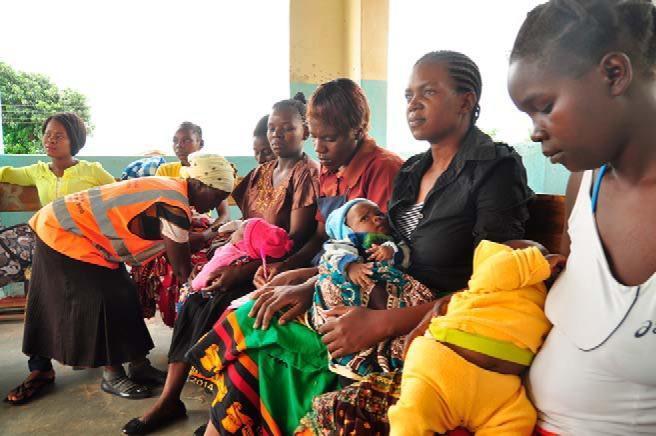
A clinical photograph depicting a maternal and child health (MCH) outreach setting at the Lundazi Urban Health Centre in Zambia. The image illustrates a group of mothers and their infants seated on a wooden bench within a basic clinical facility, characterized by painted walls and concrete flooring. A member of the Safe Motherhood Action Group (SMAG), identified by a high-visibility orange safety vest, is shown interacting with an infant held by one of the seated women. This visual documents community-level health systems strengthening and the 'Continuum of Care' (CoC) model designed to improve access to basic and emergency obstetric and newborn care. The primary educational focus is on global health initiatives, specifically the Saving Mothers, Giving Life (SMGL) project, which utilizes community health workers and peer supporters to bridge the gap between rural populations and skilled birth attendants. This photograph serves as a real-world example of demand-side health interventions and the mobilization of community health volunteers in maternal, newborn, and child health (MNCH) programs in sub-Saharan Africa.
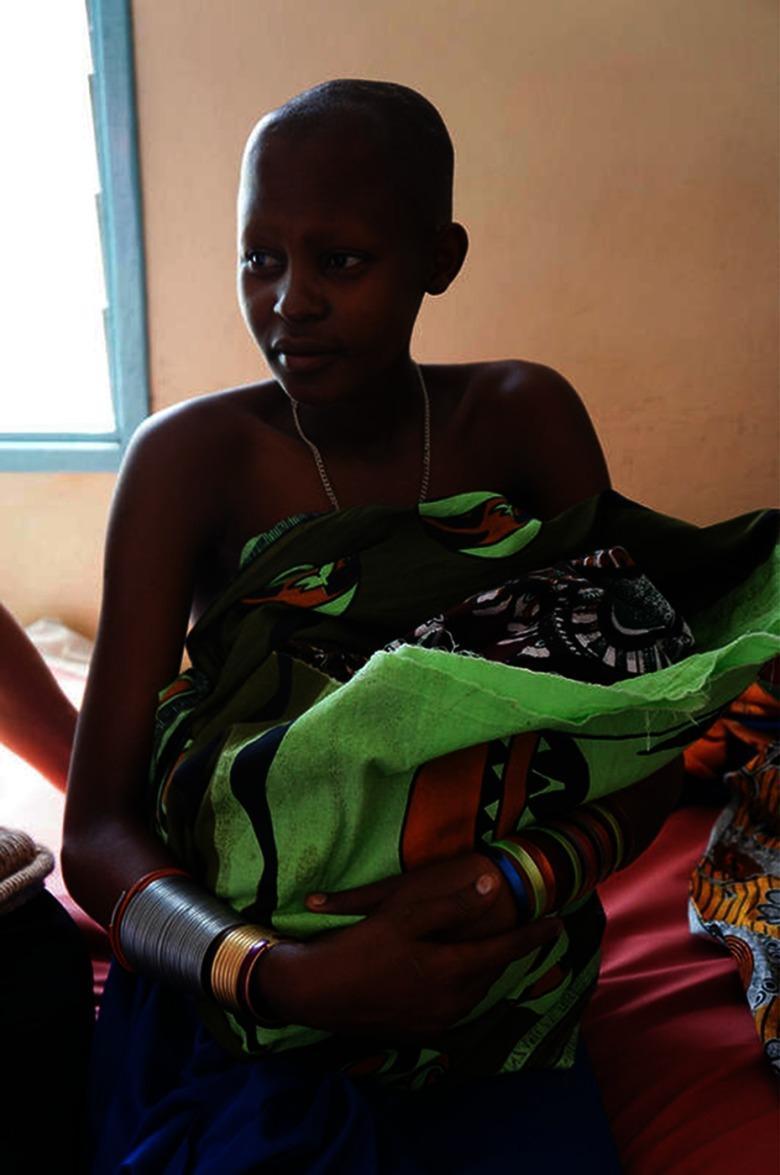
A clinical photograph depicting an adolescent postpartum patient in a district health facility. The image shows a 16-year-old female holding a neonate wrapped in a green and black patterned cloth. The patient is seated on a clinical examination bed or recovery cot covered with red linen, set within a simple medical room featuring a blue-framed window and peach-colored walls. The photograph serves as an educational visual for global maternal and child health, specifically highlighting the topics of adolescent pregnancy, postpartum care, and family planning in low-resource settings. Key educational concepts include the clinical management of young mothers and the social determinants of birth spacing as outlined in global health initiatives like Healthy People 2020. The setting represents a primary care or maternity ward context relevant to maternal-fetal medicine and reproductive health education.
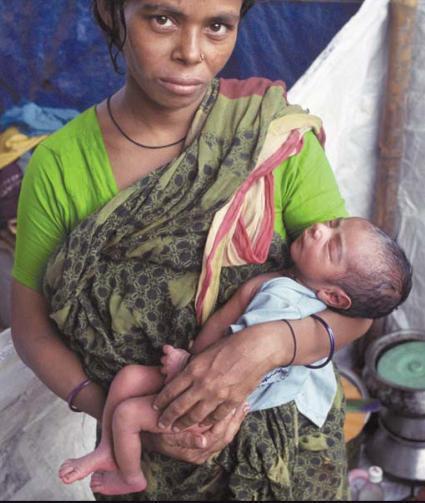
Clinical photograph of a mother holding a newborn infant in a domestic or field setting, representative of maternal and child health studies in South Asian regions like Dhaka, Bangladesh. The mother is shown in a three-quarter view, wearing traditional attire including a green blouse and a floral-patterned shawl. The newborn is positioned in the mother's arms in a resting, supine-to-sidelying posture. The infant has light brown skin, visible scalp hair, and appears stable with no immediate signs of acute respiratory distress or visible cutaneous lesions. From an educational perspective, this image illustrates neonatal care, the postpartum period, and the socio-economic determinants of health in developing urban environments. It serves as a visual reference for community health outreach, breastfeeding support, and pediatric assessment in global health contexts.
RMNCH+A / RMNCAH+N — The 5 × 5 Matrix
What Is the 5 × 5 Matrix?
- 5 high-impact interventions × 5 thematic areas = 25 core interventions
- + 5 Cross-Cutting Interventions
- + 5 Health Systems Strengthening (HSS) Interventions
- + Minimum Essential Commodities for each area
"The 5x5 matrix is an important tool for explaining the strategy in simple terms, organizing technical support, and monitoring progress with the states and high-priority districts." - Park's Textbook of PSM
The Full 5 × 5 Matrix
AREA 1: Reproductive Health
| # | High-Impact Intervention | Details |
|---|---|---|
| 1 | PPIUCD (Post-Partum IUCD) | Focus on spacing methods at high case-load facilities; interval IUCD at all facilities including sub-centres on fixed days |
| 2 | HDC + ESB | Home Delivery of Contraceptives and Ensuring Spacing at Birth through ASHAs - doorstep delivery of pills and condoms |
| 3 | PTK "Nischay Kits" | Pregnancy Testing Kits for early pregnancy detection at community level |
| 4 | Comprehensive Abortion Care | Strengthening safe MTP services; Medical Termination of Pregnancy access |
| 5 | Quality Sterilization Services | Target-free, need-based permanent family planning methods |
AREA 2: Maternal Health
| # | High-Impact Intervention | Details |
|---|---|---|
| 1 | MCTS-based ANC | Use Mother & Child Tracking System for early pregnancy registration and complete 4-visit ANC package |
| 2 | High-risk pregnancy detection | Identify and line-list severely anaemic mothers, hypertensive disorders, other complications; ensure management |
| 3 | Skilled delivery + EmOC | Equip delivery points with trained HR; ensure Emergency Obstetric Care at FRUs; establish MCH Wings |
| 4 | Maternal/infant/child death review | Mandatory facility-level death audits for corrective action |
| 5 | Misoprostol + Referral strengthening | Distribute misoprostol to women in 8th month for home delivery (3rd stage of labour); strengthen referral system for complications |
AREA 3: Newborn Health
| # | High-Impact Intervention | Details |
|---|---|---|
| 1 | Early initiation + Exclusive breastfeeding | Within 1 hour of birth; exclusive for 6 months; MAA programme |
| 2 | HBNC | Home-Based Newborn Care through ASHA - 7 home visits in first 42 days of life |
| 3 | Essential Newborn Care + Resuscitation | NSSK (Navjaat Shishu Suraksha Karyakram) training at all delivery points; bag-and-mask resuscitation |
| 4 | SNCU | Special Newborn Care Units with trained HR + infrastructure for sick newborns |
| 5 | Community Gentamicin by ANM | Injection gentamicin for suspected newborn sepsis at community level (saves lives before hospital referral) |
AREA 4: Child Health
| # | High-Impact Intervention | Details |
|---|---|---|
| 1 | Complementary feeding + IFA + Nutrition | Age-appropriate feeding from 6 months; IFA supplementation; vitamin A supplementation |
| 2 | Diarrhea management | ORS + Zinc at community level; IDCF (Intensified Diarrhea Control Fortnight) |
| 3 | Pneumonia management | Amoxicillin by frontline workers; IMNCI protocol |
| 4 | Full immunization | UIP + Mission Indradhanush to reach unvaccinated/partially vaccinated children |
| 5 | RBSK | Rashtriya Bal Swasthya Karyakram - screening of ALL children 0-18 years for 4 Ds: Defects at birth, Developmental delays, Deficiencies, Diseases |
AREA 5: Adolescent Health (+A)
| # | High-Impact Intervention | Details |
|---|---|---|
| 1 | Reduce teenage pregnancy | Increase contraceptive use among adolescents; delay age at marriage |
| 2 | Peer educators | Community-based services through trained adolescent peer educators for health promotion |
| 3 | ARSH Clinics | Strengthen Adolescent-Friendly Health Clinics at PHC/CHC/DH - fixed day, confidential |
| 4 | WIFS | Weekly Iron and Folic Acid Supplementation - 10.25 crore adolescents; biannual deworming (albendazole) |
| 5 | Menstrual Hygiene | Promote menstrual hygiene management; distribution of sanitary napkins under RKSK |
The 5 Cross-Cutting Interventions
| # | Intervention |
|---|---|
| 1 | Eliminate out-of-pocket expenditure - JSSK, RBSK, and all other free entitlements |
| 2 | Upgrade ANM and nurse skills - provide specialized, quality care to pregnant women and children |
| 3 | Intersectoral convergence - address social determinants (WASH, nutrition, education, women's empowerment) |
| 4 | Reach un-served/underserved areas - tribal villages, urban slums, backward blocks |
| 5 | Performance incentives - difficult area allowances + performance-based incentives for frontline workers |
The 5 Health Systems Strengthening (HSS) Interventions
| # | Intervention |
|---|---|
| 1 | Case-load based HR deployment - right number and type of staff at right level |
| 2 | Ambulances + drugs + diagnostics + RH commodities - supply chain management |
| 3 | Health education + Demand promotion + BCC - Behaviour Change Communication campaigns |
| 4 | Supportive supervision + HMIS data use - scorecards for national/state monitoring |
| 5 | Grievance redressal + Quality assurance - client satisfaction surveys, patient safety, zero tolerance for denial of services |
Summary Visual of the Matrix
                    ┌─────────────────────────────────────────────────┐
                    │           RMNCAH+N 5 × 5 MATRIX                │
                    │    "5 High-Impact Interventions × 5 Pillars"   │
┌───────────────────┼─────────────┬──────────┬─────────┬──────┬──────┤
│ THEMATIC AREA     │ Intervention│    2     │    3    │   4  │   5  │
├───────────────────┼─────────────┼──────────┼─────────┼──────┼──────┤
│ REPRODUCTIVE (R)  │  PPIUCD     │ HDC/ESB  │  PTK   │ MTP  │Steril│
│ MATERNAL (M)      │  MCTS/ANC   │ Hi-Risk  │EmOC/FRU│ MDR  │Miso  │
│ NEWBORN (N)       │  BF/MAA     │ HBNC     │  NSSK  │ SNCU │Genta │
│ CHILD (C)         │  IYCF/IFA   │ ORS+Zinc │  Amoxy │  UIP │ RBSK │
│ ADOLESCENT (A)    │  Teen preg  │ Peer edu │  ARSH  │ WIFS │MenHy │
├───────────────────┴─────────────┴──────────┴─────────┴──────┴──────┤
│ +N NUTRITION (Cross-cutting): MAA, NRC, AMB, WIFS, IYCF, Vit A    │
│ CROSS-CUTTING (5): JSSK, ANM skills, Convergence, Reach, Incentives│
│ HSS (5): HR, Supply chain, BCC, HMIS/scorecards, Grievance/QA      │
└────────────────────────────────────────────────────────────────────┘
Why the 5 × 5 Matrix Is Important
| Purpose | How it helps |
|---|---|
| Planning | States + districts know exactly which 25 interventions to implement |
| Technical support | Development partners (UNICEF, USAID, WHO) can align with specific cells |
| Monitoring | Each intervention has measurable coverage indicators (HMIS + scorecard) |
| Communication | Simplifies a complex strategy into a clear, teachable framework |
| Accountability | Central & state govt can track which districts are weak on which cells |
Goals the Matrix Is Designed to Achieve
| Goal | Target (12th Five Year Plan) |
|---|---|
| IMR | Reduce to 25/1,000 live births by 2017 |
| MMR | Reduce to 100/1,00,000 live births by 2017 |
| TFR | Reduce to 2.1 by 2017 |