
Abdus precatorius poisoning evaluation and treatment
Reading File
Finding Sources
Finding Sources
Searching PubMed
abrin poisoning treatment
Searching the Web
Abrus precatorius abrin poisoning evaluation and treatment
Reading File
Reading File
Reading File
Reading File
Abrus precatorius (Rosary Pea / Jequirity Bean) Poisoning
Note: the plant name is Abrus precatorius, not "Abdus" - also known as jequirity bean, rosary pea, crab's eye, Indian liquorice, gunchi, or rati.
Toxin and Mechanism
The seeds contain abrin, a toxalbumin (ribosome-inactivating protein) closely related to ricin (from castor bean, Ricinus communis), but roughly 2-4x more potent. Abrin enters cells and inhibits ribosomal protein synthesis, causing cell death - Rosen's Emergency Medicine, p. 3048. Seeds are bright red/orange with a black cap, about 0.85 cm long, weighing ~120 mg each - Parikh's Textbook of Medical Jurisprudence, p. 610.
Key toxicokinetic point: an intact, unchewed seed swallowed whole usually does not release significant toxin because the hard seed coat resists digestion. Toxicity requires the seed to be chewed, crushed, or extracted (or given parenterally/by injection, historically via "sui" needles used to poison cattle) - Rosen's Emergency Medicine, p. 3048; Parikh's Textbook, p. 610.
Clinical Evaluation
Route-dependent presentation:
- Oral (chewed/crushed seeds): nausea, vomiting, severe abdominal pain, hemorrhagic diarrhea (blood in stool in about a third of cases), dehydration, and electrolyte disturbances. Onset is typically delayed several hours to days after ingestion - Rosen's Emergency Medicine, p. 3048; PubMed PMID 28515607 (retrospective study of 112 patients).
- Parenteral/injection exposure: local painful swelling, ecchymosis, and necrosis at the injection site, followed by vertigo, cardiac arrhythmia, convulsions, and death - clinically described as resembling viperine snake envenomation - Parikh's Textbook, p. 610.
- Systemic absorption (rare but serious): multi-organ failure, hepatic/renal dysfunction, and severe neurologic toxicity including seizures, coma, cerebral edema, and demyelinating encephalitis - Rosen's Emergency Medicine, p. 3048.
- Fatal dose/period: reported as 1-2 seeds orally, or 90-120 mg abrin parenterally; fatal period is typically 3-5 days - Parikh's Textbook, p. 610.
Workup: CBC, comprehensive metabolic panel/electrolytes, renal and hepatic function, coagulation studies, and monitoring for hemoconcentration/dehydration. Confirmatory testing (biomarker L-abrine, or abrin-specific assays) is available only through specialized/reference or public health laboratories (e.g., CDC), and is not needed to guide acute management (PMID 24522983).
Treatment
No antidote exists. Management is entirely supportive:
- Decontamination: activated charcoal can be considered if the patient presents early after a chewed/crushed seed ingestion (not useful if the seed was swallowed whole and intact, and emesis-inducing agents are not recommended). For eye exposure, irrigate copiously with saline.
- Fluid resuscitation and electrolyte correction - the mainstay of care, given significant GI fluid losses from vomiting/diarrhea.
- Vasopressors for hypotension refractory to fluids.
- Airway/respiratory support - oxygen, airway management, and assisted ventilation if inhalational or systemic toxicity progresses to respiratory failure.
- Monitor for delayed/systemic toxicity - observe for neurologic, hepatic, and renal sequelae, particularly after large ingestions or any parenteral exposure; admission and extended observation is warranted for symptomatic patients.
- Wound care for injection-site (sui) exposures: historically, treatment included surgically removing the embedded needle/spike ("dissecting out the sui") plus symptomatic care; anti-abrin antiserum was historically used in veterinary/forensic contexts but is not a standard, validated clinical antidote today - Parikh's Textbook, p. 610.
- Extracorporeal therapies: case reports describe use of continuous renal replacement therapy and hemoperfusion in severe systemic abrin poisoning, though this is not standard of care and evidence is limited to isolated cases (PMID 28682903).
- Mortality: in the largest retrospective series (112 patients, oral exposure), mortality was about 5.35%, with diarrhea (66%) and bloody stools (33%) the most common findings (PMID 28515607).
Evidence check
A recent PubMed search (last ~2 years, meta-analyses/systematic reviews) did not surface new systematic reviews changing this management approach - current evidence remains largely case-report based (e.g., PMID 32475191 - fatal abrin poisoning by injection, 2021), consistent with the "supportive care only, no antidote" framework above.
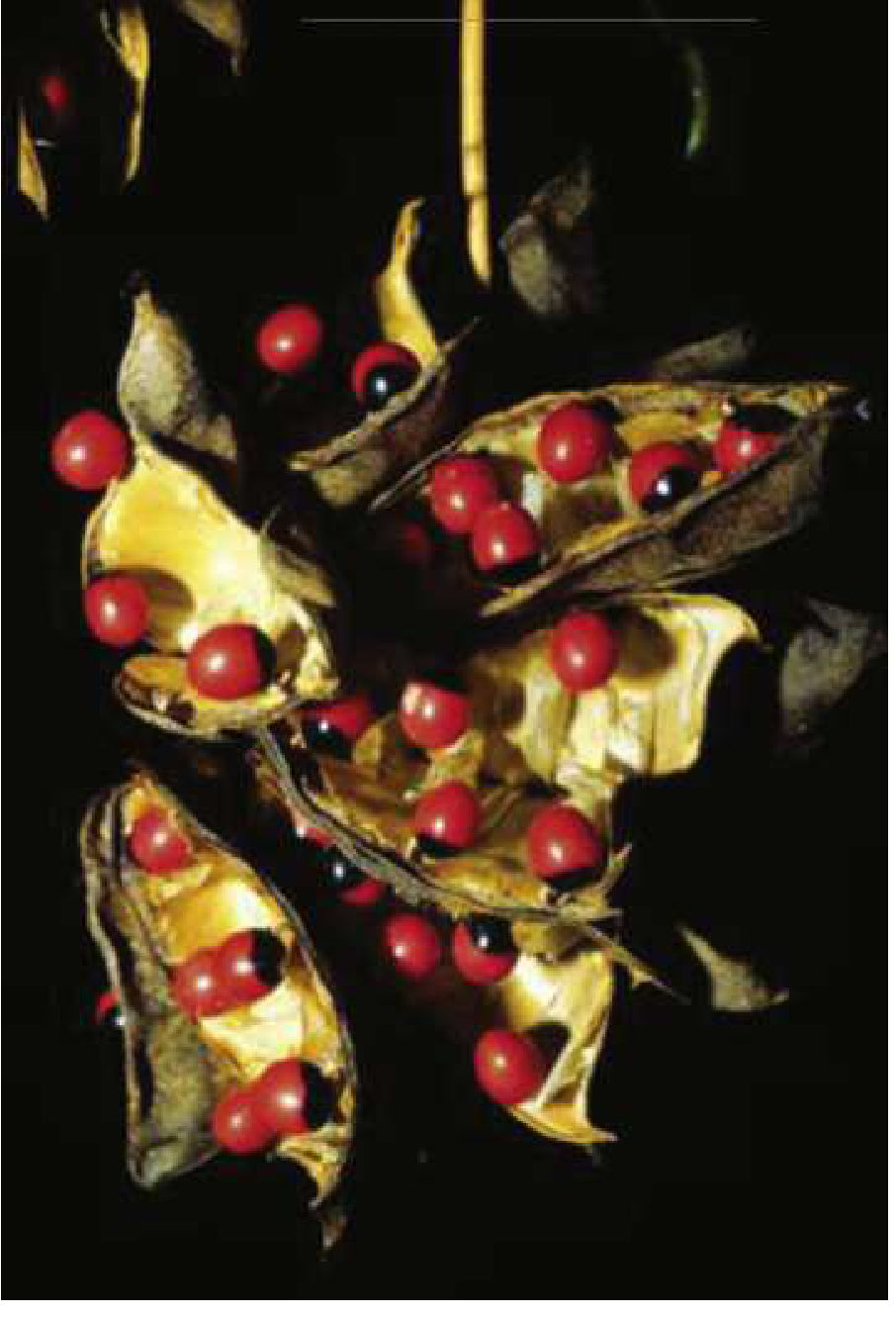
Fig: Abrus precatorius seed pods and seeds - Rosen's Emergency Medicine, Fig. 153.9
This is a shared conversation. Sign in to Orris to start your own chat.